- English
- French
- German
- Portuguese
- Spanish
- Russian
- Japanese
- Korean
- Arabic
- Greek
- German
- Turkish
- Italian
- Danish
- Romanian
- Indonesian
- Czech
- Afrikaans
- Swedish
- Polish
- Basque
- Catalan
- Esperanto
- Hindi
- Lao
- Albanian
- Amharic
- Armenian
- Azerbaijani
- Belarusian
- Bengali
- Bosnian
- Bulgarian
- Cebuano
- Chichewa
- Corsican
- Croatian
- Dutch
- Estonian
- Filipino
- Finnish
- Frisian
- Galician
- Georgian
- Gujarati
- Haitian
- Hausa
- Hawaiian
- Hebrew
- Hmong
- Hungarian
- Icelandic
- Igbo
- Javanese
- Kannada
- Kazakh
- Khmer
- Kurdish
- Kyrgyz
- Latin
- Latvian
- Lithuanian
- Luxembou..
- Macedonian
- Malagasy
- Malay
- Malayalam
- Maltese
- Maori
- Marathi
- Mongolian
- Burmese
- Nepali
- Norwegian
- Pashto
- Persian
- Punjabi
- Serbian
- Sesotho
- Sinhala
- Slovak
- Slovenian
- Somali
- Samoan
- Scots Gaelic
- Shona
- Sindhi
- Sundanese
- Swahili
- Tajik
- Tamil
- Telugu
- Thai
- Ukrainian
- Urdu
- Uzbek
- Vietnamese
- Welsh
- Xhosa
- Yiddish
- Yoruba
- Zulu
Butterfly Valves vs. Ball Valves: Which Is Better?
The choice between butterfly valves and ball valves depends entirely on your operational requirements. Butterfly valves excel in large-diameter, low-pressure applications where space savings and cost efficiency matter most, making them ideal for water treatment and HVAC systems. Ball valves dominate high-pressure environments requiring zero-leakage shutoff, particularly in oil, gas, and chemical processing. Neither valve universally outperforms the other—success lies in matching valve characteristics to your specific system parameters, including pressure ratings, flow dynamics, installation constraints, and maintenance budgets.


Introduction
More than flow control, valve selection matters. It impacts system downtime, operating safety, and total cost of ownership over many years. I've worked with hundreds of builders and distributors worldwide and witnessed how picking the incorrect valve can delay projects, create maintenance issues, and increase costs, straining even the most established supply lines.
This comparison addresses procurement managers' and engineering teams' daily question: "Which valve can handle your pressure needs?" Which closure decreases downtime? What material selections affect toxic environment durability? Knowing these distinctions can help you choose valves for a municipal water system, petrochemical facility, or equipment manufacturer that satisfy your short-term project objectives and long-term dependability goals.
Regional distributors require correct specifications to satisfy client demands without overstocking. As project deadlines approach, contractors must know when work will be completed and meet technological requirements. Our mission is to simplify procurement and reduce decision-making risk to improve project success.
Understanding Butterfly Valves and Ball Valves
Both types of valves control flow by turning them a quarter of the way, but their internal mechanisms make them perform very differently.
How Butterfly Valves Work
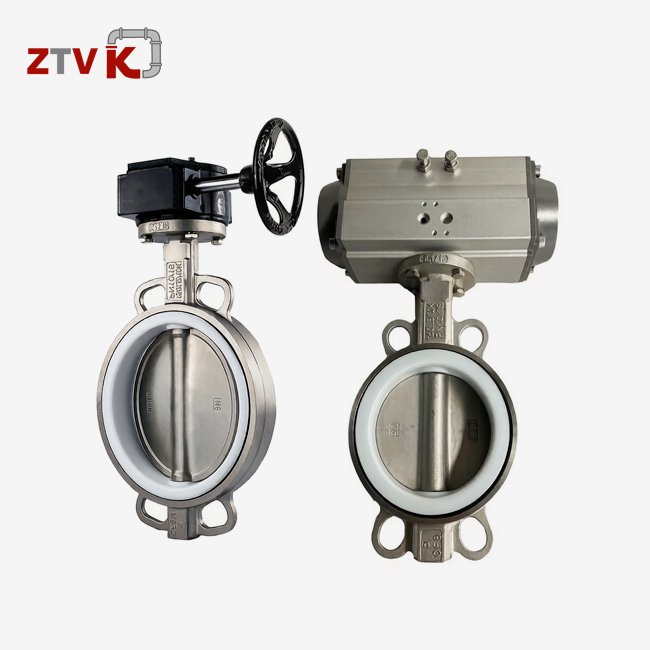
A butterfly valve has a disk that is round and attached to a shaft that spins in the middle of the flow path. The disk can turn from fully open to fully closed when the actuator turns the shaft 90 degrees. The disk stays partly in the flow stream even when it is fully open. This makes a lasting blockage that changes how the pressure drops.
Modern versions often use ductile iron bodies (DI/QT450) to make them last longer, and disks can be made of ductile iron, corrosion-resistant steels like CF8 and CF8M, or aluminum bronze for specific uses. Seat materials like EPDM, NBR, PTFE, and VITON offer strong binding in a variety of media and temperature ranges. Because this material is so flexible, butterfly valves can be used in water systems, low-pressure chemical lines, and fire protection networks where a moderate level of sealing is enough.
Lug-type connection methods make it possible to place between flanges without using through-bolts, which makes it easier to do maintenance. Most light industrial and public uses are covered by mounting standards set by ISO5211 and pressure ratings ranging from PN10 to PN16. Sizes usually range from DN50 to DN600, and larger diameters like DN300 (12") are the most cost-effective compared to other options.

How Ball Valves Work
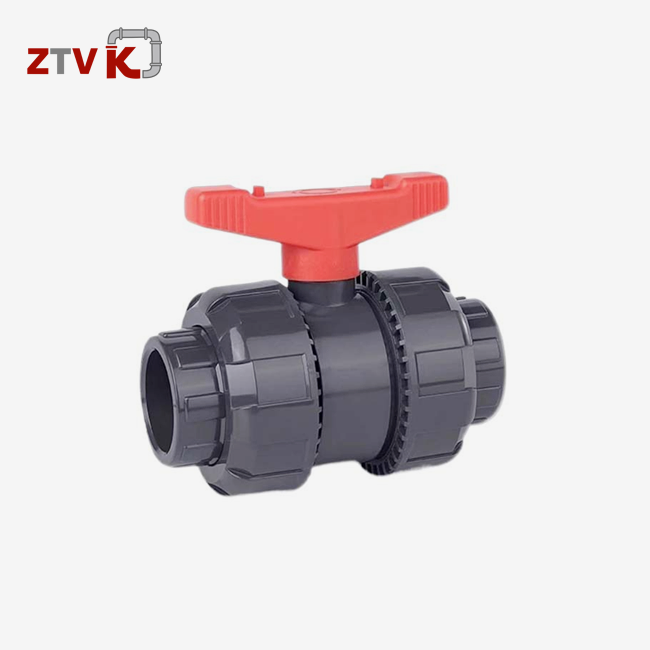
A spherical closure element with a hole through the middle is used in ball valves. When you turn this ball 90 degrees, it lines up or stops the hole with the pipeline, letting all the flow through or stopping it completely. Under system pressure, the ball presses against elastomeric or metal seals, creating a bubble-tight closure that stops even the tiniest leaks.
Body materials that are made to handle pressures much higher than butterfly valve values are usually carbon steel, stainless steel 304/316, or duplex steel. Because the sealing mechanism can make metal-to-metal contact (in trunnion designs), ball valves can be used in conditions where elastomeric seats would fail. This strong design is used in places like chemical plants, gas transport systems, and oil factories where safety rules require complete isolation.
When the ball valve is fully open, it lets flow through without any problems and with little pressure loss, which is helpful in high-speed situations. But this efficiency comes at a cost: ball valves are heavier, take up more space when installed, and cost more to make. These drawbacks make them less cost-effective for large-diameter, low-pressure services.
Key Differences Between Butterfly Valves and Ball Valves
Knowing the differences between valve types based on their practical needs helps choose the right valve type for the system instead of using the most common ones.
Design and Flow Control Mechanisms
Even when the butterfly valves are fully open, the disc configuration in the flow stream causes turbulence and a pressure drop. In large-diameter, low-velocity systems, this property doesn't matter, but it does in small, high-flow systems. Ball valves get rid of this blockage, allowing full-bore flow that keeps the system running efficiently at all pressures.
There are fundamentally different ways to seal. Butterfly valve seats touch the disc's edge, making a seal good for most liquid, air, and non-hazardous services. With radial sealing, system pressure actually improves seat contact, which makes the closure more reliable at higher pressures. Because they shut with pressure, ball valves are usually the best choice when leakage limits are close to zero.

Installation and Maintenance Considerations
Space limitations often determine whether or not a valve can be used. A DN300 butterfly valve with a gearbox operator takes up about 40% less space when installed than a similar ball valve with an actuator. This compactness is very important for retrofit projects with crowded pipe runs or skid-mounted equipment that needs to fit through small spaces.
The same reasoning applies to maintenance ease. In lug-type setups, butterfly valves let you change the seat without taking the valve off the line. Most ball valves need to be taken apart completely in order to get to the internal parts. This increases downtime and work costs. But maintenance times for ball valves tend to be longer because they last longer and don't wear out as quickly. This is because they have stronger seals that break down more slowly when they're cycled.
Differences in weight affect how things are moved and how they are supported. Butterfly valves are much lighter than ball valves of the same size, which means that a crane is not needed for installation and the pipe does not need to be supported as much. When the diameter is big, like DN600, a butterfly valve might only weigh a fifth of what a ball valve does.
Pressure and Temperature Performance
Long-term dependability is based on operating envelope compatibility. Butterfly valves are usually used in pressure ranges from vacuum to PN25. Depending on the material of the seat, the temperature ranges that they can handle are limited to about -20°C to +120°C. EPDM seats work great in water, and VITON makes them more resistant to chemicals and higher temperatures.
Most ball valves can work at PN40 or higher, and metal-seated valves can work in temperatures ranging from -50°C to +400°C. Because of this, ball valves are the standard for services like high-pressure steam, thermal oil, and cryogenics, where butterfly valves can't physically handle it. Not only do procurement teams have to check for normal operating conditions, but they also have to check for upset scenarios, startup transients, and emergency shutdown conditions that might be higher than the nameplate ratings.
How to Choose Between Butterfly Valves for Your Industrial Needs
Lifecycle costs and operating risk are lower when valve characteristics are matched to application factors.
Evaluating System Requirements
System pressure is the main factor used for selection. For water delivery networks that work at PN10 to PN16, butterfly valves are the most cost-effective option. This is especially true for sizes above DN200, where ball valve costs go up a lot. This is why municipal contractors choose butterfly valves over other options: the difference in price allows for more system capacity or a bigger project.
Different uses care about flow properties in different ways. Butterfly valve linearity is helpful for processes that need to slow down or change the flow rate. This is because the disk position is linearly related to flow rate. Most of the time, ball valves are used as separation devices rather than control elements. However, there are expensive V-port versions that can be used for specific throttling needs.
For each type of valve, the choice of material is based on how well it works with the media. For butterfly valves, corrosive chemicals might need CF8M stainless disks with PTFE seats. For ball valves, they would need a full stainless build. Abrasive slurries make soft-seated butterfly valves wear out faster, so metal-seated ball valves are better even though they cost more. Instead of depending on general compatibility charts, ZTVK's material testing features make sure that the materials you specify really do not react with your process media.
Cost-Benefit Analysis
The cost of acquisition at the start only tells part of the story. A DN300 butterfly valve usually costs 30–50% less than a similar ball valve, which helps your budget right away. But in cycling situations, where seals don't last as long, the economics of life may favor ball valves that can be cycled more than 50,000 times before they need major repair.
Installation costs add to the original price. Lighter butterfly valves lower the cost of wiring, and their small size makes it easier to change the layout of pipes during retrofits. Most of the time, these "soft costs" are higher than the differences in valve prices. This is especially true in offshore or high-up installations where crane time is billed by the hour.
In continuous-flow systems, the amount of energy used over many years should be calculated. Pumping costs go up when there is a permanent drop in pressure across butterfly disks. At normal industry rates, a 5 psi pressure drop across a 1000 gpm butterfly valve costs about $400 a year in energy. This is more than the savings from the valve itself over 20 years. In vital services, ball valves get rid of this problem.
Automation and Control Integration
Electric, gas, and hydraulic forces can open and close both types of valves, but there are some useful differences. Because butterfly valves need less working force, actuators can be smaller and cheaper. A gearbox-operated butterfly valve, like ZTVK's DN300 lug-type design, can use ISO5211 mounting patterns, which make it easier to upgrade the actuator without having to replace the valve.
Ball valves need a higher break-torque capacity, especially when they are bigger or under more pressure, which makes the closing forces stronger. Because of this, stronger (and more expensive) actuation packages are needed. However, the fail-safe reliability of ball valve quarter-turn is very high—spring-return pneumatic motors close ball valves firmly when the air supply goes out, which is an important safety trait for emergency shutdown systems.
Positioners and control loops work the same way with both types, but the ability to throttle a butterfly valve lets you use more complex adjusting techniques. Equipment manufacturers often like standardized actuation interfaces, which means that ISO5211 compliance is a useful sourcing requirement for distributors who work with OEM clients.
Procurement Insights: Sourcing Quality Valves
Choosing the right supplier determines whether specifications lead to reliable performance or expensive failures in the field.
Evaluating Supplier Credentials
Certification accuracy distinguishes manufacturers from document mills. The OHSAS18001 safety systems, ISO9001 quality management, and ISO14001 environmental standards demonstrate a disciplined, error-free procedure. Lower-tier merchants sometimes make uncheckable promises, while ZTVK maintains these certificates with buyer-friendly third-party verification.
Testing skills show a manufacturer's commitment. Pressure testing, chemical material research, and dimensional measuring instruments demonstrate the company's commitment to requirements. Modern CNC machining centers and large-diameter processing lathes provide consistent dimensions. This prevents fitting issues and premature wear.
Technical help is irrelevant. Supplying CAD drawings, 3D models, and selection assistance simplifies engineering for your team. Companies with installation videos and troubleshooting instructions lessen field issues. ZTVK's 18-month warranty and local expert collaborations prevent tiny issues from becoming major emergencies.
Customization and Bulk Procurement
OEM branding meets distributors' market positioning demands. Custom valve body nameplates, logos, and packaging help firms stand out in competitive local markets. ODM services may adjust valve body design, connecting techniques (flange, lug, wafer), and sealing materials to suit the application.
Stock availability determines delivery reliability. By stocking over 2,000 pieces in typical sizes DN50 to DN600, ZTVK can ship within 3 to 7 days, reducing wait times. Distributors may plan "just-in-time" inventories and speed up contractors' project timetables with this responsiveness.
Custom creation requires scheduling. Without proper requirements, manufacturing might take 15 to 25 days, depending on how hard the work is. Faster service costs 20% more and takes 7–10 days. Being near major ports (ZTVK is 50 km from Tianjin Port) simplifies ocean freight scheduling and reduces interior transit delays.
Pricing and Logistics Strategy
Port proximity considerably affects landing costs. Manufacturing companies near key shipping hubs may provide FOB terms, which allow buyers to manage freight, or CIF quotations, which simplify operations. ISPM15 packaging, such as timber boxes, moisture barriers, and set brackets, prevents customs delays and damage claims that disrupt schedules.
Relationships with carriers demonstrate operational expertise. Long-term ties with COSCO and Maersk assist suppliers in managing booking issues during busy periods and achieving better pricing in competitive offers. These connections also simplify tracking and handling late shipments.
Unit cost, payment terms, and warranties must be considered. Longer warranties, like ZTVK's 18-month coverage, safeguard against manufacturing faults without a complicated claims procedure. Clear return policies and fast technical support demonstrate product quality and protect customer relationships.
Conclusion
When deciding between butterfly valves and ball valves, practical goals are more important than which is clearly better. Butterfly valves are the best choice for large-diameter, moderate-pressure situations where installation space, weight, and cost are important factors. Ball valves are more expensive than other valves because they seal better, can handle more pressure, and last longer in demanding applications. To successfully buy something, you need to make sure that these features match the requirements of your system in terms of pressure ratings, flow rates, media properties, and maintenance options. Partnering with makers that offer both types and a lot of customization options helps distributors find a balance between inventory freedom and customer diversity. To lower their risk, project managers choose providers that have quality certifications, the ability to test products, a track record of on-time deliveries, and a technical support system that goes beyond shipping products.
Frequently Asked Questions
1. What applications favor butterfly valves over ball valves?
Butterfly valves work best in low-pressure process settings where modest sealing is enough, HVAC systems, fire protection networks, and water distribution. Because they are cost-effective for big diameters (DN200+), they are the first choice for building services and city infrastructure. The small size makes it good for repair jobs that don't have a lot of room.
2. When do ball valves justify their higher cost?
When there is a lot of pressure (PN25+), when there needs to be no leakage (like when moving dangerous chemicals or gases), or when the temperature goes beyond what the elastomeric seat can handle, ball valves are necessary. Even though they cost more at first, their reliability makes up for it in uses that cycle a lot, where the longer the seal lasts, the less it costs over its lifetime.
3. How do maintenance requirements compare?
Butterfly valves let you replace the seat more quickly, but depending on how often you cycle, they usually need more seal service more often. Ball valves need less care, but they have to be taken apart completely to get to the inside. Actual repair times are affected by operating conditions and the properties of the media more than the type of valve alone.
Partner with ZTVK for Reliable Butterfly Valves Supply
Choosing the right industrial valve maker has a direct effect on how well your project turns out and how happy your customers are. ZTVK has been making valves in Tianjin for more than 15 years and offers realistic solutions for distributors and contractors around the world, along with production that is ISO9001, ISO14001, and OHSAS18001 approved.
This is shown by our DN300 lug-type butterfly valves with gearbox operation: DI/QT450 bodies can handle tough service, and CF8/CF8M/aluminum bronze disk choices can handle conditions that are corrosive. Different types of media can be used with EPDM, NBR, PTFE, and VITON seat materials. ISO5211 mounting compliance and PN10/PN16 pressure ratings are the same in North America and Europe, so they meet international standards.
We keep more than 2,000 standard valves in stock so that they can be delivered in 3–7 days. Custom-making takes 15–25 days without sacrificing quality. Our position 50 km from Tianjin Port makes FOB and CIF shipping easy thanks to our partnerships with COSCO and Maersk. OEM branding services help you place yourself in the market, and they come with a guarantee that lasts for 18 months and technical paperwork that makes installation and upkeep easier. Contact our team at ktec86961886@163.com to talk about what butterfly valves you need.
References
1. American Water Works Association. (2017). AWWA Manual M49: Quarter-Turn Valves: Head Loss, Torque, and Cavitation Analysis. Denver: AWWA Publications.
2. Baumann, H.D. (2009). Control Valve Primer: A User's Guide (Fourth Edition). Research Triangle Park: ISA - The Instrumentation, Systems, and Automation Society.
3. Emerson Automation Solutions. (2019). Valve Selection Guide for Process Applications: Engineering Best Practices. Marshalltown: Fisher Controls Division.
4. Lyons, J.L. & Askland, C.L. (2016). Piping Handbook (Eighth Edition). New York: McGraw-Hill Education.
5. Nesbitt, B. (2011). Handbook of Valves and Actuators: Valves Manual International. Oxford: Elsevier Science.
6. Zappe, R.W. (2004). Valve Selection Handbook: Engineering Fundamentals for Selecting the Right Valve Design for Every Industrial Flow Application (Fifth Edition). Houston: Gulf Professional Publishing.
Send us your valve requirements and our team will provide professional solutions and fast quotations.
RELATED INDUSTRY KNOWLEDGE