- English
- French
- German
- Portuguese
- Spanish
- Russian
- Japanese
- Korean
- Arabic
- Greek
- German
- Turkish
- Italian
- Danish
- Romanian
- Indonesian
- Czech
- Afrikaans
- Swedish
- Polish
- Basque
- Catalan
- Esperanto
- Hindi
- Lao
- Albanian
- Amharic
- Armenian
- Azerbaijani
- Belarusian
- Bengali
- Bosnian
- Bulgarian
- Cebuano
- Chichewa
- Corsican
- Croatian
- Dutch
- Estonian
- Filipino
- Finnish
- Frisian
- Galician
- Georgian
- Gujarati
- Haitian
- Hausa
- Hawaiian
- Hebrew
- Hmong
- Hungarian
- Icelandic
- Igbo
- Javanese
- Kannada
- Kazakh
- Khmer
- Kurdish
- Kyrgyz
- Latin
- Latvian
- Lithuanian
- Luxembou..
- Macedonian
- Malagasy
- Malay
- Malayalam
- Maltese
- Maori
- Marathi
- Mongolian
- Burmese
- Nepali
- Norwegian
- Pashto
- Persian
- Punjabi
- Serbian
- Sesotho
- Sinhala
- Slovak
- Slovenian
- Somali
- Samoan
- Scots Gaelic
- Shona
- Sindhi
- Sundanese
- Swahili
- Tajik
- Tamil
- Telugu
- Thai
- Ukrainian
- Urdu
- Uzbek
- Vietnamese
- Welsh
- Xhosa
- Yiddish
- Yoruba
- Zulu
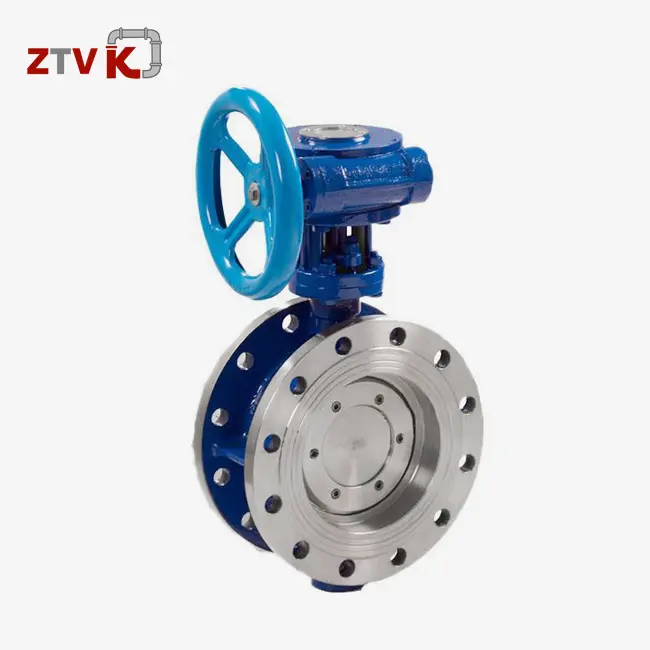
metal to metal butterfly valve
Pressure Rating:PN6 / PN10 / PN16 / 150LB
Body: Ductile Iron(GGG40/50), Carbon Steel(WCB A216), Stainless Steel(SS304/SS316/SS304L/SS316L) , Duplex Stainless Steel(2507/1.4529),
Disc: DI(Ni lined), WCB (A216), Stainless Steel(SS304/SS316/SS304L/SS316L) , Duplex Stainless Steel(2205/2507)
Seat: Metal+Flexible Graphite
Actuator:Worm Gear, Electric, Pneumatic
Sample: available
Metal to Metal Butterfly Valve – Triple Offset Design for Severe Service Applications
When process conditions exceed the limits of soft-seated valves — high temperatures, abrasive slurries, or sustained differential pressure — a metal to metal butterfly valve built on triple-offset geometry provides the sealing reliability that elastomers and PTFE cannot. This valve is produced by ZTVK Fluid Control Equipment (Tianjin) Co., Ltd. in sizes DN50-DN3000 with pressure ratings of PN6, PN10, PN16 and 150LB. Worm gear, electric and pneumatic actuation are available for severe service applications worldwide.
What Is a Metal to Metal Butterfly Valve?
A metal to metal butterfly valve is a quarter-turn rotary valve that uses a machined metal sealing interface — rather than rubber or PTFE — to achieve tight shutoff under process conditions that degrade soft-seated designs.
The distinguishing structural characteristic is the triple offset geometry . Three calculated offset locations guarantee no contact between the disk and seat across the whole rotation arc. They just touch at the last instant while closing. So it wedges against the seat, but does not halt the position by compression. This prevents the friction-based wear that gradually destroys traditional butterfly valve seats.
This design eliminates three common failure modes of soft seated valves:
· Degradation or hardening of elastomers due to high temperature
· Erosion of the seat due to abrasive or particle-laden material
· High differential pressure over time leading to seal failure
The laminated metal and flexible graphite seat ring provides some degree of compliance during thermal cycling, so avoiding the disk from seizing as the temperature changes (a failure mechanism seen in all-rigid metal seal designs).
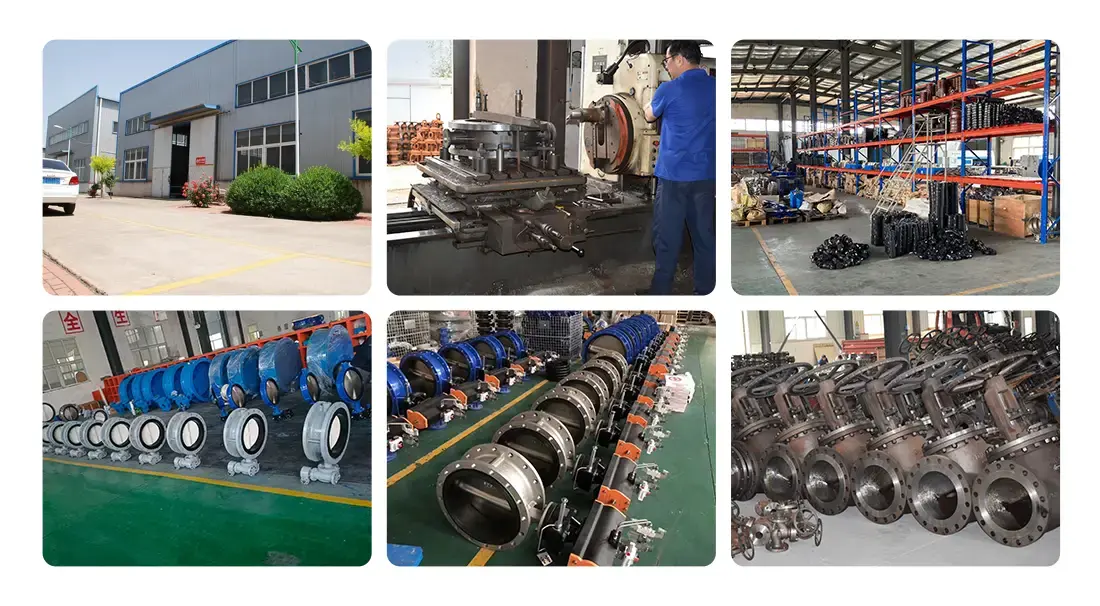
Product Specifications
|
Parameter |
Details |
|
Size Range |
DN50 – DN3000 |
|
Pressure Rating |
PN6 / PN10 / PN16 / 150LB |
|
Body Materials |
Ductile Iron (GGG40/GGG50), Carbon Steel (WCB A216), SS304/316/304L/316L, Duplex SS (2507/1.4529) |
|
Disc Materials |
Ductile Iron (Ni lined), Carbon Steel (WCB A216), SS304/316/304L/316L, Duplex SS (2205/2507) |
|
Seat Materials |
Metal + Flexible Graphite (laminated multi-layer sealing ring) |
|
Actuation Options |
Worm Gear, Electric, Pneumatic |
|
End Connections |
Wafer, Flanged, Lug |
|
Design Standards |
API, ANSI, JIS, BS, DIN, ISO |
|
Certifications |
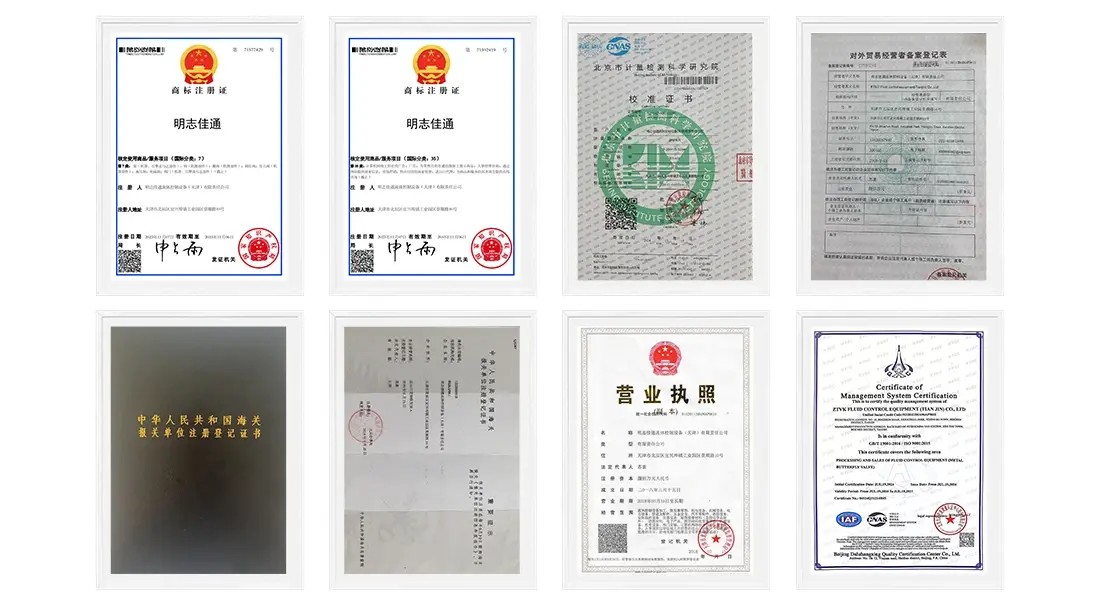
ISO9001, ISO14001, OHSAS18001 |
|
Sample Availability |
Available upon request — contact us to initiate |
Key Design Features
The triple offset three-dimensional eccentric construction implies that the contact between the disk and the seat is limited to the final closing degree. This removes wear that occurs throughout the whole rotating arc of a traditional design.
The seat assembly employs a multi-layer metal and flexible graphite laminated ring. The graphite layers are designed to be compliant so that they may expand and contract with temperature and the metal layers give structural stability under pressure. This combination overcomes the seizing danger of the all-rigid metal chairs in bicycle duty,
Sealing surfaces are cut to close dimensional tolerances using CNC machines. Optional Stellite hard-facing (Grade 6 or 21) is offered for situations where particle loaded media would normally abrade the contact zone of the seats.
The valve is constructed so as to be fire safe and has no parts which melt or burn under fire conditions.
Material Selection Guide
Selecting the right body, disc, and seat material combination is one of the most common points of application error. The following guidance reflects the standard configurations available from ZTVK.
|
Application Condition |
Recommended Body/Disc |
Seat |
|
General water/utility service |
Ductile Iron GGG40/GGG50 |
Metal + Graphite |
|
Petrochemical / hydrocarbon |
Carbon Steel WCB A216 |
Metal + Graphite |
|
Corrosive chemical media |
SS316 / SS316L |
Metal + Graphite |
|
Seawater / chloride exposure |
Duplex SS 2507 / 1.4529 |
Metal + Graphite |
|
High-temperature steam |
Carbon Steel WCB or SS304 |
Metal + Graphite |
For high-chloride settings where austenitic stainless steels are susceptible to stress corrosion cracking, duplex stainless steel grades 2507 and 2205 are recommended. The Ni-lined ductile iron disk is an economical choice for mild corrosive situations where a complete stainless construction is not needed.
If your process circumstances are outside these conventional setups, please contact our technical team with your media, temperature and pressure data for a material suggestion.
Quality Control Process
Before each valve is sent, ZTVK performs a systematic check. All manufacturing orders have the following phases in common:
· Positive Material Identification (PMI): Verify alloy composition of body and disk to assure material traceability and reduce danger of galvanic corrosion in mixed-metal assemblies.
· Dye Penetrant (PT) and Hardness Testing: Sealing surfaces are tested for tiny cracks. When Stellite hard-facing is applied, the hardness is checked for the given grade (Stellite 6 or 21).
· High-Pressure Seat Leakage Test: Nitrogen gas testing per API 598 confirms seating performance to Class VI zero-leakage parameters.
· Torque Check: The running and seating torque is recorded after thermal cycling to ensure that the actuator size is adequate.
· Dimensional Geometry Check: The third-offset angle geometry is measured to prevent any rubbing closure throughout the whole rotation arc.
All orders are accompanied by material certifications and inspection reports.
Industry Applications
The metal to metal butterfly valve is specified across process industries where temperature, pressure, or media conditions rule out soft-seated alternatives:
· Petrochemical and Refining: Isolation of hydrocarbons at high temperature, fire safe cutoff criteria
· Boiler Isolation, Feedwater and Steam Systems, Power Generation
· Steel and Metallurgy: high dust and high heat situations
· Natural Gas Distribution: Tight shutdown for gas isolation service
· Water and Waste Water Treatment: Large diameter flow control from DN50 to DN3000
• Food & Pharmaceutical: SS304/316 body & disk for sanitary interaction with media
· Pulp, Paper and Chemical Processing: Corrosive slurry and acid media service
Stable flow characteristics for throttling and control applications are provided by valve operation between 20° and 70° open, minimizing the likelihood of cavitation at the seat.
Customization and OEM/ODM Support
OEM & ODM orders are supported by ZTVK.
OEM services include client branding, bespoke nameplates, logo placement and private label packaging. ODM services include modification of valve body structure, selection of sealing material, change of connection arrangement, and adaption to particular pressure, temperature and media requirements.
To start a request for a bespoke product, please include the following information: valve size and end connection standard, process medium and operating temperature/pressure range, needed kind of actuation, and any design standard or certification that applies. Our engineering team will contact you with a suggestion and lead time.
Frequently Asked Questions
Q1: Can a butterfly valve have zero leakage?
A: The wedging mechanism is capable of torque-seated operation and, when constructed with triple-offset geometry, the valve can fulfill Class VI bubble-tight shutdown requirements. On closing , the disk wedges into the seat rather than halting at a predetermined rotational point . This is what allows for constant zero-leakage performance .
Q2: Is it OK with bi-directional flow?
A: Most common designs have a preferred flow direction Versions that are fully bi-directional may be built for situations where this is required, however the sealing class in the reverse direction may be different unless the valve has been specially constructed as bi-directional according to API 609. Please confirm the necessity of flow direction while submitting a query.
Q3: How does the valve deal with thermal expansion?
A: The floating element is the laminated metal and graphite seat ring which expands and contracts with temperature. This protects the disk from seizing in service under extreme heat or thermal stress.
Q4: Do we need a gearbox actuator?
A: For diameters larger than DN65 a gearbox or motorized actuator is necessary. This is a torque seated design – manual levers are not able to provide the force necessary to seat a metal seal at bigger diameters. Worm gear. Electric and pneumatic actuation options are offered across the complete size range.
Q5. How does the service life compare to rubber-seated valves?
A: Rubber seated valves are susceptible to seat deterioration due to heat, abrasion and continuous pressure under heavy use. A properly specified butterfly valve is intended for long cycle life under the similar circumstances. Contact us with your application data for a service life evaluation.
Q6: Which certifications are important for critical service installations?
A: ZTVK valves are ISO9001, ISO14001 and OHSAS18001 certified. If your application is safety essential and requires documentation under API 607, ISO 15848 or SIL criteria please contact us to determine which certification records are available for your project specification.
Contact Us
For technical inquiries, material recommendations, custom orders, or metal to metal butterfly valve samples, email ktec86961886@163.com. Our team will respond to your inquiry promptly.
Send us your valve requirements and our team will provide professional solutions and fast quotations.