- English
- French
- German
- Portuguese
- Spanish
- Russian
- Japanese
- Korean
- Arabic
- Greek
- German
- Turkish
- Italian
- Danish
- Romanian
- Indonesian
- Czech
- Afrikaans
- Swedish
- Polish
- Basque
- Catalan
- Esperanto
- Hindi
- Lao
- Albanian
- Amharic
- Armenian
- Azerbaijani
- Belarusian
- Bengali
- Bosnian
- Bulgarian
- Cebuano
- Chichewa
- Corsican
- Croatian
- Dutch
- Estonian
- Filipino
- Finnish
- Frisian
- Galician
- Georgian
- Gujarati
- Haitian
- Hausa
- Hawaiian
- Hebrew
- Hmong
- Hungarian
- Icelandic
- Igbo
- Javanese
- Kannada
- Kazakh
- Khmer
- Kurdish
- Kyrgyz
- Latin
- Latvian
- Lithuanian
- Luxembou..
- Macedonian
- Malagasy
- Malay
- Malayalam
- Maltese
- Maori
- Marathi
- Mongolian
- Burmese
- Nepali
- Norwegian
- Pashto
- Persian
- Punjabi
- Serbian
- Sesotho
- Sinhala
- Slovak
- Slovenian
- Somali
- Samoan
- Scots Gaelic
- Shona
- Sindhi
- Sundanese
- Swahili
- Tajik
- Tamil
- Telugu
- Thai
- Ukrainian
- Urdu
- Uzbek
- Vietnamese
- Welsh
- Xhosa
- Yiddish
- Yoruba
- Zulu
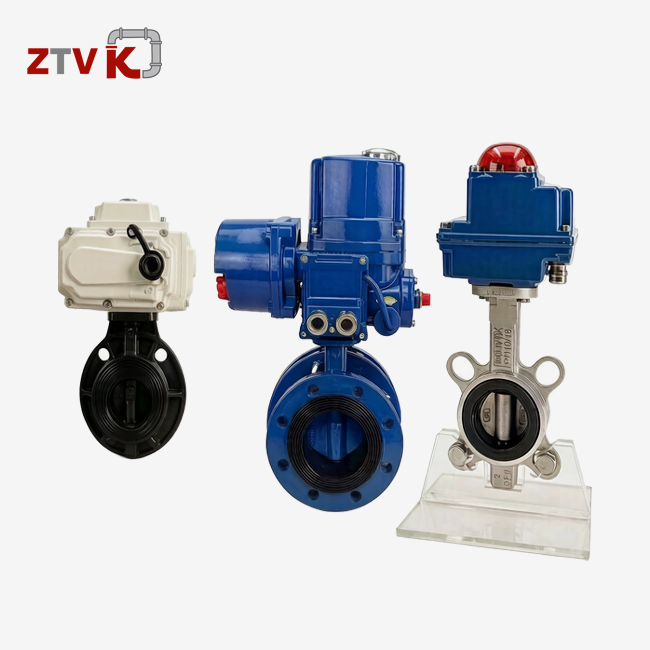
electric operated butterfly valve
Connection method:Wafer type
Connection standard:ISO5211--PN10/PN16/125LB/150LB/JIS5K/JIS10K/JIS16K
Size:1.5"-48"(DN40-DN1200 mm)
Working pressure:PN10/PN16
Body material:DI/QT450
Disc material:DI/CF8/CF8M/Aluminum bronze
Seat material:EPDM/NBR/PTFE/VITON/
Electric Operated Butterfly Valve – Wafer Type Actuated Flow Control Solution for Industrial Automation
Automated pipeline control demands valves that respond precisely, hold up under pressure, and integrate cleanly with existing systems. Manufactured by ZTVK in Tianjin, China, this wafer-type electric operated butterfly valve covers sizes from DN40 to DN1200 (1.5"–48"), rated at PN10/PN16 and 0°C–80°C. The ductile iron body may be supplied with many alternatives for disks and seats include CF8M, aluminum bronze, EPDM, NBR, PTFE and VITON, to handle water, gas, oil and common chemical liquids in a broad variety of industrial pipes.
What Is an Electric Operated Butterfly Valve?
An electric operated butterfly valve is a quarter-turn rotary valve that uses an electric actuator to rotate a disc 90° within the flow path—stopping, starting, or throttling fluid without manual intervention.
The actuator generates torque by converting electrical energy into motion, rotating the disk from 0 to 90 degrees. Units of switch type are suitable for AC 220V or AC 380V on/off duty. Modulating devices are fed with 4-20mA or 0-10V analog signals for positioning the disk at precise intermediate angles such as 30° or 45° for throttling of continuous flow.
Electric actuation also lowers worker exposure on big bore or dangerous lines, offers accurate flow modulation via analog control and helps prevent water hammer by providing regulated open/close rates compared to manual valves.
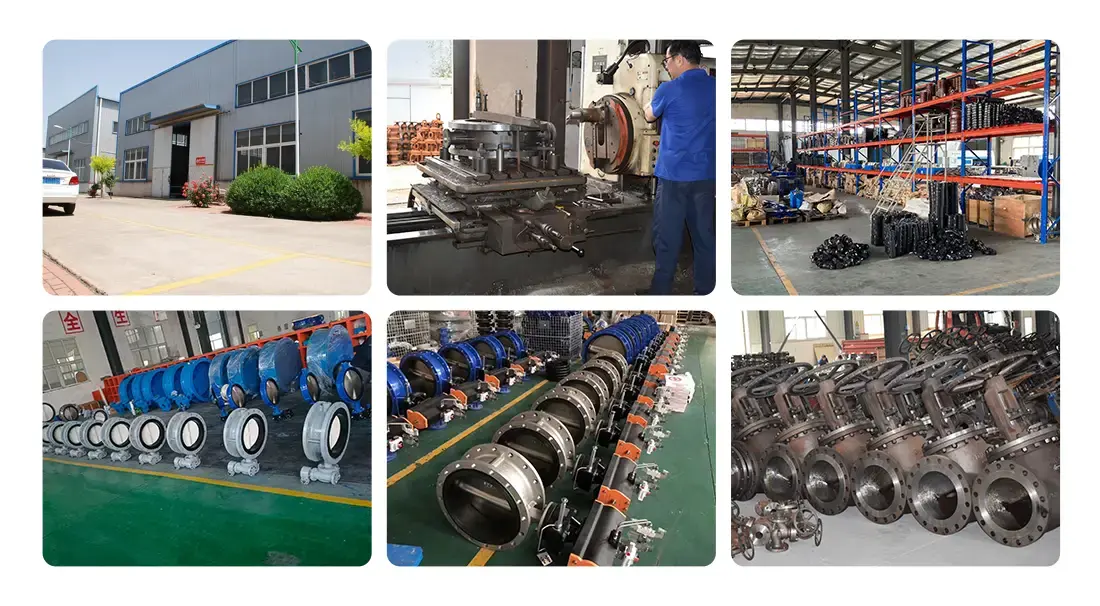
Key Features and Design Details
Integration of electric actuators
At the manufacturer, the valve is coupled with an electric actuator that meets ISO 5211 mounting criteria. The switch versions provide on/off isolation. The modulating versions take a 4–20mA or 0–10V input to position the disk precisely at any point in between.
Body and seal materials
Body: Ductile Iron (DI/QT450). Disk possibilities include DI, CF8, CF8M and Aluminum bronze. The seat materials – EPDM, NBR, PTFE, VITON – provide the adaptation of the valve to the particular medium and temperature conditions up to 80°C.
Wafer, compact design
The wafer type is a lightweight valve that may be installed between conventional flanges. Connection standards supported: ISO 5211, PN10 / PN16, 125LB / 150LB, JIS 5K / 10K / 16K.
Double eccentric tilting seal
The double-eccentric inclined sealing geometry minimizes seat contact stress during disk rotation and, thus, the operating torque relative to concentric systems and helps increase service life over repeated cycles.
Safe-fail options
Standard units stay in the last place when power is lost. For safety sensitive applications, spring return or battery backup designs may be provided to drive the valve to a predetermined open or closed state.
Technical Specifications
|
Parameter |
Details |
|
Operated By |
Electric Actuator |
|
Connection Method |
Wafer Type |
|
Connection Standard |
ISO 5211 – PN10/PN16 / 125LB/150LB / JIS 5K/10K/16K |
|
Size Range |
1.5"–48" (DN40–DN1200) |
|
Working Pressure |
PN10 / PN16 |
|
Working Temperature |
0°C – 80°C |
|
Body Material |
DI / QT450 |
|
Disc Material |
DI / CF8 / CF8M / Aluminum Bronze |
|
Seat Material |
EPDM / NBR / PTFE / VITON |
|
Suited Media |
Water, Gas, Oil, Chemical Liquids |
|
Power Supply |
AC 220V / AC 380V (Switch); 4–20mA / 0–10V (Modulating) |
|
Actuation Range |
0°–90° Partial Rotation |
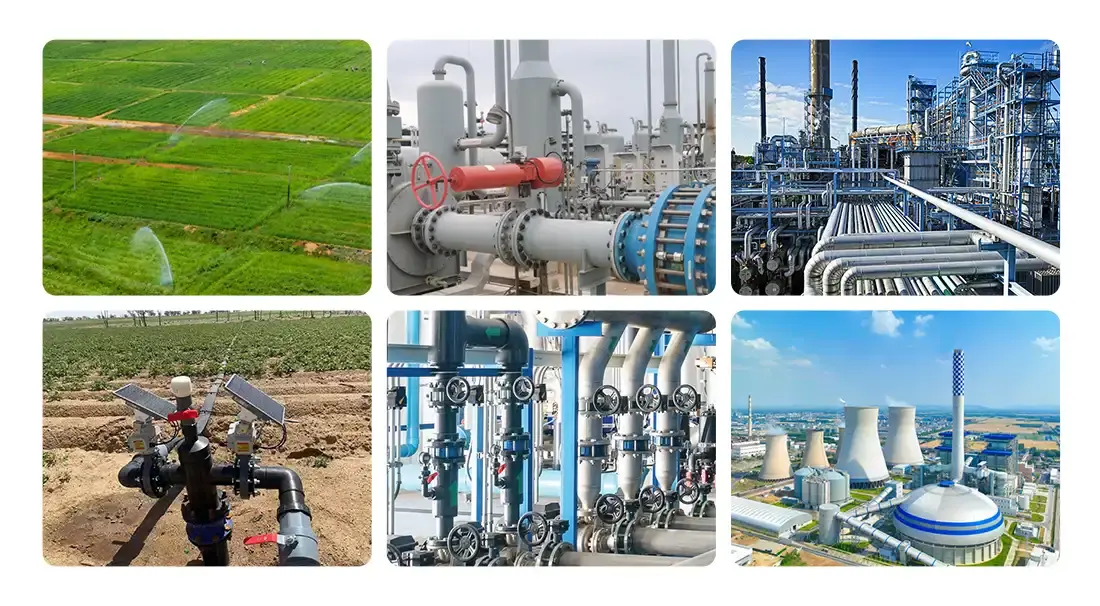
Application Industries
HVAC & Chilled Water Plants
For cooling tower isolation and balancing of heat exchanger. The modulating version automatically controls flow according to heat demand by integrating with Building Management Systems (BMS).
Water & Wastewater Treatment
Installed in aeration lanes and sludge handling lines. In these circumstances EPDM seats are suitable for abrasive and slightly corrosive slurries.
Chemical Processing and Petrochemicals
PTFE seat configurations for Aggressive Fluids. Explosion-proof actuator designs are available upon request for hazardous zone installations.
Water supply, gas distribution and power generation
The size range DN40–DN1200 and pressure ratings PN10/PN16 satisfy most of the conventional pipeline needs in utilities and power plants.
Food Processing and Pharmaceuticals
A CF8M (316 stainless steel) disk with PTFE seat offers a corrosion resistant flow route for sanitary media applications.
Quality Control Process
Each product is examined before shipping in the following steps:
· Shell Hydrostatic Test at 1.5x design pressure per API 598 / ISO 5208 to certify body integrity
· Seat Seal Test at 1.1x Design Pressure to verify cutoff performance
· Actuator Torque Load Test to confirm output is within the valve's Maximum Allowable Stem Torque (MAST)
· Insulation Resistance Testing – Electrical Safety
· Dimensional Check (Face-to-Face) as per EN 558 / API 609
· Epoxy Coating Dry Film Thickness Test – min. 250 microns
· Perform 4–20mA Calibration Cycle Test on modulating equipment to verify synchronization of limit switch and position indication
Customization and OEM/ODM Options
ZTVK supports OEM and ODM requests. Available options include:
· Private label, custom nameplate, or branded packaging
· Disc and seat material selection based on media and temperature conditions
· Wafer, flanged, or lug connection configurations
· Actuator type: switch-type on/off or modulating with analog signal input
· Regional adaptations such as thicker stem protection for high-dust environments or epoxy resin treatment for humid climates
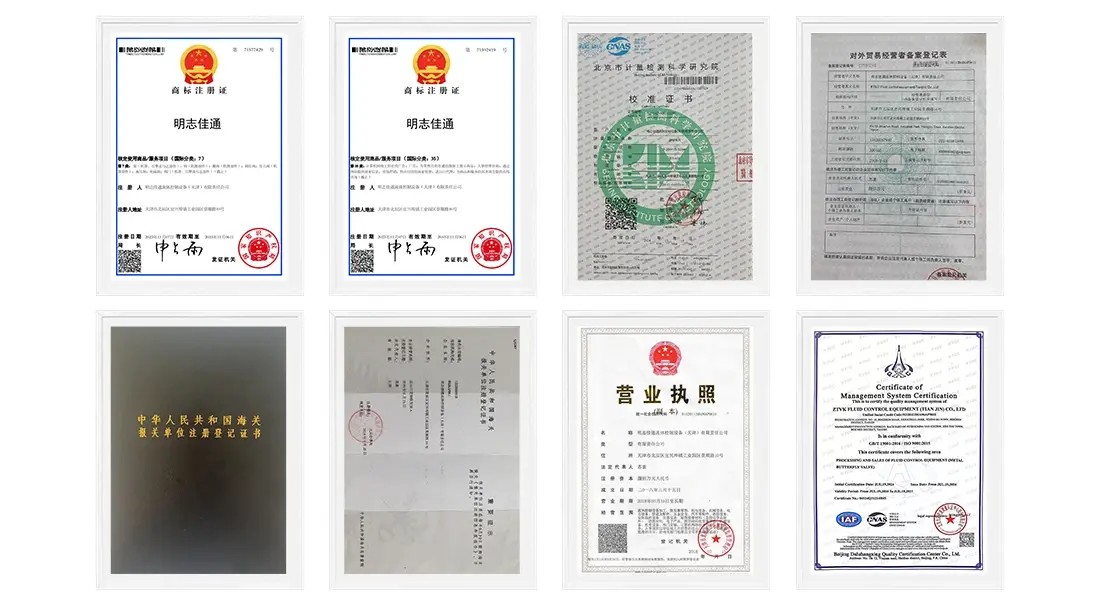
Standard DN50–DN600 valves are held in stock, with lead times subject to confirmation at the time of order. Custom orders and expedited production schedules are available on request.
Packaging and Shipping
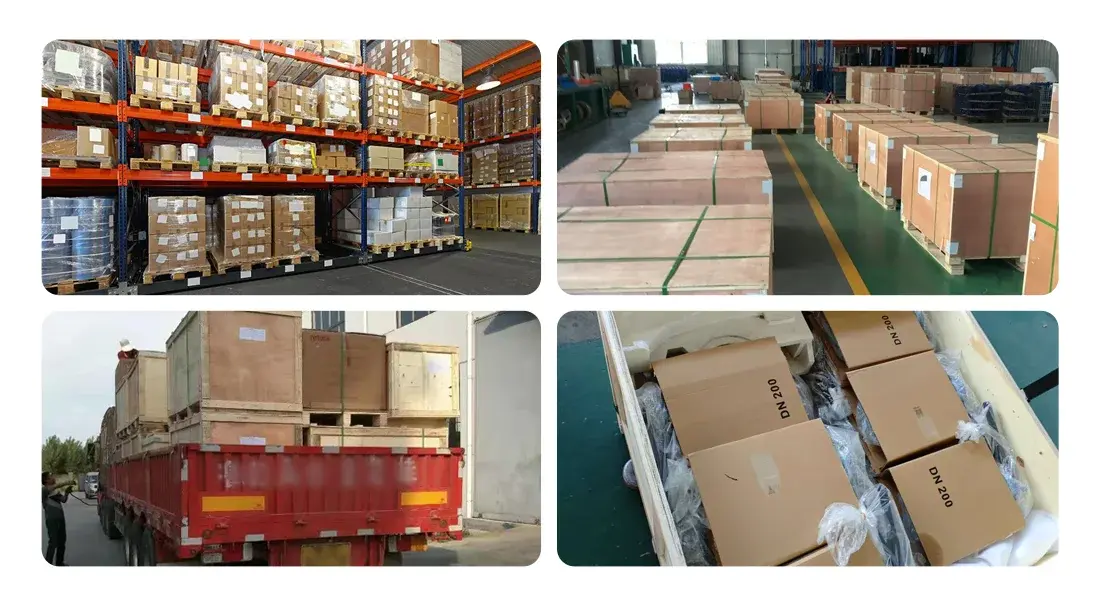
Electric operated butterfly valve are packed in wooden crates with moisture-proof film and fixing brackets, meeting ISPM 15 requirements for international export. ZTVK's factory is approximately 50 km from Tianjin Port, supporting FOB Tianjin Xingang and CIF destination-port shipping arrangements.
After-Sales Support
· 18-month warranty covering non-human-caused failures, with free replacement
· Installation guidance and troubleshooting documentation provided
· CAD drawings and 3D models available on request
· QR code on each unit links to inspection records and maintenance history
· On-site technical support available through local service partners
Frequently Asked Questions
Q1: What is the difference between an on/off and modulating electric actuator?
A: On/off actuators are used to completely open or fully closed the valve for isolation function. Throttling flow is achieved by a modulating actuator with a positioner, which is fed a 4–20mA or 0–10V signal to retain the disk at a certain intermediate angle – say 30° or 45° – of the disk.
Q2. What happens to the valve when there is no power?
A: Standard butterfly valves fail-in-place (remain where they are) on cessation of power. Units with spring return mechanisms, or with battery backup, may be selected to move the valve to a predetermined safe position automatically.
Q3: How do I size the actuator properly?
A: Calculate the valve operating torque at maximum differential pressure Apply a safety factor of 1.3×-1.5× Before specifying the actuator, check with your supplier the seat break-away torque and the viscosity of your medium.
Q4: Is this valve rated for outdoor use?
A: Yes. Actuator IP67 with dust tight and temporary immersion protection. For coastal or marine conditions, a C5-M anti-corrosion paint grade is suggested.
Q5: Why is duty cycle important in choosing this valve?
A: When electric motors run , they produce heat . Standard on/off duty is classified at S2 (30%) normally. If your process demands continuous modulation you need an S4 (75-100%) duty cycle motor to avoid heat overload and actuator damage.
Q6: What media may be serviced by this valve?
A: It is suitable for water, gas, oil and common chemical liquids between 0°C-80°C at PN10/PN16 pressure. PTFE seat with CF8M disk is ideal for strong chemicals.
Contact Us
For electric operated butterfly valve selection advice, drawings, or a quote, email us at ktec86961886@163.com and our team will follow up with the information you need.
Send us your valve requirements and our team will provide professional solutions and fast quotations.