- English
- French
- German
- Portuguese
- Spanish
- Russian
- Japanese
- Korean
- Arabic
- Greek
- German
- Turkish
- Italian
- Danish
- Romanian
- Indonesian
- Czech
- Afrikaans
- Swedish
- Polish
- Basque
- Catalan
- Esperanto
- Hindi
- Lao
- Albanian
- Amharic
- Armenian
- Azerbaijani
- Belarusian
- Bengali
- Bosnian
- Bulgarian
- Cebuano
- Chichewa
- Corsican
- Croatian
- Dutch
- Estonian
- Filipino
- Finnish
- Frisian
- Galician
- Georgian
- Gujarati
- Haitian
- Hausa
- Hawaiian
- Hebrew
- Hmong
- Hungarian
- Icelandic
- Igbo
- Javanese
- Kannada
- Kazakh
- Khmer
- Kurdish
- Kyrgyz
- Latin
- Latvian
- Lithuanian
- Luxembou..
- Macedonian
- Malagasy
- Malay
- Malayalam
- Maltese
- Maori
- Marathi
- Mongolian
- Burmese
- Nepali
- Norwegian
- Pashto
- Persian
- Punjabi
- Serbian
- Sesotho
- Sinhala
- Slovak
- Slovenian
- Somali
- Samoan
- Scots Gaelic
- Shona
- Sindhi
- Sundanese
- Swahili
- Tajik
- Tamil
- Telugu
- Thai
- Ukrainian
- Urdu
- Uzbek
- Vietnamese
- Welsh
- Xhosa
- Yiddish
- Yoruba
- Zulu
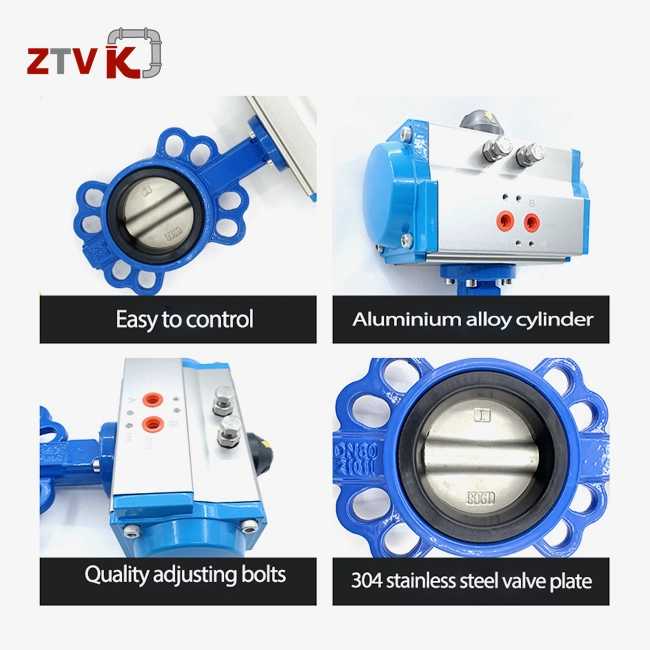
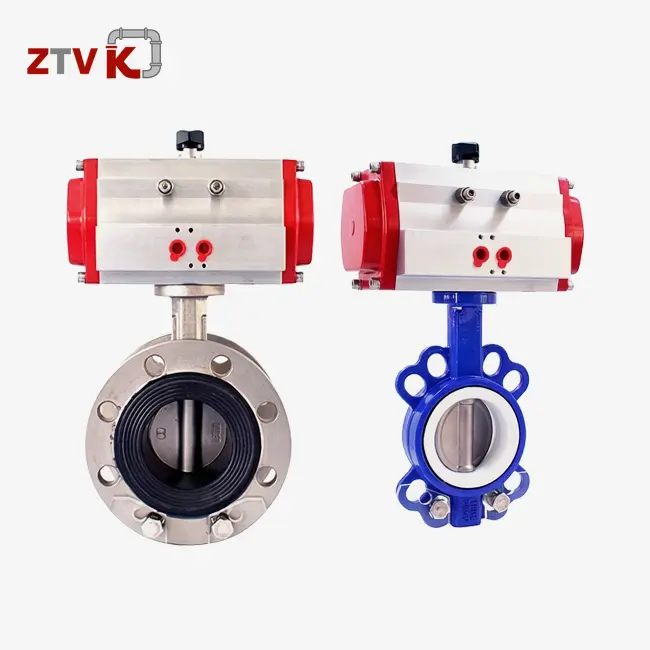
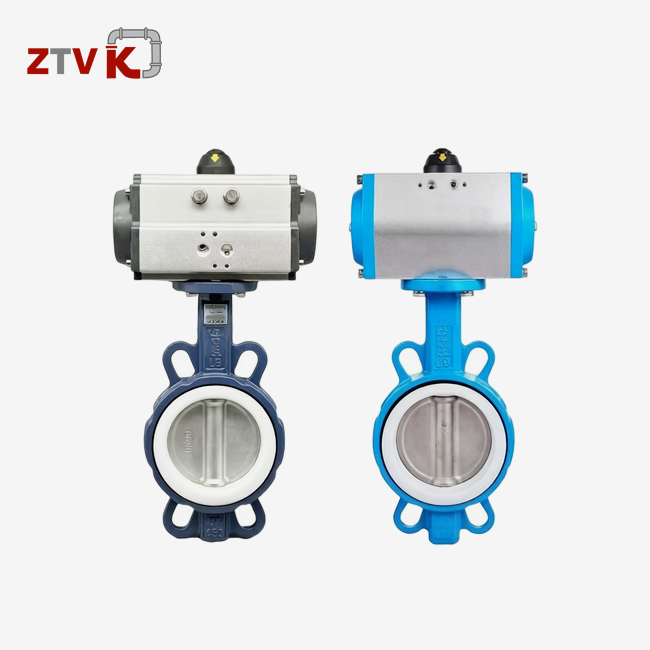
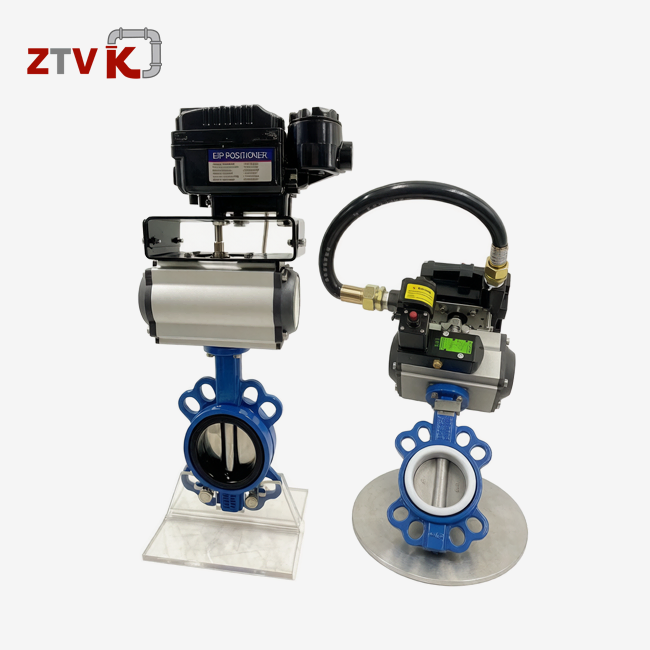
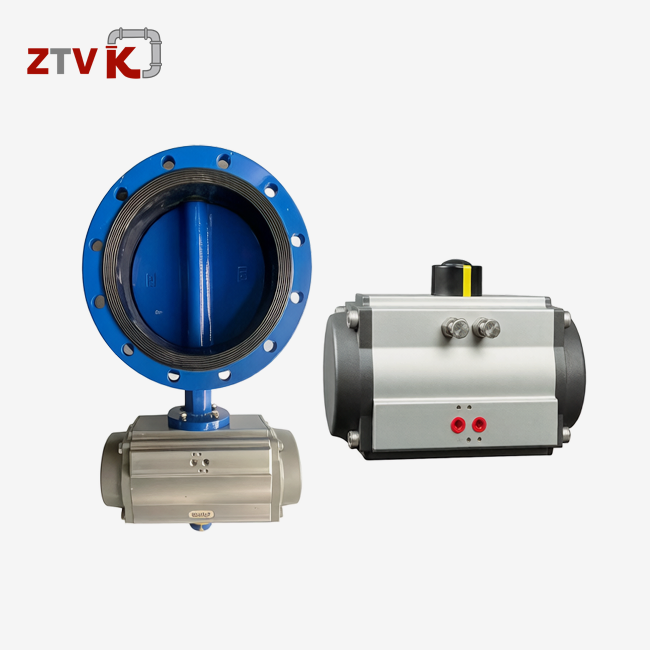
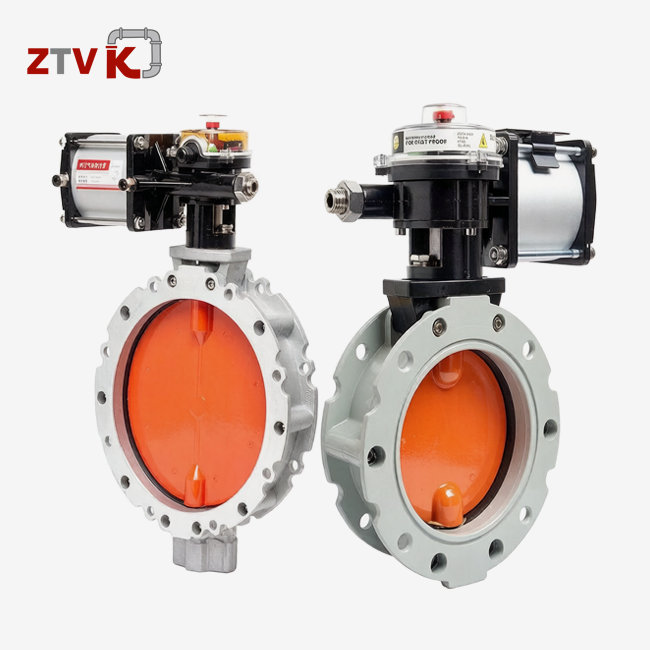
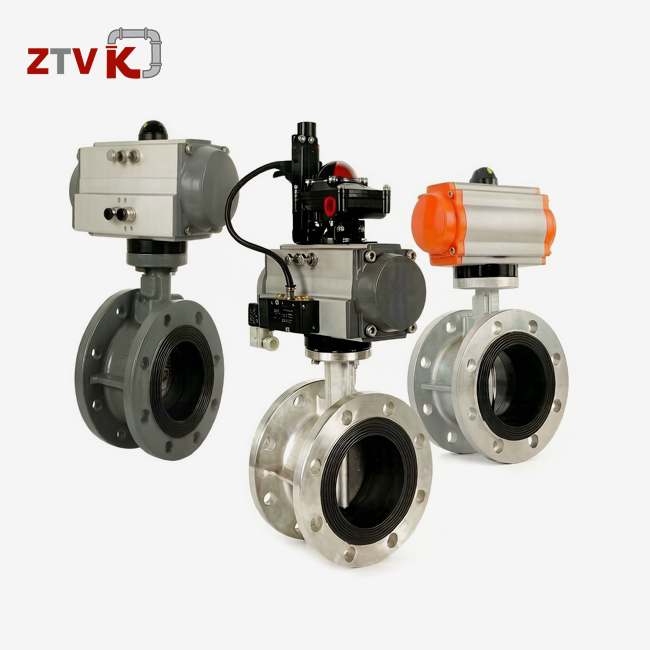
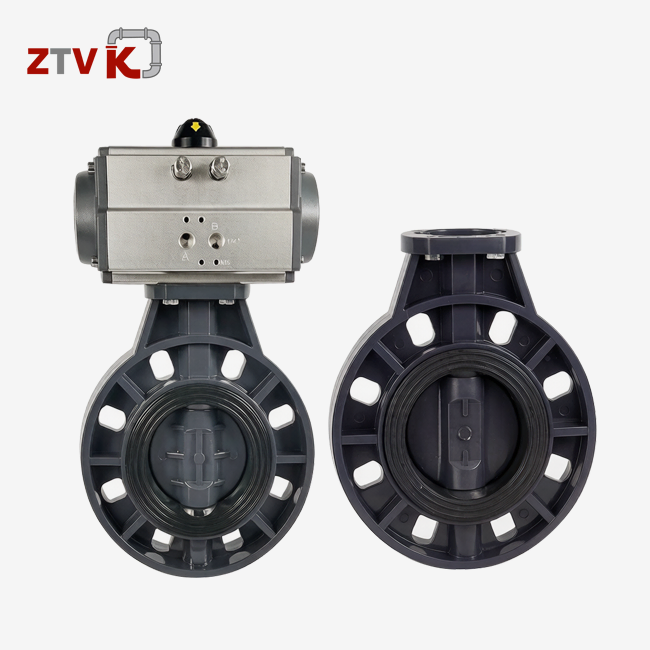
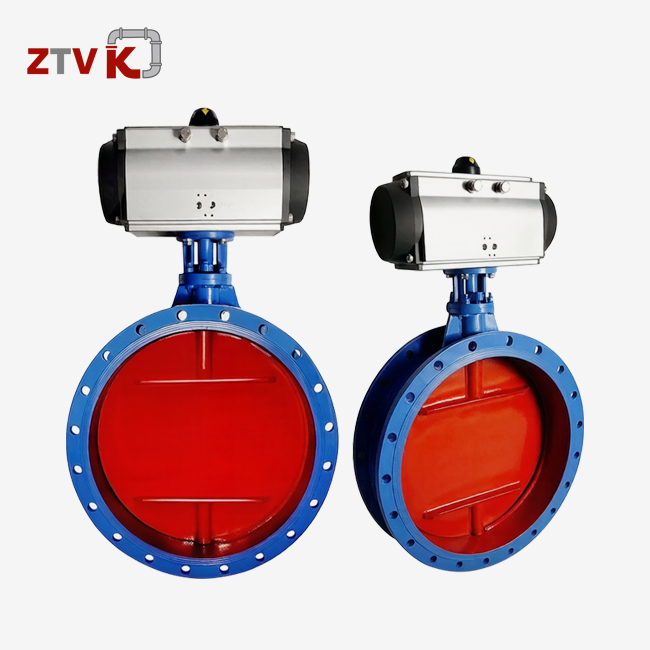
pneumatic wafer butterfly valve
Pressure Rating: PN10-PN40,150LB-300LB
Material: A216 GR.WCB, SS304, SS316
Design Standard: API609,ASME B16.34,BS5155
Application medium: Water, Oil and gas
Application Temperature: 0-200℃
Pneumatic Wafer Butterfly Valve for Industrial Flow Control — ZTVK Factory Direct
Pneumatic wafer butterfly valve from ZTVK FLUID CONTROL EQUIPMENT (TIANJIN) CO., LTD. are quarter-turn rotary valves that combine a compact wafer-style body with a pneumatic actuator to automate fluid isolation and flow control in industrial piping systems. These valves can work in temperatures from 0 °C to 200 °C and come in sizes from DN50 to DN1200 (2” to 48”). You can use them in petrochemical, water treatment, power generation, and food processing. Their ratings range from PN10 to PN40.Factory Direct ZTVK Helps Buyers All Over the World with OEM and ODM.
What Is a Pneumatic Wafer Butterfly Valve?
A pneumatic wafer butterfly valve pairs a wafer-style valve body with a pneumatic actuator — typically rack-and-pinion or scotch-yoke — to control fluid flow using compressed air as the power source.
In the wafer connection type, the valve body is tucked between two pipe flanges that are held together by long through-bolts. It's lighter and takes up less room than gate or globe valves because it doesn't have any valve flanges.
The butterfly disk spins from 0° to 90° when you do this. The pneumatic actuator lets you quickly open or close the valve or control the flow to a certain extent. Because it can turn a quarter of a turn, this setup is a good choice for emergency shut-off (ESD) systems that need to move quickly.
Key Functions and Working Principle
The valve has three main uses in industrial pipe systems.
Isolation: Parts of the pipeline can be kept separate by opening or closing the disk all the way.
Flow Control: Moving the disk from 0° to 90° lets you change the flow rate or pressure to fit the needs of the process.
Automated process control: Using pneumatic actuators and control signals together reduces the amount of work that needs to be done by hand in both continuous and batch operations.
The actuator can usually be set up in two ways:
· Single-acting (spring return): Compressed air moves the disk in a single direction. If the air supply is cut off, mechanical springs return the valve to its safe state. Used when there needs to be a specific fail safe position.
Two-way: Air is used for both the open and close movements. When air is lost, the valve stays in the same place. Use this when fail-in-place behavior is okay.
Technical Specifications
|
Parameter |
Details |
|
Size Range |
2"–48" / DN50–DN1200 |
|
Pressure Rating |
PN10–PN40 / 150LB–300LB |
|
Working Pressure |
PN10 / PN16 |
|
Temperature Range |
0°C–200°C (operating); 0°C–80°C (standard) |
|
Body Material |
A216 GR.WCB, SS304, SS316 |
|
Seat Material |
EPDM, NBR, PTFE, Viton |
|
Design Standard |
API 609, ASME B16.34, BS5155 |
|
Face-to-Face Standard |
ISO 5752 / EN 558 |
|
Actuator Mounting |
ISO 5211 mounting pad |
|
Suitable Media |
Water, oil, gas, slurries |
|
Actuation Type |
Single-acting / Double-acting pneumatic |
Material and Design Features
ZTVK provides several combinations of material for the body and seat to meet individual media and operation requirements.
Based on the pressure, temperature, and corrosion conditions, the body can be made of carbon steel (WCB/A216), stainless steel SS304 and SS316, or duplex steel.
EPDM is a material used for seats that can handle water and mild chemicals. NBR: It can be used with oil-based media PTFE: Can handle harsh acids and chemicals Viton: Can be used in places with a lot of solvents or high temperatures Checking for chemical compatibility should be done before placing an order.
The disk shape is concentric or eccentric to minimize friction and operating torque. Standard is a blow-out proof stem design that will guard against stem ejection under pressure. The ISO 5211 mounting pad allows for direct installation of the actuator without the need for extra adaptor brackets.
Quality Control Process
Every valve goes through a methodical, multi-stage inspection before it is shipped.
Testing of the shell and seat with water pressure (API 598)
· Do a hydrostatic test at 1.5 times the service pressure to make sure the body is solid and the casting is good.
Test for seat leaks at 1.1 times the rated pressure. It has been proven that soft-seated valves have no leakage (Rate A).
Actuator Torque and Cycle Tests:
Actuator torque output is validated to exceed valve breakout torque by a specified safety margin. Automated cycling verifies smooth rack-and-pinion functioning
Material & Dimension Verification:
· Face to face measurements proved in accordance with API 609 Category A or EN 558.
· Positive Material Identification (PMI) using XRF testing on disk and body validates alloy composition.
· External corrosion protection is checked by measuring the thickness of the epoxy coated dry layer.
Industry Applications
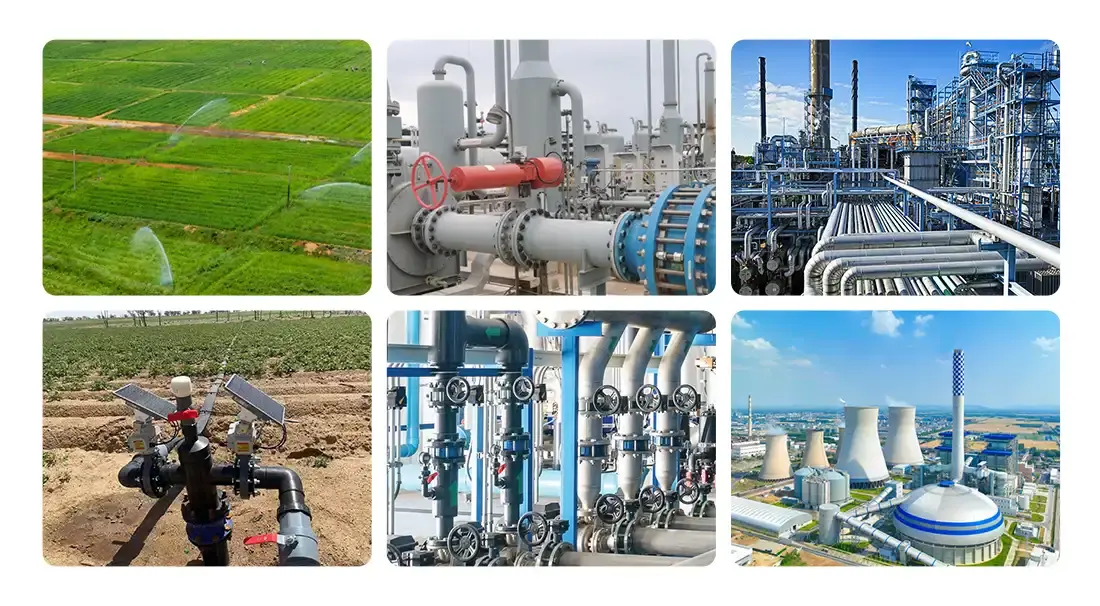
The pneumatic wafer butterfly valve handles water, oil, gas, and process fluids across a range of industries:
· Petrochemical and refining – pipeline isolation and flow control at various pressures
· Power generating – utility systems, steam condensate and cooling water systems
· Water treatment & distribution – municipal and industrial water handling
· Food and pharmaceutical — SS316 body with PTFE seat for sanitary servicing
· Pulp and paper and chemical processes – corrosion-resistant designs for harsh media
· Natural gas distribution – single acting fail closure actuator with tight shut off
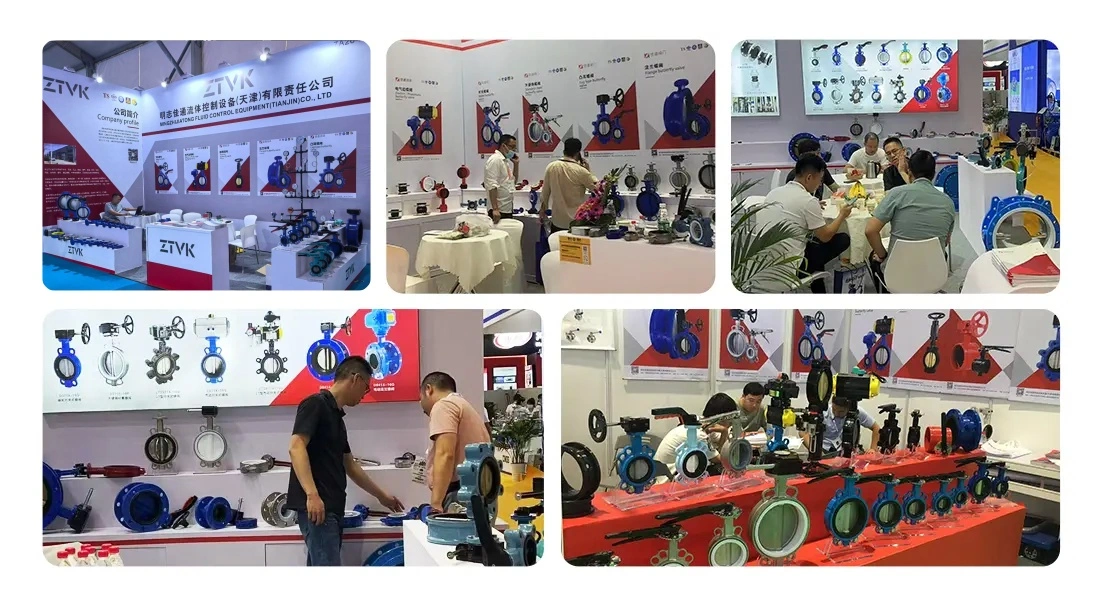
Customization and OEM/ODM Capabilities
OEM and ODM orders are also welcome, and ZTVK may provide to the customer with particular engineering or branding needs.
OEM possibilities include bespoke logos, nameplates, packaging, and customer branding on completed items.
ODM capabilities include: valve body structure modification, sealing material selection, connection configuration (wafer, lug or flanged) and adaption to specified pressure, temperature and media conditions.
Regional variations as per specified needs of the application are provided. Call our technical team to discuss unique setups.
Delivery, Packaging, and Logistics
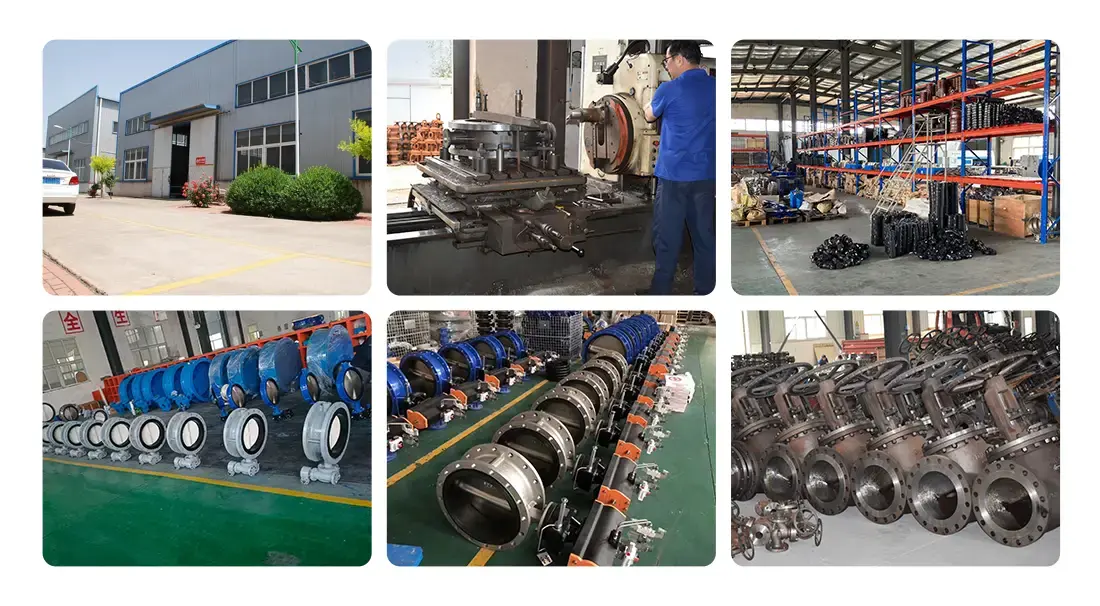
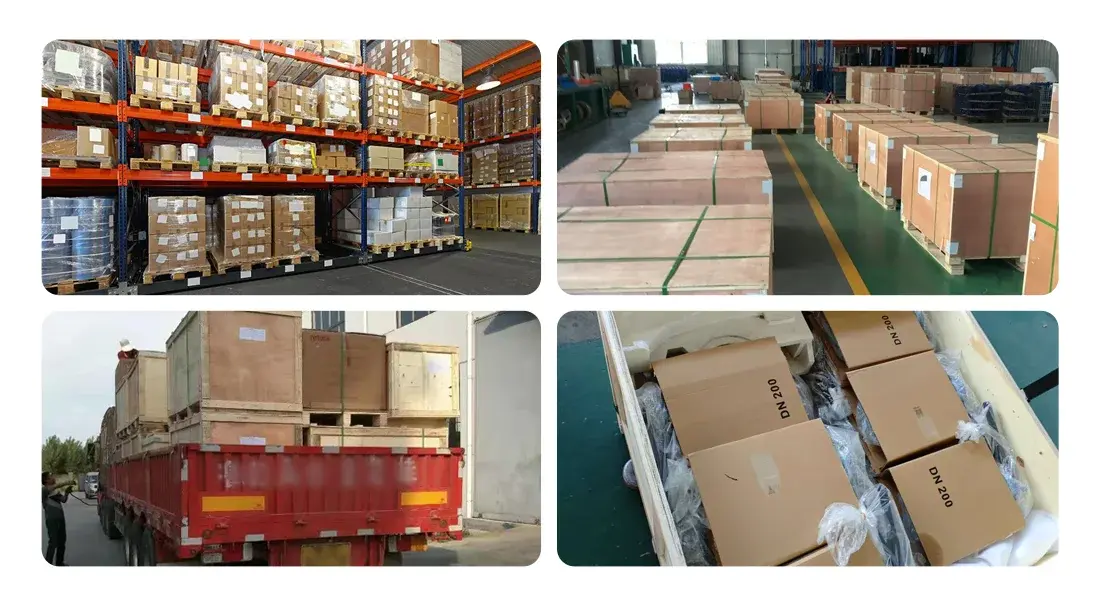
regular DN50-DN600 valves are available from stock, regular orders are sent within 3-7 business days. Standard lead times are 15-25 days for custom orders. Rush service is available for tight timelines. Lead times are dependent on specification and order volume.
The facility is situated around 50km from Tianjin Port, facilitating efficient export logistics. Export packing using hardwood cartons, moisture-proof film and fastening brackets as per ISPM 15 phytosanitary regulations. We can provide both FOB Tianjin Xingang and CIF destination-port estimates.
After-Sales Support
Each valve is covered by an 18-month warranty. Non-human-caused product failures are handled with free replacement.
Technical support includes:
· CAD drawings and 3D models for pre-installation planning
· Installation guidance and troubleshooting documentation
· Product records and inspection reports available upon request
· Technical support coordination for on-site requirements
FAQ
Q1. What is the difference between double-acting and spring-return pneumatic actuators?
A: Double-acting uses pressurized air for both the open and close strokes. Spring return (single acting) utilizes air to operate in one direction, and mechanical springs to return the valve to its safe position when air supply is interrupted. The conventional option for ESD applications when a definite fail position is needed is spring-return.
Q2: Are Butterfly Valves Good for Vacuum Service?
A: For vacuum applications, the seat design must be bonded or vulcanized. If the slip-in seat liners are not properly fastened to the valve body, they may distort or collapse under vacuum circumstances. When obtaining a quote, specify vacuum service so the right seat arrangement may be guaranteed.
Q3: What are some typical reasons of seat leaks after installation?
A: Typical reasons include uneven flange alignment that forces the seat to compress unevenly, missing or poorly adjusted actuator limit stops that prevent the disk from closing fully, and seat material incompatibility, e.g. EPDM seats are not suited for oil or hydrocarbon media.
Q4: Can I install the valve with the shaft in a vertical position?
A: While vertical shaft mounting is feasible, the horizontal shaft orientation is preferable for handling slurry or particle heavy fluid. “Solid materials in a vertical shaft location tend to accumulate at the lower bearing, which increases the likelihood of bearing seizure over time.
Q5: How to adjust the opening and shutting speed to cut down water hammer?
A: Throttle fittings (pneumatic speed control valves) are fitted on the actuator exhaust ports to control the rate of air exhaust and slow disk motion to minimize pressure surges during quick closing. The correct setting relies on the pipe diameter, the flow speed and the system pressure.
Q6: How do I choose the proper seat material for chemical service?
A: PTFE is resistant to most strong solvents and acids. Viton is suited for high temperature or solvent mediums. NBR is good for oil and gasoline servicing. EPDM is suitable for water, steam and light chemical applications. Chemical compatibility with actual media composition should always be checked before purchase.
Contact Us
Have a pneumatic wafer butterfly valve requirement or need a quotation? Send your specifications to ktec86961886@163.com and our team will respond to your technical or purchasing inquiry.
Send us your valve requirements and our team will provide professional solutions and fast quotations.