- English
- French
- German
- Portuguese
- Spanish
- Russian
- Japanese
- Korean
- Arabic
- Greek
- German
- Turkish
- Italian
- Danish
- Romanian
- Indonesian
- Czech
- Afrikaans
- Swedish
- Polish
- Basque
- Catalan
- Esperanto
- Hindi
- Lao
- Albanian
- Amharic
- Armenian
- Azerbaijani
- Belarusian
- Bengali
- Bosnian
- Bulgarian
- Cebuano
- Chichewa
- Corsican
- Croatian
- Dutch
- Estonian
- Filipino
- Finnish
- Frisian
- Galician
- Georgian
- Gujarati
- Haitian
- Hausa
- Hawaiian
- Hebrew
- Hmong
- Hungarian
- Icelandic
- Igbo
- Javanese
- Kannada
- Kazakh
- Khmer
- Kurdish
- Kyrgyz
- Latin
- Latvian
- Lithuanian
- Luxembou..
- Macedonian
- Malagasy
- Malay
- Malayalam
- Maltese
- Maori
- Marathi
- Mongolian
- Burmese
- Nepali
- Norwegian
- Pashto
- Persian
- Punjabi
- Serbian
- Sesotho
- Sinhala
- Slovak
- Slovenian
- Somali
- Samoan
- Scots Gaelic
- Shona
- Sindhi
- Sundanese
- Swahili
- Tajik
- Tamil
- Telugu
- Thai
- Ukrainian
- Urdu
- Uzbek
- Vietnamese
- Welsh
- Xhosa
- Yiddish
- Yoruba
- Zulu
Air-actuated butterfly valve Applications and Benefits
When managing complex industrial fluid systems, we need automation solutions that respond instantly, operate reliably, and integrate seamlessly with control networks. An air actuated butterfly valve delivers exactly this—combining a quarter-turn butterfly disc with a pneumatic actuator powered by compressed air. This configuration enables remote operation, reduces labor costs, and eliminates human error in flow regulation. Unlike manual butterfly valves that demand physical presence and effort, pneumatic actuation transforms ordinary pipelines into smart, responsive systems capable of handling water, chemicals, gases, and slurries across dozens of industries. For distributors, contractors, and OEM partners evaluating bulk orders, understanding how these valves work and where they excel is the foundation for smarter procurement decisions.
Understanding Air-Actuated Butterfly Valves: Working Principles and Components
Core Structure and Design
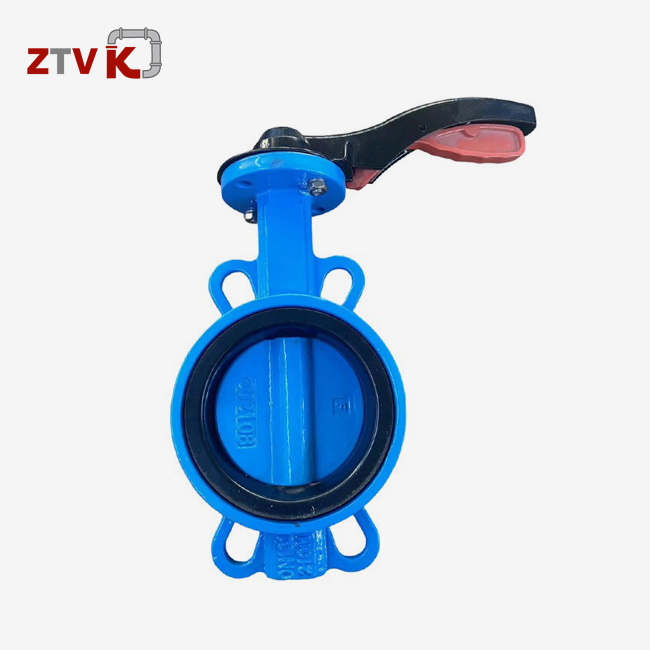
A simple yet important mechanism powers every air butterfly valve. The valve body might be ductile iron (DI), CF8, CF8M stainless steel, or WCB cast steel. A disk spins and pivots 90 degrees to regulate flow. The disks are constructed of ductile iron for water, stainless steel for acidic media, and aluminum bronze for salt water. The actuator and disk are joined via a carefully machined SS410, SS416, SS304, or SS316 shaft. This smooths torque transfer. A durable EPDM, Nitrile, White EPDM, PTFE, or VITON seat seals the disk when the valve shuts. This inhibits leaks at PN10 or PN16 pressures.
An extruded aluminum actuator body with a strong anodized finish resists corrosion and mechanical wear in harsh circumstances. Strong and lightweight aluminum pressure die-cast racks and caps are simple to handle. The actuator may be connected to the valve stem via a common interface since it fulfills ISO 5211 criteria. This makes installation and removal simple without special components.
Single-Acting vs. Double-Acting Pneumatic Actuators
Single- or double-acting depending on system safety and air supply. One-way compressed air actuators turn valves. Internal springs restore the valve to a fail-safe state, either open or closed, when air pressure lowers. This design is ideal for emergency shutdowns that need automated separation or flow start due to air supply failure. Double-acting actuators open and shut with air pressure. They have higher torque and react quicker, but they're not fail-safe without battery-powered accumulator tanks or solenoid valves.
We've seen procurement teams overlook this distinction while evaluating specs, only to discover that their valves can't fail-close when the power goes off. Avoiding this error in fire protection and chemical containment systems is crucial.
How Compressed Air Drives Valve Motion
Compressed air comes into the actuator through threaded ports and fills spaces that are divided by a piston or diaphragm. When the pressure goes up, it creates a linear or rotary force that moves the rack-and-pinion gear inside the actuator housing. This mechanical advantage turns low air pressure (usually 4–7 bar) into a large rotating force that can overcome fluid pressure, friction, and disk weight. The 90-degree turn takes only seconds, which lets process changes happen quickly that can't be done by hand. When paired with positioners or I/P converters that turn 4-20mA signals into proportional air pressure, modulating control is possible. This lets the disk stop at any angle for precise flow throttling.
Regular repair makes things last a lot longer. Corrosion inside actuator chambers can be avoided by checking air supply lines for water. Position input is accurate if you check the limit switches and hydraulic valves. Every twelve months, lubricating shaft bearings lowers friction and wear on sealing parts.
Applications of Air-Actuated Butterfly Valves in Industrial Settings
Municipal Water Treatment and Distribution
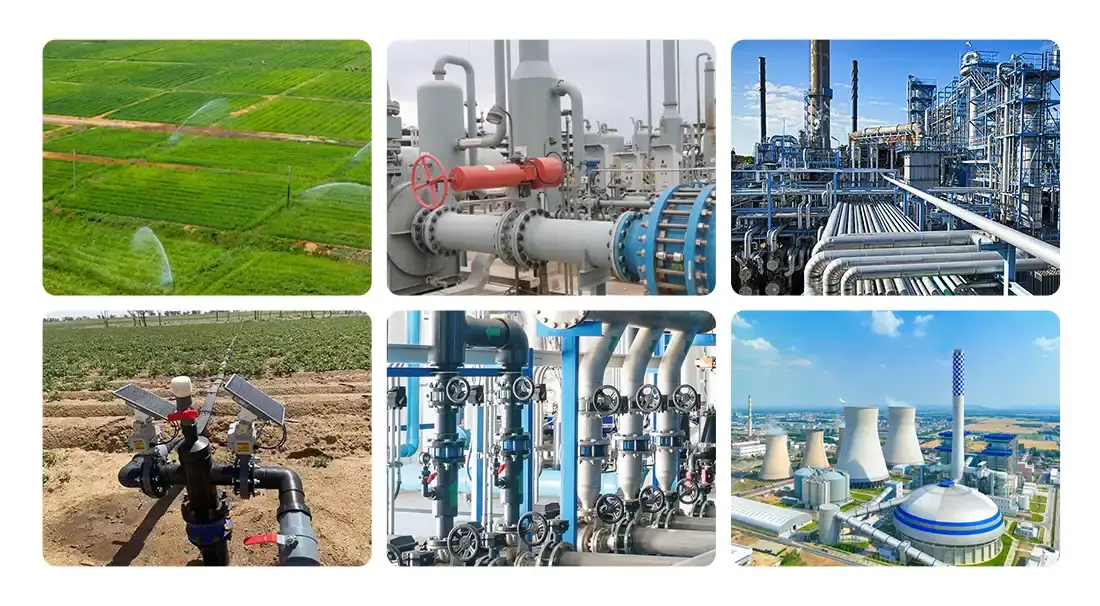
In the stages of filtration, disinfection, and distribution, water treatment plants use pneumatic butterfly valves to automate the process. Based on feedback from turbidity sensors, automatic valves in clarifiers and sedimentation tanks control how fast sludge is withdrawn. Chlorine dosing systems use valves with PTFE seats so that they can handle strong disinfectants without the seats wearing down. Large-diameter flanged butterfly valves (DN300–DN600) are used in distribution networks to separate pump stations and control pressure zones. Integrating with SCADA systems lets operators change flows from afar, so they can respond to changes in demand without sending out field crews.
HVAC and Building Management Systems
Air-actuated valves like the air actuated butterfly valve are used a lot in cooling tower bypass lines, heating circuits, and cold water loops in commercial buildings, data centers, and district energy plants. Building Management Systems (BMS) send analog messages to valve positioners, which change the flow to keep temperatures where they need to be while using as little energy as possible for the pump. Installing the wafer-type connection between existing flanges is possible without making any other changes to the pipe, which lowers the cost of retrofitting. When smoke detectors go off in fire safety systems, usually closed pneumatic valves open right away, filling sprinkler zones within seconds.
Chemical Processing and Petrochemical Plants
When working with acids, caustic solutions, and oil streams, you need materials that don't react with each other and seals that don't leak. For services that work at high temperatures with sulfuric acid, we've given them CF8M bodies made of stainless steel and VITON seats. Our valves have a double eccentric design that lowers the opening force by 30%. This lets smaller actuators work with less air, which saves a lot of money when plants use hundreds of automatic valves at the same time. Dosing of chemicals accurately in batch reactors depends on modulating pneumatic valves that respond to flow meters and level monitors. This makes sure that the quality of the product stays the same.
Food and Beverage Manufacturing
Standards for cleanliness in dairy, beer, and drink production call for sanitary valves with smooth insides and rubber seats that are safe for food contact. Seats made of white EPDM and PTFE are clean and meet FDA and 3-A standards. CIP (Clean-in-Place) systems use pneumatic valves to automatically move cleaning solutions through process lines. This cuts down on the need for human work and the chance of contamination. The fast movement speed keeps product loss to a minimum during line changes, which is very important in high-volume bottling processes.
Power Generation and Energy Infrastructure
Butterfly valves are used in cooling water intake systems, condensate return lines, and flue gas desulfurization scrubbers in power plants. Because they can handle changing temperatures and are not worn down by ash-filled water, ductile iron bodies with stainless steel shafts are the best choice. Backflow damage is avoided by automated separation when the turbine trips, and the best condenser vacuum levels are kept by varying control in the cooling towers.
There are some benefits that all of these different applications have in common: they all save time and money, make processes more consistent, make them safer by letting people operate them from a distance, and work well with modern control architectures. When purchasing teams look at different suppliers, they should make sure that the suppliers have experience in the field they work in. This is because choosing the right seat material and actuator size can be very different for clean water and gritty slurry services.
Benefits of Using Air-Actuated Butterfly Valves in B2B Procurement
Operational Efficiency Through Automation
Routine tasks like batch transfers, tank filling, and line isolation can be done without having to touch the valves by hand when they are automated. Response times go from minutes to seconds very quickly. It's no longer possible for people to make mistakes like forgetting to close a valve or starting the wrong line. When you connect valve A to a PLC or DCS system and wait for the pressure to be confirmed, you can then open valve B. With human valves, this level of teamwork is not useful, and it's not safe with partly automatic systems.
Cost-Effectiveness Across the Asset Lifecycle
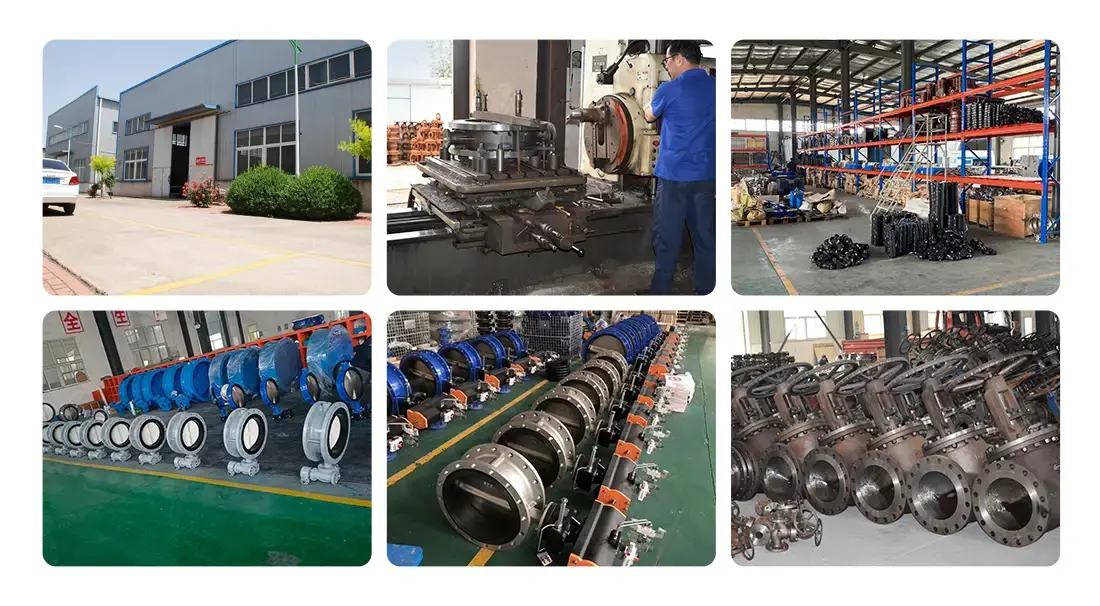
The starting cost of hydraulic valves is higher than that of manual valves, but when labor, safety, and downtime are taken into account, the total cost of ownership is higher for automation. When you use wafer-type parts that fit between current flanges without having to change the flanges, installation costs go down. Because pneumatic actuators don't have as many parts that wear out as electric motors with gearboxes, maintenance intervals are longer. The amount of energy used stays low because compressed air is usually already available in factories. Because we make everything ourselves at ZTVK's factory in Tianjin, we can keep our prices low—usually 15 to 20 percent less than European manufacturers—while still meeting ISO9001 quality standards.
Customization and Standards Compliance
There are different rules for each industry. For use with steam at high temperatures, PTFE seats that can handle 180°C are needed. For saltwater corrosion resistance, marine environments need aluminum bronze disks and duplex stainless steel shafts. Our engineering team can make custom configurations, such as stems that are longer for insulated pipes, locking devices for safety-critical isolation, and explosion-proof actuator enclosures for labeling hazardous areas. Compliance certifications, like ISO, API, ANSI, JIS, BS, DIN, and CE, make sure that valves meet local rules and regulations without having to wait for expensive re-certifications.
End connections can be changed to fit the needs of the project. For example, wafer types allow for two-way flow in small spaces, while flanged ends to ASME B16.5 (Class 150 or 300) are used for high-pressure services that need to be bolted through. Pressure ranges from PN10 for low-pressure water to PN16 for process fluids in industry.
Comparing Air-Actuated Butterfly Valves with Other Valve Types
Pneumatic vs. Electric Actuation
Electric controllers can be precisely placed and don't need infrastructure for compressed air, which makes them a good choice for places that don't already have air systems. But pneumatic actuation for an air actuated butterfly valve is faster, safer (no sparks in explosive environments), and more reliable because it uses fail-safe spring-return mechanisms. Pneumatics are more cost-effective when air compressors are already being used for other tasks. Adding electric actuators to butterfly valves that are already in place is pricey because most of them need special mounting parts. On the other hand, pneumatic actuators are global and meet ISO 5211 standards.
Butterfly Valves vs. Gate and Ball Valves
When it comes to large-diameter uses (DN200 and up), butterfly valves are the best choice because they take up less installation room and are lighter than gate valves. It takes more pressure drop across a fully open butterfly disk than across a fully open ball valve, but this is usually not a problem. Gate valves are better at shutting off flow, but they can't slow it down and need a lot more actuator force. Ball valves seal perfectly, but they cost two to three times more when they're big. Butterfly valves that are operated by air pressure are the best choice for controlling flow and light separation work because they are the most cost-effective and easy to install.
Evaluating Supplier Credibility
Third-party certifications, open factory audits, and test records for every production batch are all ways that reliable suppliers show that their quality is always the same. We've seen wholesalers get ripped off by suppliers who sent valves with fake material certificates, like CF8 nameplates on carbon steel bodies, which caused catastrophic breakdowns in corrosive services. Material PMI testing, pressure testing to 1.5 times the rated pressure, and dimensional inspections according to ISO 5752 are some of the ways that verification is done. Our QR code tracking system connects each valve's serial number to its material mill certificate, pressure test report, and inspection photos. This makes sure that everything can be found and that people are held responsible.
How to Source and Purchase Air-Actuated Butterfly Valves for Industrial Use
Assessing Price, Delivery, and Certification
When buying something, people weigh the up-front cost against the dependability of delivery and the quality guarantee. Chinese manufacturers can save you 30–50% on costs compared to Western providers, but delivery times and contact aren't always the same. Because ZTVK is in Tianjin Beichen District, which is only 50 km from Tianjin Port, normal DN50–DN600 sizes that are kept in our more than 2,000-unit warehouse can be delivered within 3–7 days within China. Depending on how complicated the order is, it takes 15 to 25 days to finish a custom order. You can also get rush service (7–10 days for an extra 20%). Because we work with COSCO Shipping and Maersk, we can give you accurate FOB Tianjin Xingang and CIF target port quotes. This keeps you from having to deal with the frequent changes in freight rates that come with using smaller forwarders.
Quality Certifications and Warranty Protection
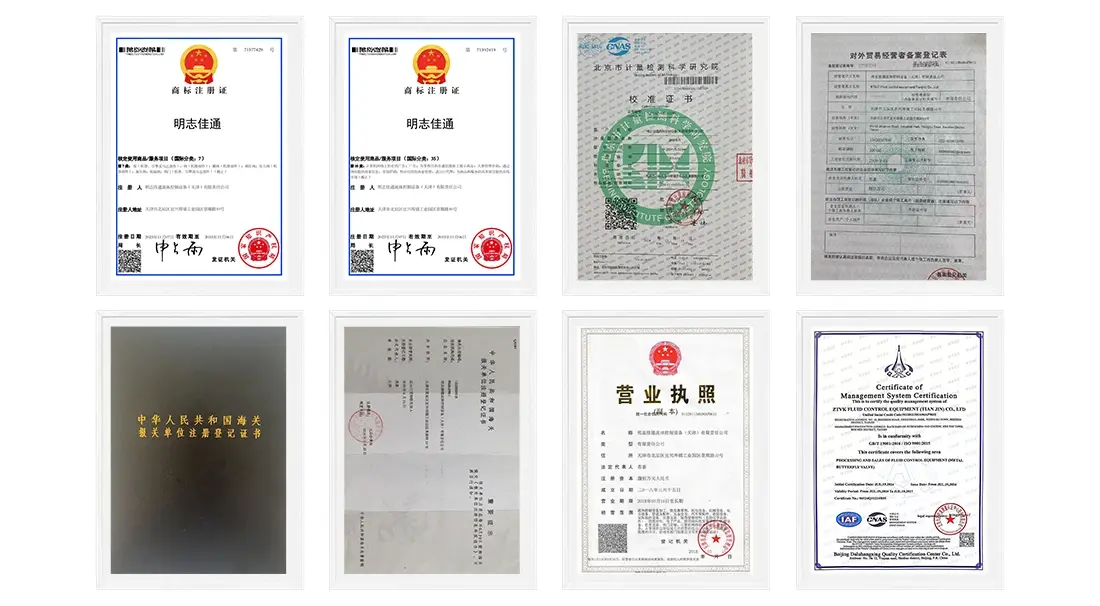
Certifications like ISO9001, ISO14001, and OHSAS18001 prove that a company is serious about quality control, protecting the environment, and following safety rules at work. Design conformance is proven by product-specific certifications, such as API 609 for butterfly valves and CE for European markets. We offer an 18-month guarantee that covers problems caused by manufacturing flaws and free replacements for problems that were not caused by people. This is longer than the usual industry standard of 12 months and shows that we are confident in our double-eccentric structural optimization, which increases service life beyond 50,000 cycles. This was proven by accelerated cycle testing in our Tianjin facility.
Technical Support and After-Sales Service
For supply partnerships to work, they need to do more than just fill orders. They also need to offer ongoing technology support. Free valve selection help, CAD sketches, and 3D models for pipe design integration are all part of the pre-sales support. After delivery, our installation help videos and troubleshooting guides cut down on the time and money needed for field service. When needed, on-site help is provided by local expert service partners in key markets. Digital services, such as scanning QR codes for product files and records of maintenance, make managing assets easier.
OEM and ODM Capabilities
Companies that trade and make tools often need unique goods or designs that are made just for them. We can help with both OEM projects (making valves with customer names, nameplates, and packing) and ODM projects (changing valve structures, sealing materials, or connection methods based on how they will be used). Because of this, distributors can make their own lines of products while still using our manufacturing scale and technical know-how.
Conclusion
With air actuated butterfly valve pneumatic butterfly valves, passive pipe systems can be turned into flexible, high-performance systems that can meet the needs of today's industries. Because they can be quickly activated, are completely reliable, and don't cost much to run, they are essential in the water treatment, HVAC, chemical processing, and power generation industries. When purchasing managers are choosing suppliers, they need to make sure that the materials they use are certified, that they know the different ways that actuators can be configured, and that they work with makers who provide consistent quality and quick support. Automation has many benefits, such as less work, better safety, and better control over the process. These benefits make the investment worthwhile when supported by good planning and dependable supply lines.
Frequently Asked Questions
1. What differentiates single-acting from double-acting pneumatic actuators in practical use?
When air pressure drops, single-acting actuators use springs to return the valve to a set position (open or closed). This is an important fail-safe feature for emergency shutdown systems. Double-acting models need air pressure for both directions of movement. They work faster and have more torque, but they need extra parts like solenoid valves with battery backup to make sure they work even if something goes wrong.
2. Can wafer-type butterfly valves be installed at pipeline termination points?
For wafer designs to stay in place, they need to be clamped between two flanges. When the downstream pipes are taken away, the valve is left without any support, which poses a safety risk. Lug-type valves have threaded pieces in the body that let you bolt them directly to a single flange. This means that they can be used in dead-end service, where equipment further downstream can be taken out for repair.
3. How should seat material be selected for different media?
Between -20°C and 120°C, EPDM works well with water, glycol, and weak acids. Buna-N nitrile can handle fuels, oils, and hydrocarbons. PTFE can handle harsh acids and temperatures up to 180°C. Strong acids and solvents don't damage VITON as much as other materials do. If you make the wrong choice, the seat will swell, harden, or dissolve before it's time.
4. What causes actuator motor overheating in electric-actuated systems?
The motor has to draw too much power when the duty cycle (frequency of activity) is exceeded or when it gets mechanically stuck because of dirt or corrosion. Thermal overload safety in good actuators stops power when the winding temperature goes over safe limits. The actuators then reset themselves automatically when they cool down. By checking the valve stem and manual override on a regular basis, sticking problems can be avoided.
Partner With ZTVK for Reliable Pneumatic Valve Solutions
ZTVK's mix of high-quality manufacturing, quick service, and low prices will appeal to industrial wholesalers and project workers looking for reliable air actuated butterfly valve providers. Over 2,000 standard valves are kept in stock at our Tianjin facility and can be delivered in 3–7 days. For custom projects, our 15-year engineering experience and ISO 5211-compliant designs come in handy. Our team can help you with OEM branding for your distribution network or ODM engineering for specific uses. Our work is certified by ISO9001 and comes with an 18-month warranty. Email us at ktec86961886@163.com to talk about the needs of your project, get expert drawings, or get full quotes.
References
1. American Water Works Association. Butterfly Valves: Torque, Head Loss, and Cavitation Analysis. AWWA Manual M49, 2012.
2. British Standards Institution. Industrial Valves – Butterfly Valves for General Purposes. BS EN 593:2009+A1:2011.
3. Hutchison, John W. ISA Handbook of Control Valves. Instrument Society of America, 2nd Edition, 1976.
4. Lyons, Jerry L. Piping Handbook. McGraw-Hill Professional, 7th Edition, 2003. Chapter on Valve Selection and Applications.
5. Smith, Peter. Valve Selection Handbook: Engineering Fundamentals for Selecting the Right Valve Design. Gulf Professional Publishing, 5th Edition, 2004.
6. International Organization for Standardization. Industrial Valves – Mounting Pattern for Valve Actuators. ISO 5211:2001.
Send us your valve requirements and our team will provide professional solutions and fast quotations.
RELATED INDUSTRY KNOWLEDGE