- English
- French
- German
- Portuguese
- Spanish
- Russian
- Japanese
- Korean
- Arabic
- Greek
- German
- Turkish
- Italian
- Danish
- Romanian
- Indonesian
- Czech
- Afrikaans
- Swedish
- Polish
- Basque
- Catalan
- Esperanto
- Hindi
- Lao
- Albanian
- Amharic
- Armenian
- Azerbaijani
- Belarusian
- Bengali
- Bosnian
- Bulgarian
- Cebuano
- Chichewa
- Corsican
- Croatian
- Dutch
- Estonian
- Filipino
- Finnish
- Frisian
- Galician
- Georgian
- Gujarati
- Haitian
- Hausa
- Hawaiian
- Hebrew
- Hmong
- Hungarian
- Icelandic
- Igbo
- Javanese
- Kannada
- Kazakh
- Khmer
- Kurdish
- Kyrgyz
- Latin
- Latvian
- Lithuanian
- Luxembou..
- Macedonian
- Malagasy
- Malay
- Malayalam
- Maltese
- Maori
- Marathi
- Mongolian
- Burmese
- Nepali
- Norwegian
- Pashto
- Persian
- Punjabi
- Serbian
- Sesotho
- Sinhala
- Slovak
- Slovenian
- Somali
- Samoan
- Scots Gaelic
- Shona
- Sindhi
- Sundanese
- Swahili
- Tajik
- Tamil
- Telugu
- Thai
- Ukrainian
- Urdu
- Uzbek
- Vietnamese
- Welsh
- Xhosa
- Yiddish
- Yoruba
- Zulu
How Water Main Butterfly Valve Regulates Fluid Flow: A Complete Guide
A water main butterfly valve is a quarter-turn rotational device specifically engineered for municipal water transmission and distribution networks. It operates through a central disc that rotates 90 degrees on a shaft—fully open when parallel to the flow and completely closed when perpendicular. This design minimises pressure drop and provides rapid shutoff, making it essential for isolating pipeline sections during maintenance or emergencies. The valve's compact structure and reliable sealing mechanism address critical challenges in water infrastructure, including space limitations in underground vaults and the need for fast response during hydraulic events. Understanding how these valves regulate fluid flow helps procurement professionals select the right equipment for water supply projects.


Understanding Water Main Butterfly Valves: Basics and Functionality
Core Operating Principle
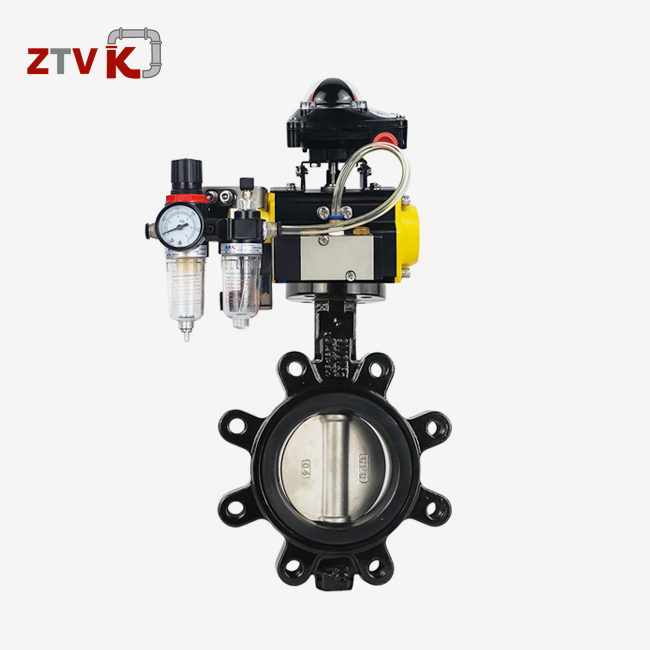
You can control the flow through the water main butterfly valve by turning a disc on a shaft inside the valve body. The disc goes from fully open to fully closed in just 90 degrees when the actuator is turned by a hand lever, worm gear, pneumatic cylinder, or electric motor. When fully open, this quarter-turn action creates very little turbulence, letting water flow smoothly with very little head loss. The smooth shape of the disc lowers resistance, which makes these valves perfect for large-diameter uses that need to save energy.
Essential Components and Construction
Most valve bodies are made of ductile iron (DI/QT450), which is stronger than standard cast iron in both tensile strength and impact resistance. Inside, the disc's material changes depending on the job: ductile iron for regular city water, CF8/CF8M stainless steel for places that are corrosive, or aluminium bronze when extra strength is needed. The closing surface and chemical compatibility are set by the seat material, which can be EPDM, NBR, PTFE, or VITON. EPDM seats do well in chlorinated water, but VITON seats can handle higher temperatures and harsh chemicals.
Wafer-Type Connection Advantages
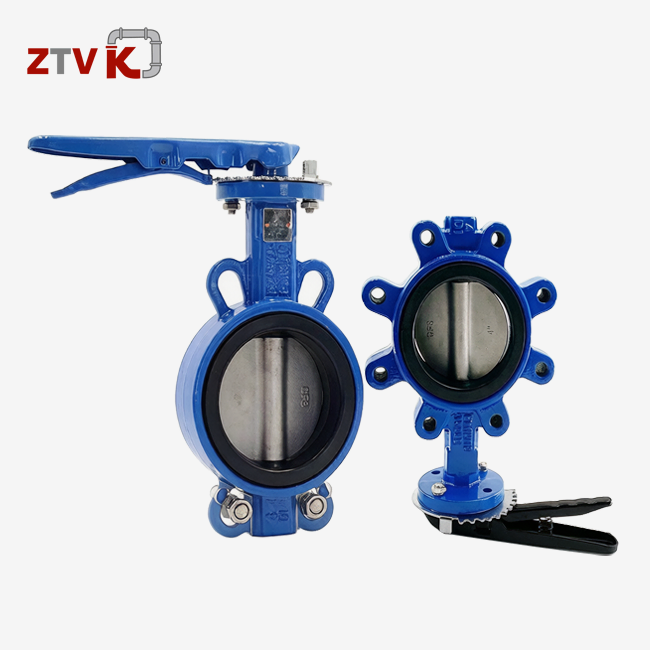
We often make wafer-type water main butterfly valves because they fit between two plates and don't need any extra tools to bolt them in place besides the pipeline's existing bolts. This way of connecting things is lighter, cheaper to install, and takes up less room, which is especially helpful in underground utility passageways that are already crowded. The chip design works with a number of different connection standards, such as ISO5211, PN10/PN16, 125LB/150LB, and JIS5K/10K/16K. This gives engineers the freedom to work with a wide range of regional specs and project needs.

Size and Pressure Specifications
Our production range goes from 1.5 inches to 48 inches (DN40 to DN1200 mm), so we can make everything from small branch lines for homes to large gearbox mains. PN10 and PN16 can handle working pressures of up to 160 psi and 232 psi, respectively, which is enough for most city water distribution systems. This range covers the normal working conditions in water networks while still leaving room for temporary pressure spikes that happen when pumps start up or valves close quickly.
Comparison and Decision-Making for Water Main Butterfly Valves
Butterfly Valves Versus Gate Valves
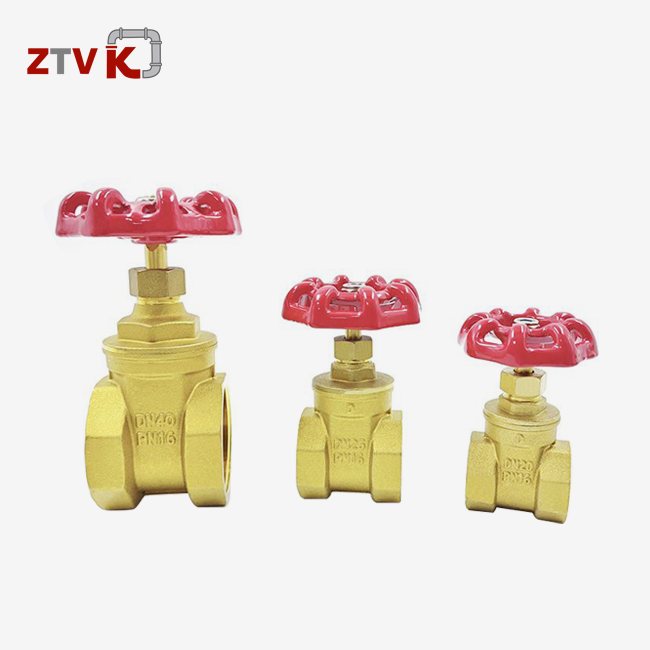
To fully open or close, gate valves need to be rotated several times, which takes a lot of time during emergency shutdowns. A water main butterfly valve of the same size can close in one quick 90-degree turn, while a 24-inch gate valve might need 40 to 50 full turns. This quick process keeps water from leaking out too much when a main breaks and limits the amount of time that repair crews are exposed to working in live pipelines. The water main butterfly valve is often 40% lighter than a similar gate valve. This makes it easier to handle and cuts down on installation labour costs, which is especially important when working with equipment bigger than DN300.
Performance Advantages in Water Systems
Municipal water treatment plants in the US have reported big energy savings since they switched from old gate valves to new water main butterfly valves. After putting water main butterfly valves on their main distribution pipes, one plant in the Midwest cut its annual pumping costs by 12%. Because there was less resistance to flow, pumps had to work less to keep the same output pressure. The smooth disc makes little wake turbulence, which keeps the hydraulic efficiency high throughout the system and lets smaller, cheaper pumps meet demand.
Material Selection Criteria
Long-term valve reliability depends on picking the right mix of body material, disc material, and seat compound. The quality of the water is very important. Municipal water that is chlorine-free and has a pH level between 6.5 and 8.5 works well with EPDM seats and ductile iron bodies. Stainless steel discs (CF8M grade) that don't pit or corrode in crevices are good for systems that have higher chlorine levels or pH changes outside of this range. Temperature is another important factor. EPDM seats can handle temperatures up to 180°F, but VITON seats need to be rated for 400°F constant service in situations where hot water or steam is present.
Installation and Maintenance Best Practices for Water Main Butterfly Valves
Professional Installation Procedures
Checking the flanges for flatness and alignment is the first step in a proper installation. Flanges that aren't lined up right cause uneven gasket stress, which causes leaks and early seat wear. We suggest installing the water main butterfly valve so that the shaft is horizontal instead of vertical. This will keep the bearings from getting clogged with sediment and make sure that the disc's weight is spread out evenly. Leave enough space around the actuator to be able to use it and get to it for repair in the future. Cross-pattern-torque the flange bolts according to the manufacturer's instructions. For smaller valves, this is usually 30 to 50 ft-lbs, but it goes up as the valve gets bigger.
Routine Maintenance and Inspection
Water main butterfly valves that are buried in water mains are meant to need little care, but they should be exercised every so often to keep them working properly. We recommend that the valve be cycled through its whole range twice a year, even if it is only used for isolation service very rarely. Mineral layers build up on the sides of the shaft and disc. This easy step removes them, keeping the valve running smoothly when it's needed right away. During these exercises, look for leaks around the seat or the shaft packing. External gear operators work better when the gear teeth and bearing surfaces are oiled once a year with waterproof grease.
Troubleshooting Common Issues
Mineral growth on the shaft bearings or disc edges is usually the cause of sticking or binding during operation. Putting a penetrating lubricant on the valve and gently moving it in small steps usually fixes the problem without taking it apart. If there is leakage past the seat, it's usually because something got stuck between the disc and the seat surface, or the seat was damaged when it was closed too tightly. Do not push a valve past its designed closing pressure. Doing so will deform the robust seat and make the leak permanent. To replace a broken seat, you have to drain the line section and take off the valve, which shows how important it is to follow the right steps when operating.
Supplier Support Considerations
When looking at valve providers, you should look at their guarantee terms and how well they can help with technical issues. We offer new parts for as long as the valve is in use and offer an 18-month guarantee that covers problems with the way it was made. Having access to technical sketches, installation videos, and troubleshooting tools makes it easier to fix problems quickly and cuts down on downtime. If a supplier has a lot of stock, they can ship new actuators or repair parts within days instead of weeks, which is very important when a valve breaks and customers can't get water.
Procurement Guide for Butterfly Valves in Water Systems
Evaluating Supplier Credentials
Certification checks separate trustworthy makers from sources that might not be so trustworthy. We have ISO9001, ISO14001, and OHSAS18001 certifications, which show that we follow consistent standards for quality management, caring for the environment, and safety at work. The water main butterfly valve meets the requirements set by the American Water Works Association for rubber-seated butterfly valves in potable water service because it meets AWWA C504 standards. Look for NSF/ANSI 61 certification, which says the materials are safe to touch drinking water, and NSF/ANSI 372 certification, which says the materials are lead-free as required by new laws.
Pricing Structures and Volume Discounts
When you buy in bulk, you can usually get better prices. Standard-size valves (DN50 to DN600) that are stocked in large quantities can be sent out within 3 to 7 days of proof of the order, saving you the extra money that comes with making them from scratch. Custom sizes or combinations of materials take 15 to 25 days to make. For an extra 20%, you can get fast order service, which cuts shipping time to 7 to 10 days. If a distributor orders 20 to 40 containers, based on the size, they can get better per-unit prices than if they bought smaller lots. This makes them more competitive in area markets.
OEM and Customisation Capabilities
Manufacturers of industrial equipment that add valves to pump packages or treatment skids need to make changes that go beyond what is listed in the catalogue. We're okay with OEM partnerships where valves have the client's logo, nameplates, and package designs on them. ODM services go even further by changing the disc width, seat material, and shaft diameter of the valve so that it works best in a certain situation. This versatility comes in handy when standard products can't handle unusually high pressures, corrosive media, or size restrictions put in place by existing equipment. Our building in Tianjin's Beichen District is close to Tianjin Port, which is only 50 kilometres away. This geographical advantage makes it easy to load containers quickly and offer competitive FOB or CIF prices. We have long-term relationships with big shipping lines like COSCO and Maersk, which means that we can guarantee safe transit times to North American and European destinations. Professional export packing using wooden boxes, moisture barriers, and set brackets meets international standards for ISPM 15, which keeps customs delays at the ports of arrival to a minimum.
Troubleshooting Common Problems and Future Trends in Water Main Butterfly Valves
Addressing Typical Valve Failures
Disc coming off of the shaft is a major failure mode for the water main butterfly valve that is usually caused by poor pin fastening or rust at the connection point. Inspections that are done as part of routine maintenance catch early signs of loosening before they become too big to fix. Damage to the outside covering that leaves bare metal exposed to soil moisture speeds up corrosion on valves that are underground. This decline can be stopped by installing protective wrapping or cathodic protection. This makes the service life longer than 30 years in harsh dirt conditions.
Emerging Smart Valve Technologies
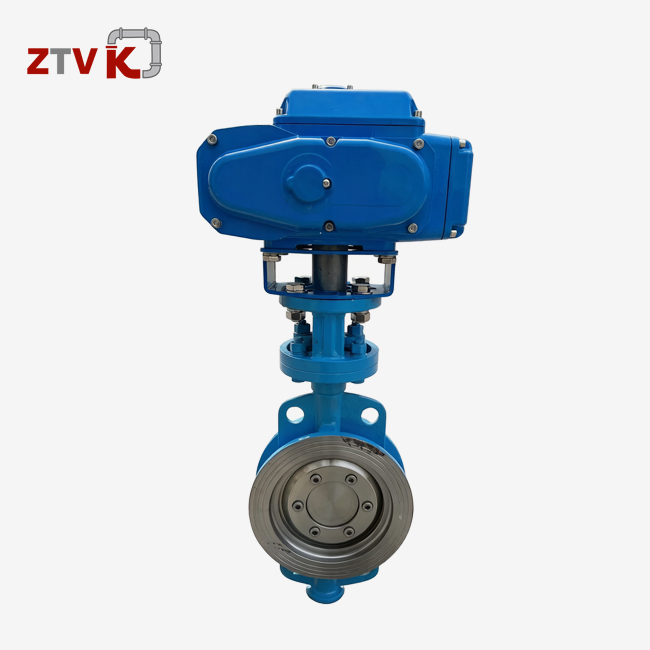
When automation is added to passive isolation valves, they become active system management tools. Electric actuators with position monitors send real-time information about the state of valves to SCADA systems, which lets them be monitored and controlled from afar. Smart actuators can spot unusual torque patterns that could be caused by dirt or mechanical wear and send repair alerts before the whole system fails. Some more advanced systems build pressure and flow sensors right into the valve body. This makes the device multifunctional, as it can both measure hydraulic data and control flow.
Sustainable Materials and Changes in Regulations
Environmental laws have a bigger impact on choosing valve materials and coating systems. Older paints that contained lead have mostly been changed with epoxy coats, which meet today's standards for safe drinking water. Bio-based seal materials are being studied to make us less reliant on elastomers made from petroleum while keeping performance high. Third-party lifecycle assessments and carbon footprint documentation will likely be required by future procurement specifications. This will likely benefit manufacturers with efficient production processes and access to local materials for water main butterfly valves.
Conclusion
To choose the right water main butterfly valve, you have to weigh the technical specs, the trustworthiness of the supplier, and the prices over its entire life. These valves are essential to modern water distribution networks because they work with a quarter-turn, are small, and let water flow efficiently. We've talked about how choosing the right material affects rust resistance, why wafer connections make installation easier, and how different types of actuators meet different working needs. Service life is increased by proper installation and regular upkeep, and new smart technologies offer better monitoring capabilities for systems. When procurement workers know about these things, they can make choices that support the reliability and operational efficiency of infrastructure.
FAQ
1. What size range is practical for water main applications?
Water main butterfly valves work best from 2 inches to 48 inches, but above 12 inches, when gate valves become too heavy and expensive to use, butterfly valves become the better choice from an economic point of view. For municipal distribution mains, valves are usually between 6 and 24 inches in size, while valves for gearbox mains may be 36 inches or bigger.
2. How do the prices of running different types of actuators change?
Hand levers work well for smaller valves in easy-to-reach places, but they're not useful for valves bigger than 12 inches because they need too much power. Worm gear operators lower the power that is needed for mechanical advantage, which lets bigger valves be operated by hand. Pneumatic devices let you direct them from a distance and respond quickly, but they need a way to connect to compressed air. The higher initial cost of electric actuators is balanced by the fact that they require less labour and can be easily integrated with automation systems.
3. Can a two-way flow go through one valve?
Resilient-seated water main butterfly valves work well with flow going in either direction, unlike some check valve types that need to be installed in a certain way. This ability to flow in both directions makes installation easier and gives you options when the working mode changes and the flow direction changes.
Partner with ZTVK for Reliable Water Main Butterfly Valve Supply
Through our facility in Tianjin Beichen, ZTVK has more than 15 years of experience making water main butterfly valves that meet international standards such as ISO, API, ANSI, and AWWA requirements. Our double-eccentric oblique seal design cuts down on working force by 30% and makes the seal last longer than 50,000 rounds. We keep more than 2,000 standard valves in stock, so we can deliver within 3 to 7 days. We can also customise the valves to support OEM logos and ODM engineering changes. Because it's only 50 kilometres from Tianjin Port, shipping costs are low, and containers can be loaded quickly. Our expert help network and 18-month warranty give you peace of mind throughout the product's lifecycle. Get in touch with us at ktec86961886@163.com to talk about your project needs with a committed water main butterfly valve manufacturer who knows what is needed for both public infrastructure and commercial uses.
References
1. American Water Works Association (2015). AWWA Manual M49: Butterfly Valves: Torque, Head Loss, and Cavitation Analysis. Denver: AWWA Publications.
2. Sanks, R.L., Tchobanoglous, G., Bosserman, B.E., and Jones, G.M. (1998). Pumping Station Design (2nd Edition). Boston: Butterworth-Heinemann.
3. Lydon, P.B. and Askeland, D.R. (2009). Valve Selection Handbook: Engineering Fundamentals for Selecting the Right Valve Design for Every Industrial Flow Application. Oxford: Gulf Professional Publishing.
4. Hydraulic Institute and American National Standards Institute (2012). ANSI/HI 9.6.7: Butterfly Valves for Pump Piping. Parsippany: Hydraulic Institute.
5. Zappe, R.W. (2004). Valve Selection Handbook: For the Process Industries (5th Edition). Houston: Gulf Publishing Company.
6. Skousen, P.L. (2011). Valve Handbook (3rd Edition). New York: McGraw-Hill Professional.
Send us your valve requirements and our team will provide professional solutions and fast quotations.
RELATED INDUSTRY KNOWLEDGE