- English
- French
- German
- Portuguese
- Spanish
- Russian
- Japanese
- Korean
- Arabic
- Greek
- German
- Turkish
- Italian
- Danish
- Romanian
- Indonesian
- Czech
- Afrikaans
- Swedish
- Polish
- Basque
- Catalan
- Esperanto
- Hindi
- Lao
- Albanian
- Amharic
- Armenian
- Azerbaijani
- Belarusian
- Bengali
- Bosnian
- Bulgarian
- Cebuano
- Chichewa
- Corsican
- Croatian
- Dutch
- Estonian
- Filipino
- Finnish
- Frisian
- Galician
- Georgian
- Gujarati
- Haitian
- Hausa
- Hawaiian
- Hebrew
- Hmong
- Hungarian
- Icelandic
- Igbo
- Javanese
- Kannada
- Kazakh
- Khmer
- Kurdish
- Kyrgyz
- Latin
- Latvian
- Lithuanian
- Luxembou..
- Macedonian
- Malagasy
- Malay
- Malayalam
- Maltese
- Maori
- Marathi
- Mongolian
- Burmese
- Nepali
- Norwegian
- Pashto
- Persian
- Punjabi
- Serbian
- Sesotho
- Sinhala
- Slovak
- Slovenian
- Somali
- Samoan
- Scots Gaelic
- Shona
- Sindhi
- Sundanese
- Swahili
- Tajik
- Tamil
- Telugu
- Thai
- Ukrainian
- Urdu
- Uzbek
- Vietnamese
- Welsh
- Xhosa
- Yiddish
- Yoruba
- Zulu
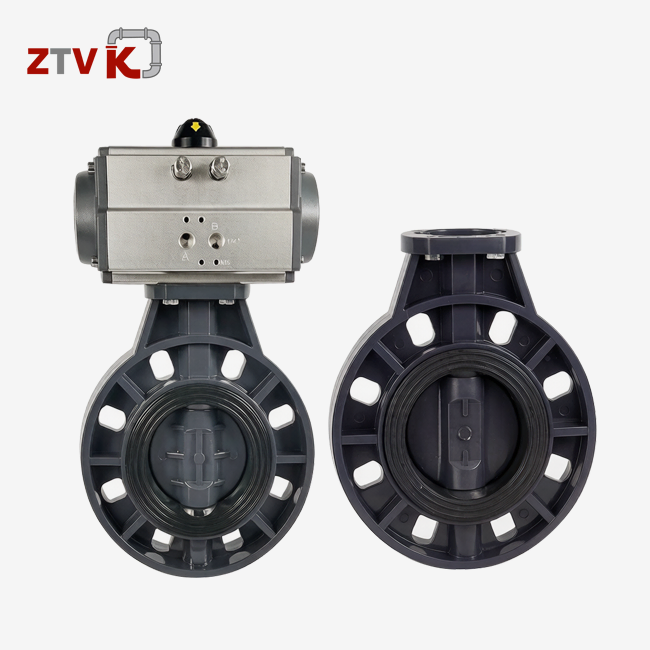
pneumatic control butterfly valve
Pressure: PN6, PN10, PN16(Class 150)
Temperature: -29℃ ~ +120℃
Body: Ductile Iron: GGG40
Seat: NBR, EPDM, Viton, Silicone Rubber
Disc/Trim: Epoxy Coated Ductile Iron,SS316,SS304,Duplex Stainless Steel,Al Bronze
Stem: SS316,SS304,SS420,SS416
Connection: Wafer, Lug, U-type flange
Design Standard: API,DIN,ASME,ISO,ANSI,GB/T,BS EN,AWWA
Pneumatic Control Butterfly Valve for Industrial Flow Control — Factory Direct Supply from ZTVK
ZTVK FLUID CONTROL EQUIPMENT (TIANJIN) CO., LTD. has been manufacturing industrial valves for over 15 years. Our pneumatic control butterfly valve line covers DN32 to DN2400 (NPS 1¼ to NPS 96), with working pressures up to PN16 and a temperature range of -29°C to +120°C. Bodies are cast from GGG40 ductile iron. We provide NBR, EPDM, Viton and Silicone Rubber seat choices. Products are developed to standards like as DIN, ASME, ISO, ANSI, GB/T, BS EN and AWWA. Standard diameters DN50 – DN600 are available from stock.
How a Pneumatic Control Butterfly Valve Works
The actuator uses compressed air to turn the disk from 0° to 90° for opening, closing or modulating flow. There are two configurations of actuator:
· Single-acting (spring return): When the flow of air is cut off, the spring returns the valve to a predetermined, safe state, either fully open or completely closed. This is the most typical configuration indicated for safety critical or emergency shutdown systems.
· Double-acting: Valve remains in last position if air supply is withdrawn. That fits with procedures where a surprise change of position might create complications.
Both versions may be equipped with solenoid valves, electro-pneumatic positioners and limit switches for automated operation.
Key Technical Specifications
|
Parameter |
Details |
|
Size Range |
DN32 – DN2400 (NPS 1¼ – NPS 96) |
|
Working Pressure |
PN6, PN10, PN16 (Class 150) |
|
Temperature Range |
-29°C to +120°C |
|
Body Material |
Ductile Iron GGG40 |
|
Disc / Trim Options |
Epoxy Coated Ductile Iron, SS316, SS304, Duplex SS, Al Bronze |
|
Seat Material |
NBR, EPDM, Viton, Silicone Rubber |
|
Stem Material |
SS316, SS304, SS420, SS416 |
|
Connection Types |
Wafer, Lug, U-type Flange |
|
Suitable Media |
Water, gas, oil, and similar fluids |
|
Design Standards |
DIN, ASME, ISO, ANSI, GB/T, BS EN, AWWA |
|
Actuator Types |
Single-acting (spring return), Double-acting |
Three Core Functions
Shut-off When closed the disk entirely closes the bore to turn off flow. Leakage performance evaluated to API 598.
Flow control: With an electro-pneumatic positioner, this valve controls flow, pressure, temperature or liquid level. For reliable control, leave the disk open 30° to 70°. Operation below 30° is likely to cause cavitation damage while beyond 70° the marginal flow change is insignificant compared to the disk displacement.
Automatic control The valve is cycled automatically in conjunction with a solenoid valve and control signal. This decreases the amount of manual tasks in a process loop and reduces the reaction time during setpoint changes.
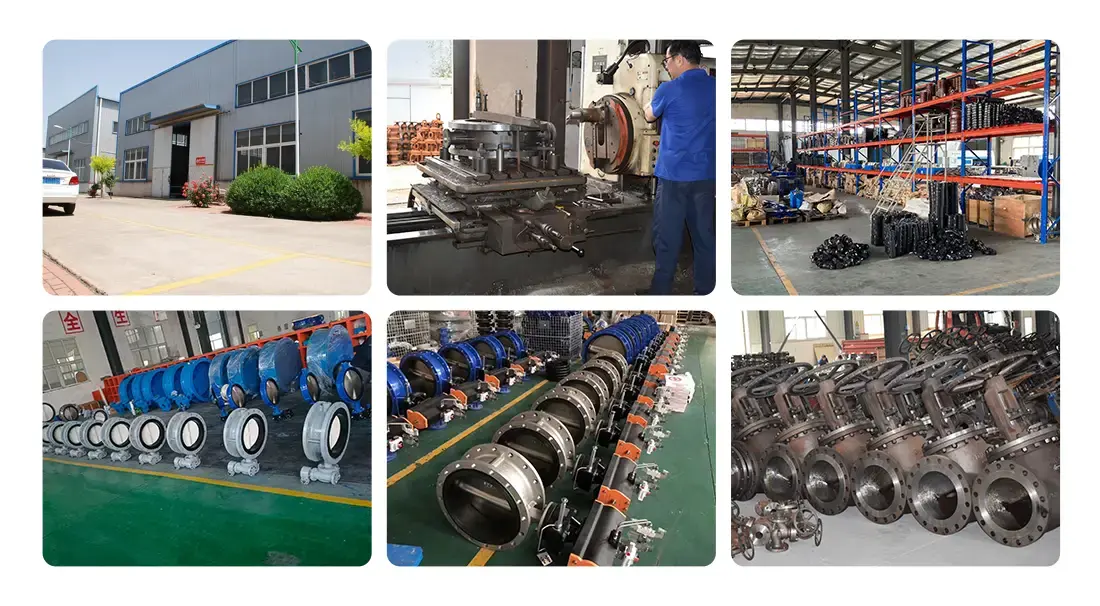
Material Selection Guide
The media and operating environment should be compatible with the material of disk and trim:
· Epoxy coated ductile iron disk – for clean water and general purpose service.
• SS316 or SS304 disk and stem Handles moderate corrosive media and food grade fluids.
· Duplex stainless steel – used for chloride-rich or severely corrosive situations.
· Aluminum bronze – good for saltwater and marine applications.
The choice of the seat material follows similar rationale. EPDM is good in water service. Viton ( FKM ) is better able to tolerate oils , numerous chemicals and high temperatures than EPDM . NBR: Good for petroleum based media.
Each pneumatic control butterfly valve body includes an ISO 5211 standardized mounting pad. This allows actuators, limit switches, and positioners to be changed without custom machining during upgrades or maintenance.
Quality Control and Testing
The methods for each valve are as follows, and are checked before shipment:
Shell and Seat Leakage Test (API 598) The body is hydrostatically tested at 1.5 x design pressure for casting porosity. The seat is tested at 1.1× design pressure to confirm cutoff performance to the corresponding leakage class .
Actuator torque and cycle testing. The actuator output is tested at minimal air supply, often 4 bar, to prove the valve is opening and closing against full differential pressure. A safety margin is provided to the estimated breakaway torque over the anticipated breakaway torque to lessen the danger of stalling under dynamic load situations.
Positive Material Identification (PMI): Handheld XRF analysis is used to check the alloy composition of disk and body materials prior to assembly. For example, it may be used to check the molybdenum content of SS316 components.
Dimensional Check: Flange face measurements and bolt-circle drilling patterns are tested against the appropriate standard (ANSI, DIN or ISO) to ensure compatibility with existing pipeline flanges.
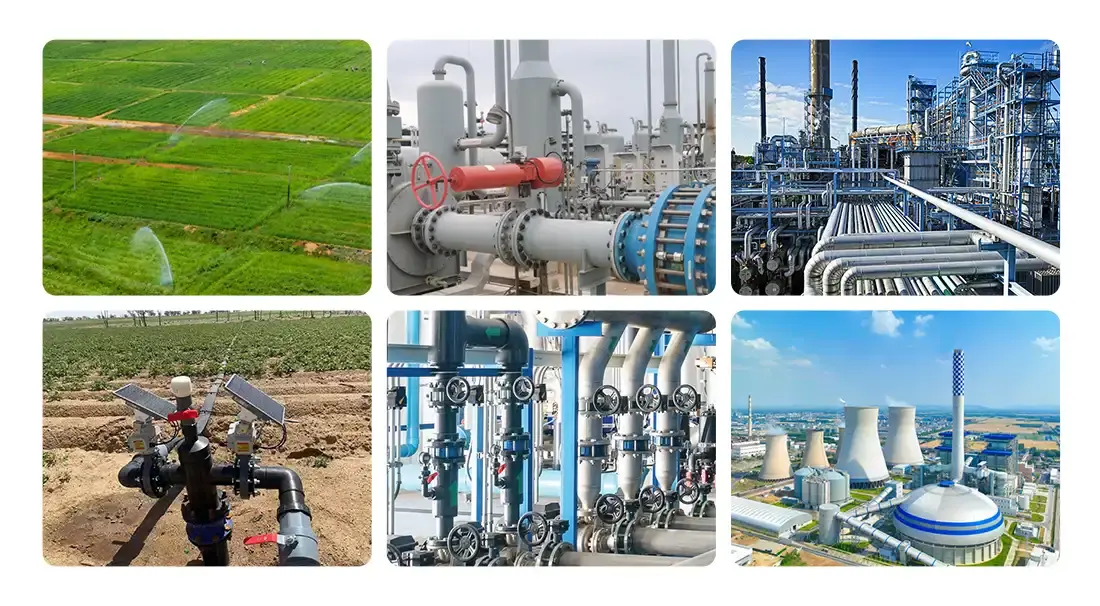
Industry Applications
|
Industry |
Typical Application |
|
Petrochemical |
Oil, gas, and chemical pipeline control |
|
Water Treatment |
Supply, drainage, and distribution systems |
|
Power Generation |
Cooling water and steam condensate lines |
|
Pharmaceuticals |
Clean media flow control |
|
Food Processing |
Hygienic fluid handling |
|
Metallurgy |
Cooling and process fluid control |
|
Pulp and Paper |
Slurry and water flow management |
Wafer and lug connection types work well in confined spaces. The lug type also allows the valve to be removed from the line without disturbing both adjacent flanges — useful during maintenance.
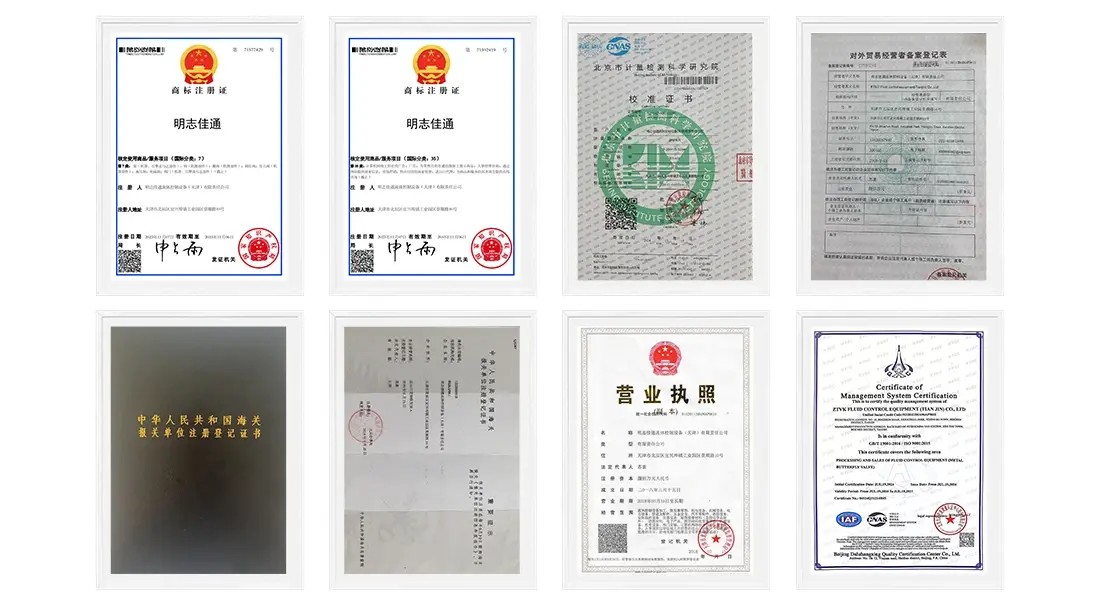
OEM and ODM Options
ZTVK supports both OEM and ODM for international buyers:
· OEM: Brand name, logo, nameplate, and packaging applied to standard pneumatic control butterfly valve.
· ODM: Configuration of valve body, sealing materials and connection type according to the pressure, temperature and media requirement as specified by the customer.
Regional environment needs may also be met – such as extra stem protection for high dust locations or epoxy resin surface treatment for humid regions, subject to discussion and confirmation during the inquiry stage.
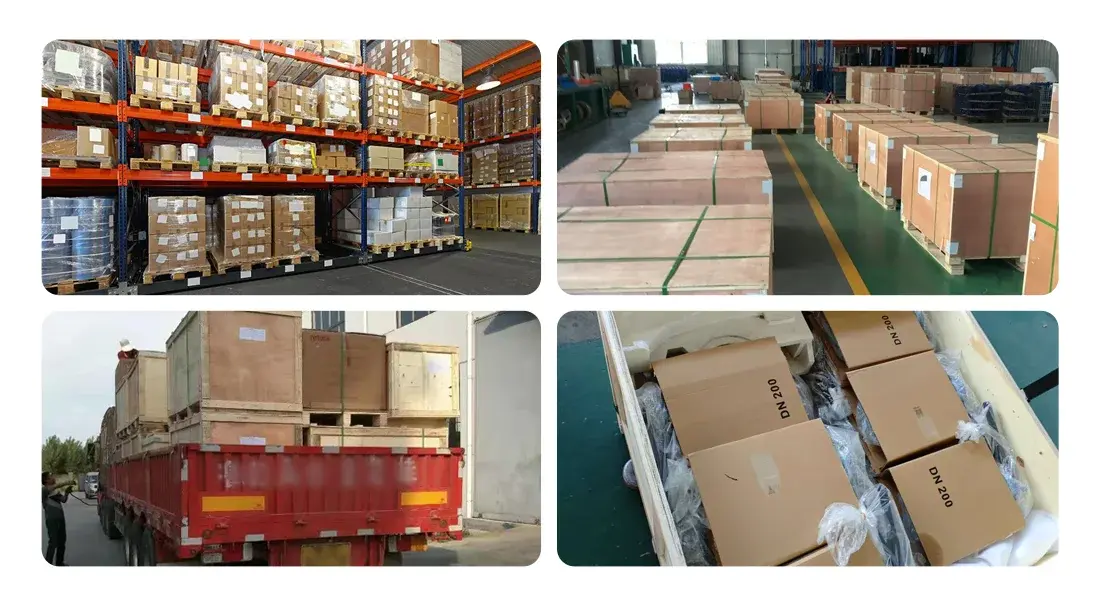
Standard sizes DN50-DN600 delivery 3-7 days. We fulfilll custom orders in 15–25 days, with accelerated manufacturing in 7–10 days depending on the size of the order.
Frequently Asked Questions
Q1: What is the difference between fail-open and fail-closed and which should I specify?
A: Both are available with spring-return (single-acting) actuators. Fail-closed is often specified for safety shutdown systems where flow has to be stopped if control power or air is lost. Flow is maintained on failure in fail-open applications, such as cooling circuits where lack of flow might harm equipment.
Q2. Is this valve suitable for throttling or continuous flow modulation?
A: Yes with fitted electro-pneumatic positioner. The disk should be held between 30° and 70° open for reliable and responsive control. Temperature below 30° increases the chance of cavitation erosion at the disk and seat. Temperature over 70° makes the valve more and more insensitive to position variations.
Q3: What size actuator do I need for my application?
A: The size of the actuator is determined by the size of the valve, line pressure and the differential pressure across the disk at the point of action. Please state your operating circumstances in your request and our technical staff will advise you of the right actuator type and air supply pressure.
Q4: What is water hammer and how can it be corrected?
A: A quick closing of the disk causes a spike of pressure in the pipeline. Usually this is because of an actuator that’s too big, or an actuator that has no speed control at all. The closure speed may be lowered by using adjustable flow-control mufflers fitted to the exhaust ports of the actuator, limiting the pressure spike in the line.
Q5: What does it mean if air is leaking from the actuator breather port?
A: This is a symptom that the internal piston O-ring seals have worn out or failed, enabling pressured air to go around into the exhaust chamber. Replacing the regular seal kit will restore normal operation.
Q6: What is a suitable maintenance cycle for the actuator?
A: For most applications, a visual check every six months is a suitable starting point. Internal lubrication is rated for around 1 million operation cycles. Seals should be checked yearly for hardening, swelling or surface cracking in high temperature or chemically harsh conditions.
Q7. Which form of connection should I use for my pipeline?
A: The wafer type fits between conventional flanges and is best suited for most applications. The lug type has threaded inserts that let the valve to be unbolted and removed without disturbing both pipe flanges -- handy when single-side access is needed. Type U flanges are employed in higher pressure pipelines when the distribution of bolt load is significant.
Contact Us
Send your specifications or technical questions to ktec86961886@163.com. We will review your pneumatic control butterfly valve requirements and respond promptly.
Send us your valve requirements and our team will provide professional solutions and fast quotations.