- English
- French
- German
- Portuguese
- Spanish
- Russian
- Japanese
- Korean
- Arabic
- Greek
- German
- Turkish
- Italian
- Danish
- Romanian
- Indonesian
- Czech
- Afrikaans
- Swedish
- Polish
- Basque
- Catalan
- Esperanto
- Hindi
- Lao
- Albanian
- Amharic
- Armenian
- Azerbaijani
- Belarusian
- Bengali
- Bosnian
- Bulgarian
- Cebuano
- Chichewa
- Corsican
- Croatian
- Dutch
- Estonian
- Filipino
- Finnish
- Frisian
- Galician
- Georgian
- Gujarati
- Haitian
- Hausa
- Hawaiian
- Hebrew
- Hmong
- Hungarian
- Icelandic
- Igbo
- Javanese
- Kannada
- Kazakh
- Khmer
- Kurdish
- Kyrgyz
- Latin
- Latvian
- Lithuanian
- Luxembou..
- Macedonian
- Malagasy
- Malay
- Malayalam
- Maltese
- Maori
- Marathi
- Mongolian
- Burmese
- Nepali
- Norwegian
- Pashto
- Persian
- Punjabi
- Serbian
- Sesotho
- Sinhala
- Slovak
- Slovenian
- Somali
- Samoan
- Scots Gaelic
- Shona
- Sindhi
- Sundanese
- Swahili
- Tajik
- Tamil
- Telugu
- Thai
- Ukrainian
- Urdu
- Uzbek
- Vietnamese
- Welsh
- Xhosa
- Yiddish
- Yoruba
- Zulu
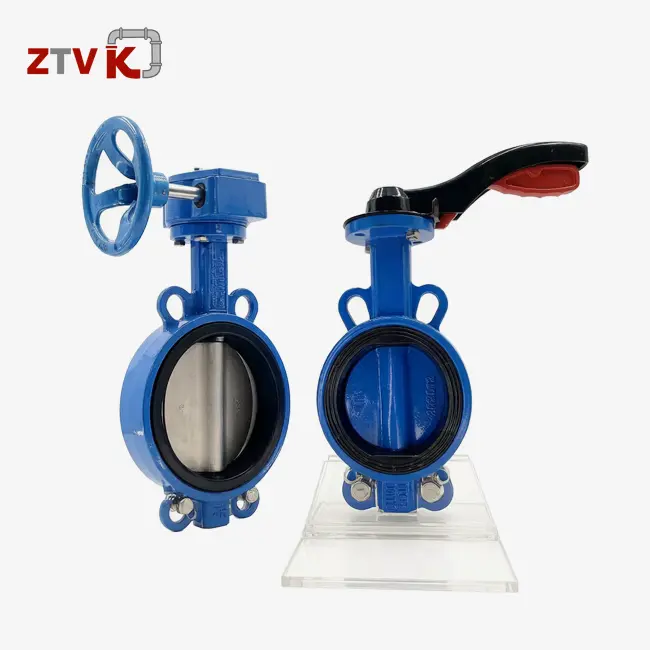
cast iron wafer butterfly valve
Pressure: PN6, PN10, PN16 (class 150)
Temperature: -29 ℃ ~ + 120 ℃
Body: Ductile Iron: GGG40
Seat: NBR, EPDM, Viton, Silicone Rubber
Disco / Trim: epoxy coated ductile iron, SS316, SS304, stainless steel duplex, bronze
Stem: SS316, SS304, SS420, SS416
Connection: Wafer, Lug, flange
Design standard: API, DIN, ASME, ISO, ANSI, GB / T, BS EN, AWWA
Application: Water, power plant, HVAC, food, medicine, desalinization
Cast Iron Wafer Butterfly Valve — Ductile Iron GGG40 Body, DN50–DN2400, PN6/PN10/PN16
Cast iron wafer butterfly valves from ZTVK are built on a ductile iron GGG40 body, covering DN50 to DN2400 (NPS 1¼–NPS 96) with pressure ratings of PN6, PN10, and PN16 (Class 150). The valve is designed to function across a temperature range of -29°C to +120°C with NBR, EPDM, Viton and Silicone Rubber seats for a broad variety of media. ZTVK holds these valves factory straight from Tianjin and has over 2,000 standard pieces in stock with average lead times of 3-7 days for shipment.
What Is a Cast Iron Wafer Butterfly Valve?
A cast iron wafer butterfly valve is a quarter-turn, rotary flow control device installed between two pipe flanges using through-bolts — no additional gaskets needed. The elastomer seat face forms an integral seal between both flanges, simplifying installation and reducing components on site.
Wafer-type butterfly valves are 30 to 50 percent lighter than equivalent size gate or globe valves. The weight decrease reduces structural stress on pipe supports and reduces installation time on large-diameter systems. Its tiny face-to-face length also makes it well suited for mechanical rooms where heavier valve types are impractical and a good option for water-based and low-pressure neutral gas applications.
Key Features & Engineering Design
The body of ductile iron GGG40 has stronger tensile strength and impact resistance than gray iron (GG25). This is important for systems subject to pressure surges or water hammer, e.g. municipal pumping networks, where the body integrity under dynamic load is of importance.
The disk can be made of brass, epoxy-coated ductile iron, SS304, SS316, or stainless steel duplex. You can choose from SS304, SS316, SS420, and SS416 for the stem material. You can choose the wet materials for a certain medium and corrosion state from this range without having to order a non-standard unit.
The material of the seat determines how long it can stand up to high temperatures. EPDM can handle up to 120°C and works well with hydronic systems, while NBR can handle up to 80°C and can handle small amounts of oil or fertilizers. Viton and Silicone Rubber make it possible to work with more difficult or pure media.
Product Specifications
|
Parameter |
Details |
|
Size (Nominal Bore) |
DN50–DN2400 (NPS 1¼–NPS 96) |
|
Pressure Rating |
PN6, PN10, PN16 (Class 150) |
|
Temperature Range |
-29°C to +120°C |
|
Body Material |
Ductile Iron GGG40 |
|
Seat Materials |
NBR, EPDM, Viton, Silicone Rubber |
|
Disc / Trim Materials |
Epoxy-coated ductile iron, SS316, SS304, Duplex stainless, Bronze |
|
Stem Materials |
SS316, SS304, SS420, SS416 |
|
Connection Types |
Wafer, Lug, Flange |
|
Design Standards |
API, DIN, ASME, ISO, ANSI, GB/T, BS EN, AWWA |
|
Actuation Options |
Manual, electric, pneumatic, turbine |
Application Scenarios
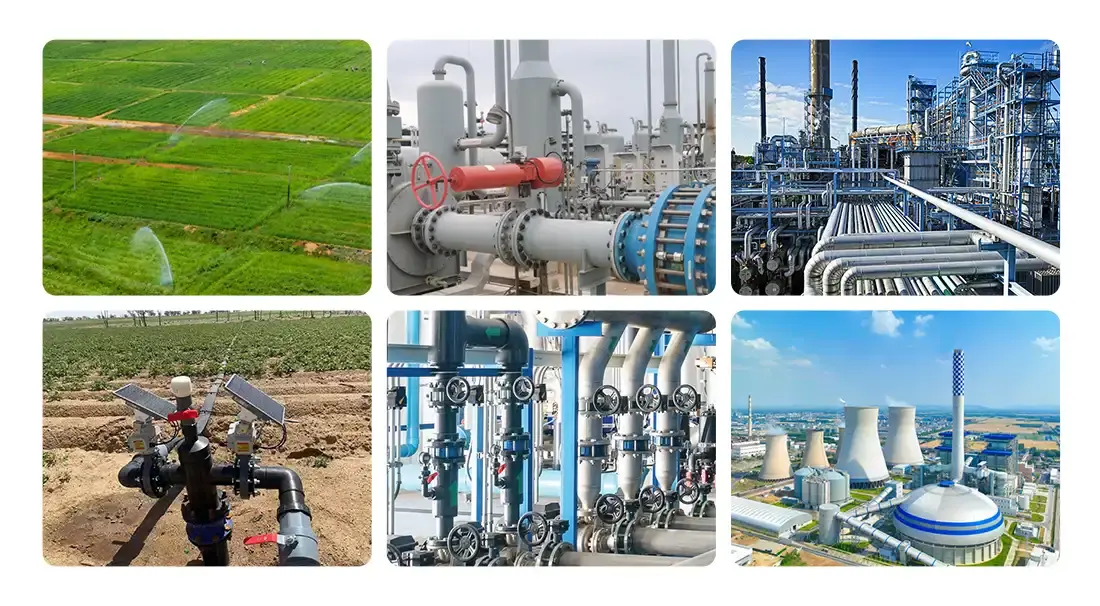
Commercial HVAC Chilled & Hot Water
These valves operate chiller loops and cooling towers for high-rise buildings and data centers. Ductile iron body for treated HVAC water, wafer profile for tight pump rooms and EPDM seats for the heat and chemical additives typical to hydronic systems.
Wastewater and Municipal Water Treatment
Valves used for raw water, sludge and treated effluent need the ability to withstand pressure spikes. The GGG40 body is better at absorbing water hammer than gray iron and the disk rotation gives some degree of self-cleaning in sediment loaded flows.
General Industrial Utilities
This valve is a dependable shut-off for compressed air lines, agricultural irrigation and process water in food or pharmaceutical companies. The ease of seat replacement, especially NBR in irrigation lines exposed to fertilizers, is easy even in the field.
Other Industries
This kind of valve is also often requested in power generation, pulp and paper, desalination and general water supply within the stipulated pressure and temperature range.
Customization & OEM/ODM Options
OEM & ODM order available in ZTVK. OEM services include client branding, bespoke logos, name plates & packaging. ODM services include valve body design, sealing material selection, connection type and adaption to specified pressure, temperature and media conditions.
Custom orders often take 15-25 days to complete. If desired, we can expedite manufacturing in 7 to 10 days.
Quality, Standards & Manufacturing
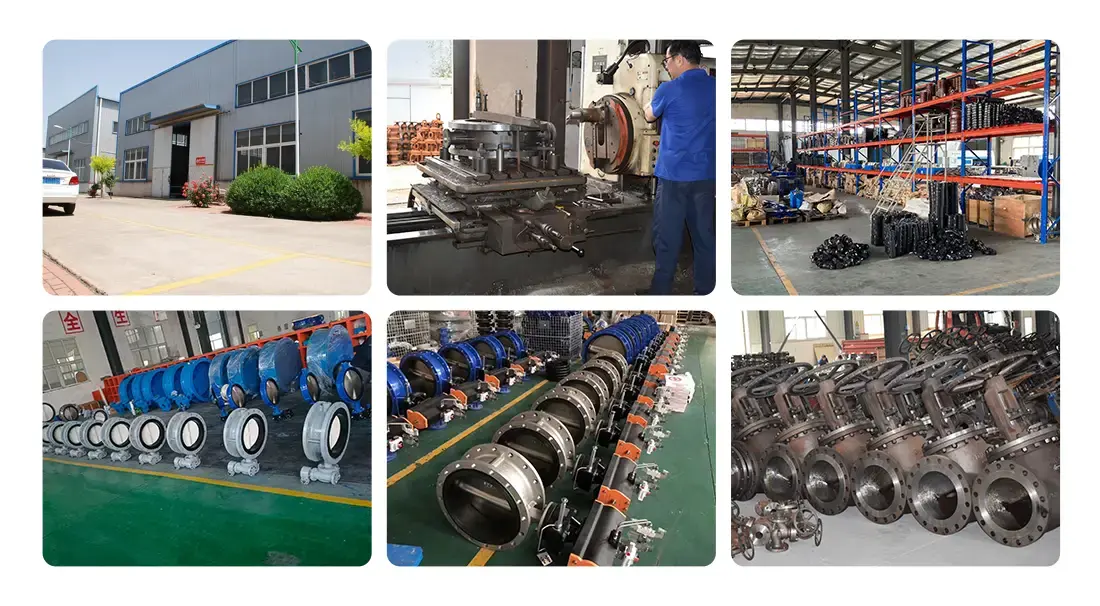
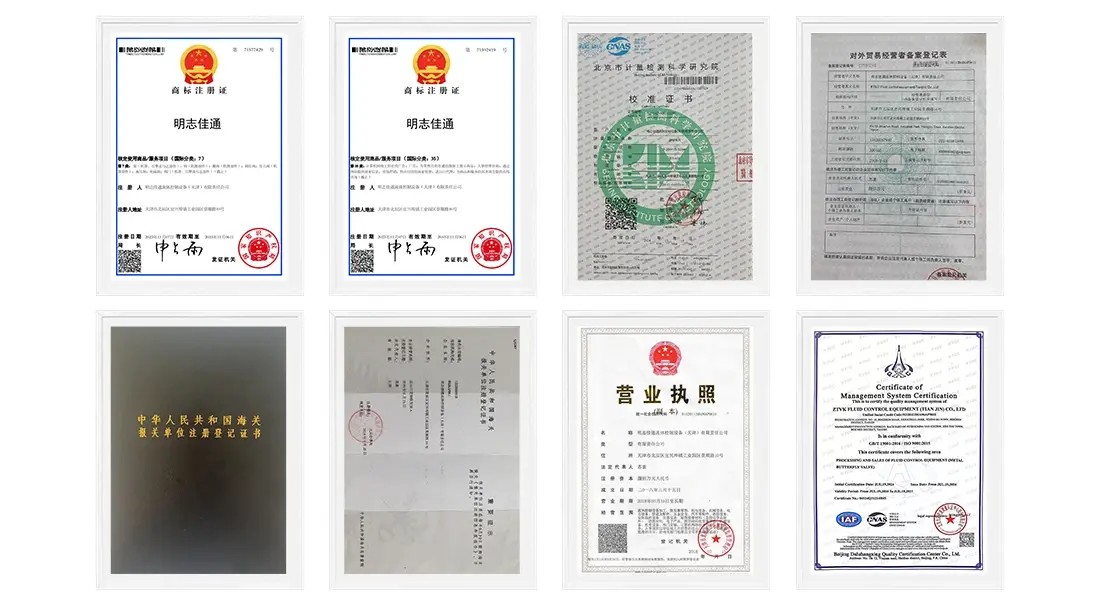
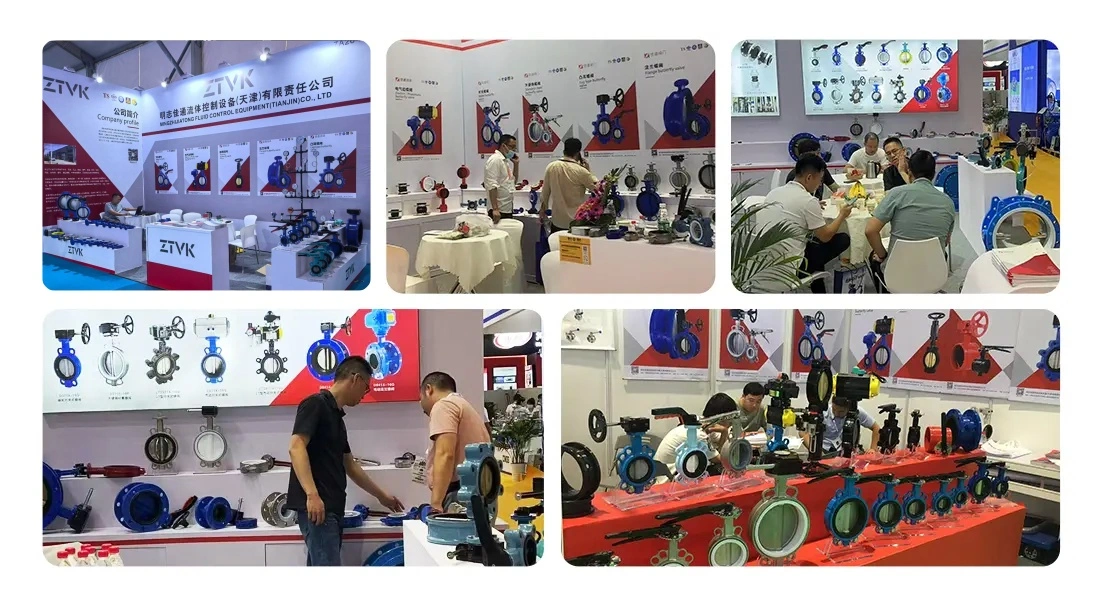
ZTVK is certified by ISO 9001, ISO 14001, and OHSAS 18001, among others. API, DIN, ASME, ISO, ANSI, GB/T, BS EN, and AWWA standards are used to make the products.
Material inspection, chemical analysis, and pressure testing can all be done in-house. It is possible for a third party to visit the plant, and approval papers can be seen upon request.
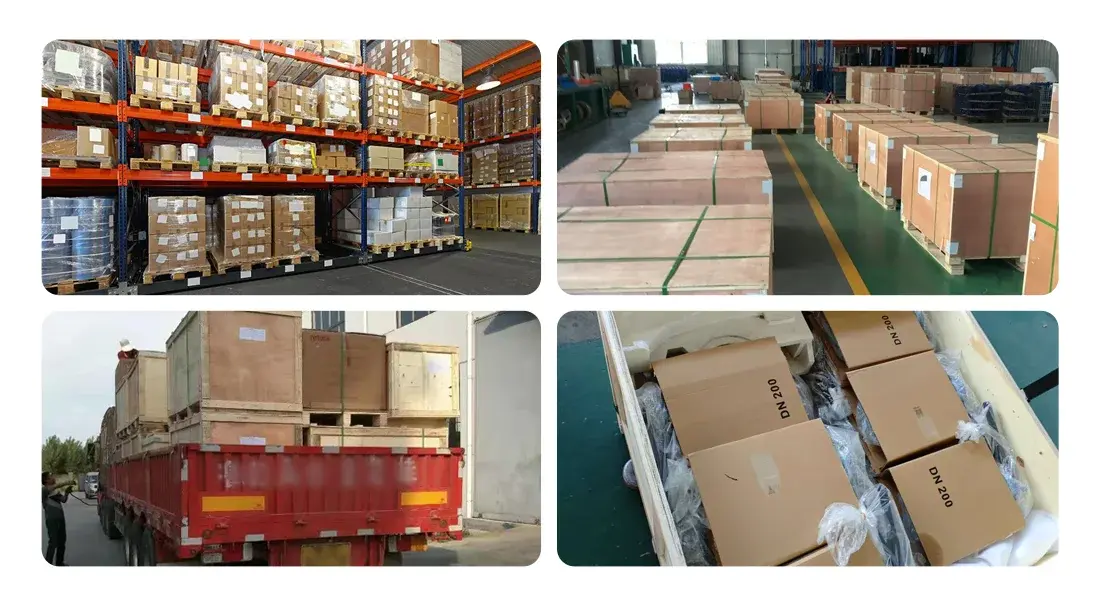
Packaging & Logistics
The factory is about 50 km from Tianjin Port, which takes about an hour to get to by car. For export packing, wooden boxes, moisture-proof film, and mounting bolts that meet ISPM 15 standards are used. You can get quotes for both FOB Tianjin Xingang and CIF destination-port.
After-Sales Support
Every cast iron wafer butterfly valve comes with an 18-month warranty. Non-human-caused failures receive free replacement parts. ZTVK provides installation guidance, troubleshooting documentation, and pre-sales support including valve selection advice, CAD drawings, and 3D models.
FAQ
Q1. Can a butterfly valve be utilized in a dead-end (end-of-line) application?
A: No, wafer type valves are held in place and sealed by compression from both flanges around it. For dead-end service, a lug-type valve is necessary since it may be securely under pressure without the pipe support downstream.
Q2: How does a GG25 body vary from a GGG40 body?
A: The gray iron GG25 is more brittle and hence more suitable for static applications at low pressure. GGG40 (ductile iron) has a spheroidal graphite microstructure, delivering better tensile strength and impact resistance – useful when water hammer or pressure surges are a concern.
Q3. What is the highest temperature for an EPDM seated valve?
A: EPDM is rated to around 120 C NBR has a max of roughly 80degC. If the seat temperature is higher than the rated temperature, the seat will harden and the seal will be broken. Viton seats are the proper option for higher temperature media.
Q4: Is this valve suited for steam service?
A: Ductile iron with robust seating is not normally suggested for high pressure steam. This sort of valve is ideally suited for water, air and neutral gasses at low pressure in the above temperature range.
Q5: Is there a gasket required in the design while installing the wafer?
A: No, the elastomer seat projecting is a built-in gasket against both flange sides. Adding more gaskets might cause over-compression or leakage and should be avoided.
Q6. How does the wafer design compare cost wise with the lug design?
A: In-line service is more cheap in wafer designs using less materials and fewer bolts. Lug designs are more costly but are required when the valve must independently support pipe on one or both sides.
Contact Us
For cast iron wafer butterfly valve quotes, technical specifications, or CAD drawings, email ktec86961886@163.com. Our team typically responds within one business day.
Send us your valve requirements and our team will provide professional solutions and fast quotations.