- English
- French
- German
- Portuguese
- Spanish
- Russian
- Japanese
- Korean
- Arabic
- Greek
- German
- Turkish
- Italian
- Danish
- Romanian
- Indonesian
- Czech
- Afrikaans
- Swedish
- Polish
- Basque
- Catalan
- Esperanto
- Hindi
- Lao
- Albanian
- Amharic
- Armenian
- Azerbaijani
- Belarusian
- Bengali
- Bosnian
- Bulgarian
- Cebuano
- Chichewa
- Corsican
- Croatian
- Dutch
- Estonian
- Filipino
- Finnish
- Frisian
- Galician
- Georgian
- Gujarati
- Haitian
- Hausa
- Hawaiian
- Hebrew
- Hmong
- Hungarian
- Icelandic
- Igbo
- Javanese
- Kannada
- Kazakh
- Khmer
- Kurdish
- Kyrgyz
- Latin
- Latvian
- Lithuanian
- Luxembou..
- Macedonian
- Malagasy
- Malay
- Malayalam
- Maltese
- Maori
- Marathi
- Mongolian
- Burmese
- Nepali
- Norwegian
- Pashto
- Persian
- Punjabi
- Serbian
- Sesotho
- Sinhala
- Slovak
- Slovenian
- Somali
- Samoan
- Scots Gaelic
- Shona
- Sindhi
- Sundanese
- Swahili
- Tajik
- Tamil
- Telugu
- Thai
- Ukrainian
- Urdu
- Uzbek
- Vietnamese
- Welsh
- Xhosa
- Yiddish
- Yoruba
- Zulu
What Is a Butterfly Valve With Actuator?
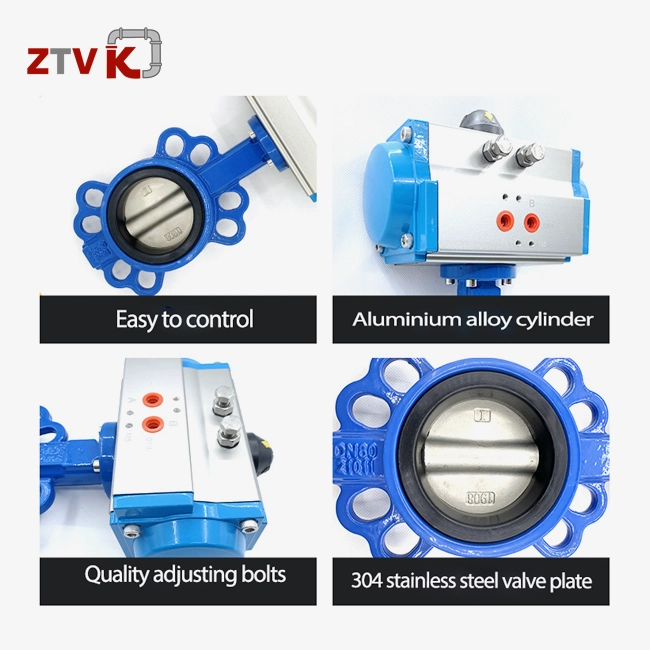
A butterfly valve with actuator is a quarter-turn flow control assembly that combines a disc-based butterfly valve with a motorized, pneumatic, or electromechanical drive unit. Instead of relying on manual lever operation, the actuator rotates the valve disc 90° to open or close a pipeline—either on command or automatically. This configuration is widely adopted across water treatment, HVAC, petrochemical, and municipal infrastructure projects where remote operation, process consistency, and rapid response are non-negotiable. Understanding how this assembly works helps procurement engineers and distributors specify the right product, avoid costly mismatches, and build reliable automated pipeline systems.


Understanding Butterfly Valves with Actuators
How the Assembly Works
A butterfly valve has a cylinder-shaped body with a disk inside that rotates on a shaft. When the actuator turns the shaft 90°, the disk can turn from fully closed to fully open, or it can be turned anywhere in between to slow down. An ISO 5211 mounting pad connects the actuator directly to the valve stem. This standardizes the interface and gets rid of the problems that come with adapters. Because of this design, the actuator can be changed or improved without having to replace the valve body. This is very helpful for long-term plant upkeep.
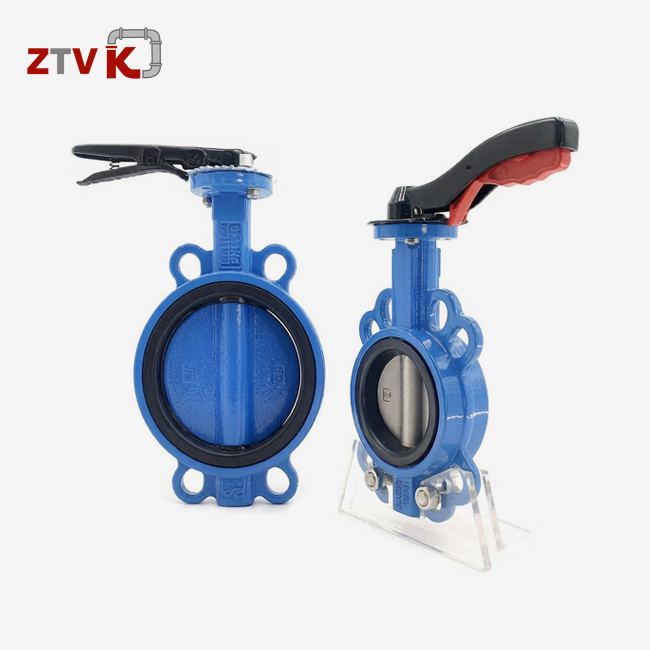
The butterfly valve with actuators from ZTVK has an extruded, hard-anodized aluminum actuator body that is paired with pressure die-cast aluminum caps and rack parts. In pneumatic models, the rack-and-pinion mechanism turns linear air pressure into clean rotary output. In electric models, it does the same thing with motor torque. You can get valve bodies made of ductile iron (DI), CF8, CF8M, or WCB cast steel. Disks come in DI, CF8, CF8M, and aluminum bronze, and shafts come in SS410/416, SS304, and SS316, based on the needs of the fluid compatibility.
EPDM, Nitrile, White EPDM, PTFE, and VITON are all seat materials that can handle a wide range of fluids, from clean water to harsh chemicals. End connections come in wafer-type and flanged styles that are in line with ASME B16.5 at 150# and 300# ratings, with PN10 and PN16 pressure ratings.
Key Types of Butterfly Valve Actuators and Their Applications
Pneumatic Actuators: Speed and Safety
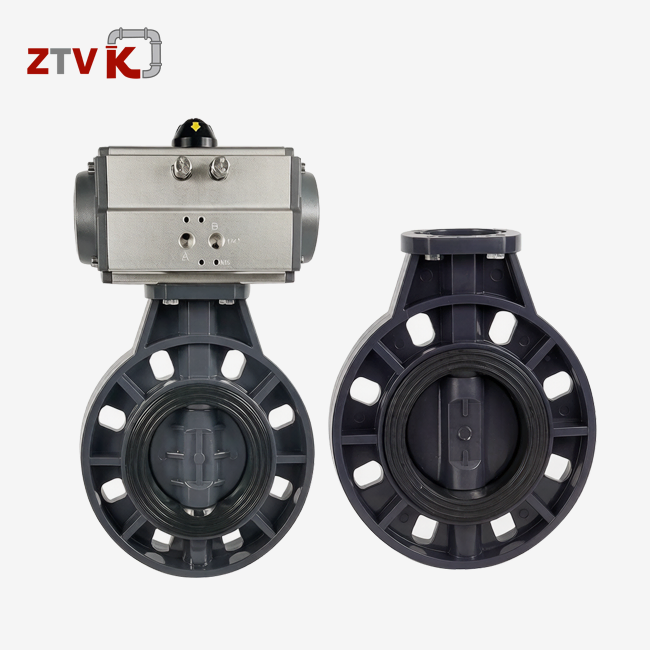
There are two types of pneumatic actuators: single-acting (spring return) and double-acting. They both use compressed air (usually 3–8 bar). When air pressure drops, single-acting units use a spring to return the valve to a fail-safe position. This is very important in emergency shutdown (ESD) situations in chemical plants and oil refineries. For both opening and closing, double-acting units need air, and they give the same amount of force over the full 90° stroke. With ISO 5211-compliant actuators, ZTVK allows both designs, making it easy to install on all standard valve stems.

Electric Actuators: Precision and Integration
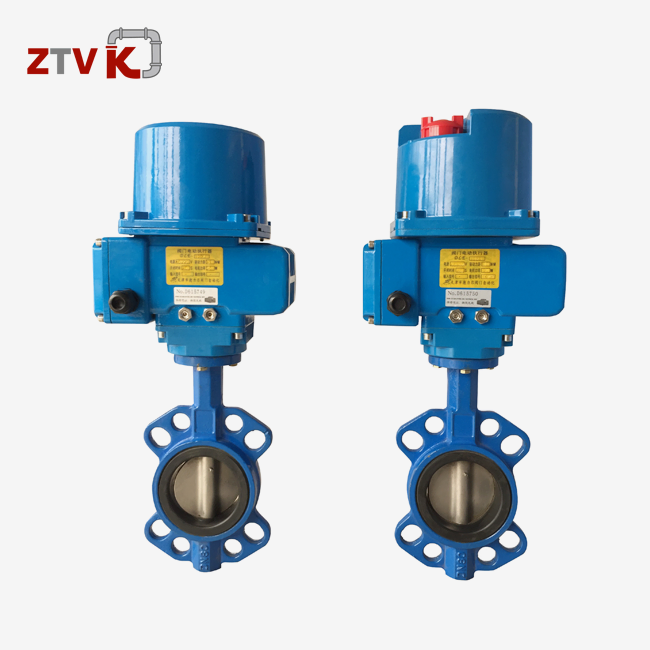
When compressed air isn't available or when modulating control (partial opening) is needed, electric (motorized) actuators are a good choice. They work with PLCs, DCS platforms, and SCADA systems without any problems. Electric butterfly valve with actuators offer repeatable positioning accuracy and real-time feedback, which cuts down on energy waste and human error in HVAC setups and water treatment plants.
Hydraulic Actuators: High-Torque Demand
Large-bore pipeline applications need a lot of torque, which is what hydraulic actuators can handle. Even though they aren't used as often for normal butterfly valves, they are still useful for sizes DN500 and up in heavy industrial and marine settings. Most of the time, pneumatic and electric actuators are enough for distributors and EPC contractors who need to buy DN50–DN600 valves.
How to Choose the Right Butterfly Valve Actuator for Your Needs
To choose the right butterfly valve with an actuator, you need to know three things: the needed torque, the size of the valve, and the area in which it will be used. If the torque is too small, the valve won't move all the way, and if it's too big, it will cost more and take up more space.
Here are the main things that procurement engineers use to make decisions:
- Torque calculation: To figure out torque, we know that break torque (the force needed to remove a closed disk) is usually 1.3 to 1.5 times running torque. When choosing the size of the actuator output, you should always add at least 25% for safety. Torque values for EPDM-seated valves in water lines are very different from those for PTFE-seated valves in chemical lines.
- Fail-safe requirement: In order to meet fail-safe requirements, the valve must automatically open or close if power or air flow is lost. A spring-return (single-acting) pneumatic actuator is the best option for this. Double-acting works best in situations where it's okay to place it halfway.
- Environmental conditions: In mild settings, hard-anodized aluminum actuator bodies don't rust very easily. For installations along the coasts of Southeast Asia with high humidity or in the dusty Middle East, ZTVK has epoxy resin coatings and thickened stem protective covers made just for those conditions.
- Automation compatibility: Check the signal power (24VDC or 220VAC) and see if the system needs an extra solenoid valve, limit switch, or positioner. These devices can be used with ZTVK's NAMUR-interface-ready motors without any extra work being done.
These parameters, assessed together, prevent the most common procurement errors—wrong torque rating, incompatible mounting, or missing fail-safe capability. Accurate sizing protects both system uptime and capital investment.

Benefits and Maintenance of Butterfly Valves With Actuators
Automated butterfly valve with actuator assemblies makes things run more smoothly. Companies that switch from manual valves to actuated units say that operators don't have to do as much work, cycle times are faster, and long-term maintenance costs are lower. The double eccentric plus oblique-seal design from ZTVK lowers the opening and closing torque by about 30% compared to concentric designs. It is rated to last more than 50,000 operational cycles.
Here are the primary operational advantages this assembly class provides:
- Remote operability: Valves can be opened and closed in dangerous, submerged, or high places without putting people at risk. This directly meets safety standards in petrochemical and city water systems.
- Process consistency: Automated control gets rid of the differences that come with human operation, so flow rates stay within the parameters even when demand is high.
- Reduced total cost of ownership: Less manual work means less wear on packing and stem parts, which means longer service intervals and a lower total cost of ownership.
These advantages translate directly into lower downtime, safer operations, and better ROI for distributors reselling to end-users.
Regarding maintenance, pneumatic actuators benefit from quarterly air filter checks, lubrication of the rack-and-pinion mechanism, and seal inspection every 12 months. Electric actuators require periodic gearbox grease replenishment and torque switch calibration. Always use OEM replacement seals and actuator components—non-OEM parts introduce dimensional variances that accelerate wear and void warranty coverage. ZTVK provides an 18-month warranty covering non-human-caused damage, plus installation guidance videos and troubleshooting manuals for every shipment.
Procurement Insights: Comparing Products, Brands, and Buying Considerations
When looking at butterfly valves with actuators for bulk purchases, the choice between electric and pneumatic has a big impact on the total cost over their whole life. Pneumatic units have a lower initial unit price and work best in high-cycle applications. Electric motors, on the other hand, have a higher initial cost but don't need any infrastructure for compressed air, which is a big plus for sites that are far away.
ZTVK stands out in a clear way. The company is in the Beichen Industrial Zone in Tianjin, which is only 50 km from Tianjin Port. It is certified by ISO9001, ISO14001, and OHSAS18001, and it follows ISO, API, ANSI, JIS, BS, DIN, and CE rules. We have more than 2,000 normal DN50–DN600 units in stock, and we can deliver them 3–7 days after you place your order. Custom OEM/ODM configurations take 15–25 days to make, but you can pay an extra 20% for a fast order and get it in 7–10 days.
Long-term logistics partnerships with COSCO Shipping and Maersk make it possible to get quotes for both FOB Tianjin Xingang and CIF destination ports. Shipping items in wooden crates that are in line with ISPM-15 standards keeps them safe from water damage while they're on the ocean. This is an important detail for valve suppliers in Southeast Asian markets with a lot of humidity.
For OEM buyers, ZTVK makes valves with your brand name, logo, and package specs, and supports full drawing-based ODM redesign of body geometry, sealing materials, and end connections. Pre-sales support includes free valve selection advice, CAD drawings, and 3D models. All certification documents are verifiable and withstand third-party factory audits.
Conclusion
A properly specified butterfly valve with actuator makes pipelines safer, cuts down on manual work, and works well with modern automation systems. It is important to match the actuator type, power grade, body material, and seat compound to the specifics of the job, rather than using standard specifications. ZTVK is a good partner for wholesalers, EPC contractors, and equipment makers around the world to source from because its production is ISO-certified, it is close to Tianjin Port, and it can do OEM and ODM work. When both reliability and speed of delivery are important, the best way to buy something is from a manufacturer whose production capacity has been checked and whose quality documentation is clear.
FAQ – Your Top Questions About Butterfly Valves With Actuators Answered
1. How do I calculate the correct actuator torque?
To find the safety factor, multiply the valve's maximum required torque (found in the manufacturer's torque table) by 1.25 to 1.5. This takes into account the pressure, seat material, and disk size. Always look at the torque graph for the specific butterfly valve with actuator and never use general assumptions.
2. What is the difference between single-acting and double-acting actuators?
One-way single-acting (spring return) moves with compressed air in one direction. If the air leaks out, a spring returns it to the fail-safe state. When used in non-ESD situations, double-acting needs air pressure for both strokes and gives a more consistent cycle.
3. Can I retrofit an actuator onto an existing manual butterfly valve?
As long as the valve's stem top fits an ISO 5211 fitting design, the answer is yes. Because ZTVK's actuators mount via ISO 5211, most compatible valves can be upgraded without having to get a new valve body.
4. Which seat material suits chemical service?
Seats made of PTFE and VITON can handle harsh poisons and higher temperatures. Nitrile is better for oil-based media than EPDM for water and steam.
Ready to Source Actuated Butterfly Valves? Contact ZTVK Today
We trust ZTVK as a reliable butterfly valve with actuator maker and seller. We offer low bulk prices, OEM support, and 3–7 day shipping from our own stock. Our engineering team can help you choose the right valves and give you free CAD drawings and full documentation, whether you are looking for supplies for a municipal water project, an EPC pipeline contract, or a distributor's stock. You can email us at ktec86961886@163.com to get a price or a list of our products.
References
1. Valve Magazine – "Pneumatic Actuator Selection for Automated Butterfly Valves" (2022). Valve Manufacturers Association of America.
2. Flow Control Network – "Electric vs. Pneumatic Actuators: Choosing the Right Technology" (2023).
3. ISA (International Society of Automation) – "ANSI/ISA-75.01.01: Industrial Process Control Valves — Flow Equations" (2012).
4. Plant Engineering – "Reducing Operational Risk with Automated Valve Systems" (2021).
5. Fluid Handling Pro – "Butterfly Valve Standards and Pressure Ratings: ASME B16.5 and PN Ratings Explained" (2022).
6. ISO.org – "ISO 5211: Industrial Valves — Part-Turn Actuator Attachment" (2017).
Send us your valve requirements and our team will provide professional solutions and fast quotations.
RELATED INDUSTRY KNOWLEDGE