- English
- French
- German
- Portuguese
- Spanish
- Russian
- Japanese
- Korean
- Arabic
- Greek
- German
- Turkish
- Italian
- Danish
- Romanian
- Indonesian
- Czech
- Afrikaans
- Swedish
- Polish
- Basque
- Catalan
- Esperanto
- Hindi
- Lao
- Albanian
- Amharic
- Armenian
- Azerbaijani
- Belarusian
- Bengali
- Bosnian
- Bulgarian
- Cebuano
- Chichewa
- Corsican
- Croatian
- Dutch
- Estonian
- Filipino
- Finnish
- Frisian
- Galician
- Georgian
- Gujarati
- Haitian
- Hausa
- Hawaiian
- Hebrew
- Hmong
- Hungarian
- Icelandic
- Igbo
- Javanese
- Kannada
- Kazakh
- Khmer
- Kurdish
- Kyrgyz
- Latin
- Latvian
- Lithuanian
- Luxembou..
- Macedonian
- Malagasy
- Malay
- Malayalam
- Maltese
- Maori
- Marathi
- Mongolian
- Burmese
- Nepali
- Norwegian
- Pashto
- Persian
- Punjabi
- Serbian
- Sesotho
- Sinhala
- Slovak
- Slovenian
- Somali
- Samoan
- Scots Gaelic
- Shona
- Sindhi
- Sundanese
- Swahili
- Tajik
- Tamil
- Telugu
- Thai
- Ukrainian
- Urdu
- Uzbek
- Vietnamese
- Welsh
- Xhosa
- Yiddish
- Yoruba
- Zulu
How Does a Cast Iron Wafer Type Butterfly Valve Work?
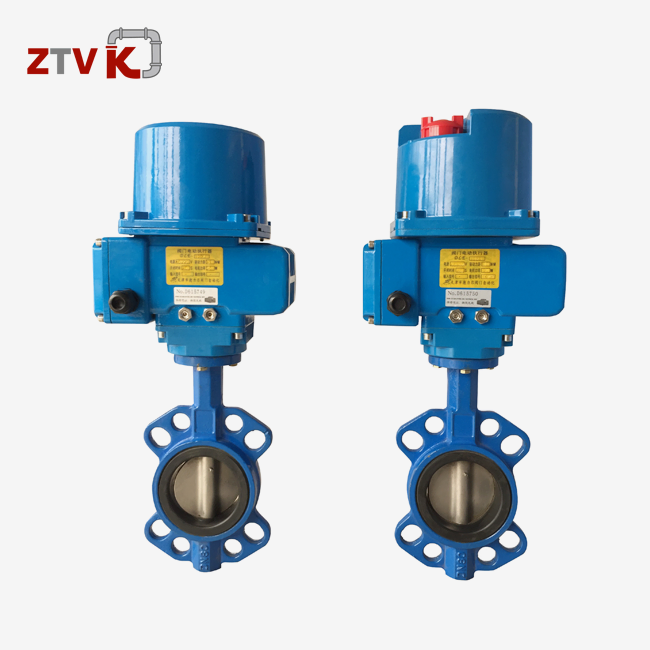
When you're sourcing industrial valves for municipal water systems, HVAC installations, or chemical processing facilities, understanding how a cast iron wafer type butterfly valve cast iron wafer type butterfly valve operates is essential for making informed procurement decisions. This valve works through a simple yet effective mechanism: a disc mounted on a rotating stem opens or closes the flow path within a pipeline. When the operator turns the stem 90 degrees, the disc rotates from a fully closed position—perpendicular to the flow—to a fully open position—parallel to the flow. The elastomeric seat, typically made from NBR, EPDM, or Viton, contacts the outer edge of the disc to create a bubble-tight seal, preventing leakage even under pressure. The wafer design sandwiches the valve body between two pipe flanges, secured by bolts, eliminating the need for additional gaskets and reducing installation complexity.
Understanding Cast Iron Wafer Type Butterfly Valves
What Makes Wafer-Style Valves Different
Wafer butterfly valves are different from lug and flanged valves because they are small and placed in the middle. Wafer valves stay in place only because of the shear force of the upstream and downstream flanges. This is different from lug types with threaded inserts or flanged types with built-in pin holes. Because of how they are built, they are lighter and cost less, but they can't be used in dead-end service where there is no downstream pipe. Not having any extra bolt holes or flanges also means less material is used, and the cost of production is lower, which is good for wholesalers who want to get good bulk prices.
Core Components and Operating Principle
The valve has a disc, a stem, a body, and a durable seat. The disc moves inside the body cavity when the driver (hand lever, gearbox, electric motor, or air cylinder) turns the stem. During the opening process, the disc edge slowly separates from the seat, letting fluid flow through the growing crescent-shaped hole. When the disc is fully open (90 degrees), its shape lines up with the flow direction, reducing pressure drop and noise. When you close the lid, this motion goes the other way, pressing the disc edge hard against the seat to turn it off. For a pressure range of PN6 to PN16 (Class 150), the robust seat makes up for small disc flaws and pipeline misalignment, making sure a good seal.
Material Selection: Ductile Iron vs. Grey Cast Iron
In the past, valve bodies were made of grey cast iron (GG25), but these days, ductile iron (GGG40) is more common in industrial settings for cast iron wafer-type butterfly valves. Ductile iron has magnesium in it, which changes the brittle graphite flakes into spheroidal lumps. This makes the strength and resistance to contact much higher. This material can handle water hammer, changing temperatures, and mechanical vibrations that are typical in HVAC and public works systems. The disc and trim parts usually have improved materials like SS304, SS316, or duplex stainless steel for tough media, or epoxy-coated ductile iron to protect against rust better. Stems are usually made of SS316, SS304, SS420, or SS416 because they don't rust and allow for smooth turning under load.
Key Design Features and Performance Parameters
Compact Wafer Body Construction
The wafer body shape is much shorter from front to back than the gate or globe valves of the same size. This feature that saves space is very important in crowded machinery rooms, basement vaults, or remodelling projects with limited space for installation. The slim form also cuts down on shipping volume and weight, which saves distributors money on freight costs when they buy in bulk. When put in place between ANSI 125/150 or DIN PN10/16 flanges, the valve presses down on the extended rubber seat, making a good seal without the need for extra gasket materials. If you tighten the flange bolts too much, you could damage the seat, so make sure you follow the torque specs when you install them.
The valve can fit a lot of different standard sizes, from DN50 (2 inches) for small HVAC jobs in homes to DN2400 (96 inches) for big water transport mains in cities. Smaller sizes usually ship as standard stock items and arrive in three to seven days. Larger or non-standard sizes need to be cast and machined to order, which can add 15 to 25 days to the wait time, based on how complicated they are.
Pressure and Temperature Ratings
Most ductile iron wafer butterfly valves are rated for PN6, PN10, and PN16 work, which is the same as ANSI Class 150. At room temperature, these values are equal to working pressures of about 6 bar, 10 bar, and 16 bar. For quality control, shell testing includes putting 1.5 times the maximum pressure (24 bar for PN16) on the body to find holes, cracks or voids in the casting. At 1.1 times the maximum pressure, the seat seal is tested to make sure there is no leaking (Class A bubble-tight shutdown) at the disc-seat contact.
The temperature range is from -29°C to +120°C, and the flexible seat material is what limits the range. EPDM seats work well with hot water, steam, and glycol up to 120°C. On the other hand, NBR (Buna-N) chairs work well with oils and fuels but break down above 80°C. Options like Viton and silicone rubber make it more resistant to chemicals and changes in temperature. By choosing the right seat material for your media and working temperature, you can keep it from hardening, cracking, and leaking too soon.
Sealing Technology and Leak Prevention
When the valve closes, the durable seat makes a mechanical interference fit with the disc's edge. When compressed, the rubber slightly changes shape, smoothing out tiny surface flaws and making sure there is continuous contact around the whole closing perimeter. This design makes bubble-tight shutdown possible without metal-to-metal contact, which cuts down on wear and increases service life. In most designs, seats can be changed out in the field. This lets repair teams fix the sealing performance without having to replace the whole valve body. The valve's malleable iron body makes it last a long time, so replacing the seat is the main care task over its 50,000-cycle useful life.
Applications and Benefits of Cast Iron Wafer Butterfly Valves
Primary Industry Applications
These valves are used in many areas where effective flow control, small installation, and low costs are very important cast iron wafer type butterfly valve. In networks that treat and distribute water for cities, they control the flow through pump stations, holding tanks, and transport pipes. They are installed by HVAC workers in heating systems, cooling water circuits, and cold water loops. Their low-pressure drop keeps the pumps working efficiently. Chemical processing plants use them for non-corrosive fluids like water, salt water, and weak acids, making sure to choose the right seat materials that are compatible with chemicals. Food and drug companies like that the flow path is clean, there are no cracks, and it meets sanitary standards when stainless steel discs and FDA-approved seats are used together. Desalination plants use epoxy finishes and better trim materials because they don't rust in high-salinity settings.
Power plants use wafer butterfly valves in their cooling water systems, vapour lines, and other process pipes. Lifecycle costs and downtime are cut down because the valves can work effectively for thousands of rounds with little upkeep. Integrators of fire protection systems use them in wet pipe spray systems, flood systems, and fire pump suction lines, where being able to quickly shut off and seal properly is important for safety.
Advantages Over Alternative Valve Types
When comparing butterfly valves to gate valves, they work faster (quarter-turn vs. multi-turn), are lighter, and cost less to make. Their smaller face-to-face size makes it easier to lay out pipes and requires less support structure. Globe valves cause a big drop in pressure because their flow path is so winding. Butterfly valves, on the other hand, don't block much when they're fully open, so the hydraulic efficiency of the system stays high.
When the sizes get bigger, the cost-benefit becomes even more appealing. A DN600 wafer butterfly valve is much lighter than a similar gate valve, which means that less moving tools and installation work are needed. Distributors who manage goods in various stores can get the most out of their storage space by using wafer valves, which save room and allow items to be stacked. When wholesalers buy in bulk from companies like ZTVK, which keeps over 2,000 units of standard sizes (DN50–DN600) in stock, they can make good profits and get orders to customers quickly.
Comparison and Procurement Considerations
Wafer vs. Lug vs. Flanged Connection Types
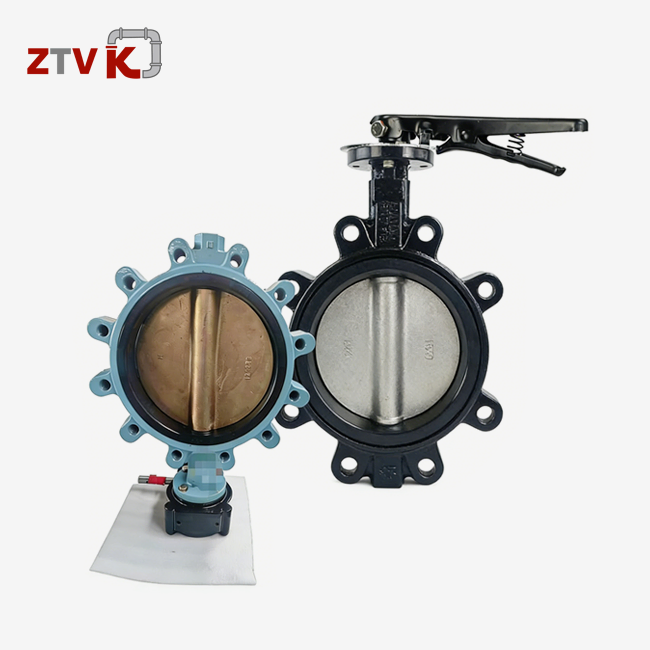
Understanding connection type differences helps procurement teams match valve configurations to specific installation requirements. Wafer valves depend on flange compression for retention and cannot remain installed if the downstream piping is removed, making them unsuitable for dead-end or end-of-line service. Lug-type valves incorporate threaded inserts around the body perimeter, allowing bolts to secure each flange independently. This permits removal of the downstream piping for maintenance without valve dislodgement, and enables dead-end service where the valve closes off a piping terminus.
Flanged butterfly valves include integral bolt holes or flanges cast into the body, allowing direct bolting to mating flanges without through-bolts. This configuration suits applications requiring frequent disassembly or where flange face access is restricted. The choice among these types balances installation flexibility, initial cost, and maintenance convenience.
Material and Seat Selection Guidance
Procurement decisions must account for the media characteristics, temperature range, and chemical exposure. For clean water, EPDM seats provide excellent resilience and temperature capability up to 120°C. Petroleum products, mineral oils, and hydraulic fluids require NBR seats, which resist swelling and degradation in hydrocarbon environments but limit temperature to 80°C. Viton seats accommodate acids, solvents, and high-temperature applications up to 200°C, though at a higher material cost.
Disc and trim upgrades from epoxy-coated ductile iron to SS316 or duplex stainless steel become necessary when handling corrosive or abrasive media. Stem material selection impacts torque smoothness and corrosion resistance; SS416 offers magnetic properties for position indication, while SS304 and SS316 provide superior corrosion resistance in chloride-rich environments.
Standards and Certification Requirements
Industrial valve procurement typically mandates compliance with recognised design and testing standards. API 609, ASME B16.34, ISO 5752, DIN 3202, BS EN 593, and AWWA C504 define dimensions, pressure-temperature ratings, materials, and testing protocols. Verifying that your supplier's products conform to these standards ensures compatibility with existing piping systems and regulatory acceptance across jurisdictions.
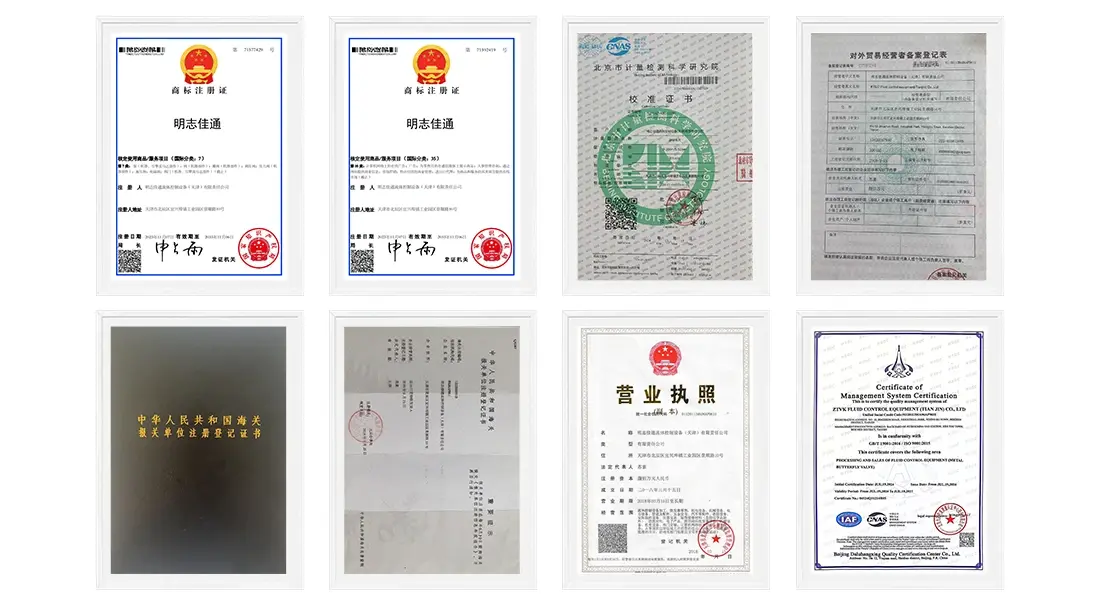
Material traceability through EN 10204 3.1 Material Test Reports (MTRs) provides documented evidence of chemical composition and mechanical properties, essential for quality assurance and liability protection for the cast iron wafer-type butterfly valve. Coating thickness verification, hydrostatic pressure testing, and dimensional inspection reports should accompany bulk orders. Manufacturers holding ISO9001, ISO14001, and OHSAS18001 certifications demonstrate systematic quality management, environmental responsibility, and workplace safety practices.
Maintenance, Operation, and Longevity Tips
Routine Inspection and Lubrication Protocols
The life of a valve rests on regular upkeep that is in line with its working conditions and rotation regularity. Visual review should be done every six to twelve months to check for rust on the outside, damage to the coating, the state of the actuator, and the strength of the stem packing. Stem packing glands may need to be tightened from time to time to stop escape emissions. This is especially true in gas and electric systems that cycle a lot.
Lubricating the stem bearings and gearbox parts lowers friction, increases the life of the parts, and keeps the working power constant. For manual lever-operated valves to work well, the pivot points and seals should be oiled every so often. To prevent wear from being caused by misalignment, automated valves need to have their actuator fitting torque and connection strength checked.
Troubleshooting Common Issues
Internal leaking, or leakage across the line, usually means that the seat is damaged and needs to be taken apart and replaced. Since bodies made of ductile iron can be used for decades, seat renewal is a cheap way to get them working again. If there is external leaking around the stem, it means that the packing rings or glands are worn out or loose. This is usually easy to fix by tightening the packing nut or changing the packing rings.
Too much force could be caused by grit building up in the seat area, the disc and body not being lined up correctly, or an actuator that doesn't work right. Installing valves with the stem horizontal instead of vertical keeps sediment from building up at the lower pivot point, which over time lowers wear and torque. Fluids that are full of debris may need upstream strainers to protect the surfaces that seal the valves.
If a coating blisters or peels, it means that the surface wasn't prepared properly or that the coating wasn't applied correctly during production. Fusion-bonded epoxy (FBE) coats are used by good makers at controlled thicknesses (minimum 250 microns dry film thickness) to keep ductile iron from rusting, especially in sites that are underground or underwater.
Conclusion
Understanding how a cast-iron wafer-type butterfly valve functions empowers procurement teams to specify the right valve configuration, materials, and ratings for their applications. The combination of ductile iron body strength, resilient seat sealing, and compact wafer design delivers reliable flow control across water, HVAC, chemical, and industrial systems. By considering pressure ratings, temperature limits, seat material compatibility, and connection type during specification, you ensure long-term performance and minimise lifecycle costs. Partnering with manufacturers that maintain comprehensive stock, offer OEM customisation, and provide verifiable quality documentation streamlines procurement and protects your supply chain integrity.
FAQ
1. Can wafer butterfly valves be used in dead-end service?
Wafer valves are not recommended for dead-end or end-of-line applications because they rely on the compression of two flanges to remain in position. Removing the downstream flange causes the valve to disconnect under pressure. Lug-type butterfly valves with threaded inserts provide the necessary retention for dead-end service, allowing safe installation at pipe termini.
2. How do I select between EPDM and NBR seat materials?
EPDM suits water, glycol, steam (low pressure), and mild acids, operating from -10°C to 120°C. NBR (Buna-N) handles oils, fuels, greases, and hydrocarbons from -10°C to 80°C. Using NBR in hot water applications causes premature hardening and seal failure, while EPDM degrades in petroleum environments. Match seat material to your specific media and temperature range for optimal longevity.
3. What installation orientation works best?
Horizontal stem orientation is preferred, especially in fluids containing sediment or particulates. Vertical installation allows debris to settle in the lower stem pivot area, increasing operating torque and accelerating seat wear. While vertical installations function properly in clean media, horizontal mounting extends service intervals and reduces maintenance requirements.
Partner with ZTVK: Your Trusted Cast Iron Wafer Type Butterfly Valve Manufacturer
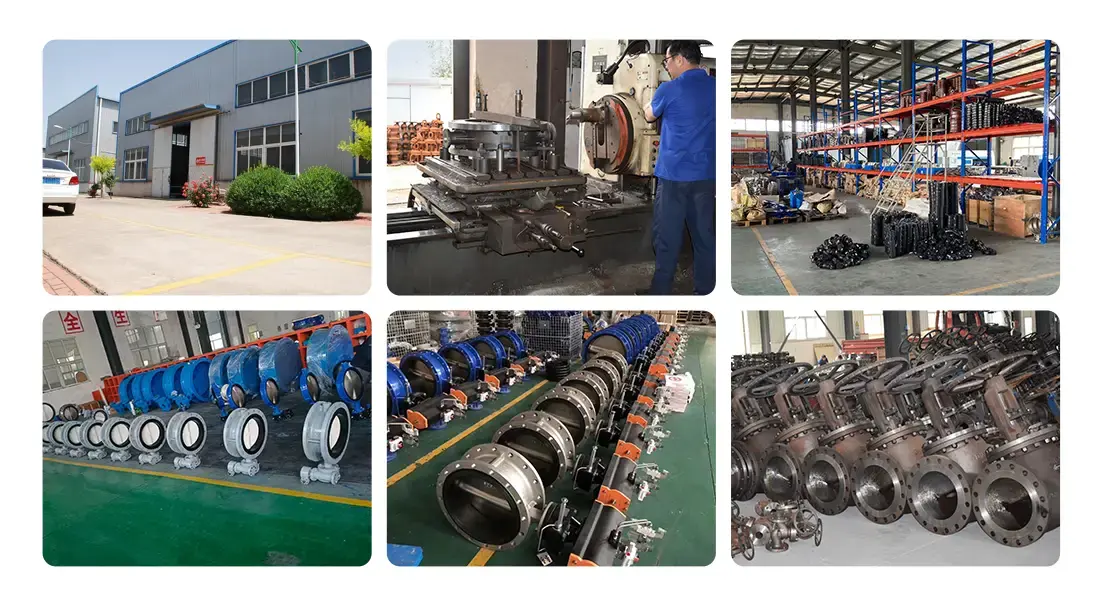
Distributors and contractors seeking a reliable cast iron wafer type butterfly valve supplier will find ZTVK's combination of engineering expertise, manufacturing capacity, and customer service particularly valuable. Located in Tianjin's Beichen District with over 15 years of valve manufacturing specialisation, we maintain more than 2,000 units of standard sizes (DN50-DN600) in stock for three to seven-day delivery. Our ductile iron GGG40 valve bodies, resilient seat options (NBR, EPDM, Viton, silicone rubber), and upgraded trim materials (SS304, SS316, duplex stainless steel, bronze) accommodate diverse applications. Full OEM and ODM capabilities support custom branding, packaging, and specification modifications tailored to your regional requirements. ISO9001/ISO14001/OHSAS18001 certifications, compliance with API, DIN, ASME, ISO, ANSI, and AWWA standards, and comprehensive quality documentation, including material test reports and hydrostatic test certificates, provide the assurance your procurement team requires. Contact us at ktec86961886@163.com to discuss your project specifications, request technical drawings, or obtain competitive quotations for bulk orders.
References
1. American Water Works Association (AWWA). AWWA C504 Standard for Rubber-Seated Butterfly Valves. Denver: AWWA, 2018.
2. American Petroleum Institute (API). API 609: Butterfly Valves: Double-Flanged, Lug- and Wafer-Type. Washington D.C.: API Publishing Services, 2020.
3. Lyons, Jerry L., and Ned H. Askland. Valve Selection Handbook: Engineering Fundamentals for Selecting the Right Valve Design for Every Industrial Flow Application. Burlington: Gulf Professional Publishing, 2012.
4. Pearson, Glenn R. Valve Design: Based on Fundamental Principles of Valve Performance. London: Mechanical Engineering Publications Limited, 1978.
5. Smith, Peter, and R. W. Zappe. Valve Selection Handbook for the Process Industries. Houston: Gulf Publishing Company, 2004.
6. Zappe, R. W. Valve Selection and Specification Guide for the Process Industries. Houston: Gulf Professional Publishing, 1999.
Send us your valve requirements and our team will provide professional solutions and fast quotations.
RELATED INDUSTRY KNOWLEDGE