- English
- French
- German
- Portuguese
- Spanish
- Russian
- Japanese
- Korean
- Arabic
- Greek
- German
- Turkish
- Italian
- Danish
- Romanian
- Indonesian
- Czech
- Afrikaans
- Swedish
- Polish
- Basque
- Catalan
- Esperanto
- Hindi
- Lao
- Albanian
- Amharic
- Armenian
- Azerbaijani
- Belarusian
- Bengali
- Bosnian
- Bulgarian
- Cebuano
- Chichewa
- Corsican
- Croatian
- Dutch
- Estonian
- Filipino
- Finnish
- Frisian
- Galician
- Georgian
- Gujarati
- Haitian
- Hausa
- Hawaiian
- Hebrew
- Hmong
- Hungarian
- Icelandic
- Igbo
- Javanese
- Kannada
- Kazakh
- Khmer
- Kurdish
- Kyrgyz
- Latin
- Latvian
- Lithuanian
- Luxembou..
- Macedonian
- Malagasy
- Malay
- Malayalam
- Maltese
- Maori
- Marathi
- Mongolian
- Burmese
- Nepali
- Norwegian
- Pashto
- Persian
- Punjabi
- Serbian
- Sesotho
- Sinhala
- Slovak
- Slovenian
- Somali
- Samoan
- Scots Gaelic
- Shona
- Sindhi
- Sundanese
- Swahili
- Tajik
- Tamil
- Telugu
- Thai
- Ukrainian
- Urdu
- Uzbek
- Vietnamese
- Welsh
- Xhosa
- Yiddish
- Yoruba
- Zulu
Stainless Steel Butterfly Valve vs Cast Iron: A B2B Guide
Whether you choose cast iron or stainless steel butterfly valves will affect how well your business runs, how much it costs to maintain, and how long the product lasts. A cast iron wafer butterfly valve is the most common type used in water treatment and HVAC because it is cheap and closes well. Stainless steel versions, on the other hand, work best in harsh settings like chemical processing. This guide breaks down the qualities of materials, how much they cost, and what applications they should be used for. This is done so that dealers, contractors, and procurement managers can make smart buying choices that fit their budgets and last a long time.
Material Properties: What Sets Them Apart?
Cast iron and stainless steel are very different in how they are made and how they work. Knowing these differences can help you choose the right valve material for the job.
The body of most cast iron butterfly valves is made of ductile iron (GGG40). The tensile strength of this material is between 370 and 480 MPa, and it can handle pressures up to PN16 (Class 150). The graphite lumps in ductile iron make it more resistant to pressure than grey iron, which lowers the chance of breaking when it expands at high temperatures. However, cast iron quickly rusts in acidic or chlorine environments if it doesn't have any coats to protect it.
Chromium oxide passivation keeps stainless steel valves (usually SS316 or SS304) from rusting. Molybdenum in SS316 makes it more resistant to chlorine, which is important for systems that deal with seawater and purification. These valves stay strong in temperatures ranging from -196°C to +538°C, which is much higher than the -29°C to +120°C range for cast iron.
Three core differences to remember:
- Corrosion resistance: Stainless steel naturally protects itself; cast iron requires epoxy coatings
- Temperature tolerance: Stainless handles cryogenic and high-heat applications
- Weight and handling: Cast iron weighs 30-40% more, affecting installation logistics
If you need valves for neutral-pH water systems at standard temperatures, cast iron provides cost-effective reliability. Corrosive chemicals or extreme conditions demand stainless steel's superior resilience.
Cost Analysis: Upfront Investment vs. Lifecycle Value
Price structures vary significantly between materials, affecting your total cost of ownership calculations.
A DN200 cast iron wafer butterfly valve typically costs $80-$150, while the stainless steel equivalent ranges from $320-$580, roughly 3-4 times higher. This initial gap narrows when you factor in maintenance and replacement cycles.
Cast iron operational costs include
- Epoxy coating reapplication every 5-7 years ($15-$30 per valve)
- Higher replacement frequency in corrosive environments (8-12 year lifespan vs. 15-25 years for stainless)
- Potential system downtime from corrosion-related failures
Stainless steel advantages emerge over time
- Minimal surface treatment needs after installation
- Extended service life reduces replacement frequency by 40-60%
- Lower insurance premiums for chemical plants due to reduced leak risks
Test data comparison (based on 5,000-cycle pressure tests)
- Cast iron seats show 12% compression set after 3 years in chlorinated water
- SS316 discs maintain 98% original sealing efficiency under identical conditions
If you need valves for temporary projects or non-corrosive applications, cast iron delivers better ROI. Long-term installations in aggressive media justify stainless steel's premium through reduced lifecycle costs.
Application-Specific Selection Criteria
Different industries impose unique demands on valve materials. Matching specifications to operating conditions prevents premature failures.
Water supply and municipal systems
Cast iron wafer butterfly valves dominate these applications. Municipal water (pH 6.5-8.5) doesn't attack epoxy-coated cast iron aggressively. The material's thermal expansion coefficient matches ductile iron piping, preventing flange stress. ZTVK's DN50-DN2400 cast iron valves with EPDM seats serve over 200 municipal projects across Southeast Asia and the Middle East.
HVAC and fire protection
Closed-loop systems benefit from cast iron's stability. Fire suppression systems use butterfly valve wafer-type designs for space efficiency. The lug-style connection allows downstream maintenance without draining entire systems—critical for high-rise buildings.
Chemical processing and petrochemicals
Stainless steel becomes non-negotiable here. Acids, solvents, and high temperatures destroy cast iron rapidly. SS316 discs with Viton seats handle temperatures up to +200°C and resist pH extremes from 2-12. Plants processing sulfuric acid or sodium hydroxide require duplex stainless steel (higher pitting resistance than standard grades).
Food and pharmaceutical manufacturing
Sanitary applications demand stainless steel for FDA compliance. Smooth electropolished surfaces prevent bacterial growth. Cast iron wafer butterfly valve's porous structure harbors contaminants despite coatings, making it unsuitable for these industries.
Five application rules to follow
- pH < 5 or > 9: Choose stainless steel
- Temperature swings > 50°C/hour: Prefer stainless steel's thermal stability
- Potable water at standard pressure: Cast iron offers the best value
- Seawater or brines: SS316 with marine-grade coatings only
- Budget-constrained municipal projects: Epoxy-coated cast iron with 10-year warranties
If you need valves for standard HVAC or water distribution, cast iron wafer butterfly valve models provide proven reliability. Aggressive chemicals or hygiene-critical processes require stainless steel's inert properties.
Installation and Maintenance Considerations
Physical characteristics influence installation labor and ongoing upkeep requirements.
Weight and handling differences
A DN400 cast iron valve weighs approximately 68 kg, while stainless steel equivalents weigh 45-50 kg. This 25-30% weight reduction simplifies installation in ceiling-mounted HVAC systems or offshore platforms. However, cast iron's heft provides vibration damping in high-flow applications.
Installation procedures vary slightly
- Wafer butterfly valve installation requires careful bolt torquing (cast iron: 40-60 Nm; stainless: 50-70 Nm due to material hardness)
- Cast iron flanges need gaskets; wafer designs seal with integral seats
- Lug-type valves allow single-side maintenance—valuable for both materials in accessible locations
Maintenance schedules differ markedly
Cast iron valves need biannual inspections in corrosive environments. Check for coating integrity, seat compression, and stem corrosion. NBR seats require replacement every 3-5 years in chlorinated water. ZTVK provides maintenance manuals with torque specs and seat replacement videos for all valve sizes.
Stainless steel valves operate 5-7 years between inspections in most applications. The primary concern becomes seat wear rather than body corrosion. Silicone rubber seats in steam applications last 8-10 years before hardening requires replacement.
Stem sealing comparison (leak rate after 10,000 cycles):
- SS316 stems with PTFE packing: 0.02 ml/min average leakage
- Epoxy-coated SS420 stems: 0.08 ml/min average leakage
If you need valves for hard-to-reach locations, stainless steel's extended maintenance intervals reduce access costs. Easily accessible systems tolerate cast iron's more frequent service needs.
Standards Compliance and Certification Requirements
Meeting international standards ensures global marketability and regulatory acceptance.
Both materials comply with major design standards when properly manufactured:
- API 609: Butterfly valve dimensions and tolerances
- ANSI/AWWA C504: Rubber-seated butterfly valves for water systems
- EN 593: Industrial valves for European markets
- GB/T 12238: Chinese national standards (relevant for Asian procurement)
Material-specific certifications include
Cast iron valves need NSF/ANSI 61 approval for potable water contact. This requires leach testing to verify coatings don't release harmful substances. ZTVK's epoxy formulations pass 30-day immersion tests with lead levels < 5 ppb.
Stainless steel valves serving food industries require 3A sanitary certification or ECAMP compliance. Surface finish must achieve Ra < 0.8 μm to prevent bacterial adhesion. Pharmaceutical applications demand material traceability to mill test certificates.
Pressure rating documentation
- PN10 cast iron: Hydrostatic test at 15 bar for 5 minutes (1.5× working pressure)
- Class 150 stainless: Shell test at 450 psi, seat test at 330 psi per API 598
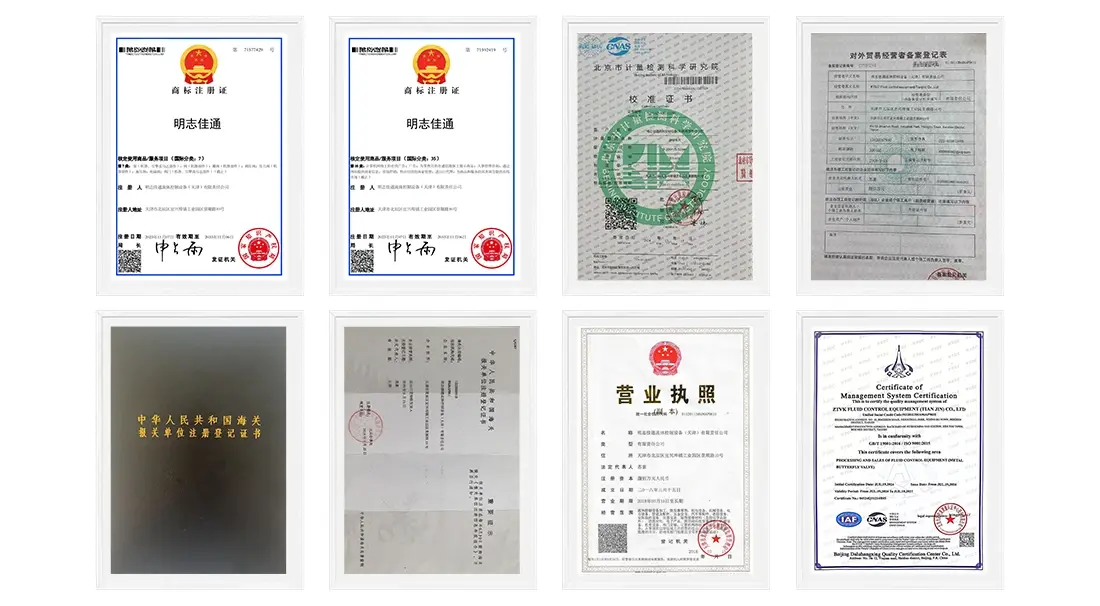
If you need valves for export to Europe or the Middle East, CE marking and PED compliance become mandatory. ZTVK maintains ISO9001/ISO14001 certifications and provides full material traceability for both cast iron and stainless steel products.
ZTVK's Cast Iron Wafer Butterfly Valve Advantages
Material and structural superiority
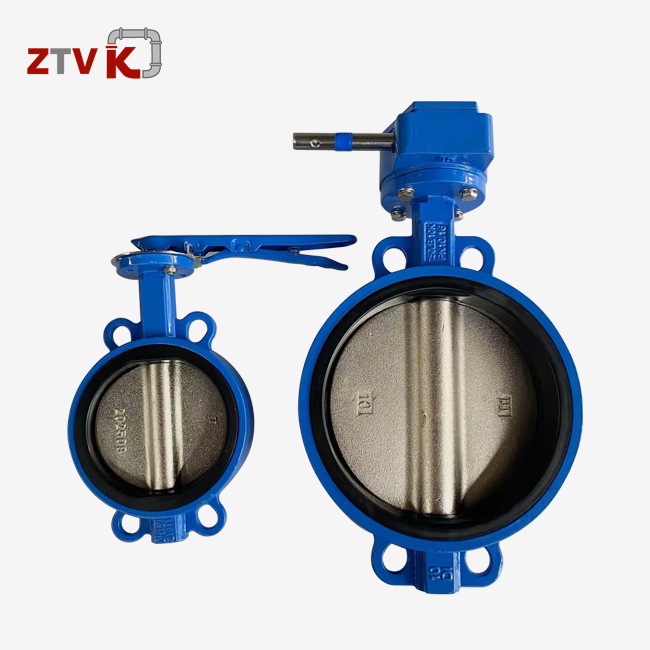
- GGG40 ductile iron bodies exceed ASTM A536 Grade 65-45-12 standards, offering 20% higher tensile strength than standard cast iron wafer butterfly valve. Double eccentric design reduces operating torque by 30% compared to concentric disc valves—critical for manual operation in large diameters
- Oblique cone sealing surface increases sealing contact area by 15%, achieving zero-leakage performance up to PN16
- Epoxy coating thickness reaches 250-300 μm (standard: 150-200 μm), tested to withstand 1,000-hour salt spray exposure
Customization and flexibility
- Support for OEM branding with customer logos laser-etched on valve bodies—ideal for distributors building brand recognition
- ODM services allow seat material substitution (NBR/EPDM/Viton) without mold changes, adapting to different temperature ranges
- Connection options include wafer, lug, and flanged types across DN50-DN2400 sizes—covering 95% of standard applications
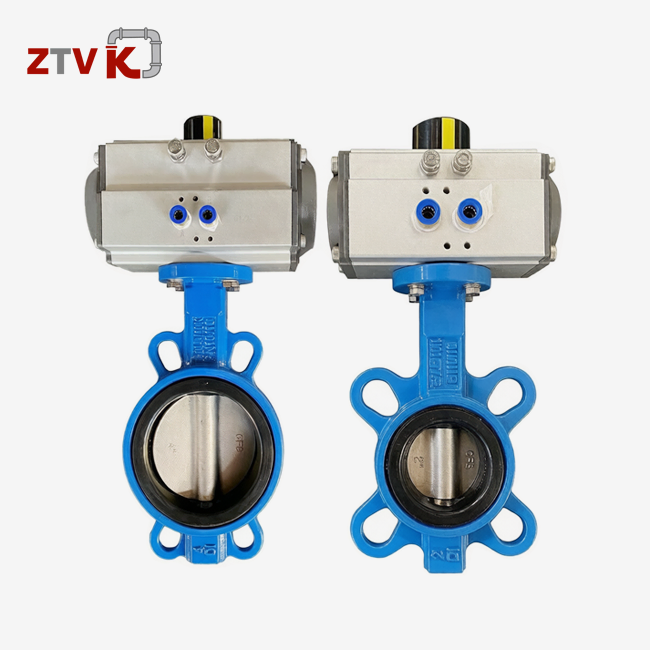
- Actuator-ready designs with ISO5211 mounting pads enable seamless automation upgrades
Supply chain reliability
- 2,000+ units of standard sizes (DN50-DN600) maintained in Tianjin warehouse for 3-7 day delivery post-order
- Non-standard production completed in 15-25 days with rush service available (+20% fee reduces time to 7-10 days)
- The factory location, 50 km from Tianjin Port, enables efficient container loading and reduces inland freight costs
- Long-term partnerships with COSCO and Maersk ensure predictable shipping schedules to Europe, the Middle East, and Southeast Asia
Quality assurance systems
- Every valve undergoes hydrostatic shell and seat testing per API 598 standards before shipment
- Material chemical analysis conducted via spectrometry (certificates provided with each batch)
- 18-month warranty covers manufacturing defects—longest in the industry for cast iron valves
- Third-party inspection support from SGS, TÜV, and Lloyd's Register is available upon request
Technical support infrastructure
- The pre-sales engineering team provides CAD drawings and 3D models within 24 hours of inquiry
- Installation guidance videos in English, Arabic, and Spanish reduce on-site commissioning time
- QR codes on valve nameplates link to digital maintenance records and troubleshooting manuals
- Regional service partners in the UAE, Germany, and Malaysia offer local technical support
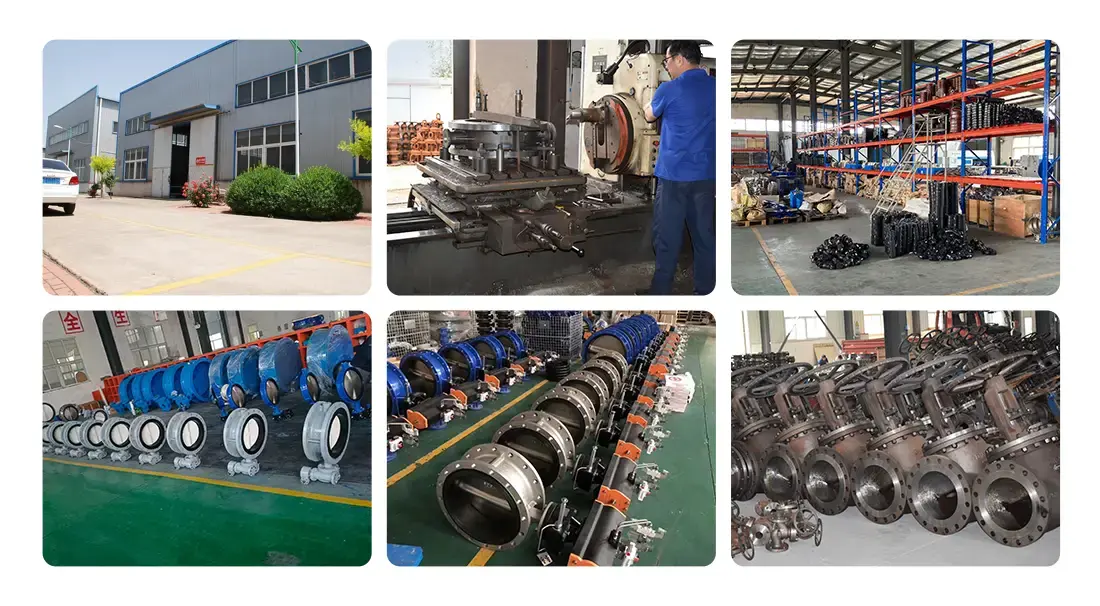
ZTVK's combined production skills get rid of markups for middlemen, so they can be your cast iron wafer butterfly valve source with reasonable prices and on-time delivery. We've been working with city builders and industry dealers for more than 15 years, and return sales show that the quality is always the same.
Conclusion
Choosing between cast iron and stainless steel for butterfly valves depends on the type of media, the temperature range, and the cost goals over the duration. Cast iron works best in neutral-pH water systems, where the original investment is most important. Stainless steel, on the other hand, is worth the higher price because it lasts longer in harsh settings. When distributors buy from makers who offer both types of materials and uniform quality standards, they have an edge over their competitors. Find out which apps your customers use most often, and then make sure your stocking plan matches those technology needs to get the most out of your stock and avoid interface problems.
Partner with ZTVK for Your Industrial Valve Needs
Selecting the optimal butterfly valve material requires balancing immediate budget constraints against long-term performance expectations. Cast iron wafer butterfly valve options deliver proven reliability for water systems and HVAC applications, while stainless steel addresses corrosive and high-temperature challenges. ZTVK's manufacturing facility in Tianjin Bechen District combines advanced CNC machining with rigorous quality control, producing valves that meet API, DIN, and AWWA standards. Our inventory depth supports rapid fulfillment for standard configurations, and OEM/ODM capabilities address specialized requirements. Contact our engineering team at ktec86961886@163.com to receive technical specifications, pricing for your volume requirements, and delivery timelines tailored to your project schedule.
References
1. American Water Works Association. ANSI/AWWA C504-18: Standard for Rubber-Seated Butterfly Valves, Sizes 2 In. Through 72 In. Denver: AWWA Publications, 2018.
2. British Standards Institution. BS EN 593:2017: Industrial Valves – Metallic Butterfly Valves for General Purposes. London: BSI Standards, 2017.
3. Miller, James R. Valve Selection Handbook: Engineering Fundamentals for Selecting the Right Valve Design. Oxford: Butterworth-Heinemann, 2020.
4. American Petroleum Institute. API Standard 609: Butterfly Valves: Double-Flanged, Lug- and Wafer-Type, 11th Edition. Washington, D.C.: API Publishing Services, 2022.
5. Zappe, R. W. Valve Selection Handbook: The Definitive Guide for Valve Applications. Houston: Gulf Professional Publishing, 2019.
6. International Organization for Standardization. ISO 5752:2021: Metal Valves for Use in Flanged Pipe Systems – Face-to-Face and Centre-to-Face Dimensions. Geneva: ISO Central Secretariat, 2021.
Send us your valve requirements and our team will provide professional solutions and fast quotations.
RELATED INDUSTRY KNOWLEDGE