- English
- French
- German
- Portuguese
- Spanish
- Russian
- Japanese
- Korean
- Arabic
- Greek
- German
- Turkish
- Italian
- Danish
- Romanian
- Indonesian
- Czech
- Afrikaans
- Swedish
- Polish
- Basque
- Catalan
- Esperanto
- Hindi
- Lao
- Albanian
- Amharic
- Armenian
- Azerbaijani
- Belarusian
- Bengali
- Bosnian
- Bulgarian
- Cebuano
- Chichewa
- Corsican
- Croatian
- Dutch
- Estonian
- Filipino
- Finnish
- Frisian
- Galician
- Georgian
- Gujarati
- Haitian
- Hausa
- Hawaiian
- Hebrew
- Hmong
- Hungarian
- Icelandic
- Igbo
- Javanese
- Kannada
- Kazakh
- Khmer
- Kurdish
- Kyrgyz
- Latin
- Latvian
- Lithuanian
- Luxembou..
- Macedonian
- Malagasy
- Malay
- Malayalam
- Maltese
- Maori
- Marathi
- Mongolian
- Burmese
- Nepali
- Norwegian
- Pashto
- Persian
- Punjabi
- Serbian
- Sesotho
- Sinhala
- Slovak
- Slovenian
- Somali
- Samoan
- Scots Gaelic
- Shona
- Sindhi
- Sundanese
- Swahili
- Tajik
- Tamil
- Telugu
- Thai
- Ukrainian
- Urdu
- Uzbek
- Vietnamese
- Welsh
- Xhosa
- Yiddish
- Yoruba
- Zulu
Stainless Steel Butterfly Valves vs. Ball Valves: Key Differences
When sourcing flow control components for industrial pipelines, choosing between stainless steel butterfly valves and ball valves is one of the most consequential decisions a procurement engineer can make. Both valve types regulate fluid flow effectively, yet they differ substantially in structure, cost, sealing performance, and application suitability. Understanding these distinctions helps distributors, EPC contractors, HVAC engineers, and OEM manufacturers avoid costly misspecification, reduce downtime, and optimize lifecycle value across water supply, petrochemical, and municipal infrastructure projects.


Understanding Stainless Steel Butterfly Valves and Ball Valves
How Butterfly Valves Work
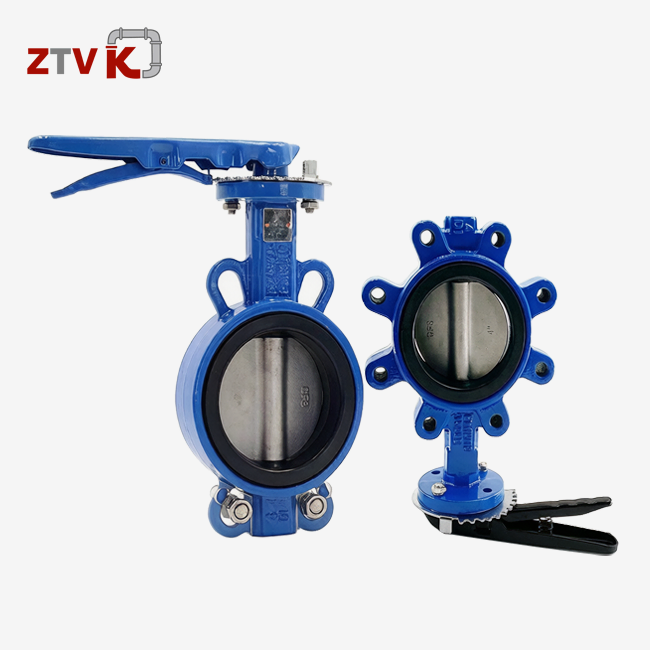
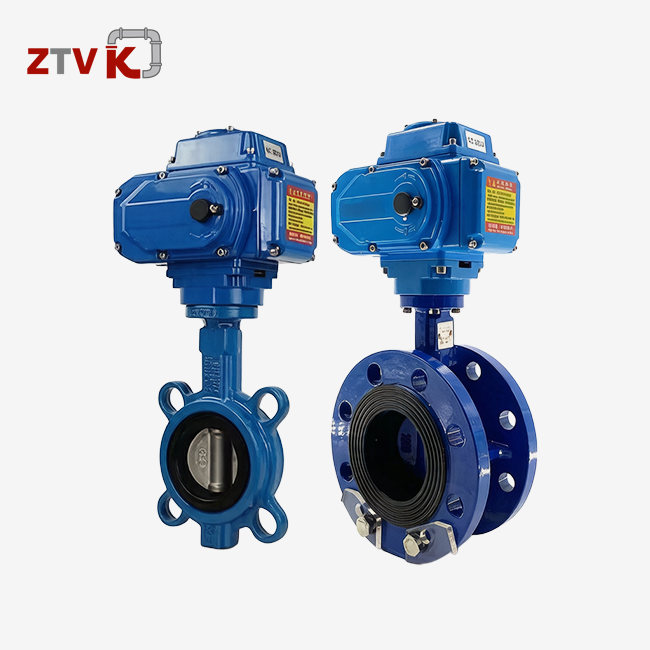
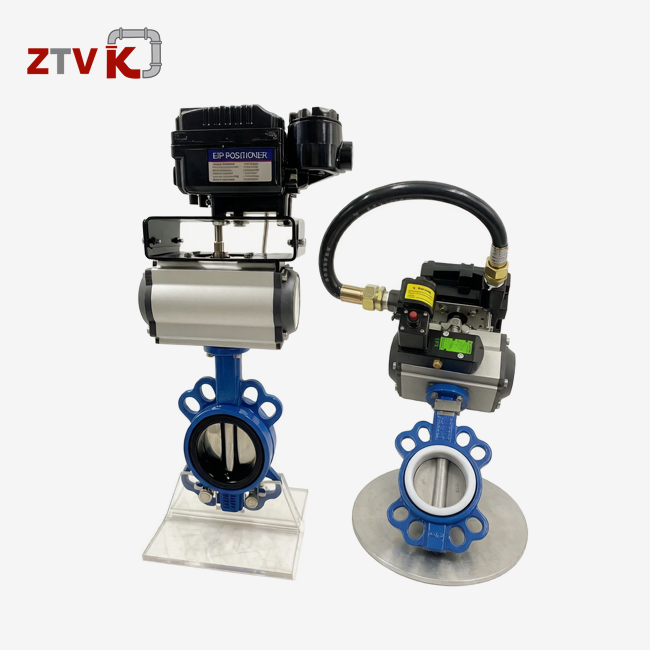
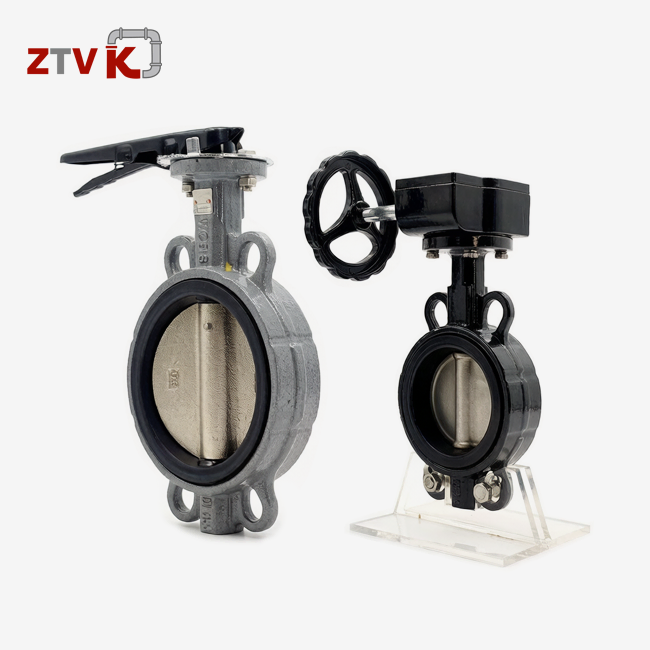
The flow is controlled by a butterfly valve, which consists of a disk that rotates on a stem in the center. When the disk is rotated through a half-turn, it moves from being completely open to completely closed. Due to its modest face-to-face dimensions and low weight, this valve is an excellent choice for large-diameter pipelines in situations where space and weight are of utmost importance. Butterfly valves made of stainless steel (SS304) are manufactured by ZTVK. These valves range in size from DN15 to DN1200 and have pressure ratings ranging from PN0.6 to PN1.6 MPa (150 to 300 pounds). EPDM, Teflon, fluoroelastomer, nitrile, silicone rubber, or wear-resistant ethylene-propylene plastic are some of the materials that may be used to construct the seats. Actuation may be performed manually, electrically, or pneumatically using these valves. Water, saltwater, air, weak acids, oil, weak alkaline liquids, and alcohol are all substances that they are able to manage.
How Ball Valves Work
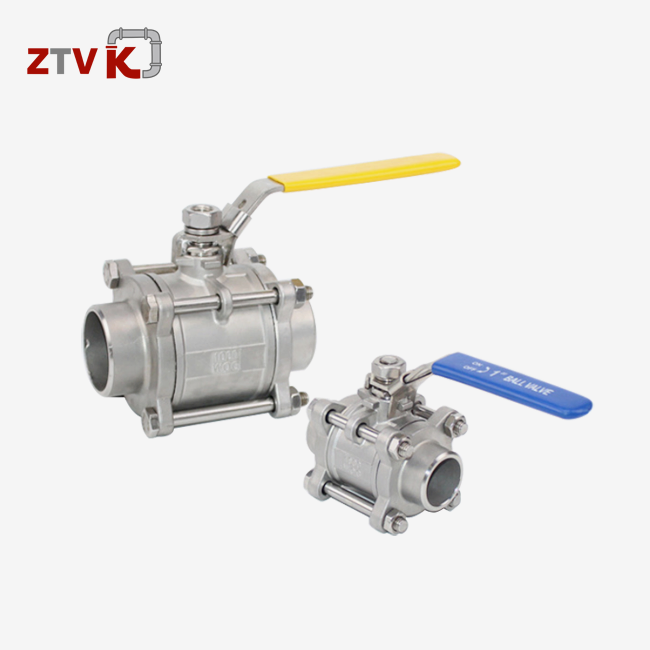
There is a hole in the center of a ball valve, which allows it to shut. The valve is a circular item. The hole may be aligned or stopped with a quarter turn, which enables the valve to operate in a more rapid manner. Gas lines, petrochemical systems, and cryogenic pipelines are all examples of applications that benefit greatly from the usage of ball valves because of their ability to shut rapidly and under high pressure. In general, they are able to bear greater pressures and seal without bubbles; nonetheless, they are more expensive per unit and need more space when installed than butterfly valves.

Key Differences Between Stainless Steel Butterfly Valves and Ball Valves
Selecting between these two valve types for stainless steel butterfly valves requires examining several functional and economic factors. The following breakdown covers the most critical distinctions.
Structural Mechanics and Torque
Even when it is completely open, a butterfly valve disk made of stainless steel remains partly in the flow stream throughout operation. The pressure will reduce somewhat as a result of this, but you will be able to slow down the flow. Ball valves, when they are open, let full-bore flow through with practically no restriction at all. It is beneficial for systems that are sensitive to pressure loss to have this assistance. When it comes to actuation torque, butterfly valves need between 30 and 50 percent less effort than ball valves of comparable size when used in large quantities. Because of this, the costs of actuators are significantly reduced. ZTVK's double-eccentric oblique-seal design reduces the amount of working force by thirty percent while simultaneously increasing the service life to more than fifty thousand repeated cycles.
Sealing Performance and Pressure Range
Due to the fact that they close more securely at greater pressure differences, ball valves are the most suitable option for use in upstream applications involving oil and gas. In general, butterfly valves can shut reliably and bubble-tight at low pressures, often up to PN1.6 MPa. This is particularly true for soft-seated butterfly valves that have EPDM or PTFE seats. This is sufficient for the majority of water treatment, heating, ventilation, and air conditioning, as well as municipal pipeline applications. Ball valves often function better than other types of valves when the working pressure is more than PN2.5 MPa or when abrasive materials are already present.
Cost, Weight, and Installation Footprint
When purchasing in large quantities, the price difference between these two varieties of valves becomes a very significant factor. From a financial and installation standpoint, the following are the primary distinctions between the two:
- When it comes to municipal or HVAC projects that include hundreds of valve positions, butterfly valves have a much lower cost per unit at bigger diameters (DN200 and beyond). This results in a reduction in the overall expenditure for the project.
- Because of the precision-machined spherical closure element and the heavier body materials that are necessary for high-pressure duty, ball valves attract a higher price than other types of valves.
- It is possible to reduce the amount of money spent on labor and support structures in big pipeline assemblies by using butterfly valves since they are lighter and need less face-to-face clearance during installation.
- Due to the self-wiping action of the ball against the seats, ball valves, on the other hand, provide uninterrupted service for a longer period of time in media that are unclean or contain particles.
Choosing the Right Valve for Industrial Use — Decision Factors
Media Compatibility and Application Fit
The nature of the process fluid heavily influences valve selection. ZTVK's stainless steel butterfly valves are compatible with water, seawater, air, weak acids, oil, weak alkaline liquids, and alcohol. This means they can be used in most HVAC, fire protection, and light chemical uses. A ball valve with an SS316 body and PTFE seats usually works better for strong media like concentrated acids, chlorinated liquids, or high-velocity steam because it holds pressure better and the seats last longer.
Actuation and Automation Requirements
Both types of valves support manual handwheel, electric actuator, or pneumatic actuator configurations. Butterfly valves, however, are better for large-scale automatic control because they need smaller, less expensive actuators since they need less force. All of ZTVK's butterfly valves come with actuator interfaces that are already attached. This means that upgrades can be made quickly in the field without having to replace the valve body, which is helpful for EPC contractors managing tight project timelines.
Procurement Strategy for Distributors and OEM Clients
For distributors and trading companies purchasing in bulk, butterfly valves offer greater inventory flexibility due to their standardized face-to-face dimensions per API 609 and ASME B16.5. ZTVK keeps more than 2,000 units in stock in sizes DN50 to DN600, with delivery achievable within 3 to 7 days of order confirmation. Non-standard customization — including OEM branding, custom seat materials, and special coatings — is completed within 15 to 25 days. The factory's proximity to Tianjin Port, just 50 km away, ensures efficient sea freight booking with partners including COSCO Shipping and Maersk.
Comprehensive Comparison Table: Stainless Steel Butterfly Valves vs. Ball Valves
| Parameter | Stainless Steel Butterfly Valve | Ball Valve |
|---|---|---|
| Operating Mechanism | Rotating disc (quarter-turn) | Rotating sphere (quarter-turn) |
| Pressure Rating | PN0.6–1.6 MPa / 150–300 Lb | PN1.6–6.4 MPa and above |
| Diameter Range | DN15–DN1200 | DN6–DN600 (typical) |
| Seat Materials | EPDM, PTFE, nitrile, fluoroelastomer, silicone | PTFE, RPTFE, metal |
| Flow Control | Moderate throttling capability | Primarily on/off; limited throttling |
| Sealing Performance | Bubble-tight at moderate pressure | Bubble-tight at high pressure |
| Weight & Size | Compact and lightweight | Heavier; larger face-to-face |
| Maintenance | Low — resilient seats replaceable in-line | Moderate — seat wear in dirty media |
| Unit Cost (large bore) | Lower | Higher |
| Typical Applications | Water, HVAC, municipal, fire, light chemical | Gas, petrochemical, high-pressure pipelines |
This table serves as a rapid-reference tool during specification and procurement review.
Maintaining and Optimizing Valve Performance in Industrial Settings
Routine Inspection and Care
Valve service life may be extended by proper maintenance, which also helps to avoid unscheduled shutdowns. The most important aspect of maintenance for butterfly valves made of stainless steel is to do routine checks on the elastomeric seat to check for signs of swelling, cracking, or chemical deterioration. This is particularly important when the process fluid undergoes a change. When the disk is in low-speed use, the stem packing should be inspected for leaks on an annual basis, and any silt that accumulates on the surface of the disk should be removed.
The wear on the seat of ball valves, which is caused by particle pollution, requires careful monitoring. In order to drastically minimize the amount of early seat erosion, flushing the pipeline before commissioning new ball valves is recommended. Both kinds of valves may reap the benefits of having their actuators calibrated once every twenty-four months in automated systems.
The correct storage of the item before installation is also important. Valves that are stored in humid or coastal conditions, which are typical in Southeast Asian or Middle Eastern project locations, should be kept in packaging that is resistant to moisture until they are brought to the installation site. For the purpose of avoiding cargo detention at destination ports, ZTVK ships all of its goods in hardwood boxes that are equipped with moisture-proof film and fastened brackets. This ensures that the company complies with the international packaging regulations known as ISPM 15.
Conclusion
Stainless steel butterfly valves and ball valves each serve distinct roles in industrial fluid control. Butterfly valves deliver cost efficiency, compact installation, and reliable performance across water supply, HVAC, municipal drainage, and fire protection systems — particularly in larger diameters. Ball valves suit high-pressure and critical-shutoff applications in gas and petrochemical pipelines. Matching the valve type to the specific operating conditions — pressure, media, diameter, and automation requirements — eliminates premature failure and unnecessary procurement expense. Both product lines comply with international standards including ISO, API, ANSI, DIN, and BS, when sourced from a certified manufacturer.
FAQ
1. Can stainless steel butterfly valves handle seawater service?
Yes. SS304 butterfly valves with EPDM or fluororubber seats perform reliably in seawater and brackish water systems. For prolonged offshore or chloride-heavy environments, upgrading to SS316 material provides superior pitting resistance due to the added molybdenum content.
2. What seat material should I specify for weak acid media?
PTFE (Teflon) seats are the standard recommendation for weak acid service. They resist most dilute acids and maintain dimensional stability across a broad temperature range. Fluorine rubber seats are an alternative for applications involving petroleum-based acids.
3. Are butterfly valves suitable for throttling service?
Butterfly valves provide moderate throttling capability, particularly in the 15–70 degree disc position range. They are not recommended for precise proportional control in high-velocity gas systems, where a globe valve or control valve is more appropriate.
4. What is the difference between wafer and flanged butterfly valves?
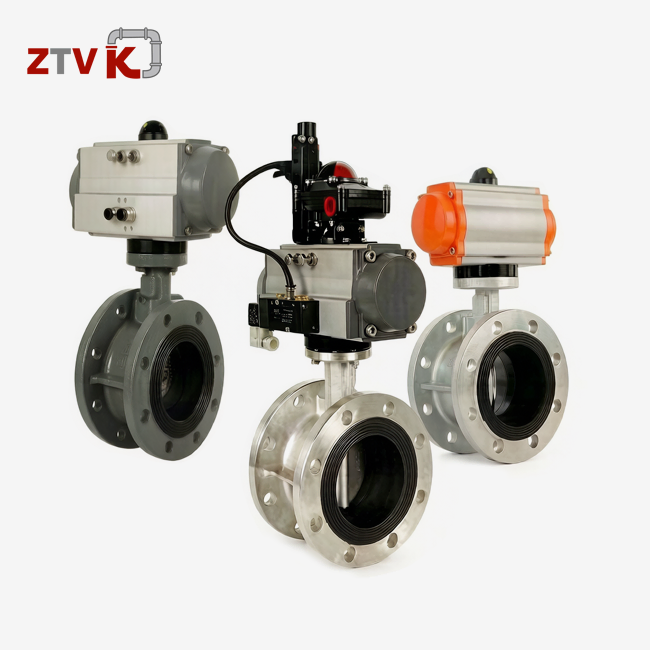
A wafer butterfly valve fits between two pipe flanges and cannot support dead-end service. A flanged butterfly valve has flanges built right in, which lets you remove downstream pipes while the valve stays under pressure. Flanged types suit larger diameters and higher-stress installations.

Get Stainless Steel Butterfly Valves from a Certified Manufacturer — Contact ZTVK Today
ZTVK delivers ISO9001-certified stainless steel butterfly valves built for global industrial demands, from DN15 municipal fittings to DN1200 large-bore pipeline systems. With 2,000+ units in stock, OEM branding support, and direct port access through Tianjin, we help distributors and project contractors meet tight deadlines without compromising quality. Reach our engineering team at ktec86961886@163.com.
References
1. Valve Magazine. (2022). Material Selection for Industrial Valves: Stainless Steel in Corrosive Service. Valve Manufacturers Association of America.
2. American Society of Mechanical Engineers. (2021). ASME B16.34 – Valves: Flanged, Threaded, and Welding End. ASME.
3. International Plant Equipment & Machinery Association. (2023). Global Valve Market Procurement Trends Report. IPEMA.
4. API. (2020). API 609 – Butterfly Valves: Double-Flanged, Lug- and Wafer-Type. American Petroleum Institute.
5. ISPM 15. (2019). Regulation of Wood Packaging Material in International Trade. International Plant Protection Convention, FAO.
6. Fluid Controls Institute. (2022). Selection and Application Guide for Quarter-Turn Valves. FCI.
Send us your valve requirements and our team will provide professional solutions and fast quotations.
RELATED INDUSTRY KNOWLEDGE