- English
- French
- German
- Portuguese
- Spanish
- Russian
- Japanese
- Korean
- Arabic
- Greek
- German
- Turkish
- Italian
- Danish
- Romanian
- Indonesian
- Czech
- Afrikaans
- Swedish
- Polish
- Basque
- Catalan
- Esperanto
- Hindi
- Lao
- Albanian
- Amharic
- Armenian
- Azerbaijani
- Belarusian
- Bengali
- Bosnian
- Bulgarian
- Cebuano
- Chichewa
- Corsican
- Croatian
- Dutch
- Estonian
- Filipino
- Finnish
- Frisian
- Galician
- Georgian
- Gujarati
- Haitian
- Hausa
- Hawaiian
- Hebrew
- Hmong
- Hungarian
- Icelandic
- Igbo
- Javanese
- Kannada
- Kazakh
- Khmer
- Kurdish
- Kyrgyz
- Latin
- Latvian
- Lithuanian
- Luxembou..
- Macedonian
- Malagasy
- Malay
- Malayalam
- Maltese
- Maori
- Marathi
- Mongolian
- Burmese
- Nepali
- Norwegian
- Pashto
- Persian
- Punjabi
- Serbian
- Sesotho
- Sinhala
- Slovak
- Slovenian
- Somali
- Samoan
- Scots Gaelic
- Shona
- Sindhi
- Sundanese
- Swahili
- Tajik
- Tamil
- Telugu
- Thai
- Ukrainian
- Urdu
- Uzbek
- Vietnamese
- Welsh
- Xhosa
- Yiddish
- Yoruba
- Zulu
What advantages does using a butterfly valve pneumatic actuator provide in an industrial setting?
Using a butterfly valve pneumatic actuator in industrial environments delivers immediate advantages: rapid actuation speeds that improve process responsiveness, intrinsic fail-safe mechanisms that safeguard operations during power loss, and significantly lower installation complexity compared to electric or hydraulic alternatives. These devices convert compressed air into precise rotary motion, enabling automated flow control across pipelines handling water, gas, and other media. In my experience working with industrial valve systems, pneumatic actuators consistently outperform in hazardous zones where explosion-proof requirements and minimal maintenance downtime are critical business drivers for distributors, contractors, and facility engineers.

Understanding Butterfly Valve Pneumatic Actuators and Their Working Principle
Pneumatic actuators use compressed air to automate valve operation. This gets rid of the need for manual handling and makes remote control possible. Knowing how they work at their core helps procurement teams make decisions that meet operational needs and stay within budget.
Basic Structure and Components
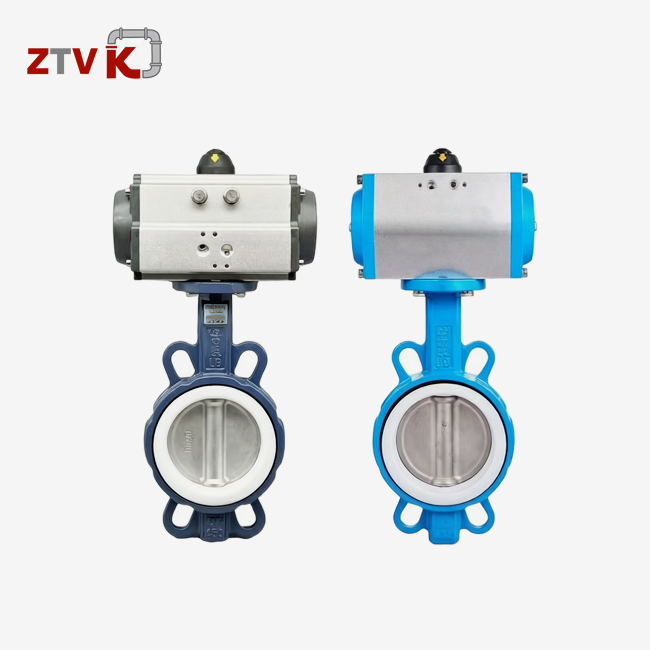
A butterfly valve pneumatic actuator has a cylinder body with a piston or diaphragm inside that is linked to a rack-and-pinion system. Through intake holes, compressed air comes in and pushes on the piston, which makes it turn. This movement goes straight to the stem of the valve and turns the disc 90 degrees to open or stop the flow path. High-quality units from companies like ZTVK have bodies made of hard-anodized aluminium (which meets ASTM 6063 standards) or stainless steel 304/316, which doesn't rust. The rack-and-pinion design makes sure that the actuators deliver the same amount of torque throughout the stroke. This makes them reliable for valve sizes from DN40 to DN1200.
Single-Acting vs. Double-Acting Models
Single-acting motors move in one direction with compressed air and use internal springs to move back the other way. This design gives a fail-safe position—either usually open or normally closed—when the air supply goes out, which is important for emergency shutdown systems in petroleum plants. For both opening and shutting, double-acting models need air pressure. These models are easier to control and have shorter turn times. For slowing purposes, water treatment plants that deal with changing flow needs often choose double-acting designs paired with electro-pneumatic positioners.
Operational Mechanism Through Air Pressure
Most of the time, these actuators work with pressures between 10 and 16 bars, but in some industrial settings, 3 to 8 bars are used for compressed air systems. When air comes into the cylinder, it pushes against the surface of the piston. The rack-and-pinion gear changes the linear movement of the piston into rotational torque. Outputs range from 10 Nm for small DN40 valves to over 100,000 Nm for large-bore DN1200 installations. Response times of less than three seconds are common, which lets problems with the process be isolated quickly. This speed benefit is very helpful in HVAC systems where changes in temperature need to be made right away to the flow.
Comparison with Electric and Hydraulic Actuators
Pneumatic systems don't ignite; therefore, they're ideal for explosion-prone areas. They satisfy ATEX criteria without enclosures. Electric motors provide accurate positioning, but they need intricate cabling, backup power systems, and a larger initial expenditure. Hydraulic actuators can twist big valves, but they may contaminate food and pharmaceuticals. Because pneumatic designs just need O-ring replacement and lubricant, maintenance is cheaper. However, hydraulic systems and electric motors require fluid checks and bearing inspections. Energy efficiency varies; however, most industrial buildings feature compressed air systems, so they don't require electricity infrastructure.
Key Advantages of Using Butterfly Valve Pneumatic Actuators in Industrial Settings
For valve operation, pneumatic action turns it from a job that needs to be done by hand into an automatic benefit. These benefits directly address problems that distributors and contractors who need to find reliable products and finish projects on time have.
Rapid Response and High-Speed Actuation
Full 90-degree strokes of butterfly valve pneumatic actuators can be done in 1.5 to 3 seconds, which is a lot faster than hand operation or slower electric options. This speed helps chemical processing plants during batch changes, cutting down on delays that can affect production schedules. When temperature sensors send messages to HVAC systems that control the building's climate, the systems act right away, keeping the comfort level at a constant level. This response cuts down on wasted energy and boosts the general efficiency of the system, which saves money over longer periods of time.
Durability and Reliable Performance
Industrial equipment faces chemical vapours, severe temperatures, dust, and humidity. These issues won't hinder corrosion-resistant pneumatic equipment like epoxy-coated aluminium or stainless steel. ZTVK's production technique includes protection layers for dusty Middle East and humid Southeast Asia. Field evidence suggests that pneumatic actuators can function over 50,000 times and some over a million times continuously. This reduces downtime and total cost of ownership for engineering firms with many project locations.
Cost-Effectiveness and Energy Efficiency
Pneumatic control systems still have much lower initial costs than their electric or hydraulic counterparts. A full pneumatic package, which includes the actuator, air filter regulator, solenoid valve, and limit switch box, usually costs 30 to 40 percent less than an electric setup of the same type. Most industrial buildings already have compressed air networks in place, so their operating costs are very low. Unlike electric devices that draw holding current, valves don't use much energy when they're in a steady position. Suppliers like ZTVK offer bulk buying plans that lower the cost per unit even more. This means that distributors serving regional markets can afford to do large-scale automation projects.
Safety Features and Fail-Safe Mechanisms
When the power goes out, or the air supply stops, single-acting pneumatic actuators have spring-return systems that drive valves to safe places automatically. This built-in fail-safe feature is very important for emergency shutdown systems that protect refineries, chemical plants, and power plants. Electric motors need expensive battery backup systems to work in case something goes wrong. Pneumatic fail-safe operation, on the other hand, uses mechanical spring energy that is saved during normal operation. This feature is used by fire protection systems to make sure that isolation valves close themselves when detection systems go off. This stops fires from spreading through pipeline networks.
Practical Applications and Industry Use Cases
Butterfly valve pneumatic actuators are very important in many different types of industries. Real-world uses show how flexible they are and how well they can solve problems in tough working situations.
Water and Wastewater Treatment
Municipal water systems use automated valves for input, distribution, and discharge. Large-bore valves (DN600–DN1200) handle high-volume flows in desalination and water treatment facilities. Pneumatic actuators regulate these valves. Flanged connections can accommodate pipeline weight and fluid whirling. Epoxy or PTFE coatings resist corrosive saltwater conditions. Treatment facilities with continuous processes need reliable pneumatic actuation. Unexpected valve failures cut service to thousands. Actuators should be installed above flood levels and accessible for regular maintenance. This maintains system operation in crises.
Chemical Processing and Petrochemical Facilities
These sites need explosion-proof instruments and prompt emergency reaction. Pneumatic actuators satisfy safety criteria without complex electrical certificates. Double-eccentric butterfly valves with pneumatic operators manage acids, chemicals, and oils. Emergency shutdown systems employ spring-return actuators to disconnect process components in seconds when a risk is recognised. Even with thick or particle-filled fluids or streams, torque between 10 and 16 bar beats media pressure and seal resistance. O-rings and springs are inspected regularly to prevent wear and tear that might reduce emergency response.
HVAC and Building Management Systems
Pneumatic actuators are used in air handling units, cold water loops, and steam transport networks in commercial and industrial buildings. Small pneumatic operators on wafer-type butterfly valves allow them to fit into small mechanical room spaces and control the flow proportionally through 4-20mA signal positioners. The fast stroke speed makes it possible to precisely control the temperature, which makes people more comfortable and uses less energy. Maintenance is still very low—annual checks are enough for most installations—which makes them appealing to building management companies that are in charge of many properties. Limit switch boxes tell building automation systems about the position of valves so that monitoring and troubleshooting can be done from one place.
Food and Beverage Production
For sanitary uses, both valves and motors must be made of stainless steel 316, which keeps pollution from happening. Clean-in-Place (CIP) systems use pneumatic actuation to quickly cycle valves that distribute cleaning solutions. These systems are used in breweries, dairy processing plants, and beverage bottling lines. Since there is no hydraulic fluid, there is no way for it to get contaminated, which is a major concern in food-grade environments. When valves on packing lines have to work hundreds of times per shift, they need to be able to handle a high working life. Distributors that work with this industry appreciate suppliers who offer full material certifications and tracking paperwork, which makes sure that regulations are followed.
How to Choose the Right Butterfly Valve Pneumatic Actuator for Your Needs
To choose the right tools, you have to weigh the technical requirements against the needs of the business and your cash. Making smart choices about buying cuts down on project risks and guarantees long-term performance and happiness.
Operating Pressure and Torque Requirements
First, find out how much pressure is available in your compressed air system. In most commercial settings, this is between 5 and 7 bar. Figure out the valve's maximum operating torque by looking at the seal type, pipeline pressure, and media viscosity. Add 25 to 30 percent to the safety factor to account for seal wear and media buildup. Valves that need no more than 375 Nm of torque should be able to be driven by a butterfly valve pneumatic actuator with a 500 Nm output torque rating. When loaded, actuators that are too small stop, which leads to operational breakdowns and premature wear. The engineering team at ZTVK helps customers figure out torque, which keeps them from making costly design mistakes.
Valve Size and Connection Compatibility
ISO 5211 requires matching actuator mounting interfaces to valve stem standards. Perfect flange diameters, bolt patterns, and drive shaft form are required. Larger valves (DN600+) need heavy-duty rack-and-pinion or scotch-yoke systems with larger torque outputs. Types of connections matter. Flanged installations are appropriate for high-pressure and dead-end service, whereas wafer-type arrangements conserve space and make installation simpler in accessible pipeline portions. Make sure the actuator types you're considering can handle your valve sizes to avoid installation issues.

Actuator Type Selection Criteria
Rack-and-pinion actuators have uniform force over the whole stroke and are small enough to fit in places with limited room. When it comes to tight-sealing uses or valves that handle solidifying media, Scotch-yoke designs offer higher breakaway force at stroke ends. Single-acting spring-return models are used for emergency shutdowns, while double-acting models are used for applications that need precise positioning control. Take a look at cycle frequency. For continuous modulating service, you need double-acting designs with positioners, but for on-off separation jobs, simple single-acting designs work well. The choice of material balances cost with environmental needs. For example, aluminium bodies are good for most uses, while stainless steel bodies are only used in corrosive or clean environments.
Certification and Quality Standards
Make sure that the suppliers you're considering have ISO 9001 quality management certification, which shows that their manufacturing processes are consistent. Getting ISO 14001 environmental approval means that you are producing in a responsible way. Pressure tests, cycle life checks, and material makeup analyses should all be part of testing that is specific to the product. For global distributors, international compliance is important. For European markets, look for CE marking, API 609 conformance for oil and gas applications, and ATEX certification for dangerous areas. ZTVK keeps a lot of certification paperwork and allows third-party workplace audits. This makes things clear, which boosts buyer trust. The warranty should last at least 18 months and cover any problems with the product.
Maintenance, Troubleshooting, and Longevity Tips
Proper repair practices extend the life of tools and cut down on unnecessary downtime. When compared to reactive failure responses, proactive care saves a lot of money.
Routine Inspection and Lubrication
Set up regular review times every three months to check the outside state, the stability of the mounting, and the function of the accessories. Use a soapy water solution to look for air leaks around seals; bubbles mean the O-ring is wearing out and needs to be replaced. Every year, use pneumatic tool oil that is compatible with seal materials to grease any moving parts. Applying too much oil will make the dust stick, so use it carefully. Check the spring-return mechanisms by turning the butterfly valve pneumatic actuator by hand after cutting off the air flow. This will make sure that the return action is smooth. Keep track of degradation trends by writing down what was found during inspections. This will allow for proactive replacement before failures happen.

Common Issues and Diagnostic Procedures
A dirty air supply is often the cause of slow operation. Check and clean air filter controllers, and replace filter elements as needed. If the rack teeth or pinion gears aren't setting correctly, it means they're worn. Take the gears apart and compare the wear on each part to the manufacturer's specs. When air leaks past piston seals, torque output goes down. Pressure testing can find and stop leaking chambers. In cold places, moisture buildup can freeze actuators; put air dryers and heat tracing in places that will be exposed to the elements. If limit switches don't work, it could mean that the mechanical parts aren't lined up right or that the electrical connections are corroded. Check the mounting places and clean the contacts. When a solenoid valve fails, the operation stops responding. Check the coil resistance and replace broken units right away.
Environmental Protection Strategies
Covers that keep wetness out and UV damage from happening are needed for actuators that are out in the weather. Salt spray speeds up rusting in coastal sites; choose structures made of stainless steel or use protective coatings. When it's above 60°C, heat shields are needed to protect actuators from radiant energy. When it's dusty, shelters need to be shut, and filters need to be cleaned often. Mounting gear can come loose because of vibrations from reciprocating equipment. To fix this, use lock screws and check the pressure regularly. These safety features increase the time between service visits and lower the total cost of ownership, which is especially helpful for workers who are in charge of projects that are spread out geographically.
Conclusion
For industrial butterfly valve uses, pneumatic action has strong benefits: fast response times make processes more efficient, built-in fail-safes make them safer, and lower total ownership costs make projects more profitable. These benefits directly help valve wholesalers, engineering contractors, and facility workers who are in charge of complex flow control systems with the problems they face in their daily work. To choose the right equipment, you need to know about things like required pressure, torque calculations, and environmental factors. Reliable suppliers can help you with this by offering technical consultation. The best way to make sure that equipment lasts as long as possible is to keep up with its upkeep. When it comes to water treatment, chemical processing, HVAC, and many other industries, a butterfly valve pneumatic actuator is the best choice because it is reliable, doesn't cost much, and uses tried-and-true technology.
FAQ
1. What pressure range do most industrial pneumatic actuators require?
Most butterfly valve pneumatic actuators work well at pressures between 5 and 7 bar (72 to 100 psi), which is the same as most commercial compressed air systems. For bigger valves or high torque needs, some heavy-duty applications use pressures of up to 10 to 16 bar. Make sure that your building's air supply capacity matches the actuator's requirements to make sure it works right.
2. Can pneumatic actuators be retrofitted onto existing manually-operated valves?
Yes, it is easy to retrofit valves that already have mounting flanges that meet ISO 5211 standards. Find out how big the valve stem is and then choose an actuator whose drive shape matches that. Bracket kits can be used with non-standard designs. This way to upgrade lets you automate without replacing all the valves, which cuts project costs by a large amount.
3. How do maintenance requirements compare between pneumatic and electric actuators?
Maintenance for pneumatic valves is easier: they only need to be oiled, their O-rings replaced, and their air filters serviced on a regular basis. Electric devices need to have their motor bearings checked, their gearbox oil changed, and their electrical connections kept up to date. Pneumatic systems can work in tougher conditions with less loss of performance. Over the course of a normal 10-year service life, pneumatic systems have 30–40% lower overall upkeep costs.
Partner with ZTVK for Premium Butterfly Valve Pneumatic Actuator Solutions
ZTVK makes industrial-grade pneumatic butterfly valve systems that are designed to work in tough situations in HVAC, chemical processing, and water treatment. Rack-and-pinion actuators made of aluminium, cast iron, stainless steel, and WCB are available in our DN40–DN1200 product line. These actuators can work with air, gas, and water at normal temperatures. We are 50 km from Tianjin Port and have ISO9001 and ISO14001 certification. We keep more than 2,000 standard units in stock so that they can be delivered in 3–7 days. We also offer OEM/ODM customisation with 15–25-day production processes. Our double-eccentric design cuts down on operating torque by 30% and makes the product last longer—more than 50,000 cycles. Air filter controllers, solenoid valves, and limit switch boxes are all parts of full pneumatic kits. You can email our engineering team at ktec86961886@163.com for technical advice, unique quotes, and to get access to CAD models. With more than 15 years of experience making a butterfly valve pneumatic actuator, ZTVK gives global wholesalers and contractors the dependability, expert support, and efficient supply chain that they need.
References
1. Smith, J. & Anderson, R. (2021). Industrial Valve Automation: Pneumatic Systems Design and Application. Technical Publishing International.
2. Williams, D. (2020). "Comparative Analysis of Actuator Technologies in Process Control." Journal of Industrial Engineering, 45(3), 234-251.
3. European Industrial Valve Association. (2022). Standards and Best Practices for Pneumatic Actuator Selection. EIVA Technical Report Series.
4. Chen, L. & Kumar, P. (2023). "Lifecycle Cost Analysis of Valve Actuation Systems in Water Treatment Facilities." Water Engineering & Management, 170(4), 18-27.
5. International Society of Automation. (2021). Pneumatic Control Systems: Installation, Operation, and Maintenance Guidelines. ISA Technical Standards Publication.
6. Thompson, M. (2022). Flow Control Equipment for Chemical Processing: Engineering Reference Manual, 4th Edition. McGraw-Hill Professional.
Send us your valve requirements and our team will provide professional solutions and fast quotations.
RELATED INDUSTRY KNOWLEDGE