- English
- French
- German
- Portuguese
- Spanish
- Russian
- Japanese
- Korean
- Arabic
- Greek
- German
- Turkish
- Italian
- Danish
- Romanian
- Indonesian
- Czech
- Afrikaans
- Swedish
- Polish
- Basque
- Catalan
- Esperanto
- Hindi
- Lao
- Albanian
- Amharic
- Armenian
- Azerbaijani
- Belarusian
- Bengali
- Bosnian
- Bulgarian
- Cebuano
- Chichewa
- Corsican
- Croatian
- Dutch
- Estonian
- Filipino
- Finnish
- Frisian
- Galician
- Georgian
- Gujarati
- Haitian
- Hausa
- Hawaiian
- Hebrew
- Hmong
- Hungarian
- Icelandic
- Igbo
- Javanese
- Kannada
- Kazakh
- Khmer
- Kurdish
- Kyrgyz
- Latin
- Latvian
- Lithuanian
- Luxembou..
- Macedonian
- Malagasy
- Malay
- Malayalam
- Maltese
- Maori
- Marathi
- Mongolian
- Burmese
- Nepali
- Norwegian
- Pashto
- Persian
- Punjabi
- Serbian
- Sesotho
- Sinhala
- Slovak
- Slovenian
- Somali
- Samoan
- Scots Gaelic
- Shona
- Sindhi
- Sundanese
- Swahili
- Tajik
- Tamil
- Telugu
- Thai
- Ukrainian
- Urdu
- Uzbek
- Vietnamese
- Welsh
- Xhosa
- Yiddish
- Yoruba
- Zulu
Motorized Butterfly Valve Installation and Maintenance Guide
A motorized butterfly valve combines an electric actuator with a quarter-turn disc mechanism to regulate fluid flow with precision and speed. Whether you manage water treatment infrastructure, HVAC systems, or petrochemical pipelines, understanding how to install and maintain this device correctly directly impacts system uptime and operational safety. This guide covers working principles, step-by-step installation procedures, routine maintenance protocols, and selection criteria — equipping procurement managers, contractors, and engineers with practical knowledge to get the most out of every electric butterfly valve in service.


Understanding Motorized Butterfly Valves: Working Principle and Components
How the Electric Actuator Drives Flow Control
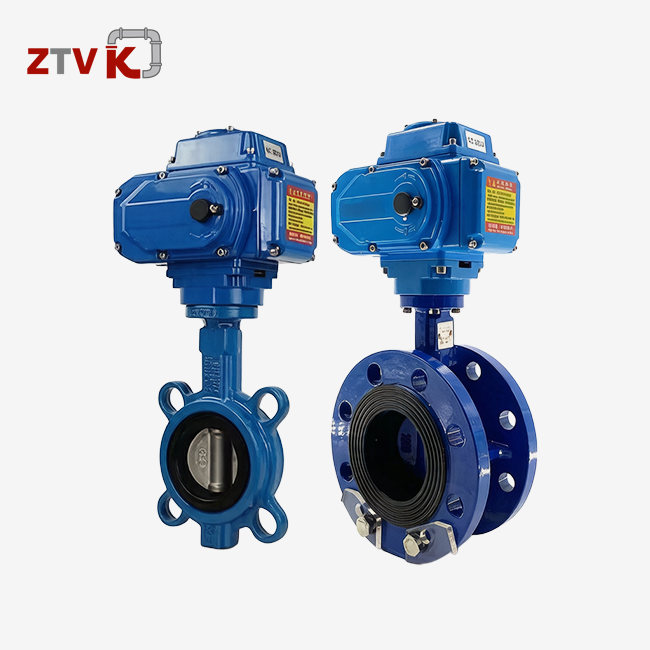
An electric motor turns the disk of the valve 90 degrees to let flow through or stop it. An IP67-rated cast aluminum alloy or ductile iron case holds the actuator. Inside, a self-locking worm-gear train changes the motor power into rotational force on the stem. The self-locking system keeps the disk in place even if the power goes out, so line pressure doesn't cause it to back-drive. Control signals include simple on/off switches and 4–20 mA analog inputs for modulating duty. This lets them be connected to PLC and DCS platforms without the need for extra hardware.
Key Components and Material Options
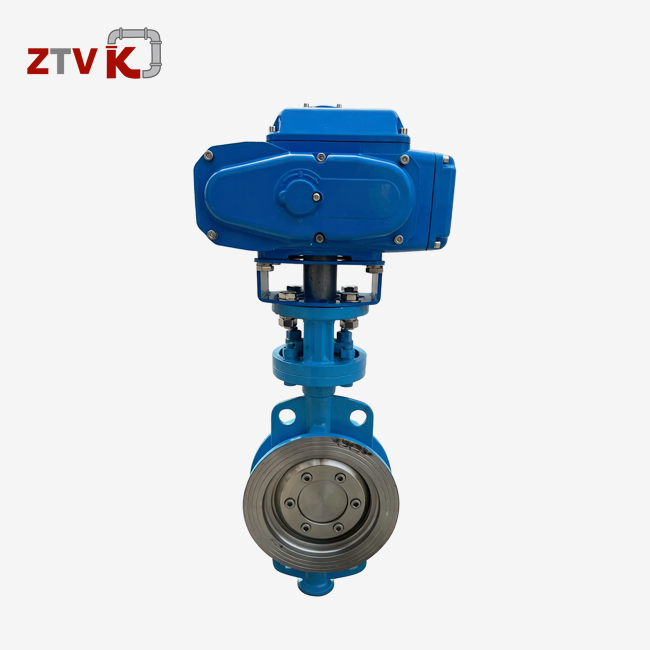
The valve body, disk, seat, and stem all have different jobs to do, and the choice of material directly affects how well it works with the fluid medium. The wafer-type butterfly valve from ZTVK comes in sizes ranging from DN40 (1.5") to DN1200 (48"). It can handle working pressures of PN10 and PN16 and joins using ISO 5211 flange patterns that are suitable with PN10 and PN16, 125LB and 150LB, and JIS 5K/10K/16K standards. Here are the possible combinations of core materials:
- Body: Made of ductile iron (DI/QT450), which provides reliable structural strength in municipal water, HVAC, and light industrial media while keeping costs low in large-diameter uses.
- Disc: The disc can be made of DI, CF8 (304 SS), CF8M (316 SS), or aluminum bronze. CF8M is better at resisting chloride for coastal desalination loops, while aluminum bronze works best in seawater and marine HVAC circuits where dezincification is a known risk.
- Seat: Matching the seat elastomer to the medium is the most important part of valve specification. EPDM is good for water and steam up to 150 °C, NBR is good for oils and fuel lines, PTFE is good for harsh chemicals, and VITON is good for high-temperature hydrocarbon service.
Most wholesalers and workers who work in warm, humid, or chemically aggressive settings have trouble with corrosion and pressure compatibility. These mixes work well to solve those problems.

Step-by-Step Motorized Butterfly Valve Installation Guide
Pre-Installation Checks
Make sure the motorized butterfly valve's pressure rating, face-to-face measurement, and flange drilling pattern match the pipeline drawing before you touch a wrench. Compare the measured torque of the actuator to the needed unseating torque of the valve. A minimum 1.3× safety margin is required by industry standards. Get three things: calibrated torque wrenches, a spirit level, and the wiring diagram from the manufacturer. Once the line section is no longer under pressure, drain it and then turn off the control circuit.
Mechanical Mounting and Electrical Wiring
Place the wafer valve between the flanges so that the disk is partly open. This will protect the seat rubber while the bolt is tightened. Tighten the flange bolts in a diagonal cross-pattern to make sure the gasket is compressed evenly. Tightening too much on one side will damage the seat and cause it to leak before it should. Once the body is in place, attach the actuator to the ISO 5211 top pad using the correct adapter bracket. Incorrect adapters are a common reason why stem shear fails during field installations.
Wiring needs the same care. To keep electromagnetic interference out of PLC loops, route signal cables away from power conductors. Connect the ground connection before the live wires and make sure the voltage source fits the nameplate on the actuator. Common voltages are 24V DC, 220V AC, and 380V AC. After wiring, do a bench stroke test: tell it to open all the way, watch how long it takes to move, then tell it to close all the way and make sure the limit switch works. The valve should not be put under live system pressure until it has passed a clean bench test.

Essential Maintenance Tips for Motorized Butterfly Valves
Routine Inspection and Cleaning Schedule
A regular check schedule stops things from wearing out over time, which leads to parts being needed out of the blue. Plan to visually check visible valves every three months and internally check valves that handle slurry or chemically active media every six months. When you do an inspection, look for seat swelling, disk surface pitting, and corrosion in the actuator housing. A soft brush and a gentle solvent can be used to remove scale or biofilm layers from the edge of the disk. Abrasive tools will scratch the sealing surfaces and speed up seat wear.
Lubrication and Troubleshooting Actuator Faults
Every year, grease the stem packing and gear train with grease that is allowed by the maker. Greases made from petroleum should not be used on EPDM seats because they make the elastomer swell. When a valve gets stuck in the middle of its stroke, the most common reasons are a seat that has shrunk from thermal cycling, something stuck between the disk and the seat, or old gears that don't provide enough actuator power. To run diagnostics, stroke the valve by hand with the declutch lever. If the valve moves smoothly when operated by hand but the actuator stops moving, the problem is either electrical or mechanical in the actuator. Before you order a new unit, make sure the motor winding resistance and thermal overload reset are both good. A survey by Valve World found that failures related to the actuator cause about 38% of unplanned valve downtime in process plants.
Choosing the Right Motorized Butterfly Valve and Actuator for Your Application
On/Off vs. Modulating Duty
With on/off actuators, the motorized butterfly valve disk can be hard-stop open or closed. This makes them perfect for isolating service in fire protection heads and city water mains. Modulating motors, which can handle 4–20 mA or 0–10 V signals, can stop at any angle to slow flow, which is needed in chemical dose lines and chiller bypass loops. It's not bad to use a modulating actuator for an on/off task, but using an on/off unit for modulating work leads to hunting, faster seat wear, and control instability.
When deciding between electric and gas butterfly valves, you should think about which one is more useful. Pneumatic actuators have faster stroke speeds, but they need a way to connect to compressed air. Electric actuators are self-contained, easy to connect to BMS platforms, and use no energy when they are in a holding position, which saves a lot of money on running costs in big HVAC plants.
Selection Criteria for Procurement Professionals
Before placing an order, you should look at these factors in addition to power and control type:
- Ingress protection: For outdoor or wet-pit installations, ingress protection must be at least IP67. For submerged service, IP68 is required.
- Certifications: It has been certified with ISO 9001 for quality management, CE marking for compliance with European market rules, and explosion-proof (Ex d) rating for areas with hydrocarbons.
- Fail-safe mode: In fail-safe mode, emergency stop valves on important process lines can use battery backup or spring-return modules.
- Enclosure material: Epoxy powder-coated metal works well in mild humidity, while ductile iron housings are better for heavy industrial settings where they need to withstand impact.
When you match these factors to your project datasheet, it cuts down on RFI cycles and speeds up the sourcing process for EPC projects that need to be done quickly.
Maximizing Valve Performance: Installation Best Practices and Long-Term Maintenance Strategy
Reliable data exchange between the actuator and the upstream controller is needed for the valve to keep working well. Check that the actuator's return signal, which is usually a 4–20 mA position transmitter, gets to the PLC within the update time that was set. If the signal drops out, the control loop will oscillate, and the valve will cycle too often, which shortens the life of the seat.
Add real operating data to the manufacturer's maintenance plans. If your CMMS shows that a certain valve needs to be fixed without warning every eight months, don't wait for the next failure to cut the time between planned inspections. Cross-train your maintenance staff on both the electrical and mechanical parts of actuated valves. Teams that only know one area take a lot longer to figure out what's wrong with complex problems. In the future, IoT-enabled smart actuators will have torque trend loggers and cycle counts built right into the actuator. These will send condition data to cloud displays without the need for field visits. This skill is getting better quickly and should be included in the requirements for buying things for new projects.
Conclusion
It's not hard to install and take care of a motorized butterfly valve the right way, but you have to pay attention at every step, from choosing the right material and torque size to lubricating it regularly and checking the control loop. The information in this guide comes from published engineering standards and real-life field practice. When procurement teams, contractors, and maintenance experts all follow these rules together, valves last a lot longer and cost less to repair in an emergency. Every step of this process is easier to handle if you choose a company with strong quality control, verified certifications, and quick expert help.
FAQ
1. What is the correct torque safety margin for sizing an electric actuator?
When the differential pressure is full, the actuator should always be at least 1.3 times the valve's highest unseating force. When actuators are too small, they stop working during startup, trip thermal overloads, and stop processes that cost a lot of money.
2. What seat material handles both hot water and mild chemicals?
EPDM works well with water up to 150 °C and mild acids and bases. VITON (FKM) is the best material for exposure to harsh poisons and high temperatures at the same time, even though it costs more per unit.
3. Can a wafer-type butterfly valve be installed vertically?
Yes, you can place a wafer butterfly valve in any direction—horizontally, vertically, or at an angle—as long as the disk and stem are properly supported and the actuator mounting plate can handle the extra weight when it's not horizontal.
4. How often should the actuator gear grease be refreshed?
Most HVAC and water uses only need to be re-greased once a year. For applications that do more than 500 operations per day, lubrication checks should be done every six months to keep gears from wearing out faster.
Partner with ZTVK — Motorized Butterfly Valve Manufacturer for Global Projects
Our Tianjin factory, which is only 50 km from Tianjin Port, ships standard motorized butterfly valve models within 3–7 days. We make electric butterfly valves from DN40 to DN1200 and are certified by ISO 9001, ISO 14001, and OHSAS 18001; any other certifications are welcome. We offer OEM logos, seats made of EPDM, NBR, PTFE, or VITON, and full compliance with ISO 5211 standards. Email us at ktec86961886@163.com for bulk pricing, CAD drawings, or a custom quote.
References
1. Valve Manufacturers Association of America. Valve Actuator Selection Guide. VMA, 2021.
2. ISA — International Society of Automation. ANSI/ISA-75.01.01: Flow Equations for Sizing Control Valves. ISA, 2012.
3. Siemens AG. Electric Actuator Installation and Commissioning Manual — ACVATIX Series. Siemens, 2022.
4. Valve World Magazine. Actuator Reliability Survey: Causes of Unplanned Valve Downtime in Process Plants. Valve World, 2020.
5. ASHRAE. ASHRAE Handbook — HVAC Systems and Equipment. ASHRAE, 2020.
6. Flow Control Network. Smart Actuators and IIoT Integration in Industrial Valve Applications. Flow Control Network, 2023.
Send us your valve requirements and our team will provide professional solutions and fast quotations.
RELATED INDUSTRY KNOWLEDGE