- English
- French
- German
- Portuguese
- Spanish
- Russian
- Japanese
- Korean
- Arabic
- Greek
- German
- Turkish
- Italian
- Danish
- Romanian
- Indonesian
- Czech
- Afrikaans
- Swedish
- Polish
- Basque
- Catalan
- Esperanto
- Hindi
- Lao
- Albanian
- Amharic
- Armenian
- Azerbaijani
- Belarusian
- Bengali
- Bosnian
- Bulgarian
- Cebuano
- Chichewa
- Corsican
- Croatian
- Dutch
- Estonian
- Filipino
- Finnish
- Frisian
- Galician
- Georgian
- Gujarati
- Haitian
- Hausa
- Hawaiian
- Hebrew
- Hmong
- Hungarian
- Icelandic
- Igbo
- Javanese
- Kannada
- Kazakh
- Khmer
- Kurdish
- Kyrgyz
- Latin
- Latvian
- Lithuanian
- Luxembou..
- Macedonian
- Malagasy
- Malay
- Malayalam
- Maltese
- Maori
- Marathi
- Mongolian
- Burmese
- Nepali
- Norwegian
- Pashto
- Persian
- Punjabi
- Serbian
- Sesotho
- Sinhala
- Slovak
- Slovenian
- Somali
- Samoan
- Scots Gaelic
- Shona
- Sindhi
- Sundanese
- Swahili
- Tajik
- Tamil
- Telugu
- Thai
- Ukrainian
- Urdu
- Uzbek
- Vietnamese
- Welsh
- Xhosa
- Yiddish
- Yoruba
- Zulu
Elektro Ventil Troubleshooting: Common Issues and Solutions
When an elektro ventil stops responding mid-operation, the consequences ripple fast — halted production lines, missed project deadlines, and mounting repair costs. An electro-ventil, broadly defined as an electrically actuated valve controlling fluid or gas flow, is a backbone component across water treatment, HVAC, petrochemical, and municipal infrastructure systems. Whether you manage bulk procurement or oversee field installations, knowing how to diagnose and resolve common valve failures is not optional — it is operationally essential. This guide walks through root causes, structured troubleshooting steps, and decision-making frameworks to keep your systems running reliably.


Understanding Elektro Ventil Failures: What Goes Wrong and Why
Elektro ventils that are controlled by electricity often break down for unclear reasons. There are three main types of failure modes: electrical, mechanical, and hydraulic or gas problems at the system level. Figuring out what kind of fault it is cuts down on testing time by a huge amount.
Electrical Faults: Coil Burnout, Wiring Errors, and Power Loss
A lot of the time, valves don't respond because of electrical problems. A voltmeter reading outside the manufacturer's recommended resistance range shows a burned coil, which stops the valve from working without causing any obvious mechanical damage. Valve behavior can also be erratic due to wiring polarity errors, loose terminals, and power supplies that are too small. Before assuming a component is broken, you should always compare your placement to the wiring layout. Plant Engineering (2022) says that almost 40% of solenoid valve breakdowns in industrial settings are caused by electrical problems.
Mechanical Failures: Contamination, Seal Wear, and Sticking
Mechanical problems appear over time. Particles in the flow medium damage valve seats and disk surfaces over time, which speeds up the seal's breakdown. If you don't choose the right elastomer and use EPDM or NBR seats in chemically aggressive media, the seats will fail before they should. Corrosion on the valve stem limits the actuator's movement, causing loops of partial open and close that operators often mistake for actuator problems. Most of the time, mechanical resistance, not electrical failure, is to blame for a stuck valve that responds to an electrical signal but doesn't move.

Diagnosing the Root Cause: A Structured Approach
It's a waste of time and money to go straight to replacing parts for an elektro ventil system. One level of diagnostics finds the real problem before any wrenches are turned.
Here is a useful diagnostic step that buying teams and field engineers should give to their repair crews:
- Verify power supply first. First, check the power supply. Make sure that the voltage at the valve coil's ends is the same as what is specified. In large buildings, voltage drop along long cable runs is a regular but often overlooked problem. A 10–15% voltage deficit can stop safe operation.
- Test coil resistance. Check the coil's resistance. Take the coil off and use a multimeter to measure the resistance. A reading of 0 means there is a short circuit, and an open circuit (infinite resistance) means the coil has burned out. In both cases, the coil needs to be replaced, not the whole valve.
- Inspect the valve body and seat. Check the seat and body of the valve. Take the valve off the line and look at the disk, seat, and stem. After a long time of use, both PTFE and VITON seats show signs of compression deformation. When aluminum bronze disks are used in salty or brackish water, they may get pits that make the sealing less reliable.
- Check system pressure against valve rating. Compare the system pressure to the valve value. If you use a valve that is rated for PN10/PN16 above its pressure class, it will leak internally and react in unpredictable ways. Before assuming a part is broken, you should always make sure that the working pressure matches the valve's specifications.
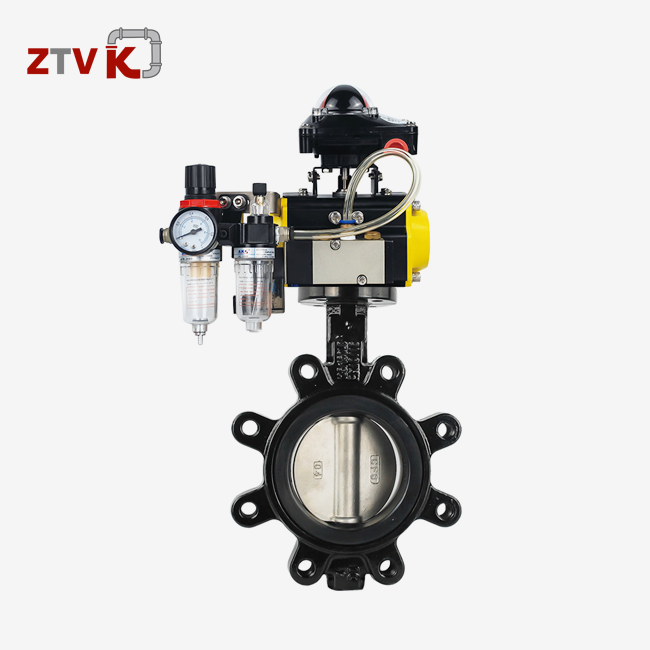
- Assess actuator performance independently. Check the performance of the actuator on your own. For butterfly valves that are operated by air pressure, apply air pressure straight to the actuator and watch it move. If the actuator can move around without the valve body being attached, the problem is with the valve system, not the actuator.
These five steps get rid of the most common wrong diagnoses and give maintenance teams a record of the diagnostic process that they can use to support warranty claims and talk to suppliers.
Practical Solutions: Repair, Recalibration, and Replacement
Once the problem is found, it's easier to see how to fix it. Not all valve failures need to be replaced completely, and being able to tell the difference between those that can be fixed and those that can't saves procurement funds.
Seal Replacement and Cleaning Protocols
A lot of leakage complaints are caused by seals that are worn out. Different types of seat materials, like EPDM, NBR, PTFE, and VITON, can only be used in certain temperatures and chemicals. In a filtered water system, for example, changing an NBR seat with an EPDM seat improves sealing without having to replace the whole valve body. Cleaning the valve cavity and disk with a suitable fluid gets rid of the buildup of particles that cause them to stick. This often restores full motion without having to replace any parts.
Rewiring and Recalibration
Once the wiring has been fixed for an elektro ventil actuator, the open/close limit switches should be recalibrated. To keep them from over-traveling or not closing all the way, pneumatic actuators with positioners need to be stroke-calibrated after they are put back together. One of the main reasons for repeat service calls within 30 days is not recalibration after a fix.
Comparing Valve Solutions: Pneumatic vs. Electric Actuation
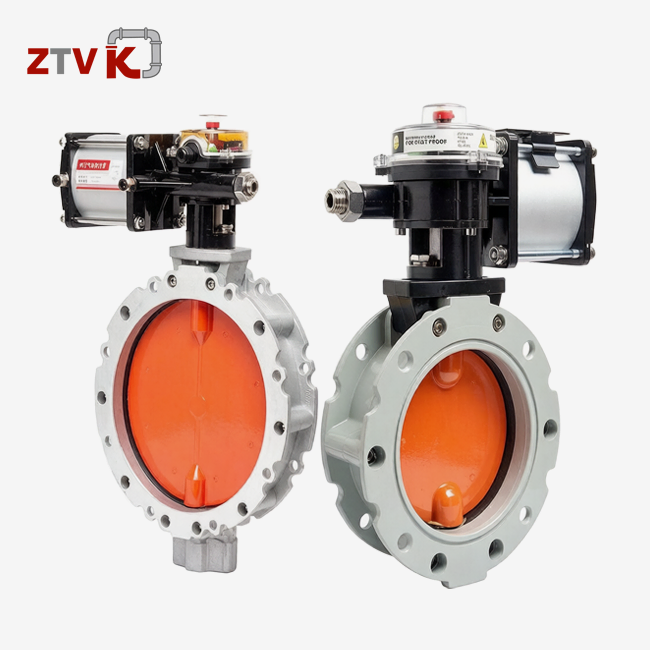
Long-term repair regularity changes depending on whether pneumatic or electric actuation is used. Butterfly valves that are operated by pneumatics, like ZTVK's wafer-type butterfly valve series, have quick cycle response and built-in fail-safe features that use spring-return mechanisms. Electric actuators allow for more precise positioning control and remote integration without the need for a system for supplying compressed air. It's not always clear which option is better. The best one relies on the cycle frequency, the services that are available, and the design of the control system that is already in place.
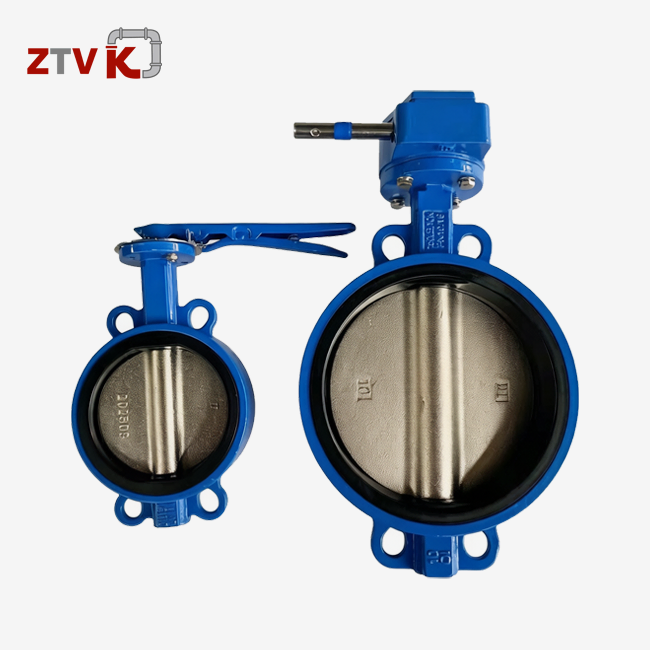
The butterfly valves made by ZTVK are pneumatically operated and have a wafer-type body that meets ISO5211 standards. They come in sizes ranging from DN40 (1.5") to DN1200 (48") and can handle working pressures of PN10 and PN16. Its strength-to-weight ratio is better than that of regular gray iron, so the body is made of ductile iron (QT450). Disks can be made of ductile iron, CF8, CF8M stainless steel, or aluminum bronze, so they can handle a lot of different flow media. Chemical compatibility can be precisely matched by choosing a seat material like EPDM, NBR, PTFE, or VITON. The double eccentric oblique sealing design cuts down on working force by 30% compared to regular concentric designs and increases service life to more than 50,000 cycles, which is a clear benefit in high-frequency settings.

When Replacement Outweighs Repair: Procurement Decision Criteria
When the same valve unit needs work more than once, it's time to replace it. When a valve's seal has to be replaced more than twice in 18 months, the total cost of maintenance is usually higher than the cost of a new unit. When sealing performance drops after repeated cleaning, body rust can be seen going through the wall thickness, and actuator response drops after recalibration, it's time to get new units instead of keeping fixing the old ones.
To choose the right replacement, you need to make sure that it works with the connection standard (ISO5211, PN10/PN16, 125LB/150LB, or JIS5K through JIS16K), as well as the size, pressure class, and seat material. Stocking standard wafer butterfly valves in sizes DN50 to DN600 gives wholesalers who manage regional resale goods the most options and the fastest turnover cycle.
Conclusion
Systematic fixing of electrically and pneumatically operated elektro ventils cuts down on downtime, saves budgets for purchases, and increases the life of equipment. Check the electricity source, test the coil, look at the mechanical parts, make sure they can handle the pressure, and then test the actuator on its own. Choosing a seal that works with the chemistry of the media keeps it from failing too soon. When repair costs add up, it's better to make a structured decision to replace based on the total cost of ownership than to keep fixing broken units for as long as possible. Supply chain resilience is increased by getting valves from makers with quality systems that can be checked and who are close to major shipping places.
FAQ
1. How do I confirm a coil fault without specialized equipment?
A regular digital multimeter will do. Take the coil off of its power source, switch the meter to resistance mode, and test the ends of the coil. A reading of 0 ohms means there is a short circuit. If there is no reading at all, or an open circuit, it means that the coil winding has broken. In their technical datasheets, most manufacturers list the range of resistances that can be expected. If the reading is outside that range, the coil needs to be replaced.
2. What distinguishes an elektroventil from a standard solenoid valve?
In German, "Elektroventil" refers to a wide range of electrically controlled valves, such as solenoid valves, motorized ball valves, and electrically operated butterfly valves. A solenoid valve moves a cylinder by using an electric coil to do so. In this larger group are motor-driven and pneumatically operated valves that are controlled by electrical signals. When buying things for industry, the names often mean the same thing, but the actuation system tells you which part to change.
3. How often should butterfly valves receive preventative maintenance?
According to ISA-75 guidelines, inspections should be done every 6 to 12 months under normal service conditions. Applications with more than 10,000 spins per year should have the seat and stem checked every three months to make sure they are still in good shape. By writing down each check, you build a service history that can be used to support warranty claims and help you decide when to repair something.
Partner with ZTVK for Reliable Elektro Ventil Solutions
ZTVK has been making valves for more than 15 years and can help distributors, EPC contractors, and industrial operators who are looking for a reliable elektro ventil supplier partner. Our pneumatically operated wafer butterfly valves are shipped from our facility in Tianjin, which is 50 km from Tianjin Port. Standard models can be sent out within 3–7 days. As standard, you can get OEM branding, custom seat materials, and quality control that is ISO9001-certified. To get a price, email us at ktec86961886@163.com.
References
1. Plant Engineering (2022). "Solenoid Valve Failure Analysis in Industrial Systems."
2. Valve World Magazine (2021). "Butterfly Valve Selection and Maintenance Best Practices."
3. ISA (International Society of Automation) (2020). "ISA-75.05.01: Control Valve Terminology."
4. Fluid Control Institute (2019). "Industrial Valve Reliability and Lifecycle Management."
5. Chemical Engineering Progress (2021). "Elastomer Seat Selection for Industrial Valves in Corrosive Media."
6. Pumps & Systems (2022). "Actuator Selection for Flow Control Applications: Pneumatic vs. Electric."
Send us your valve requirements and our team will provide professional solutions and fast quotations.
RELATED INDUSTRY KNOWLEDGE