- English
- French
- German
- Portuguese
- Spanish
- Russian
- Japanese
- Korean
- Arabic
- Greek
- German
- Turkish
- Italian
- Danish
- Romanian
- Indonesian
- Czech
- Afrikaans
- Swedish
- Polish
- Basque
- Catalan
- Esperanto
- Hindi
- Lao
- Albanian
- Amharic
- Armenian
- Azerbaijani
- Belarusian
- Bengali
- Bosnian
- Bulgarian
- Cebuano
- Chichewa
- Corsican
- Croatian
- Dutch
- Estonian
- Filipino
- Finnish
- Frisian
- Galician
- Georgian
- Gujarati
- Haitian
- Hausa
- Hawaiian
- Hebrew
- Hmong
- Hungarian
- Icelandic
- Igbo
- Javanese
- Kannada
- Kazakh
- Khmer
- Kurdish
- Kyrgyz
- Latin
- Latvian
- Lithuanian
- Luxembou..
- Macedonian
- Malagasy
- Malay
- Malayalam
- Maltese
- Maori
- Marathi
- Mongolian
- Burmese
- Nepali
- Norwegian
- Pashto
- Persian
- Punjabi
- Serbian
- Sesotho
- Sinhala
- Slovak
- Slovenian
- Somali
- Samoan
- Scots Gaelic
- Shona
- Sindhi
- Sundanese
- Swahili
- Tajik
- Tamil
- Telugu
- Thai
- Ukrainian
- Urdu
- Uzbek
- Vietnamese
- Welsh
- Xhosa
- Yiddish
- Yoruba
- Zulu
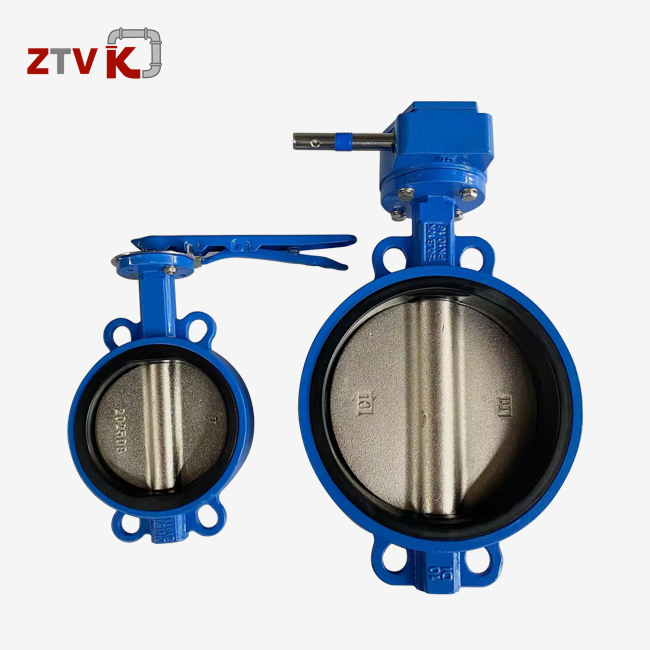
water main butterfly valve
Connection method:Wafer type
Connection standard:ISO5211--PN10/PN16/125LB/150LB/JIS5K/JIS10K/JIS16K
Size:1.5"-48"(DN40-DN1200 mm)
Working pressure:PN10/PN16
Body material:DI/QT450
Disc material:DI/CF8/CF8M/Aluminum bronze
Seat material:EPDM/NBR/PTFE/VITON/
Water Main Butterfly Valve — Wafer Type for Municipal & Industrial Pipelines
Water main butterfly valve selection directly affects the long-term reliability of municipal distribution systems and industrial pipelines. The wafer-type butterfly valve from ZTVK is designed to do this. It can handle sizes from DN40 to DN1200 (1.5" to 48"), working pressures of PN10 and PN16, and temperatures ranging from 0°C to 80°C. The bodies are made of ductile iron DI/QT450, and the disk and seat materials are chosen to work with water, gas, sewage, light oils, and chemicals.
What Is a Water Main Butterfly Valve?
A water main butterfly valve is a quarter-turn rotational device that controls fluid flow by rotating a disc 90° inside the valve body. When the disc sits parallel to flow, the valve is fully open. When perpendicular, it closes against the resilient elastomer seat and achieves tight shutoff.
The disk is made from a single piece and has a spherical surface that is polished by hand on the edge. This shape lowers the operating torque, increases the service life of the seat, and limits the surface area where biofilm or particles can build up. This is important for water treatment and sanitary service.
The disk and stem are made with a thin-plate design, which makes them better at controlling flow and lowering pressure drop compared to thicker spindle-through designs. This makes the Cv work better across the entire operating range.
Product Specifications
|
Parameter |
Details |
|
Size |
1.5"–48" (DN40–DN1200) |
|
Working Pressure |
PN10 / PN16 |
|
Temperature Range |
0°C – 80°C |
|
Body Material |
DI / QT450 (Ductile Iron) |
|
Disc Material |
DI / CF8 / CF8M / Aluminum Bronze |
|
Seat Material |
EPDM / NBR / PTFE / VITON |
|
Connection Method |
Wafer Type |
|
Connection Standard |
ISO5211 — PN10/PN16/125LB/150LB/JIS5K/JIS10K/JIS16K |
|
Operation |
Hand lever / Worm gear / Pneumatic / Electric |
|
Applicable Media |
Water, gas, oil, sewage, air, food, chemicals |
Key Product Features
Small wafer body.Flanged gate valves of the same diameter are heavier and longer across the face than wafer-type valves. It can be used in underground utility vaults and small mechanical rooms that don't need any special support.
One operation with a quarter-turn.The valve can be fully opened or closed by turning it 90°. This is a lot faster than multi-turn gate valves, and it helps with faster separation during emergency shutdowns.
Seat switch that is resilient.The polished disk edge and rubber seat work together to make a tight seal that doesn't show any leaking when the differential pressure is at its recommended level. In treated municipal water, chlorine and chloramine don't break down EPDM seats.
Material combinations that can be changed.Corrosive chemical service is a good fit for CF8 or CF8M stainless steel disks. Aluminum brass disks can be used in both saltwater and muddy water. When used with regular water, DI disks that are surrounded by rubber guard against metal wear. You can wrap the outside of the disk and stem in NBR or EPDM to protect them from rusting in harsh environments.
A double-eccentric inclined sealing shape.This design lowers the friction between the disk and seat when the door is opened and closed. This lowers the operating power and the size of the actuator needed for electric or gearbox operation.
Made to withstand repeated cycling.Each valve can open and close more than 50,000 times, which means it can be used in places where it needs to work a lot, like pump station controls and flow regulation systems.
Applications
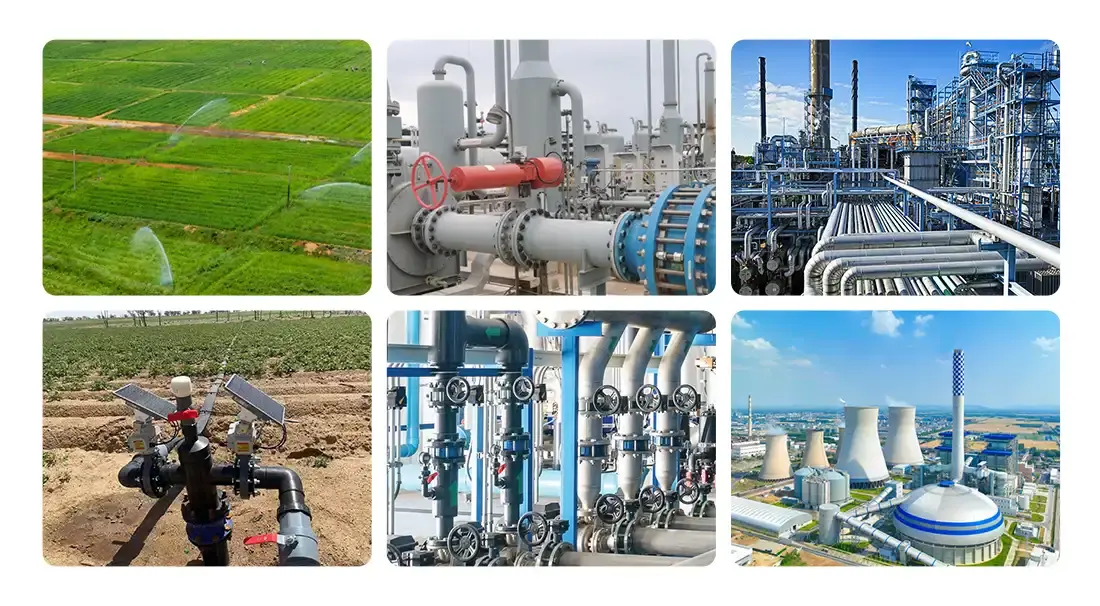
Water main butterfly valves from ZTVK are used across municipal and industrial infrastructure:
Municipal water transmission mains are set up with extension stems and valve boxes to separate and divide distribution networks underground.
Wastewater treatment plants use epoxy coating to protect against hydrogen sulfide in the plant environment and control the flow of air and water in aeration systems.
Pumping stations are placed at the pump discharge lines and have electric or hydraulic actuators that allow them to start up and shut down automatically when the power goes out.
Petrochemicals and power plants—handles grease, steam, and process chemicals by choosing the right disk and seat material.
For use in food, medicine, and hygiene, the disc's smooth surface and bacteria-resistant shape make it easy to handle clean media in a clean way.
Quality Control
Before it is shipped, each valve goes through the following checks:
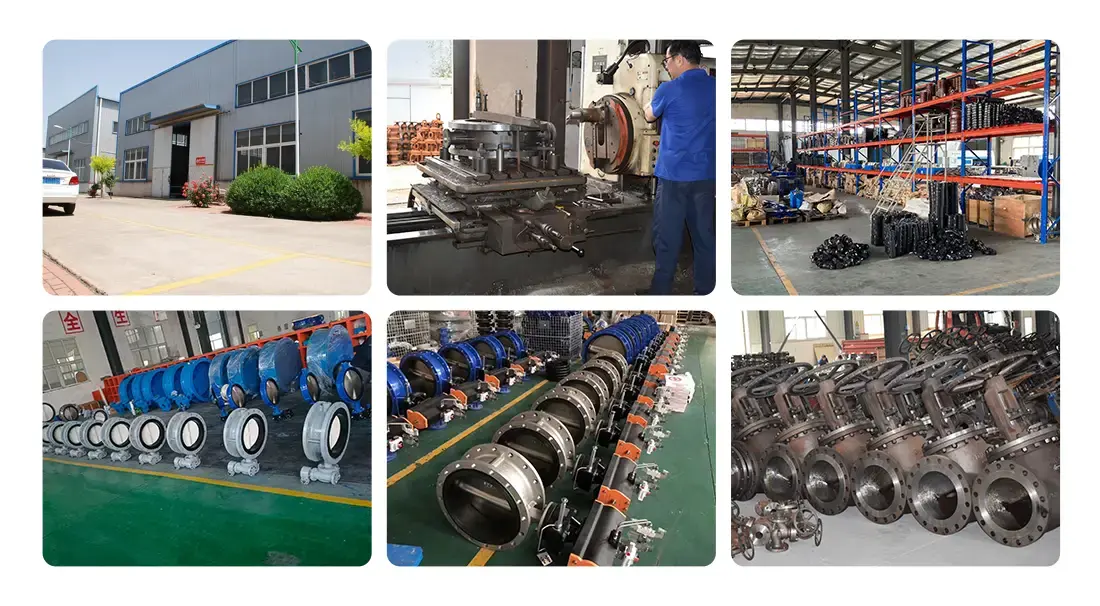
The hydrostatic shell test checks the valve body at 1.5 times its rated working pressure to see if the casting is solid and to look for holes.
A seat leakage test puts pressure on one side while the other side is checked for leaks. The relevant standard says that there can be no obvious leaking.
covering inspection: the thickness of the epoxy covering is measured, and a high-voltage holiday test is run to look for holes that could cause rusting over time.
Torque and cycle testing: some valves are cycled under full differential pressure to check the strength of the link between the shaft and the disk and to make sure that the working torque stays within the rated actuator capacity.
Dimensional verification: the face-to-face dimensions and flange drilling patterns are compared to the relevant connection standard to make sure the pipelines are compatible.
Customization & OEM/ODM Options
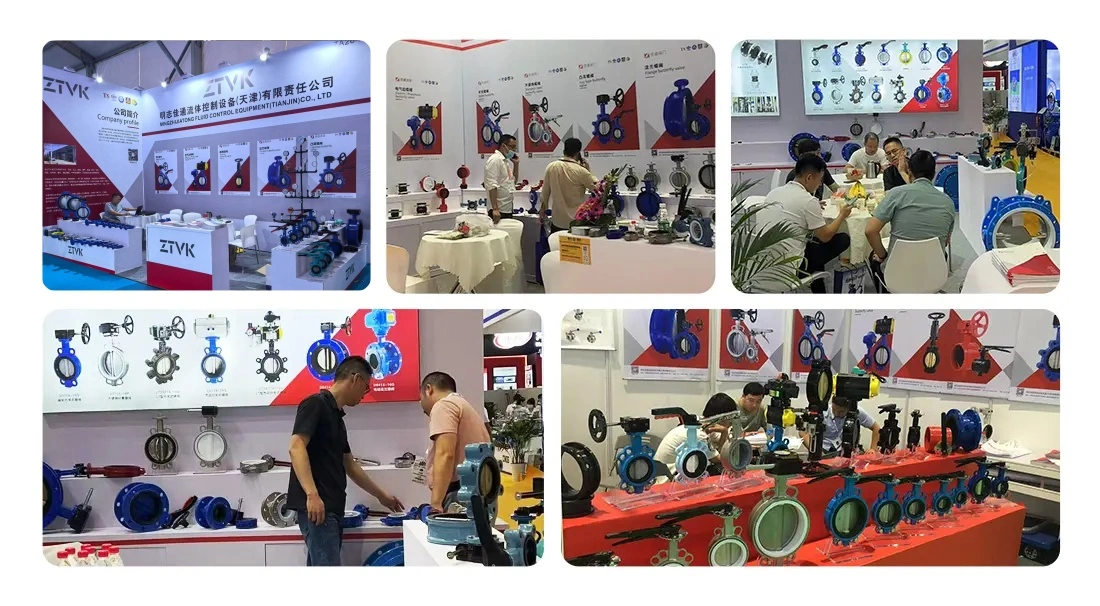
For this line of products, ZTVK can do both OEM and ODM production.
Custom branding, company names, nameplates, and different packing choices are some of the OEM possibilities.
ODM options include redesigning the valve body structure, choosing a different sealing material, changing the way connections are set up, and adapting to certain pressure, temperature, or media conditions.
There are regional adaptations that can be used, such as thicker stem protection for places with a lot of dust and epoxy anti-corrosion treatment for places that are humid or near the coast. It is possible to join in a wafer, flanged, or lug style.
If your project has special needs, get in touch with us early on in the specification process. Our engineering team can look over the drawings and media conditions before production starts.
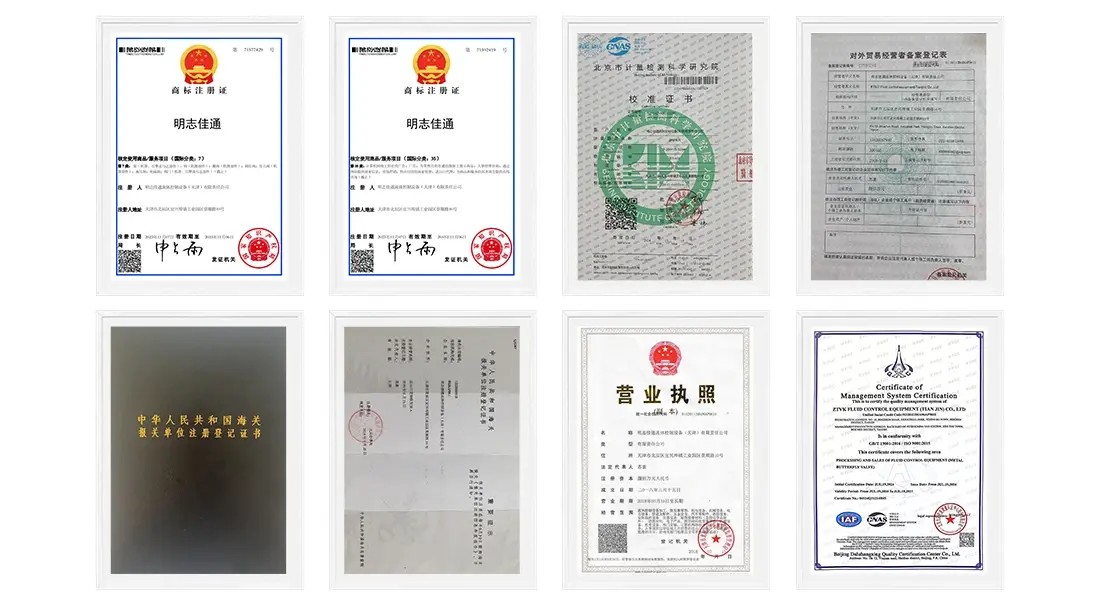
Delivery & Logistics
ZTVK maintains stock of DN50–DN600 standard valves, with typical shipping in 3–7 days after order placement.
Custom-engineered valves are delivered in 15–25 days, with expedited options at 7–10 days for urgent projects.
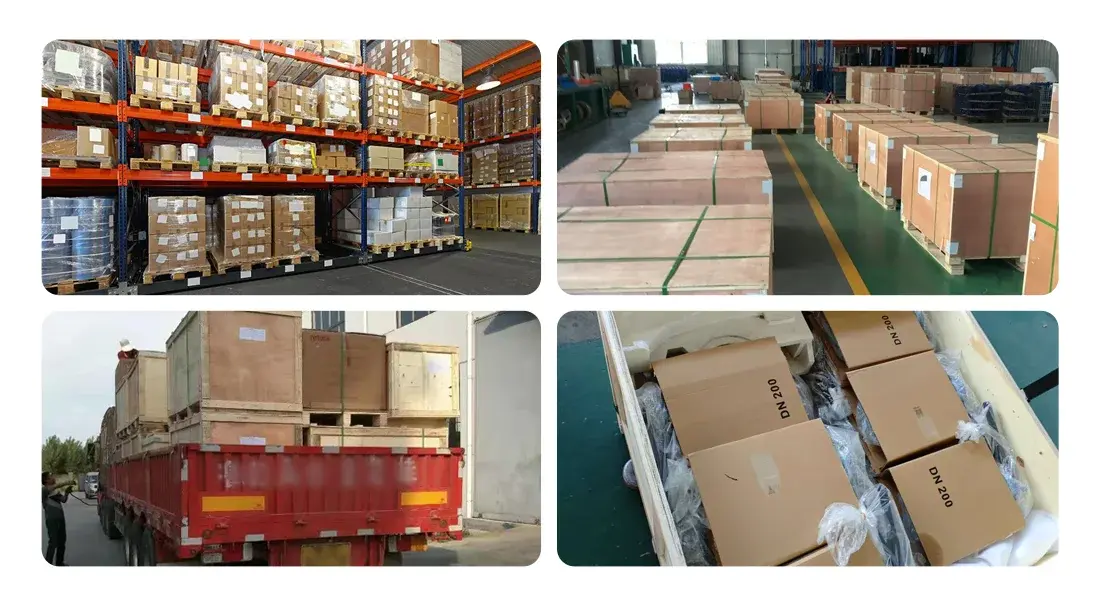
The factory is located approximately 50 km from Tianjin Port — about one hour by road. Export shipments are available on FOB Tianjin Xingang or CIF destination-port terms. Export packaging uses wooden crates, moisture-proof film, and fixing brackets compliant with ISPM 15 phytosanitary standards.
After-Sales Support
Every valve comes with an 18-month warranty. Non-human-caused product failures are covered with free replacement.
Pre-sales support includes valve selection guidance, CAD drawings, 3D models, and technical consultation. After installation, installation videos, troubleshooting manuals, and on-site technical support through ZTVK's local service partners are available on request.
FAQ
Q1: Which is better for water mains bigger than 12 inches? A butterfly valve or a gate valve?
A: Butterfly valves are the lighter, smaller, and faster to use option for larger pipe sizes. A gate valve needs to be turned many times to close all the way, but a butterfly valve only needs to be turned 90° once to close. This saves the user time and effort during emergency shutdowns.
Q2: Can this valve be put in place with the shaft standing up straight?
A: Technically, it is possible, but installing the shaft horizontally is what you should do. A horizontal shaft keeps dirt out of the lower bearing area, which can lead to stopping over time, and lets the weight of the disk be spread out evenly between both bearings.
Q3: How does this valve handle pressure spikes or water hammer?
A: So there isn't a sudden disk slam, the gear operator is made to close slowly. This controlled closure lowers the size of pressure waves that happen when the flow stops, and it keeps older pipe infrastructure from getting damaged by hydraulic shocks.
Q4: What kind of upkeep does a hidden butterfly valve need?
A: These valves are made so that they don't need much internal upkeep. Every year or every two years, the external gear operator should be exercised by cycling it open and closed. This will keep it from getting hard and make sure the valve hasn't stuck in place.
Q5: How long do you think it will last?
A: Service life depends on the pressure class chosen, the conditions of the media, the quality of the lining inside, and the corrosion protection on the outside. Being able to choose the right materials for the job is the most important thing for getting a long service life.
Q6: What kind of seat material should I pick if the water I drink is chlorinated?
A: EPDM is the best material for the seat if the drinking water has chlorine or chloramine in it. Chemicals used in water cleaning don't break it down, and the seal stays strong for long periods of time.
Contact our engineering team with your media conditions and pressure class to get material suggestions that are made just for your application.
Contact Us
Have a water main butterfly valve requirement or need a technical quote? Email ktec86961886@163.com and our engineering team will respond with valve selection guidance or a formal quotation.
Send us your valve requirements and our team will provide professional solutions and fast quotations.