- English
- French
- German
- Portuguese
- Spanish
- Russian
- Japanese
- Korean
- Arabic
- Greek
- German
- Turkish
- Italian
- Danish
- Romanian
- Indonesian
- Czech
- Afrikaans
- Swedish
- Polish
- Basque
- Catalan
- Esperanto
- Hindi
- Lao
- Albanian
- Amharic
- Armenian
- Azerbaijani
- Belarusian
- Bengali
- Bosnian
- Bulgarian
- Cebuano
- Chichewa
- Corsican
- Croatian
- Dutch
- Estonian
- Filipino
- Finnish
- Frisian
- Galician
- Georgian
- Gujarati
- Haitian
- Hausa
- Hawaiian
- Hebrew
- Hmong
- Hungarian
- Icelandic
- Igbo
- Javanese
- Kannada
- Kazakh
- Khmer
- Kurdish
- Kyrgyz
- Latin
- Latvian
- Lithuanian
- Luxembou..
- Macedonian
- Malagasy
- Malay
- Malayalam
- Maltese
- Maori
- Marathi
- Mongolian
- Burmese
- Nepali
- Norwegian
- Pashto
- Persian
- Punjabi
- Serbian
- Sesotho
- Sinhala
- Slovak
- Slovenian
- Somali
- Samoan
- Scots Gaelic
- Shona
- Sindhi
- Sundanese
- Swahili
- Tajik
- Tamil
- Telugu
- Thai
- Ukrainian
- Urdu
- Uzbek
- Vietnamese
- Welsh
- Xhosa
- Yiddish
- Yoruba
- Zulu
What are the characteristics of a threaded gate valve in application
Threaded gate valves are important parts of industrial fluid control systems all over the world. These valves are famous for being able to reliably shut off and being easy to install. This makes them essential for water supply networks, oil distribution systems, and city structures. You can use a 2 threaded gate valve, which is a linear-motion isolation device with a standard bore size of 2 inches (DN50) and threaded end links, to easily connect to pipe systems without having to weld or flare. This design gets rid of the need for special welding tools and creates full-bore flow areas that keep pressure drops to a minimum. These are two major problems that current industrial uses have. When purchasing managers, distributors, and engineering workers know about the special features of threaded gate valves, they can make choices that combine performance needs with project deadlines and price limits.


Understanding Threaded Gate Valves: Basics and Working Principle
A simple but effective way for threaded gate valves to work is for a moving wedge or gate element to rise vertically to control the flow of fluid. The threaded end connections are usually made to ANSI B1.20.1 standards for NPT threads or BSP standards for foreign markets. They make installation quick by connecting directly to threaded lines that are the same size.
Core Operating Mechanism
The working concept is based on a stem-operated gate that moves in the opposite direction of the flow. The stem threads connect with the gate when the handwheel turns, moving it up or down inside the valve body. This perpendicular action is very different from quarter-turn valves, and it has clear benefits in situations where flow control needs to be slow.
Design Classification
Rising stem configurations (OS&Y type) let you see where the valve is, which is helpful for repair situations where workers need to know right away what the valve's state is. Non-rising stem designs (NRS type) save vertical room in tight spaces like underground utility vaults or pipe racks that are already full. Both types keep the basic feature of full-bore flow when they are fully open, which means there is very little resistance and no pressure loss that could lower the efficiency of the system.
Material Construction
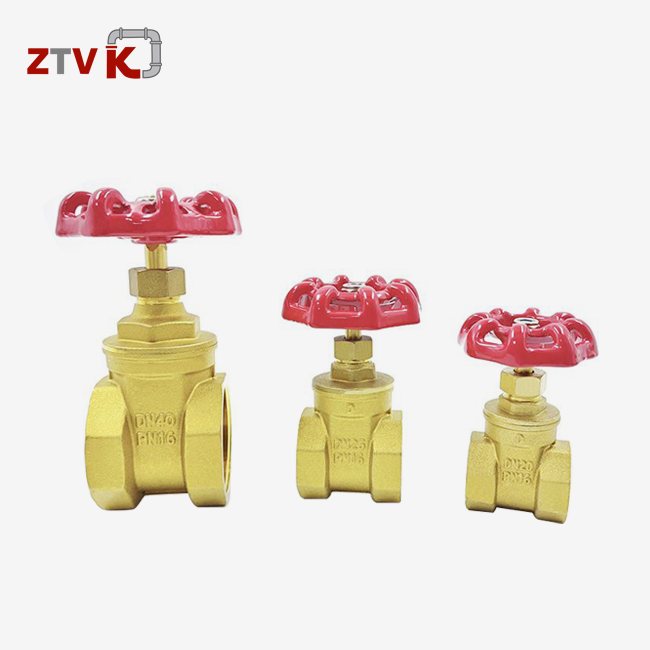
The HPB59-1 brass used in ZTVK's model JT-2001 was chosen because it is resistant to corrosion and lasts a long time in a variety of working situations. This choice of material solves the problem that wholesalers often have with making sure that products last in a wide range of conditions, from humid coastal areas to dry industrial areas.
Key Characteristics of Threaded Gate Valves in Industrial Applications
The performance features of threaded gate valves directly affect which workplace settings are best for them. When procurement workers understand these factors, they can correctly match valve specifications with practical needs.
Material Composition and Durability
Due to their ability to fight dezincification and kill microbes, brass and bronze types are most often used in drinkable water, heating systems, and fluids that don't corrode. In ZTVK's JT-2001 type, the HPB59-1 brass makeup has about 59% copper, which makes it the best combination of being easy to machine and strong. Brass would rust in harsh chemical conditions, but stainless steel works just as well. However, it costs more to buy, which dealers have to account for when they figure out their margins.
Pressure and Temperature Tolerances
The JT-2001 works efficiently at a pressure of 1.6 MPa, which makes it good for standard city water systems and low- to medium-pressure industry processes. Temperature compatibility from -10°C to 120°C works with hot water circuits, oil lines at room temperature, and gas distribution networks that don't contain dangerous materials. These specs are in line with what is usually needed for HVAC installations and fire protection systems. For these, workers make sure that parts meet basic safety standards without going overboard with engineering requirements.
Thread Standards and Global Compatibility
The success of fitting and the long-term stability of the seal depend on how accurate the threads are for a 2 threaded gate valve. Differences in American NPT (National Pipe Thread) and British BSP (British Standard Pipe) threads make it hard for global supply lines to work together. Suppliers like ZTVK that strictly follow international thread standards are helpful for distributors who serve multiple regional markets. This is proven by measured Go/No-Go gauging used during quality control processes. This accuracy stops the annoying problem of big orders coming in with threads that don't match, which leads to expensive returns and project delays.
Dimensional Standards
One of the most popular nominal sizes for industrial pipes is 2 inches, which is a good compromise between flow capacity and space requirements. This size is commonly used for building service lines, support systems in processing plants, and distribution laterals in cities. Understanding dimensional standards helps trading companies keep the right amount of goods on hand by keeping sizes that are frequently bought in stock and handling their working capital well.
Comparison of Threaded Gate Valves with Other Valve Types
When choosing between threaded gate valves and other designs, it's important to know the practical trade-offs that affect how much they cost to install, how often they need to be maintained, and how well they work.
Threaded vs. Flanged Gate Valves
When there is a lot of pressure or a big diameter, flanged links are the best choice because they are stronger than threaded joints. Threaded versions, on the other hand, are clearly better for smaller hole sizes because they require less fitting time and cost less in materials. When a city worker installs meter isolation valves, threaded connections are helpful because they get rid of the need for flange gaskets, nuts, and the skilled labour time needed to sequence the torques correctly. So, projects with dozens or hundreds of valve setups will save money in a measured way.
Gate Valves vs. Ball Valves
Ball valves are useful when you need to quickly shut off a system because they can be turned a quarter of the way. Still, this speed makes water hammer a possibility in city systems with long pipe runs and a lot of flowing motion. This problem can be solved by threaded gate valves, which have multiple turns and close slowly, preventing hydraulic shock waves that could damage old infrastructure. The metal-to-metal seating in gate valves is also better at blocking abrasive particles than the soft seats in normal ball valves. This means that they last longer in water lines that carry sediment or oil lines that contain scale debris.
Installation Method Comparison
Socket weld connections need trained welders and hot work permits, which can make organising hard on industrial sites that are already busy. With simple pipe tools and thread sealant, threaded setups can be done quickly, so maintenance teams can change parts during short periods of downtime. This feature is useful for valve wholesalers who work with clients who want as little downtime as possible, since threaded valves allow for quick replacement when they fail.
Maintenance Tips and Common Problems of Threaded Gate Valves
Proactive maintenance keeps valves working longer and stops them from breaking down when they're least expected, which can mess up processes and make customers lose faith in equipment providers.
Routine Maintenance Practices
As part of regular inspections for a 2 threaded gate valve, the stem packing should be looked at visually for weepage, which is a sign of compression degradation that needs gland adjustment or packing replacement. Using suitable grease to lubricate the stem threads stops galling and lowers the working torque. This is especially important for valves that cycle a lot. The JT-2001's PTFE packing ensures reliable sealing with little upkeep needed. This solves a common problem where regular repacking slows down processes and raises the cost of ownership over time.
Common Issues and Solutions
Thread damage is usually caused by bad installation methods, especially cross-threading during the initial contact or using too much force, which deforms the thread. Distributors should stress to customers the correct way to install things, suggesting that threads be sized before makeup and torque be applied carefully using measured wrenches. Leaks usually happen because the seat surfaces are broken. This can be because of trash getting stuck during closing or corrosion pitting in places with harsh chemicals. Knowing about these types of failure helps buying managers choose the right materials for different media circumstances.
Repair vs. Replacement Decisions
Repair choices should be based on economic research. When major parts of small-diameter threaded valves like the JT-2001 break, they should usually be replaced instead of being fixed in the field, because the cost of labour is higher than the price of the valve itself. But when distributors know what caused a failure, they can suggest ways to make sure it doesn't happen again. This builds stronger ties with clients by giving them useful expert advice instead of just dealing with them as a supplier.
Procurement Guidance: Selecting and Buying Threaded Gate Valves
To support business goals, strategic procurement means finding a balance between technical requirements and the supplier's skills, pricing systems, and supply reliability.
Specification Alignment
Matching the valve's features to the needs of the application stops wasteful over-specification and failures caused by inadequate under-specification. For potable water contact, water utility workers need valves that are certified by NSF/ANSI 61. On the other hand, oil distribution systems put a high priority on hydrocarbon compatibility, which can be proven through material testing paperwork. The JT-2001 can handle water, oil, and non-corrosive gases, which meets the needs of most distributors for flexible inventory items that can serve a variety of market groups without having too many SKUs.
Supplier Evaluation Criteria
An ISO 9001 quality certification shows that the manufacturing process can be controlled, which is necessary to make sure that the quality of the product stays the same from one production run to the next. ZTVK's ISO 9001, ISO 14001, and OHSAS 18001 certifications give buyers peace of mind about quality management, environmental responsibility, and worker safety. These are all things that are becoming more and more important for procurement professionals who have to meet company sustainability requirements. It is possible to test the valve's soundness before it is shipped, including hydrostatic shell testing and seat closing proof to API 598 standards. This keeps defective goods from getting to installation sites, which can be very expensive.

Inventory and Delivery Considerations
Distributors who use "lean inventory" models gain when sellers keep a lot of stock on hand, which lets them complete orders quickly. ZTVK has more than 2,000 standard valves in stock in the DN50–DN600 range, and orders can be delivered 3–7 days after they are placed. This solves the problem that distributors have when they have to hold too much safety stock, which uses up their working capital. Being close to major shipping ports cuts down on the time and cost of moving goods. ZTVK is only 50 km from Tianjin Port, which makes it easy to load containers quickly and offer cheap FOB/CIF prices.
OEM and Customization Capabilities
Trading companies that sell to branded markets need OEM support, which includes custom nameplate engraving, image application, and their own packing. ZTVK's OEM/ODM skills help wholesalers set their products apart from the competition in the market beyond just price, which is good for premium positioning strategies. Technical customisation, such as changing pressure ratings, using different materials, or creating special connection types, can be used in niche applications where standard catalogue goods don't work, creating high-margin project possibilities.
Conclusion
Thanks to their full-bore design, gradual closing, and easy installation, threaded gate valves are important for stopping the flow of water, oil, and industrial gases in systems that supply and distribute these things. The 2 threaded gate valve is designed for medium-bore situations where welded connections aren't realistic and threaded interfaces offer the best mix between ease of installation and mechanical reliability. To make sure long-term performance meets client standards, the material choice, pressure grades, and temperature compatibility must all be perfectly in line with the working conditions. Threaded gate valves have clear benefits over flanged alternatives, ball valves, and socket weld setups in certain situations, mainly when it comes to installation speed, stopping water hammer, and ease of upkeep. To be successful at procurement, suppliers must be carefully evaluated by looking at things like quality certifications, testing methods, the amount of goods they have, and how easily they can be customised. Strategic distributors work together with makers like ZTVK, who offer advanced technology and quick shipping systems that help them stay competitive in a wide range of regional markets and application areas.
FAQ
1. What makes threaded gate valves preferable to flanged designs in certain applications?
Threaded gate valves work best in smaller hole sizes (usually less than 4 inches), where cost and speed of installation are more important than the highest pressure that flanged connections can handle. Not having to deal with seals, bolts, and alignment steps cuts installation time by about 60% compared to flanged options. This saves a lot of work on jobs that involve installing a lot of valves.
2. Can the JT-2001 threaded gate valve handle petroleum products safely?
The JT-2001 type works well for oil uses that stay within its limits. These limits include non-corrosive petroleum distillates at temperatures no higher than 120℃ and pressures no higher than 1.6 MPa. The HPB59-1 brass material doesn't break down when it comes into contact with hydrocarbons, but it's still a good idea to check its compatibility with specific petroleum mixtures before using it with speciality fuels or oils that have been chemically handled.
3. How frequently should threaded gate valves undergo maintenance inspection?
If the valves are in steady-state service and don't need to be cycled very often, an annual inspection is enough. If the valves are in regular operation or are exposed to tough environments, a quarterly check is better. Visual stem packing checks should be done as part of regular system walkthroughs. This way, weeping can be found early, before it gets so bad that it needs emergency action.
Partner with ZTVK for Reliable Threaded Gate Valve Solutions
ZTVK is ready to help you buy threaded gate valves because we can make a wide range of them, and our customer service is quick to respond. Our JT-2001 model has been tested and proven to work well in water, oil, and gas applications. It is backed by ISO-certified quality control methods that make sure the quality of the product is always high. The large amount of inventory we keep on hand lets us quickly fill regular orders, and our OEM/ODM services help distributors build their own brand recognition in the market. We are conveniently located near Tianjin Port and can offer you cheap international shipping rates and efficient container operations to help you with your inventory optimisation strategies. Our engineering team is here to help you choose the best product, whether you need a lot of standard 2-threaded gate valves for distribution networks or unique ones made just for your project. You can talk to our buying experts at ktec86961886@163.com about your needs, ask for technical data sheets, or get price quotes for large orders. Well-known companies that make 2 threaded gate valves, such as ZTVK, offer the dependability, technical depth, and supply chain timeliness that are needed to succeed in tough global markets.
References
1. Stewart, Harry L. Pneumatics and Hydraulics: Revised and Expanded Edition. Indianapolis: Audel Technical Trades Series, 1998.
2. Skousen, Philip L. Valve Handbook, Third Edition. New York: McGraw-Hill Professional, 2011.
3. American Water Works Association. AWWA Manual M11: Steel Pipe—A Guide for Design and Installation, Fifth Edition. Denver: American Water Works Association, 2017.
4. Zappe, R. W. Valve Selection Handbook: Engineering Fundamentals for Selecting the Right Valve Design for Every Industrial Flow Application, Fifth Edition. Oxford: Gulf Professional Publishing, 2004.
5. Nesbitt, Brian. Handbook of Valves and Actuators: Valves Manual International. Oxford: Elsevier Science, 2007.
6. Smith, Peter and R. W. Zappe. Valve and Actuator Technology. Oxford: Butterworth-Heinemann, 2003.
Send us your valve requirements and our team will provide professional solutions and fast quotations.
RELATED INDUSTRY KNOWLEDGE