- English
- French
- German
- Portuguese
- Spanish
- Russian
- Japanese
- Korean
- Arabic
- Greek
- German
- Turkish
- Italian
- Danish
- Romanian
- Indonesian
- Czech
- Afrikaans
- Swedish
- Polish
- Basque
- Catalan
- Esperanto
- Hindi
- Lao
- Albanian
- Amharic
- Armenian
- Azerbaijani
- Belarusian
- Bengali
- Bosnian
- Bulgarian
- Cebuano
- Chichewa
- Corsican
- Croatian
- Dutch
- Estonian
- Filipino
- Finnish
- Frisian
- Galician
- Georgian
- Gujarati
- Haitian
- Hausa
- Hawaiian
- Hebrew
- Hmong
- Hungarian
- Icelandic
- Igbo
- Javanese
- Kannada
- Kazakh
- Khmer
- Kurdish
- Kyrgyz
- Latin
- Latvian
- Lithuanian
- Luxembou..
- Macedonian
- Malagasy
- Malay
- Malayalam
- Maltese
- Maori
- Marathi
- Mongolian
- Burmese
- Nepali
- Norwegian
- Pashto
- Persian
- Punjabi
- Serbian
- Sesotho
- Sinhala
- Slovak
- Slovenian
- Somali
- Samoan
- Scots Gaelic
- Shona
- Sindhi
- Sundanese
- Swahili
- Tajik
- Tamil
- Telugu
- Thai
- Ukrainian
- Urdu
- Uzbek
- Vietnamese
- Welsh
- Xhosa
- Yiddish
- Yoruba
- Zulu
Butterfly Actuator Valve Sizing: A Practical Guide
Getting butterfly actuator valve sizing right is one of the most consequential decisions an engineer or procurement manager will make for any pipeline system. Select a valve that is too small, and you throttle flow; select one too large, and you waste capital while inviting premature wear. This guide walks through the core sizing principles, actuator type comparisons, installation best practices, and a practical buying checklist — giving distributors, contractors, and OEM clients a reliable framework before committing to a purchase order.
Understanding Butterfly Actuator Valve Basics
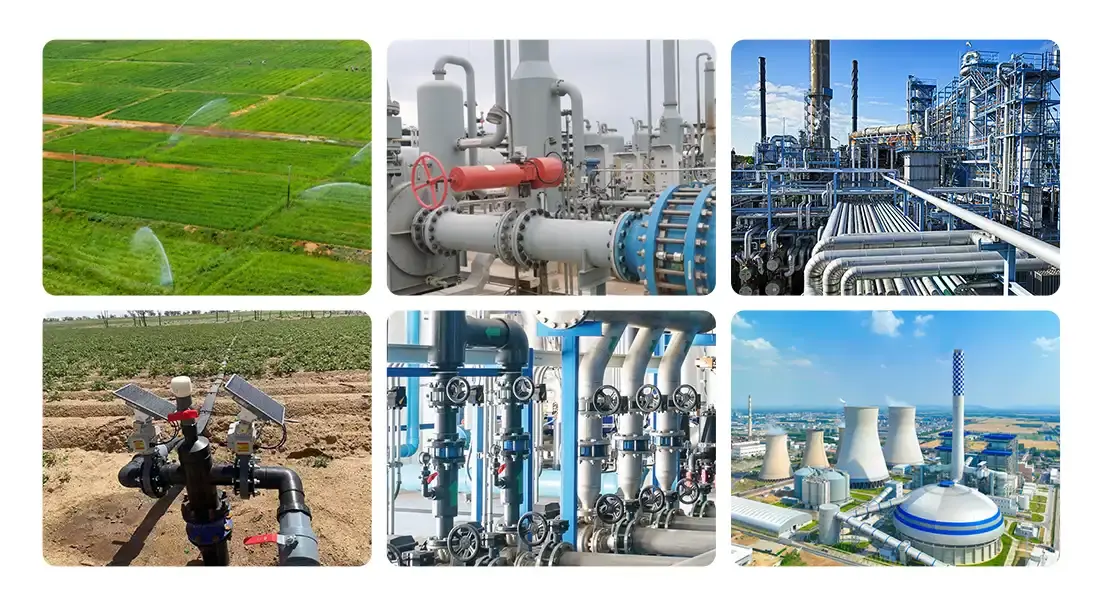
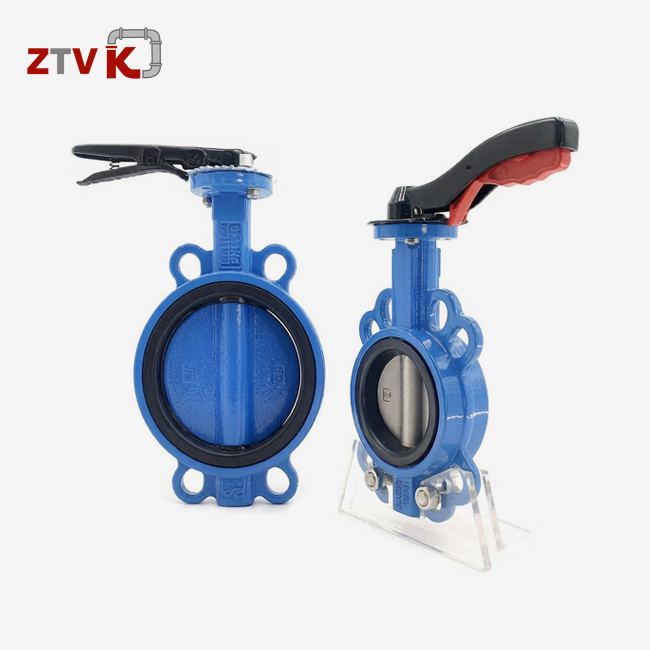
A butterfly actuator valve is a quarter-turn flow control device in which an electric, pneumatic, or manual actuator rotates a disc inside the valve body to open, throttle, or isolate fluid flow. It is compact, lightweight, and cost-effective compared to gate or globe alternatives, which is why it dominates water supply, HVAC, petrochemical, and municipal infrastructure applications worldwide.
Core Components and Material Choices
In order to construct the valve body, the disk, the seat seal, the stem, and the actuator housing, many types of materials are required. When valves are installed in the field, one of the primary reasons they fail early on is because the materials are not matched adequately. The following is a list of the most significant aspects that procurement engineers need to take into consideration when it comes to materials:
- The majority of water and HVAC applications up to PN16 are handled by the valve body, which is made of ductile iron (DI/QT450). It is superior to gray cast iron in terms of its resistance to impact loading and has a high strength-to-weight ratio.
- DI, CF8 (304 stainless), CF8M (316 stainless), and aluminum bronze are some of the disk materials that consumers may choose from. Aluminum bronze performs very well in brackish and marine environments, whereas CF8M is preferable in slightly corrosive environments.
- For the seat seal, EPDM is suitable for use with cold and hot water up to roughly 120 degrees Celsius; NBR is effective with petroleum-based fluids; PTFE is able to manage aggressive chemicals; and VITON (FKM) is able to endure hydrocarbons and high temperatures.
The pressure ratings and torque needs are directly determined by these selections, which therefore feed directly into the size of the actuator. Leaving out this step results in mismatched assembly and downtime that might have been avoided.
Operational Parameters That Drive Sizing
According to ISA-75.01.01, flow coefficient (Cv) and differential pressure across the valve are the two anchor values in any sizing calculation. A butterfly actuator valve operating at 60° open position typically delivers 70–80% of its full-open Cv, so the sizing margin must account for partial-stroke operation. Temperature limits also shift seal performance, narrowing the acceptable Cv range at extremes.
Key Principles of Butterfly Actuator Valve Sizing
Correct sizing protects both the valve assembly and the broader pipeline infrastructure. Undersized valves create excessive velocity, erosion, and noise; oversized valves spend most of their service life barely cracked open — a condition that accelerates disc and seat wear dramatically. Correct butterfly actuator valve sizing is essential for system longevity.
Diameter, Flow Coefficient, and Torque Calculation
Valve nominal diameter (DN) selection begins with confirmed pipeline flow rate (Q) and allowable pressure drop (ΔP). The Cv formula is:
Cv = Q × √(SG / ΔP)
where SG is the specific gravity of the fluid relative to water. Once Cv is established, cross-reference the manufacturer's published Cv table for each diameter. Typical Cv values for a DN200 butterfly actuator valve at full open range from 4,000 to 6,000 depending on disc geometry.
Torque sizing requires calculating break torque (the force needed to unseat the disc from a closed position), running torque, and end-of-stroke torque. A widely applied safety factor of 1.25–1.5× the maximum calculated torque ensures reliable actuator operation without oversizing the actuator to the point where modulating control becomes imprecise.
Real-World Sizing Lessons
In municipal water treatment projects, a common error involves selecting valve diameter based solely on pipe diameter rather than actual flow demand. A DN300 butterfly actuator valve in a low-flow bypass line may spend 80% of its operating life at less than 15° open — practically guaranteeing cavitation and seat erosion within two years. The corrective step is always to size for the operating flow range, not the pipe bore alone.
Comparing Actuator Types and Their Impact on Sizing Choices
Actuator selection shapes the entire sizing conversation because different drive mechanisms deliver torque differently across the valve stroke. Selecting the right butterfly actuator valve configuration depends heavily on the application requirements.
Electric vs. Pneumatic Actuators
Electric actuators — like those on ZTVK's wafer-type butterfly actuator valve line — offer precise modulating control, easy integration with PLC and SCADA systems, and self-locking capability at any intermediate position. They are well-suited for applications where compressed air is unavailable or where position accuracy within ±1° matters. The tradeoff is speed: electric actuators typically complete a 90° stroke in 15–60 seconds, whereas pneumatic units achieve the same in 1–5 seconds.
For sizing purposes, an electric actuator must be matched to the valve's maximum torque demand, including the safety factor, and the actuator's output torque curve must remain above the valve's torque curve across the full 0–90° travel range. ISO 5211 mounting flanges (supported by ZTVK across all sizes from DN40 to DN1200) standardize the mechanical interface and simplify actuator swaps without replacing the valve body.
Manual vs. Automated Operation
Manual gear operators are appropriate for infrequent isolation duty on large-diameter valves where automation costs are not justified. Automated actuators are non-negotiable in emergency shut-down loops, remote locations, and systems requiring audit-trail position logging. Butterfly actuator valve actuators also differ from ball valve actuators in torque profile: a butterfly disc generates its peak torque at approximately 70–80° (near open), whereas a ball valve peaks at the initial break from the closed seat. This distinction shifts the actuator sizing envelope significantly.
Installation, Maintenance, and Troubleshooting Tips Related to Sizing
A correctly sized butterfly actuator valve installed incorrectly still underperforms. Getting the mechanical assembly right is equally important.
Alignment and Positioner Setup
The actuator's ISO 5211 mounting must be torqued to specification; misalignment of the coupling causes stem side-loading, accelerating bearing wear. For modulating electric actuators, a positioner or integral feedback potentiometer should be calibrated at commissioning to confirm the valve disc position matches the command signal. A 4–20 mA signal should produce a linear disc travel, not a stepped response.
Here are the most telling signs that a valve has been incorrectly sized:
- Persistent leakage past the seat when fully closed, indicating the actuator cannot generate enough break torque to seat the disc firmly.
- Audible cavitation or vibration at partial opening, pointing to an oversized valve running at a dangerously low Cv.
- Excessive actuator motor cycling or overheating, caused by a torque demand that consistently approaches the actuator's rated limit.
These symptoms rarely self-correct. Early intervention — recalculating Cv and torque against actual operating data — avoids catastrophic failure and costly emergency shutdowns. Maintaining a torque log at quarterly intervals provides an early warning system for seal degradation.
Practical Buying Guide: Selecting the Right Butterfly Actuator Valve Size
When sourcing a butterfly actuator valve at scale, procurement professionals need more than a datasheet. Lead time, certification trail, and OEM flexibility determine whether a supplier partnership works long-term.
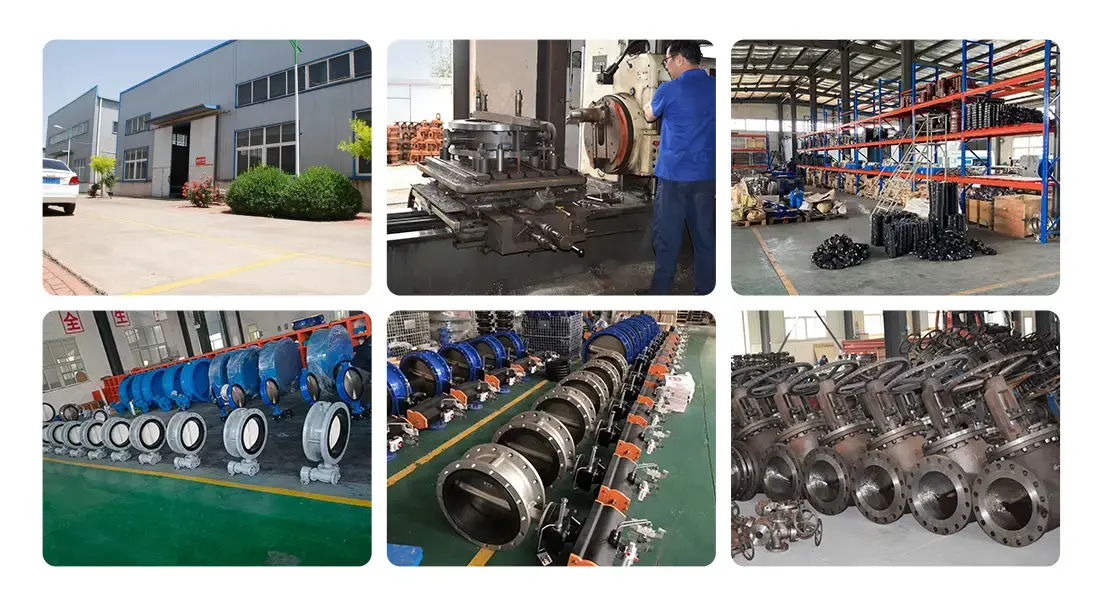
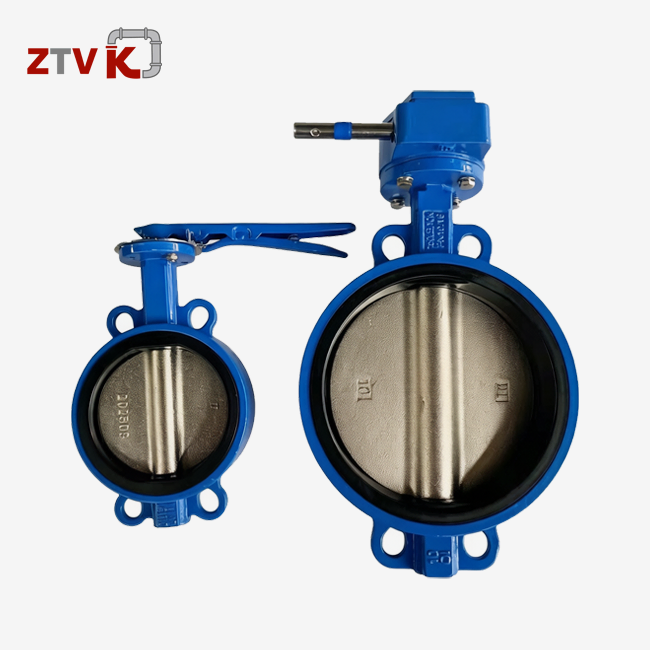
ZTVK's electric actuator butterfly valve — wafer-type, covering DN40 to DN1200 (1.5″–48″), rated PN10/PN16, with body in DI/QT450, disc options in DI/CF8/CF8M/aluminum bronze, and seat choices of EPDM, NBR, PTFE, or VITON — is engineered to ISO 5211 and supports connection standards including PN10/PN16, 125LB/150LB, and JIS5K/10K/16K. Standard models (DN50–DN600) carry 2,000+ units in stock with 3–7 day delivery, while non-standard custom orders ship in 15–25 days.
Brands like Emerson, AUMA, and Belimo publish extensive sizing software and torque tables, which are valuable benchmarks. When evaluating any butterfly actuator valve supplier, verify these factors:
- Published Cv tables and torque curves for every nominal diameter in the range
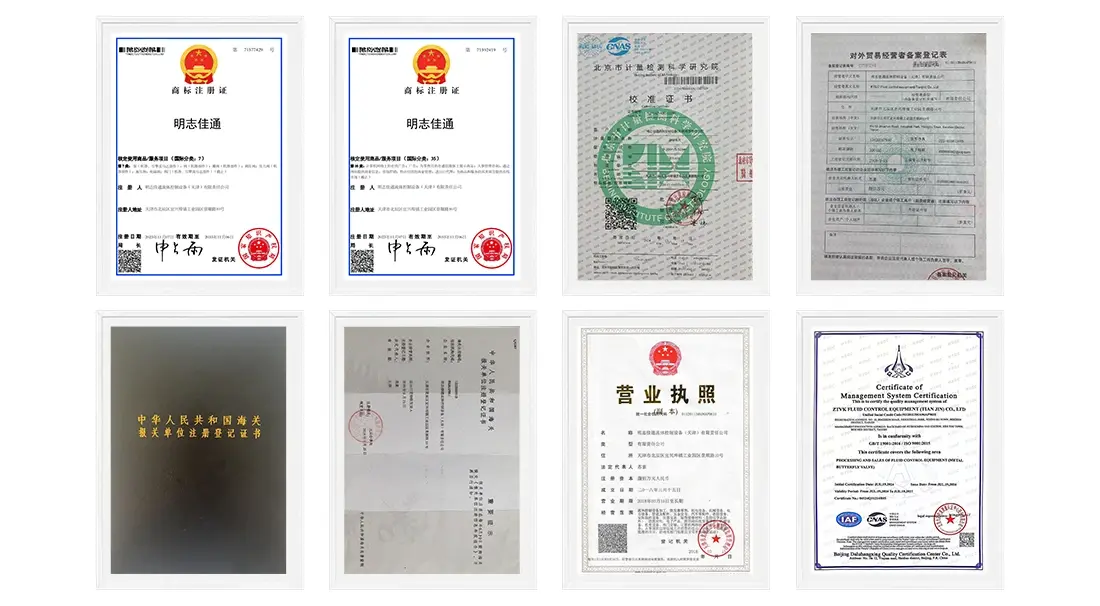
- ISO 9001 quality certification with audit-ready documentation (ZTVK holds ISO 9001, ISO 14001, and OHSAS 18001)
- OEM/ODM support, including custom nameplates, disc material substitutions, and connection adaptations
- Proximity to a major port for predictable lead times (ZTVK's factory is 50 km from Tianjin Port)
Pairing the right sizing data with a supplier who stocks product and supports urgent orders substantially reduces project risk for EPC contractors and distributors alike.
Conclusion
Sizing a butterfly actuator valve correctly requires understanding Cv, torque demands, material compatibility, and actuator drive mechanics — none of which can be treated as optional variables. The principles in this guide apply whether you're specifying a single DN100 valve for an HVAC retrofit or procuring 500 units for a municipal water expansion. Sound sizing decisions protect system uptime, extend service life, and reduce total cost of ownership. When in doubt, work backward from your operating flow and pressure data, apply the standard torque safety factors, and lean on suppliers who provide verifiable sizing documentation alongside their products.
FAQ
1. How do I calculate the correct actuator torque for a butterfly actuator valve?
Determine the maximum differential pressure across the valve at the moment of opening, multiply by the calculated torque coefficient for that valve's disc geometry, and apply a safety factor of 1.25–1.5×. Most manufacturers publish torque tables per DN size; always use the break torque (closed-to-open) as your design value, not the running torque.
2. When should I choose an electric actuator over a pneumatic one?
Choose an electric actuator when compressed air is unavailable, when you need precise modulating control with position feedback, or when the system integrates with a PLC/SCADA network. Pneumatic actuators remain preferable for applications demanding fast cycling (under five seconds) or inherent fail-safe spring-return behavior in emergency shutdown systems.
3. Can I retrofit an existing butterfly actuator valve with a different actuator?
Yes, provided the new actuator's ISO 5211 mounting flange matches the valve's top-works interface and its rated output torque exceeds the valve's break torque with the appropriate safety margin. ZTVK's valve bodies include a reserved ISO 5211 interface precisely to support actuator upgrades without replacing the entire valve body.
4. What seat material should I specify for chemical service?
PTFE is the standard choice for aggressive chemical media due to its broad chemical inertness and low friction coefficient. VITON (FKM) is preferred when operating temperatures exceed 120 °C in hydrocarbon or solvent service. Always confirm compatibility against a chemical resistance chart before finalizing the order.
Request a Sizing Consultation from ZTVK — Your Trusted Butterfly Actuator Valve Supplier
ZTVK delivers certified, factory-stocked butterfly actuator valves from DN40 to DN1200, with full OEM customization and 3–7 day standard delivery. Our engineering team provides free sizing consultation, CAD drawings, and torque verification before every order. Contact us at ktec86961886@163.com to request a quote and access our complete technical catalog.
References
1. ISA (International Society of Automation). ISA-75.01.01: Flow Equations for Sizing Control Valves. ISA, 2012. Used in the "Diameter, Flow Coefficient, and Torque Calculation" section.
2. Emerson Automation Solutions. Fisher Control Valve Handbook, 5th ed. Emerson, 2020. Used in the "Diameter, Flow Coefficient, and Torque Calculation" section.
3. Valve Magazine. Maintenance Best Practices for Industrial Valves. Valve Manufacturers Association of America, 2021. Used in the "Installation, Maintenance, and Troubleshooting" section.
4. Crane Co. Flow of Fluids Through Valves, Fittings, and Pipe — Technical Paper No. 410. Crane Co., 2013. Used in the "Key Principles of Butterfly Actuator Valve Sizing" section.
5. AUMA Actuators. Actuator Sizing and Selection Guide for Industrial Valves. AUMA, 2022. Used in the "Comparing Actuator Types" section.
6. British Standards Institution. BS EN ISO 5211: Industrial Valves — Part-Turn Actuator Attachments. BSI, 2017. Used in the "Electric vs. Pneumatic Actuators" and "Installation" sections.
Send us your valve requirements and our team will provide professional solutions and fast quotations.
RELATED INDUSTRY KNOWLEDGE