- English
- French
- German
- Portuguese
- Spanish
- Russian
- Japanese
- Korean
- Arabic
- Greek
- German
- Turkish
- Italian
- Danish
- Romanian
- Indonesian
- Czech
- Afrikaans
- Swedish
- Polish
- Basque
- Catalan
- Esperanto
- Hindi
- Lao
- Albanian
- Amharic
- Armenian
- Azerbaijani
- Belarusian
- Bengali
- Bosnian
- Bulgarian
- Cebuano
- Chichewa
- Corsican
- Croatian
- Dutch
- Estonian
- Filipino
- Finnish
- Frisian
- Galician
- Georgian
- Gujarati
- Haitian
- Hausa
- Hawaiian
- Hebrew
- Hmong
- Hungarian
- Icelandic
- Igbo
- Javanese
- Kannada
- Kazakh
- Khmer
- Kurdish
- Kyrgyz
- Latin
- Latvian
- Lithuanian
- Luxembou..
- Macedonian
- Malagasy
- Malay
- Malayalam
- Maltese
- Maori
- Marathi
- Mongolian
- Burmese
- Nepali
- Norwegian
- Pashto
- Persian
- Punjabi
- Serbian
- Sesotho
- Sinhala
- Slovak
- Slovenian
- Somali
- Samoan
- Scots Gaelic
- Shona
- Sindhi
- Sundanese
- Swahili
- Tajik
- Tamil
- Telugu
- Thai
- Ukrainian
- Urdu
- Uzbek
- Vietnamese
- Welsh
- Xhosa
- Yiddish
- Yoruba
- Zulu
Can a 4 inch flanged check valve achieve zero leakage?
Achieving absolute zero leakage in any mechanical system sounds like a bold promise, yet it remains a persistent question among valve distributors, municipal contractors, and industrial procurement teams. When it comes to a 4 inch flanged check valve, the answer is nuanced. While "zero leakage" in the strictest engineering sense means no detectable fluid passage across the sealing surfaces, modern industrial-grade check valves can reach what we call "bubble-tight" shutoff when properly designed, installed, and maintained. A well-manufactured DN100 flanged check valve with resilient seat materials like EPDM or metal-to-metal seats with precision machining can achieve leakage rates below API 598 allowable limits, often registering zero visible leakage during hydrostatic testing. However, factors like operating pressure, temperature cycling, media corrosiveness, and installation precision all influence real-world sealing performance.


Understanding Leakage in 4 Inch Flanged Check Valves
When non-return valves leak, it's not by chance. Most of the time, it happens at three weak spots: the disc-to-seat contact, the flange gasket joints, and sometimes around the hinge pin in swing-type designs. The disc of a DN100 check valve should form a tight seal against its seat when it closes. This stops backflow. Leaking will happen if the seat surface is worn down by cavitation or if particles get stuck between the disc and the seat.
Common Causes of Valve Seat Leakage
Leaks in valve seats are usually caused by choosing the wrong material or mechanical wear. If chlorine levels are higher than what was intended, valves with soft rubber seats can break down more quickly than expected in water treatment plants that deal with chemically treated city water. In the same way, metal seats may slightly bend and create tiny holes in HVAC systems that go through rapid temperature cycles. Cavitation damage is another cause. When fast flow quickly changes direction, vapour bubbles smash into the seat, making pits in the surface that stay there over time. In these tough conditions, choosing a valve with a Co-based Stellite coating on the closing sides makes it last a lot longer.
Flange Connection Integrity
If the flange joints are broken, even the best-designed valve body can leak. A 4-inch flanged check valve usually fits with Class 125/150 or PN10/16 flanges, but only if the seals are suitable and the bolts are tightened in the right order. In some cases, unevenly tightening the bolts caused stress concentrations that warped the flange face and let fluid leak through the sides of the gasket. If you use spiral-wound gaskets with graphite filler instead of regular compressed fibre gaskets, the seal will hold better when the temperature changes. The finish on the flange face is also important. A raised-face flange with a surface finish of 125–250 micro-inch works better for gasket tension than a rough-machined surface.
Impact of Operational Conditions
Changes in fluid properties, temperature, and pressure spikes all have a big effect on how well a seal works in a 4 inch flanged check valve. When working with low-viscosity fluids like vapour at 180°C, a swing check valve might close exactly when the flow is steady but leak a little when the temperature drops. On the other hand, a lift-type check valve in a vertical pipe run with upward flow can keep the cutoff tight because gravity helps the disc close. It's easier to predict leaking risks and choose the right valve designs when you know your unique operating area. This is true whether you're talking about a city booster pump that cycles fifty times a day or a continuous hydrocarbon transfer line.
Design Features that Minimize Leakage in 4 Inch Flanged Check Valves
Manufacturers have developed several engineering solutions to push leakage rates toward zero. The journey from acceptable API leakage limits to bubble-tight performance requires attention to materials, geometry, and manufacturing precision.
Advanced Seal and Seat Materials
Different closing methods are used in modern check valves depending on the purpose. Soft-seated designs made of nitrile rubber (NBR), ethylene propylene diene monomer (EPDM), or fluoroelastomers (Viton) can work with water and light chemicals up to 120°C without any leaks that can be seen. When the seat is loaded, these elastomers get compressed and fill in small bumps on the matching surfaces. Metal-seated valves made of 13% chromium stainless steel or Stellite hard-facing can handle higher temperatures and rough media, but they need to be lapped to very tight tolerances—usually within 0.001 inches—in order to close well. Our ZTVK HC41X flange sound-dampening check valve has Co-radix metal soldered sealing surfaces that make it resistant to wear and have great sealing properties for a longer operating life.
Precision Manufacturing and Surface Finishing
The machine shop is where getting close to zero leaks starts. CNC lathes and precision cutting tools make sure that the valve body seat and the disc closing face are perfectly lined up. Under pressure, even a 0.002-inch runout can make a way for a leak to happen. Diamond sanding and electropolishing are two ways to finish the surface. These methods lower the surface roughness to less than 32 micro-inches Ra, which gets rid of the small gaps where fluids could leak out. Coordinate measuring tools (CMM) are used to check the accuracy of the dimensions, and API 598 seat leak tests are done on every valve that leaves our Tianjin plant to make sure it meets strict quality standards.
Innovative Valve Body Construction
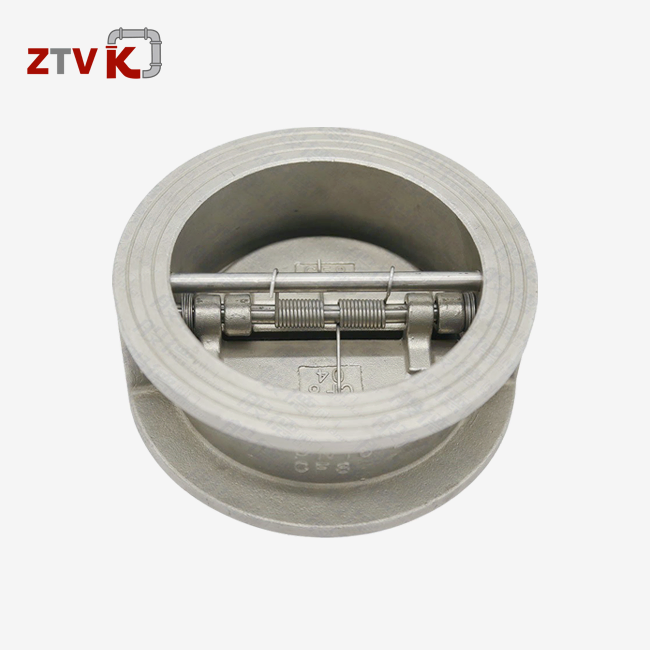
Some makers have switched from standard swing designs to dual-plate or nozzle-style check valves, which close more quickly and make it less likely that backward flow will happen before the valve is shut off. Even when differential pressures are low, spring-assisted systems help keep the seats in place, which stops "chattering" that speeds up seat wear. The inside-set bolt-bearing structure of the HC41X type reduces external leaking points while keeping the structure serviceable. This is important for repair teams that have to work quickly.
Comparing 4 Inch Flanged Check Valves to Other Check Valves on Leakage Performance
Not all check valves are created equal when it comes to sealing capability. Understanding structural differences helps procurement teams make informed decisions balancing performance against budget constraints.
Flanged vs. Wafer Check Valves
Flanged check valves in 4 inch flanged check valves, bolt directly between pipeline flanges using through-bolts, creating a robust, leak-resistant assembly suitable for Class 300 or higher pressure services. Wafer-style valves, sandwiched between flanges with single-bolt sets, offer space and weight savings but can experience edge leakage if flange faces aren't perfectly parallel. In high-pressure municipal water boosting stations, flanged designs provide superior long-term reliability despite higher initial costs. Distributors serving the Middle East market often prefer flanged construction because installation teams can remove and service valves without disrupting adjacent piping—a crucial advantage in desert environments where equipment access is challenging.
Material Selection: Cast Iron vs. WCB Carbon Steel
Cast iron valves (ASTM A126 Class B) dominate low-pressure water distribution due to cost-effectiveness and adequate corrosion resistance in neutral pH water. However, cast iron's brittleness limits its use in systems experiencing water hammer or thermal cycling. WCB carbon steel (ASTM A216) offers superior impact resistance and higher pressure ratings, making it preferable for industrial boiler feedwater and HVAC chilled water loops. ZTVK manufactures both material grades, allowing clients to optimize specifications: Cast iron for DN100 municipal gate valves in stable systems, and WCB for demanding petrochemical applications requiring 1.6 MPa nominal pressure capacity and temperature tolerance from -20°C to 200°C.
Swing vs. Lift vs. Dual-Plate Designs
Swing check valves excel in horizontal lines with steady flow, using a hinged disc that opens fully during forward flow and gravity-closes on reversal. Lift check valves, with a guided disc moving perpendicular to flow, suit vertical installations but create higher pressure drops. Dual-plate designs split the disc into two spring-loaded halves, reducing closure time and minimizing water hammer risk—ideal for pump discharge protection. Leakage performance varies: swing types achieve excellent sealing in clean fluids but can trap debris; lift types handle solids better but wear faster; dual-plate valves close fastest but rely on spring tension for sealing, which can relax over time.
Maintenance and Installation Tips to Achieve Zero Leakage
Even a perfectly manufactured valve will leak if installed incorrectly or neglected during its service life. Attention to installation details and proactive maintenance strategies separate reliable systems from problematic ones.
Proper Installation Procedures
Installation begins with flange preparation. Both mating flange faces must be clean, free of old gasket material, and checked for warping using a straightedge. We recommend a maximum flange face deviation of 0.015 inches across the diameter. Gasket selection should match the service: compressed non-asbestos fiber for water below 80°C, spiral-wound with graphite for steam service, and PTFE envelope gaskets for corrosive chemicals. Bolt tightening follows a star pattern, achieving uniform compression measured by torque wrench—typically 50-75 ft-lbs for Class 150 four-inch flanges. Orientation matters too; swing check valves must have the hinge pin horizontal and the disc swinging freely in the flow direction.
Routine Inspection and Testing
Municipal contractors operating DN100 check valves in lift stations should implement quarterly visual inspections checking for external leakage at flange joints and listening for abnormal noise indicating disc flutter. Annual seat leakage tests involve isolating the valve, pressurizing the downstream side, and measuring leakage rates—acceptable limits per API 598 are typically 40 drops per minute for resilient-seated 4-inch valves. Trending these measurements over time reveals gradual seat deterioration before catastrophic failure occurs. Industrial clients in petrochemical plants often incorporate valve condition monitoring into their computerized maintenance management systems, triggering service alerts based on cycle counts or elapsed time.
Troubleshooting Common Issues
When leakage appears in a 4 inch flanged check valve, systematic diagnosis saves time and money. External flange leakage usually responds to retorquing bolts or replacing gaskets. Internal seat leakage requires valve disassembly and inspection. If the disc shows scoring parallel to the flow direction, abrasive particles in the media are the culprit; installing upstream strainers prevents recurrence. Cavitation pitting appears as rough, sponge-like erosion on downstream seat surfaces; reducing pressure drops or relocating the valve solves this. Corrosion pitting indicates material incompatibility; upgrading to stainless steel or applying protective coatings becomes necessary. ZTVK provides installation guidance videos and troubleshooting manuals to help maintenance teams resolve issues quickly, backed by our 18-month warranty covering manufacturing defects.
Procurement Considerations for Zero Leakage 4 Inch Flanged Check Valves
Selecting the right valve supplier involves more than comparing price lists. Smart procurement teams evaluate technical capabilities, supply chain reliability, and after-sales support to ensure long-term system performance.
Evaluating Pressure Ratings and Certifications
Different applications demand specific pressure classes and certifications. Municipal water systems typically specify AWWA C508 butterfly valves or API 594 swing checks rated Class 125, adequate for 175 psi working pressure. Industrial steam systems require Class 300 or higher, tested to 1125 psi hydrostatic pressure. Always verify that valves carry ISO 9001 manufacturing certification and material test reports (MTRs) traceable to heat numbers. ZTVK holds ISO9001, ISO14001, and OHSAS18001 certifications, with every valve batch accompanied by pressure test documentation and chemical analysis reports verifiable by third-party auditors. For exports to North American markets, ASME B16.34 compliance and NSF-61 certification for potable water contact become essential.

Balancing Cost with Reliability
Procurement managers face constant pressure to reduce costs without compromising safety or performance. A basic cast iron swing check valve might cost 30% less than a WCB model with Stellite seats, but if it requires replacement every three years instead of lasting ten, lifecycle costs favor the premium option. Bulk purchasing agreements can secure competitive pricing; distributors ordering container quantities of DN50-DN300 valves from ZTVK benefit from volume discounts while maintaining 2000+ units of standard models in our stock for rapid replenishment. Customization options—including OEM branding, modified trim materials, or specific flange drilling patterns—add 15-25 days to production schedules but enable distributors to serve niche markets with higher margins.
Supplier Logistics and Support
Geographic proximity to manufacturing hubs and major ports influences delivery speed and freight costs. ZTVK's Tianjin Beichen facility lies just 50 kilometers from Tianjin Xingang Port, enabling one-hour land transport and streamlined export logistics. Long-term partnerships with COSCO Shipping and Maersk allow us to offer FOB Tianjin or CIF destination port terms with predictable transit times. Professional ISPM 15-compliant wooden crate packaging prevents cargo damage and customs delays. Beyond physical logistics, technical support matters; we provide CAD drawings, 3D models for system integration planning, and access to engineering staff who understand regional operating conditions—like developing epoxy resin coatings for Southeast Asia's high-humidity environments or reinforced valve stem covers for Middle Eastern dust exposure.
Conclusion
Can a 4 inch flanged check valve achieve zero leakage? With advanced design features, precision manufacturing, appropriate material selection, and rigorous installation practices, modern DN100 flanged check valves can indeed reach bubble-tight performance meeting API 598 standards. While absolute zero leakage under all operating conditions remains a theoretical ideal, industrial-grade valves like ZTVK's HC41X model deliver exceptional sealing reliability for water distribution, HVAC, and industrial process applications. Success requires matching valve design to service conditions, implementing proper installation procedures, and maintaining proactive inspection schedules. By understanding the interplay between materials, construction quality, and operational factors, procurement teams can specify valves that protect system integrity while controlling lifecycle costs.
FAQ
1. What inspection intervals maintain valve sealing integrity?
For municipal water systems using DN100 check valves in continuous service, we recommend quarterly external inspections checking flange joints and valve body condition. Annual internal inspections during scheduled maintenance outages should include seat leakage testing per API 598 protocols. Industrial applications with cyclic loading—like pump discharge protection cycling 20-50 times daily—benefit from biannual inspections due to accelerated wear. Documenting baseline leakage rates when new and trending measurements over time reveals gradual deterioration, allowing planned replacement before emergency failures disrupt operations.
2. Are there cost-effective materials that don't compromise sealing performance?
Ductile iron (ASTM A536) offers an excellent middle ground between cast iron's economy and carbon steel's strength, providing 30% higher yield strength than gray cast iron while maintaining corrosion resistance in neutral water. For seat materials, EPDM elastomers cost less than Viton but perform equally well in water below 80°C. Strategic material selection based on actual operating conditions—rather than over-specifying for worst-case scenarios—optimizes budgets without sacrificing reliability. ZTVK's engineering team assists clients in right-sizing specifications, ensuring valves meet performance requirements at competitive pricing.
Partner with ZTVK for Reliable Check Valve Solutions
Selecting a dependable 4-inch flanged check valve supplier ensures your projects avoid costly leakage issues and downtime. ZTVK combines over 15 years of valve manufacturing expertise with modern CNC machining capabilities and rigorous ISO-certified quality systems. Our HC41X flange sound-damping check valve, available in Cast Iron and WCB materials across DN40-DN300 sizes with a 1.6 MPa pressure rating, delivers proven performance in municipal water, HVAC, and industrial applications. With 2000+ standard units in stock, enabling 3-7 day delivery and flexible OEM/ODM customization supporting your brand growth, we stand ready to support distributors and contractors throughout North America. Contact our technical team at ktec86961886@163.com or explore detailed specifications at ztvk-valve.com to discuss your specific requirements and receive personalized quotations backed by responsive engineering support and reliable supply chain execution.
References
1. American Petroleum Institute, "Specification for Check Valves: Flanged, Lug, Wafer, and Butt-welding," API Standard 594, Seventh Edition, 2018.
2. American Water Works Association, "Swing-Check Valves for Waterworks Service, 2-In. Through 24-In. NPS," AWWA C508-17, 2017.
3. ASME International, "Valves—Flanged, Threaded, and Welding End," ASME B16.34-2020, American Society of Mechanical Engineers, 2020.
4. Zappe, R.W., "Valve Selection Handbook: Engineering Fundamentals for Selecting the Right Valve Design for Every Industrial Flow Application," Fifth Edition, Gulf Professional Publishing, 2004.
5. Lyons, Jerry L., and Askeland, Donald R., "The Science and Engineering of Materials," Seventh Edition, Cengage Learning, 2015, Chapter 12: Corrosion and Wear.
6. Smith, Philip L., and Zappe, Raymond W., "Check Valve Application and Troubleshooting," Valve Magazine, Valve Manufacturers Association, Spring 2019, pp. 32-38.
Send us your valve requirements and our team will provide professional solutions and fast quotations.
RELATED INDUSTRY KNOWLEDGE