- English
- French
- German
- Portuguese
- Spanish
- Russian
- Japanese
- Korean
- Arabic
- Greek
- German
- Turkish
- Italian
- Danish
- Romanian
- Indonesian
- Czech
- Afrikaans
- Swedish
- Polish
- Basque
- Catalan
- Esperanto
- Hindi
- Lao
- Albanian
- Amharic
- Armenian
- Azerbaijani
- Belarusian
- Bengali
- Bosnian
- Bulgarian
- Cebuano
- Chichewa
- Corsican
- Croatian
- Dutch
- Estonian
- Filipino
- Finnish
- Frisian
- Galician
- Georgian
- Gujarati
- Haitian
- Hausa
- Hawaiian
- Hebrew
- Hmong
- Hungarian
- Icelandic
- Igbo
- Javanese
- Kannada
- Kazakh
- Khmer
- Kurdish
- Kyrgyz
- Latin
- Latvian
- Lithuanian
- Luxembou..
- Macedonian
- Malagasy
- Malay
- Malayalam
- Maltese
- Maori
- Marathi
- Mongolian
- Burmese
- Nepali
- Norwegian
- Pashto
- Persian
- Punjabi
- Serbian
- Sesotho
- Sinhala
- Slovak
- Slovenian
- Somali
- Samoan
- Scots Gaelic
- Shona
- Sindhi
- Sundanese
- Swahili
- Tajik
- Tamil
- Telugu
- Thai
- Ukrainian
- Urdu
- Uzbek
- Vietnamese
- Welsh
- Xhosa
- Yiddish
- Yoruba
- Zulu
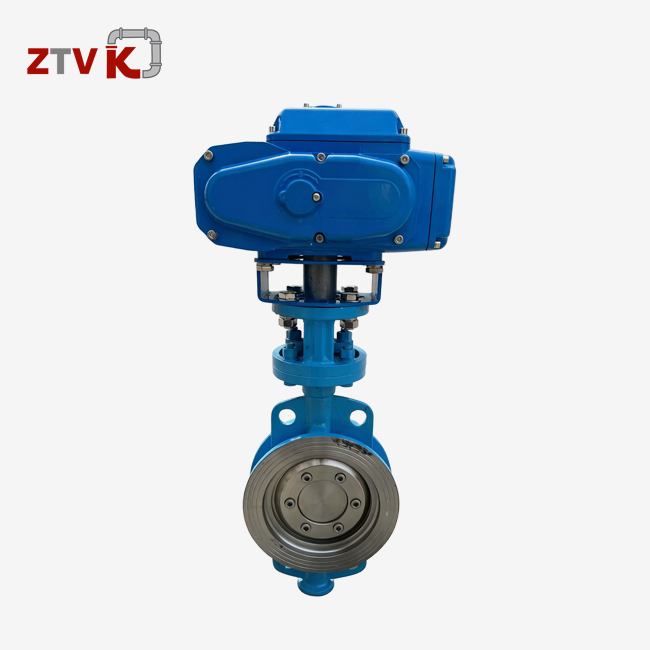
Wafer Type Triple-eccentric Metal-seated Butterfly Valves
Pressure Rating:PN6 / PN10 / PN16 / 150LB
Body: Ductile Iron(GGG40/50), Carbon Steel(WCB A216), Stainless Steel(SS304/SS316/SS304L/SS316L) , Duplex Stainless Steel(2507/1.4529),
Disc: DI(Ni lined), WCB (A216), Stainless Steel(SS304/SS316/SS304L/SS316L) , Duplex Stainless Steel(2205/2507)
Seat: Metal+Flexible Graphite
Actuator:Worm Gear, Electric, Pneumatic
Sample: available
Wafer Type Triple-eccentric Metal-seated Butterfly Valves – Metal Seat Isolation for Critical Process Systems
Wafer Type Triple-eccentric Metal-seated Butterfly Valves are quarter-turn isolation valves designed for process conditions where zero leakage, high-temperature resistance, and long service life are required. Through-bolts hold the wafer body in place between the pipe ends. This keeps the valve small and light. Three exact geometric distances keep the sealing ring and seat from rubbing against each other while they are moving. Only when they reach their final position do they touch. The metal seat and a flexible graphite sealing ring with multiple layers can work in temperatures ranging from very cold to over 600°C.
How Triple-Eccentric Geometry Differs from Standard Butterfly Valves
When used in high-temperature or high-pressure situations, standard butterfly valves with rubber seats wear out quickly. Seat galling, elastomer degradation, and leakage during thermal cycling are all common ways for things to break down and need to be fixed or replaced often.
This is directly dealt with by triple-eccentric geometry. The disk lifts off the seat without touching it at any point during its trip. It only touches the seat when it is in its final position. This stops wear and tear on the seat, erosion of the seat, and torque rises caused by friction over the valve's service life.
This means that the valve can be used instead of heavier gate valves in many situations. It can also provide bubble-tight shutoff according to API 598 in both directions of flow, and it can handle repeated thermal cycling without breaking down like soft-seated valves would.
Wafer Type Triple-eccentric Metal-seated Butterfly Valves Specifications
|
Parameter |
Details |
|
Size Range |
DN50 – DN3000 |
|
Pressure Rating |
PN6 / PN10 / PN16 / 150LB |
|
Body Material |
Ductile Iron (GGG40/50), Carbon Steel (WCB A216), SS304/SS316/SS304L/SS316L, Duplex SS (2507/1.4529) |
|
Disc Material |
DI (Ni lined), WCB (A216), SS304/SS316/SS304L/SS316L, Duplex SS (2205/2507) |
|
Seat Material |
Metal + Flexible Graphite (multi-layer laminate) |
|
Actuator Options |
Worm Gear, Electric, Pneumatic |
|
Connection Type |
Wafer (sandwiched between flanges) |
|
Standards |
API, ANSI, ISO, DIN, JIS, BS, CE |
|
Service Life |
50,000+ cycles |
|
Sample |
Available |
Key Performance Characteristics
The disc's multi-layer sealing ring, which is made up of layers of flexible graphite and stainless steel, makes a smooth contact with the sealing surface on the valve body. This allows for gas-tight shutoff when pressure changes without having to rely on elastomer compression.
Operating torque is up to 30% lower than in traditional designs, which lowers the load on the actuator and the amount of energy it uses. Because the triple-eccentric shape gets rid of constant friction during movement, the seal lasts longer and requires less work over time.
You can get the body and disk made of duplex stainless steel (2205/2507) for use with aggressive corrosive media or carbon steel WCB for everyday industrial use. The process media and temperature range you use affect the material combinations you choose.
Typical Applications
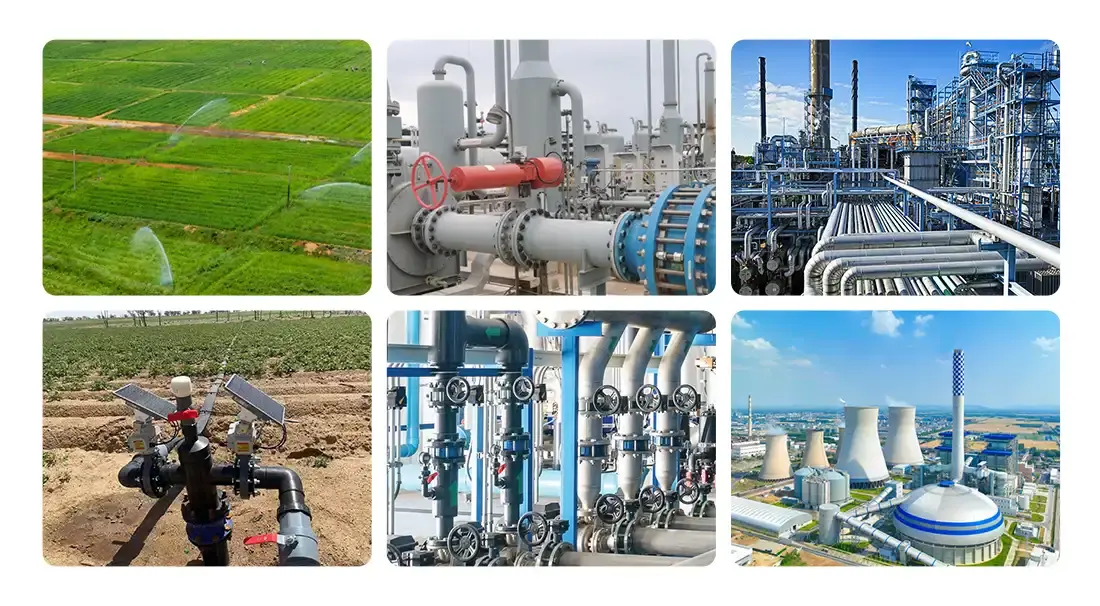
Wafer Type Triple-eccentric Metal-seated Butterfly Valves are used across a range of demanding industrial environments where standard soft-seated valves are not suitable.
Power Plants and District Heating: These valves handle very hot steam in places where fast flow would damage rubber-seated options. The metal seat doesn't wear away when wires are drawn, and the small wafer body fits into tight spaces in steam tunnels.
Petrochemical and Refinery Units: The triple-eccentric disk doesn't get stuck when it comes to catalytic cracking and hydrocarbon processing. It can move through coke or particle building. Sour gas and chemicals don't hurt the metal seat, but soft seats break after just a few months.
Cryogenic LNG Service: Normal elastomers become less flexible and can break at -196°C. The laminated metal sealing ring keeps its seal even when it is heated very much and then cooled very quickly.
Food processing, medicines, steel mills, industrial water treatment, high-rise building water systems, and environmental protection systems are some of the other industries that use our services.
Material Selection Reference
Choosing the right material for the body and disk is very important for how well the valve works and how long it lasts. For a general guide, see the following:
Ductile iron (GGG40/50): hot and cold water systems, HVAC, and low-pressure systems
WCB made of carbon steel: standard industrial pipes for oil, steam, and gas
SS304 and SS316 are used in chemical service, food preparation, pharmaceuticals, and toxic media.
SS304L/SS316L: Low-carbon grade for welded assemblies to keep them from becoming sensitive.
Duplex SS 2507 / 1.4529: Seawater, chloride-rich conditions, and strong protection to rust
Duplex SS 2205 (disc): high-pressure, acidic situations that need both strength and protection to rust
Before you decide on a material, talk to the technical team about any specific questions you have about how it will work with different media.
OEM and ODM Options
For this line of products, you can get both OEM and ODM service. Custom logos, nameplates, and packages are all part of OEM. ODM includes making changes to the structure, the sealing material, the way the connections are set up, and the way the product works with different pressures, temperatures, and media.
There are different types of connections, such as wafer, flanged, and ring. For certain places, thicker stem protection designs have been made for places with a lot of dust, and an epoxy resin anti-corrosion treatment is available for places with a lot of humidity.
Delivery, Packaging, and Logistics
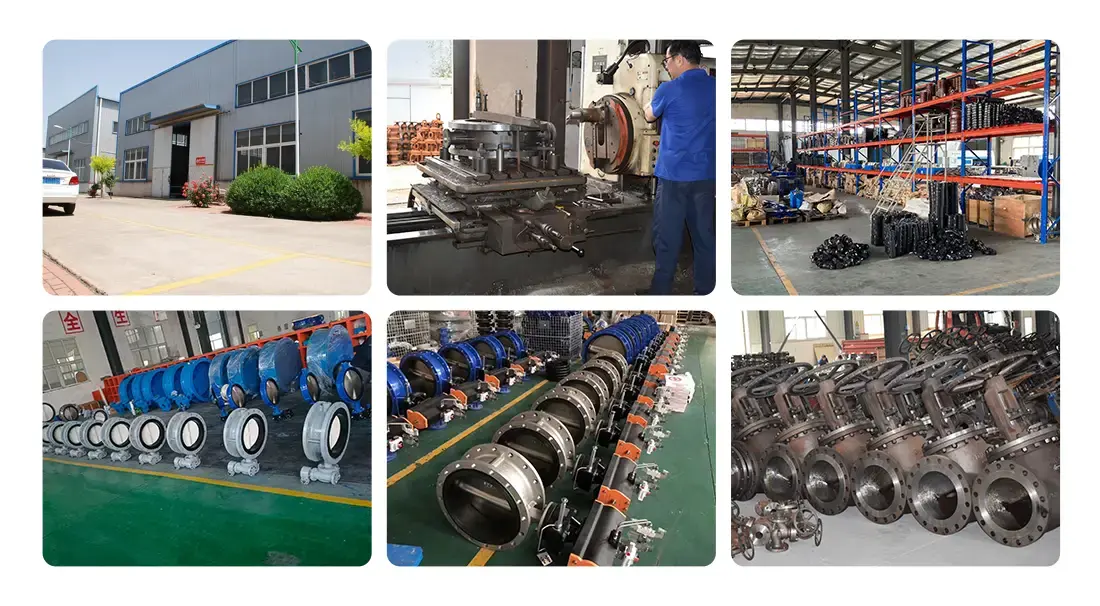
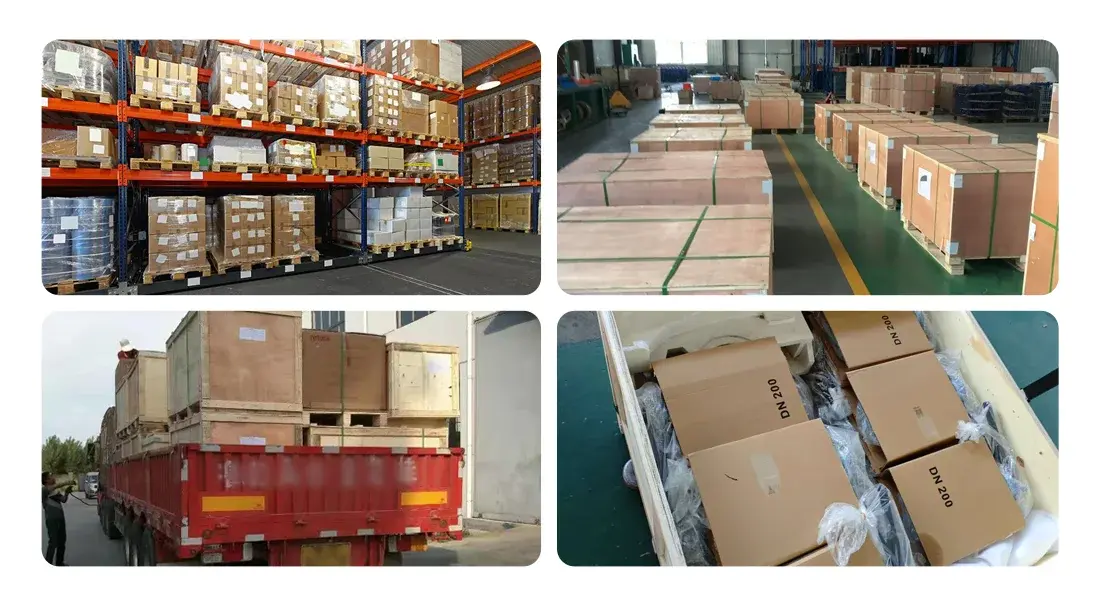
Standard sizes from DN50 to DN600 are kept in stock, and shipping is usually set up 3–7 days after an order is confirmed. Customized sizes between DN50 and DN3000 usually ship within 15 to 25 days, but faster production times are available upon request.
There are about 50 km between the plant and Tianjin Port. In line with ISPM 15 rules, export packaging uses wooden crates, moisture-proof film, and mounting brackets. You can get quotes for both FOB Tianjin Xingang and CIF destination-port.
After-Sales Support
Each Wafer Type Triple-eccentric Metal-seated Butterfly Valves includes an 18-month warranty covering non-human-caused product failures. Pre-sales support includes valve selection guidance, CAD drawings, and 3D models upon request.
After delivery, installation guidance, troubleshooting documentation, and access to local technical service partners are provided. Each product carries a QR code linking to product records, inspection reports, and maintenance records.
Frequently Asked Questions
Q: What's the difference between a Lug type triple-eccentric valve and a Wafer type one?
A: The Wafer type uses through-bolts to connect two flanges. It is cheaper and lighter, but the downstream pipes can't be taken out without depressurizing the line. The Lug type has holes with threads that let it stay attached to one plate for end-of-line work.
Q: Can flow go in both directions through these valves?
A: Yes. According to API 598, these valves have been tested and given a rating for two-way isolation. Most of the time, the valve is rated for flow in one direction, but it can be used in either direction for maximum sealing help from line pressure.
Q: Why is torque seating important for valves that are seated in metal?
A: Some valves close by using force to push the metal disk into the cone-shaped seat, instead of stretching a rubber. This means that if necessary, the actuator can increase the seating force. This gives a higher safety margin in critical isolation situations.
Q: Can these valves be used to slow down and control flow?
A: Yes. The shape doesn't cause any friction, so it's easy to modulate. These valves work well for controlling flow between 15% and 70% opening. They are made for general slowing, not precise micro-flow control.
Q: Does the whole valve need to be replaced if the seat leaks?
A: Not all the time. The disc's sealing ring is made of several layers of stainless steel and graphite. This ring can usually be replaced without having to replace the whole disk or valve body. This saves money on maintenance costs.
Q: What kinds of licenses and rules are needed?
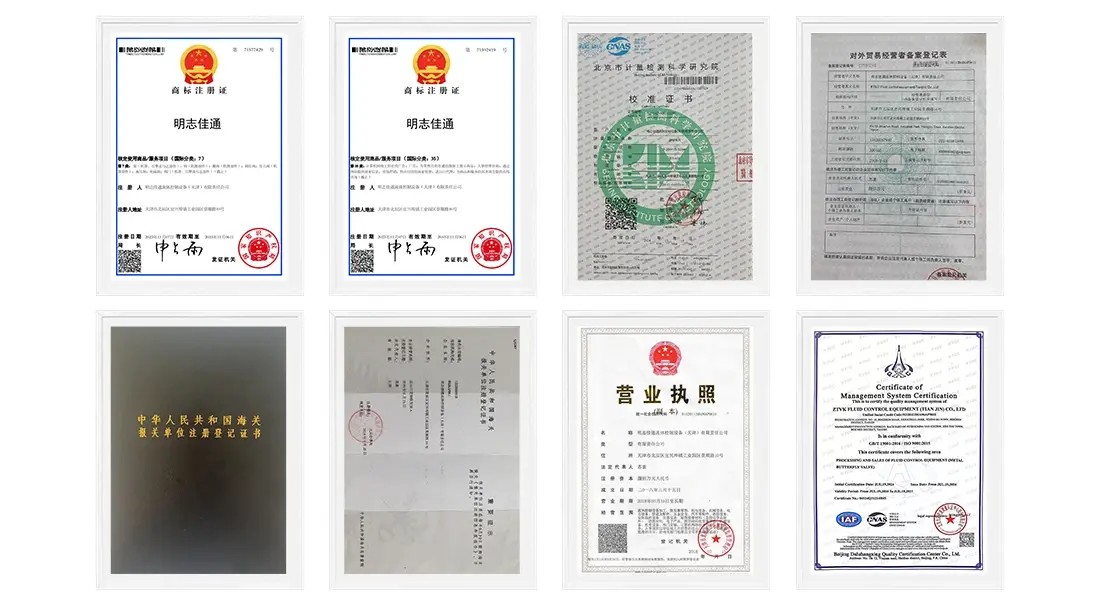
A: API, ANSI, ISO, DIN, JIS, BS, and CE standards are used to make the products. ISO9001, ISO14001, and OHSAS18001 are all qualifications that the company has. You can get certification documents if you ask for them, and third-party factory inspections are welcome.
Contact Us
Have a specification or quote request? Send your Wafer Type Triple-eccentric Metal-seated Butterfly Valves details to ktec86961886@163.com and our team will follow up promptly.
Send us your valve requirements and our team will provide professional solutions and fast quotations.