- English
- French
- German
- Portuguese
- Spanish
- Russian
- Japanese
- Korean
- Arabic
- Greek
- German
- Turkish
- Italian
- Danish
- Romanian
- Indonesian
- Czech
- Afrikaans
- Swedish
- Polish
- Basque
- Catalan
- Esperanto
- Hindi
- Lao
- Albanian
- Amharic
- Armenian
- Azerbaijani
- Belarusian
- Bengali
- Bosnian
- Bulgarian
- Cebuano
- Chichewa
- Corsican
- Croatian
- Dutch
- Estonian
- Filipino
- Finnish
- Frisian
- Galician
- Georgian
- Gujarati
- Haitian
- Hausa
- Hawaiian
- Hebrew
- Hmong
- Hungarian
- Icelandic
- Igbo
- Javanese
- Kannada
- Kazakh
- Khmer
- Kurdish
- Kyrgyz
- Latin
- Latvian
- Lithuanian
- Luxembou..
- Macedonian
- Malagasy
- Malay
- Malayalam
- Maltese
- Maori
- Marathi
- Mongolian
- Burmese
- Nepali
- Norwegian
- Pashto
- Persian
- Punjabi
- Serbian
- Sesotho
- Sinhala
- Slovak
- Slovenian
- Somali
- Samoan
- Scots Gaelic
- Shona
- Sindhi
- Sundanese
- Swahili
- Tajik
- Tamil
- Telugu
- Thai
- Ukrainian
- Urdu
- Uzbek
- Vietnamese
- Welsh
- Xhosa
- Yiddish
- Yoruba
- Zulu
Threaded Gate Valves and How They Are Used in Pipeline Systems
Threaded gate valves are important parts of pipeline systems that keep water, oil, and gas from flowing too freely. They do this accurately and reliably. We can use a 2 threaded gate valve, which has a standard diameter of two inches and threaded end fittings, for medium-bore pipes where full-bore flow and low pressure drop are important. This multi-turn design, unlike quarter-turn valves, moves a wedge-shaped gate so that it is perpendicular to the flow path. This makes a straight-through route that lowers energy loss and turbulence. These valves are trusted by distributors, builders, and equipment makers because they are both affordable and effective, especially in situations where welding or flanging isn't possible or wouldn't be cost-effective.
Understanding Threaded Gate Valves: Basics and Functionalities
A simple but effective way for threaded gate valves to work is for the handwheel to turn the stem, which raises or lowers the gate element. When the gate is fully open, it goes back into the head all the way, leaving a flow path that is the same diameter as the pipe inside. The globe valves push fluid through a winding path that causes friction and pressure loss. This full-port design doesn't do that.
Core Design Components
The important closing areas are on the valve body, where the gate meets the valve seats. HPB59-1 brass or similar copper alloys that don't rust while keeping their mechanical properties are often used in high-quality buildings. The stem goes through the cap and is covered by packing material, which is usually PTFE. This keeps the stem path from leaking. Threaded ends meet the standards set by ANSI B1.20.1 for NPT connections or ISO 7-1 for BSP threads, which means they can be used with current pipe systems.
Common Wedge Configurations
Solid wedge shapes are good for closing clean fluids and for use with mild pressure. The single-piece gate offers a reliable shut-off, but it can become stuck if thermal growth or pipeline stress throws it out of position. Some types of flexible wedges have a little give that makes up for body distortion during thermal cycles. This makes them better for systems or lines that experience temperature changes. Split wedge gates have self-adjusting parts that can handle small seat wear. This makes the gates last longer in situations where abrasive particles are present.
Thread Standards and Pressure Ratings
Most industrial uses need tapered NPT threads that make a mechanical seal through an interference fit and can be used with PTFE tape or thread sealer. Parallel BSP threads depend on an elastic seal at the face, which is usually an O-ring or a bonded washer. Standard brass threaded gate valves can handle up to 200 WOG (water, oil, and gas) or Class 125/150 of pressure, making them perfect for low-pressure industrial services, public water systems, and HVAC circuits.
Our JT-2001 model is a great example of useful engineering. It has a threaded link that makes fitting easy without tools, is made of HPB59-1 brass for sturdiness, and can handle up to 1.6 MPa of pressure. Temperatures from -10°C to 120°C are suitable for most water supply, heating oil distribution, and compressed air systems. The small size of the structure means that it takes up little space when installed.
Comparing Threaded Gate Valves to Other Valve Types: Making Informed Choices
To choose the best valve type, you need to know how the project's installation requirements, material qualities, and working needs all fit together. When it comes to different pipeline situations, threaded gate valves mostly compete with flanged options, ball valves, and globe valves.
Installation Methods and Space Considerations
Threaded connections get rid of the need for hot work permits, welding tools, and qualified welders. This is very helpful when working in occupied buildings, dangerous areas, or remote areas with few skilled workers. Pipe tools and the right way to apply sealer are all that is needed for installation. Even though flanged gate valves are stronger for higher pressures, they need to be tightened in the right order, with the right seal, and with enough wrench space around the flange's edge. The threaded choice works faster when adding to systems that are already in place or when repair teams need to quickly replace valves without having to use special tools.
When there isn't much room for flange bolts, like in crowded pipe manifolds or engine rooms, threaded designs are better. A 2 threaded gate valve's small face-to-face size lets it be installed in tight spaces, but you should make sure there is enough room for the handwheel to work and for future removal.
Material Selection Impact
Because they don't dezincify and are made of FDA-approved copper alloys, brass threaded gate valves can handle drinkable water, heating systems, and gases that don't corrode. Stainless steel types, usually 316 or CF8M grades, can handle slightly corrosive media, salty water, or places that need to meet high cleanliness standards. In oil and gas secondary lines, where strength is more important than rust, carbon steel bodies are used. These bodies are often coated to protect them.
Choice of material has a direct effect on cost and durability. A metal valve might be 40% less expensive than a stainless steel one, but it will rust quickly in places with a lot of salt or acid. Corrosion-resistant choices should be kept on hand by distributors who work with chemical plants or coastal areas, while metal is fine for local waterworks.
Manual Versus Automated Operation
Hand-operated threaded gate valves are most common in places where the valve cycle frequency is low, like when equipment needs to be shut down for repair, seasonal changes, or emergencies. Because they have multiple turns, they don't need to be adjusted very often, so they're not good for slowing service. Automated actuators can be added to models of rising stems to turn them into separation points that can be managed from a distance. This upgrade path is good for wholesalers who offer progressive automation solutions to industry clients who are slowly updating old systems.
Maintenance, Installation, and Best Practices for Threaded Gate Valves
Proper fitting and regular maintenance have a direct effect on how long valves last and how reliable the system is. Knowing about common installation mistakes and upkeep needs helps procurement teams choose the right products and get end users ready to be good guardians.
Step-by-Step Installation Guidance
First, check the threads for damage, dirt, or production burrs that could make sealing harder. A wire brush can be used to remove protective oils from both male pipe threads and female valve threads. You can use PTFE thread sealant tape that is oriented in the direction of thread rotation (three to five wraps, starting two threads from the end) or an anaerobic pipe sealant solution that is rated for the medium and temperature you want to use.
By hand, thread the valve onto the pipe until it is finger-tight. Make sure that the handwheel is easy to reach by turning the valve in the right direction. For an extra one to two full turns, use a wrench on the flats of the valve body, never on the bonnet or handwheel. If you tighten it too much, the body could crack, or the threads could get twisted, but if you tighten it too little, it could leak. Before applying pressure, open and close the valve all the way two times to make sure it works smoothly and is properly seated.
Routine Maintenance Approaches
In active systems, check the packing glands every three months and fix the packing nut if you see small stem leaks. When it comes to important services or when changing the packing nut no longer stops leaks, the packing material should be replaced once a year. Every six months, grease the stem threads with a suitable grease to keep them from galling and to make sure they work smoothly. This is especially important for setups that will be outside in the weather.
Regularly clean the outside to look for rust, mechanical damage, or unauthorised tampering. Visual inspection should prove the correct position of the handwheel: fully open valves show maximum stem extension in rising stem designs, giving instant feedback on the operating state. Keep track of trends in valve health and plan ahead for replacements by writing down check dates and results.
Addressing Common Challenges
Thread wear usually shows up after being put in and taken out many times, which happens a lot with portable pipes or equipment that is repaired often. Use union connections next to valves to reduce the number of times they need to be reinstalled. This lets equipment be disconnected without damaging the valve-to-pipe threads. If you see thread damage on a valve, replace it right away instead of trying to fix it with threads that are too big or too much sealer.
When system improvements raise working pressures above what was originally planned, pressure limits become very important. Due to the risk of pressure spike (water hammer), a 2 threaded gate valve rated for 1.6 MPa shouldn't be used in systems that are getting close to this limit. Keep a safety cushion that is big enough to handle changing conditions. This is usually 20% less than the maximum pressure.
Procurement Guide: Sourcing Quality Threaded Gate Valves for Industrial Use
Technical requirements, source dependability, and the total cost of ownership must all be balanced for buying to go well. When builders and distributors buy threaded gate valves to resell or use on a project, they need to be able to evaluate them in a way that goes beyond what is written in the catalogue.
Verifying Supplier Credentials
Give priority to makers who have ISO 9001 quality management certification and make sure that the design, production, and testing methods are written down. Ask for copies of material test results that prove the alloy's makeup meets certain standards. This is especially important for claims of corrosion resistance. Documentation from third-party tests done by recognised labs confirms the pressure ratings and leak-tight performance according to API 598 or MSS SP-80 standards.
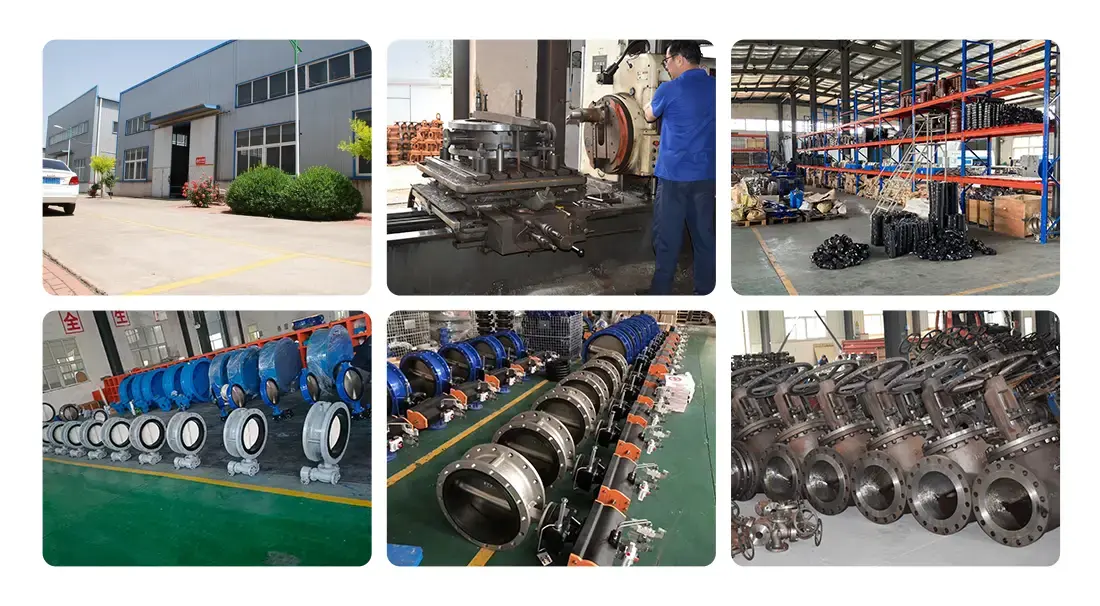
Being able to inspect a factory is what sets dedicated suppliers apart from trading middlemen. Customers are welcome to come to our Tianjin Beichen factory to see how CNC machines are used, how pressure testing units work, and how materials are checked. Because we are only 50 kilometres from Tianjin Port, we can easily combine shipments and offer clear FOB Xingang or CIF prices.
Wholesale and Bulk Order Logistics
Price tiers that take into account economies of scale should be negotiated by buyers who buy a lot. When orders are bigger than the minimum production runs, savings are given on standard models like DN50–DN600 butterfly valves and popular threaded gate sizes. Make it clear how long it takes to ship stock items versus custom configurations. Our standard inventory ships within 3–7 days, but non-standard configurations take 15–25 days, based on how complicated they are.
Optimising how containers are loaded lowers the cost of freight per unit. Multiple valve types and sizes can be accommodated in mixed container loads, which helps wholesalers keep a wide range of items in stock without having to spend a lot of money. Talk about the package needs early on. Export-grade wooden crates that meet ISPM 15 standards keep customs lines moving quickly, and moisture-proof wrapping keeps valves safe while they're travelling across the ocean.
OEM Partnerships and Customization
OEM agreements offer branded goods and customised specs, which are helpful for equipment makers that put valves into packaged systems. We can make unique nameplates, packaging with distributor names, and pressure testing methods that are changed to fit the needs of each application. ODM services include changing the valve body, using different closing materials, and changing the way the valve is connected.
Long-term relationships let people work together to make new products. Share application problems, like corrosive media, high temperatures, and limited space, so that engineering teams can come up with the best answers. When you commit to a certain amount of work, you get priority scheduling for production and specialised technical support, which is helpful when project schedules are tight or unexpected demands come up.
Advantages and Potential Drawbacks of Threaded Gate Valves in Pipeline Systems
Knowing both the strengths and weaknesses of a valve helps you choose the right application for it, which keeps it working reliably and prevents early breakdowns or operating problems. This fair view helps buyers match goods to needs that happen in the real world.
Key Advantages in Industrial Applications
The best thing about it is how easy it is to install. For threaded joints, you don't need to know how to weld, have a hot work permit, or keep a stock of flange gaskets. Maintenance teams like parts that can be replaced in the field and easy removal steps that keep downtime to a minimum. When you add up the cost of labour and materials for fitting, threaded valves are 30–50% less expensive than flanged valves for small- to medium-bore uses.
The full-port design keeps the system's efficiency and lowers pumping costs over the life of the valve by lowering the pressure drop. Being able to flow in both directions makes installation easier—you don't have to check the flow direction or worry about getting it wrong. Threaded gate valves are useful in HVAC, municipal water, and light industrial settings because they can handle a variety of fluids, such as water, light oils, and gases that don't corrode.
Limitations and Alternative Considerations
When compared to soldered or flanged joints, thread integrity limits the highest pressure and temperature that can be applied. Systems that need flanged valves with flexible gasket materials should have pressure values higher than Class 150 or temperature cycling that happens a lot above 120°C. Threaded connections aren't often used on large-diameter pipes above DN150 because they are hard to machine and don't offer as much safety.
Over time, thread rust in harsh chemical conditions or galvanic reactions between metals that are not the same can weaken the joint. All-stainless construction or protected thread solutions are good for coastal installations or systems that deal with acidic condensate. The dependability of the sealing relies on how it is installed. If you overtighten, the bodies will crack, and if you undertighten, leaks will happen. This creates a quality difference compared to captured gasket designs.
Installations that are prone to vibration may gradually become less tight even after being properly tightened at first. For pump discharge lines, air compressor ports, or other high-vibration services, you might want to look at flanged options. If these restrictions affect how you need to use the valve, you should think about flanged 2 threaded gate valves, ball valves, or other high-performance choices.
Conclusion
Threaded gate valves are a useful way to control flow in a wide range of pipeline systems. They are easy to install and work reliably in oil, gas, and water applications. Procurement pros can choose the right goods and avoid common mistakes by knowing how they work, what materials are available, and how often they need to be maintained. Threaded gate valves are essential for small- to medium-bore pipe systems because they are cost-effective, easy to install, and allow full-bore flow, but they have limits on pressure capacity and large-diameter uses. To be successful at sourcing, you need to check the qualifications of your suppliers, negotiate good bulk terms, and build relationships with makers who are committed to quality and quick support. Paying close attention to the best ways to put these valves and keeping them in good shape will make sure they work reliably for years within their design limits.
FAQ
1. What distinguishes a 2-threaded gate valve from a flanged gate valve?
The most important change is the connecting method. Threaded types have tapered or parallel threads cut straight into the body of the valve. These threads fit onto pipe threads by mechanical interference and sealant. For flanged versions, raised-face or flat-face flanges with bolt holes are used. Gaskets are pressed between two flanges that fit together to seal them. Threaded types are easier to install, cheaper, and work best with lower pressures. Flanged designs, on the other hand, can handle higher pressures and bigger diameters and are more reliable in important services.
2. Can threaded gate valves handle high-pressure applications?
Standard threaded gate valves work with low to middling pressures, up to 1.6 MPa or Class 150. Compared to flanged or welded joints, the thread engagement depth and body wall width limit the amount of pressure that can be put on them. For systems with pressures greater than 20 bar, you should ask for flanged gate valves with thicker walls and controlled gasket loads. Always make sure that the valve's pressure number is the same as or higher than the system's maximum pressure, even during surges.
3. How often should I inspect and maintain these valves?
Every three months, a visual check finds rust, leaks, or mechanical damage on the outside. Every three months, check how tight the packing gland is and make any necessary changes. Every year, you should do a full operating test of the valve, which includes opening and closing it all the way, making sure the stem moves smoothly, and checking the packing for wear and tear. In active systems, replace the packing material every 12 to 18 months or when the change stops stopping leaks. Keep track of performance trends and plan replacements on time by writing down all repair tasks.
Partner With ZTVK for Reliable Threaded Gate Valve Supply
From our facility in Tianjin, ZTVK has been making valves for more than 15 years and can offer high-quality goods that meet both foreign standards and real-world needs. The JT-2001 model is one of our 2 threaded gate valves. It is designed to work with water, oil, and gas in city, HVAC, and light commercial settings. Our ISO 9001, ISO 14001, and OHSAS 18001 certifications show that we care about quality, the environment, and safety at work.
We keep more than 2,000 standard valve units in stock, so we can deliver on-time projects in 3–7 days. For special orders, our in-house machining centers take 15–25 days. When you work with an OEM, you get branded packages, custom nameplates, and technical support that is tailored to the needs of your market. We can offer competitive prices because we control the whole production process, from getting the materials to checking them before they are shipped. This means we don't have to pay markups to middlemen.
Our position, which is only 50 kilometres from Tianjin Port, makes sure that shipping goes smoothly thanks to our global logistics knowledge. No matter if you need FOB Xingang terms or CIF to your final port, our relationships with major shipping lines ensure a smooth transit and clear paperwork. As a reliable company that makes 2 threaded gate valves, we welcome enquiries from distributors, contractors, and equipment builders who are looking for reliable valve options backed by quick expert support. You can email our team at ktec86961886@163.com to talk about your needs and find out how our valve solutions can help your project succeed and make your customers happier.
References
1. American Petroleum Institute. "API Standard 598: Valve Inspection and Testing." Washington, DC: API Publishing Services, 2016.
2. Manufacturers Standardization Society of the Valve and Fittings Industry. "MSS SP-80: Bronze Gate, Globe, Angle, and Check Valves." Vienna, VA: MSS, 2013.
3. Smith, P. R., and Zappe, R. W. "Valve Selection Handbook: Engineering Fundamentals for Selecting the Right Valve Design for Every Industrial Flow Application." 5th ed. Houston: Gulf Professional Publishing, 2004.
4. American Society of Mechanical Engineers. "ASME B1.20.1: Pipe Threads, General Purpose (Inch)." New York: ASME International, 2013.
5. Lyons, Jerry L., and Askeland, Donald R. "Piping Systems Manual." New York: McGraw-Hill Professional, 2011.
6. Skousen, Philip L. "Valve Handbook." 3rd ed. New York: McGraw-Hill Education, 2011.
Send us your valve requirements and our team will provide professional solutions and fast quotations.
RELATED INDUSTRY KNOWLEDGE