- English
- French
- German
- Portuguese
- Spanish
- Russian
- Japanese
- Korean
- Arabic
- Greek
- German
- Turkish
- Italian
- Danish
- Romanian
- Indonesian
- Czech
- Afrikaans
- Swedish
- Polish
- Basque
- Catalan
- Esperanto
- Hindi
- Lao
- Albanian
- Amharic
- Armenian
- Azerbaijani
- Belarusian
- Bengali
- Bosnian
- Bulgarian
- Cebuano
- Chichewa
- Corsican
- Croatian
- Dutch
- Estonian
- Filipino
- Finnish
- Frisian
- Galician
- Georgian
- Gujarati
- Haitian
- Hausa
- Hawaiian
- Hebrew
- Hmong
- Hungarian
- Icelandic
- Igbo
- Javanese
- Kannada
- Kazakh
- Khmer
- Kurdish
- Kyrgyz
- Latin
- Latvian
- Lithuanian
- Luxembou..
- Macedonian
- Malagasy
- Malay
- Malayalam
- Maltese
- Maori
- Marathi
- Mongolian
- Burmese
- Nepali
- Norwegian
- Pashto
- Persian
- Punjabi
- Serbian
- Sesotho
- Sinhala
- Slovak
- Slovenian
- Somali
- Samoan
- Scots Gaelic
- Shona
- Sindhi
- Sundanese
- Swahili
- Tajik
- Tamil
- Telugu
- Thai
- Ukrainian
- Urdu
- Uzbek
- Vietnamese
- Welsh
- Xhosa
- Yiddish
- Yoruba
- Zulu
Applications and Working Principles of Pneumatic-Operated Butterfly Valve
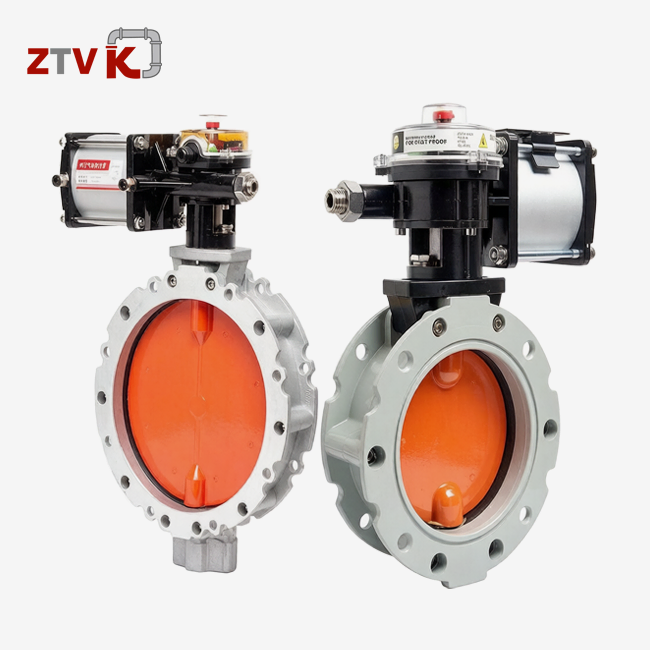
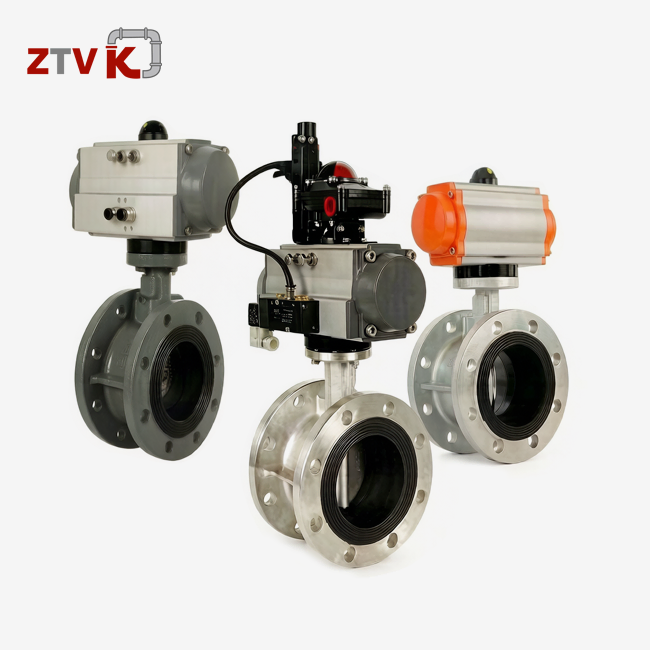
A pneumatic operated butterfly valve is a quarter-turn flow control device that combines a disc-type closure element with a compressed air-driven actuator to modulate or isolate fluid flow in pipelines. Unlike manual valves, this assembly harnesses compressed air energy, converting it into mechanical torque through rack-and-pinion or scotch yoke mechanisms. The rapid actuation speed—often under one second—makes these valves essential for emergency shutdown systems and automated control in industries ranging from water treatment to petrochemical processing, where operational safety and efficiency are paramount.
Understanding the Working Principles of Pneumatic-Operated Butterfly Valves
The actuator, the valve body, and the spinning disc are the three main parts that make up the reasoning behind how these valves work. When compressed air goes into the actuator chamber, it moves things in a straight line or in a circle, which causes torque at the valve stem. This force turns the disc in a 90-degree circle, which can move the valve from fully closed to fully open or any point in between for throttling purposes.
How Actuator Designs Drive Performance
Two main types of actuators are used for different tasks. Rack-and-pinion actuators use gear teeth to mesh pneumatic pressure into rotary force. They have a small form and can last for a long time. Scotch yoke actuators have a sliding pin inside a yoke slot that creates more torque at the start and end of the stroke. This makes them perfect for large-diameter valves that deal with thick fluids. It is possible to set up either a single-acting system with a spring return for fail-safe positioning if air pressure drops, or a double-acting system with air pressure controlling both opening and closing for more precise modulating control.
Valve Body Styles and Installation Considerations
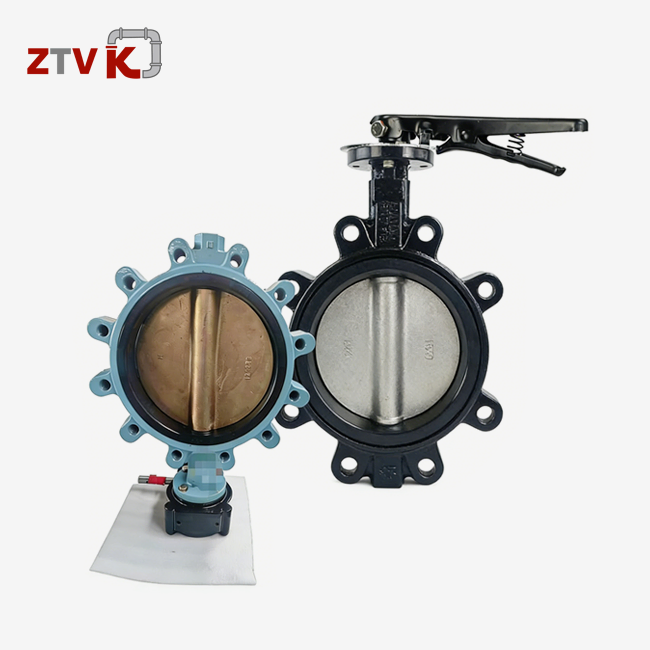
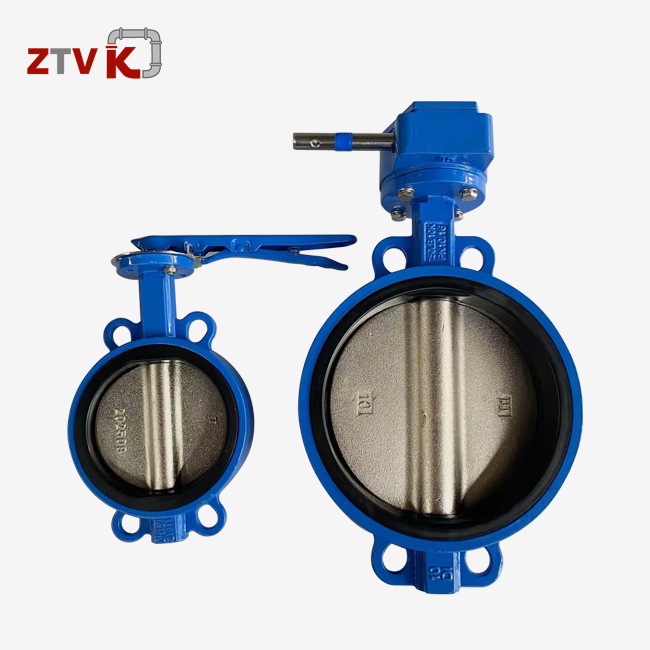
Wafer-shaped bodies fit between flanges, and bolts hold the valve in place. This makes installation lighter and cheaper. This form works well in low-pressure situations where saving room is important. Lug-style bodies have threaded inserts in the outer casing that let the flange be removed separately from the rest of the piping system. This is a huge benefit during maintenance cycles. Permanent flanges are welded or cast onto flanged bodies, which give high-pressure systems like those in petrochemical plants the most structural stability.
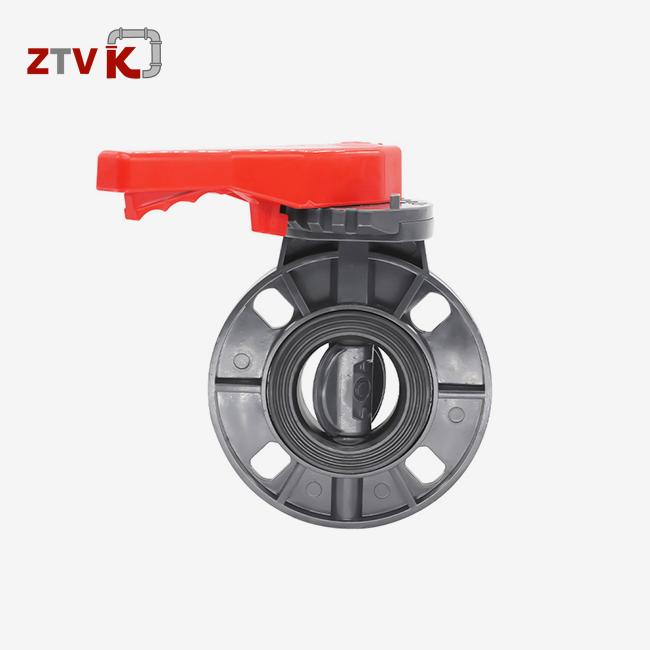
From theoretical widths of 2′′ to 80′′ (DN50 mm to DN2000 mm), ZTVK makes wafer-style bodies that meet DIN PN10/PN16, JIS 5K/10K, and ANSI Class 150LB flange standards. This flexibility makes sure that different regional piping standards can work together, which makes buying easier for foreign wholesalers.
Material Selection and Corrosion Resistance
Body materials' service life is affected by corrosion. ASTM A536 65-45-12 ductile iron is cheap and sturdy when ripped apart for municipal water systems. WCB carbon steel HVAC bodies can withstand moderate temperatures and pressures. CF8M stainless steel resists acidic and chloride-rich chemical processing fluids well. Nylon-coated ductile iron reduces friction and galvanic corrosion, while CF8 and CF8M stainless discs maintain form in clean food-grade or pharmaceutical lines.
Material determines seat closure ability and temperature range. EPDM chairs can withstand 120°C water and steam, making them suitable for municipal water systems. NBR chairs handle fuels and oils well. Chemical industries and refineries use PTFE chairs to withstand severe chemicals and 200°C temperatures. The torsional strength of stainless steel stems SS420 and SS431 allows actuator force to pass over thousands of cycles.
Key Applications of Pneumatic-Operated Butterfly Valves in Industrial Settings
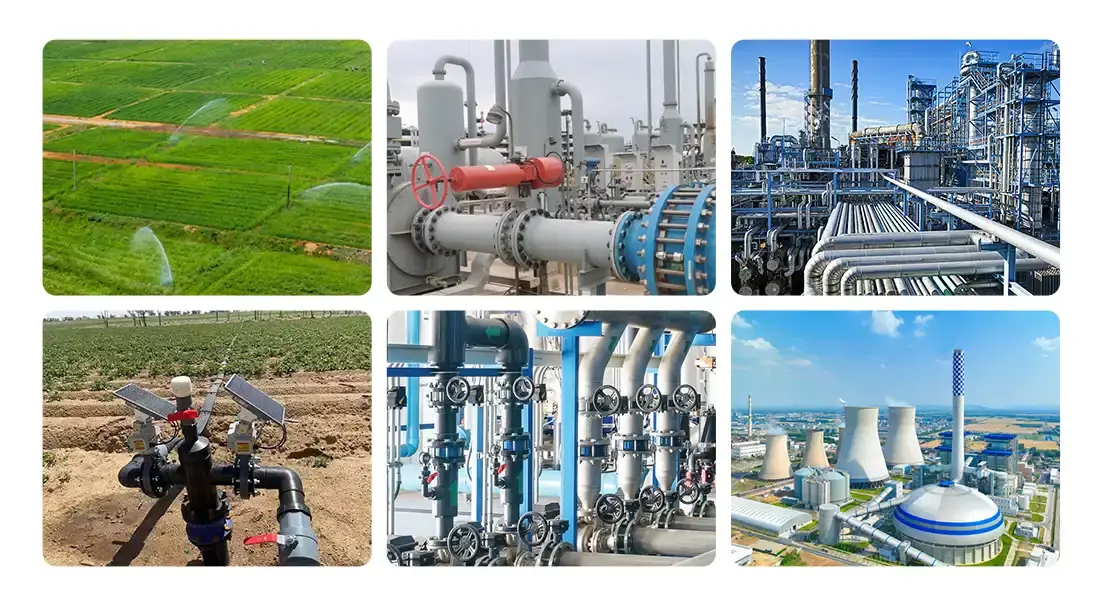
These valves are very important in many areas where technology, safety, and dependability all come together for the pneumatic operated butterfly valve. Because they can work in harsh conditions and respond quickly, they can solve certain practical problems that human or electric options can't.
Water Treatment and Municipal Infrastructure
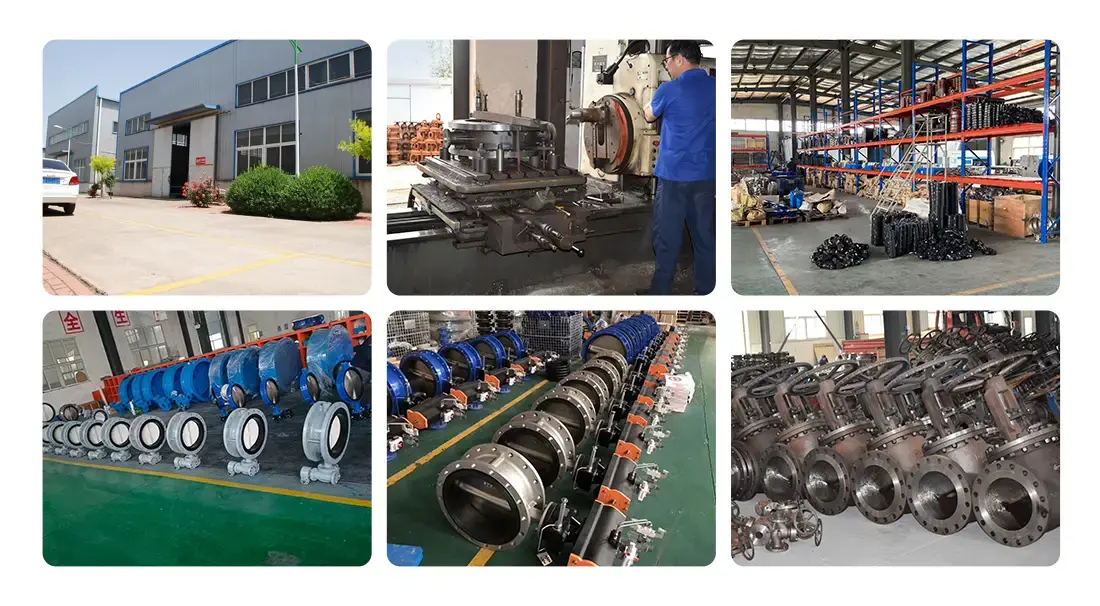
Large-bore valves in wastewater treatment plants manage the flow of sewage and water into and out of filter backwash systems and sludge drainage lines. The pneumatic action works in corrosive, wet environments where electrical parts might break down early from moisture getting in. When compared to circular disc designs, ZTVK's double eccentric design lowers the opening and closing force by 30%. This makes the cycle life more than fifty thousand operations. Municipal contractors like how quickly they can get standard models from DN50 to DN600, which can be shipped within three to seven days from Tianjin's large inventory.
Chemical Processing and Petrochemical Operations
Valve bodies and seats that are lined with PTFE are needed when working with harsh chemicals like sulphuric acid or organic solvents. Electrical sparks can't start in dangerous classified areas when the machine is run by air pressure, which meets ATEX and IECEx explosion-proof standards. The fast closing speed lets you do exact batch dosing and emergency separation when something goes wrong with the process. Keeping the compressed air supply separate from the process fluids keeps them from getting contaminated and meets strict health, safety, and environmental standards.
HVAC and Building Automation Systems
These valves control the flow of hot water, cold water, and steam in temperature control loops in commercial buildings. The thin wafer design makes installation easier in small mechanical rooms, and electro-pneumatic positioners make it possible to connect to building management systems and change the settings remotely based on occupancy sensors or temperature setpoints. When they are in a steady state, pneumatically operated butterfly valves don't use any electricity, which makes them more energy efficient than electric motors that are always on.
Food and Beverage Manufacturing
Cleaning-in-place processes must be done often on sanitary processing lines so they meet FDA or USDA standards. The hygienic design includes bodies made of stainless steel and seats made of EPDM. The smooth disc surface also stops bacteria from growing. Pneumatic action lets you quickly turn things on and off for tasks like filling, mixing, and moving things without adding lubricants or other impurities to the product lines. Valve distributors and trading companies can stay ahead of the competition by giving their customers reliable automation solutions that are backed by consistent quality and quick delivery. ZTVK's manufacturing process is ISO9001-certified, which means that every unit meets international standards like API 609 and API 598 testing protocols.
Maintenance and Troubleshooting of Pneumatic-Operated Butterfly Valves
Regular inspections and preventative repair are key to keeping things running well. Knowing the most common types of failure and how to fix them cuts down on downtime and increases the life of an asset.
Routine Inspection and Preventive Care
Three times a year, you should look over the actuator housing for cracks or corrosion, the air supply lines for leaks or blockages, and the disc edges for damage to the coating or erosion. Seat checks show wear patterns that point to improper alignment or too fast a pedalling speed. Different types of actuators need different amounts of grease. For example, lithium-based grease should be put on the gear teeth every six months for rack-and-pinion systems, but high-temperature synthetic lubricants should be used once a year for scotch yoke bearings. Air flow quality has a direct effect on how long an actuator lasts. Putting in coalescers and regulators upstream gets rid of the water and particles that damage cylinder seals. Seals and diaphragms don't get over-stressed when the supply pressure stays within the actuator's recommended range, which is usually four to seven bar.
Diagnosing Common Operational Issues
Hissing near actuator ports or delayed valve reaction times indicate air leakage in a pneumatic operated butterfly valve. Identifying leaks or seal failures allows you to replace O-rings or pneumatic tubing exactly. Actuator problems occur when filthy air deposits in cylinders stop the piston from moving. Taking items apart and cleaning with permitted chemicals restores functionality. Valves stick when media hardens around the disc or seat, as in slurry or powder. Increasing air pressure may break the connection, but if it continues stuck, remove and clean the disc by hand. When sealing surfaces are destroyed by chemical assault or compression set, leakage beyond the closed disc indicates a replacement seat is needed. Eccentric loading occurs when the actuator and valve stem misalign. The bearing wears faster, and sealing becomes less stable. Realigning the coupler and tightening the fastening nuts to the specified pressure fixes this issue. Repair data might reveal tendencies that could improve design or materials for specific usage.
Repair Versus Replacement Decision-Making
Cost-benefit analysis compares the cost of repairs to the cost of replacement and the length of time that the business is closed. Valve bodies that have serious rust or mechanical damage that takes up more than 30% of the wall thickness need to be replaced because they could compromise the structure. If an actuator's seal fails more than once during its warranty time, it could mean that the manufacturing process was flawed, which would allow the seller to make a replacement claim. On the other hand, replacing a small seal or bearing usually only costs fifteen to twenty percent of the price of a new actuator, so repair is usually a better deal. ZTVK helps customers make this choice by offering an 18-month guarantee that covers failures not caused by humans, free new parts, and troubleshooting guides. Installation advice videos help keep commissioning mistakes to a minimum, and local expert service partners offer support on-site when remote tests aren't enough.
Selecting the Right Pneumatic-Operated Butterfly Valve: A Buyer's Guide
When making a procurement choice, you have to look at a lot of things, such as the need for automation, the conditions of the process, your budget, and the skills of the seller. By comparing control methods, you can see which technology fits your practical needs the best.
Comparing Pneumatic, Electric, and Manual Actuation
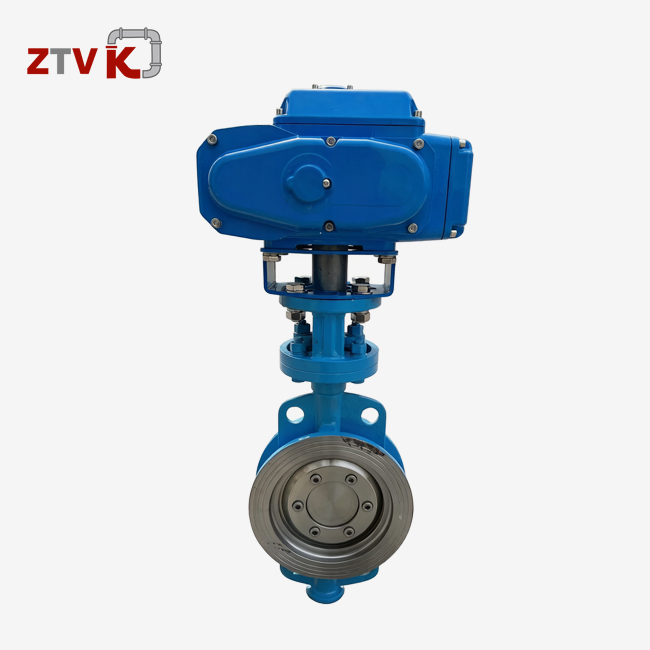
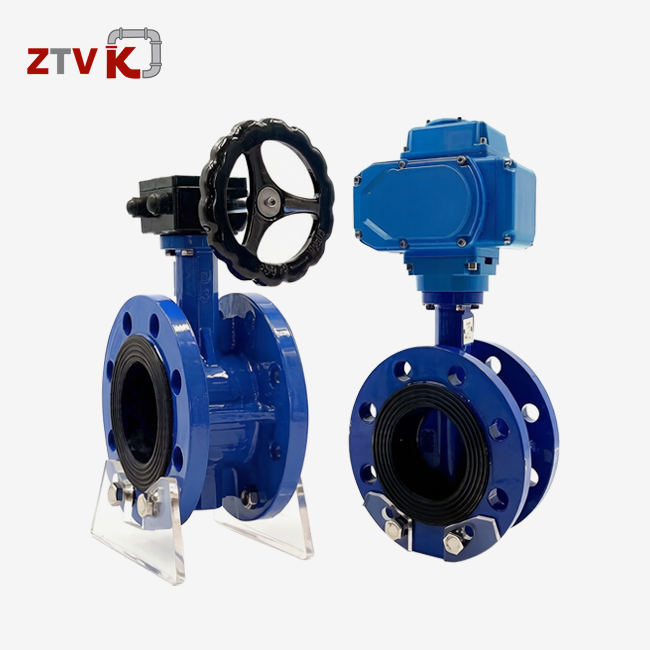
Naturally safe pneumatic-actuated butterfly valves may be used in risky situations since they have no electrical components. Their shorter stroke periods than electric actuators help shut down in emergencies. Because most industrial locations have compressed air equipment, operational expenses are low. Facilities with little instrument knowledge will appreciate its ease of maintenance—fewer computer parts equal less mending. In areas lacking pneumatic infrastructure, electric motors provide precise positioning without compressed air. They're compatible with Profibus and Modbus. They're not cost-effective for high-cycle or safety-critical purposes since they require more power while operating and cost more initially. Manual valves reduce cash and eliminate power needs. However, they allow human error, complicate distant operation, and aren't appropriate for wide or frequent services. The option hinges on upfront costs against system efficiency during its lifetime.
Critical Specifications for Informed Selection
The flow coefficient (Cv), maximum pressure drop, and pipeline speed constraints must be considered when choosing a valve size. Too-small valves limit flow, causing erosion and cavitation; too-large valves function under unstable flow circumstances, reducing control accuracy. Safety restrictions need pressure ratings above system maximums. ANSI 150LB valves can withstand 285 psig at ambient temperature, while PN16 valves can handle 16 bar systems. Material compatibility matrices include fluid chemistry, severe temperatures, and wear and tear to aid in choosing. Checking rust resistance charts helps prevent premature failure. EPDM seats may expand and leak with hydrocarbon fuels; however, NBR seats perform well. The proper size actuator depends on how much torque is required during escape, running, and sitting, and then picking actuators with torque outputs 20–30% greater than peak needs. Spring force returns single-acting configurations to fail-closed or fail-open states, which is crucial for fire safety systems. Electro-pneumatic positioners that receive analogue inputs from dispersed control systems may modulate double-acting setups.
Supplier Reliability and Customization Capabilities
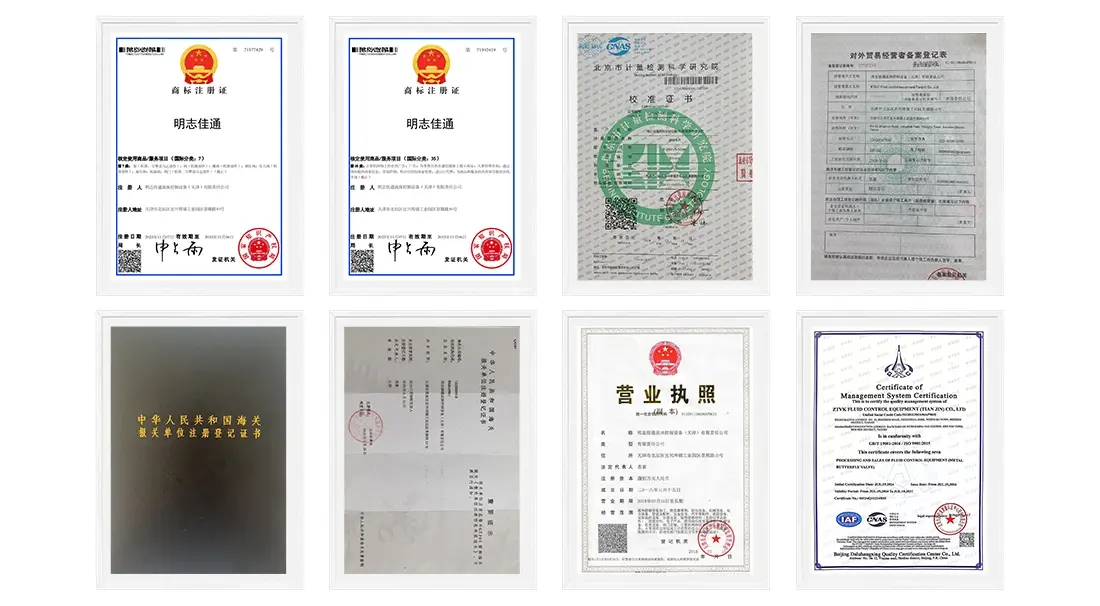
Reliable manufacturers follow ISO9001, API 609 butterfly valve design, and PED 2014/68/EU safety criteria. Safe industrial methods are certified by DNV, TÜV, and ASME. Requesting test results and factory audits explains QA. Multi-location wholesalers need customisation. ZTVK OEM allows client names, nameplates, and packaging. This helps brand distinction. ODM lets valve body designs, sealing materials, and connection methods be modified for harsh temperatures or corrosion. Draw-based manufacturing simplifies older systems by handling non-standard sizes and plate drillings. Consider lead times, inventory support, and payment for bulk orders. ZTVK offers over 2,000 standard units, allowing distributors to quickly get more. Non-standard orders take 15–25 days; however, they may be completed quicker. Marine freight coordination is simpler at the site 50 km from Tianjin Port thanks to COSCO Shipping and Maersk. Professional packing with hardwood boxes, moisture-proof paper, and set brackets meets ISPM 15 standards, avoiding port delays.
Enhancing Operational Efficiency with Pneumatic Butterfly Valves
Equipment that uses less energy, works with digital infrastructure, and has long-term value beyond the initial purchase price is needed in modern industry settings. Pneumatic operated butterfly valves meet these needs by using new design ideas and lifetime management techniques.
Energy Savings and Environmental Sustainability
Electric motors need power all the time to position, but pneumatic action only uses compressed air when the valve moves. Once the disc hits the appropriate angle, it doesn't need any energy to stay in place in modulating uses; instead, mechanical friction and seat compression do it. Over the course of a yearly working cycle, this means that the facility will use less electricity. Using variable speed drive compressors to make compressed air more efficient and recovering heat from waste are two more ways to improve sustainability profiles. Leak-tight shutoff lowers fugitive emissions in volatile organic compound services, which helps protect the environment and workers. The oblique seal design from ZTVK, which uses a double eccentric disc shape, provides bubble-tight sealing that meets API 598 standards. This reduces product loss and atmospheric escapes.
Integration with Smart Control Systems
Electro-pneumatic positioners precisely angle discs from four-to-20 milliamp control signals. It allows proportional flow control. Feedback receivers notify central control systems where valves are, terminating automated process optimisation. HART or Foundation Fieldbus digital positioners can display actuator air pressure, cycles, and seal wear to help troubleshoot. Predictive maintenance programs utilise this data to schedule repairs, reducing downtime. Wireless sensors on IoT valves provide real-time performance data to cloud systems accessible via mobile displays. Facility managers monitor valves at various places for trends like increased operating torque that indicates seat wear or dropping air pressure that indicates supply system issues. Remote diagnostics save money on site visits, which is useful for offshore platforms and pipelines.
Long-Term ROI and Total Cost of Ownership Analysis
Total cost of ownership includes purchase price, installation work, energy usage, maintenance expenses, and downtime losses. More costly pneumatic valves that last longer are typically cheaper than cheaper ones that require more repairs. ZTVK's design can endure over 50,000 cycles, reducing replacement costs for high-activity applications like batch processing and quick flow diversion. When determining maintenance expenses, consider how frequently seals, packing, and bearings need to be changed, personnel costs, and spare parts availability. Standardising valve types with interchangeable parts simplifies supply management and decreases part costs. Long-term supply agreements with manufacturers lock in stable rates and protect you against commodity price swings.
Conclusion
In conclusion, pneumatically operated butterfly valves represent an old technology that has been shown to work reliably in a wide range of difficult industrial settings. Because they are naturally safe in dangerous environments, can be quickly activated in an emergency, and have low operating costs, they are the best choice for distributors, contractors, and end users who want to maximise operational efficiency. To get the best performance and service life, make sure you choose the right body materials, seat compounds, and actuator configurations for the job. Partnering with makers that offer expert support, the ability to customise products, and a responsive supply chain can help you get the best deals and lower your business risks.
Frequently Asked Questions
1. What Distinguishes Pneumatic from Electric Butterfly Valves?
Pneumatic-operated butterfly valves get their power from compressed air instead of electrical parts that could catch fire in dangerous environments. They have shorter stroke times than electric actuators—usually less than one second for a quarter-turn—while electric actuators need several seconds. Electric valves have a better resolution for positioning and work better with digital networks, but they cost more at first and need to be powered all the time.
2. Which Materials Suit Corrosive Fluid Applications?
When paired with PTFE seats, CF8M stainless steel bodies can handle most acids, alkalis, and chlorides that are used in chemical processing. In municipal water systems that aren't too corrosive, special coatings like Rilsan or epoxy linings keep ductile iron bodies safe. Checking thorough corrosion charts that match the chemistry of the fluid to the resistance ratings of the material stops problems before they happen and makes sure that regulations are followed.
3. How Often Should Maintenance Occur?
Visual checks every three months find early signs of damage or wear. Actuator lubrication schedules depend on how often they are used. For high-duty applications that do more than 1,000 cycles per month, they should be greased every three months, while low-activity installations can get by with once a year. Depending on how often and where the machine is used, full overhauls with new seals and bearings are usually done every three to five years.
Partner with ZTVK for Reliable Pneumatic Operated Butterfly Valve Supply
ZTVK has been making specialised butterfly valves for more than fifteen years from our facility in Tianjin, which is located fifty kilometres from Tianjin Port for easy shipping around the world. With body materials ranging from ASTM A536 ductile iron, WCB carbon steel, and CF8M stainless steel, our ISO9001-certified production lines produce pneumatic operated butterfly valves that meet API 609 and API 598 standards. Seat choices like EPDM, NBR, and PTFE meet different media compatibility needs in the HVAC, chemical processing, and water treatment industries. As a maker of pneumatically operated butterfly valves, we keep more than 2,000 standard units in stock for three- to seven-day shipping and can accommodate non-standard customisations in fifteen to twenty-five days. For wholesalers who want to build brand recall, our OEM services include branded packaging and nameplates. These are paired with ODM engineering for designs that are specific to the purpose. You can email our technical team at ktec86961886@163.com to talk about your needs for bulk purchases, get CAD drawings, or set up factory audits that prove our quality systems work. Long-term supply agreements protect your prices and make sure that production schedules are followed, which lowers your lead time risks and gives you better value.
References
1. American Petroleum Institute. API Standard 609: Butterfly Valves – Double Flanged, Lug- and Wafer-Type. Washington, DC: API Publishing Services, 2022.
2. Hutchison, John W. ISA Handbook of Control Valves: Principles, Design, and Application. Research Triangle Park, NC: ISA – The International Society of Automation, 2021.
3. Skousen, Philip L. Valve Handbook: Third Edition. New York: McGraw-Hill Education, 2019.
4. British Standards Institution. BS EN 12266-1:2012 – Industrial Valves. Testing of Metallic Valves. Pressure Tests, Test Procedures and Acceptance Criteria. London: BSI Standards Limited, 2012.
5. Nesbitt, Brian. Handbook of Valves and Actuators: Valves Manual International. Oxford: Elsevier Science & Technology, 2017.
6. Zappe, R. W. Valve Selection Handbook: Engineering Fundamentals for Selecting the Right Valve Design for Every Industrial Flow Application. Houston: Gulf Professional Publishing, 2020.
Send us your valve requirements and our team will provide professional solutions and fast quotations.
RELATED INDUSTRY KNOWLEDGE