- English
- French
- German
- Portuguese
- Spanish
- Russian
- Japanese
- Korean
- Arabic
- Greek
- German
- Turkish
- Italian
- Danish
- Romanian
- Indonesian
- Czech
- Afrikaans
- Swedish
- Polish
- Basque
- Catalan
- Esperanto
- Hindi
- Lao
- Albanian
- Amharic
- Armenian
- Azerbaijani
- Belarusian
- Bengali
- Bosnian
- Bulgarian
- Cebuano
- Chichewa
- Corsican
- Croatian
- Dutch
- Estonian
- Filipino
- Finnish
- Frisian
- Galician
- Georgian
- Gujarati
- Haitian
- Hausa
- Hawaiian
- Hebrew
- Hmong
- Hungarian
- Icelandic
- Igbo
- Javanese
- Kannada
- Kazakh
- Khmer
- Kurdish
- Kyrgyz
- Latin
- Latvian
- Lithuanian
- Luxembou..
- Macedonian
- Malagasy
- Malay
- Malayalam
- Maltese
- Maori
- Marathi
- Mongolian
- Burmese
- Nepali
- Norwegian
- Pashto
- Persian
- Punjabi
- Serbian
- Sesotho
- Sinhala
- Slovak
- Slovenian
- Somali
- Samoan
- Scots Gaelic
- Shona
- Sindhi
- Sundanese
- Swahili
- Tajik
- Tamil
- Telugu
- Thai
- Ukrainian
- Urdu
- Uzbek
- Vietnamese
- Welsh
- Xhosa
- Yiddish
- Yoruba
- Zulu
Pneumatic Control Butterfly Valve: Working Principle, Types, Selection Guide & Industrial Applications
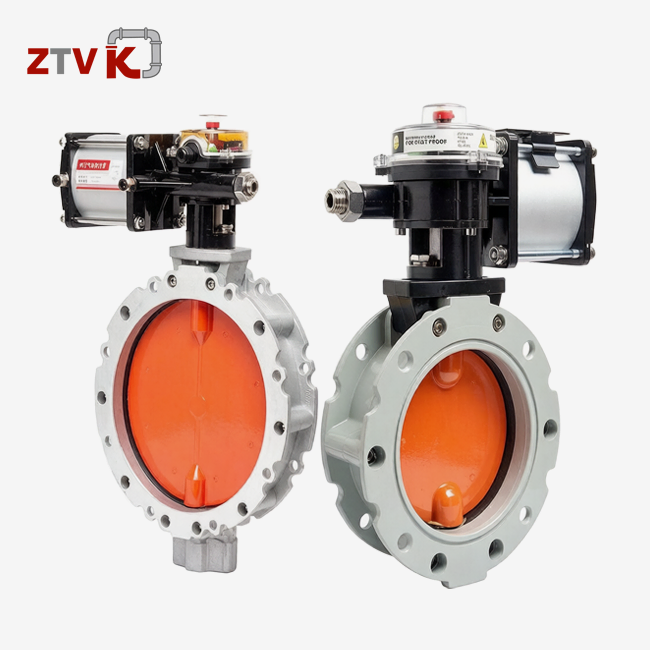
A pneumatic control butterfly valve controls the flow of fluid through pipes by using squashed air to power a rotating disc device. The pneumatic actuator changes the pressure of the air into mechanical force, which turns the disc in the middle of the valve body. If the disc is parallel to the pipe plane, flow can go through it easily. If it is not, it makes a seal that stops flow. This quarter-turn action gives you quick response times, which are very important in fields like chemical processing, HVAC, and water treatment where precise flow control keeps systems from being inefficient and poses safety risks.
Understanding How Pneumatic Butterfly Valves Operate
Core Components and Mechanical Design
A round disc on a rod that turns 90 degrees between open and closed states is inside the valve body. This stem is connected to a rack-and-pinion or Scotch yoke type pneumatic actuator, which turns compressed air into spinning force. When process instruments send control signals, they open solenoid valves that send air pressure to the actuator chambers. Positioners work like feedback loops, changing the disc angle to keep the flow rates where they need to be even when the pressure upstream changes. This closed-loop device makes sure that modulating uses are accurate to within ±1% of the setpoint.
Operational Advantages Over Alternative Technologies
Pneumatic systems are safer to use in explosive settings than electric ones because they don't make electricity sparks. In important situations, these valves stand out because they have a built-in fail-safe feature. When the air supply goes out, spring-return actuators change automatically to safe places that have already been set. This keeps the equipment from overpressurising or running without air. Pneumatic parts have fewer moving parts than motor-driven systems, so they need less maintenance. According to industry research on public water infrastructure, this lowers lifecycle costs by about 30%.
Real-World Application Scenarios
These valves are used by municipal companies in water distribution networks to quickly shut off the water so that pressure doesn't rise when a pump fails. HVAC engineering companies put them in chilled water loops, where exact throttling keeps the temperature differences between the cooling coils stable. In petrochemical plants, fire-safe types with metal seats that stay together when exposed to flame are used to meet API 607 guidelines. In a recent project at a refinery in Southeast Asia, human gate valves were replaced with pneumatic control butterfly valves. This cut the cycle time from 12 minutes to 8 seconds and kept operators out of dangerous areas.
Types and Configurations Available
Actuator Classification and Control Modes
Pneumatic control butterfly valve: To make sure the disc stays in a safe place when the air pressure drops, single-acting actuators use springs. These are perfect for situations where fail-closed or fail-open functionality is needed. When double-acting types are used, air pressure is used for both the opening and closing steps. This gives them the higher torque output needed for large-diameter valves or services with high differential pressure. For binary operation, on-off control types use simple solenoid valves. Modulating types, on the other hand, have electropneumatic positioners that turn 4-20 mA signals into proportional disc positions. This lets them precisely slow flow from 10% to 90% of full capacity.
Material Selection for Service Conditions
For general water service, bodies made of ductile iron GGG40 are a cost-effective option, while bodies made of stainless steel SS316 are better at resisting rust in chemical processing and offshore settings. The materials used for seats depend on the purpose. EPDM can handle steam up to 120°C, NBR rubber can handle general-purpose water service up to 80°C, and Viton can handle harsh chemicals like acids and solvents. Disc coatings include epoxy for use with drinkable water and electroless nickel plating for use with abrasive slurry in mines.
The choice of stem material has a direct effect on how reliably it works. SS316 stems don't rust in salty seas, SS420 stems are hard enough for high-cycle uses that do more than 100,000 operations a year, and SS416 stems don't wear down in services that contain suspended solids. In saltwater cooling systems and purification plants, where most materials break after three years, duplex stainless steel and aluminum bronze trims last longer.
Connection Methods and Pressure Ratings
Through-bolts let wafer-style valves fit between flanges, which lowers the weight and cost of installation for DN50 to DN600 uses in HVAC systems. Municipal companies manage distribution networks like lug-body designs because they have threaded inserts that let a single flange be removed for repair without having to depressurise the system. In power plant cooling water systems, U-type flanged bodies make the structure rigid for applications ranging from DN800 to DN2400. There are different pressure levels, from PN6 for low-pressure ventilation to Class 150 for industrial process uses. The temperature goes from -29°C for cryogenic service to +120°C for saturated steam.
How to Select the Right Valve for Your Application?
Assessing Operational Parameters
Figure out the needed flow coefficient (Cv) by using the fluid's properties, the highest flow rate, and the allowed pressure drop. Undersized valves cause too much turbulence, which damages seats and disc edges through cavitation. On the other hand, oversized units work in the first 20 degrees of motion, where flow patterns become irregular and control accuracy decreases. For throttling purposes, choose a valve that is big enough that the disc is normally open 30 to 70 degrees. This way, the flow reaction stays steady and reliable.
Extreme temperatures can affect how well seal materials work. EPDM stays flexible down to -40°C, while NBR hardens below 0°C and breaks down above 90°C. Chemical compatibility charts help choose the right material. For example, strong oxidizers need Viton seats, and steam service needs PTFE seals that are strengthened with graphite. When choosing a pressure class, you need to think about more than just the steady-state working pressure. In long pipes, water hammer events can cause short-term pressures that are three times higher than steady state.
Regulatory Compliance and Certification Requirements
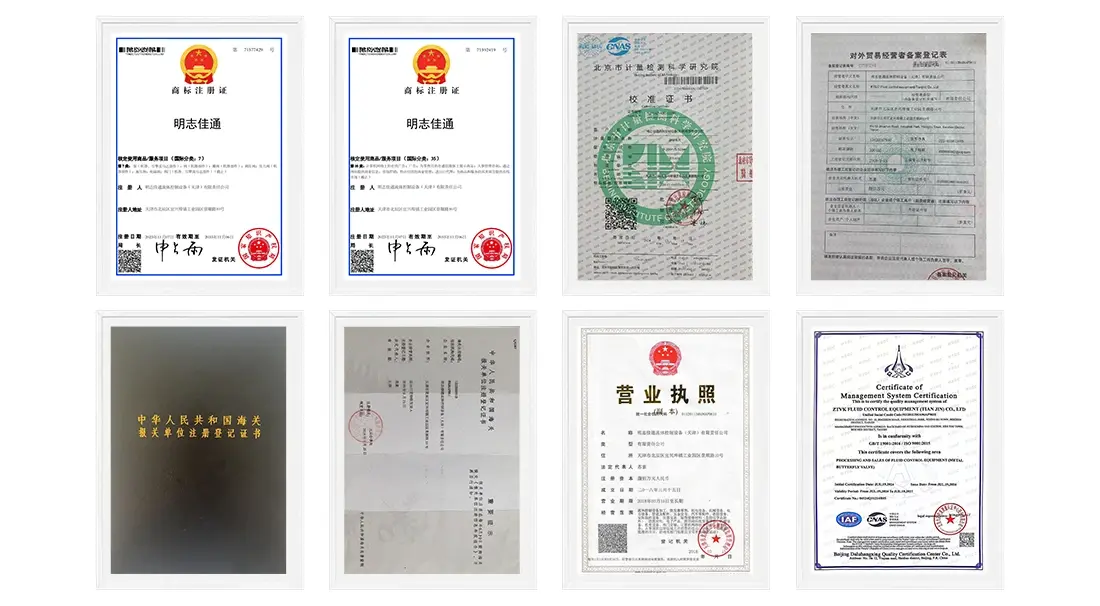
In the US, projects often need to meet AWWA C504 compliance for potable water service. This makes sure that the products meet NSF/ANSI 61 guidelines for drinking water safety. For petrochemical uses, pneumatic control butterfly valve API 609 dimensional accuracy and API 598 seat leakage tests at 1.1 times the rated pressure are needed. For European projects, products must have a CE mark that shows they comply with the Pressure Equipment Directive 2014/68/EU. ZTVK is certified to ISO 9001 for quality management and offers material test reports, hydrostatic test certificates, and third-party inspection paperwork that meets international standards for buying things.
Comparing Actuation Technologies
Electric actuators take longer to move than pneumatic actuators. For example, a DN300 valve runs in less than 3 seconds, while similar powered units take 15 to 30 seconds. Most industrial sites already have equipment for compressed air, so they don't have to pay for power wiring. Electric motors are good for places that don't have access to air or that need a battery backup. For isolation services that aren't used very often, manual workers are still the most cost-effective option. However, they are more likely to make mistakes and respond to emergencies more slowly than automatic systems.
Maintenance Practices and Troubleshooting
Preventive Maintenance Scheduling
Check actuators every three months for air leaks at the fitting joints by trying them with a soap solution. Every year, grease the stem bearings with a PTFE-based grease that is compatible with process fluids. Stay away from petroleum products, which can damage rubber seals. Every six months, check the positioner's accuracy by comparing the directed position to the real disc angle, which can be found using protractors or digital inclinometers. If the application is constant, the packing and O-rings should be replaced every 18 months or after 50,000 rounds, whichever comes first.
Resolving Common Operational Issues
Seat leak testing finds damage before it affects the quality of the process. Close the valve and raise the pressure on the upstream side to the recommended level. Then, check the leaking rate on the downstream side. Rates higher than 0.5% of the highest flow capacity mean that the seat is worn out and needs to be replaced, either with a disc or a new seat. Bubble streams show where leaks are happening during air-under-water tests. To use condition-based maintenance instead of reactive fixes, keep track of cycle counts with mechanical counters or control system logs.
Most of the time, valves that stick are caused by stem rust or actuators that are too small. Figure out the needed breakaway force by taking into account the effects of packing friction, seal drag, and differential pressure. Then, make sure that the output of the actuator is 25% higher than this. If you don't prepare the disc surface well enough before applying the epoxy coating, the coating will flake off. Make sure the blast profiles meet ISO 8501-1 SA 2.5 cleaning standards. When the actuator lets air out through breather holes, it means that the internal piston seal has failed. This means that the seal kit needs to be replaced before water gets in and corrodes the internal parts.
Water hammer during finishing means the stroke is going too fast. Put speed control mufflers on the actuator's exhaust ports and change the needle valves' closing times so that they take 5 to 8 seconds longer, based on the length of the pipeline and the speed of the fluid. Positioner hunting, which is when the unit keeps moving in small circles around the setpoint, is caused by bad tuning. To fix control loops while keeping a reasonable level of accuracy, either raise the deadband settings or lower the proportional gain.
Procurement Strategies for Industrial Buyers
Identifying Reliable Valve Suppliers
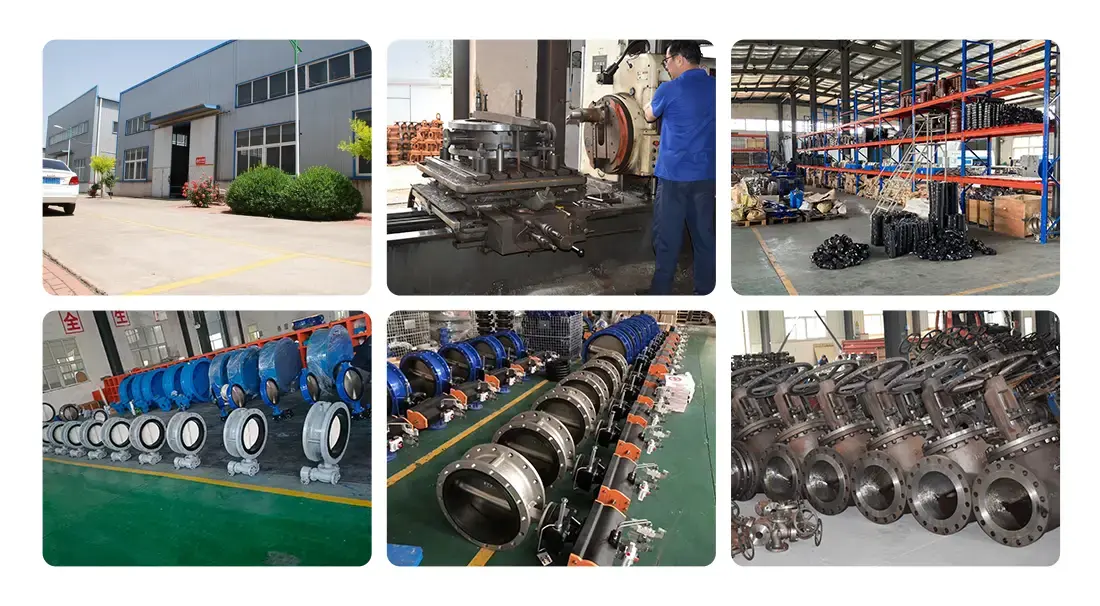
Global distributors give more weight to providers who can show regular quality through tools for statistical process control and lot tracking for pneumatic control butterfly valves. Factory inspections check the production tools they use, like CNC machines for accurate stem specs and automatic epoxy coating lines that make sure the film thickness is the same all over. ZTVK has modern facilities in Tianjin's Beichen Industrial Zone. They keep more than 2,000 standard units in sizes DN50 to DN600 in stock so that urgent projects can be delivered in 3 to 7 days. Because the plant is close to Tianjin Port, shipping costs are lower and export paperwork for foreign orders is easier to fill out.
Understanding Pricing and Lead Times
Equipment makers who put valves into packed systems need to be able to customize OEM parts. Private labels, custom actuator mounting brackets, and modified connection flanges that match secret equipment connectors should all be possible. With ODM services, valves can be redesigned to work better in different environments. For example, ZTVK engineers worked with regional wholesalers to come up with stronger stem designs for dusty Middle Eastern environments and better epoxy finishes that can handle humid Southeast Asian environments.
Costs per unit go down when you buy in bulk because of economies of scale. Most of the time, orders that are more than 100 units get 15–25% off the price of a single unit. Catalogue items usually ship within a week, but custom setups need 15 to 25 days for technical review, getting materials, and production. Rush order services cut wait times to 7–10 days, but they charge about 20% more than regular prices. This is useful when project delays threaten to miss contracted due dates for completion.
Pricing changes depending on the details. It costs about 40% less to build a DN100 PN16 wafer valve with a ductile iron body, an NBR seat, and an epoxy-coated disc than to build one with SS316. When compared to spring-return valves, double-acting motors add 30 to 50 percent to the base cost. For modulating control uses instead of simple on-off solenoid action, positioners and accessories add another 20 to 35 percent. The total cost of ownership should include the cost of installation work. When compared to flanged options, lighter wafer designs require 30% less crane time and installation.
Conclusion
Pneumatic control butterfly valves are effective for controlling flow in a wide range of industrial settings because they are mechanically simple and can be operated by pneumatics. To make the right choice, you need to make sure that the provider can meet your quality and shipping needs while also matching the valve's material, pressure rating, and actuation mode to the particular conditions it will be used in. Preventive maintenance techniques keep things running smoothly and increase the life of tools. Distributors and builders can get more work done when they work with makers that offer a wide range of products, customization services, and quick technical support.
FAQ
1. What happens when air supply fails in a pneumatic control butterfly valve?
When the air pressure drops, single-acting actuators have springs that move the valve to a safe position automatically. This fail-safe feature moves the disc either all the way open or all the way closed, based on the process needs. This keeps equipment safe from overpressure, pumps that don't work, or the release of dangerous materials. By specifying fail-safe direction during procurement, you can be sure that emergency situations will get the right automatic reaction without any help from an operator.
2. Can these valves throttle flow continuously?
Modulating control works well with pneumatic butterfly valves that have electro-pneumatic positioners built in. Process controls send 4-20mA signals to the positioner, which changes the air pressure to place the disc correctly. The best range for throttling is between 30 and 70 degrees open. Below 30 degrees, cavitation harms internal parts, and above 70 degrees, flow changes very little per degree of motion, making control less accurate.
3. How do I fix an actuator that is leaking air at the breather port?
If air is leaking from the breather, it means that the O-rings inside the pistons have failed, letting pressurized air go from the working chambers to the exhaust tubes. To do this, the actuator needs to be taken apart and the seal kit needs to be replaced. If you keep using a valve with leaking seals, the available power goes down, and finally the valve cannot reach its full-stroke position. This affects the way the process control and safety system works.
Partner with ZTVK for Reliable Pneumatic Control Butterfly Valve Supply
ZTVK makes industrial-grade pneumatic control butterfly valves for dealers, contractors, and original equipment manufacturers (OEMs) in North America and around the world. Our factory in Tianjin is ISO 9001 certified and keeps DN32-DN2400 valves in stock. These valves can handle pressures up to Class 150 and are made of ductile iron or stainless steel. They come with a variety of seal materials and meet API, ANSI, AWWA, and DIN standards. We offer OEM branding, unique engineering, and fast delivery (7–10 days) for jobs that need to be done right away. Get in touch with our technical team at ktec86961886@163.com to talk about your pneumatic control butterfly valve needs and get application-specific advice based on our 15 years of manufacturing experience.
References
1. American Water Works Association. (2020). AWWA Manual M49: Butterfly Valves: Torque, Head Loss, and Cavitation Analysis. Denver: AWWA.
2. Lyons, J. L., & Askland, C. L. (2018). Valve Selection Handbook: Engineering Fundamentals for Selecting the Right Valve Design for Every Industrial Flow Application. Burlington: Gulf Professional Publishing.
3. Smith, P., & Zappe, R. W. (2017). Valve Selection Handbook: For the Process Industries. Oxford: Butterworth-Heinemann.
4. Nesbitt, B. (2019). Handbook of Valves and Actuators: Valves Manual International. Amsterdam: Elsevier Science.
5. Emerson Process Management. (2019). Control Valve Handbook: Fourth Edition. Marshalltown: Fisher Controls International LLC.
6. Skousen, P. L. (2021). Valve Handbook: Third Edition. New York: McGraw-Hill Education.
Send us your valve requirements and our team will provide professional solutions and fast quotations.
RELATED INDUSTRY KNOWLEDGE