- English
- French
- German
- Portuguese
- Spanish
- Russian
- Japanese
- Korean
- Arabic
- Greek
- German
- Turkish
- Italian
- Danish
- Romanian
- Indonesian
- Czech
- Afrikaans
- Swedish
- Polish
- Basque
- Catalan
- Esperanto
- Hindi
- Lao
- Albanian
- Amharic
- Armenian
- Azerbaijani
- Belarusian
- Bengali
- Bosnian
- Bulgarian
- Cebuano
- Chichewa
- Corsican
- Croatian
- Dutch
- Estonian
- Filipino
- Finnish
- Frisian
- Galician
- Georgian
- Gujarati
- Haitian
- Hausa
- Hawaiian
- Hebrew
- Hmong
- Hungarian
- Icelandic
- Igbo
- Javanese
- Kannada
- Kazakh
- Khmer
- Kurdish
- Kyrgyz
- Latin
- Latvian
- Lithuanian
- Luxembou..
- Macedonian
- Malagasy
- Malay
- Malayalam
- Maltese
- Maori
- Marathi
- Mongolian
- Burmese
- Nepali
- Norwegian
- Pashto
- Persian
- Punjabi
- Serbian
- Sesotho
- Sinhala
- Slovak
- Slovenian
- Somali
- Samoan
- Scots Gaelic
- Shona
- Sindhi
- Sundanese
- Swahili
- Tajik
- Tamil
- Telugu
- Thai
- Ukrainian
- Urdu
- Uzbek
- Vietnamese
- Welsh
- Xhosa
- Yiddish
- Yoruba
- Zulu
How to determine if the opening and closing direction of a gate valve is correct?
Finding the right way for a gate valve to open and close, especially for bigger ones like a 200mm gate valve, has a direct effect on how well the system works and how safe it is to use. The gate mechanism moves perpendicular to the flow. Making sure that the valve closes by turning it clockwise (this is the usual way to do it) stops installation mistakes that happen backwards and lead to leaks, pressure drops, or damage to the actuator. To make sure the valve works correctly, look at the directional signs on the body of the valve, make sure the stem rises when the valve opens, and read the manufacturer's instructions. This step of checking, which may seem easy, saves infrastructure investments and keeps expensive downtime from happening in HVAC, chemicals, and water distribution systems where 200mm gate valves are key isolation points.
Introduction
Gate valves are still the most important part of industrial fluid control systems, especially when full-bore flow and low pressure loss are needed. It's important to know which way your gate valve works when you're selecting equipment for city water networks, chemical processing plants, or HVAC systems. When people are mistakenly identified, it causes installation delays, extra costs for repairs, and poor system performance, all of which affect project timelines and relationships with clients.
This level of technical detail is what sets good systems apart from bad ones for procurement managers who are looking for valves for building projects. The problem gets worse when it comes to 200mm gate valve (8-inch) sizes, which are popular in high-volume transmission lines. If they are not used correctly, they can cause water hammer or seal failures at working pressures of 16 bar or higher. This guide talks about ways to check things that are based on industry standards and real-world experience. It gives engineers and distributors the information they need to safely choose, install, and maintain gate valves for a wide range of uses.
Understanding the Problem with Gate Valve Operation Direction
Why Direction Verification Matters
Several practical problems can be caused by incorrect directional recognition. When a valve works backwards, the wedge-shaped gate might not fit properly against the valve body. This can cause tiny leaks that get worse over time as the temperature changes. Even a small leak from a 200mm gate valve can waste thousands of gallons of water every month and put people at risk of getting sick. Not only does water loss cost money, but unplanned repair shutdowns in petrochemical units cost more than $50,000 per hour, according to statistics from the industry.
Common Symptoms of Directional Errors
During launch, visual inspection often shows warning signs. If the handwheel needs more power than what the maker says it should, the actuator may be fighting against an installation that is backwards. When limit switches don't line up with the real gate position, fault codes are shown on the bigger valves' electric actuators. In one case, an inverted 200mm gate valve resilient-seated valve at a water company in the Midwest caused the EPDM seal to break down early, within 18 months instead of the expected 10 years. This meant that the valve had to be replaced right away during peak demand season.
Industry Standards and Compliance
Directional uniformity is part of the following standards, like ISO 5208 for seat tightness and DIN 3202 for face-to-face measurements. European EN 12266 testing procedures make sure that valves close reliably when force levels are set. When valves don't follow these rules because of mistakes in installation, they fail hydrostatic testing at 1.5 times the normal pressure, which delays handing over the job. By knowing these standards, buying teams can choose valves that will work with existing pipeline equipment without any changes needing to be made.
Analyzing Causes of Incorrect Direction in Gate Valves
Design Variations That Affect Perception
Gate valve designs vary by manufacturer and use. Rising stem designs show the valve is in place because the threaded stem rises when the valve opens. Non-rising stem versions, used in underground work, hide this movement inside the bonnet, so operators must use handwheels to count revolutions or position marks to locate the machine. The Z45X-10/16Q from ZTVK has a non-rising stem design that works best in small spaces where built-in dial indicators assess exterior location instead of stem height.
Material makeup affects how it feels and acts. Ductile iron bodies like ZTVK's have different physical resistance than cast steel or stainless steel. A twofold eccentric design reduces working torque by 30% in modern valve engineering. This means that a valve that requires less effort may be misinterpreted as poorly placed when it's actually a better mechanical design.
Installation Challenges in Field Conditions
Connection adds variables. ASME B16.5 requires bolts to be tightened in the correct order for flange-type fittings (DN40-DN600 range) to avoid misalignment that changes direction. A flanged joint can bind the gate mechanism if workers overtighten one side. This makes the valve appear to close when it's stuck when turned counterclockwise. Mechanical influence makes launching tests confusing.
Human Error and Documentation Gaps
Language barriers and confusing labels are major contributors. Asian valves may have distinct directional arrow regulations from European or American valves. Some projects had Chinese-made valves with red indications that pointed in the wrong direction (flow direction instead of operating direction), forcing installation workers to place the equipment incorrectly. Detailed manufacturer paperwork in multiple languages with functional diagrams reduces these hazards.
Principles to Correctly Determine the Opening and Closing Direction
Understanding Internal Mechanics
The gate valve works in a straight line—when it opens, a wedge or parallel gate rises perpendicular to the flow. This movement up and down is directly linked to the stem turning in patterns that can be predicted. As a general rule, turning the valve clockwise (right-hand) lowers the gate into the flow path to close it, while turning it counterclockwise lifts it. This "righty-tighty, lefty-loosey" approach works with most threaded mechanical devices, making them easy for field workers to use.
By looking at how the valve is built on the inside, you can see why this is important. When the stem goes through the bonnet nut, it changes the motion from circular to linear. Directional association is based on the thread hand, which can be either right-handed or left-handed. Right-hand threads are used on about 98% of industrial gate valves, but left-hand threads may be needed in certain situations, especially when flow is going the wrong way. Assumptions that lead to mistakes can be avoided by checking thread handling during acceptance testing.
Visual Inspection Techniques
An instant confirmation comes from a physical check. Find the arrow that is cast or stamped into the body of the valve. This shows the direction of flow, not the direction of action. Along the pipe, the arrow should go from the entrance to the exit. Once you know the direction of flow, make sure that turning the valve off (clockwise) stops this flow line by moving the gate. Some makers, like ZTVK, add extra marks like "OPEN" and "CLOSE" with arrows next to the handwheel or actuator interface.
Seeing the stem move during the test process is the only way to be sure. When the valve is opened on a rising stem design, the stem rises up and can be seen above the handwheel. To make sure the machine works right, you can count the number of turns the handwheel makes from fully closed to fully open (usually between 10 and 15 full turns for 200mm gate valve sizes) and compare that number to the manufacturer's specs. For stems that don't rise, tracking position indicator dials must be set up to show the amount of motion.
Manufacturer Specifications and Testing
Reviewing documentation takes away the need to guess. Manufacturers of good products give out thorough technical data sheets that list working torque, spin counts, and directional standards. The Z45X-10/16Q model paperwork has exploded-view images that show how the stem threads are oriented and how the gates move. During the receipt check, markings on the valves are compared to those on the papers. This finds manufacturing mistakes before they are installed.
The best way to do things is to test on a bench before installing them in the field. Connect the valve to a test bench that has clear parts or places to check the pressure. Watch how the pressure and flow change as you turn the valve all the way to its full position. When a valve is properly aligned, the pressure drops smoothly as it closes, and there is no drop in pressure when the valve is fully open. Unexpected pressure patterns show that internal parts are not aligned correctly or are flipped and need to be fixed before they can be deployed.
Practical Cases and Examples
Municipal Water System Retrofit
As part of a recent upgrade to a city system in Texas, 15 separation points had old 200mm gate valves replaced. During a pre-installation check, engineers found that three valves in a batch had arrows pointing in the wrong direction compared to the current system. Instead of assuming mistakes in the manufacturing process, the team used AWWA C515 guidelines to test the force. The results showed that the new valves met the requirements, but the original 30-year-old valves had been put backwards, which explained why there were ongoing leaks. 12% of the system's water loss was stopped when the direction was fixed during the repair.
Chemical Processing Plant Actuator Integration
To improve process control and safety, a chemical plant in the Midwest automated gate valves that were once operated by hand. When operators added electric actuators to existing 200mm gate valve units that controlled corrosive slurries, they found that some actuators needed to be wired backwards to work with the control logic. The manual valves were made by three different companies over 15 years, and each used a different thread position based on area standards (DIN vs. ANSI).
Comparing Valve Technologies
Seeing how a gate valve works in comparison to other options makes it easier to understand. Ball valves rotate every quarter-turn, or 90 degrees. If you turn them the wrong way, it's easy to see because the position of the handle shows whether the valve is open or closed. Butterfly valves work in a similar way, with clear positional input and quarter-turn movement. Gate valves need to be rotated more than once, which can lead to confusion in the middle position, where workers lose track of the turns that have been made.
This difference in how they work explains why gate valves are best for situations where they need to be used rarely and allow full-bore flow, like when isolating a main line, while quarter-turn valves are better for situations where they need to be cycled often. When making a procurement choice, these practical traits should be weighed against the needs of the application. When transmission mains are opened twice a year for repair, 200mm gate valve models work best. Butterfly valves, on the other hand, work better for throttling uses that need to be adjusted every day.
Summary of Key Points and Best Practices for B2B Clients
Setting up strong verification methods saves investments in procurement and keeps operations running. Checking that the flow direction arrows line up with the pipeline orientation, the stem movement matches up with the expected gate travel, and the physical markings match up with the maker's paperwork are all important things that need to be checked. Before taking in shipments, you should do receiving checks that test sample valves through all of their operating cycles and compare the torque requirements to the sheets that come with the equipment.
Maintenance procedures go beyond the initial check to handle assets over the long run. On an annual basis, the state of the stem should be recorded, and any rust or thread wear that could change the way it works over time should be looked for. By keeping track of how many times the handwheel is turned during repair rounds, internal wear can be found. For example, if a valve that needed 12 turns when it was first installed now needs 15 turns after five years, internal parts may be wearing out. Trending this info lets you update things before they break completely.
Purchasing goes from being a transactional activity to a strategic one when you build relationships with makers and offer full support. Commissioning risks are lower when suppliers offer CAD models, installation videos, and local expert reps. ZTVK keeps more than 2,000 standard units in stock in Tianjin and can send them in three to seven days, which meets the needs of pressing projects. Their 18-month warranty and troubleshooting help also keep lifetime costs low. Customization options, like changing valve bodies, sealing materials, and actuator interfaces to fit particular working conditions, make sure the best performance instead of forcing applications to work within the limits of standard products.
Conclusion
Correctly identifying the direction of flow in gate valves is a basic skill in controlling fluids in industry. The described methods—visual inspection, mechanical testing, document verification, and systematic commissioning—can be used in a wide range of situations, from treating city water to processing petrochemicals. As valve sizes get bigger, up to and including 200mm gate valves, the effects of directional mistakes get worse, so strict verification methods are required, not just a choice.
When procurement workers understand these concepts, they gain a competitive edge through faster installations, lower maintenance costs, and more reliable systems. Investing in learning about valve mechanics and building relationships with responsive makers pays off over and over again throughout the span of an item. This turns choosing a valve from a simple buy into a strategic engineering choice.
FAQ
Q1: How can I verify valve direction without disassembly?
For external proof, watching the stem move during the test process is necessary. Watch for stem rise (in designs with rising stems) or position indicator movement as you turn the handwheel counterclockwise. The valve opens counterclockwise and closes clockwise, which is generally how things work. For stems that don't rise, you need to look at the flow lines and compare them to the direction of the pipeline. The arrow should point downstream, and turning the internal gate clockwise should stop this flow.
Q2: What risks accompany incorrect operational direction?
In addition to causing leaks right away, reversal action speeds up wear patterns that make the service last less long. The gate wedge doesn't fit perfectly, which creates high-stress areas that break when the temperature changes. When actuators try to stop a reversed installation, they draw too much current, which causes trips and, eventually, motor burnout. When the difference pressure is higher than the wedge's mechanical holding capacity, it can lead to catastrophic blowouts in high-pressure systems (PN16 and above).
Q3: Do manual and electric actuators rotate differently?
In theory, yes. Electric actuators depend on the wires of the motor and the gear trains inside the actuator. Manual handwheels always turn in a clockwise direction. Some companies make motors that work well with human operation (clockwise close), while others make them work best with control logic. During plant acceptance testing, you should always check the direction of the actuator's movement and make sure that the control systems are set up correctly. ZTVK's actuator choices are tested together to make sure they work the same way when operated by hand.
Partner with ZTVK for Reliable Gate Valve Solutions
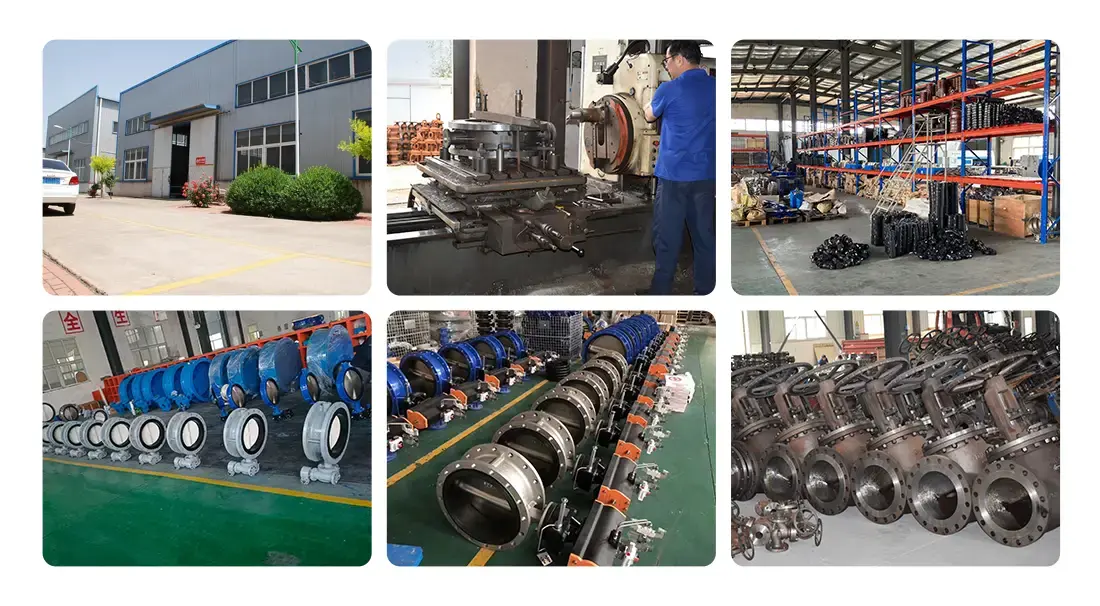
Getting gate valves can be hard, so you need a manufacturing partner who knows how to handle both technical details and supply chain efficiency. ZTVK is a valve engineering company based in Tianjin's Beichen District. They have been helping wholesalers and contractors in North America, Europe, and the Middle East for more than 15 years. Our Z45X-10/16Q type is a great example of this determination. It is made of ductile iron, which is more durable than cast iron, has flange connections from DN40 to DN600, and can be operated by manual, pneumatic, or electric drives.
Because we are close to Tianjin Port, we can quickly meet orders. Standard 200mm gate valve models ship within 3–7 days from our 2,000-unit inventory, and custom designs are finished in 15–25 days. We keep our ISO9001, ISO14001, and OHSAS18001 certifications up to date. Before being shipped, every valve goes through hydraulic shell testing at 1.5x its rated pressure and seat-leaking verification in line with EN 12266-1 standards. Our engineering team offers CAD models, installation tutorial videos, and technical help in multiple languages, which gets rid of the communication problems that come up with foreign buyers.

We at ZTVK can help you with OEM branding for dealer networks or ODM engineering for specific uses in oil, chemicals, or city water systems. Our solutions are tailored to meet your needs. Email our team at ktec86961886@163.com to talk about the details of your project and get access to our full selection of products. As a reliable 200mm gate valve maker, we turn problems with buying things into competitive benefits by providing quick service and quality that has been tested.
References
1. American Water Works Association. (2020). AWWA C515 Standard for Resilient-Seated Gate Valves for Water Supply Service. Denver: AWWA Press.
2. British Standards Institution. (2018). BS 5163: Specification for Resilient Seated Gate Valves for Water Supply. London: BSI Group.
3. International Organization for Standardization. (2019). ISO 5208: Industrial Valves—Pressure Testing of Metallic Valves. Geneva: ISO Publications.
4. Deutsches Institut für Normung. (2017). DIN 3352: Gate Valves for Waterworks—Part 2: Metal Seated Gate Valves. Berlin: DIN Standards.
5. Zappe, R. W. (2021). Valve Selection Handbook: Engineering Fundamentals for Selecting the Right Valve Design (6th ed.). Houston: Gulf Professional Publishing.
6. Smith, P. & Zappe, R. (2019). Valve Design and Selection for Process Applications. New York: McGraw-Hill Technical Publishing.
Send us your valve requirements and our team will provide professional solutions and fast quotations.
RELATED INDUSTRY KNOWLEDGE