- English
- French
- German
- Portuguese
- Spanish
- Russian
- Japanese
- Korean
- Arabic
- Greek
- German
- Turkish
- Italian
- Danish
- Romanian
- Indonesian
- Czech
- Afrikaans
- Swedish
- Polish
- Basque
- Catalan
- Esperanto
- Hindi
- Lao
- Albanian
- Amharic
- Armenian
- Azerbaijani
- Belarusian
- Bengali
- Bosnian
- Bulgarian
- Cebuano
- Chichewa
- Corsican
- Croatian
- Dutch
- Estonian
- Filipino
- Finnish
- Frisian
- Galician
- Georgian
- Gujarati
- Haitian
- Hausa
- Hawaiian
- Hebrew
- Hmong
- Hungarian
- Icelandic
- Igbo
- Javanese
- Kannada
- Kazakh
- Khmer
- Kurdish
- Kyrgyz
- Latin
- Latvian
- Lithuanian
- Luxembou..
- Macedonian
- Malagasy
- Malay
- Malayalam
- Maltese
- Maori
- Marathi
- Mongolian
- Burmese
- Nepali
- Norwegian
- Pashto
- Persian
- Punjabi
- Serbian
- Sesotho
- Sinhala
- Slovak
- Slovenian
- Somali
- Samoan
- Scots Gaelic
- Shona
- Sindhi
- Sundanese
- Swahili
- Tajik
- Tamil
- Telugu
- Thai
- Ukrainian
- Urdu
- Uzbek
- Vietnamese
- Welsh
- Xhosa
- Yiddish
- Yoruba
- Zulu
What is a double flanged butterfly valve?
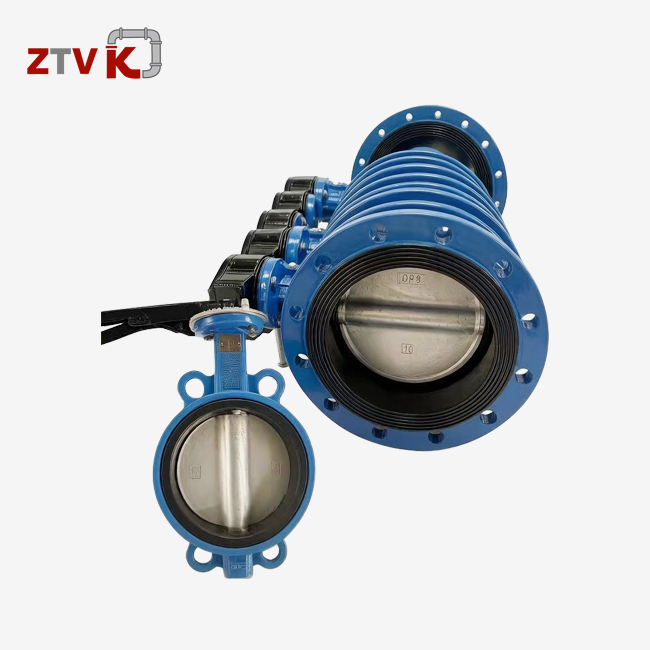
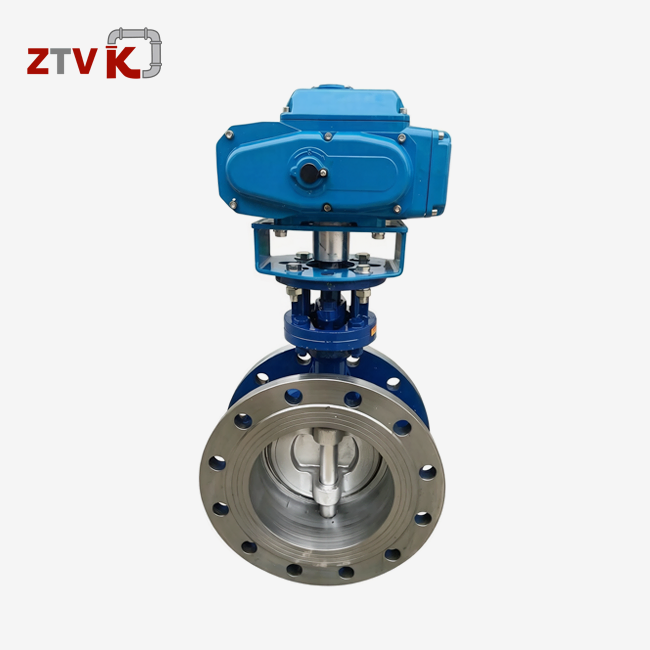
A butterfly valve double flange type, is a quarter-turn rotary valve featuring independent flanges integrated on both the inlet and outlet ends of the valve body. Unlike wafer-style valves compressed between pipe flanges, this design provides structural autonomy by bolting directly to mating pipe flanges on each side. This configuration delivers exceptional mechanical stability and allows for dead-end service applications—meaning the valve can remain securely in place even when downstream piping is removed for maintenance. The double flange design addresses critical industry challenges in large-diameter pipelines (DN50 to DN2000 mm), high-pressure systems, and environments requiring reliable isolation. It conforms to international face-to-face standards such as ISO 5752 Series 13 and 14, ensuring compatibility across diverse industrial installations.
Understanding Double Flanged Butterfly Valves
Core Structural Design and Operating Principles
The body design with two flanges is what makes a double flanged butterfly valve unique. Each flange has a full cutting design that matches normal pipe flange shapes. This lets each link be connected separately. The disc valve, which is in the middle of the flow line, turns 90 degrees around a wheel to control the flow. When the disc is fully open, it lines up with the flow direction, which keeps the pressure drop to a minimum. When the lid is closed, the disc presses against a rubber or metal lock to make a tight seal.
This structural method solves a problem that procurement managers have had for a long time: how to distribute mechanical stress. When used in large-bore sizes bigger than DN600, wafer valves often lose their orientation due to shaking or temperature changes. The double flange design moves pipe loads through the flanges instead of the valve seat contact, which keeps the seals strong over a longer period of time. Many new designs use double eccentric or triple offset disc shapes, which lower friction during use and increase cycle life to more than 50,000 actuations.
Important Details and Material Choices
We make double-flanged butterfly valves in sizes ranging from 2" to 80" (DN50 to DN2000 mm) and with pressure values of PN10 and PN16 that are good for city water systems, HVAC setups, and light industrial processes. ISO5211, PN10/PN16, 125LB/150LB, and JIS5K/JIS10K/JIS16K are some of the connection standards that make sure everything works everywhere.
The choice of material has a direct effect on how well and how long a valve works. Stainless steel types SS304, SS316, SS304L, and SS316L can be used for the body. These steels are more resistant to rust than regular cast iron. Different types of discs are made from different materials, such as ductile iron (DI) for low-cost water use, CF8 and CF8M stainless steel for chemical use, and aluminium bronze for use in salt water. The EPDM, NBR, PTFE, and VITON seat materials are picked based on how well they work with different types of media and the temperature needs. EPDM can handle drinking water up to 120°C, while VITON can handle harsh chemicals and high temperatures up to 200°C.
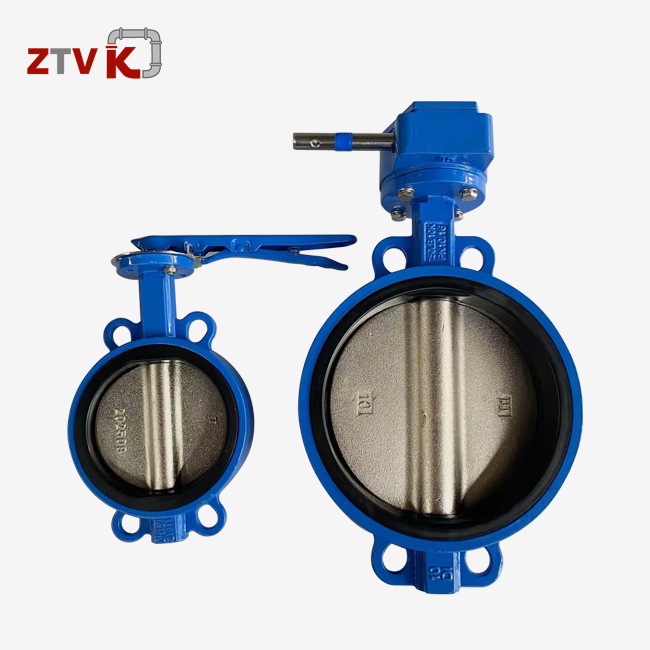
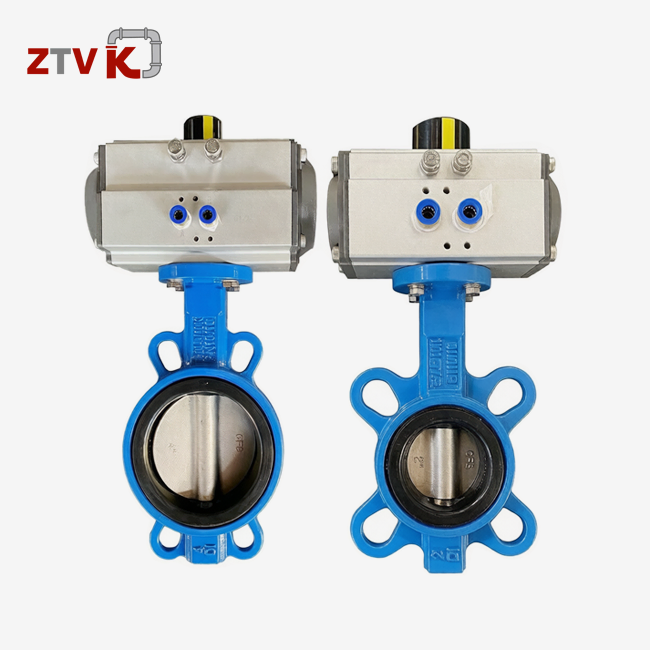
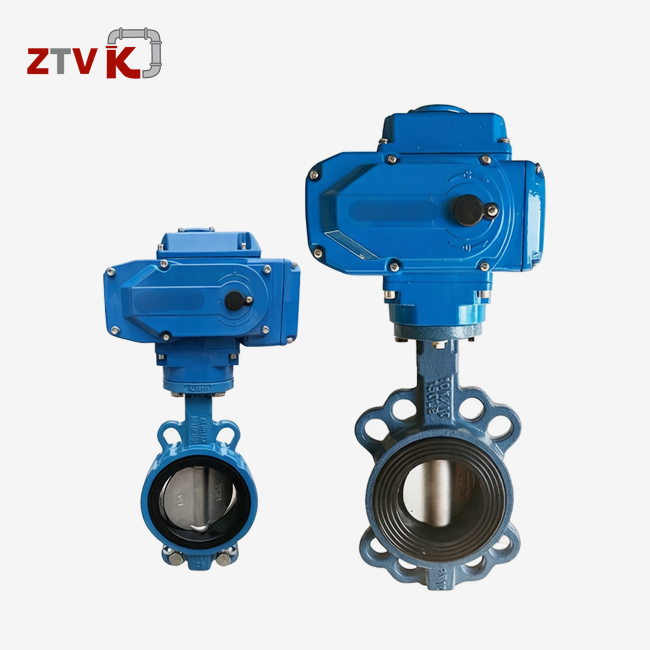
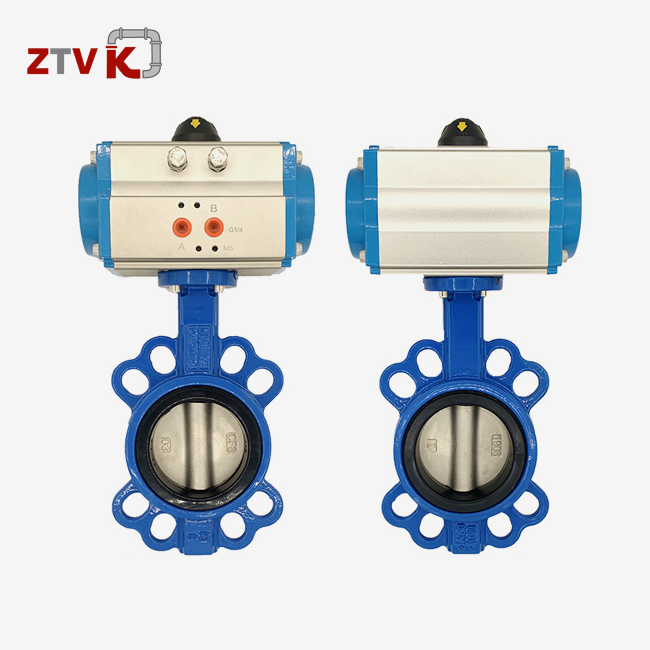
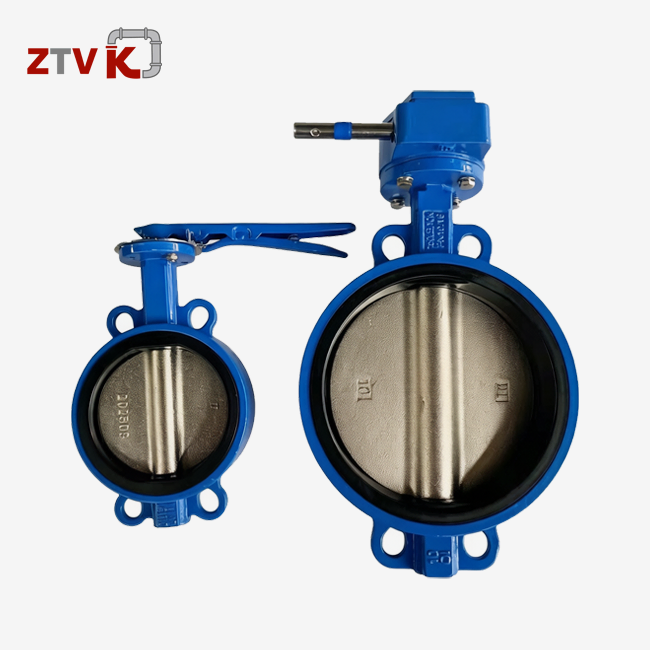
Actuation choices are based on practical needs. For example, hand switches can be used for physical control in easy-to-reach places, worm gears can be used for larger valves that need mechanical advantage, gas actuators can be used for quick automatic response, and electric actuators can be used for precise modulating control that is linked with SCADA systems. This adaptability helps our clients work in a wide range of settings, from remote city pump stations to fully automated industrial plants.
Industry Standards and Certifications
Procurement trust is based on the following well-known norms. Our Double-flange butterfly valve has been certified by the ISO9001, ISO14001, and OHSAS18001 systems. This shows that we are committed to making high-quality products and being good to the environment. For design, API 609, BS EN 593, and AWWA C504 are used, and ASME B16.5, ASME B16.47, and EN 1092-1 are used for flange drilling. Face-to-face measurements are in line with ISO 5752, which means they can be easily replaced with current systems.
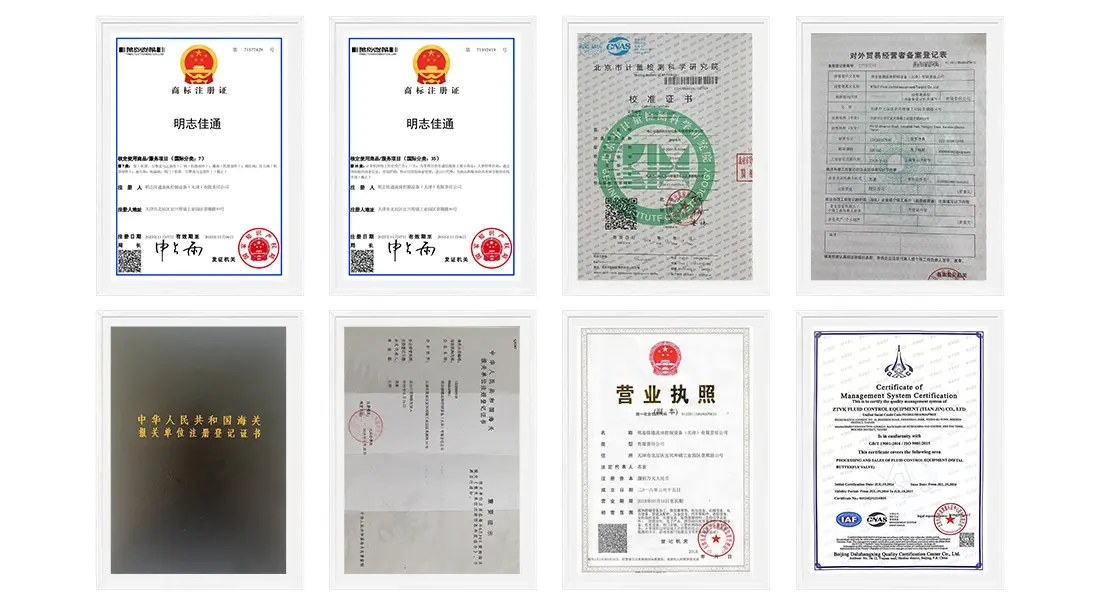
The procedures for pressure testing meet or go beyond what the industry needs. For example, hydraulic shell tests are done at 1.5 times the rated pressure, and seat leakage tests make sure the shutdown is bubble-tight according to API 598 or EN 12266-1 Rate A standards. All valves go through spectrographic analysis to make sure they are made of the right materials and that their chemical makeup fits the requirements. This is very important for wholesalers who work with controlled industries. Documentation files include records on material tests, strength tests, and measures of layer thickness, which make it easier to get through customs and get the product approved by the end customer.
Advantages and Applications of Double Flanged Butterfly Valves
Superior Performance Characteristics
When you compare double-flanged butterfly valves to other types of valves, their benefits become clear. Stability during installation is very important. The separate flange connections get rid of the need for long through-bolts that are needed by wafer designs. This makes installation easier in small areas and speeds up the assembly process. Maintenance teams like that they can remove pipes further downstream without affecting the fitting of the valve. This isn't possible with wafer types that depend on compression from both sides.
The structural strength of the double-flange body makes the sealing more reliable. Instead of changing the shape of the seat area, piping vibrations, temperature changes, and pressure spikes pass through the flange connections. This mechanical separation keeps the seal contact pressure, so it works without leaking even when the temperature changes, which is common in HVAC and district heating systems. Compared to circular disc valves, our double eccentric design cuts the working force by an additional 30%. This makes actuators last longer and uses less energy in automatic setups.
Modulating service applications need flow control that is very accurate. The disc has reliable flow properties between 30° and 70° opening angles, making it good for control loops that handle dosing for water treatment, regulating HVAC temperature, and process cooling circuits. The sleek disc shape creates little turbulence, which keeps head loss to about 0.3 to 0.5 bar at full opening. This is a big benefit for local water officials who want to save energy and money on pumping costs.
Typical Industrial Applications
The main areas of application are water treatment and city facilities. In treatment plants, filter trains, chemical dosing lines, and clearwell distribution use double-flanged butterfly valves to separate and direct flow. The rust strength of the stainless steel bodies and EPDM seats means that they will last for decades in places with polluted water. Face-to-face measurements that match AWWA C504 make it easier to keep a standard collection of extra parts, which lowers the long-term costs of ownership for city managers.
Valves that can handle harsh media and conditions are needed in petrochemical and energy plants. Oils that are toxic can be handled by our SS316L bodies with PTFE seats. High-temperature versions with metal seats are used in steam lines and thermal oil circuits. The option to choose aluminium bronze discs solves the problem of weathering in slurry services that happen a lot in mine operations. Safety rules for refineries and gas processing plants are met by fire safety tests according to API 607 and compliance with API 609 Category B.
HVAC and building services workers like how small it is and how it can seal in both directions. These valves are used to separate and balance zones in chilled water systems, condenser water loops, and district heating networks. There are gas and electric devices with location input that can be used to help integrate building automation. This makes it possible to watch and fix problems from a distance. It is faster to install between flanged pipe parts than between threaded ones, which saves money on labour costs for big business building projects.
Comparative Analysis with Other Valve Types
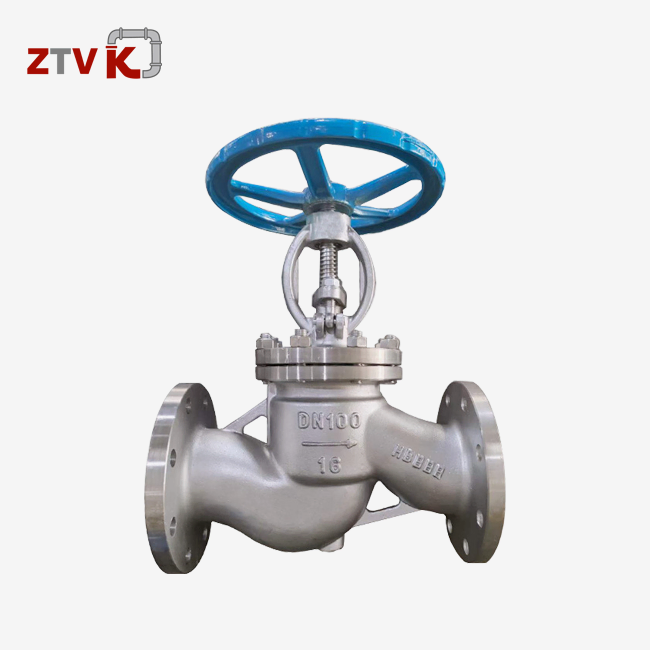
When evaluating valve selection, distributors weigh performance against cost and maintenance factors. Compared to gate valves, double flanged butterfly valves offer 60-70% lower installed cost and 80% faster operation in quarter-turn actuation versus multi-turn gate stems. The reduced weight—often half that of equivalent gate valves—simplifies handling and reduces structural support requirements.
Versus ball valves, the double-flanged butterfly design provides larger port sizes at competitive pricing, particularly beyond DN150. Ball valves excel in tight shutoff for gas service, but the mechanical simplicity and serviceability of butterfly valves reduce maintenance intervals and spare parts inventory. Lug-style butterfly valves present an alternative for dead-end service, yet the through-bolt configuration complicates installation in confined spaces and lacks the mechanical rigidity of true flanged connections under high vibration or thermal shock.
Installation and Maintenance Guidelines for Double Flanged Butterfly Valves
Step-by-Step Installation Procedures
Proper installation begins with verifying flange alignment between pipe sections and the double-flange butterfly valve. Misalignment exceeding 1.5mm can induce body stress, distorting the seal and causing premature leakage. We recommend using alignment pins or laser alignment tools for large-diameter installations. Gaskets should be positioned concentrically, confirming the inner diameter does not protrude into the flow path where the disc edge travels.
Bolt tightening follows a star pattern to distribute clamping force evenly. Torque specifications vary by flange class and gasket material; typical PN16 installations with EPDM gaskets require 80-120 Nm for M16 bolts. Over-tightening compresses gaskets excessively, reducing sealing effectiveness and potentially cracking flange faces. Under-tightening allows flange separation under pressure cycling, leading to gasket blowout. Pneumatic or hydraulic torque wrenches ensure consistent bolt loading across multi-bolt patterns.
Before pressurizing the system, manually cycle the valve through several complete open-close operations, confirming smooth rotation without binding. Binding indicates misalignment, debris interference, or packaging damage requiring correction. Actuator mounting follows ISO 5211 standards, verifying that mechanical stops align with valve disc position. Electrical actuators require confirmation of phase wiring and limit switch calibration to prevent over-travel damage.
Routine Maintenance Best Practices
Maintenance intervals depend on service conditions and media characteristics. Clean water applications may require only annual inspections, while abrasive slurries or high-cycle automated service demands quarterly attention. Inspection protocols include visual examination of external surfaces for corrosion or coating damage, verification of packing gland integrity, and confirmation of actuator mounting security.
Lubrication of the valve stem and thrust bearings extends service life. PTFE-based lubricants suit most applications, while high-temperature service above 150°C requires graphite compounds. Worm gear actuators need gearbox oil level checks, topping up with ISO VG 220 gear oil as specified. Pneumatic actuators require air filtration maintenance and condensate drainage to prevent internal corrosion.
Seat replacement becomes necessary when leakage exceeds acceptable limits or after 10-15 years in continuous service. Mechanically retained seats allow field replacement: drain and depressurize the line, remove flange bolts, withdraw the valve, and replace the seat ring. Vulcanized seats require factory refurbishment. We provide installation guidance videos and troubleshooting manuals, supporting distributors in advising end-users on maintenance procedures. Proper maintenance protocols reduce the total cost of ownership, a key consideration for procurement teams evaluating long-term supplier partnerships.
Procurement Considerations for Double Flanged Butterfly Valves
Technical Requirements and Sizing Criteria
Procurement specifications begin with defining operating parameters: working pressure, temperature range, media characteristics, and flow requirements. Sizing follows velocity criteria—typically 2-4 m/s for water to balance pressure drop against erosion risk. Undersizing increases head loss and accelerates wear; oversizing raises capital cost and complicates installation in space-constrained environments.
Material compatibility requires matching body, disc, and seat materials to media chemistry and temperature. Chlorinated water below 80°C suits ductile iron bodies with EPDM seats, while acidic condensate demands stainless steel with PTFE. Petrochemical applications involving hydrogen sulfide or chlorine necessitate duplex stainless steel or nickel alloys. We offer material selection consultation, helping distributors specify optimal configurations that balance performance and cost.
Actuation selection weighs operational frequency, torque requirements, and control integration. Manual operation suffices for quarterly-actuated isolation valves, while daily cycling warrants pneumatic or electric automation. Modulating control applications require electric actuators with positioners providing 4-20mA feedback. Fail-safe requirements dictate spring-return pneumatic actuators for emergency isolation, ensuring fail-closed or fail-open positioning upon air supply loss.
Supply Chain Dynamics and Lead Times
Pricing trends reflect raw material costs, particularly stainless steel and actuator components. Global distributors benefit from direct manufacturer relationships, bypassing intermediary markups. We maintain an inventory of 2000+ standard units in sizes DN50-DN600, enabling 3-7 day delivery post-order for distributors requiring rapid stock replenishment. Non-standard configurations—custom materials, extended stems, or special coatings—follow 15-25 day production cycles, with expedited options available at premium pricing.
Lead times benefit from our Tianjin Beichen location, positioned 50 km from Tianjin Port with direct highway access. Established partnerships with COSCO Shipping and Maersk facilitate reliable container booking and competitive FOB/CIF pricing. Packaging follows ISPM 15 standards with heat-treated wooden crates, moisture-barrier films, and anti-vibration bracing, preventing damage during ocean transit and avoiding customs delays due to packaging non-compliance.
Supplier Evaluation and Risk Mitigation
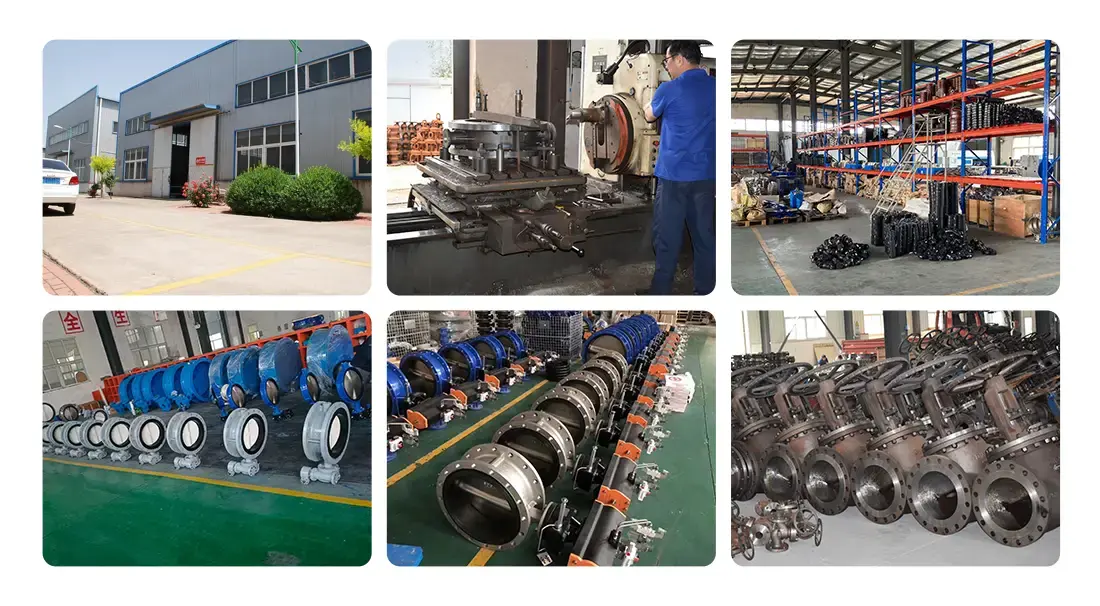
Distributors assess suppliers on multiple dimensions: manufacturing capability, quality systems, after-sales support, and commercial stability. Factory audits verify production capacity—our facility operates modern CNC machining centers, special large-diameter valve lathes, and comprehensive testing equipment, including hydrostatic test benches and spectrographic analyzers. ISO9001 certification demonstrates process control, while material traceability systems ensure batch-level documentation for regulatory compliance.
After-sales support differentiates reliable suppliers from transactional vendors, butterfly valve double flange type. We provide 18-month warranties covering manufacturing defects, free replacement for non-operational damage, and technical hotline access. OEM and ODM programs enable private labeling and custom engineering, supporting distributors building proprietary product lines. Digital services include QR-coded documentation linking to CAD drawings, test reports, and maintenance schedules—enhancing customer experience and reducing support call volume.
Making the Right Choice: Butterfly Valve Double Flange Buying Guide
Aligning Operational Demands with Valve Features
Decision-making begins with mapping operational requirements to valve capabilities. High-cycle applications exceeding 10,000 annual operations benefit from double eccentric designs, reducing friction and wear. Dead-end service mandates double flanged construction over wafer types. Compliance-driven projects in pharmaceutical or food processing sectors require electropolished stainless steel interiors and FDA-compliant seat materials.
Customization options extend valve applicability. We support OEM branding, custom nameplate engraving, and specialized coatings—epoxy resin for high-humidity Southeast Asian environments or thickened stem covers for Middle Eastern dust exposure. Regulatory compliance spans CE marking for European markets, WRAS approval for UK potable water, and NSF 61 for North American drinking water systems. Distributors serving regulated industries value suppliers offering comprehensive certification portfolios, simplifying product qualification and market entry.
Cost-Performance Trade-offs and Supplier Reputation
Balancing acquisition cost against lifecycle value requires considering maintenance intervals, energy consumption, and replacement frequency. Lower-priced valves with marginal materials may require premature replacement, negating initial savings. Our SS304/SS316 bodies with mechanically retained seats enable 20+ year service lives in clean media, amortizing higher upfront costs across extended operational periods.
Supplier reputation influences risk exposure in long-term procurement relationships. We have served global markets for over 15 years from our Tianjin Binhai New Area facility, building repeat business through consistent quality and delivery reliability. Transparent pricing without hidden fees, responsive technical support, and flexible order quantities (accommodating small trial orders through container-load shipments) establish trust foundational to partnership longevity.
The butterfly valve double flange type emerges as a preferred solution where mechanical stability, serviceability, and cost-effectiveness intersect. Its structural advantages over wafer designs, combined with material versatility and actuation flexibility, address diverse industrial requirements from municipal infrastructure through petrochemical processing. Distributors gain a competitive advantage by partnering with manufacturers offering comprehensive customization, rapid delivery, and robust after-sales support—capabilities aligning with evolving market demands.
Conclusion
Double flanged butterfly valves represent a mature, reliable technology meeting the rigorous demands of water treatment, HVAC, petrochemical, and municipal infrastructure applications. Their structural independence, facilitated by integral flanges on both ends, provides mechanical stability absent in wafer configurations while enabling critical dead-end service capability. Material diversity—from cost-effective ductile iron to corrosion-resistant stainless steel—allows specification optimization, balancing performance and budget constraints. Actuation options spanning manual through fully automated control support operational requirements from infrequent isolation to continuous modulation. Procurement success hinges on partnering with manufacturers demonstrating manufacturing depth, quality certifications, inventory availability, and responsive technical support. Evaluating suppliers on these dimensions reduces risk and enhances long-term value across repeated procurement cycles.
FAQ
1. What distinguishes double flanged butterfly valves from lug-style valves?
Both valve types support dead-end service, but their construction differs fundamentally. Double flanged butterfly valves feature complete flange faces on both ends, bolting independently to mating pipe flanges. Lug-style valves use threaded inserts around the body perimeter, accepting bolts from each side without nuts. The double flange configuration provides superior structural rigidity for large diameters exceeding DN600 and better withstands vibration in high-flow applications. Lug designs offer installation flexibility where space constraints limit access to both flange sides simultaneously.
2. Can these valves handle bi-directional flow?
Standard concentric disc designs with resilient seats provide bi-directional sealing, suitable for systems experiencing flow reversal. High-performance double or triple offset variants typically specify preferred flow direction (indicated by body arrows) to optimize metal seat contact. Reverse flow remains permissible at reduced pressure ratings—consult manufacturer documentation for specific derating factors. Bi-directional capability proves valuable in municipal water networks with variable pumping configurations and HVAC systems switching between heating and cooling modes.
3. What gasket selection applies to double flanged installations?
Unlike wafer valves, where the seat liner often functions as the gasket, double flanged configurations require separate gaskets between valve flanges and pipe flanges. Gasket material matches service conditions: EPDM suits potable water to 120°C, compressed non-asbestos fiber serves general industrial water and air, while spiral-wound stainless steel with graphite filler handles high-temperature steam and thermal oil. Gasket inner diameter must exceed disc edge travel, preventing interference during valve operation.
Partner with ZTVK for Reliable Butterfly Valve Double Flange Type Solutions
ZTVK has specialized in butterfly valve manufacturing for over 15 years, serving global distributors, contractors, and industrial end-users from our ISO9001/ISO14001-certified facility in Tianjin. As an established butterfly valve double flange type manufacturer, we maintain stock of 2000+ standard units, enabling 3-7 day delivery, with non-standard customization completed in 15-25 days. Our product range spans DN50-DN2000 in SS304/SS316/SS304L/SS316L bodies, accommodating PN10/PN16 pressures with EPDM/NBR/PTFE/VITON seats. We support OEM branding, custom engineering, and actuator integration—hand lever, worm gear, pneumatic, and electric options—tailored to your operational requirements.
Located 50 km from Tianjin Port, we provide competitive FOB/CIF pricing through partnerships with major shipping lines. Our 18-month warranty, technical support hotline, and digital documentation access ensure confident procurement and simplified after-sales service. Distributors benefit from flexible order quantities, rush order capability, and reserved actuator interfaces enabling future automation upgrades without valve body replacement.
Contact our technical team at ktec86961886@163.com to discuss your butterfly valve double flange type requirements. We provide free selection consultation, CAD drawings, and material test reports supporting your project specifications.
References
1. American Water Works Association. AWWA Manual M49: Butterfly Valves: Torque, Head Loss, and Cavitation Analysis. Denver: AWWA, 2012.
2. Zappe, R.W. Valve Selection Handbook: Engineering Fundamentals for Selecting the Right Valve Design for Every Industrial Flow Application. 5th ed. Houston: Gulf Professional Publishing, 2004.
3. British Standards Institution. BS EN 593:2017 Industrial Valves – Metallic Butterfly Valves for General Purposes. London: BSI Standards, 2017.
4. American Petroleum Institute. API Standard 609: Butterfly Valves: Double-Flanged, Lug- and Wafer-Type. 6th ed. Washington, DC: API Publishing Services, 2018.
5. Smith, P. and Zappe, R.W. Valve Selection and Specification Guide. New York: Van Nostrand Reinhold, 1991.
6. International Organization for Standardization. ISO 5752:1982 Metal Valves for Use in Flanged Pipe Systems – Face-to-Face and Centre-to-Face Dimensions. Geneva: ISO, 1982.
Send us your valve requirements and our team will provide professional solutions and fast quotations.
RELATED INDUSTRY KNOWLEDGE