- English
- French
- German
- Portuguese
- Spanish
- Russian
- Japanese
- Korean
- Arabic
- Greek
- German
- Turkish
- Italian
- Danish
- Romanian
- Indonesian
- Czech
- Afrikaans
- Swedish
- Polish
- Basque
- Catalan
- Esperanto
- Hindi
- Lao
- Albanian
- Amharic
- Armenian
- Azerbaijani
- Belarusian
- Bengali
- Bosnian
- Bulgarian
- Cebuano
- Chichewa
- Corsican
- Croatian
- Dutch
- Estonian
- Filipino
- Finnish
- Frisian
- Galician
- Georgian
- Gujarati
- Haitian
- Hausa
- Hawaiian
- Hebrew
- Hmong
- Hungarian
- Icelandic
- Igbo
- Javanese
- Kannada
- Kazakh
- Khmer
- Kurdish
- Kyrgyz
- Latin
- Latvian
- Lithuanian
- Luxembou..
- Macedonian
- Malagasy
- Malay
- Malayalam
- Maltese
- Maori
- Marathi
- Mongolian
- Burmese
- Nepali
- Norwegian
- Pashto
- Persian
- Punjabi
- Serbian
- Sesotho
- Sinhala
- Slovak
- Slovenian
- Somali
- Samoan
- Scots Gaelic
- Shona
- Sindhi
- Sundanese
- Swahili
- Tajik
- Tamil
- Telugu
- Thai
- Ukrainian
- Urdu
- Uzbek
- Vietnamese
- Welsh
- Xhosa
- Yiddish
- Yoruba
- Zulu
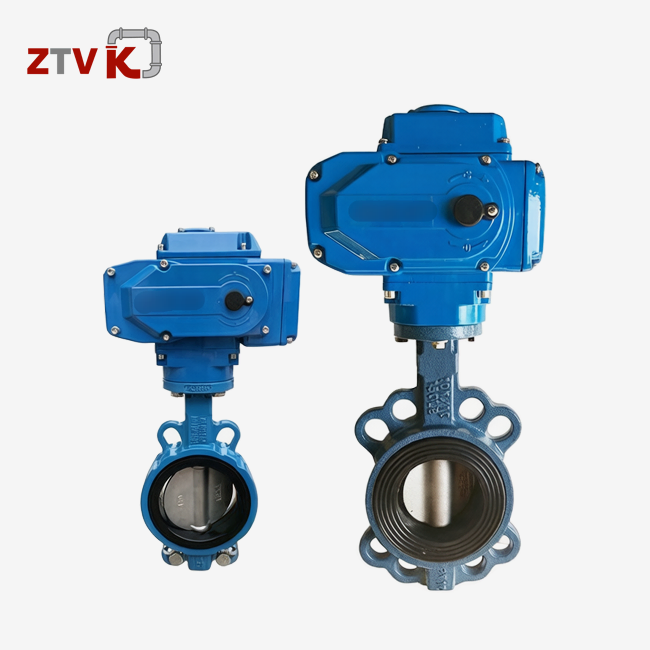
Electric Wafer Butterfly Valve
Connection method:Wafer type
Connection standard:ISO5211--PN10/PN16/125LB/150LB/JIS5K/JIS10K/JIS16K
Size:1.5"-48"(DN40-DN1200 mm)
Working pressure:PN10/PN16
Body material:DI/QT450
Disc material:DI/CF8/CF8M/Aluminum bronze
Seat material:EPDM/NBR/PTFE/VITON/
Electric Wafer Butterfly Valve for Industrial Automation — Precision Flow Control with Electric Actuation
The Electric Wafer Butterfly Valve from ZTVK pairs a compact wafer-style body with electric actuation to deliver reliable flow control across a wide range of industrial pipelines. The valve body is produced from DI / QT450 ductile iron castings; available from DN40 to DN1200 ( 1.5” to 48”) at operating pressures of PN10 and PN16. Disk possibilities include DI, CF8, CF8M and aluminum bronze. The seat materials – EPDM, NBR, PTFE and VITON – are chosen to suit your media and temperature requirements.
What Is an Electric Wafer Butterfly Valve?
An Electric Wafer Butterfly Valve is an electromechanical flow control device. The thin wafer body clamps between two pipe flanges using long studs, and an electric actuator rotates a disc from 0° to 90° to open, close, or throttle fluid flow.
Unlike the manual valves, the electric version has a motor (AC or DC), gear system and control logic. On/Off or modulating signals (4–20 mA, 0–10 V) provide remote and automatic control.
The wafer design is lighter and shorter than flange-type designs. It lowers installation material costs and is perfect for pipes where space and weight are an issue — such as HVAC skids, filtration units and chemical process lines.
Technical Specifications
|
Parameter |
Details |
|
Operated By |
Electric Actuator |
|
Connection Method |
Wafer Type |
|
Connection Standard |
ISO 5211 — PN10/PN16/125LB/150LB/JIS5K/JIS10K/JIS16K |
|
Size Range |
1.5"–48" (DN40–DN1200) |
|
Working Pressure |
PN10 / PN16 |
|
Body Material |
DI / QT450 Ductile Iron |
|
Disc Material |
DI / CF8 / CF8M / Aluminum Bronze |
|
Seat Material |
EPDM / NBR / PTFE / VITON |
|
Suited Medium |
Water, Gas, Oil, and similar fluids |
|
Suited Temperature |
0°C – 80°C |
|
Actuator Voltage |
24 VDC / 110 VAC / 220 VAC / 380 VAC |
|
Actuator Protection |
IP67 / NEMA 4X |
|
Control Signal |
On/Off or Modulating (4–20 mA / 0–10 V) |
Functions and Working Principle
Cut-off: The disk spins to completely open or fully shut the fluid route giving isolation of water, gas or oil flows.
Flow control: The disk may be held at intermediate angles (e.g., 30°, 45°, or 60°) using a modulating actuator to throttle flow and control pressure, temperature, or liquid level.
Automatic control: The electric actuator is linked to a PLC or building management system to provide remote control without the need for on-site physical intervention.
The electric actuator powers the valve stem via a worm gear train. The worm gear is self-locking meaning that the disk does not wander when under dynamic fluid pressure and retains its place. ISO 5211 mounting pads enable direct actuator attachment without extra brackets, thereby eliminating alignment issues during assembly.
Material Selection Guide
Seat material selection directly affects sealing performance and service life. The options below cover the most common media and temperature conditions in this Electric Wafer Butterfly Valve's rated range.
For cold and hot water, HVAC and weakly corrosive media up to 80 °C.
NBR is recommended for oil-based media and petroleum applications where EPDM would swell or disintegrate.
PTFE is resistant to strong substances such as dilute acids, bleach and solvents. This also makes it suitable for food-grade and pharmaceutical applications where media contamination must be avoided.
VITON covers the higher temperature chemical duty and has wider chemical resistance than NBR.
CF8 and CF8M offer corrosion resistance in chemical and wastewater service for disk service. Aluminum bronze is suitable for seawater or brackish water service.
Application Scenarios
HVAC and district cooling: Modulating actuators adjust the flow of chilled water depending on the instantaneous thermal demand. The wafer body minimizes the weight on suspended pipe lines in chiller facilities and cooling towers.
Wastewater treatment: EPDM-seat variants with stainless steel disks prevent biological fouling in aeration channels. Actuators with an IP67 rating may be used in humid settings and in the presence of H2S without any corrosion damage to the motor housing.
Chemical Processing: PTFE seat arrangements handle dilute sulfuric acid, bleach and similar corrosive fluids. Fail-safe actuators with battery backup immediately stop the valve in the event of a power failure, decreasing the likelihood of spills.
Water distribution and general utilities: NBR or EPDM seats for municipal water, irrigation networks and industrial cooling water in DN40-DN1200 size range.
The valve is also utilized in petrochemical, power generation, metallurgy, natural gas distribution, pulp and paper, food processing and pharmaceutical pipeline systems.
Quality Control and Testing
Before being shipped, each valve should go through the following inspection steps.
After fitting, the face-to-face width and flange hole alignment are checked to make sure there is no disk interference (API 609/EN 558).
· Hydrostatic shell test: the valve body is pressed down on by water at 1.5 times its rated pressure to check for casting porosity. Outside, there are no leaks.
High-pressure seat test at 1.1 bar working pressure: Making sure the seat's structure is stable under the load.
Low pressure air test at 80 psi checks for tiny leaks in situations where bubble-tight sealing is needed.
Test of actuator torque and duty cycle: The motor is checked to make sure it can produce enough torque with a safety factor of more than 1.3×. The Megger test is also used to check the motor's insulation resistance.
Check the coating thickness: spark test or magnetic gage are used to make sure that the epoxy powder coating on ductile iron bodies is more than 250 microns thick.
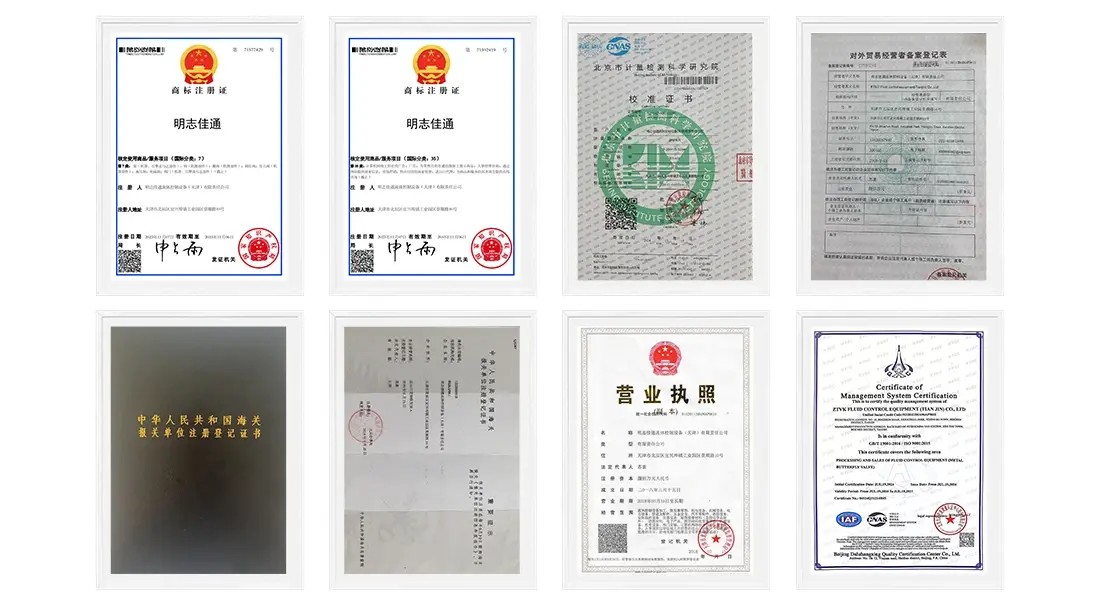
ZTVK has been approved by ISO 9001, ISO 14001, and OHSAS 18001 standards. If you ask, you can look at the certification records.

Customization and OEM/ODM Options
ZTVK supports OEM & ODM orders for this product line.
OEM services include bespoke branding, logos, nameplates and packaging to fit your product range.
ODM services include valve body redesign, changes in sealing material, changes in connection type, adaption to particular pressure, temperature and media conditions, including wafer, lug and flanged connection types.
We are open to discussions on non-standard diameters outside the DN40–DN1200 range as well as media needs. Standard orders for DN50–DN600 are sent from stock within 3–7 days. Lead time for custom manufacture is 15-25 days; rush alternatives available in 7-10 days.
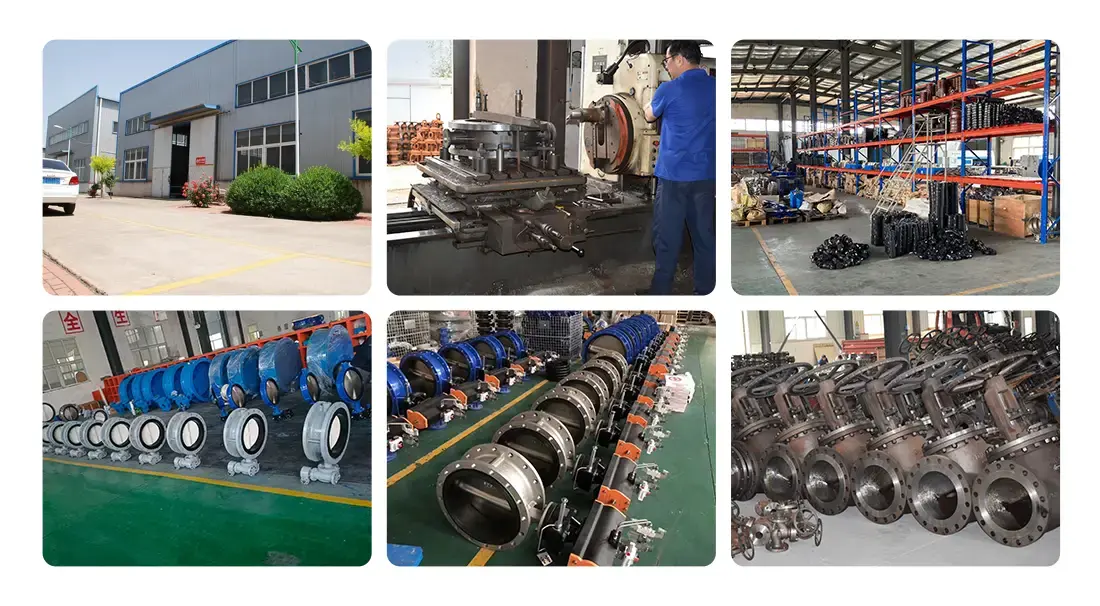
Packaging and Logistics
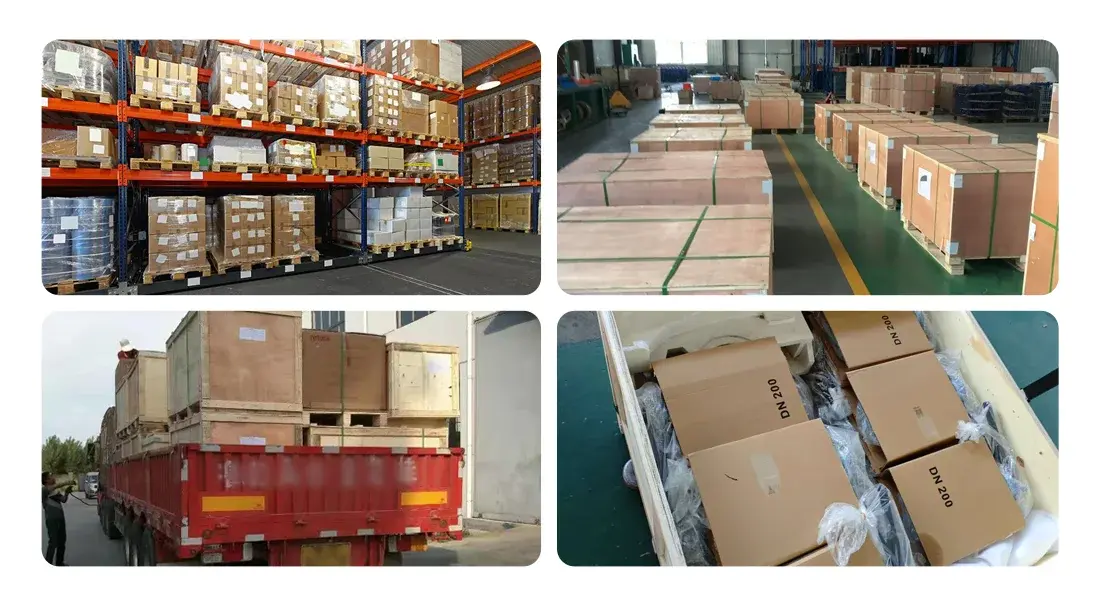
Normal export packing with hardwood cases and moisture-proof film and attaching brackets. All wooden packing meets ISPM 15 phytosanitary regulations.
ZTVK plant is around 50 km from Tianjin Port, about one hour drive. It allows for efficient loading of containers and flexible scheduling of departures. We can quote FOB in Xingang, Tianjin and CIF at the destination port.
Frequently Asked Questions
Q1: Is this valve suitable for end of line service?
A: No, in general. The flange compression holds the wafer body. The valve will slide or leak when you remove the downstream pipe. For end of line service utilize a lug style valve. If wafer type is required, put blind flange immediately downstream.
Q2: What are the differences between On/Off and modulating electric actuators?
A: The valve is driven by an ON/OFF actuator that completely opens or closes it and drains power only while moving. A modulating actuator receives a constant signal (4–20 mA or 0–10 V) to keep the disk at a certain angle in between the full-open and full-closed position for flow throttling. Modulation units are equipped with high duty-cycle motors (S4 specification) for frequent changes.
Q3: How does this valve affect water hammer?
A: Typically an electric actuator will turn 90° in 15 to 30 seconds. This closing speed decreases the pressure spikes as compared to fast acting solenoid valves. The disk material — ductile iron or stainless steel — has to be chosen to resist the pressure conditions of the particular system.
Q4. Why does the valve leak after a short period in service?
A: Three main reasons are: pipe flange misalignment pinching the rubber seat; usage of additional gaskets (wafer valves have integrated seals – adding gaskets twists the seat); and welding flanges with the valve still in line, which transfers heat to the rubber seat and destroys it.
Q5: What happens when there is a power outage?
A: A conventional electric actuator maintains the valve in its final position upon power loss. For safety sensitive applications specify a fail safe device with inbuilt battery back up or spring return. This positions the valve in a pre-set safe position – full open or full closed – irrespective of power condition.
Q6 : What standards and certifications does this valve meet?
A: The valve is designed according to ISO 5211 (mounting of actuator), API 609 (design), API 598 (testing) and EN 558 (face to face dimensions). Working pressure ratings are in accordance with PN10/PN16 and ANSI Class 150. Actuators are rated for ingress protection of IP67/NEMA 4X.
Contact Us
Have a question or need a Electric Wafer Butterfly Valve quote? Email us at ktec86961886@163.com and our team will get back to you.
Send us your valve requirements and our team will provide professional solutions and fast quotations.