- English
- French
- German
- Portuguese
- Spanish
- Russian
- Japanese
- Korean
- Arabic
- Greek
- German
- Turkish
- Italian
- Danish
- Romanian
- Indonesian
- Czech
- Afrikaans
- Swedish
- Polish
- Basque
- Catalan
- Esperanto
- Hindi
- Lao
- Albanian
- Amharic
- Armenian
- Azerbaijani
- Belarusian
- Bengali
- Bosnian
- Bulgarian
- Cebuano
- Chichewa
- Corsican
- Croatian
- Dutch
- Estonian
- Filipino
- Finnish
- Frisian
- Galician
- Georgian
- Gujarati
- Haitian
- Hausa
- Hawaiian
- Hebrew
- Hmong
- Hungarian
- Icelandic
- Igbo
- Javanese
- Kannada
- Kazakh
- Khmer
- Kurdish
- Kyrgyz
- Latin
- Latvian
- Lithuanian
- Luxembou..
- Macedonian
- Malagasy
- Malay
- Malayalam
- Maltese
- Maori
- Marathi
- Mongolian
- Burmese
- Nepali
- Norwegian
- Pashto
- Persian
- Punjabi
- Serbian
- Sesotho
- Sinhala
- Slovak
- Slovenian
- Somali
- Samoan
- Scots Gaelic
- Shona
- Sindhi
- Sundanese
- Swahili
- Tajik
- Tamil
- Telugu
- Thai
- Ukrainian
- Urdu
- Uzbek
- Vietnamese
- Welsh
- Xhosa
- Yiddish
- Yoruba
- Zulu
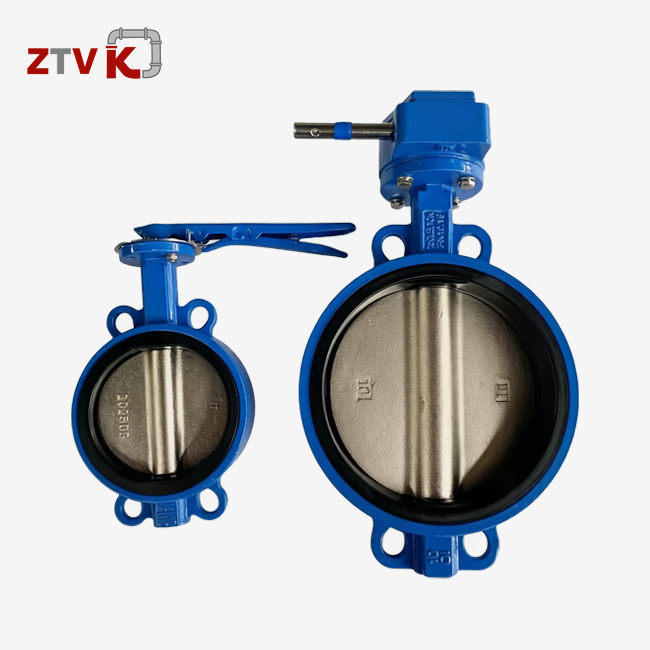
iron butterfly valve
Pressure: PN6, PN10, PN16 (class 150)
Temperature: -29 ℃ ~ + 120 ℃
Body: Ductile Iron: GGG40
Seat: NBR, EPDM, Viton, Silicone Rubber
Disco / Trim: epoxy coated ductile iron, SS316, SS304, stainless steel duplex, bronze
Stem: SS316, SS304, SS420, SS416
Connection: Wafer, Lug, flange
Design standard: API, DIN, ASME, ISO, ANSI, GB / T, BS EN, AWWA
Application: Water, power plant, HVAC, food, medicine, desalinization
Iron Butterfly Valve – Ductile Iron Body with EPDM / NBR / Viton Seat | DN50–DN2400
ZTVK's iron butterfly valve uses a ductile iron GGG40 body with a tensile strength exceeding 60,000 psi, providing impact resistance and flexibility that standard grey cast iron cannot match. The valve is available in DN50 to DN2400 (NPS 1¼ to NPS 96) and with pressure ratings PN6, PN10 and PN16 (Class 150). The valve may be used at temperatures from -29°C to +120°C. We provide wafer, lug and flanged types with a choice of seat materials and complete OEM/ODM service.
What Is an Iron Butterfly Valve?
An iron butterfly valve is a quarter-turn flow control device that uses a disc mounted on a rotating stem to regulate or shut off fluid flow inside a pipeline. The disc rotates 90° from fully open to fully closed, making it fast to operate and straightforward to automate.
This design is much lighter, shorter in face-to-face dimension and needs lower installation torque than the gate valves of the same pressure rating. These properties make it a suitable solution in large diameter pipe systems where weight, space and installation cost all play a part in the engineering decision.
The valve is made by ZTVK in accordance with API 609 short pattern face-to-face dimensions and thus may be directly compatible with the existing pipeline flange.
Key Product Specifications
|
Parameter |
Details |
|
Nominal Diameter |
DN50–DN2400 (NPS 1¼–NPS 96) |
|
Pressure Rating |
PN6, PN10, PN16 (Class 150) |
|
Operating Temp. |
-29°C to +120°C (varies by seat material) |
|
Body Material |
Ductile Iron GGG40 |
|
Seat / Liner |
NBR, EPDM, Viton, Silicone Rubber |
|
Disc / Trim |
Epoxy-coated ductile iron, SS304, SS316, Duplex Stainless, Bronze |
|
Stem Material |
SS304, SS316, SS420, SS416 |
|
Connection Type |
Wafer, Lug, Flanged |
|
Design Standards |
API, DIN, ASME, ISO, ANSI, GB/T, BS EN, AWWA |
|
Coating |
Fusion Bonded Epoxy (FBE), min. 250 microns |
|
Leakage Class |
Class A per EN 12266-1 (bubble-tight shutoff) |
|
Actuation Options |
Manual, electric, pneumatic, turbine |
Seat Material Selection Guide
The choice of seat material has a direct impact on the service life and the dependability of the seal.
NBR (Nitrile-Buna)
For Oil, Fuel, Grease Lines NBR resists swelling from hydrocarbons. Standard EPDM is not suitable for oil service – it will disintegrate on contact with hydrocarbons.
EPDM Excellent for water, waste water and steam applications. EPDM solutions are available for potable water systems. Before buying, check with your procurement team for the necessary certification requirements for your project.
Viton (FKM)
For harsh chemicals, high temperature media/solvents. Viton has the broadest range of chemical resistance among the conventional seat materials described above.
Silicone elastomer
In food processing and pharmaceutical lines where neutrality to taste and odor is essential.
Also, the selection of disk material matters. General water and HVAC applications Epoxy coated ductile iron. For use in saltwater, chlorinated water or light chemical exposure, SS316 disks are more acceptable.
Performance Features
The valve body is made of precision cast ductile iron GGG40 with a greater nodular graphite percentage than gray cast iron. This provides flexibility and impact resistance to the body and is more tolerant of water hammer and pressure surges than brittle gray iron bodies.
The FBE coating is applied at a minimum of 250 microns internally and externally and is tested for holiday detection (spark) to ensure that there are no pinholes in the cured layer. In subterranean or submerged service this stops galvanic corrosion.
The concentric disk design results in low hydrodynamic torque during operation, allowing for smaller actuators to be used for large diameter installations.
Seat seal test at 1.1x rated pressure before shipping is tested to bubble-tight shutdown to leakage Class A (EN 12266-1).
Application Industries
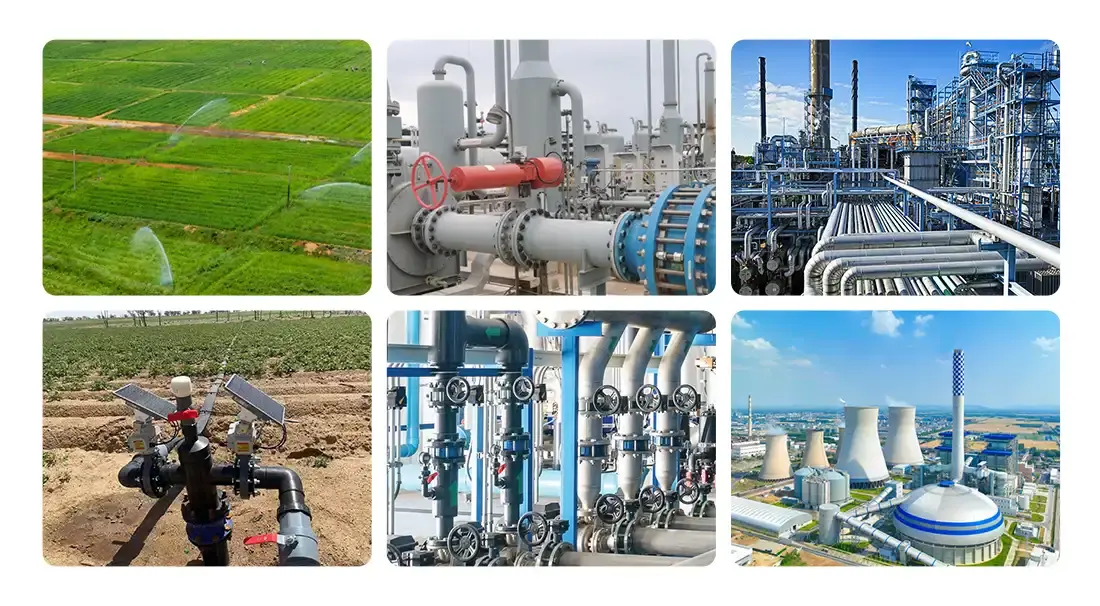
Iron butterfly valves from ZTVK are used across a range of industrial and municipal applications.
Water & Waste Water Treatment
Use in filtering systems, sludge handling and aeration lines. The body of ductile iron with EPDM seats is suitable for clean water and slurry with solids duty.
HVAC and Chilled Water Plants
The lug-style structure allows dead-end servicing, so you may isolate and service downstream equipment without emptying the whole system. The valve is used in high velocity chilled water loops .
Electricity Generation
For plant cooling water, condensate pipes, ash slurry. The erosion resistance of the ductile iron disk in slurry medium is studied.
Fire safety
Gear driven versions with tamper switches, developed for fire sprinkler networks, are able to endure hydraulic stress during pump start up.
Food and Pharma
Silicone rubber seats are utilized when food contact is involved. Flat surfaces of the disks limit the danger of bacterial buildup.
Marine & Desalination
SS316 disk and stem with FBE coated body are suitable for chloride heavy environment.
Quality Control Process
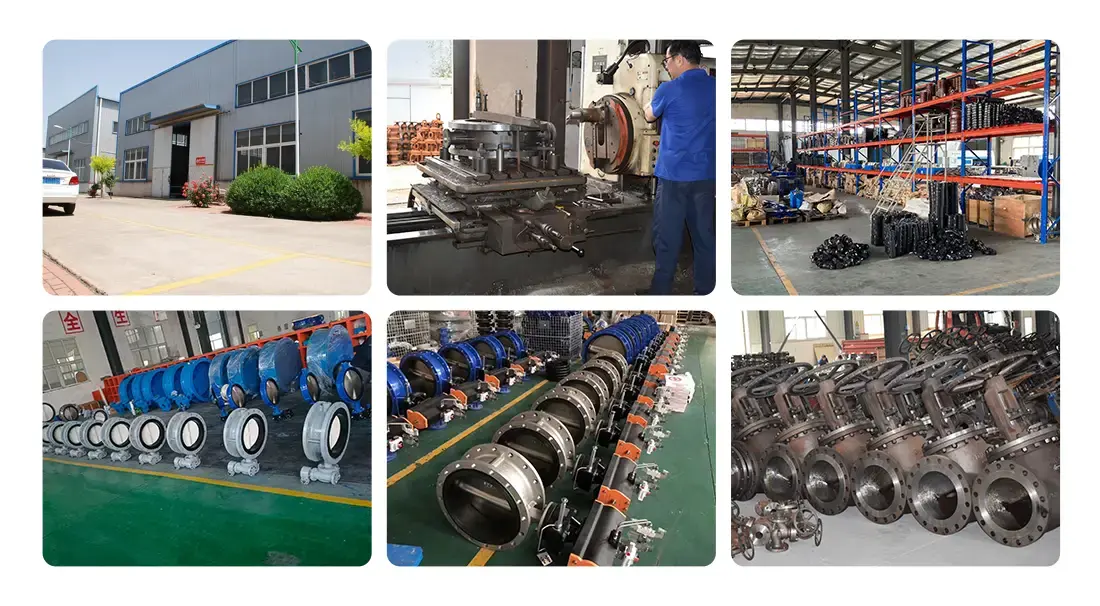
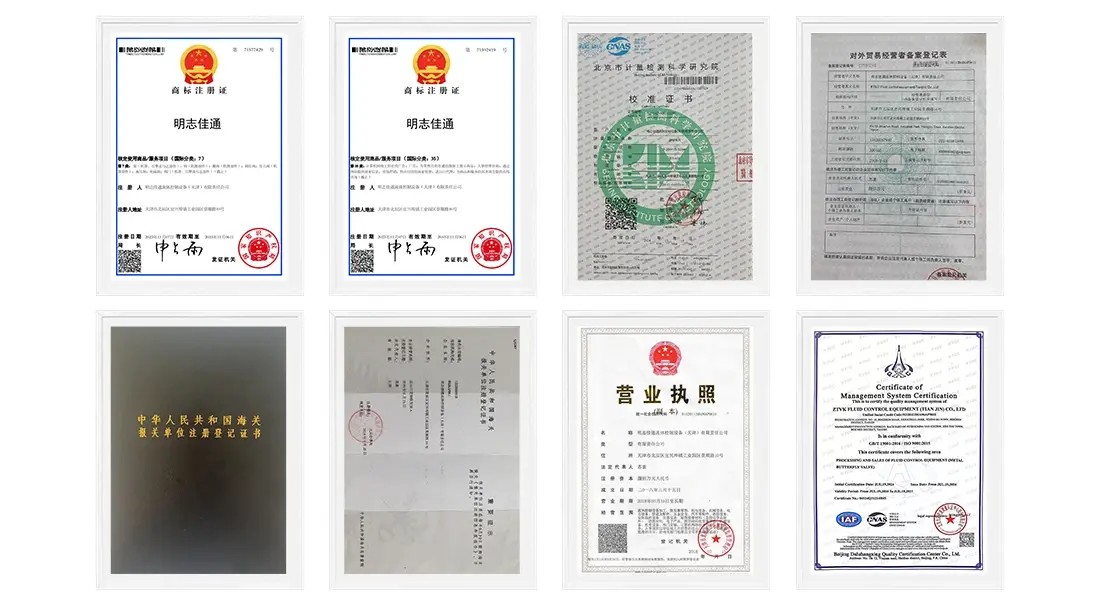
ZTVK applies a multi-stage inspection procedure on every iron butterfly valve before shipment.
Hydrostatic Shell Test: Conducted at 1.5 times the rated pressure to demonstrate body integrity and ensure no leaking through the casting.
Seat Seal Test: At 1.1× rated pressure to check for bubble-tight shutdown to EN 12266-1 Class A.
FBE Coating Inspection: Thickness check verifies minimum coverage of 250 micron. Pinholes in the cured epoxy layer are found by spark testing.
Dimensional Verification: Face to face measurements are verified using API 609 and related ISO standards.
Material Traceability: Review of Mill Test Reports (MTR) for each casting verifying carbon content, silicon percentage and nodularity % for ductile iron categorization.
Customization & OEM/ODM Options
ZTVK provides OEM and ODM services for customers that want branded or application-specific goods.
OEM solutions include personalized logos, nameplates and export packing with your name. ODM alternatives include disk material alterations, customized seat compounds, different stem materials and pressure or temperature adaptations for various pipeline circumstances.
ZTVK is equipped with strengthened stem protection for buyers working in high dust locations like the Middle East. Furthermore, exterior surfaces are coated with epoxy anti-corrosion for humid tropical regions in Southeast Asia.
Please contact us with your project specifics for lead time and availability on standard and bespoke setups.
Shipping & Packaging
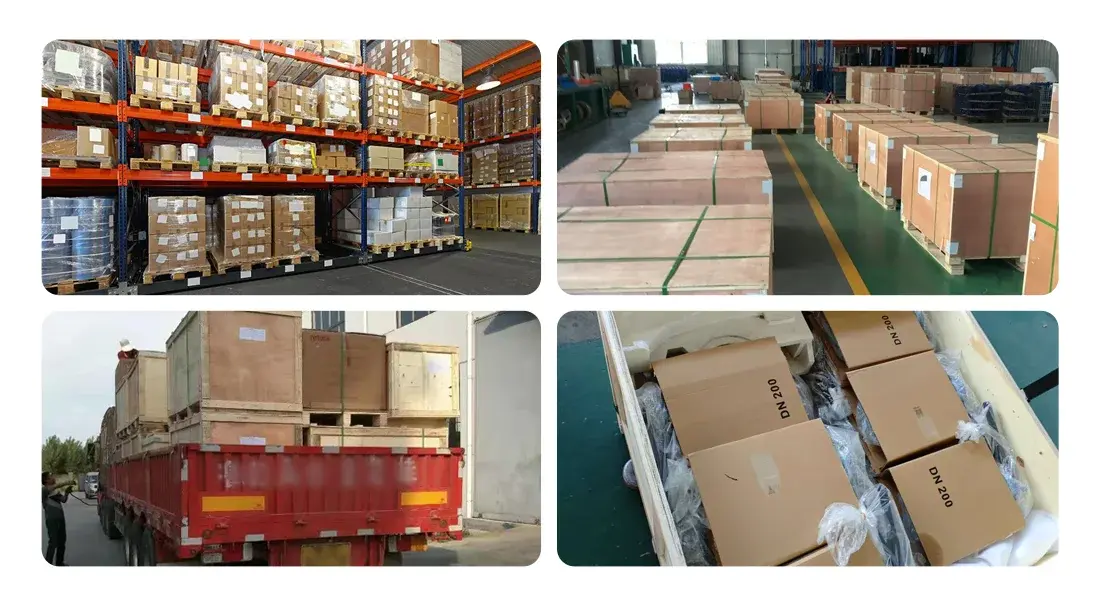
ZTVK's factory is located near Tianjin Port, which allows flexible export scheduling and FOB Tianjin Xingang or CIF destination-port pricing.
Export packaging uses wooden crates compliant with ISPM 15 phytosanitary requirements, with moisture-proof film and internal fixing brackets to prevent movement during ocean freight.
FAQ
Q1: What is the difference between Cast iron and Ductile valve?
A: Ductile iron (GGG40/50) has nodular graphite and a tensile strength of around 60,000 psi and is resistant to water hammer. Standard gray cast iron is fragile and is not usually suited for systems with pressure spikes. Ductile iron provides impact resistance and a longer service life for industrial applications .
Q2. Is the valve suitable for dead end service?
A: The lug-type arrangement is applicable only for dead-end service. Lug-style valves are bolted directly to the mating flange on both sides, which allows the downstream pipe to be removed without disturbing the valve. Wafer type valves are not designed for dead-end service.
Q3: What material should I use for the seat for oil applications?
A: Standard EPDM liners will deteriorate in hydrocarbons. For oil, gasoline or grease duty, use an NBR (Buna-N) seat to avoid swelling and seal failure.
Q4: How does installation orientation influence valve performance?
A: For liquids containing suspended particulates, mount the valve with the shaft horizontal. This prevents debris from collecting in the lower pivot region that would increase operating torque over time and hasten stem seal degradation.
Q5: Why is the starting torque larger than the running torque?
A: This happens from seat set. The disk is pushed against the robust lining in long closed periods and static friction is created. When calculating the size of actuators, a safety factor of 25-30% over the predicted operating torque should be used to guarantee reliable opening.
Q6: What is the leakage standard of this valve?
A: The valve is leakage Class A according to EN 12266-1, which means bubble-tight shutdown without apparent leaking. This is confirmed during seat seal testing at 1.1× rated pressure prior to shipping.
Contact Us
For iron butterfly valve quotes or technical drawings, email ktec86961886@163.com. Include your diameter range, pressure rating, and media type for a faster response.
Send us your valve requirements and our team will provide professional solutions and fast quotations.