- English
- French
- German
- Portuguese
- Spanish
- Russian
- Japanese
- Korean
- Arabic
- Greek
- German
- Turkish
- Italian
- Danish
- Romanian
- Indonesian
- Czech
- Afrikaans
- Swedish
- Polish
- Basque
- Catalan
- Esperanto
- Hindi
- Lao
- Albanian
- Amharic
- Armenian
- Azerbaijani
- Belarusian
- Bengali
- Bosnian
- Bulgarian
- Cebuano
- Chichewa
- Corsican
- Croatian
- Dutch
- Estonian
- Filipino
- Finnish
- Frisian
- Galician
- Georgian
- Gujarati
- Haitian
- Hausa
- Hawaiian
- Hebrew
- Hmong
- Hungarian
- Icelandic
- Igbo
- Javanese
- Kannada
- Kazakh
- Khmer
- Kurdish
- Kyrgyz
- Latin
- Latvian
- Lithuanian
- Luxembou..
- Macedonian
- Malagasy
- Malay
- Malayalam
- Maltese
- Maori
- Marathi
- Mongolian
- Burmese
- Nepali
- Norwegian
- Pashto
- Persian
- Punjabi
- Serbian
- Sesotho
- Sinhala
- Slovak
- Slovenian
- Somali
- Samoan
- Scots Gaelic
- Shona
- Sindhi
- Sundanese
- Swahili
- Tajik
- Tamil
- Telugu
- Thai
- Ukrainian
- Urdu
- Uzbek
- Vietnamese
- Welsh
- Xhosa
- Yiddish
- Yoruba
- Zulu
What Are Iron Butterfly Valves Used For?
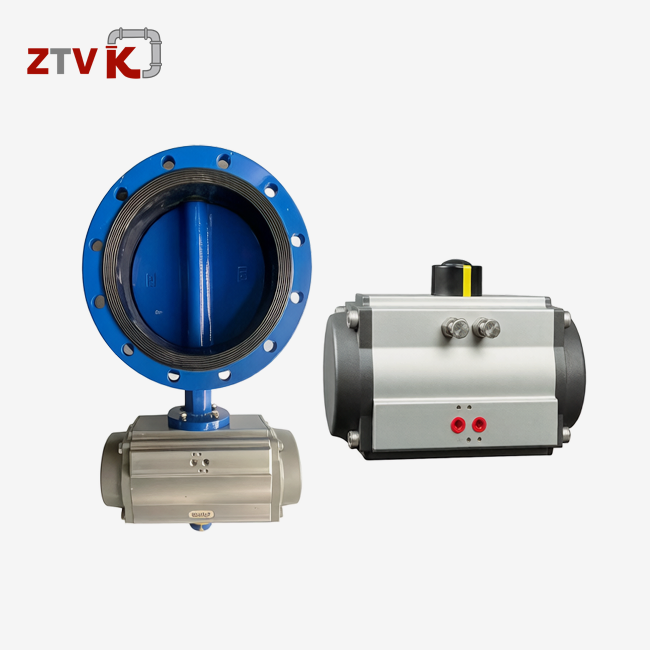
Iron butterfly valves are quarter-turn flow control devices built around a disc mounted on a rotating shaft inside a ductile iron body. When the shaft rotates 90°, the disc moves from fully open to fully closed, regulating fluid flow with minimal pressure drop. Industries ranging from municipal water treatment to HVAC and power generation rely on these valves because they combine mechanical durability, corrosion resistance, and cost efficiency. Whether you are managing a large pipeline network or specifying components for a new facility, understanding where and how these valves perform helps you make sharper procurement decisions.


Understanding Iron Butterfly Valves: Design and Functionality
An iron butterfly valve looks like it has a simple structure, but that's not the case. Inside that small body is engineering precision that can handle tough service conditions in a lot of different areas.
Construction and Key Variants
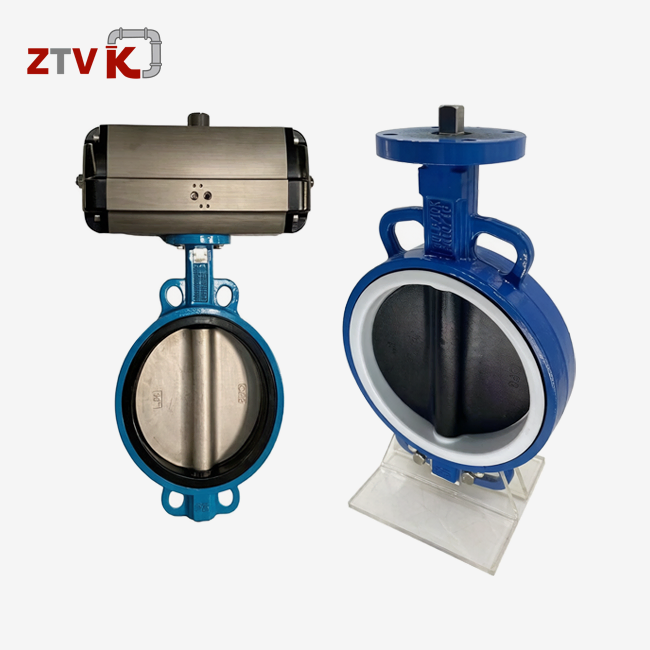
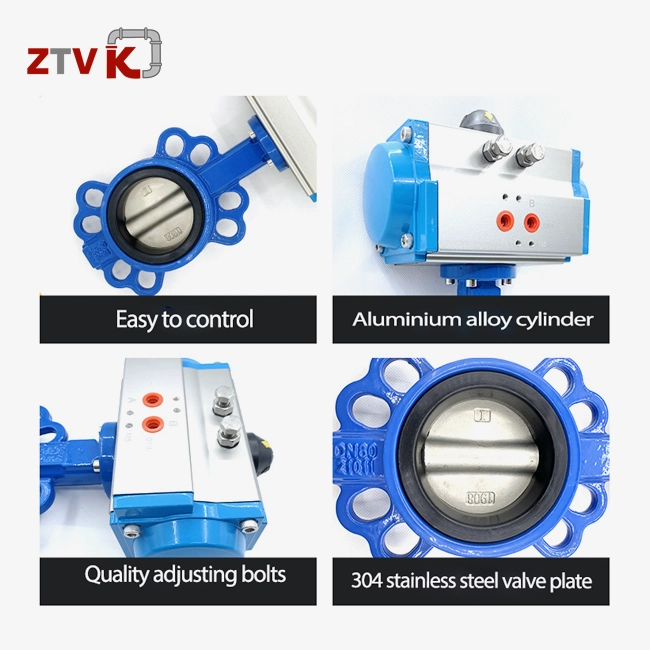
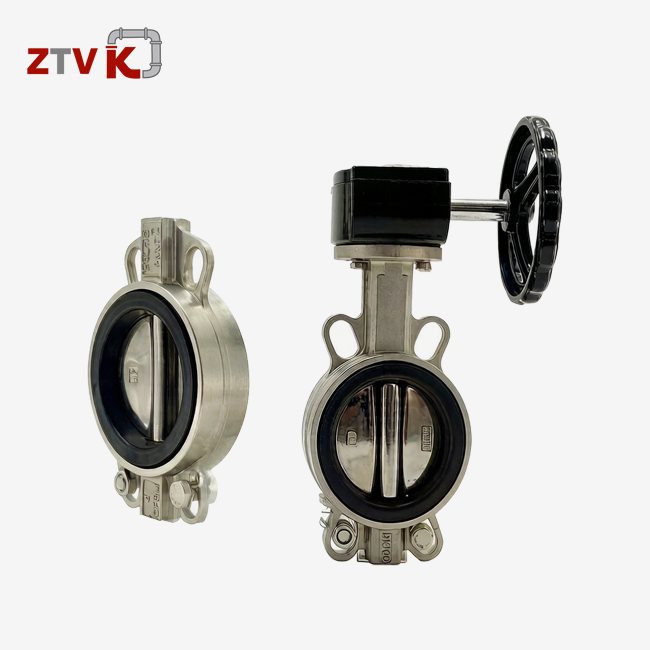
The normal iron butterfly valve has a GGG40 malleable iron body, a disk that spins, a stem, and a seat that can bend. From DN50 to DN2400 (NPS 1¼ to NPS 96), ZTVK's catalog has sizes that fit PN6, PN10, and PN16 (Class 150) pressures and a temperature range that goes from -29 °C to +120 °C. Different types of seat materials, like NBR, EPDM, Viton, and Silicone Rubber, are each designed to work with a certain type of fluid and temperature. You can choose from epoxy-coated ductile iron, SS304, SS316, stainless steel duplex, and bronze for the disk (trim), and from SS304, SS316, SS420, and SS416 for the stem.
Three connection styles define installation flexibility:
- Wafer — the smallest and most space-efficient choice. It is placed between two pipe flanges and is commonly used in water and HVAC systems where there isn't much room between the pipes.
- Lug — threaded inserts on both sides allow end-of-line service, which means that one side of the pipeline can be taken out without affecting the other. This is helpful in places that need a lot of maintenance.
- Flanged — bolted straight to matching flanges on both sides; this type of structure is the most rigid and is best used in places with a lot of cycles or vibrations.
API, DIN, ASME, ISO, ANSI, GB/T, BS EN, and AWWA are some of the design standards that are supported. This makes cross-border specification easy for engineering teams that work in more than one regulatory area.

Flow Characteristics and Pressure Ratings
The natural flow feature of a butterfly valve is about an equal percentage, which means that as the disk opens, the flow rate gradually rises. When set to PN16/Class 150, ductile iron butterfly valves provide a bubble-tight shut-off that meets EN 12266-1 leaking Class A standards. When compared to concentric designs, the double-eccentric disk shape used in luxury designs lowers seating force by about 30%. This means that smaller actuators are needed and automation costs are lower, which is a clear benefit for large-diameter orders.
Core Applications and Benefits of Iron Butterfly Valves
Iron butterfly valves made of ductile iron are used almost everywhere that pipes carry liquids or low-pressure gases. They are used a lot for a reason—the material and shape meet real operational needs at a reasonable price.
Here are the primary industry applications where these valves demonstrate consistent value:
- Municipal water supply and drainage — AWWA C504-compliant valves control the flow in treatment plants, transportation networks, and stormwater systems. GGG40 ductile iron can handle the changing pressures that happen often in city water systems, and EPDM seats stay stable even when temperatures change a lot, which happens a lot in outdoor installations.
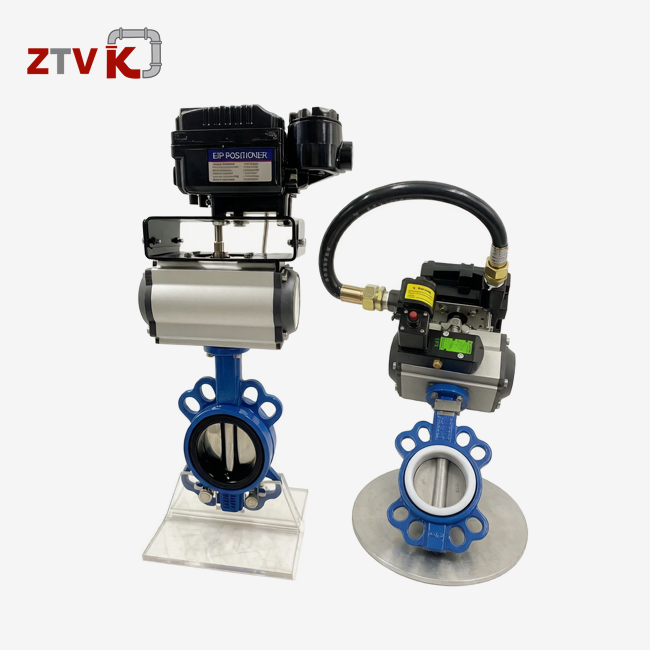
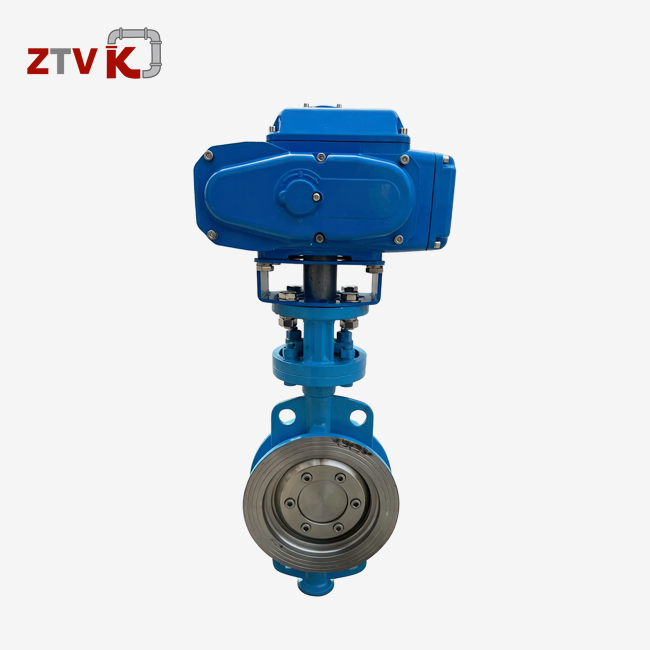
- HVAC and building services — Wafer-pattern butterfly valves are used a lot in commercial buildings for chilled water, hot water, and condenser water loops because they take up little room in the mechanical room and can be attached to automated building management systems with electric or pneumatic actuators.
- Power generation — Thermal and hydropower plants need large-bore, high-cycle valves for their cooling water systems. Sizes up to DN2400 with SS316 disk trim can handle the rough and chemically treated water in condenser systems without speeding up seat wear.
- Food, pharmaceutical, and desalination — Silicone Rubber seats are clean enough for food-grade applications, while Viton seats don't react with the chlorine media used in reverse osmosis pre-treatment and desalination plants.
- Chemical processing — NBR and Viton elastomer seats with stainless steel duplex disk trim can handle chemical streams that aren't too corrosive at temperatures up to 120 °C.
These benefits can help procurement teams in water utilities, EPC contractors, and industrial facilities solve the flow control problems they face when they have to balance performance against lifecycle cost. If you compare butterfly valves to gate valves, they open and close in a quarter turn, which greatly cuts down on the time it takes to operate and the wear and tear on the parts. When ordering hundreds of DN400 to DN1200 pieces in bulk, the unit cost of iron butterfly valves is much lower than that of ball valves with the same big diameter.

Choosing the Right Iron Butterfly Valve: Decision Factors
Three things must be matched in order to choose the right iron butterfly valve: the size, the pressure class, and the trim material. Oversizing makes costs go up, while undersizing causes cavitation and speeds up disk wear.
Sizing and Pressure Class
The valve's diameter should match the pipe's nominal bore, not just the flow rate. Most city distribution needs can be met by a DN200 wafer valve with an EPDM seat and an epoxy-coated disk for water service at PN10. When the working pressure gets close to PN16 or when the fluid has objects suspended in it, switching to an SS316 disk and lug body keeps the seat from wearing out too quickly. ZTVK's range from DN50 to DN2400 means that a single source can handle all of a project's valve needs, which makes it easier to coordinate between different providers.
Material Selection by Application
| Application | Recommended Seat | Recommended Disc |
|---|---|---|
| Potable water / HVAC | EPDM | Epoxy ductile iron |
| Seawater/desalination | EPDM or Viton | SS316 |
| Food/pharmaceutical | Silicone Rubber | SS304 or SS316 |
| Chemical service | Viton | SS316 or duplex |
| Fire protection | EPDM | Epoxy ductile iron |
Procurement Guide for Iron Butterfly Valves
To find iron butterfly valves made of ductile iron quickly, you need to be clear about three things: price, wait time, and quality paperwork. ZTVK is based in Tianjin's Beichen Industrial Zone and is qualified for ISO 9001, ISO 14001, and OHSAS 18001. They keep more than 2,000 standard units in stock in sizes DN50 to DN600 and can ship them 3–7 days after receiving proof of the order. Non-standard sizes and OEM versions take 15–25 days to make, but there are choices for faster delivery.
The factory is only 50 km from Tianjin Port, which makes it easy to book sea freight with Maersk and COSCO Shipping. Export packaging meets the standards for ISPM 15 wooden crates, with moisture-proof film and fixed brackets that keep cargo from being held up at destination ports. ZTVK provides FOB Tianjin Xingang and CIF destination port quotes, which give dealers and EPC contracting teams a choice of Incoterms for setting budgets.
OEM branding — including custom logos, nameplates, and packaging — is available, as is ODM redesign of sealing materials and connection configurations to match specific operating conditions. All certification papers can be checked and can withstand factory checks by a third party.
Maintenance Tips and Best Practices for Longevity
An iron butterfly valve made of malleable iron that is well taken care of usually lasts for more than 50,000 rotations. Neglect shortens that lifespan very quickly. The following routine takes care of the important things:
- Quarterly visual inspection — Look for corrosion or mechanical damage on the stem seal, disk surface, and body covering. Progressive body pitting can be stopped by finding pinhole rust on the epoxy covering early on.
- Annual seat integrity test — Once a year, check the soundness of the seat by applying the recommended pressure and comparing the leakage to the Class A standard. If the leaking goes beyond what is allowed, you should replace the rubber seat instead of continuing to use it, which speeds up the wear on the disk and body.
- Actuator check — For valves that are moved by electricity or air pressure, compare the torque output to the valve's hydraulic torque curve. A mismatched actuator leads to partial closing, which is the main reason why seats fail in automatic systems.
When you're done with these checks, write down what you found in the valve's service record. ZTVK offers installation tutorial videos, troubleshooting guides, and digital product files that can be accessed by QR code. This makes it easier for field maintenance teams to do their jobs by giving them less information to remember.
Conclusion
Iron butterfly valves made of ductile iron are an important part of the world's flow control infrastructure. They are used in everything from power plants and desalination plants to local water networks and HVAC systems. They can handle a lot of different service conditions because they have GGG40 ductile iron bodies, a range of seat and disk materials, and a size range from DN50 to DN2400. Choosing the right trim and connection style for the job protects both the valve and the system around it, and regular maintenance makes the valve last much longer than expected. For large-scale sourcing teams, the best way to make sure a project goes well is to work with a maker that offers verified certifications, OEM freedom, and dependable shipping.
FAQ
1. What is the difference between ductile iron and cast iron butterfly valves?
Ductile iron (GGG40) has graphite crystals that have been treated with magnesium. This gives the material a tensile strength of more than 400 MPa and the ability to stretch before breaking. When hit, standard gray cast iron breaks easily. Ductile iron is the best body material for industrial butterfly valves used in water, HVAC, or power because it can handle sudden changes in pressure without breaking.
2. How do I select the correct seat material?
Make sure the elastomer works with the temperature and chemistry of the fluid. Potable water and gentle acids up to 120 °C are fine for EPDM. Petroleum-based fluids work well with NBR. Viton can handle strong poisons and high temperatures. Silicone Rubber is clean enough to be used in food and medicine.
3. Can iron butterfly valves be automated?
Yes, ZTVK designs include a place for electric and pneumatic actuators to connect. This means that automatic control changes can be made without having to replace the valve body, which saves a lot of money on refit projects.
4. What sizes are available?
ZTVK's ductile iron butterfly valves are available in sizes DN50 to DN2400 (NPS 1¼ to NPS 96), so they can be used for both small-bore building services and large-bore pipelines in cities or factories.
Partner with ZTVK for Reliable Iron Butterfly Valve Supply
ZTVK sells certified iron butterfly valves in sizes DN50 to DN2400. They are backed by ISO 9001 quality systems and have more than 2,000 units in stock. You can also get factory-direct pricing. As a well-known company that makes iron butterfly valves, we can handle large orders, fast shipping, and special requests. We are also close to Tianjin Port. To get a quote that fits your needs, email our technical team at ktec86961886@163.com.
References
1. American Water Works Association. AWWA C504: Rubber-Seated Butterfly Valves, 3 In. Through 72 In. (2015). AWWA Standards.
2. American Society of Mechanical Engineers. ASME B16.34: Valves – Flanged, Threaded, and Welding End (2017). ASME Publications.
3. European Committee for Standardization. EN 12266-1: Industrial Valves – Testing of Metallic Valves – Part 1: Pressure Tests (2012). CEN Standards.
4. International Organization for Standardization. ISO 5752: Metal Valves for Use in Flanged Pipe Systems – Face-to-Face and Centre-to-Face Dimensions (1982). ISO Publications.
5. Valve Manufacturers Association of America. Valve Industry Report: Market Trends and Product Standards (2022). VMA Publications.
6. Hydraulic Institute. Pump and Valve System Design Guide: Flow Control Components for Industrial Infrastructure (2021). HI Publications.
Send us your valve requirements and our team will provide professional solutions and fast quotations.
RELATED INDUSTRY KNOWLEDGE