- English
- French
- German
- Portuguese
- Spanish
- Russian
- Japanese
- Korean
- Arabic
- Greek
- German
- Turkish
- Italian
- Danish
- Romanian
- Indonesian
- Czech
- Afrikaans
- Swedish
- Polish
- Basque
- Catalan
- Esperanto
- Hindi
- Lao
- Albanian
- Amharic
- Armenian
- Azerbaijani
- Belarusian
- Bengali
- Bosnian
- Bulgarian
- Cebuano
- Chichewa
- Corsican
- Croatian
- Dutch
- Estonian
- Filipino
- Finnish
- Frisian
- Galician
- Georgian
- Gujarati
- Haitian
- Hausa
- Hawaiian
- Hebrew
- Hmong
- Hungarian
- Icelandic
- Igbo
- Javanese
- Kannada
- Kazakh
- Khmer
- Kurdish
- Kyrgyz
- Latin
- Latvian
- Lithuanian
- Luxembou..
- Macedonian
- Malagasy
- Malay
- Malayalam
- Maltese
- Maori
- Marathi
- Mongolian
- Burmese
- Nepali
- Norwegian
- Pashto
- Persian
- Punjabi
- Serbian
- Sesotho
- Sinhala
- Slovak
- Slovenian
- Somali
- Samoan
- Scots Gaelic
- Shona
- Sindhi
- Sundanese
- Swahili
- Tajik
- Tamil
- Telugu
- Thai
- Ukrainian
- Urdu
- Uzbek
- Vietnamese
- Welsh
- Xhosa
- Yiddish
- Yoruba
- Zulu
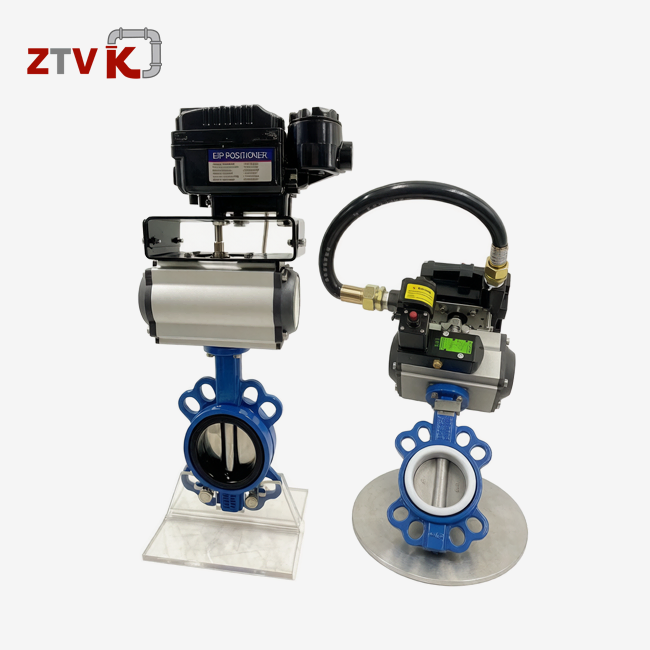
butterfly valve with pneumatic actuator and positioner
Disc: SS304,SS316,SS316L
Seats: NBR,EPDM,VITON,FKM
Body stlye: Flanged, Wafer type,Lug type
Stem: Stainless Steel
Size: 2″ – 60″ (50mm – 1500mm)
End: PN10,PN16,5K,10K,16K,150LB
Pneumatic actuator: Double acting,Single acting
Accessories: Solenoid valve, limit switch box , filter, E/P positioner, hand wheel
Butterfly Valve with Pneumatic Actuator and Positioner – Precise Flow Control for Industrial Automation
A butterfly valve with pneumatic actuator and positioner is a complete automated valve assembly designed for throttling, modulation, and on/off isolation in industrial process control loops. This assembly is manufactured by ZTVK FLUID CONTROL EQUIPMENT (TIANJIN) CO., LTD. in diameters from 2" through 60" (DN50-DN1500), operating pressure up to PN16 and temperature range from 0°C to 80°C. Body material possibilities include WCB, DI, CF8, CF8M and CF3M. Seats are available in NBR, EPDM, VITON and FKM for water, gas and oil service.
What Is a Butterfly Valve with Pneumatic Actuator and Positioner?
The assembly merges three functions in one control loop.
The butterfly valve is the rotating flow control device. The pneumatic actuator transforms the compressed air to mechanical torque to move the valve stem 0° to 90°. The positioner receives a control signal (usually 4–20mA) and controls the air pressure to the actuator such that the angle of the disk is always set to the command signal.
Together they tackle typical process control problems like poor flow modulation on big bore pipes, the necessity for fail-safe placement on essential lines, and the cost penalty of globe valves at higher diameters.
Key Technical Specifications
|
Parameter |
Details |
|
Size Range |
2″–60″ (DN50–DN1500) |
|
Working Pressure |
PN10 / PN16 |
|
Temperature Range |
0°C – 80°C |
|
Body Material |
DI, WCB, CF8, CF8M, CF3M |
|
Disc Material |
SS304, SS316, SS316L |
|
Seat Material |
NBR, EPDM, VITON, FKM |
|
Stem Material |
Stainless Steel |
|
Body Style |
Flanged, Wafer, Lug |
|
End Connection |
PN10, PN16, 5K, 10K, 16K, 150LB |
|
Actuator Type |
Single-acting (spring return), Double-acting |
|
Control Signal |
4–20mA, HART, PROFIBUS, FOUNDATION Fieldbus |
|
Supply Pressure |
2–8 bar |
|
Linearity Deviation |
<1% |
|
Hysteresis |
<0.5% |
|
Accessories |
Solenoid valve, limit switch box, filter regulator, E/P positioner, handwheel |
|
Actuator Interface |
NAMUR / ISO 5211 |
How It Works: Actuation Principles
The actuator is driven by compressed air and turns the butterfly disk from 0° to 90° to regulate flow rate in real time.
Single acting actuators have a spring return. In the event of an air supply failure, the valve will migrate to its fail-safe position automatically (completely closed or fully open, depending upon the spring arrangement). This is suitable for safety critical isolation jobs.
Double-acting actuators maintain the valve in its final position when the air supply is lost. They have better torque output . They are employed when you want freeze-in-position characteristics .
The positioner receives the 4–20mA signal from DCS or PLC and continually modulates the air delivered to the actuator cylinder such that the disk angle is always within the precision specified in the specification table above, which is within the linearity and hysteresis values.
Performance Properties
The butterfly valve with pneumatic actuator and positioner in this assembly operates to linearity deviation below 1% and hysteresis below 0.5%, as stated in the specification table.
Actuator Configurations Rack and Pinion (compact; uniform torque production through stroke) Scotch Yoke (greater torque at the start and end of stroke) Both variants function at supply pressures between 2 and 8 bar.
Fail-safe logic is field changeable Fail-Open, Fail-Close or Fail-Freeze - as determined by the internal spring configuration of the single-acting actuator. The positioner is set in Direct or Reverse action as required.
Application Scenarios
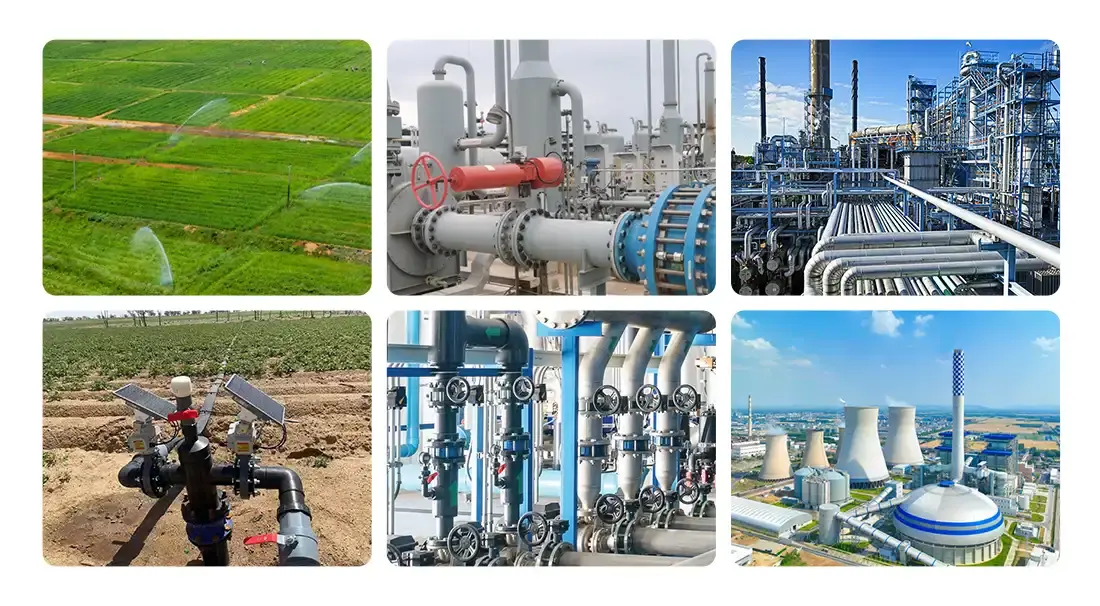
The butterfly valve with pneumatic actuator and positioner is used across several process industries:
Petrochemical and FGD Systems: Controls flow of limestone slurry or flue gas in scrubbing towers. Single-acting spring-return actuators provide defined fail-safe behavior on critical process lines. Positioners with partial stroke test capability allow periodic valve function checks without shutting down the process.
Water Treatment and Desalination: Used on high-pressure pump outlets and brine rejection lines in RO systems, where reliable on/off and modulating control is needed. Seat material selection (EPDM or VITON) depends on the corrosiveness of the media.
HVAC District Cooling: Replaces heavier globe valves on large-diameter chilled water distribution lines (DN400 and above). Flow modulation based on thermal load demand is handled by the positioner responding to signals from a building management system.
Other industries where this assembly is commonly applied include power generation, natural gas distribution, food processing, pharmaceuticals, pulp and paper, and municipal water systems.
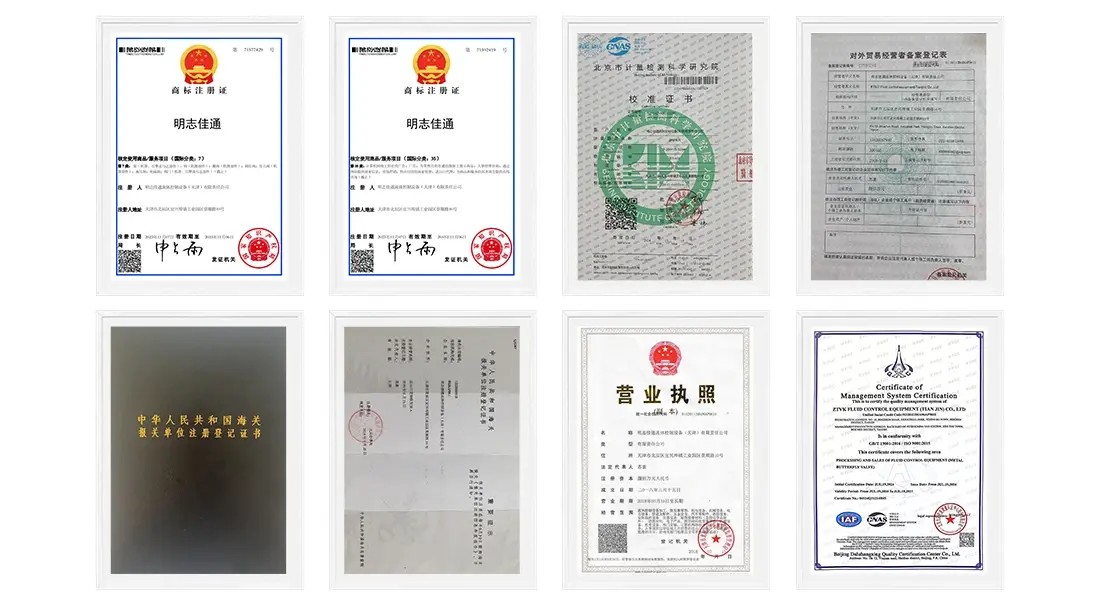
Quality Assurance Testing
Each assembly is tested before shipment across the following checkpoints:
· Hysteresis and Deadband Testing using a loop calibrator — position error verified against ascending and descending 4–20mA signals, held within the stated linearity and hysteresis limits
· Shell and Seat Leakage Tests per API 598 or EN 12266-1 — hydrostatic testing at 1.5× design pressure for the body and 1.1× for the seat
· Actuator Torque Verification — actuator output confirmed to exceed valve operating torque requirements under the specified supply pressure range
· NAMUR Interface Check — direct-mount interfaces for solenoids and positioners verified before packing
Customization and OEM/ODM Options
ZTVK supports OEM and ODM production for this product line.
OEM options include custom branding, nameplates, and packaging. ODM services cover body redesign, sealing material substitution, connection configuration changes, and adaptation to specific pressure, temperature, or media requirements.
For high-dust environments, additional stem protection is available. For humid operating climates, epoxy resin coating can be applied to the body exterior.
Standard DN50–DN600 sizes ship in 3–7 days. Custom orders ship in 15–25 days, with expedited production available in 7–10 days subject to confirmation.
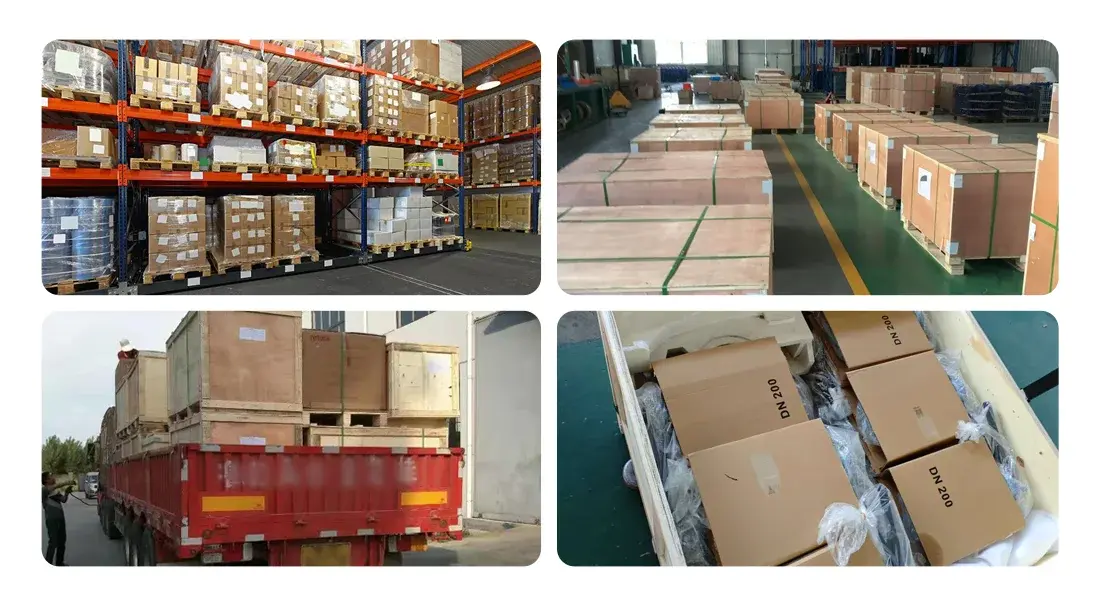
Packaging and Logistics
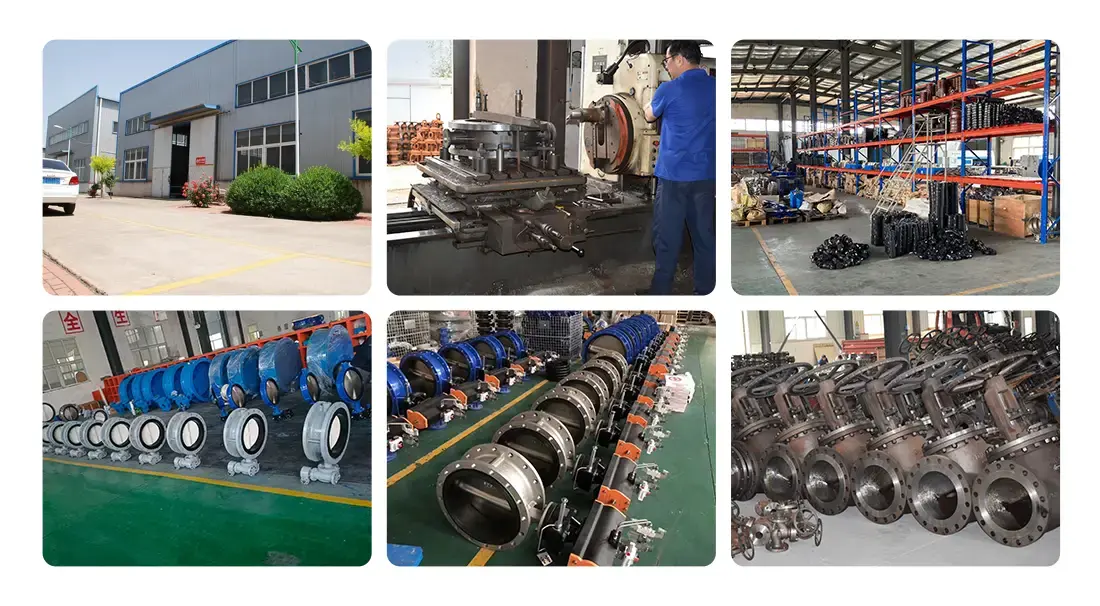
Products are packed in wooden crates with moisture-proof film and fixing brackets in compliance with ISPM 15 export requirements. The ZTVK factory is approximately 50 km from Tianjin Port, supporting efficient access to international freight routes. FOB Tianjin Xingang and CIF destination-port quotations are both available.
Frequently Asked Questions
Q1: Why is my butterfly valve hunting or oscillating around the setpoint?
A: Hunting is commonly caused by one or more of the following: overly aggressive gain settings on the positioner, stick-slip friction in the valve seat, or an undersized air supply line causing pressure fluctuation. Start by running the positioner's auto-tune or auto-calibration function to adjust PID parameters. If hunting continues, check supply pressure stability and seat condition.
Q2: Can this assembly be used in steam service?
A: For steam applications, a high-performance butterfly valve with a metal seat is required — soft-seated configurations are not suitable. The positioner should be thermally isolated or remote-mounted to keep electronics away from heat exposure. Please specify the steam temperature and pressure when inquiring so the correct configuration can be confirmed.
Q3: What is the difference between an electro-pneumatic positioner and a pneumatic-to-pneumatic positioner?
A: An electro-pneumatic positioner accepts a 4–20mA electrical input from a PLC or DCS. A pneumatic-to-pneumatic positioner uses a 3–15 psi air signal instead. The electro-pneumatic type integrates more directly with modern automation systems and supports digital protocols such as HART and PROFIBUS where required.
Q4: How is the fail-safe mode determined?
A: Fail-safe mode — Fail-Close or Fail-Open — is determined by the internal spring configuration of the single-acting actuator. The positioner is then set to Direct or Reverse action to match the mechanical behavior. Fail-Freeze behavior requires a double-acting actuator with a solenoid valve.
Q5: Does the positioner require instrument-quality air?
A: Yes. The air supply must be clean, dry, and oil-free. Contaminated air damages the pilot valve inside the positioner and causes positioning errors. ISO 8573-1 Class 3 or 4 is the commonly referenced standard for instrument air quality in process plants.
Q6: What signal protocols does the positioner support?
A: The positioner supports 4–20mA analog, HART, PROFIBUS, and FOUNDATION Fieldbus — compatible with most DCS and PLC platforms used in process industries.
Contact Us
Send your butterfly valve with pneumatic actuator and positioner specifications or drawing requests to ktec86961886@163.com. Include valve size, media, pressure, and control signal type for a faster response.
Send us your valve requirements and our team will provide professional solutions and fast quotations.