- English
- French
- German
- Portuguese
- Spanish
- Russian
- Japanese
- Korean
- Arabic
- Greek
- German
- Turkish
- Italian
- Danish
- Romanian
- Indonesian
- Czech
- Afrikaans
- Swedish
- Polish
- Basque
- Catalan
- Esperanto
- Hindi
- Lao
- Albanian
- Amharic
- Armenian
- Azerbaijani
- Belarusian
- Bengali
- Bosnian
- Bulgarian
- Cebuano
- Chichewa
- Corsican
- Croatian
- Dutch
- Estonian
- Filipino
- Finnish
- Frisian
- Galician
- Georgian
- Gujarati
- Haitian
- Hausa
- Hawaiian
- Hebrew
- Hmong
- Hungarian
- Icelandic
- Igbo
- Javanese
- Kannada
- Kazakh
- Khmer
- Kurdish
- Kyrgyz
- Latin
- Latvian
- Lithuanian
- Luxembou..
- Macedonian
- Malagasy
- Malay
- Malayalam
- Maltese
- Maori
- Marathi
- Mongolian
- Burmese
- Nepali
- Norwegian
- Pashto
- Persian
- Punjabi
- Serbian
- Sesotho
- Sinhala
- Slovak
- Slovenian
- Somali
- Samoan
- Scots Gaelic
- Shona
- Sindhi
- Sundanese
- Swahili
- Tajik
- Tamil
- Telugu
- Thai
- Ukrainian
- Urdu
- Uzbek
- Vietnamese
- Welsh
- Xhosa
- Yiddish
- Yoruba
- Zulu
What Are the Three Main Actuators of a Butterfly Valve?
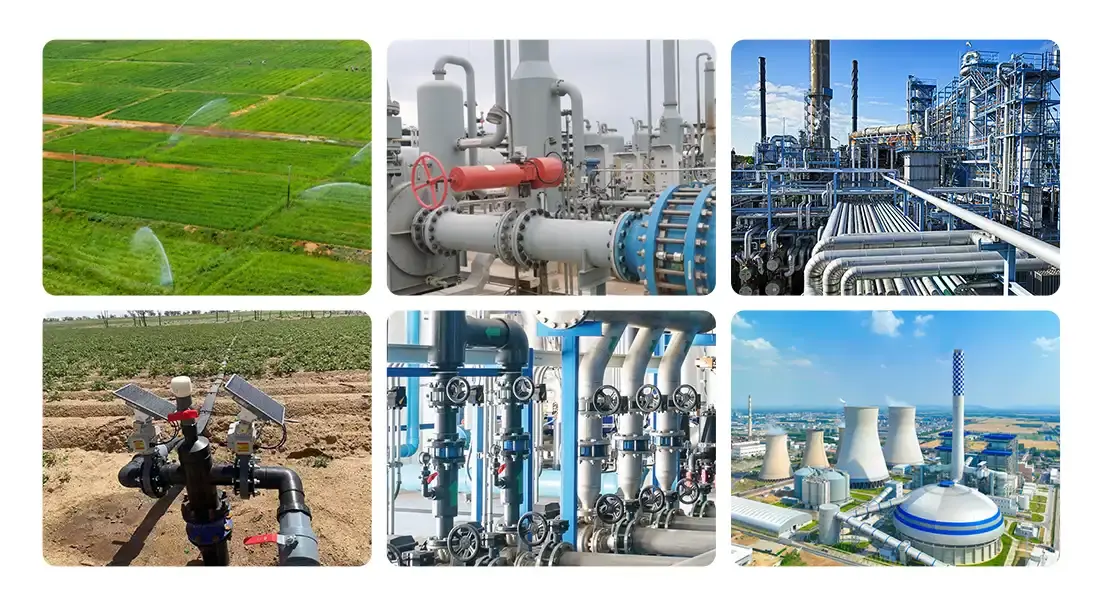
Butterfly valves rely on three primary actuator types: manual, pneumatic, and electric. Manual actuators use a lever or handwheel for direct operator control. Pneumatic actuators use compressed air to rotate the valve disc quickly. A butterfly valve motorized actuator—the electric type—uses an electric motor paired with a gearbox to deliver precise, automated control. In modern industrial pipelines, the electric actuator stands out for its remote operability, integration with PLC and DCS systems, and suitability for large-diameter applications ranging from DN50 to DN2000.
Understanding the Three Main Actuators for Butterfly Valves
If you pick the wrong type of actuator, you could end up with problems with the flow control, extra downtime, and expensive repairs. When procurement teams and engineers know how each type of actuator works, they can find the best solution for real-world operational needs.
Manual Actuators: Direct and Cost-Effective
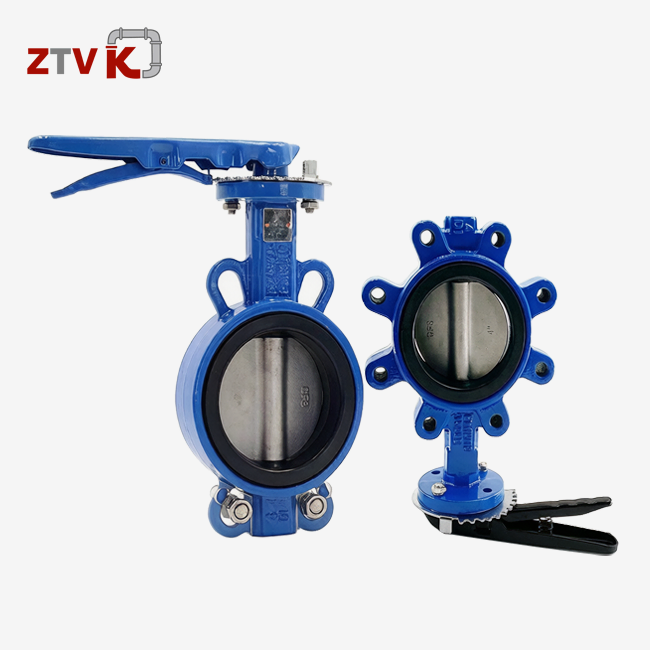
A person has to physically push on a manual actuator, which is usually a lever for a smaller valve or a gear operator for a larger one. They work well for low-frequency, non-critical tasks that don't need to be automated. Manual activation still makes up a big part of installed valve units in public water systems because it is easy to use and doesn't cost much up front. However, valves larger than DN200 can't be operated by hand because they need too much power.
Pneumatic Actuators: Speed Over Precision
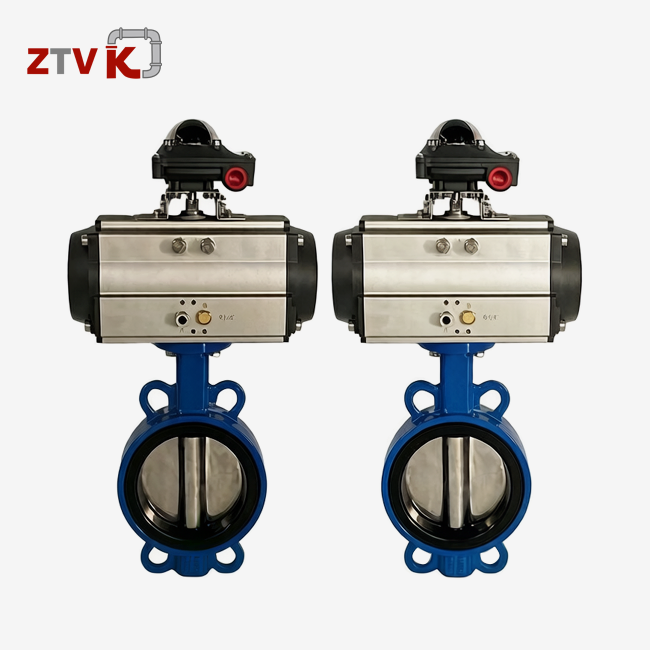
Compressed air pressure is turned into spinning force by pneumatic actuators. They cycle quickly—often finishing a full stroke in less than five seconds—which makes them popular in lines that process chemicals or make food and drinks where quick shutoff is important. Their flaws are that they need a constant source of compressed air, and they are less accurate when changing control. In humid places, maintenance teams also have to deal with air line moisture and seal wear.
Electric Actuators: Automation and Intelligence
An electric motor and a self-locking clutch in a butterfly valve motorized actuator turn the valve disk very precisely. It works with a lot of different voltages, from 24V DC to 380V/480V AC, and can be controlled by either 4–20 mA or 0–10V analog signals for on/off separation or modulating. These units work perfectly with Modbus RTU, Profibus DP, or Foundation Fieldbus protocols, which let you do diagnostics in real time and control them from a central control room.
In-Depth Look at Motorized Butterfly Valve Actuators
Electric control is now the best choice for fields that need to combine accuracy, safety, and automation. Knowing a lot about the technical side of this type of actuator helps buyers feel good about their purchases.
Key Technical Specifications to Know
When judging the performance and usefulness of an electric actuator for butterfly valves, these details set the standards:
- Torque output: Must be at least 30% greater than the valve's unseating torque to make sure it works reliably at maximum differential pressure.
- IP protection rating: Ratings of IP67 or NEMA 4X keep electronics inside safe in environments that are wet, dusty, or chemically harsh.
- Control modes: There are two types of control modes: on/off (Class A) for isolation duty and modulating (Class C) for throttling with more than ±1% positioning accuracy.
- Fail-safe options: Battery-backed or spring-return modules keep the valve in a safe position even if the power goes out, which is very important for ESD (Emergency Shutdown) uses.
- Built-in protection: Thermal overload cutout and power limit switches keep the motor from burning out and causing damage to the valve seat.
These specs have a direct effect on how well the actuator works in harsh industrial settings like petroleum ports and water treatment plants.
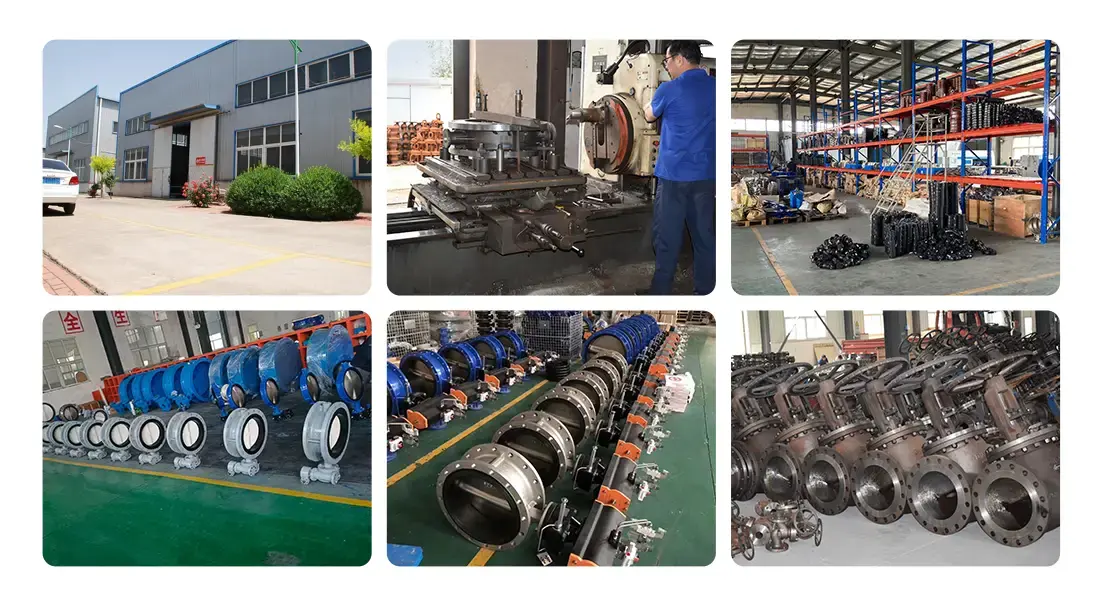
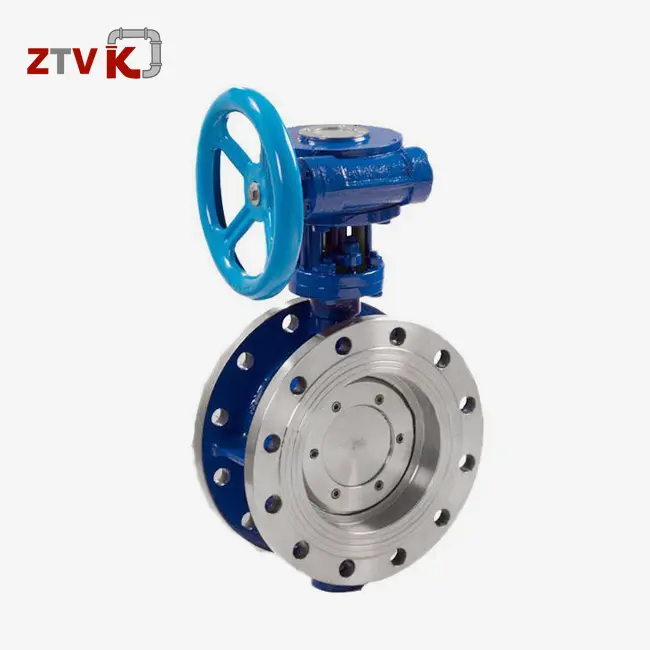
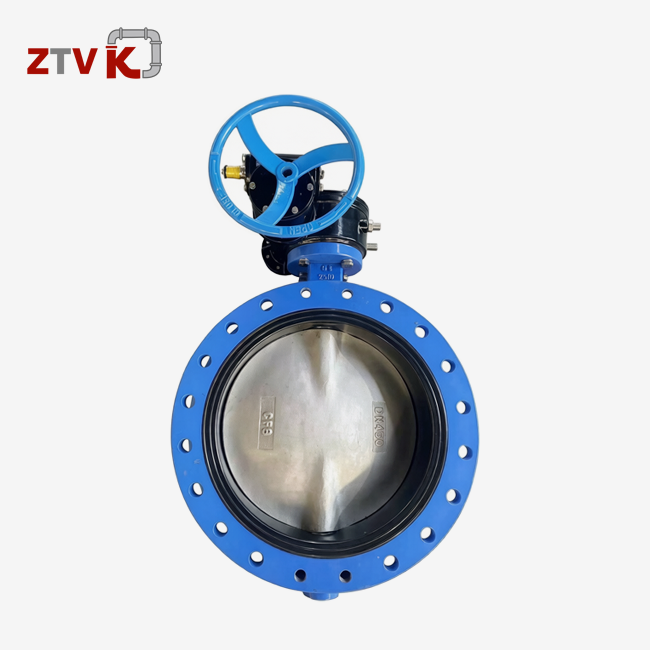
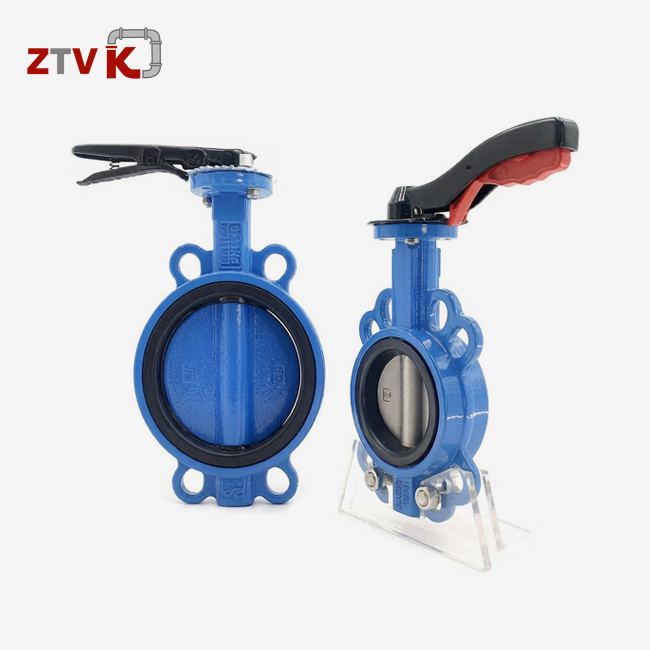
ZTVK's flanged butterfly valves can be operated by electric actuators and come in sizes ranging from 2" to 80" (DN50 to DN2000). They also have fixing pads that are compatible with ISO 5211 so that they can be used with any actuator. Ductile iron, WCB, SS304, and SS316 are all body materials that can be used. You can choose from DI, CF8, CF8M, and aluminum bronze disks, and seat materials like EPDM, NBR, PTFE, and VITON work with a lot of different types of media. Working pressure ratings of PN10 and PN16 (meeting 125LB/150LB/JIS5K/JIS10K/JIS16K standards) show that they are suitable for common pipelines in cities and factories.
Comparing Motorized Actuators with Other Actuator Types
One type of valve doesn't always work best. Procurement pros can weigh trade-offs more accurately with the help of a structured comparison.
| Criteria | Manual | Pneumatic | Electric |
|---|---|---|---|
| Source of energy | Work of the people | Squished air | Supply of electricity |
| Accuracy in control | Low | Moderate | High |
| Remote action | No | Partially | Partially or fully |
| Need for maintenance | Low | Moderate | Low to Moderate |
| Cost over time | Not very high up front | Moderate | More up front, less in the long run |
| Use of dangerous areas | Yes | Yes (intrinsically safe) | Of course (Ex-rated models) |
Electric actuators cost more at first, but they end up costing less in the long run because they don't need infrastructure for compressed air, they require less human work, and they have troubleshooting feedback built in that helps find problems before they break. A study by the Flow Control Network in 2021 found that facilities that switched from pneumatic to electric actuation had 18–22% lower yearly repair costs over five years.
Installation and Maintenance of Motorized Butterfly Valve Actuators
Proper fitting for a butterfly valve motorized actuator is required because it has a direct effect on how long the actuator lasts and how reliable the system is. Commissioning should be seen as a structured process, not a quick way out, by engineering teams. Make sure that the ISO 5211 fixing flange and the valve stem are mechanically aligned before you place the actuator. When the gearbox is out of alignment, it puts stress on the sides, which speeds up wear. Once the actuator is mechanically attached, wire the control circuit according to the schematic, making sure that the right voltage is supplied and that the circuit is grounded. Before you turn it on, connect position feedback signals (4–20 mA or discrete limit switches) to the control panel.
Routine Maintenance Practices That Extend Service Life
Regular maintenance keeps shutdowns from happening without warning. Some suggested actions are:
- Every six months, check the terminal block links and wire glands for corrosion and looseness.
- Make sure the internal space heater works in humid places so that condensation doesn't damage the PCB.
- Gearbox parts should be oiled at the intervals recommended by the maker, which is usually every 12 to 24 months under standard load.
- During yearly audits, run open/close cycles by hand to look for torque drift or shifts in the limit switch's tuning.
If you take care of these things on time, the actuator will last as long as its rated Mean Time Between Failures (MTBF), which for quality units is usually 10,000 or more full cycles.
Purchasing Guide for Motorized Butterfly Valve Actuators
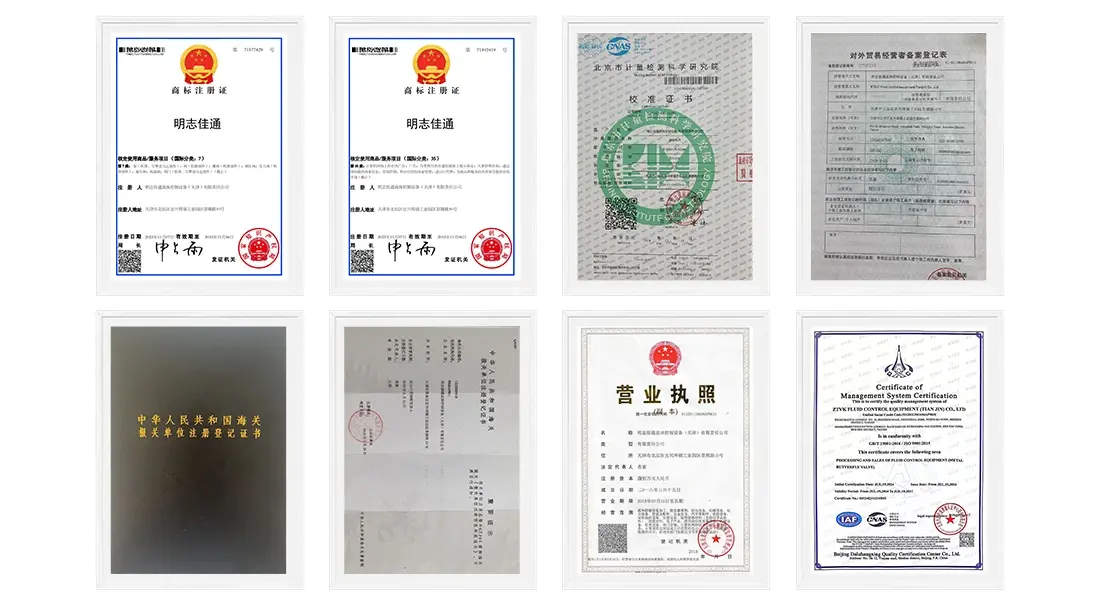
There's more to finding an electric actuator for industrial butterfly valves than just comparing prices. Purchasing teams need to look at how skilled the suppliers are, how many certifications they have, and how reliable their logistics are. When evaluating providers, make sure they follow ISO 9001 quality management standards and check to see if the actuator has CE, ATEX (for dangerous areas), or IECEx certifications. Make sure that torque values are checked by someone else and not just what the manufacturer says. Before you agree to a bulk order, ask for factory test results and endurance cycle data.
Lead time and shipping logistics are both important. When suppliers are close to big port facilities, freight transit times are more stable. ZTVK's factory is 50 km from Tianjin Port, which makes it possible for FOB Tianjin Xingang shipments to be coordinated through partnerships with Maersk and COSCO Shipping. Standard sizes that are kept in stock (DN50 to DN600) ship in 3 to 7 days. Non-standard changes take 15–25 days to make, but you can place a quick order if you need it faster. OEM buyers can fully customize their orders with ZTVK, which includes having valve bodies branded with their names, custom packaging, and ODM redesigns based on engineering sketches they send in. Free CAD drawings and 3D models are part of the pre-sales support. After the sale, ZTVK offers a guarantee that lasts for 18 months, movies that show how to install the product, and scan-code access to test reports and licensing papers.
Conclusion
You can open and close a butterfly valve motorized actuator in three ways: by hand, with air pressure, or electrically. Each one is better at different tasks, but the electric actuator always provides the best automation, integration, and long-term cost savings for complicated industrial pipelines. Choosing the right actuator and provider is important for making sure your system works efficiently, whether you're controlling flow in a city water network, a petrochemical plant, or an HVAC loop. ZTVK designs flanged butterfly valves from DN50 to DN2000 that work with all types of electric actuators and are certified to ISO, ANSI, JIS, and API standards. They also have a clear supply chain that is designed to make buying things around the world easy.
FAQ
1. How do I determine the correct torque for an electric actuator?
Find the valve's strongest breaking force at full differential pressure, and then add 1.3 times as much safety as that. The size of the valve isn't enough; the required torque is also affected by the media viscosity, line pressure, and seat material. The engineering team at ZTVK helps with power calculations for all valve sizes for free.
2. Can I retrofit an electric actuator onto an existing manual butterfly valve?
Yes, as long as the valve body has a mounting pad that meets ISO 5211 standards. This link is built into most current butterfly valves. Before you order, make sure that the stem drive's measurements match the actuator's drive socket.
3. What happens to the valve during a power outage?
Electric actuators that are standard will hold the last position (fail-freeze). If you need a clear safe state, like open or closed, you need a fail-safe type with a battery backup or a mechanical spring-return module.
4. Do electric actuators work with DCS and PLC systems?
Modern models can talk to each other using Modbus RTU, Profibus DP, or Foundation Fieldbus. This lets them work with a wide range of control systems and give real-time diagnostic information, like torque curves and cycle counts.
Get Electric Butterfly Valve Actuators from ZTVK — Trusted Manufacturer & Supplier
ZTVK makes flanged butterfly valves that work with all butterfly valve motorized actuator units and range in size from DN50 to DN2000 for PN10 and PN16 pressure classes. Our production facility in Tianjin is ISO 9001-certified and can handle OEM branding, bulk purchases, and custom engineering. We take the guesswork out of sourcing by having stock on hand, fast port access, and test documentation that can be checked. Send your requirements or ask for a datasheet right now to ktec86961886@163.com.
References
1. Valve Magazine. (2022). "Manual vs. Automated Valves: Trends in Municipal Infrastructure." Valve Manufacturers Association of America.
2. ISA (International Society of Automation). (2021). "Electric Actuator Integration with DCS and PLC Platforms." ISA Technical Publications.
3. Flow Control Network. (2021). "Lifecycle Cost Analysis: Pneumatic vs. Electric Valve Actuation." Flow Control Network Industry Report.
4. Emerson Automation Solutions. (2023). "MTBF and Reliability Standards for Quarter-Turn Electric Actuators." Emerson Technical Bulletin.
5. ISO. (2021). "ISO 5211: Industrial Valves — Part-Turn Actuator Attachments." International Organization for Standardization.
6. Fieldbus Foundation. (2020). "Foundation Fieldbus Integration Guide for Smart Valve Positioners." Fieldbus Foundation Technical Reference.
Send us your valve requirements and our team will provide professional solutions and fast quotations.
RELATED INDUSTRY KNOWLEDGE