- English
- French
- German
- Portuguese
- Spanish
- Russian
- Japanese
- Korean
- Arabic
- Greek
- German
- Turkish
- Italian
- Danish
- Romanian
- Indonesian
- Czech
- Afrikaans
- Swedish
- Polish
- Basque
- Catalan
- Esperanto
- Hindi
- Lao
- Albanian
- Amharic
- Armenian
- Azerbaijani
- Belarusian
- Bengali
- Bosnian
- Bulgarian
- Cebuano
- Chichewa
- Corsican
- Croatian
- Dutch
- Estonian
- Filipino
- Finnish
- Frisian
- Galician
- Georgian
- Gujarati
- Haitian
- Hausa
- Hawaiian
- Hebrew
- Hmong
- Hungarian
- Icelandic
- Igbo
- Javanese
- Kannada
- Kazakh
- Khmer
- Kurdish
- Kyrgyz
- Latin
- Latvian
- Lithuanian
- Luxembou..
- Macedonian
- Malagasy
- Malay
- Malayalam
- Maltese
- Maori
- Marathi
- Mongolian
- Burmese
- Nepali
- Norwegian
- Pashto
- Persian
- Punjabi
- Serbian
- Sesotho
- Sinhala
- Slovak
- Slovenian
- Somali
- Samoan
- Scots Gaelic
- Shona
- Sindhi
- Sundanese
- Swahili
- Tajik
- Tamil
- Telugu
- Thai
- Ukrainian
- Urdu
- Uzbek
- Vietnamese
- Welsh
- Xhosa
- Yiddish
- Yoruba
- Zulu
The influence of metals on metal butterfly valves
Metal selection is the defining factor determining whether a metal-to-metal butterfly valve thrives or fails under demanding industrial conditions. Every component—from the valve body to the disc and sealing surfaces—depends on metallurgical properties to withstand corrosion, thermal stress, and mechanical wear. When you choose the right metal combination, you're not just purchasing equipment; you're investing in uptime, safety, and lifecycle cost management. This guide walks through how different metals shape valve performance, application suitability, and procurement decisions for distributors, contractors, and OEM clients across global B2B markets.
Understanding Metal-to-Metal Butterfly Valves
When it comes to how they work, metal-to-metal butterfly valves are very different from their soft-seated cousins. These valves don't use rubber or PTFE to make a seal. Instead, they use precisely machined metal surfaces that press together under torque to make a tight barrier against fluid flow. This design works better when temperatures are higher than 200°C or when working with rough slurries that would wear out elastomeric seats fast.
What Defines Metal Sealing Technology?
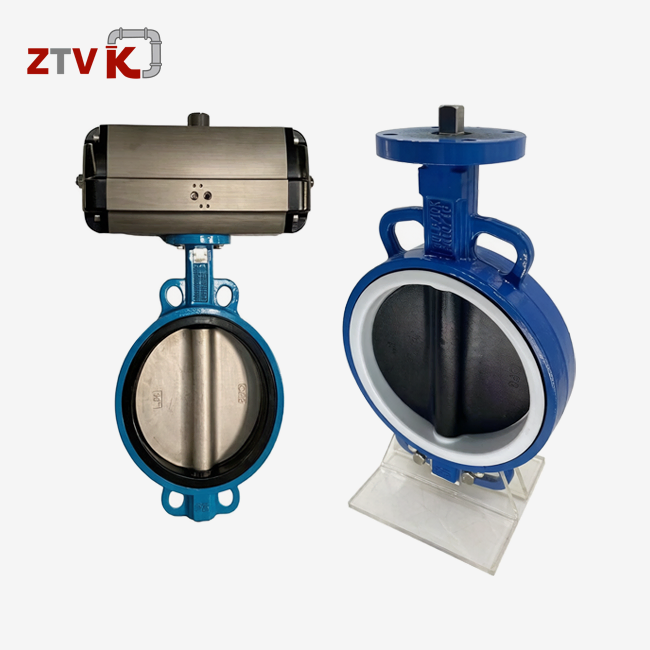
The way the seal works depends on the shape of the surface and how hard the material is. Most modern designs use a metal seat with flexible graphite layers on top of it. This makes a hybrid seal that combines the strength of metal with the flexibility of graphite. ZTVK's valves in sizes DN50 to DN3000 use this hybrid method to ensure bubble-tight shutoff even at pressures from PN6 to PN16 and 150 lb classes.
Operating Principles Behind Metal Seats
As the disc turns into the closed position, the metal closing surfaces meet at an exact angle, usually in the shape of a cone seat. Metal seats need controlled surface pressure and force to keep the seal tight, while soft seats compress. Because these valves have a torque-seated system, the seal gets tighter gradually as the actuator applies force. This makes them great for two-way flow situations where line pressure changes.
Design Elements That Control Performance
The shape of the seat is very important. How evenly pressure is spread across the closing surface is based on the contact angle between the disc and the seat. It doesn't matter what kind of material you use; matching a hard Stellite-faced seat with a slightly softer stainless steel disc keeps the wear resistance high while stopping galling. Temperature capability is directly related to how stable the metal's phases are. For example, carbon steel works well up to 400°C, while duplex stainless grades like 2507 can be used in environments beyond 600°C that are corrosive.
How Do Metals Influence Performance and Applications?
The choice of material affects every part of a valve's performance, from its ability to fight corrosion to its ability to hold up under pressure. It is important to match the features of a material with its practical needs because different metals have different benefits.
Carbon Steel and Ductile Iron for General Service
When mild temperatures and non-corrosive media are present, carbon steel (WCB A216) and ductile iron (GGG40/50) are the most common materials used. These materials are great for municipal water systems and HVAC installations because they are strong and don't cost too much. When used in fresh water, ductile iron bodies with nickel-lined discs protect against rust well. However, WCB carbon steel can handle steam and gas service up to 400°C. Metal-to-metal butterfly valve options are also available for these applications.
Their weakness is that they are easily corroded. Carbon steel needs protective coatings in chloride-rich or acidic environments. For example, ZTVK puts epoxy resin linings on clients' equipment in high-humidity Southeast Asian climates, which extends service life by stopping rust before it starts.
Stainless Steel Grades for Corrosion Resistance
Stainless steel grades SS304, SS316, and their low-carbon versions (SS304L/SS316L) are better at resisting corrosion over a wide pH range. It is common for chemical processes, remote platforms, and food-grade uses to use austenitic stainless steels because they don't react with oxidising acids, chlorides, or seawater.
The amount of molybdenum in 304 and 316 is what makes them different. SS316 has 2 to 3 per cent molybdenum in it, which makes it much more resistant to pitting in chloride environments. This is an important thing to think about for desalination plants or refineries near the coast. Low-carbon versions stop carbide from forming when temperatures drop below -20°C, which can lead to intergranular corrosion during welding or thermal cycling.
Duplex Stainless Steels for Extreme Conditions
Duplex types, such as 2205 and super duplex 2507, have microstructures that are a mix of austenitic and ferritic. This makes them twice as strong as regular stainless steels and keeps their great resistance to rust. When there is a lot of pressure and chlorine in the air, these metals work really well because they can handle both mechanical stress and chemical attack at the same time.
Even SS316 fails in the harshest conditions, like sour gas service, hot brine, and concentrated acids. For super duplex 2507 (1.4529), ZTVK provides disc and body choices for petrochemical clients working with corrosive hydrocarbon streams containing H₂S and CO₂. If a material fails, it could lead to catastrophic safety events.
Cost is part of the deal. Duplex alloys cost three to five times more than carbon steel, but in critical situations, their longer service life and lower frequency of maintenance often make the extra cost worth it. When figuring out the total cost of ownership, a duplex valve that doesn't need to be replaced for 15 years will do better than three carbon steel valves that need to be replaced every five years, even when labour and downtime costs are taken into account.
How Does Metal Choice Affect Operating Ranges?
Temperature and pressure limits are directly related to the qualities of the material. According to ASME B16.34, carbon steel valves can work from -29°C to 425°C. SS316, on the other hand, can work from -196°C (for cold service) and stay strong up to 540°C. Duplex stainless steels can handle a wide range of temperatures, but they really shine when they are under stress from both heat and corrosion.
Pressure ratings are based on the thickness of the wall and the tensile strength of the material. In ductile iron, a DN300 valve body might rate to PN16, but in duplex steel, the same shape can reach PN25 or higher. By using double eccentric geometry and oblique sealing, ZTVK's structural optimisation cuts torque needs by 30%. This lets lighter-duty actuators work with harder metal seats, which lowers the overall cost of the system.
Application Scenarios Where Metal Seats Excel
In petroleum crackers, where temperatures can reach over 500°C and hydrocarbon vapours can damage soft seats, metal-to-metal butterfly valve layouts are most common. Power plants use these valves in steam lines that are very hot, and the rubber seats would break in just a few weeks. In mining, abrasive slurry pipes work better with hard metal surfaces that don't wear away, so the seal stays strong even when solids are in the slurry.
Conversely, soft seats are often better for low-pressure sealing and less expensive at first in clean water systems that work below 80°C, while a metal-to-metal butterfly valve is suitable for applications requiring higher durability. If you know what the application is for, you won't have to describe too much. For example, selecting duplex steel for freshwater at room temperature wastes money that could be used to pay for redundancy elsewhere in the system.
Comparing Metal-to-Metal Butterfly Valves with Other Valve Types
When looking at different valve choices, it's important to know how metal-to-metal butterfly valves compare to others in terms of how well they seal, how much upkeep they need, and how easy they are to install.
Metal-Seated Versus Soft-Seated Butterfly Valves
When the valve is clean and the temperature is moderate, soft-seated valves reliably seal at lower torques and offer bubble-tight shutoff. However, they rarely work above 150°C, and sharp particles damage rubber surfaces, which leads to leaks within months. Metal seats can handle temperatures up to 800°C and don't wear down easily, but they need more seating torque and might not be able to stop leaks completely in very low pressure differences.
Patterns of maintenance are very different. To change soft seats, you have to take the valves off and take the whole thing apart every two to five years, based on how often they are used. Metal seats, especially those with replaceable seal rings, last for decades with little maintenance. For example, ZTVK designs let you change the seal ring without taking the valve out of the pipeline, which cuts down on maintenance downtime by 70%.
How They Compare to Ball Valves?
Ball valves are better at shutting off flow and can handle higher pressures in smaller spaces, but they are very expensive above DN200. Butterfly valves stay cost-effective at big diameters—a DN600 metal-to-metal butterfly valve costs about half of what an equivalent ball valve does, takes up less room, and puts less stress on the pipe's structure.
When a ball valve is half open, the turbulent flow around the ball makes it hard to throttle. This causes cavitation and shaking. Butterfly valves are better for control purposes because they open and close easily between 20° and 70°. But ball valves work better in slurry service with big solids than butterfly discs, which can get stuck.
Flange Standards and Integration Flexibility
Modern metal-to-metal butterfly valves meet multiple flange standards, including ANSI/ASME B16.5, DIN/EN 1092, and JIS B2220. This means they can be used with all pipelines around the world. ZTVK valves come with flanged, wafer, or lug configurations, which lets them be used instead of gate valves or other butterfly valves without having to change the pipe spools.
This standardisation makes buying things easier. When an EPC firm buys a metal-to-metal butterfly valve for a project with sites in both Europe and Asia, they make sure that all of the valves fit by using ISO 5752 face-to-face measurements. This is because different regions have different ways of piping things. Certification to API 609 Category B ensures that dimensions can be swapped out, which makes inventory simpler for distributors who serve a variety of markets.
Conclusion
Choosing the right metal for industrial valves determines whether they meet operational needs or become maintenance problems. Carbon steel and ductile iron are cheap materials that can be used in a wide range of situations. Stainless steel grades protect against rust, and duplex alloys can handle high temperatures and chemicals. In applications where soft seats fail quickly, metal-to-metal butterfly valves work best in harsh, high-temperature, and thermally cycling conditions. When buying something, people have to think about how the material works, how hard the job is, how much it will cost over its lifetime, and what the seller can do. By working with makers that offer full customisation, fast delivery, and quality systems that have been shown to work, businesses can be sure that their value investments will support their long-term running reliability and profitability.
FAQ
1. What temperature ranges do metal-to-metal butterfly valves handle?
Depending on the materials used for the body and seat, metal-to-metal butterfly valves can work at temperatures as low as -196°C and as high as 815°C. Grades of carbon steel can be used up to 425°C, grades of stainless steel up to 540°C, and special alloys can handle even higher temperatures. ZTVK valves use a metal plus flexible graphite seat design that keeps the sealing strong even after heat cycling, which would kill elastomeric seats in hours.
2. How do maintenance needs compare between metal and soft-seated designs?
Usually, soft-seated valves need to have their seals replaced every two to five years. This means that the valve has to be taken apart and the seal has to be replaced. Seal rings that can be replaced on metal-to-metal butterfly valves last 10 to 15 years or more than 50,000 passes before they need to be serviced. ZTVK's design lets you change the seal ring while the valve is still in place. This cuts down on maintenance work by about 70% and keeps production from stopping while the valve is being taken out.
3. Which metal alloys provide the best corrosion resistance?
Super duplex stainless steel 2507 is the most corrosion-resistant metal that is widely used. It can handle chlorides, acids, and sour gas service, which is something that regular stainless steels can't do. SS316, which has molybdenum in it, doesn't pit in acidic or saltwater conditions. In corrosive media, carbon steel needs protective coatings. The choice of material must fit the chemistry of the media. ZTVK's expert team helps match the properties of alloys to the needs of an application, ensuring the best performance and durability.
Partner with ZTVK for Reliable Metal Butterfly Valve Supply
In industrial settings, valve devices must work consistently even when conditions are tough. ZTVK makes metal-to-metal butterfly valves with sizes from DN50 to DN3000 and double eccentric oblique sealing, which lowers the operating torque by 30% and increases the cycle life to more than 50,000 operations. We keep more than 2,000 standard units in stock at our Tianjin facility so that we can send them quickly, within three to seven days. Our facility is certified by ISO9001, ISO14001, and OHSAS18001, and it follows all API, ANSI, DIN, and JIS standards. We offer OEM branding, technical plans, and fast production when project deadlines call for it. Whether you need carbon steel for city infrastructure, stainless steel for chemical processing, or duplex alloys for offshore petroleum platforms, we can help. Get in touch with our engineering team at ktec86961886@163.com to talk about your needs and find out why global distributors and EPC contractors choose ZTVK as their preferred metal-to-metal butterfly valve manufacturer.
References
1. American Petroleum Institute. (2018). API Standard 609: Butterfly Valves - Double Flanged, Lug- and Wafer-Type. Washington, DC: API Publishing Services.
2. ASME International. (2020). ASME B16.34: Valves - Flanged, Threaded, and Welding End. New York: American Society of Mechanical Engineers.
3. Davis, J.R. (2000). Corrosion of Weldments. Materials Park, OH: ASM International.
4. Borden, G. & Friedman, P. (2011). Control Valves: Practical Guides for Measurement and Control. Research Triangle Park, NC: ISA.
5. Gurevich, D. (2016). Metallurgy for Non-Metallurgists: Second Edition. Materials Park, OH: ASM International.
6. Nesbitt, B. (2011). Handbook of Valves and Actuators: Valves Manual International. Oxford: Elsevier Science.
Send us your valve requirements and our team will provide professional solutions and fast quotations.
RELATED INDUSTRY KNOWLEDGE