- English
- French
- German
- Portuguese
- Spanish
- Russian
- Japanese
- Korean
- Arabic
- Greek
- German
- Turkish
- Italian
- Danish
- Romanian
- Indonesian
- Czech
- Afrikaans
- Swedish
- Polish
- Basque
- Catalan
- Esperanto
- Hindi
- Lao
- Albanian
- Amharic
- Armenian
- Azerbaijani
- Belarusian
- Bengali
- Bosnian
- Bulgarian
- Cebuano
- Chichewa
- Corsican
- Croatian
- Dutch
- Estonian
- Filipino
- Finnish
- Frisian
- Galician
- Georgian
- Gujarati
- Haitian
- Hausa
- Hawaiian
- Hebrew
- Hmong
- Hungarian
- Icelandic
- Igbo
- Javanese
- Kannada
- Kazakh
- Khmer
- Kurdish
- Kyrgyz
- Latin
- Latvian
- Lithuanian
- Luxembou..
- Macedonian
- Malagasy
- Malay
- Malayalam
- Maltese
- Maori
- Marathi
- Mongolian
- Burmese
- Nepali
- Norwegian
- Pashto
- Persian
- Punjabi
- Serbian
- Sesotho
- Sinhala
- Slovak
- Slovenian
- Somali
- Samoan
- Scots Gaelic
- Shona
- Sindhi
- Sundanese
- Swahili
- Tajik
- Tamil
- Telugu
- Thai
- Ukrainian
- Urdu
- Uzbek
- Vietnamese
- Welsh
- Xhosa
- Yiddish
- Yoruba
- Zulu
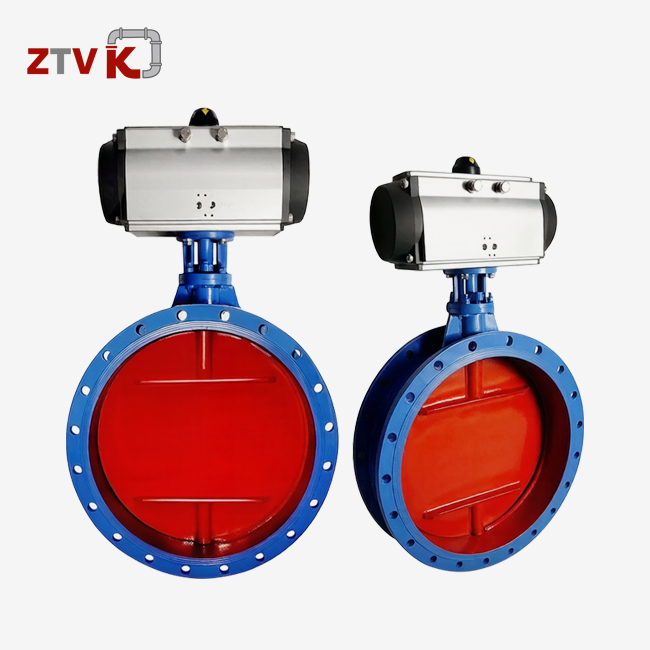
Pneumatic ventilation butterfly valve
Nominal Pressure: 0.1~0.6Mpa (If other pressure standards are required, please specify when placing an order)
Valve Body :Material Carbon Steel (C), Stainless Steel 304 (P), Stainless Steel 316 (R)
Sealing Material: Retaining Ring (W)
Medium Temperature: W3: -20~250°C, W4: -29~425°C, W5: -29~650°C
Connection Method :Wafer, Flange
Pneumatic Actuator :JLAT Series, JLAW Series, Imported Actuator Series
Operating Mode: Double - acting, Normally - closed Single - acting, Normally - open Single - acting
Pneumatic Ventilation Butterfly Valve for Gas & Air Control — ZTVK Factory Direct
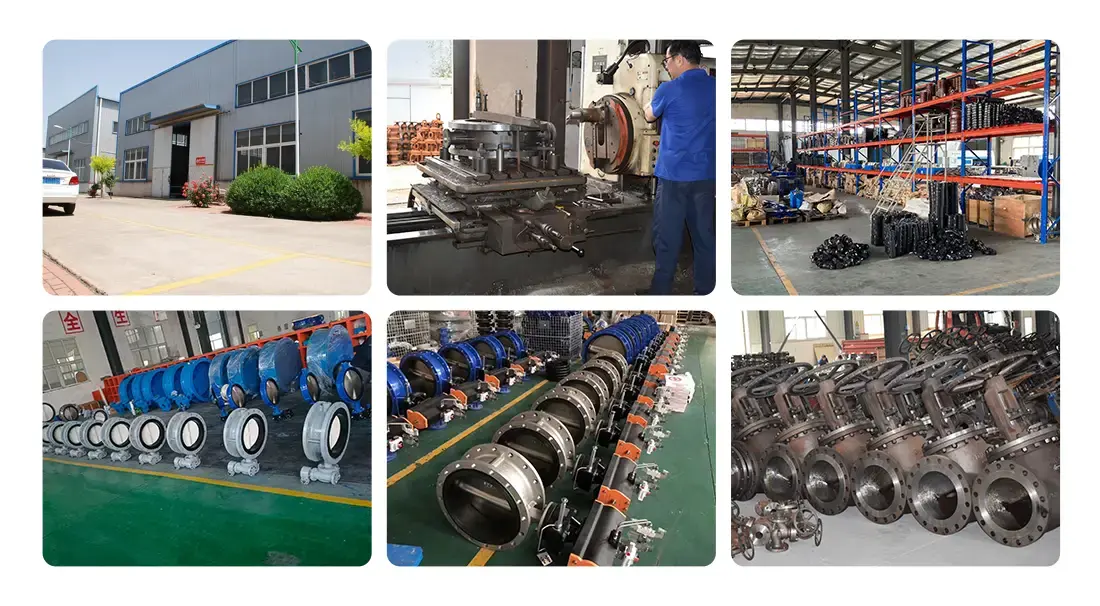
ZTVK FLUID CONTROL EQUIPMENT (TIANJIN) CO., LTD. has over 15 years of industrial valve manufacturing experience. Our pneumatic ventilation butterfly valve line covers nominal diameters from DN50 to DN2200 mm, operating pressures of 0.1–0.6 MPa, and medium temperatures from -20°C to 650°C. Wafer or flanged connections are possible for valve bodies in Carbon Steel (WCB), Stainless Steel 304, Stainless Steel 316. Pneumatic actuators JLAT series, JLAW series, imported actuator choices, double acting, generally closed single acting, normally open single acting.
What Is a Pneumatic Ventilation Butterfly Valve?
A pneumatic ventilation butterfly valve is an industrial flow control device built for automated regulation and isolation of gas, air, flue gas, and dust-carrying media in large ductwork and low-pressure pipelines.
It is different from conventional liquid process valves in that it has a lightweight, open-frame disk design that reduces pressure loss and reacts rapidly to control inputs. The flow is opened, closed or modulated by rotating the disk from 0° to 90° using a compressed air powered rack-and-pinion or scotch yoke actuator.
Controlling enormous volumes of air in HVAC or metallurgical ductwork is challenging without automation, and manual valves are impractical in high temperature or dangerous gas situations. This sort of valve is the immediate answer to such operating problems.
Key Technical Specifications
|
Parameter |
Details |
|
Nominal Diameter |
DN50 – DN2200 mm |
|
Nominal Pressure |
PN10 / PN16 (0.1–0.6 MPa) |
|
Medium Temperature |
W3: -20~250°C / W4: -29~425°C / W5: -29~650°C |
|
Suitable Media |
Water, gas, oil, flue gas, dust-laden air |
|
Valve Body Material |
Carbon Steel (WCB), SS304, SS316 |
|
Sealing Material |
Retaining Ring (W); metal or soft seat options |
|
Connection Method |
Wafer, Flange |
|
Pneumatic Actuator |
JLAT Series / JLAW Series / Imported Series |
|
Operating Mode |
Double-acting / Normally-closed / Normally-open |
|
Air Supply Pressure |
4–8 bar |
|
Leakage Class |
~1%–3% (ANSI/FCI 70-2 Class II or III) |
|
Standards |
ISO, API 609, GB/T 12238, DIN, ANSI, JIS, BS |
Core Functions and Working Principle
The valve has 3 key purposes in your pipeline system:
Cut-off: The disk closes the flow stream entirely and stops the passage of media in the closed position.
Flow regulation: The disk angle is accurately regulated by an electro-pneumatic positioner using a 4–20 mA signal to manage airflow volume, pressure or temperature, in real-time. Not simply on/off control.
Automatic control: Pneumatic actuator turns the valve stem and disk between 0° and 90°, using compressed air. This supports interaction with DCS or PLC systems and minimizes human involvement in distant or dangerous places.
The single-acting (spring return) actuator automatically returns to a predetermined safe position (fail-close or fail-open) on loss of air supply. The double acting actuator holds at its last position on air failure. This is acceptable in settings where flow freeze is not a safety problem.
Materials and Sealing Performance
For ordinary temperature operation, carbon steel (WCB) bodies with metal-to-metal hard seats are effective for dusty and abrasive gas streams. The disk shape is intended to minimize particle accumulation that may otherwise cause jamming over time.
For flue gas service over 250°C, the assembly is equipped with extended stem brackets and heat dissipation fins. The thermal barrier prevents radiant heat from the pipeline (which has been known to cause failure in ventilation valve installs without good thermal management) from reaching the actuator seals and internal grease.
Soft seat variations are offered for lower temperature applications requiring tighter cutoff. Selection of body material between WCB, SS304 & SS316 is dependent on medium chemistry and operating temperature range.
Industry Applications
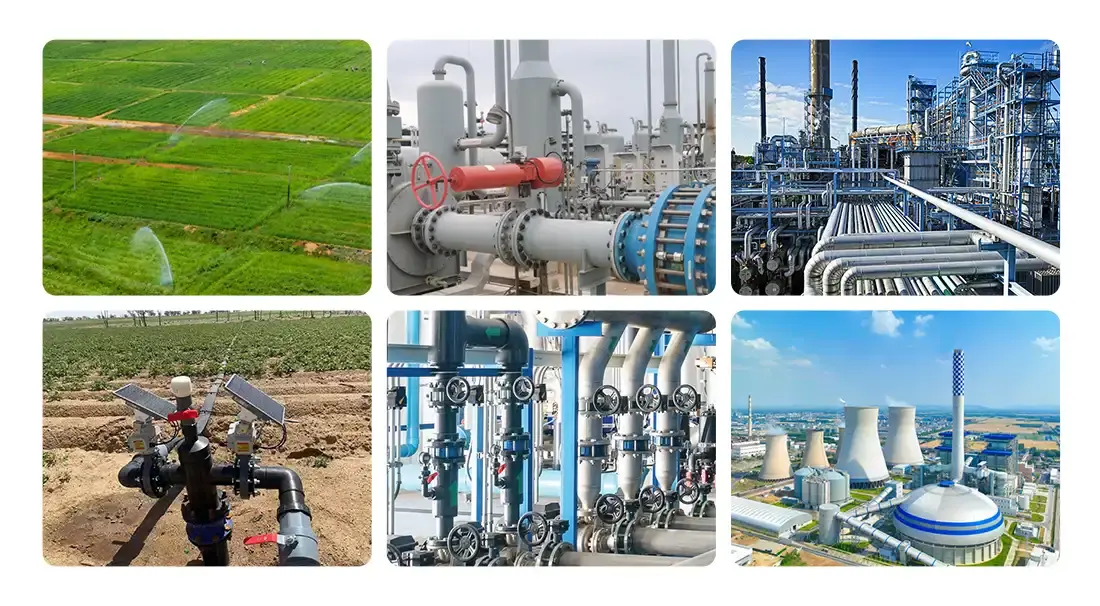
Flue Gas Desulfurization (FGD) and De-nitrification:These valves are used in coal-fired power stations and steel mills to control hot abrasive flue gas entering scrubbers. Metal structure is resistant to sulfur and nitrogen compounds and fly ash erosion. Pneumatic actuation allows for DCS-based emission control.
Industrial kilns and RTOs (Regenerative Thermal Oxidizers): The valve controls the intake of combustion air and the exhaust of VOCs in ceramic manufacturing and chemical waste treatment plants. Its capacity to endure frequent cycling and quick temperature swings makes it suitable for RTO combustion balancing systems.
Ventilation and dust collection systems: These valves are used in large ductwork – commonly DN1000 and higher – in mining and cement industries to direct airflow to bag filters or electrostatic precipitators. Personnel are kept away from dust dangerous locations by remote pneumatic operation.
Other industries where this valve is employed include petrochemical, power generation, metallurgy, natural gas distribution, paper & pulp, food processing and water drainage.
Quality Control Process
ZTVK undertakes inspections at many stages before shipping.
Dimensional and weld inspection: Face-to-face measurements and flange drilling are checked according to GB/T 12238 and API 609. Magnetic particle inspection (MPI) is done on welds of large manufactured bodies for stress cracking.
Actuator torque and cycle tests: All valves are bench tested for smooth operation at low air supply pressure. Hysteresis in binding or positioning is checked by a dry-cycle test of 50 to 100 cycles.
Leakage rate verification: Tested with low-pressure air, leakage is measured and verified within design class – less than 1% or 3% of flow capacity per ANSI/FCI 70-2 Class II or III.
Coating thickness check: Dry film thickness (DFT) of epoxy or heat resistant paint is checked to match specification prior to shipping for outdoor or corrosive usage.
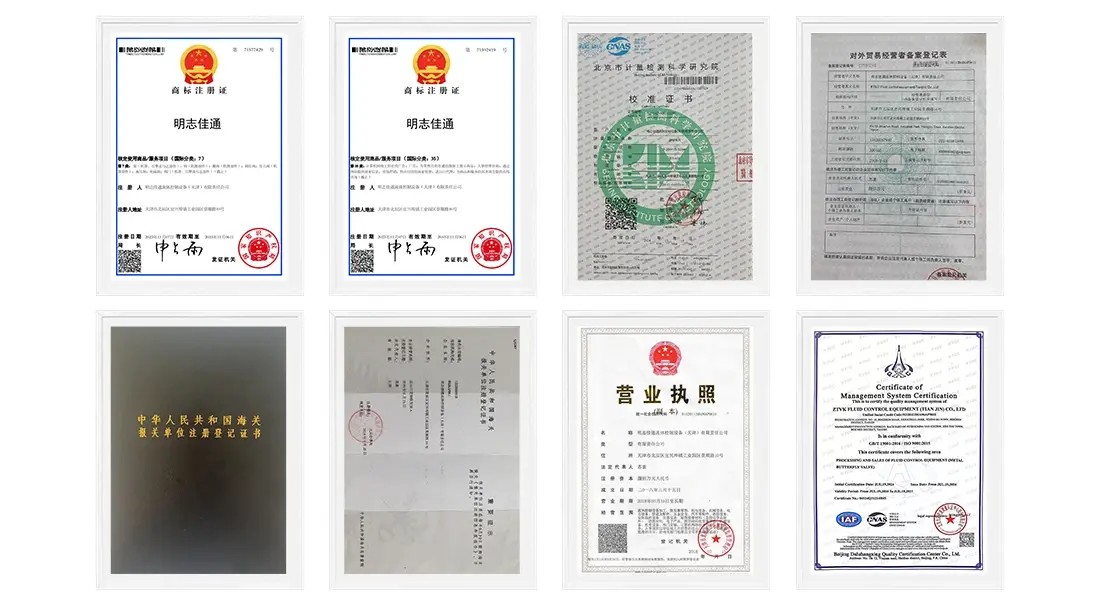
ZTVK has quality certificate ISO 9001, ISO 14001 and OHSAS 18001. You may study certification documentation and we are able to organize third party factory inspections if you would like.
Customization and Delivery
ZTVK supports OEM and ODM services for this Pneumatic ventilation butterfly valve line. OEM options include customer branding, custom logos, nameplates, and packaging. ODM services cover valve body structure modification, sealing material selection, connection configuration changes, and adaptation to specific pressure, temperature, and media requirements.
Increased stem protection is offered for dusty areas such as those often found in the Middle East. It is possible to use epoxy resin anti-corrosion treatment in humid Southeast Asian environment.
Standard items (DN50-DN600): Standard production and delivery timeframes apply following order confirmation, please contact us for current lead times.
Custom products: 15-25 days standard manufacture time. Depending on the intricacy of the specification, expedited schedules may be possible – call us to discuss your project timetable.
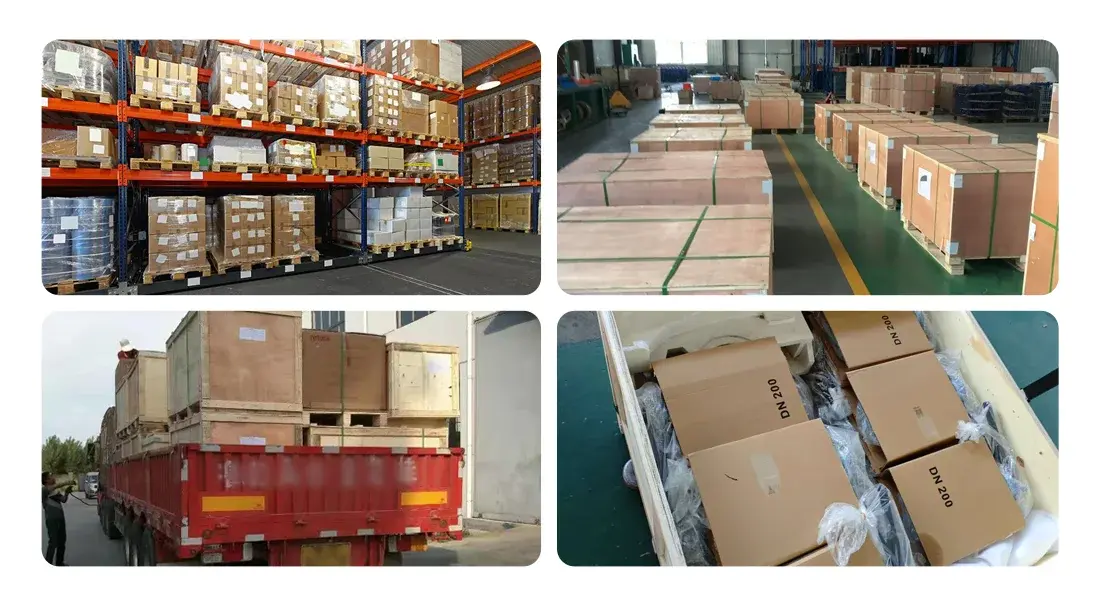
The plant is around 50 km far away from Tianjin Port, for FOB Tianjin Xingang or CIF destination-port shipping. The export packing includes hardwood cartons, moisture-proof film and attaching brackets which conforms to ISPM 15 regulations.
Frequently Asked Questions
Q1. What is the difference between a butterfly valve and a typical pneumatic butterfly valve?
A: Ventilation valves are used in low-pressure applications (up to 0.6 MPa), and usually have a controlled leakage rate and metal seats or welded construction. Normal process valves are designed for less leakage at greater pressures. With the ventilation type, the emphasis is more on flow management and minimum pressure drop than on total tight shutdown.
Q2: Is this valve modulating flow or is it on/off only?
A: It does both. The disk angle is precisely adjustable for continuous airflow control when coupled with an electro-pneumatic positioner that accepts a 4–20 mA input.
Q3: What if the supply of air runs out?
A: A single-acting actuator (spring return) travels to a predefined safety position, fail-close or fail-open. A double-acting actuator keeps its last position on loss of air. If holding position is not suitable for your application, an air reserve tank may be installed as an auxiliary precaution.
Q4. How is the actuator protected for high temperature flue gas service?
A: For the medium temperature range above 250°C, the assembly has an enlarged stem bracket with heat dissipation fins. These provide a thermal barrier protecting actuator seals and interior components from pipeline heat.
Q5: How frequently should seals be checked in dusty areas such as cement or mining?
A: Maintenance intervals vary depending on operational circumstances and local maintenance regulations. A periodic running of a complete open/close cycle reduces the risk of jamming due to ash or dust build-up. The shape of the disk helps to prevent the build-up of particulates between planned examinations.
Q6: What technical help do you provide after purchase?
A: ZTVK offers presale valve selection, CAD drawings, 3D models, installation advice, troubleshooting manuals and access to product inspection data. Contact us to discuss after-sales service terms unique to your purchase.
Contact Us
For Pneumatic ventilation butterfly valve quotes, technical specifications, or project consultation, contact us at ktec86961886@163.com. We respond to all inquiries within one business day.
Send us your valve requirements and our team will provide professional solutions and fast quotations.