- English
- French
- German
- Portuguese
- Spanish
- Russian
- Japanese
- Korean
- Arabic
- Greek
- German
- Turkish
- Italian
- Danish
- Romanian
- Indonesian
- Czech
- Afrikaans
- Swedish
- Polish
- Basque
- Catalan
- Esperanto
- Hindi
- Lao
- Albanian
- Amharic
- Armenian
- Azerbaijani
- Belarusian
- Bengali
- Bosnian
- Bulgarian
- Cebuano
- Chichewa
- Corsican
- Croatian
- Dutch
- Estonian
- Filipino
- Finnish
- Frisian
- Galician
- Georgian
- Gujarati
- Haitian
- Hausa
- Hawaiian
- Hebrew
- Hmong
- Hungarian
- Icelandic
- Igbo
- Javanese
- Kannada
- Kazakh
- Khmer
- Kurdish
- Kyrgyz
- Latin
- Latvian
- Lithuanian
- Luxembou..
- Macedonian
- Malagasy
- Malay
- Malayalam
- Maltese
- Maori
- Marathi
- Mongolian
- Burmese
- Nepali
- Norwegian
- Pashto
- Persian
- Punjabi
- Serbian
- Sesotho
- Sinhala
- Slovak
- Slovenian
- Somali
- Samoan
- Scots Gaelic
- Shona
- Sindhi
- Sundanese
- Swahili
- Tajik
- Tamil
- Telugu
- Thai
- Ukrainian
- Urdu
- Uzbek
- Vietnamese
- Welsh
- Xhosa
- Yiddish
- Yoruba
- Zulu
What Is the Best Stainless Butterfly Valve for Industry?
If you are a procurement manager, distributor, or project engineer searching for a reliable stainless butterfly valve, the short answer is this: the best choice depends on your operating pressure, fluid type, temperature range, and connection standard. A CF8M (SS316) butterfly valve with PTFE or EPDM seating, rated to PN16 and conforming to ASME B16.5 flanged end connections, covers the widest range of demanding industrial applications. Whether you are sourcing for water treatment, petrochemical pipelines, or HVAC systems, understanding the core specifications separates a confident purchase from a costly mistake.


Understanding Stainless Steel Butterfly Valves
What Makes Them Different from Standard Valves
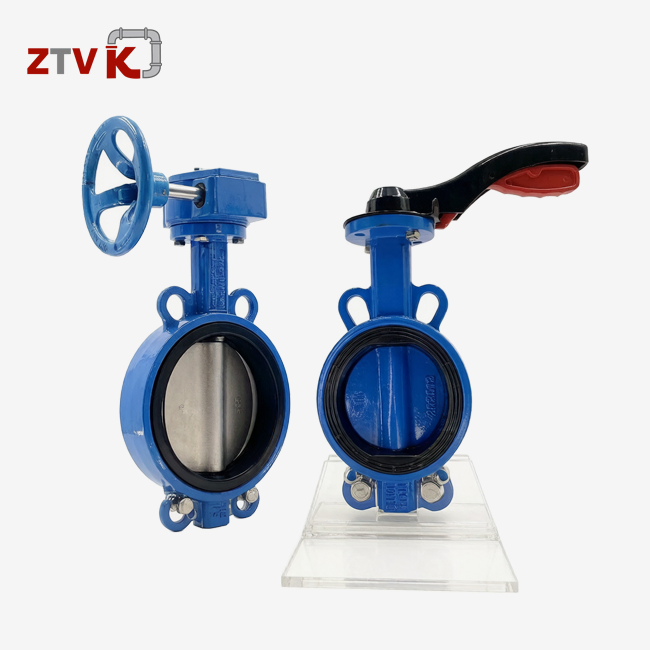
A stainless butterfly valve is a quarter-turn rotating valve that controls the flow of fluid by mounting a disk on the middle shaft. It shuts off quickly and with little pressure drop, unlike gate valves or globe valves. The disk can turn 90 degrees from fully open to fully closed, which makes it easy to use and saves energy. The Valve Manufacturers Association of America (VMA) says that about 17% of all industrial valves shipped in North America are butterfly valves. This shows how widely they are used across many industries.
Core Components and Material Grades
Most valve bodies are made from CF8 (SS304) or CF8M (SS316). CF8M has a much higher PREN (Pitting Resistance Equivalent Number) than CF8 because it has 2–3% molybdenum in it. This makes it the best grade for environments that are acidic or high in chloride. DI (ductile iron), CF8, CF8M, and aluminum bronze are the disk materials that can be used. Each is best for a different type of media. Depending on the torque and corrosion needs, the shaft is made from SS410/416, SS304, or SS316. Chemical compatibility and temperature limits are set by the seat material, which can be EPDM, Nitrile, White EPDM, PTFE, or Viton. These mixtures of parts give engineers fine-grained control over how well valves work before they are bought.
Types and Designs of Stainless Steel Butterfly Valves
Wafer vs. Flanged End Connections
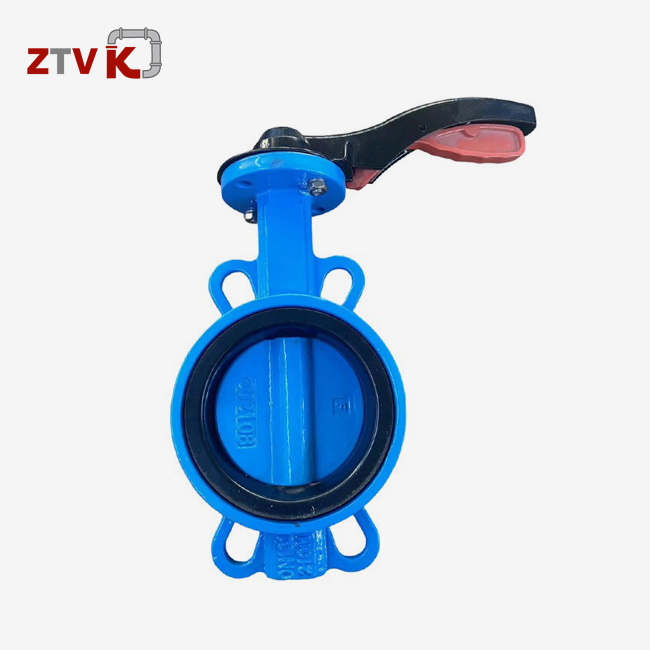
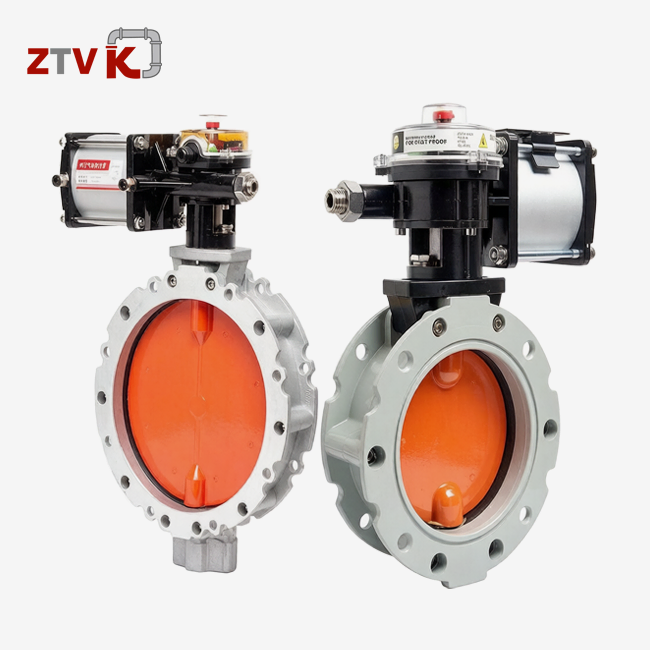
When buying things for industry, the two most common types are wafer type and flanged end (ASME B16.5, 150# or 300#). Wafer stainless butterfly valves use bolts to hold themselves between two pipeline flanges. This makes them small and inexpensive for normal installs. But flanged butterfly valves are more rigid and can support dead-end service, which means that you can remove the pipes downstream for repair while the valve keeps the full pressure upstream. The flanged shape is the most physically sound choice for long runs or places with a lot of vibration.

Pressure Ratings and Seat-Disc Compatibility
PN10 (145 PSI) valves are good for general water supply, HVAC, and drainage systems. PN16 (232 PSI) rated units can handle tougher jobs like fire protection networks and industrial process lines. The seat-disc pairing is very important. PTFE seats are the most resistant to chemicals and work reliably up to 200°C, while EPDM seats work great with water and steam. For chemical and oil conditions, Viton (FKM) is the best material for a seat. It is necessary to match the seat to the medium because it affects the service life and leak integrity.
Stainless butterfly valves always work better than those made of carbon steel in surroundings that are salty or very pure. Even though carbon steel may be cheaper up front, the higher cost of upkeep is caused by the faster rate of corrosion in active media. In pipeline systems that are subjected to chloride, a study in the Journal of Materials Engineering and Performance showed that SS316 parts last a lot longer than carbon steel versions.
How to Choose the Best Stainless Butterfly Valve for Your Industry
The F-1 Criteria Screening Approach
It's easy to choose the right valve when you look at four main factors in order: the type of fluid, the pressure-temperature rating, the connection standard, and the way the valve is activated. In real life, this structure works like this:
- Fluid type: strong acids or fuels need a CF8M body with Viton seats. CF8 with EPDM seats works well for clean water or HVAC circuits. For wear protection, slurry or gritty media may need an aluminum bronze disk.
- Pressure-temperature range: PN16 valves with PTFE seats can handle high-pressure lines up to 200°C, while PN10 valves with EPDM seats are good for low-pressure water and HVAC uses.
- Connection standard: The wafer type works well for retrofits and projects that need to save money. It is necessary to have a flanged end that meets ASME B16.5 (150#/300#) for high-pressure or dead-end service.
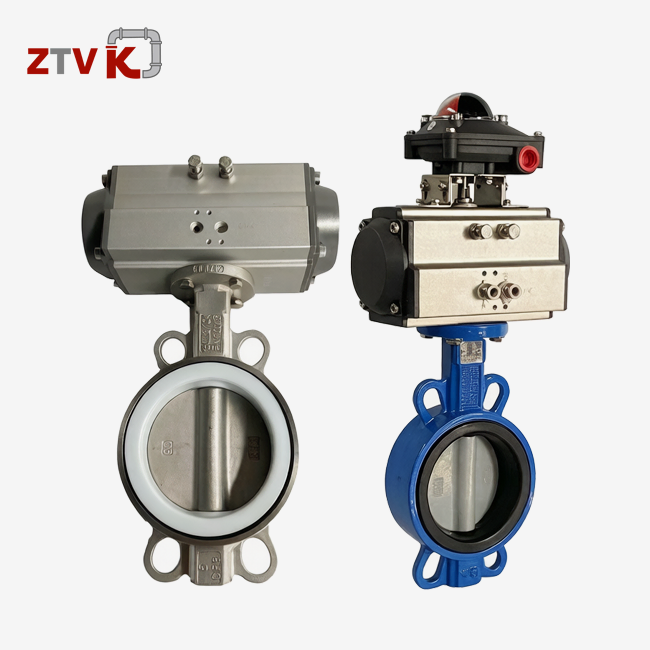
- Actuation method: For lines that are only cycled occasionally, a manual handwheel can be used. For automated control, ISO 5211 actuator-ready designs let you mount single-acting or double-acting pneumatic actuators directly without having to use adaptor plates. This saves a lot of time during installation.
Before a buy order is made, these four factors get rid of most of the mistakes. The actuation system described here has a body made of extruded aluminum that has been hard-anodized. The caps and rack are also made of aluminum that has been pressure die-cast. This makes the system durable while keeping its weight low, which is helpful for installing big panels or upgrading remote automation.

Credentials for supplier compliance are just as important. Quality assurance can be seen for valves that meet API 598 (for pressure tests), API 609 (for butterfly valve design), and ASME B16.5 (for flange measurements). Before placing a large order, you should always ask for proof of the hydrostatic shell test and the seat closing test.
Maintenance, Common Issues, and Operational Tips
Routine Care That Extends Service Life
A stainless butterfly valve is easy to take care of, but you have to do it the same way every time. Checking the seat every three months for signs of wear or chemical breakdown finds problems before they become shutdowns. Check the shaft packing gland for stem leakage. If this is found, the problem is usually fixed by tightening all of the packing nuts evenly. The shaft bearings of valves that are used a lot (more than 10,000 times a year) should be oiled every six months.
Butterfly valves usually break because the seat wears out first, then the disc-to-seat leaks because of particle contamination. A screen ahead of the valve stops the disc and seat from wearing away a lot faster if it is put in a line with suspended solids. In pneumatic units, actuator problems are often caused by moisture in the air supply. This problem can be reliably fixed by adding a filter-regulator upstream of the actuator. Modern designs have an ISO 5211 direct-mount actuator link that makes replacement easier. You can switch out an actuator in minutes without taking the valve out of the pipeline.
Where and How to Buy Stainless Steel Butterfly Valves
Sourcing and Bulk Procurement Considerations
When buying a lot of stainless butterfly valves, the two things that pose the most project risk are the supplier lead time and the certification paperwork. Distributors and EPC contractors always say that inconsistent product quality and late shipments are the worst things about buying. The first thing you should do is make sure that the supplier has ISO 9001 quality management certification. This shows that the production, inspection, and testing processes are in line with a written standard that can be checked.
One real differentiator for OEM buyers is the ability to change the disk material, seat compound, shaft grade, and connection type without having to wait a long time for production. When suppliers keep standard models (DN50–DN600) in stock and confirm production processes for non-standard models, buying teams can be sure of their schedules and use project-based purchasing.
Conclusion
When the right body material, seat compound, pressure grade, and connection standard are used with a stainless butterfly valve, it has a long service life, low upkeep costs, and effective flow control in HVAC, petrochemical, municipal, and water treatment uses. The widest range of industrial applications is covered by CF8M with a PN16 pressure rating and PTFE or Viton seating. Before agreeing to a large order, you should always check the supplier's ISO 9001 certification, API 598 test reports, and ASME B16.5 dimensional compliance. The most effective way to get uniform quality over many procurement rounds is to choose a manufacturer with in-house production and written QC methods.
FAQ
1. What pressure ratings are standard for industrial stainless butterfly valves?
Most connections use PN10 (about 145 PSI) and PN16 (about 232 PSI), which are the same as ASME Class 150 and Class 300 flanged connections. Most applications that deal with water supply, HVAC, and drainage work well within PN10. PN16 is usually required for process lines with higher pressures.
2. What is the difference between CF8 and CF8M valve bodies?
When it comes to casting, CF8 is the same as SS304. CF8M is cast in the same way as SS316, but it has 2–3% molybdenum in it, which makes it much more resistant to chloride pitting and chemical attack. CF8M is the right specification for environments with salt water, acidic media, or chemical processing.
3. How do I choose between EPDM and PTFE seats?
When heated to about 120°C, EPDM works well with water, steam, and mild chemicals. PTFE can handle temperatures up to 200°C and a wider range of chemicals, which makes it the best choice for seats in harsh chemical or high-temperature process lines.
4. Can stainless butterfly valves be upgraded to pneumatic actuation?
Single-acting or double-acting pneumatic actuators can be directly mounted on valves with an ISO 5211 actuator interface, so the valve body doesn't need to be changed. This means that upgrades to automation can be done quickly and cheaply.
Partner with ZTVK for Reliable Stainless Butterfly Valve Supply
ZTVK makes certified stainless butterfly valves that meet ISO 9001, CE, and API standards. They can support OEM branding and large orders, and regular DN50–DN600 types can be sent out in 3–7 days. ZTVK is a confirmed producer of stainless butterfly valves that is located 50 km from Tianjin Port. They offer low prices and a stable global supply chain. Contact the team today at ktec86961886@163.com to request a quote or download the product catalog.
References
1. Valve Manufacturers Association of America. VMA Market Report: Industrial Valve Shipment Data. VMA, 2022.
2. ASM International. Properties and Selection: Stainless Steels, Tool Materials and Special-Purpose Metals. ASM Handbook, Vol. 3, 2016.
3. Journal of Materials Engineering and Performance. Corrosion Behavior of Austenitic Stainless Steel in Chloride Environments. Springer, 2021.
4. American Society of Mechanical Engineers. ASME B16.5: Pipe Flanges and Flanged Fittings. ASME, 2017.
5. American Petroleum Institute. API 598: Valve Inspection and Testing. API, 2020.
6. American Petroleum Institute. API 609: Butterfly Valves — Double Flanged, Lug- and Wafer-Type. API, 2016.
Send us your valve requirements and our team will provide professional solutions and fast quotations.
RELATED INDUSTRY KNOWLEDGE