- English
- French
- German
- Portuguese
- Spanish
- Russian
- Japanese
- Korean
- Arabic
- Greek
- German
- Turkish
- Italian
- Danish
- Romanian
- Indonesian
- Czech
- Afrikaans
- Swedish
- Polish
- Basque
- Catalan
- Esperanto
- Hindi
- Lao
- Albanian
- Amharic
- Armenian
- Azerbaijani
- Belarusian
- Bengali
- Bosnian
- Bulgarian
- Cebuano
- Chichewa
- Corsican
- Croatian
- Dutch
- Estonian
- Filipino
- Finnish
- Frisian
- Galician
- Georgian
- Gujarati
- Haitian
- Hausa
- Hawaiian
- Hebrew
- Hmong
- Hungarian
- Icelandic
- Igbo
- Javanese
- Kannada
- Kazakh
- Khmer
- Kurdish
- Kyrgyz
- Latin
- Latvian
- Lithuanian
- Luxembou..
- Macedonian
- Malagasy
- Malay
- Malayalam
- Maltese
- Maori
- Marathi
- Mongolian
- Burmese
- Nepali
- Norwegian
- Pashto
- Persian
- Punjabi
- Serbian
- Sesotho
- Sinhala
- Slovak
- Slovenian
- Somali
- Samoan
- Scots Gaelic
- Shona
- Sindhi
- Sundanese
- Swahili
- Tajik
- Tamil
- Telugu
- Thai
- Ukrainian
- Urdu
- Uzbek
- Vietnamese
- Welsh
- Xhosa
- Yiddish
- Yoruba
- Zulu
How Does a Butterfly Valve for Chilled Water System Improve Flow?
By lowering pressure drop and allowing for exact flow modulation thanks to its streamlined disc form, a butterfly valve for chilled water system improves flow. The butterfly valve's thin disc turns 90 degrees to fully open, making very little resistance. This is different from gate or globe valves, which block flow routes. This quarter-turn mechanism lets it respond quickly to changing cooling needs while still keeping an ISO 5208-compliant bubble-tight shutdown. The concentric or double-offset disc design makes sure that flow patterns are smooth. This stops turbulence, which in HVAC systems lowers system performance and makes energy use go up.
Understanding Butterfly Valves in Chilled Water Systems
Because they solve problems that HVAC workers and system designers face every day, the butterfly valve for chilled water systems has become the best choice for chilled water uses. The main goal of all the projects I work on, whether they are for city planning teams or data center cooling projects, is to maximize flow efficiency while minimizing room and maintenance needs.
Design Fundamentals and Operating Principles
Most of the construction is a spherical disc attached to a spinning tube in the opposite direction of the flow. The disc flattens with the flow as the valve opens, displaying just the fluid's thin border. This design naturally creates less turbulence than gate valves, which need a wedge to be totally removed, or ball valves, which add a spherical chamber to change flow shape.
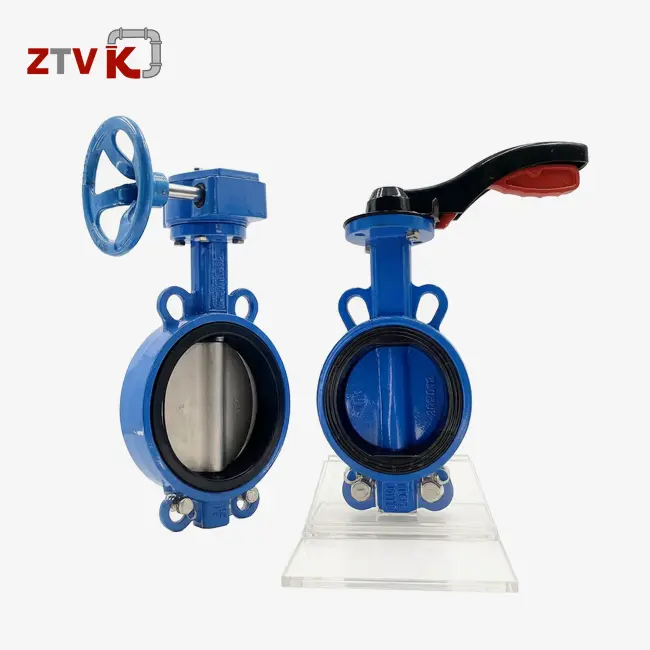
Most chilled water systems employ wafer-type connectors because they fit tightly between flanges and decrease system size. This helps in crowded mechanical rooms. The valve body is commonly ductile iron (DI/QT450), which is strong and permits PN10 and PN16 pressures. The DN40–DN1200 sizes can be utilised for air handlers and district cooling transmission lines.
Material Selection for Chilled Water Compatibility
In condensation-prone areas, material choice affects reliability. The valve disc might be malleable iron, CF8 stainless steel, CF8M stainless steel, or aluminium bronze, depending on the water type and rustiness. EPDM, NBR, PTFE, and VITON seat materials handle heat and chemicals differently. EPDM is ideal for chilled water since it doesn't break down in ozone and stays flexible from 4°C to 12°C, which is typical for cooling systems.
Actuation Methods Tailored to Control Needs
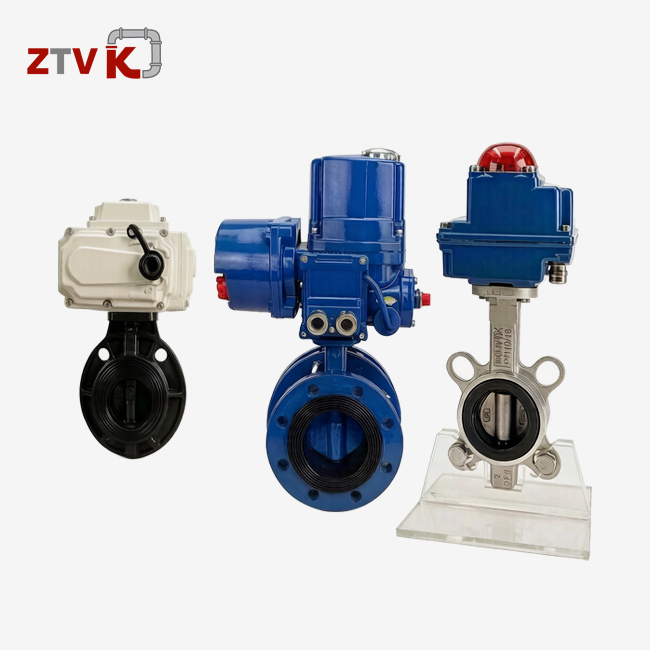
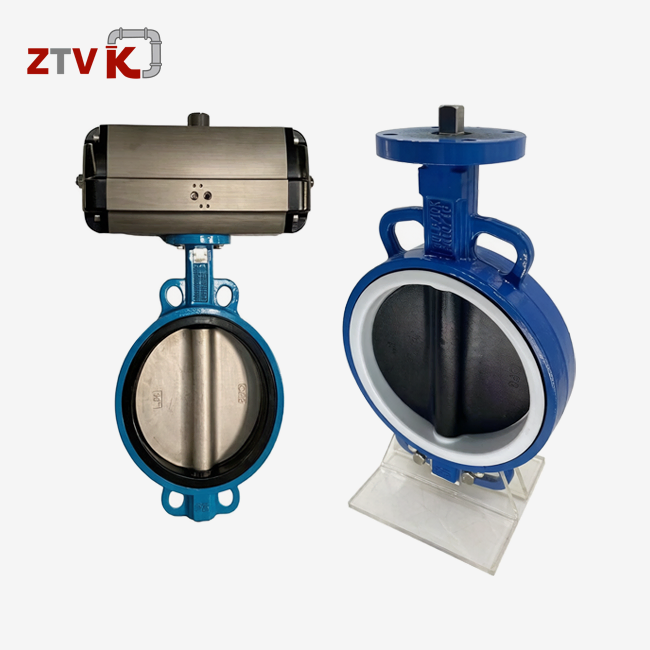
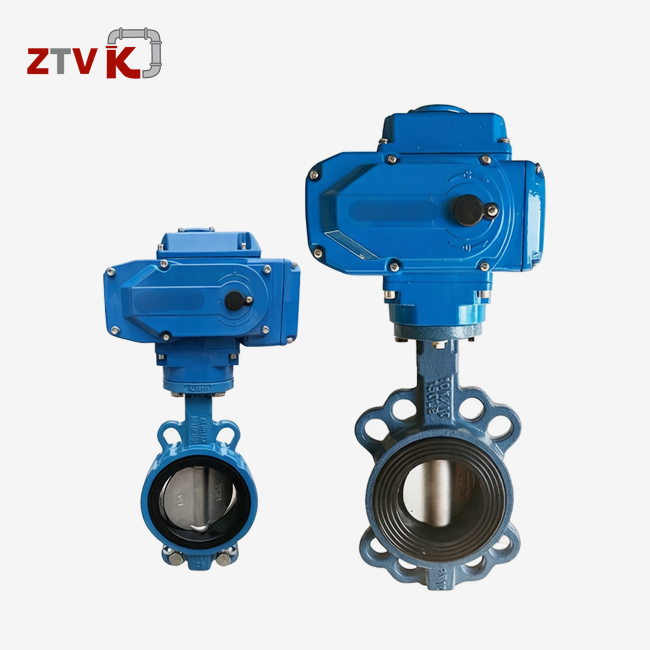
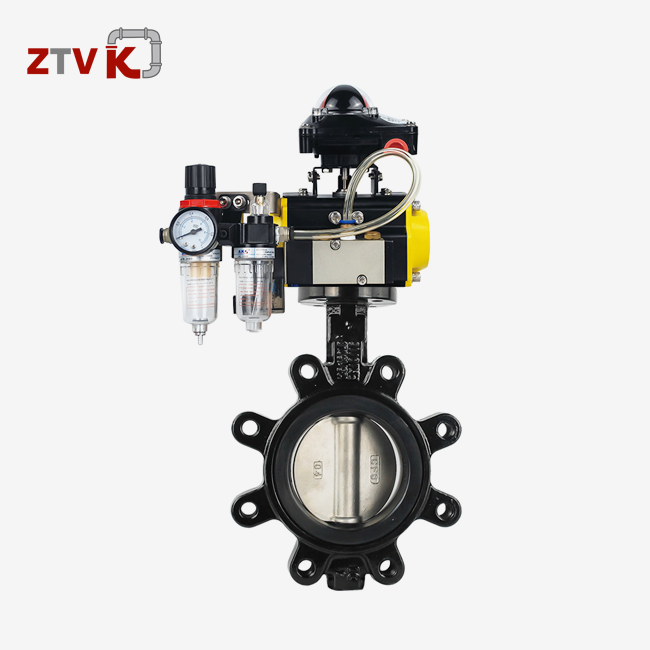
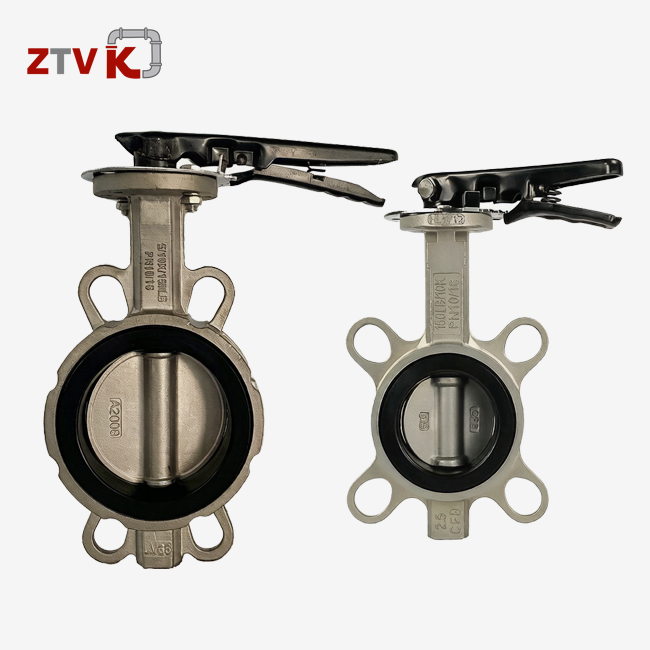
Multiple control options provide operational flexibility. Hand lever action is excellent for smaller, easy-to-reach valves. Worm gear mechanisms work better for larger diameters. Electric actuators offer precise modulating control location, and pneumatic actuators may automatically balance load with building management systems. All actuator types operate with the ISO5211 mounting standard, making maintenance and upgrades easy.
How Butterfly Valves Improve Flow in Chilled Water Systems?
Flow improvement in a butterfly valve for chilled water system shows up in a number of linked performance traits that directly lead to lower running costs and higher system stability.
Minimizing Pressure Drop Across the Valve
Pump energy waste occurs when the pressure drops. Traditional gate valves open entirely, but water still frictionally travels via the tiny gate passage. Butterfly valves solely reveal disc thickness to the flow stream. Tests demonstrate that pressure decreases 30% less than with gate valves of the same size and fully open. This decrease allows smaller pumps to meet desired flow rates, lowering capital costs and power usage.
Even when completely open, the narrow disc profile—often 10 to 15 mm in tiny valves—keeps Cv high. High Cv values increase flow capacity per valve size. This allows system designers to use smaller, cheaper valves without sacrificing performance.
Achieving Precise Flow Modulation
Chilled water systems must adjust to shifting heat loads as building occupancy and outside temperature vary. Because flow rate is proportional to disc angle, butterfly valves restrict flow well. A mechanical or electric motor may tilt the disc 0° to 90°. This offers proportional control for real-time cooling.
Oversupply of chilled water wastes energy by missing heat exchanges or making supply air temperatures too cold. This modulation function prevents this. Precision control protects delicate equipment from hydraulic stress caused by valve opening or closing too fast.
Reducing Operating Torque for Responsive Control
The hydraulic balance of the disc is what makes it need low power. As water moves past the disc, forces are spread out evenly, making it easier to turn the shaft. Because of this, actuators use less power, react faster, and are under less mechanical stress. This responsiveness leads to better temperature control in automatic systems and fewer complaints about comfort in occupied areas.
Addressing Common Flow Challenges
Valve wear, especially seat breakdown, can make sealing less effective and cause escape flow that lowers the Delta-T system's efficiency. Seat state should be checked on a regular basis, especially in systems with water that is full of particles. When there isn't enough selection, like when valves are too big, flow control is bad at low loads because the disc works close to being closed, where small moves cause big changes in flow.
Regular repair keeps the flow working well and extends the life of valves. Calibration of the actuator makes sure that the valve opens and shuts all the way, so there are no partial blocks. To stop leaks, you need to keep the seat compressed properly. Since rubber chairs relax over time, you may need to make some adjustments. Visual checks for surface rust every three months and performance tests once a year in working conditions find problems early on, before they become system failures.
Comparing Butterfly Valves with Alternative Valve Types for Chilled Water
The choice of a butterfly valve for a chilled water system affects not only the cost of purchase, but also the total costs over the life of the product, such as energy use, repairs, and replacement.
Butterfly Valves Versus Ball Valves
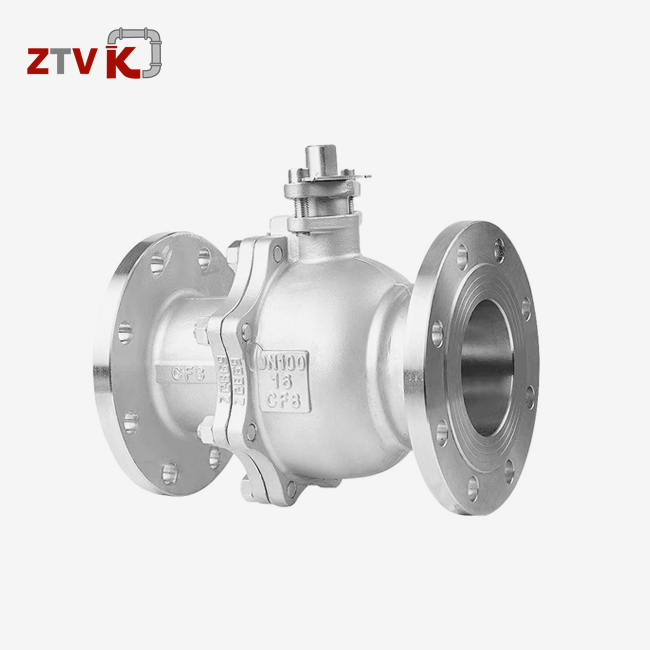
Ball valves feature minimal pressure drop and excellent cutoff when completely open, but their sphere-shaped chambers take up more space. Installing or adding to pipes in tiny machinery rooms is difficult. Larger ball valves cost more per unit, notably over DN150. Maintenance requires removing the valves to replace valve seats, which increases downtime.
Butterfly valves are straightforward to install and remove using lug-style connections, and the system doesn't need to be emptied. Wafer valves have 40–50% less face-to-face space than ball valves. This accommodates insulation and other items. Sometimes seat replacements may be done in-line, easing service.
Butterfly Valves Versus Gate Valves
Gate valves allow full flow through when open; chilled water systems have employed them for years. Butterfly valve designs have improved, making this benefit less relevant. Modern butterfly valves are lighter, quicker, and easier to use than gate valves, although they can manage similar flow. A DN200 butterfly valve weighs 25 kg, whereas a gate valve weighs 60 kg. This reduces structural stresses on pipe supports and makes it easier to handle.
Gate valves take many turns to open fully, making them sluggish in automated systems. Butterfly valves can cycle in quarter turns, allowing them to manage load fluctuations quickly. Gate valve stems rise, requiring vertical space that butterfly valves don't.
Choosing Actuation Types for Operational Context
Isolation valves that are only used occasionally, like equipment shutdown points that are only kept once a year, can be operated by hand. Because it's so simple, it doesn't need a power or air source, which makes it more reliable. Worm gear handles are better for bigger valves because they give one person more control over valves up to DN600.
In places that already have compressed air systems, pneumatic control is the most common method. Actuators move quickly, and fail-safe features can close valves automatically when the power goes out to protect the equipment. Electric actuation is great for modulating uses because it can place things more precisely and has built-in input for control systems. It doesn't use much energy because it only needs power to move, not to stay in place.
Selecting the Right Butterfly Valve for Your Chilled Water System
When making procurement choices for a butterfly valve for chilled water system, you have to balance technical requirements with what the seller can do and the limits of the project.
Sizing for Flow Capacity and System Compatibility
The first step in valve sizing is to figure out the highest flow rate and the allowed pressure drop. When valves are too small, they stop flow even when they are fully open, which makes pumps work harder. Oversized valves make it hard to handle and cost more than it needs to. Based on the peak cooling load, engineering teams should figure out the needed Cv and then choose the next standard size that meets or beats this number. From 40 mm to 1200 mm in diameter, DN sizes can fit everything from end unit branches to central plant heads.
Existing flanges must match the connection standards. For Asian markets, the ISO5211 mounting link works with PN10, PN16, and different ANSI classes (125LB, 150LB), as well as JIS standards (5K, 10K, and 16K). Making sure that everything works together stops the need for expensive adapters or changes in the field.
Evaluating Material Durability and Corrosion Resistance
Chemicals used to clean chilled water, like corrosion inhibitors, algicides, and pH stabilizers, can damage valve materials. Ductile iron bodies with fusion-bonded epoxy coats don't rust when water condenses on the outside. Linings on the inside protect against water and chemicals. Stainless steel discs (CF8 or CF8M) can handle rough waves without breaking down. Aluminum bronze is very resistant to rust and is often used in seaside settings where salt air speeds up the breakdown process.
Seat materials have a direct effect on how long they last. EPDM works great in normal chilled water and stays strong after thousands of cycles. PTFE works well in situations where the temperature changes too quickly for EPDM or where the chemicals might not be compatible. When water has chemicals made from gasoline, VITON is needed.
Partnering with Reliable Suppliers for Large Projects
HVAC contractors and companies that sell industrial valves count on suppliers who keep stock, meet shipping dates, and offer expert support. Leading makers offer basic models that can be delivered in 3–7 days for common sizes. This is very important when replacing broken valves to keep downtime to a minimum. Custom designs, such as those using special materials, longer necks to clear insulation, or one-of-a-kind activation packages, usually take 15 to 25 days, but we can meet the needs of any project.
Supplier relationships help when buying in bulk for big projects. When distributors want OEM branding or custom packaging, they can find makers who are quick and willing to meet their needs. This helps brands stand out in competitive markets. International purchasing has always been hard because of long wait times and inconsistent quality. This is why buyer track records and quality certifications are so important when evaluating suppliers.
Maintenance and Troubleshooting to Sustain Flow Improvement
Regular repair keeps the butterfly valve for chilled water system working well and stops unplanned breakdowns that stop the building from running.
Establishing Routine Inspection Schedules
External checks every three months find early signs of trouble. If you see condensation spots, it means the insulation is failing, which can cause rust on the outside. Make sure the actuator fixing bolts are tight, since vibrations can make connections loose. During operation, listen for strange sounds. Squealing sounds mean the bearings need to be oiled, or the shaft is out of line.
Performance testing under working settings once a year makes sure that everything works right. Check that the pressure drop across the valve is the same as what the maker says it should be at design flow. A drop that is too big is a sign of an internal block or a misaligned disc. To check the stability of the shutoff, separate the pipes that come after it and watch for a pressure drop, which shows seat leaking.
Lubrication Protocols for Moving Components
Bearings and seals on shafts need to be oiled from time to time to keep them from sticking and to slow down wear. Follow the manufacturer's instructions for the right type and amount of oil. Using too much can damage seals, and using too little speeds up the damage caused by friction. Anti-seize chemicals keep ductile iron bodies with stainless steel rods from galling, which can freeze valves in place.
Pay attention to the actuators too. Air filters in pneumatic valves should be checked and drained so that moisture doesn't get inside and cause rust. Electric actuator gearboxes need to be inspected and oiled on a regular basis, usually once a year for valves that are used a lot.
Diagnosing and Resolving Common Issues
Leaks around the shaft packing mean that the seals are worn out. It is easy to fix or replace the valve, and it can often be done without taking it out of service. If the disc leaks past the seat, the whole thing has to be taken apart to check the covering surface. Seats with minor harm may be able to be fixed by cleaning and replacing, but seats with a lot of wear and tear need to be replaced.
When an actuator fails, the functions don't work right, or the machine runs slowly. Pneumatic devices may not be getting enough air; check the line pressure and the state of the filter. Electric devices can have problems with their electricity, their mechanics, or their limit switches. Many problems can be fixed by recalibrating, but if the motor or gears stop working, the actuator needs to be replaced.
When valve bodies have rust pits or cracks, the only way to fix them is to replace them. If you try to fix pressure-retaining parts, they could fail catastrophically. It depends on how bad the damage is, how long the product is still useful, and how much it would cost to replace it.
Conclusion
Butterfly valves make cold water systems move better by lowering pressure drop, allowing exact modulation, and running with low torque. Their small wafer design, wide range of material choices, and adaptable activation methods meet the unique needs of HVAC users in business buildings, data centers, and district cooling networks. Long-term dependability and energy savings are guaranteed by making the right choice in a butterfly valve for a chilled water system based on the needs of the system and performing regular repairs. When B2B procurement teams work with suppliers who keep stock, allow customization, and offer technology help for both simple and complicated tasks, they all win.
FAQ
Q1: What size butterfly valve do I need for my chilled water system?
The maximum flow rate and the allowed pressure drop determine the size of the butterfly valve for the chilled water system. Use flow calculations to figure out the needed Cv value, then choose a valve size that meets or goes beyond this value. Most of the time, HVAC experts want pressure drops to be less than 5 psi at design flow. Making the right choice means looking at manufacturer Cv tables that are matched to your unique working conditions.
Q2: Can butterfly valves handle the low temperatures in chilled water applications?
Modern butterfly valves made for HVAC work well with cold water temperatures between 4°C and 12°C. In this temperature range, EPDM and other rubber seat materials keep their flexibility and ability to shut. Extended neck designs allow for thicker insulation, which stops thermal bridges that could lead to condensation and rust on the outside.
Q3: How often should butterfly valves in chilled water systems be serviced?
External checks every three months and efficiency tests once a year make up a good maintenance baseline. In modulating work, valves that are heavily cycled may need more frequent care. Actuators usually need to be oiled and calibrated once a year. Systems that use cleaned water tend to have fewer problems than those that use raw loops, which can cause scale to build up on internal parts.
Partner with ZTVK for Reliable Butterfly Valve Solutions
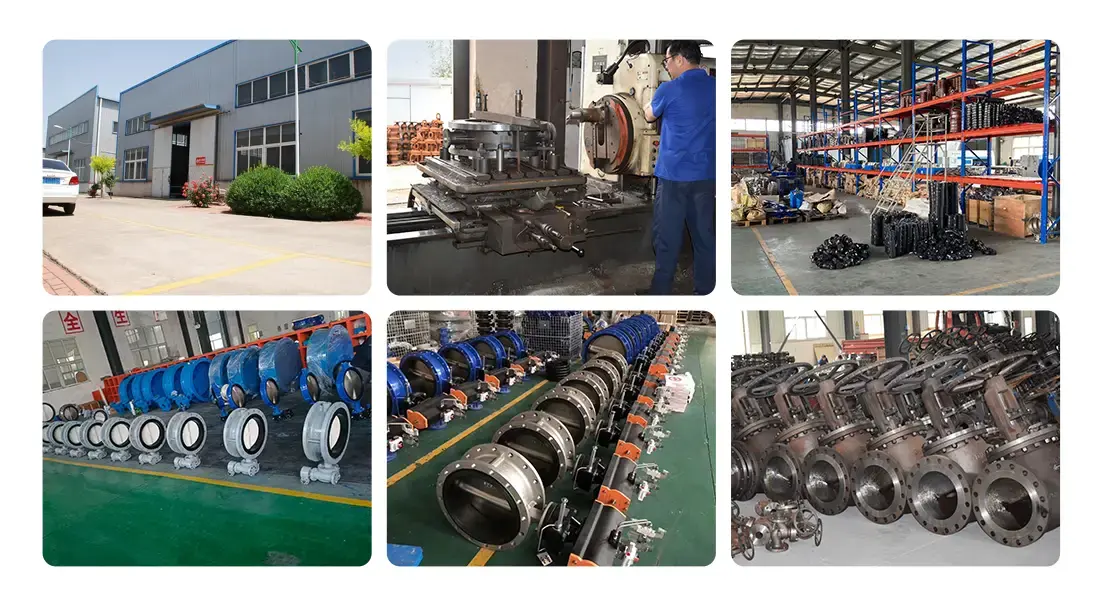
It's important to find a reliable provider and a good butterfly valve for chilled water system. ZTVK is a company in Tianjin's Beichen District that manufactures butterfly valves with PN10/PN16 pressure ratings. Their bodies are made of ductile iron, and their discs are made of stainless steel or aluminum bronze. There are also different seat material choices. Our ISO9001-certified facility maintains over 2,000 standard units in stock for 3–7 day delivery, while custom configurations ship within 15–25 days. With ISO5211 mounting, we support hand lever, worm gear, pneumatic, and electric actuation, ensuring compatibility with your control systems. Reach out to our team at ktec86961886@163.com to discuss your requirements and receive tailored recommendations from a trusted butterfly valve for chilled water system supplier, whether you're an industrial valve distributor seeking OEM packaging or an HVAC contractor with tight project deadlines.

References
1. American Society of Heating, Refrigerating and Air-Conditioning Engineers. HVAC Systems and Equipment Handbook. ASHRAE, 2020.
2. Valve Manufacturers Association of America. Butterfly Valve Selection and Application Guide for HVAC Systems. VMA Technical Publication, 2019.
3. International Organization for Standardization. Industrial Valves – Butterfly Valves (ISO 5752). ISO Standards Catalogue, 2021.
4. Hydraulic Institute. Pump Life Cycle Costs: A Guide to LCC Analysis for Pumping Systems. Hydraulic Institute Press, 2018.
5. Building Services Research and Information Association. Flow Control in Chilled Water Systems: Energy Efficiency and Valve Selection. BSRIA Technical Note, 2020.
6. American Water Works Association. Manual of Water Supply Practices M49: Quarter-Turn Valves: Head Loss, Torque, and Cavitation Analysis. AWWA Publications, 2017.
Send us your valve requirements and our team will provide professional solutions and fast quotations.
RELATED INDUSTRY KNOWLEDGE