- English
- French
- German
- Portuguese
- Spanish
- Russian
- Japanese
- Korean
- Arabic
- Greek
- German
- Turkish
- Italian
- Danish
- Romanian
- Indonesian
- Czech
- Afrikaans
- Swedish
- Polish
- Basque
- Catalan
- Esperanto
- Hindi
- Lao
- Albanian
- Amharic
- Armenian
- Azerbaijani
- Belarusian
- Bengali
- Bosnian
- Bulgarian
- Cebuano
- Chichewa
- Corsican
- Croatian
- Dutch
- Estonian
- Filipino
- Finnish
- Frisian
- Galician
- Georgian
- Gujarati
- Haitian
- Hausa
- Hawaiian
- Hebrew
- Hmong
- Hungarian
- Icelandic
- Igbo
- Javanese
- Kannada
- Kazakh
- Khmer
- Kurdish
- Kyrgyz
- Latin
- Latvian
- Lithuanian
- Luxembou..
- Macedonian
- Malagasy
- Malay
- Malayalam
- Maltese
- Maori
- Marathi
- Mongolian
- Burmese
- Nepali
- Norwegian
- Pashto
- Persian
- Punjabi
- Serbian
- Sesotho
- Sinhala
- Slovak
- Slovenian
- Somali
- Samoan
- Scots Gaelic
- Shona
- Sindhi
- Sundanese
- Swahili
- Tajik
- Tamil
- Telugu
- Thai
- Ukrainian
- Urdu
- Uzbek
- Vietnamese
- Welsh
- Xhosa
- Yiddish
- Yoruba
- Zulu
What temperature can a metal butterfly valve withstand?
Metal butterfly valves typically withstand temperatures ranging from cryogenic levels of -196°C up to superheated conditions exceeding 815°C, depending on material composition and seat design. Standard carbon steel (A216 WCB) valves operate effectively between -29°C and 425°C, while stainless steel variants (A351 CF8M) handle up to 540°C. Advanced triple-offset designs with Stellite or Inconel seats extend operational limits beyond 650°C, making them suitable for demanding petrochemical and power generation applications requiring consistent performance under thermal stress.


Introduction
There's more to choosing the right valve for your industrial system than just making sure the pipe sizes match. Compatibility with temperature has a direct effect on operating safety, system life, and the cost of upkeep. We've worked with engineering companies and dealers on several continents, and temperature-related valve problems are still a problem. This is especially true when buying teams are under a lot of pressure to find the best mix between cost and performance.
Metal butterfly valves are small and effective ways to control flow, but their temperature limits are very different depending on the materials they are made of and how their seats are set up. Knowing about these features can help you avoid costly breaks, repairs that are needed too soon, and safety issues. This guide makes it clear how material choices, design features, and manufacturing standards affect temperature resistance, whether you're looking for things for city water systems, petroleum plants, or HVAC setups. We'll talk about some useful things to think about when you're ordering in bulk or choosing valves for a project-based purchase.
Understanding Metal Butterfly Valves and Temperature Resistance
Basic Construction and Thermal Challenges
A metal butterfly valve has a disc that spins on a central tube and is put inside the pipe to control or stop the flow of fluid. What the valve's body, disc, seat, and shaft are made of determines how it reacts to changes in temperature. Different metals expand and contract at different rates when they are heated or cooled. This puts stress on sealing surfaces and mechanical parts.
Carbon steel frames (A216 WCB) are strong and cheap, but they can only handle temperatures up to 425°C in service. Stainless steel types (A351 CF8 for lower temperatures and CF8M for acidic or high-heat settings) can handle temperatures up to 540°C and won't rust. Specialised metals like Inconel can work at temperatures above 650°C, which is needed by power plants and factories that deal with very hot steam or harsh chemicals.
Key Performance Parameters
Temperature resistance isn't just about the material of the body of the metal butterfly valve. The seat is also very important because it's where the disc touches to make a seal. Most rubber or elastomer seats break above 120°C, so they can only be used in moderate-temperature systems like HVAC or public water systems. Extremely hot or cold temperatures don't affect the stability of metal-to-metal chairs, especially those that are hard-faced with Stellite or made from Inconel.
Also, the thermal cycle is important. Heating and cooling things over and over again wear down materials, especially where they join and connect. Valves with double eccentric or triple-offset designs have less friction while they're working, which means that heat expansion doesn't cause as much damage. Compared to circular disc setups, this design choice greatly increases the service life.
Industry Standards and Testing
Reputable manufacturers adhere to standards such as API 609, ASME B16.34, and ISO 5752, which specify pressure-temperature ratings for various materials. These ratings provide a reference framework, though real-world performance depends on factors like flow velocity, media corrosiveness, and cycling frequency. Quality control processes, including hydrostatic testing, dye penetrant inspection, and positive material identification (PMI), verify that valves meet declared specifications before shipment.

Types of Metal Butterfly Valves and Their Temperature Capabilities
Wafer and Lug Configurations
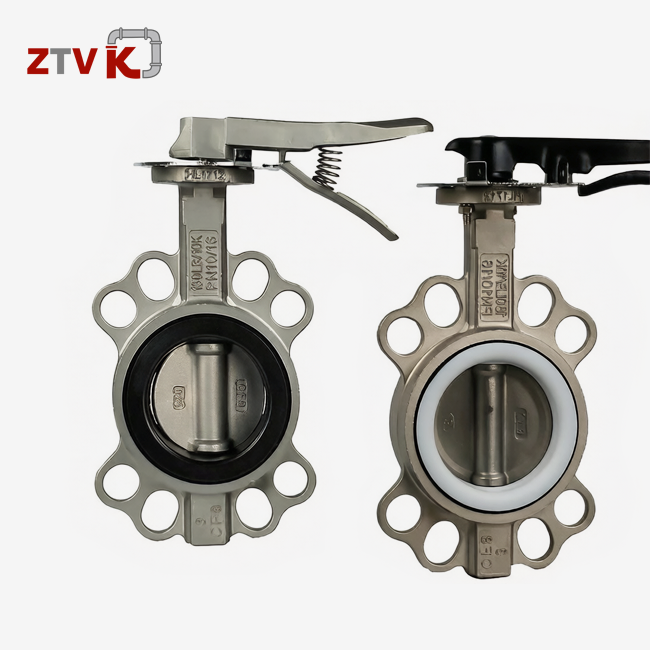
Wafer-style valves fit between flanges, offering compact installation, but are limited to lower-pressure applications. Their temperature capabilities depend heavily on seat materials. Standard wafer valves with EPDM or NBR seats handle up to 100°C, suitable for cooling water or drainage systems. Upgrading to PTFE seats extends this to approximately 200°C, covering many HVAC and light industrial processes.
Lug-style valves include threaded inserts in the body, allowing installation without downstream flanges. This design improves versatility in maintenance scenarios. Temperature ratings mirror wafer configurations when using soft seats, but metal-seated lug valves can reach 540°C or higher, depending on body and seat materials.
Double-Flanged and Triple-Offset Designs
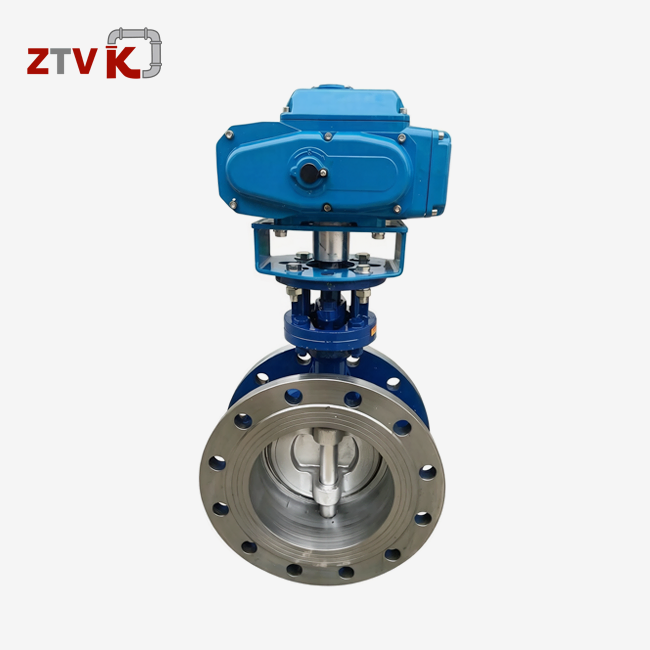
Double-flanged valves feature integral flanges on both body ends, providing structural strength for higher-pressure and temperature applications. When constructed with carbon steel bodies and hardened stainless steel discs, these valves reliably operate up to 425°C. Stainless steel bodies (CF8M) paired with Stellite-faced seats extend service to 540°C, addressing petrochemical and refining requirements.
Triple-offset butterfly valves represent the premium segment for severe service conditions. The disc and seat remain separated during rotation, eliminating rubbing and wear. Contact occurs only at final closure, creating a metal-to-metal seal through mechanical interference rather than line pressure. This design allows operation from cryogenic temperatures (-196°C for LNG service) to superheated conditions (815°C in steam systems), making them indispensable for power generation and oil refining.
Here are the core advantages of triple-offset metal-seated designs:
- Friction-Free Operation: The disc doesn't contact the seat during 90% of its travel, reducing actuator torque requirements by up to 30% compared to eccentric designs and extending mechanical component lifespan.
- Bi-Directional Sealing: High-quality units achieve Class VI shutoff in both flow directions, though reverse-direction ratings may drop slightly unless specified as full bi-directional service.
- Thermal Compensation: Laminated metal-graphite seal rings or floating seat designs accommodate thermal expansion without jamming, maintaining sealing integrity through temperature fluctuations.
These capabilities address the limitations of soft-seated valves, which degrade rapidly in high-temperature environments, and offer fire-safe certification (API 607/ISO 10497) for applications where safety regulations mandate emergency shutoff reliability in metal butterfly valves.
Seat Material Innovations
Seat technology has evolved significantly beyond basic elastomers. Stellite hard-facing, an alloy of cobalt, chromium, and tungsten, resists galling and erosion while tolerating temperatures exceeding 650°C. Inconel seats, composed of nickel-chromium alloys, handle even higher temperatures and aggressive chemicals, though at increased material cost.
Graphite-laminated seats combine stainless steel layers with flexible graphite, offering excellent thermal tolerance and chemical resistance. This construction method provides cost-effective performance in the 400-650°C range, bridging the gap between soft seats and premium hard-faced options.
Selecting the Best Metal Butterfly Valve for High-Temperature Applications
Material Selection Strategies
Before you can choose the right materials, you need to know what your working conditions are. These include the highest and lowest temperatures, the pressure levels, the type of media (corrosive, gritty, or clean), and how often the materials will be used. Carbon steel bodies work well with non-corrosive fluids below 400°C. This saves money in situations like distributing steam or handling hydrocarbons with few contaminants.
When working with acidic substances or temperature changes that cause rust, you need stainless steel (304/316 grades). Due to its higher strength and resistance to rust, duplex stainless steel is ideal for use on offshore oil platforms or in chemical plants where harsh fluids and temperature changes can damage valves.
When it comes to the toughest situations, like superheated steam above 600°C, highly acidic or alkaline chemicals, or cold liquids that need toughness at temperatures below zero, exotic metals like Inconel are worth the extra cost. Choosing the right materials has a direct effect on the total cost of ownership. Usually, spending more up front on the right materials lowers the amount of money needed for repairs and replacements.
Evaluating Supplier Capabilities
Suppliers you can trust show a few important traits. Although ISO 9001 recognition means that a company has built quality management systems, you should still check them out through plant audits or reviews by a third party. Ask possible providers about the inspection methods they use. PMI testing proves that the material is real, dye penetrant inspection finds flaws on the surface, and hydrostatic testing proves that the material is stable under pressure.
The ability to make things is just as important. For metal-to-metal bonding, CNC cutting makes sure that the seat and disc contacts are within exact limits. Suppliers who do their own mechanical tests can make sure that parts like sharpened stainless steel discs or Stellite-faced seats meet the hardness requirements and heat treatment efficiency.
Customisation choices set skilled makers apart from simple dealers. With OEM services, you can customise the logos and packaging for each of your sales markets. With ODM services, you can change the design to fit the specifics of your operations. We've seen wholesalers get ahead of the competition by teaming up with makers who offer expert help during the design process instead of just filling orders from catalogues.
Certification and Compliance
Temperature ratings mean little without proper certification documentation. API 609 specifies design and testing requirements for butterfly valves in general industrial service, while API 598 defines inspection and testing procedures, including seat leakage tests. ASME B16.34 establishes pressure-temperature ratings based on material grades and wall thicknesses.
Fire-safe certification (API 607 or ISO 10497) becomes mandatory in hydrocarbon processing, confirming that valves maintain shutoff capability after exposure to flames—even if soft seats burn away, metal backup seats prevent catastrophic leakage. CE marking indicates compliance with European safety directives, necessary for equipment supplied to EU markets.
Maintenance and Longevity of Metal Butterfly Valves in High-Temperature Environments
Preventive Maintenance Protocols
Regular inspections make valves last longer and stop them from breaking down without warning. Visual checks every three months find external rust, problems with attaching the actuator, or packing wear. Every six months, operating tests make sure that the discs rotate smoothly and that the motors provide enough power for both opening and closing processes.
Assembling the chair should be taken apart if possible so that the seat areas can be checked for wear patterns, scoring, or cracking once a year. If you take good care of your metal seats, they can last longer than 10,000 rounds, which is a lot longer than rubber seats in hot settings. Keeping track of how wear happens helps figure out when to replace something before it starts to leak.
Different designs have different lubrication needs. Many triple-offset metal-seated valves have self-lubricating bearings that don't need much upkeep. On the other hand, shaft bearings and packing glands in normal designs may need to be oiled every so often. Always follow what the maker says about the type of lube to use, because some high-temperature greases break down quickly above their stated limits.
Addressing Thermal Wear
Problems that are caused by temperature show up in expected ways in a metal butterfly valve. When temperature limits are passed, seat distortion happens, which leads to leaking that gets worse over time. Different thermal expansion between the disc and the body causes disc binding. This happens most often in valves that don't have the right physical design to compensate for thermal expansion.
Corrosion moves faster when temperatures are high, especially when acidic gases or water are present. In moderate-temperature settings, protective coats like epoxy resins can help. But in high-temperature settings, it's usually the materials that need to be upgraded instead of the surfaces. Stellite hard-facing not only doesn't wear down, but it also doesn't rust at temperatures where steel that isn't protected would scale badly.
When an actuator is exposed to heat, its performance goes down. In valve setups where body heat spreads to nearby parts, pneumatic devices may have seal failures. Adding heat shields or asking for longer hood designs makes the space between hot media and temperature-sensitive actuator parts bigger, which keeps the operation reliable.
Design Features for Extended Service
Selecting valves with design enhancements tailored to your environment improves long-term reliability. Corrosion-resistant coatings protect external surfaces in humid or marine environments, though they offer limited benefit for internal components exposed to process fluids. Double eccentric or triple-offset geometries reduce friction and wear, critical factors when thermal cycling creates repetitive mechanical stress.
Reinforced stem designs prevent deflection under torque loads, particularly important in large-diameter valves or high-pressure applications. Extended packing chambers accommodate additional packing rings, improving leak prevention around the stem in demanding service conditions.
Conclusion
Understanding temperature capabilities helps you match valve specifications to your operational demands, preventing failures and reducing lifecycle costs. Material selection, seat design, and manufacturing quality collectively determine whether a valve thrives or fails in your specific environment. Carbon steel bodies serve well in moderate-temperature applications, while stainless steel and exotic alloys address more demanding conditions.
Triple-offset metal-seated designs deliver proven performance across the widest temperature ranges, from cryogenic to superheated service. Partnering with manufacturers who demonstrate quality certifications, comprehensive testing protocols, and customization capabilities ensures you receive valves engineered for your exact requirements. Temperature resistance directly impacts your operational uptime and safety margins—investing in properly specified valves protects your infrastructure and your reputation.
FAQ
1. What is the maximum temperature for standard metal butterfly valves?
Standard carbon steel valves (A216 WCB) with metal seats operate reliably up to 425°C. Stainless steel variants (CF8M) extend this to 540°C, while Inconel or Stellite-seated triple-offset designs handle temperatures exceeding 815°C in specialized applications like superheated steam systems.
2. How do I know if a metal-seated valve suits my high-temperature application?
Evaluate your media temperature range, corrosiveness, and whether abrasive particles are present. Metal seats excel when temperatures exceed 200°C or when erosive media would rapidly degrade soft seats. Verify that the manufacturer provides material certifications and temperature ratings aligned with recognized standards like ASME B16.34.
3. Do metal butterfly valves require larger actuators due to temperature effects?
Triple-offset designs actually reduce torque requirements through non-rubbing operation. However, temperature-induced thermal expansion can temporarily increase breakaway torque. Specify actuators with a safety factor (typically 1.25-1.5x calculated torque) to ensure reliable operation through thermal cycling, preventing operational issues during startup or shutdown.
Partner with ZTVK for Reliable High-Temperature Valve Solutions
ZTVK manufactures industrial-grade butterfly valves at our ISO 9001-certified facility in Tianjin, combining advanced machining capabilities with rigorous quality control to deliver temperature-resistant solutions for demanding applications. Our metal butterfly valve inventory includes carbon steel, stainless steel, and duplex steel bodies paired with Stellite-faced seats, handling service temperatures from -29°C to 650°C across water supply, petrochemical, and power generation installations.
We maintain a stock of standard models (DN50-DN600) for 3-7 day delivery, while our OEM and ODM services customize valve specifications to your exact temperature and pressure requirements. Located just 50 kilometers from Tianjin Port, we streamline international shipping through established partnerships with major freight carriers, providing competitive FOB and CIF pricing. Contact our engineering team at ktec86961886@163.com to discuss your temperature-specific valve requirements and receive technical specifications tailored to your operating conditions.
References
1. American Petroleum Institute. (2018). API Standard 609: Butterfly Valves – Double Flanged, Lug- and Wafer-Type, Tenth Edition. Washington, DC: API Publishing Services.
2. ASME International. (2020). ASME B16.34: Valves – Flanged, Threaded, and Welding End. New York: American Society of Mechanical Engineers.
3. Nesbitt, B. (2011). Handbook of Valves and Actuators: Valves Manual International. Oxford: Elsevier Science.
4. Smith, P. & Zappe, R.W. (2003). Valve Selection Handbook: Engineering Fundamentals for Selecting the Right Valve Design for Every Industrial Flow Application, Fifth Edition. Burlington: Gulf Professional Publishing.
5. Sotoodeh, K. (2021). Industrial Valves: Calculations for Design, Manufacturing, Operation and Safety Compliance. Cambridge: Woodhead Publishing.
6. Xu, H. & Zhang, L. (2019). "Temperature Effects on Sealing Performance of Triple-Offset Butterfly Valves in Thermal Power Plants." Journal of Pressure Vessel Technology, 141(4), Article 041601.
Send us your valve requirements and our team will provide professional solutions and fast quotations.
RELATED INDUSTRY KNOWLEDGE