- English
- French
- German
- Portuguese
- Spanish
- Russian
- Japanese
- Korean
- Arabic
- Greek
- German
- Turkish
- Italian
- Danish
- Romanian
- Indonesian
- Czech
- Afrikaans
- Swedish
- Polish
- Basque
- Catalan
- Esperanto
- Hindi
- Lao
- Albanian
- Amharic
- Armenian
- Azerbaijani
- Belarusian
- Bengali
- Bosnian
- Bulgarian
- Cebuano
- Chichewa
- Corsican
- Croatian
- Dutch
- Estonian
- Filipino
- Finnish
- Frisian
- Galician
- Georgian
- Gujarati
- Haitian
- Hausa
- Hawaiian
- Hebrew
- Hmong
- Hungarian
- Icelandic
- Igbo
- Javanese
- Kannada
- Kazakh
- Khmer
- Kurdish
- Kyrgyz
- Latin
- Latvian
- Lithuanian
- Luxembou..
- Macedonian
- Malagasy
- Malay
- Malayalam
- Maltese
- Maori
- Marathi
- Mongolian
- Burmese
- Nepali
- Norwegian
- Pashto
- Persian
- Punjabi
- Serbian
- Sesotho
- Sinhala
- Slovak
- Slovenian
- Somali
- Samoan
- Scots Gaelic
- Shona
- Sindhi
- Sundanese
- Swahili
- Tajik
- Tamil
- Telugu
- Thai
- Ukrainian
- Urdu
- Uzbek
- Vietnamese
- Welsh
- Xhosa
- Yiddish
- Yoruba
- Zulu
A Practical Guide to metal to metal butterfly valve and Their Uses
When industrial operations demand flow control under extreme temperatures, high pressures, or abrasive conditions, metal-to-metal butterfly valves emerge as the reliable solution. Unlike traditional elastomer-sealed valves that degrade or fail in demanding environments, these robust devices utilize hardened metal sealing surfaces to maintain tight shut-off integrity. Engineered with advanced triple-offset geometry, they eliminate friction during operation while delivering bubble-tight performance across temperature ranges from cryogenic to superheated applications. This guide walks you through everything procurement professionals need to know about selecting, specifying, and sourcing these industrial workhorses for your operations.
Understanding Metal-to-Metal Butterfly Valves
Core Design Architecture
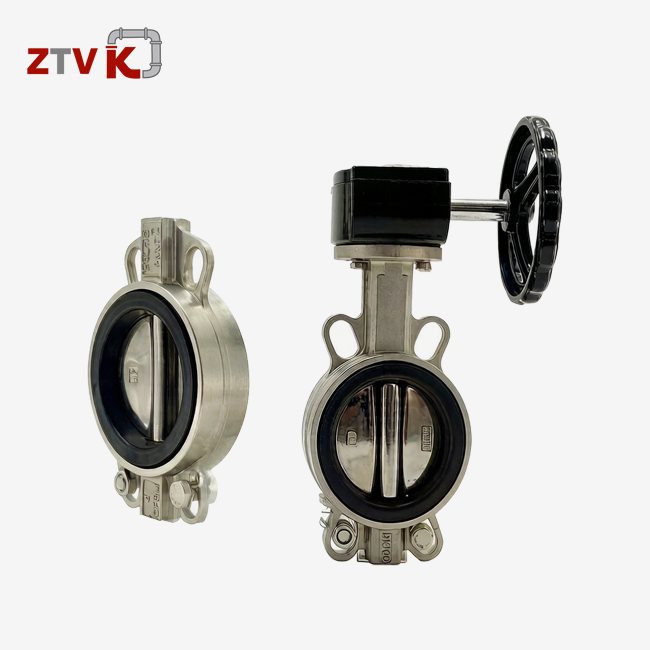
Metal-seated butterfly valves differ because the disc edge and body seat are made of strong metal alloys instead of rubber or PTFE, which is what makes rubber or PTFE valves different. The disc spins around 90 degrees inside the valve body and presses against a metal seat ring that has been carefully cut to make a seal that can't be broken. Most of the time, stainless steel, duplex steel, or nickel metals are used in this building because they are strong against chemical and thermal stress.
The triple-offset design is a big step forward in technology that makes modern metal-to-metal butterfly valves possible. The first offset moves the shaft axis behind the centerline of the sealed surface. The second offset moves it away from the centerline of the pipe. The third shift creates a circular sealing shape that stops rubbing while the door is opening and closing. Compared to concentric designs, this new idea in engineering lowers operational torque by about 30% and increases service life to more than 50,000 cycles.
Material Specifications and Performance Parameters
At ZTVK, our manufacturing standards cover sizes from DN50 to DN3000, so they can be used for anything from small auxiliary lines to large transmission pipelines. Pressure ratings include PN6, PN10, PN16, and 150 lb, so they can meet a wide range of system needs. For low-cost municipal uses, ductile iron (GGG40/50) is a good body material. Carbon steel (WCB A216) is better for general industrial use, stainless steel grades (SS304/SS316/SS304L/SS316L) are better for corrosive environments, and duplex stainless steel (2507/1.4529) is best for the harshest conditions.
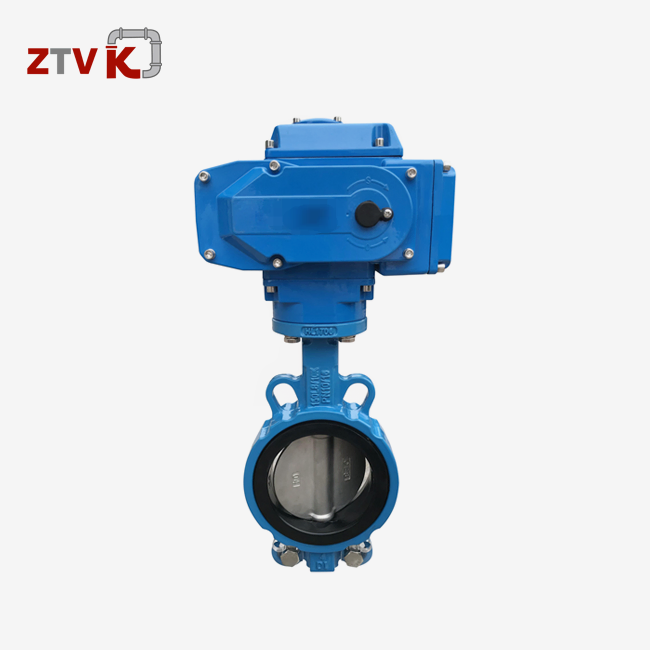
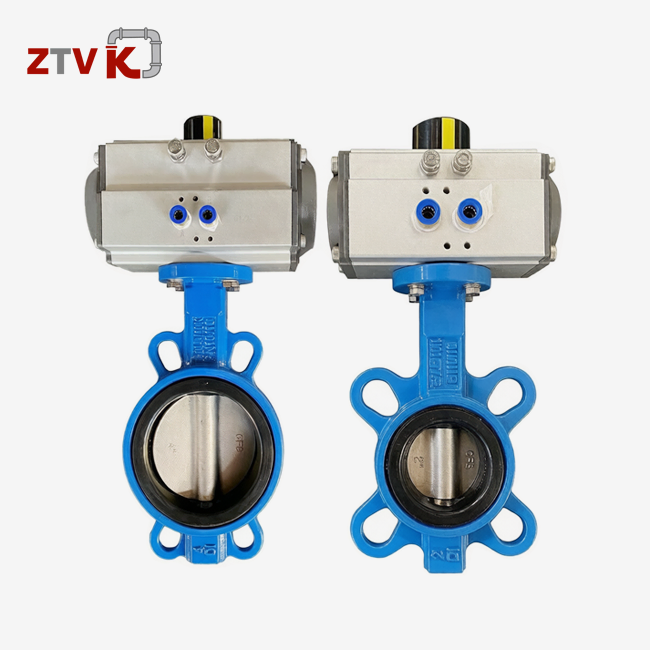
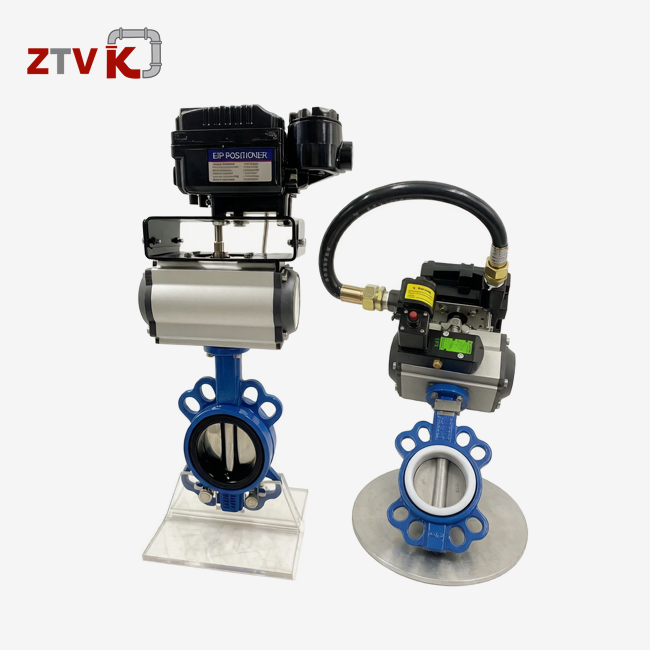
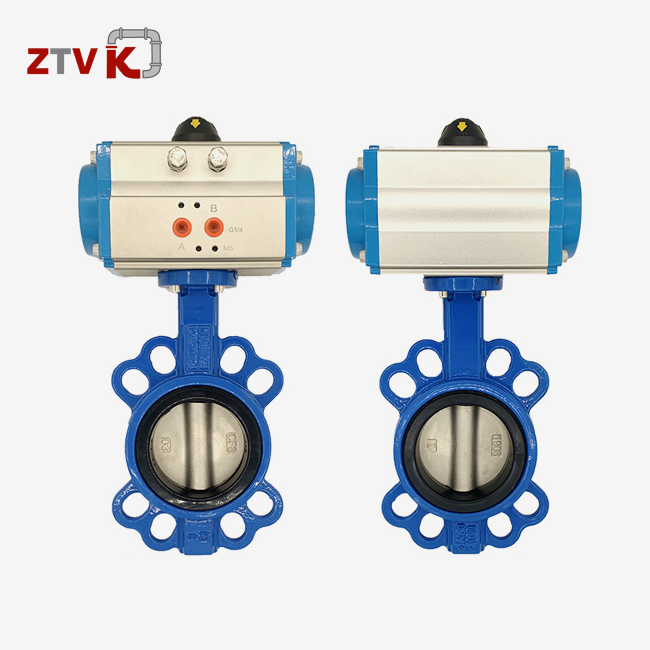
Disc structure is the same for all body material choices, but ductile iron models have an extra nickel coating to stop galvanic corrosion. The seating setup has both metal touch surfaces and flexible graphite to allow for thermal expansion while keeping the integrity of the seal. Smaller sizes can be moved with hand-worm gears, while electric actuators allow for automatic control, and gas operators are used when a quick response is needed.
Temperature and Pressure Capabilities
When other designs fail, these valves do great. They can handle temperatures from -196°C for cryogenic LNG service to +815°C for superheated steam service. The metal-to-metal contact doesn't change size in this range, but polymer seats do. Polymer seats thicken, crack, or melt. Some versions can handle pressures up to ASME Class 2500 (PN420), but most commercial uses stay within the Class 150 to 600 range. Metal-seated designs are the best choice in the petrochemical, power production, and heavy industry sectors because they can handle both high temperatures and high pressures.
Advantages and Applications of Metal-to-Metal Butterfly Valves
Superior Durability and Extended Service Life
Getting rid of the elastomeric parts gets rid of the main way that regular metal-to-metal butterfly valves break down in rough conditions. Rubber and PTFE chairs wear out over time due to changes in temperature, chemical exposure, and mechanical wear and tear. In demanding situations, they usually need to be replaced within months. When chosen correctly for the working conditions, metal chairs can handle these stresses forever.
This benefit is clearly shown by operational statistics from petrochemical sites. A refinery that used to replace soft-seated valves every 18 months switched to metal-seated units, and the same lines have been work-free for over seven years. The higher original cost was paid back in just two replacement cycles, and the years after that were spent saving money on upkeep labor and output downtime.
The torque-seated sealing mechanism makes it last even longer. Instead of using line pressure to squeeze a soft seat, the actuator uses mechanical force to push the cone-shaped disc against the seat. This method evenly spreads the binding forces across the whole contact surface, which stops the localized wear patterns that happen with position-seated designs.
Industrial Application Versatility
These valves are used a lot in distillation column overhead systems at petrochemical plants, where temperatures change from room temperature to 400°C as processes start and stop. The metal seats can handle this cycling without breaking down, and they keep a tight shut-off that stops product loss and pollution. In the same way, companies ask for them when they need to handle high-sulfur oil, because hydrogen sulfide would quickly damage polymer seals.
In power plants, metal-seated butterfly valves are used in the steam systems, feedwater lines, and circuits that remove sulfur from the waste gas. They can handle superheated steam at 540°C, which makes them good for main steam isolation, where gate valves used to be the only choice, but are much heavier and more expensive. When handling fumes that are full of fly ash, coal-fired plants value the erosion resistance the most.
Different types of municipal water treatment applications are better. Even though the weather is still mild, the grit and debris in the raw water filters wear down soft seats very quickly. The metal seats don't wear down easily, and the slim disc shape keeps headloss to a minimum. Chemical resistance is important for wastewater treatment plants that deal with chlorinated effluent or streams that change the pH.
Maintenance Considerations and Best Practices
Proper installation sets the foundation for reliable operation. Pipe ends need to be lined up within 0.5 mm of each other so that the disc doesn't get stuck as it spins. It's important to pay attention to how the shaft keyway engages and how much force is applied when attaching an actuator so that the rated sealing class is reached without putting too much stress on the parts. With every shipment, we include detailed installation videos and technical manuals to make sure the right steps are taken in the field.
The length of time between inspections depends on how bad the service is, but they are usually done once a year or every other year. Technicians should check that the actuator works, see if there are any external leaks at the packing, and cycle the valve through its full range while keeping an eye on the torque profiles. Deviations from the baseline torque curves show problems like damaged seats or misaligned discs that need to be fixed before they break.
Modern metal butterfly valves are easier to maintain when they need to be because they are built in modules. The seal ring is usually attached to the disc as a separate part that can be changed, rather than being cast into the body. When compared to gate or globe valves, where the body needs to be reworked or replaced when the seating surfaces wear down, this design makes repairs much cheaper.
Comparing Metal-to-Metal Butterfly Valves with Other Valve Types
Metal-Seated versus Soft-Seated Butterfly Valves
The main trade-off is between initial cost and lifecycle economy. Soft-seated butterfly valves are 40–60% cheaper at first, and they work great in moderate applications below 120°C with clean fluids. They work great in HVAC systems, distributing clean water, and other similar safe tasks where their low power and quick shut-off make up for the lower price.
Metal-to-metal butterfly valves are more expensive, but they work better than any other type of unit when temperatures are too high for elastomers, objects that are rough are present, or fire safety approval is needed. The decision point usually happens around 180°C service temperature or when soft seats need to be replaced more often than every 24 months. When this happens, lifecycle cost analysis always points to metal seats as the best option.
Another difference is the sealing class. Class VI (bubble-tight) shut-off is possible with little actuator force in high-quality soft-seated systems. Metal-seated valves reach the same leakage rate but require substantially more seating force, necessitating larger actuators. This power requirement reduces greatly with a triple-offset shape compared to concentric metal-seated designs, closing the performance gap.
Comparison with Ball Valves and Gate Valves
When it comes to closing in both directions, ball valves are great, but their prices go through the roof above DN300 sizes. The spherical closure element needs to be precisely machined and has a complicated body shape, which makes the price two to three times higher than that of butterfly valves with the same diameter. Butterfly valves are also better for weight reasons; metal-seated units are usually 50% lighter than similar ball valves.
Gate valves previously controlled high-pressure, high-temperature isolation work due to their full-bore flow path and metal seating capability. Metal-seated butterfly valves are now competing with these valves because they have the same temperature and pressure limits, but they work faster (quarter-turn versus multi-turn), weigh less, and cost less to install. When compared to a full-bore gate, the compact disc does cause a small drop in pressure, but this difference isn't important in most situations.
Installation Methods: Wafer, Lug, and Flanged Configurations
Using through-bolts to sandwich the valve between pipe flanges in a wafer-style installation makes the smallest and least expensive setup. This method works well when the valve will stay in place permanently, and the pipes below it don't need to be taken out separately. The plan saves money on materials and works well in places with limited room.
Lug bodies have threaded inserts that can hold flange bolts. This lets the downstream pipe be removed without disturbing the valve. This setup is good for systems that need to be able to get to other parts of the system on a regular basis for maintenance or review. The extra flexibility comes at a small cost over chip systems.
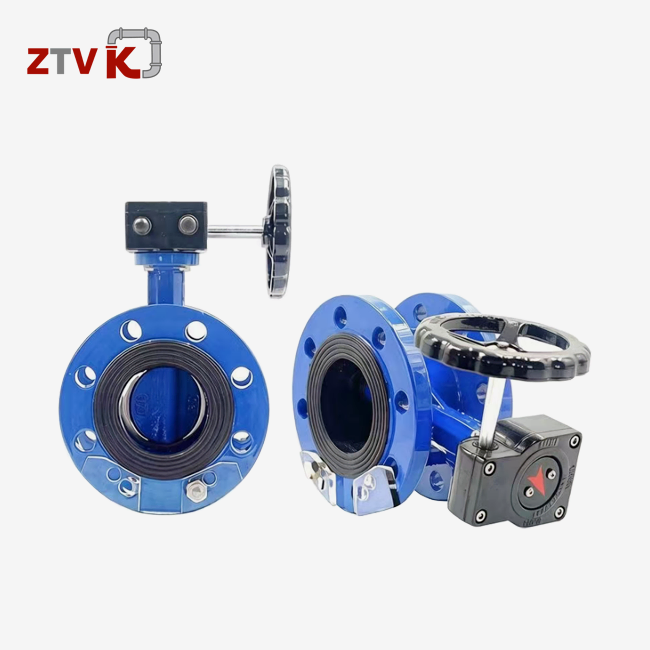
The most reliable way to place a butterfly valve is with two flanges that are welded to the body of the valve and connect straight to pipe flanges that match. This is the most expensive configuration, but it works well for services with a lot of vibration and makes sure that everything is lined up correctly.
How to Choose the Right Metal-to-Metal Butterfly Valve for Your Business?
Critical Specification Parameters
The main picking factors are pressure and temperature. Start by writing down the highest and lowest values that your system will go through, including temporary conditions that happen during startup, shutdown, and upset situations. If it is not properly defined, a metal-to-metal butterfly valve that is designed for steady-state conditions may not work when there is a thermal shock. Safety gaps of 15 to 20 percent on temperature and pressure rates are a smart way to protect against things that might not go as planned.
The characteristics of the fluid media determine the choice of material. Corrosive chemicals need duplex or stainless steel alloys, and abrasive slurries work better with surfaces that are hardened. When solids are present, they change the shape of the disc. Offset shaft setups work better with particles than centered designs. Our expert team looks at your process conditions and suggests the right materials based on decades of experience in a wide range of industries.
Figuring out the size is more complicated than just matching the pipe width. The pressure drop, cavitation danger, and erosion possibility are all affected by the flow speed through the valve. Oversized valves lower head loss, but they cost more and need more power to open and close. Undersized units save money at first, but high-velocity erosion could cause them to fail early. Computational fluid dynamics research helps you find the best size for your flow and pressure situations.
Standards Compliance and Certification Requirements
To make sure they work safely and reliably, industrial valves must be built and tested according to well-known standards. API 609 Category B tells us how to test butterfly valves in refineries and chemical plants and what their face-to-face dimensions, pressure-temperature ratings, and testing protocols should be. Pressure-temperature limits for iron valve parts are set by ASME B16.34. For world interoperability, ISO 5752 sets the face-to-face and center-to-face measurements.
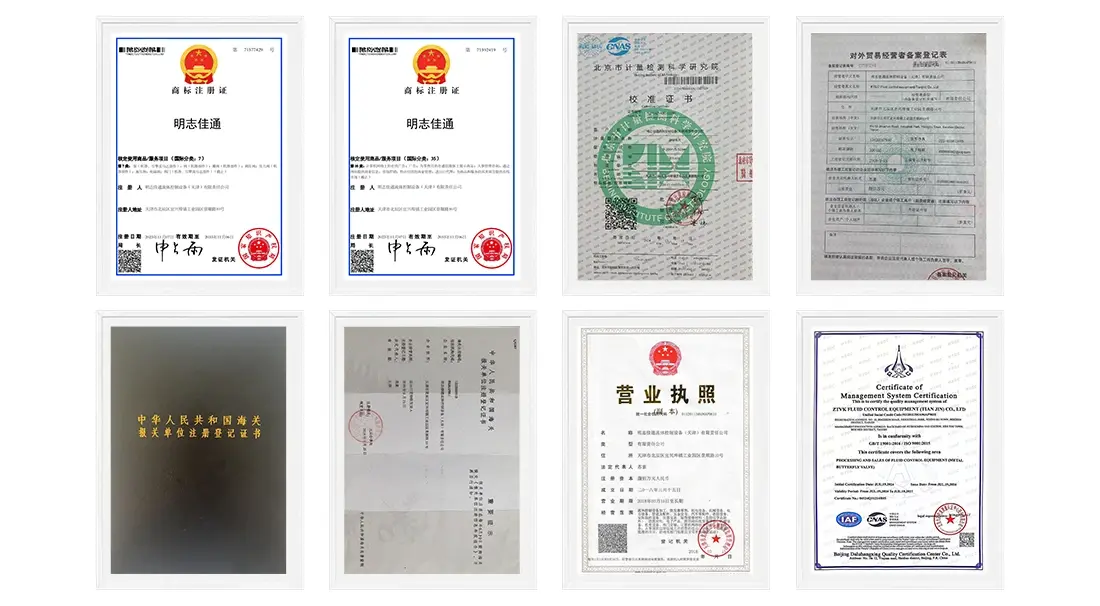
In gas service, where a terrible fire could happen, fire-safe approval according to API 607 or ISO 10497 is very important. These standards make sure that the closing ability of valves stays the same after being exposed to flames at 750°C for certain amounts of time. Butterfly valves that are seated in metal naturally meet this condition because they don't have any polymer parts that can burn away. However, tests and verification are still needed to make sure they work properly.
Concerns about safety and the environment caused by valve stem leaks are addressed by fugitive emissions approval according to ISO 15848. During the valve's service life, the packing arrangements must show that they can keep leaks below 100 ppm. Our designs use live-loaded packing systems that keep the valves compressed even as they cycle, so they always meet the strictest emission standards.
Conclusion
When operating conditions are too tough for regular soft-seated designs, metal-to-metal butterfly valves are the best option. Extreme temperatures, high pressures, and rough environments that damage rubber seals in months don't affect these seals, so they last for years without needing any repairs. The triple-offset geometry gets rid of friction and achieves bubble-tight shut-off, combining the performance of a gate valve with the economy of a butterfly valve in a small, light package. To make a good design, you need to carefully look at the features of the pressure, temperature, and media, then match them with the right materials and certifications. Working with skilled manufacturers that offer customization, technical support, and quick delivery will help you get valves that work best for your needs.
FAQ
1. What distinguishes metal-to-metal sealing from soft-seat designs?
In metal-seated configurations, both the disc and body seat have hardened alloy surfaces that shut off the system through mechanical compression instead of elastomer deformation. This method stops heat, chemicals, and grit from breaking down polymers and lets them work in a wide range of temperatures, from very cold to very hot. Soft seats work best for moderate services because they are cheaper and don't need as many actuators.
2. Can these valves handle flow in both directions and seal?
When specified during procurement, high-quality designs with triple-offset geometry can seal in both directions. The conical seat shape ensures a tight shut-off no matter the flow direction. However, to get the best performance, many installations choose a chosen flow direction where line pressure helps seal. In two-way uses, the shaft and disc pins need to be the right size for full reverse differential pressure.
3. How often should you service butterfly valves that are set in metal?
Most services have inspection cycles that last between 12 and 24 months, which is a lot longer than soft-seated equivalents. During reviews, make sure the actuator works, look for leaks on the outside, and run the metal-to-metal butterfly valves while keeping an eye on the torque profiles. The design of the seal ring that can be replaced lets the item be fixed up without having to buy a whole new body.
4. How does the way pressure drops compare to other types of valves?
When the disc is fully open, it doesn't block much flow, and its pressure loss coefficients are usually 40 to 60 percent lower than those of similar gate valves. Ball valves offer slightly better full-bore flow, but the difference isn't big enough to justify the extra cost in large sizes. With the right size analysis, you can be sure that the pressure drop won't be too high for your system's hydraulics.
Source Quality Metal-to-Metal Butterfly Valve Solutions from ZTVK
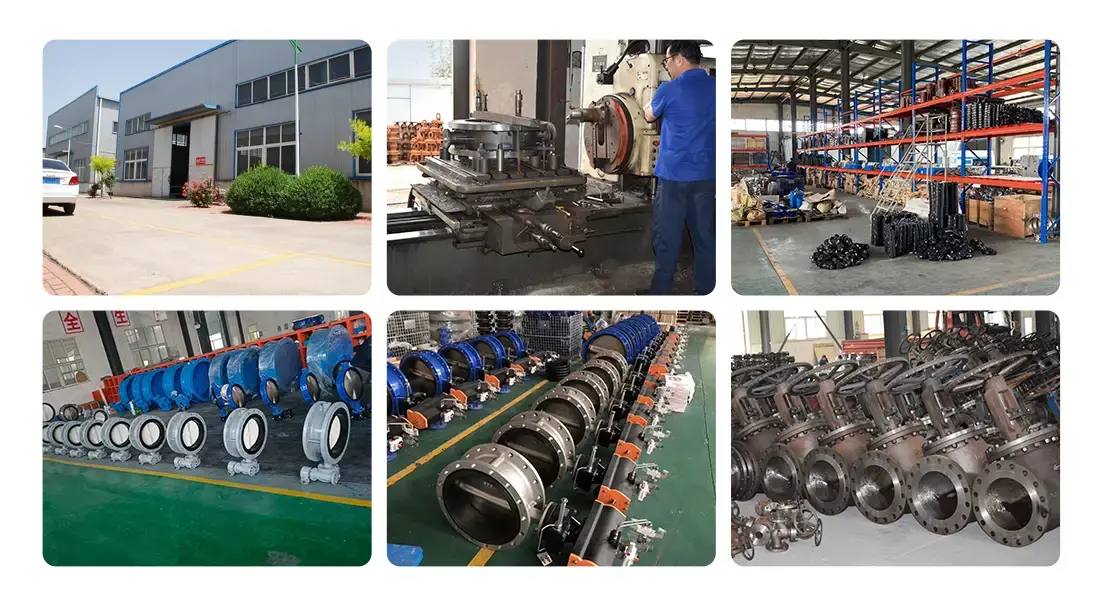
This is the end of your search for a trustworthy maker of metal-to-metal butterfly valves. ZTVK has more than 15 years of experience in specialized engineering and production from our plant in Tianjin, which is located near the industrial route in Binhai New Area. We make all sizes of pipes, from DN50 to DN3000, with pressure values from PN6 to PN16 and 150 lb. We use ductile iron and duplex stainless steel types for our materials. Our double-eccentric oblique seal design cuts down on working power by 30% and has been certified by ISO9001, ISO14001, and OHSAS18001 to work for more than 50,000 rounds.
We keep more than 2,000 standard units in stock and can send them in three to seven days. Customized orders take fifteen to twenty-five days to ship. You can get OEM branding and ODM engineering services that are tailored to your needs. We also offer full technical support, such as CAD models, installation instructions, and a guarantee that lasts for 18 months. We are conveniently located only 50 km from Tianjin Port and offer quick FOB and CIF quotes through long-term shipping partnerships. Get in touch with our team right away at ktec86961886@163.com to talk about your valve requirements, ask for technical documentation, or set up a factory audit. Let us show how China's efficient manufacturing meets quality standards around the world.
References
1. American Petroleum Institute. API Standard 609: Butterfly Valves—Double Flanged, Lug and Wafer Type, Tenth Edition, 2018.
2. Smith, P. and Zappe, R.W. "Valve Selection Handbook: Engineering Fundamentals for Selecting the Right Valve Design," Gulf Professional Publishing, 2019.
3. Sotoodeh, K. "Industrial Valves: Calculations for Design, Manufacturing, Operation, and Safety Compliance," Elsevier, 2020.
4. American Society of Mechanical Engineers. "ASME B16.34: Valves - Flanged, Threaded, and Welding End," 2021 Edition.
5. Nesbitt, B. "Handbook of Valves and Actuators: Valves Manual International," Butterworth-Heinemann, 2017.
6. International Organization for Standardization. ISO 5752: Metal Valves for Use in Flanged Pipe Systems—Face-to-Face and Center-to-Face Dimensions, Third Edition, 2021.
Send us your valve requirements and our team will provide professional solutions and fast quotations.
RELATED INDUSTRY KNOWLEDGE