- English
- French
- German
- Portuguese
- Spanish
- Russian
- Japanese
- Korean
- Arabic
- Greek
- German
- Turkish
- Italian
- Danish
- Romanian
- Indonesian
- Czech
- Afrikaans
- Swedish
- Polish
- Basque
- Catalan
- Esperanto
- Hindi
- Lao
- Albanian
- Amharic
- Armenian
- Azerbaijani
- Belarusian
- Bengali
- Bosnian
- Bulgarian
- Cebuano
- Chichewa
- Corsican
- Croatian
- Dutch
- Estonian
- Filipino
- Finnish
- Frisian
- Galician
- Georgian
- Gujarati
- Haitian
- Hausa
- Hawaiian
- Hebrew
- Hmong
- Hungarian
- Icelandic
- Igbo
- Javanese
- Kannada
- Kazakh
- Khmer
- Kurdish
- Kyrgyz
- Latin
- Latvian
- Lithuanian
- Luxembou..
- Macedonian
- Malagasy
- Malay
- Malayalam
- Maltese
- Maori
- Marathi
- Mongolian
- Burmese
- Nepali
- Norwegian
- Pashto
- Persian
- Punjabi
- Serbian
- Sesotho
- Sinhala
- Slovak
- Slovenian
- Somali
- Samoan
- Scots Gaelic
- Shona
- Sindhi
- Sundanese
- Swahili
- Tajik
- Tamil
- Telugu
- Thai
- Ukrainian
- Urdu
- Uzbek
- Vietnamese
- Welsh
- Xhosa
- Yiddish
- Yoruba
- Zulu
What is a double flange type butterfly valve?
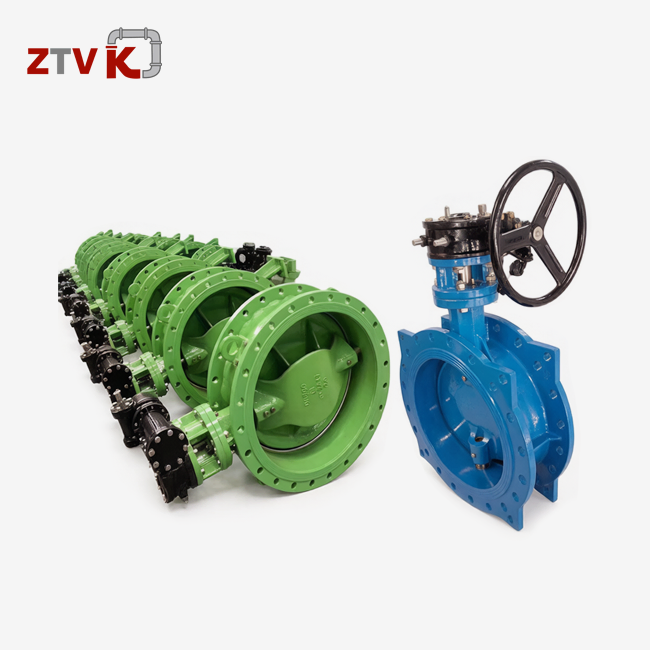
A double-flange type butterfly valve is a quarter-turn rotary valve that has full flanges on both the valve body's input and exit sides. Instead of using through-bolts to connect two pipe flanges together as wafer-style valves do, this design bolts to each matching pipe flange separately, making it more stable and ensuring a tight seal. It's very useful for large-diameter pipelines, high-pressure systems, and situations that need dead-end service, which means that the downstream pipes can be easily taken out for repair while the valve stays under pressure.
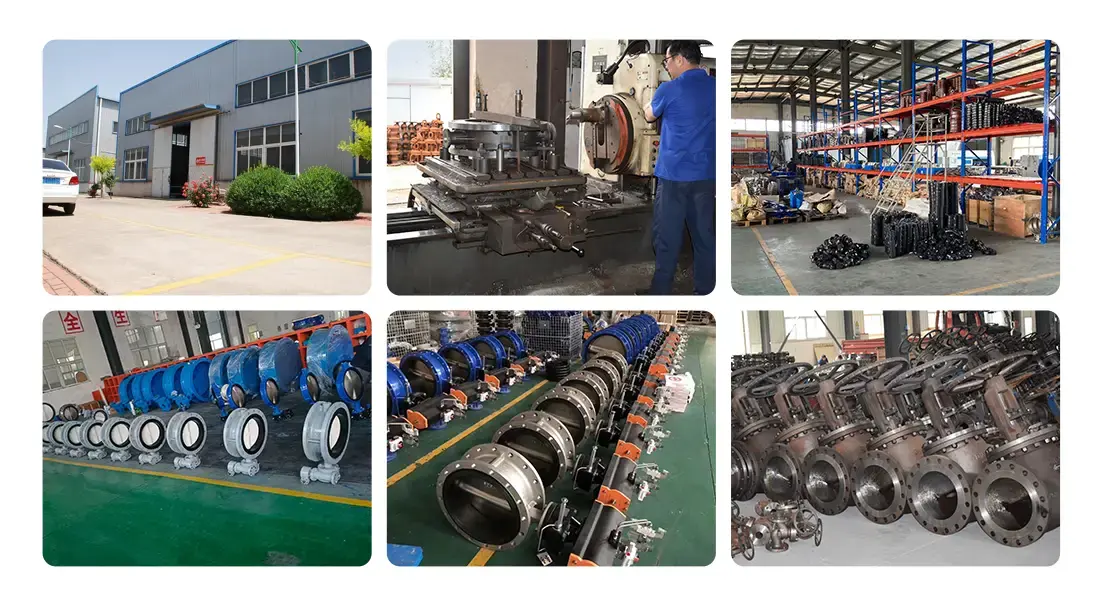
Understanding Double Flange Type Butterfly Valves
Design and Structural Features
The unique design of these valves comes from the fact that they have two flanges. There are bolt holes already made in each flange that meet foreign standards such as ISO5211, ANSI 125LB/150LB, JIS 5K/10K/16K, and PN10/PN16 ratings. The valve body is usually made of ductile iron (DI), and it holds a disc that rotates and is controlled by a bare shaft mechanism. This disc can be made of ductile iron, CF8/CF8M stainless steel, or aluminium bronze. It can turn 90 degrees to control flow from fully closed to fully open positions.
The sitting material is very important for how well the seal works. EPDM is good for general water service, NBR is good for oil service, PTFE is good for chemical protection, and VITON is good for high-temperature conditions. These elastomeric or polymer seats press against the edge of the disc, making a seal that doesn't leak even at PN16 working pressures.
Operating Principle and Flow Control
The disc can turn either opposite to or parallel to the flow direction when the valve shaft turns. When the valve is closed (at 0 degrees), the disc edge presses tightly against the valve liner, stopping all movement. As the rotation goes from 30 to 70 degrees, the valve effectively slows down the flow. However, high-speed systems should be checked for cavitation risks when the valve is used continuously in this range. When the disc is fully open (at 90 degrees), it lines up with the flow direction and reduces pressure drop, which is good for pumping systems that use a lot of energy.
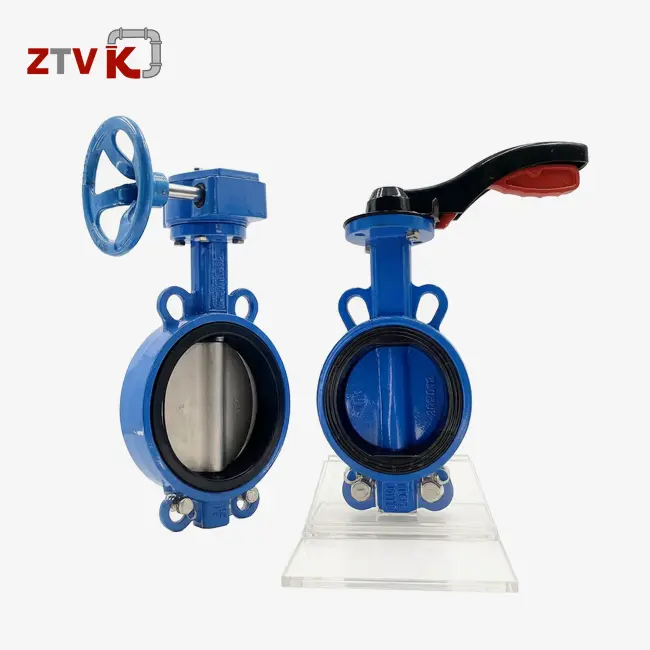
Because the valve operates on a bare shaft, it comes without an actuator. This gives end users the freedom to add manual gearboxes, electric actuators, or pneumatic operators, depending on their automation needs. This modularity lowers the original investment while keeping the ability to improve as business needs change.
Material Selection and Compatibility
Our way of making things works in a wide range of workplace situations by strategically pairing materials. The ductile iron body has a great strength-to-weight ratio for sizes from 2 inches to 80 inches (DN50-DN2000), and it is also more resistant to impact than grey cast iron alternatives. When standard materials can't handle corrosive media or high temperatures, we use CF8 or CF8M stainless steel discs, which keep their shape even when exposed to harsh chemicals.
Different types of aluminium and bronze discs are used for specific tasks in saltwater or seawater environments that are common in desalination plants and marine systems. The material naturally resists biofouling and corrosion caused by chloride, which greatly increases the time between repairs. Also, the choice of seat material has a direct effect on how long it will last. EPDM works well in drinking water up to 110°F, PTFE with most acids and solvents, and Viton with petroleum products at temperatures up to 400°F.
Advantages and Applications of Double Flange Butterfly Valves
Key Operational Benefits
Compared to other designs, the independent flange mounting has a number of performance advantages. The structural rigidity goes up a lot, especially for diameters bigger than DN600, where wafer-style valves have trouble aligning, and stress builds up at the seat interface. The double flange type butterfly valve design spreads the load on the flange across the whole face, stopping any warping that could damage the seal or speed up wear.
Installation of a double-flange type butterfly valve is a lot easier because each flange bolts separately. This gets rid of the need for long through-bolts and lets one person put together smaller sizes. It's also easier to do maintenance because techs can remove the piece of pipe further downstream without depressurising the whole system. This cuts down on downtime needed for inspections or repairs. This dead-end service feature is very useful in critical infrastructure where nearby pipeline sections must keep running continuously.
The valves are better at handling changes in pressure and water hammer than compression-mounted options. Vibration resistance comes from the positive bolted connection, which stops small movements and slow tightening that can happen in high-cycling situations like cooling tower circuits or pump discharge lines.
Industrial Applications
These valves are very important for municipal water distribution networks because they separate trunk lines and control sections. They come in sizes from DN1000 to DN2000 and offer cheaper shut-off than gate valves while taking up very little installation space. The valves can handle being buried, where ground movement and temperature changes put a lot of stress on the pipes. Their long stems allow them to be buried deeply while still having workers that can reach them from the surface.
These valves are used for chilled water and condenser water lines in HVAC systems in business buildings and district cooling plants. The quick quarter-turn action makes it easy to balance the system quickly during commissioning, and the tight cutoff stops energy loss from bypass flow, which can be very expensive. They are used by fire protection contractors to shut off sprinkler systems in places where they must be closed reliably in case of an emergency.
These valves are put on process lines that handle corrosive liquids, slurries, and gases in chemical processing plants. Extreme pH levels, rough particles, and high temperatures can all be handled by the many combinations of wet materials. In petrochemical applications, the ability to handle large diameters and high pressures is needed to meet strict requirements for moving crude oil, distributing refined products, and cooling water systems.
They are used a lot in cooling circuits, condensate systems, and other services at power plants. The valves can handle thermal cycles during start-up and shut-down processes and still seal properly against high differential pressures. Their strong design can handle the vibrations that come from being close to rotating tools without affecting their performance.
Comparing Double Flange Butterfly Valves with Alternatives
Double Flange vs. Wafer Type
Wafer-style butterfly valves use continuous through-bolts to connect between pipe flanges. This makes them lighter and smaller. However, they aren't safe for dead-end work and need careful torque control during installation to make sure they don't get too tight or too loose. The double-flange type butterfly valve works best when sections of pipe need to be shut off for repair or when mechanical loads could bend a compression-mounted valve.
When the diameter gets big, the structural advantage stands out. A DN800 wafer valve is only stable when the flanges are compressed. The equivalent double flange type butterfly valve model, on the other hand, spreads stress through specific bolt patterns. This makes it less likely that the seat will extrude or the body will warp when the temperature rises.
Double Flange vs. Lug Type
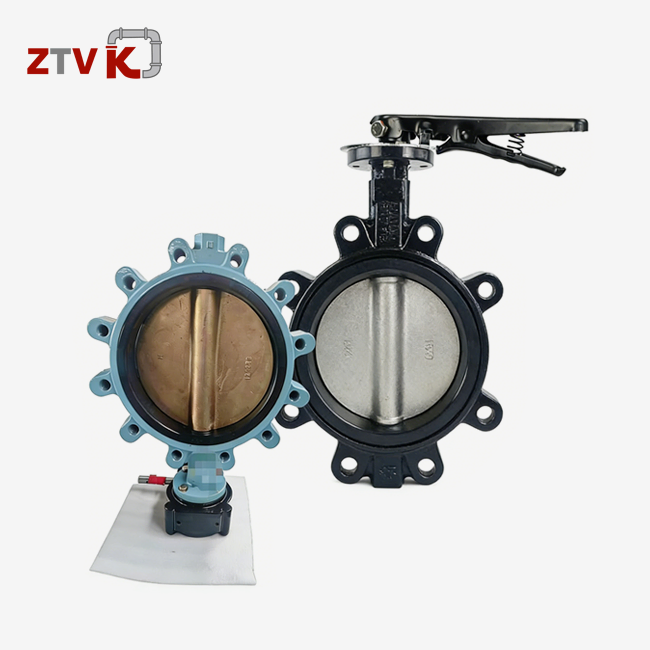
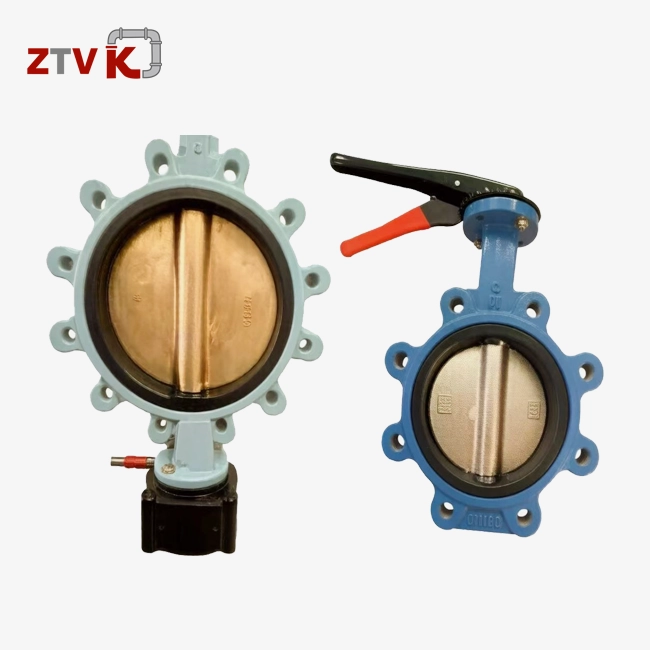
Lug-style valves have threaded inserts around the outside of the body, which lets them be installed by bolting through, like wafer-style valves, but with the ability to do dead-end service. This is similar to how double-flange-type butterfly valves work, but lug designs usually have limits on sizes and pressure ratings because of the strength of the insert. The full flange faces on our double-flange type butterfly valves spread the load better and let heavier actuators fit without the need for extra support pieces.
When it comes to maintenance, lug valves can sometimes be handled in-line by taking out alternate bolts, but full flange separation is usually needed for double-flange-type butterfly valves. But the trade-off means better long-term reliability in situations with a lot of vibration or cycling, where threaded inserts could wear out.
Double Flange vs. Ball Valves
Although ball valves have almost no pressure drop and great throttling properties, they are much more expensive to make and use. The double-flange type butterfly valve is 30–50% cheaper to buy and controls flow well enough for most uses. Butterfly valves are also cheaper to maintain because replacing a seat takes less disassembly, and because the mechanism is easier, you don't need to keep as many extra parts on hand.
Ball valves are great for gas service because they can close quickly and completely, even when there are big differences in pressure. Butterfly valves work better when a moderate seal is enough, when large diameters are needed, or when the fitting room is limited and small forms are preferred.
Buying Guide: How to Select the Right Double Flange Butterfly Valve?
Critical Specification Parameters
Correctly describing the system is the first step in choosing the right valves. Working pressure tells you whether PN10 (150 PSI) or PN16 (232 PSI) ratings are enough, and temperature ranges tell you what kind of material to use for the seat. The corrosivity, abrasiveness, and density of a fluid affect the choice of material for the body and disc. When the pH level is below 5 or above 9, we suggest stainless steel internals. When the pH level shows that elastomer degradation is likely, we suggest PTFE seats.
Flow speed and acceptable pressure drop should be taken into account when sizing. Large valves use less energy, but they are more expensive to buy and take up more room when they are installed. If the choices are too small, they could cause cavitation damage and too much actuator force. Our engineering team gives you CV data and flow curves to help you get the right size for the job across the whole operating range.
Flange Standards and Connection Compatibility
Confirming flange drilling patterns keeps expensive changes from having to be made in the field. Our normal output can handle ISO5211, ANSI 125LB/150LB, JIS 5K/10K/16K, and PN10/PN16 configurations, which are the most common pipeline standards around the world. For non-standard uses, custom drilling patterns are possible, but they add 5–7 days to the wait time. While some wafer valves have sealing surfaces built right into them, double-flange-type butterfly valve setups need their own seals that can withstand the system's media and temperature.
For most commercial uses, face-to-face measurements are based on ISO 5752 Series 13 (short pattern) or Series 14 (long pattern). In North America, however, AWWA C504 sets the standards for waterworks. By checking these measurements during the design process, you can avoid problems with equipment or structures that are close by.
Actuator Selection Considerations
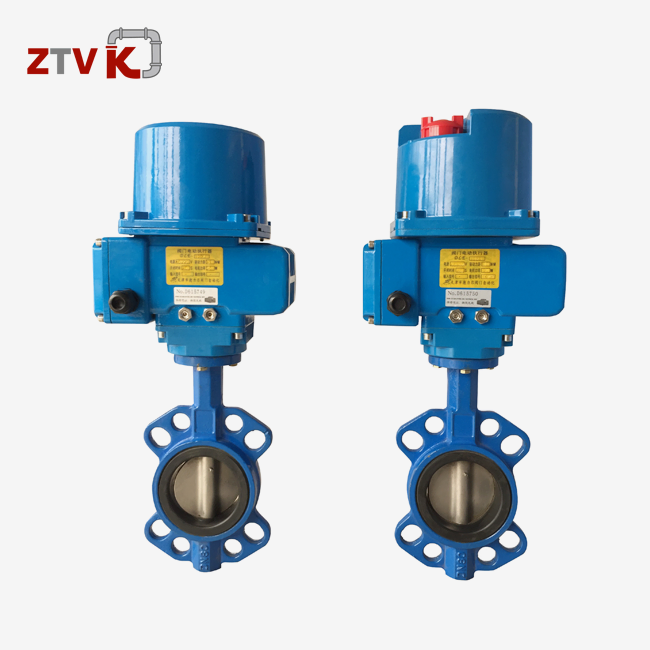
When labour costs are low enough, intermittent cycling applications that can be operated manually via handwheel or gearbox are a good fit. Electric valves let you control things from afar and connect to SCADA systems, which is very important for sites that need to be left alone or for automating processes. For emergency shutdowns, pneumatic operators provide a quick stroke, but they need infrastructure for compressed air.
The actuator torque of a double-flange-type butterfly valve must be greater than the valve breakaway torque by a safety factor of at least 1.5x to 2.0x, taking into account the effects of seat friction, bearing resistance, and differential pressure. Our bare shaft design works with ISO5211-compliant actuators from well-known brands, so you can get them at a low cost and avoid being locked into one vendor.
Conclusion
The double-flange type butterfly valve is a reliable and affordable way to control flow in the water, HVAC, chemical, and power generation industries. Its separate flange mounting is better mechanically than wafer designs, especially in setups with big widths and a lot of stress. The different types of materials can work with a wide range of media, and the bare shaft design gives the actuator the freedom to adapt to automation needs and budget limitations. To make the right choice, you need to look at things like pressure rates, material compatibility, flange standards, and actuator needs that are in line with what the system needs. Regular repair practices extend the life of operations and keep sealing performance high, safeguarding building investments and ensuring process dependability.
FAQ
1. What pressure ratings can double flange butterfly valves handle?
Standard configurations can handle working pressures of PN10 (150 PSI) and PN16 (232 PSI), which is good for most municipal water, HVAC, and light industrial uses. Higher pressure rates need different body shapes and better ways to keep the seat in place. Always look at pressure-temperature charts that are specific to the body and seat material you are using. This is because higher temperatures lower the pressures that can be used.
2. Can these valves function in high-temperature applications?
Temperature capability mostly depends on the material chosen for the seat. EPDM seats work well up to 230°F, and VITON seats work well up to 400°F. PTFE can work in temperatures ranging from very cold to 450°F, which is the widest range. Ductile iron bodies can handle temperatures up to 450°F, but for uses above that, stainless steel construction is needed. When used in high temperatures, choosing the right actuator is also affected because some electric operators need heat covers or longer shafts.
3. How do I order customised double-flange butterfly valves?
When someone asks for customisation, they should include the size, pressure rating, body material, disc material, seat material, flange standard, and face-to-face dimension. By giving us process factors like fluid type, temperature range, flow rate, and pressure drop limits, you help our engineering team make sure that the choices you make are correct and suggest ways to make things better. For non-standard requests like special coatings, longer stems, or different shaft configurations, production lead times are usually 10 to 15 days longer than for standard models.
4. What is the typical delivery timeline for bulk orders?
Our Tianjin facility keeps common configurations from DN50 to DN600 in stock, so shipping can happen 3–7 days after the order is confirmed. Sizes or specifications that aren't standard take 15 to 25 days to make, depending on how complicated they are and how busy the factories are right now. You can pay extra for faster processing, which cuts the time it takes to 7–10 days. Being close to Tianjin Port makes export logistics easier, and established shipping partnerships make FOB and CIF terms possible.
Partner with ZTVK for Reliable Double-Flange Butterfly Valve Solutions
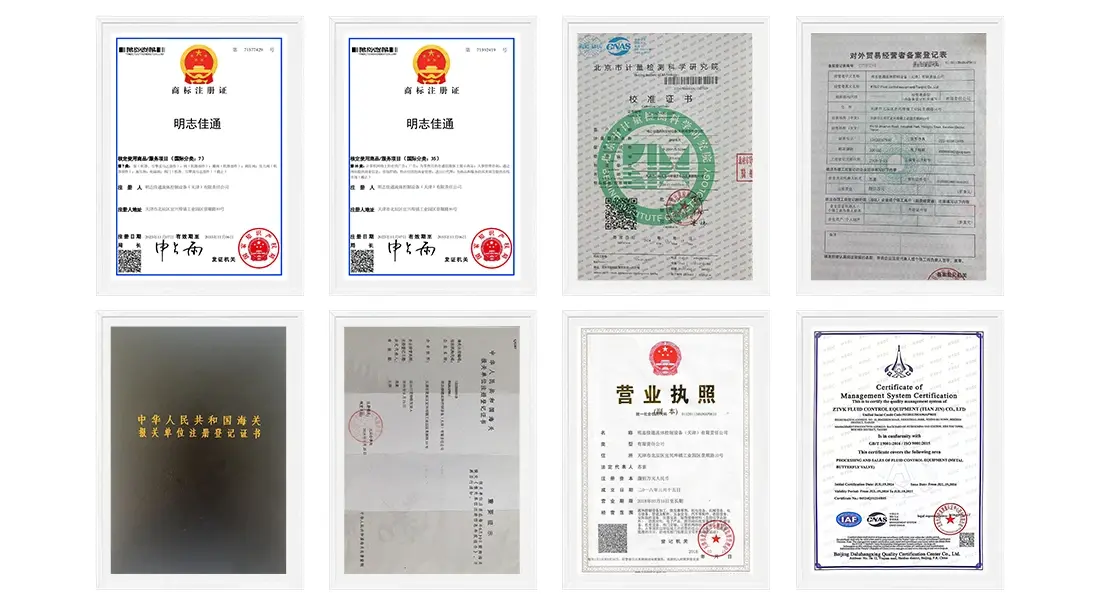
With over 15 years of experience in valve engineering and ISO9001, ISO14001, and OHSAS18001 certifications, ZTVK is a well-known double-flange-type butterfly valve manufacturer based in Tianjin's Beichen District. They offer high-quality industrial flow control solutions. Our production ranges from DN50 to DN2000, and we can handle both normal inventory shipments and OEM/ODM projects that are specifically suited to your needs. Every valve is made to meet foreign standards like ISO, ANSI, JIS, and DIN. This is done with modern machining tools and full quality control systems.
We keep a lot of popular combinations in stock, so we can deliver quickly (3–7 days). Our flexible manufacturing also lets us use custom materials, coatings, and connection standards, and our production cycles last 15–25 days. Because we are only 50 km from Tianjin Port, we have a logistical advantage that lets us offer competitive FOB prices and reliable export schedules. Our technical team offers advice before the sale, detailed CAD drawings, and full support after the sale, all backed by an 18-month warranty.
To talk about your needs for a double flange type butterfly valve, please email our sales team at ktec86961886@163.com. ZTVK gives your operations the quality, dependability, and supply chain efficiency they need, whether they need to buy in bulk for sales, make custom setups for projects, or work with other companies as an OEM.
References
1. American Water Works Association. (2017). AWWA Manual M49: Butterfly Valves: Torque, Head Loss, and Cavitation Analysis. Denver: AWWA Publications.
2. International Organization for Standardization. (2021). ISO 5752: Metal Valves for Use in Flanged Pipe Systems - Face-to-Face and Centre-to-Face Dimensions. Geneva: ISO Standards.
3. Valve Manufacturers Association. (2019). VMA Technical Guide: Butterfly Valve Design and Application. Washington DC: VMA Publications.
4. Smith, P.R. & Zappe, R.W. (2018). Valve Selection Handbook: Engineering Fundamentals for Selecting the Right Valve Design. Oxford: Gulf Professional Publishing.
5. British Standards Institution. (2016). BS EN 593: Industrial Valves - Metallic Butterfly Valves for General Purposes. London: BSI Standards.
6. Hutchison, J.W. (2020). ISA Handbook of Control Valves: Flow Control Applications and Theory. Research Triangle Park: International Society of Automation.
Send us your valve requirements and our team will provide professional solutions and fast quotations.
RELATED INDUSTRY KNOWLEDGE