- English
- French
- German
- Portuguese
- Spanish
- Russian
- Japanese
- Korean
- Arabic
- Greek
- German
- Turkish
- Italian
- Danish
- Romanian
- Indonesian
- Czech
- Afrikaans
- Swedish
- Polish
- Basque
- Catalan
- Esperanto
- Hindi
- Lao
- Albanian
- Amharic
- Armenian
- Azerbaijani
- Belarusian
- Bengali
- Bosnian
- Bulgarian
- Cebuano
- Chichewa
- Corsican
- Croatian
- Dutch
- Estonian
- Filipino
- Finnish
- Frisian
- Galician
- Georgian
- Gujarati
- Haitian
- Hausa
- Hawaiian
- Hebrew
- Hmong
- Hungarian
- Icelandic
- Igbo
- Javanese
- Kannada
- Kazakh
- Khmer
- Kurdish
- Kyrgyz
- Latin
- Latvian
- Lithuanian
- Luxembou..
- Macedonian
- Malagasy
- Malay
- Malayalam
- Maltese
- Maori
- Marathi
- Mongolian
- Burmese
- Nepali
- Norwegian
- Pashto
- Persian
- Punjabi
- Serbian
- Sesotho
- Sinhala
- Slovak
- Slovenian
- Somali
- Samoan
- Scots Gaelic
- Shona
- Sindhi
- Sundanese
- Swahili
- Tajik
- Tamil
- Telugu
- Thai
- Ukrainian
- Urdu
- Uzbek
- Vietnamese
- Welsh
- Xhosa
- Yiddish
- Yoruba
- Zulu
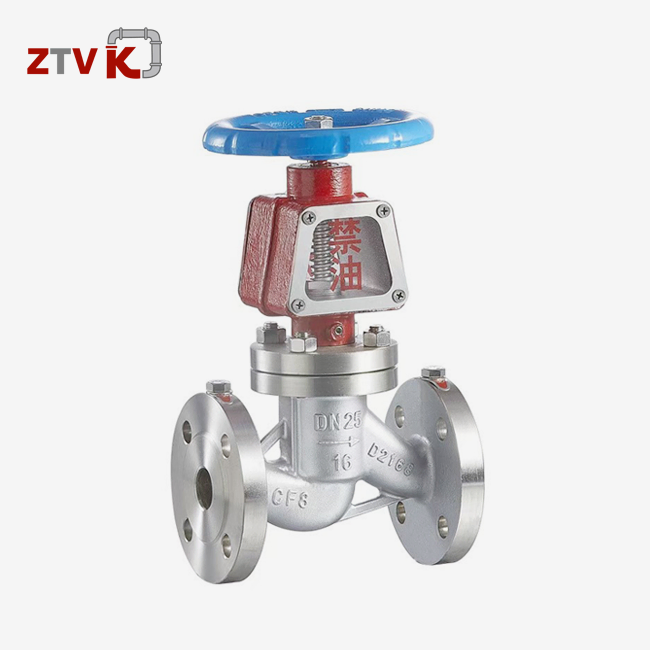
steel shut off valve
Cover :WCB
Nominal width :DN80 - 3'' inch
Plate cone:F316
Spindle :F316
Connection :Flange PN16
Body:WCB
Face to Face length :EN 558-1 series 1
Temperature range :Max. to 400°C
Actuation :Handwheel (rising stem)
Steel Shut Off Valve DN80 WCB Flanged Globe Valve with Rising Stem Handwheel for High-Temperature Service
ZTVK's steel shut off valve (DN80, PN16 flanged) is a globe-type isolation valve built for high-temperature industrial service up to 400°C. A carbon steel called WCB is used to cast the valve body and cover. F316 stainless steel is used for the spindle and disk cone. When used in harsh situations, graphite joints and seats keep their sealing function. The face-to-face measurements are in line with EN 558-1 Series 1, which means they can be directly installed into normal pipe plans without any changes.
What Is a Steel Shut Off Valve?
A steel shut off valve is a heavy-duty isolation device designed to completely stop or allow fluid flow within a piping system. It is intended for on/off service — not throttling — using a closure disc housed inside a steel body.
The pressure on the stem is what pushes the disk against the seat and stops the flow of media. The stem axis is parallel to the seat sealing surface. This makes the valve's stroke short and reliable, and it shuts off precisely.
In settings with a lot of pressure or heat, this design works well for systems that need to be isolated in the same way every time.
Key Specifications
|
Parameter |
Details |
|
Valve Type |
Globe Valve (Stop Valve) |
|
Nominal Size |
DN80 / 3 inch |
|
Body Material |
WCB (Carbon Steel) |
|
Cover Material |
WCB |
|
Spindle Material |
F316 Stainless Steel |
|
Plate Cone Material |
F316 Stainless Steel |
|
Seat / Bushing |
Graphite |
|
Connection Type |
Flange PN16 |
|
Face-to-Face Length |
EN 558-1 Series 1 |
|
Max. Temperature |
400°C |
|
Actuation |
Handwheel (Rising Stem) |
|
Pressure Direction |
Unidirectional (install per flow direction arrow) |
Design Features and How This Valve Works
The stem-applied pressure is what makes the globe valve close. The rising stem pushes the F316 disk down onto the graphite seat when the handwheel is turned. This makes a seal that stops the flow of media.
Since the stem lifts during operation, it is easy to see whether the valve is open or closed without using any tools.
In steam and thermal-oil applications, graphite seats and bushings are better at resisting deformation than elastomeric alternatives because they keep their sealing integrity at temperatures up to 400°C.
The F316 spindle and disk set doesn't rust in aggressive fluids, such as mild acids and fluids that contain chloride.
Note: This valve should not be used to slow down flow. When there is only a small opening, fast-moving fluid wears away the seat surface at the gap. This is called "wire drawing," and it makes a permanent leak path. This valve is only meant to be used when it is fully open or closed.

Globe Valve vs. Gate Valve: Key Differences
|
Feature |
Globe / Stop Valve |
Gate Valve |
|
Sealing Method |
Disc pressed onto seat |
Wedge slides across bore |
|
Flow Direction |
Unidirectional only |
Bidirectional |
|
Structural Length |
Longer |
Shorter |
|
Valve Height |
Shorter |
Taller |
|
Sealing Surface Wear |
Low (no sliding contact) |
Higher (sliding contact) |
|
Throttling Capability |
Limited; not recommended |
Not recommended |
|
Flow Resistance |
Higher (tortuous internal path) |
Lower |
The globe valve's internal flow path creates higher flow resistance than a gate valve. However, the disc's short stroke and non-sliding seat contact helps sealing surfaces stay in good condition over many open/close cycles.
Typical Applications
This steel shut off valve is used where reliable isolation is required and installation space permits a longer face-to-face valve body.
·For steam systems, the 400°C temperature rating is enough to handle very hot steam in power plants and heat distribution networks.
·Petrochemical and refinery pipelines: the WCB body deals with high-pressure hydrocarbon media
·For industrial water and sewage systems, the PN16 flanged link fits right into standard process pipes.
·Heating and thermal oil circuits: Graphite seating is better than rubber or PTFE seating when it comes to thermal cycling.
·Natural gas distribution: F316 internals can handle sulfur chemicals and other toxic parts in gas streams
Material Selection Notes
The base of the WCB is made of normal carbon steel casting grade that can handle temperatures from -29°C to 425°C. It has the right amount of tensile strength for PN16 service and the right amount of cost-effectiveness for medium-sized pipeline projects.
When the process medium could corrode carbon steel, the internals (spindle and disk) made of F316 stainless steel are required. F316 is more resistant to pitting and crevice rust than normal 304 stainless steel because it has more molybdenum in it.
Graphite seat material keeps its seal at 400°C, while PTFE or rubber alternatives would break down or creep. Additionally, graphite can lubricate itself, which lowers the friction between it and the disk while it is being used.
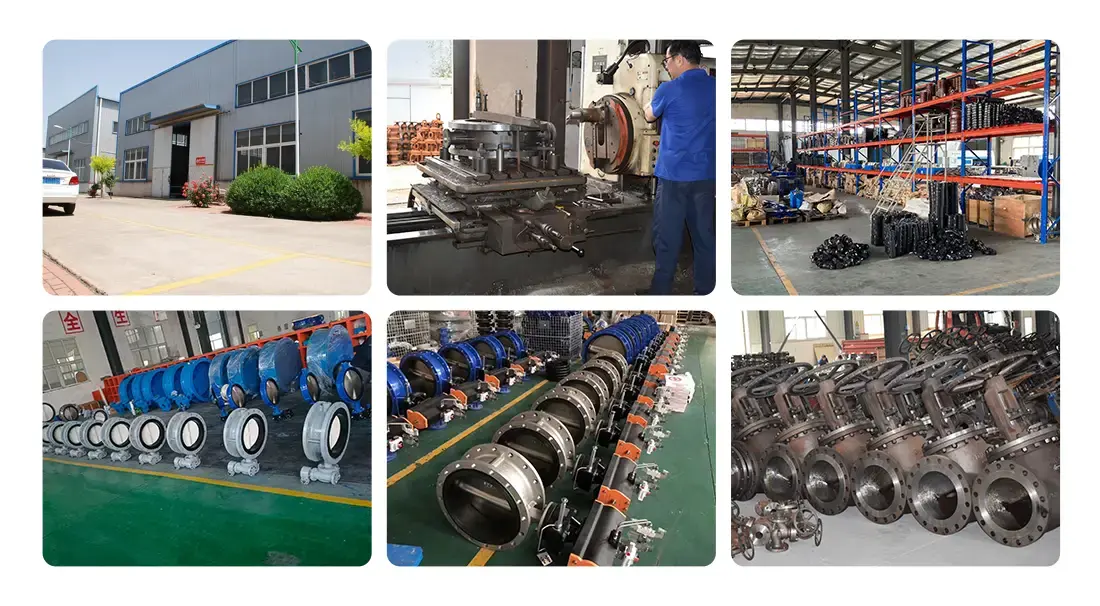
Other than PN16 and DN80, ZTVK can make valves to OEM or ODM specs in sizes ranging from DN32 to DN2600 and pressures ranging from 0.1 MPa to 48 MPa.
Quality Control Process
Before it is sent out, each valve goes through a structured inspection process.
Verification of the material: chemical composition confirmed to meet WCB and F316 standards
Checking the dimensions: the length from face to face was checked against EN 558-1 Series 1, and the flange sizes were checked against the PN16 standard.
The hydrostatic shell test is done at 1.5 times the rated pressure to make sure the body is solid.
The seat leakage test is a closure test at 1.1 bar, which is the minimum pressure required by API 598.
Visual and surface inspection: flaws were found on sealing surfaces before they were put together.
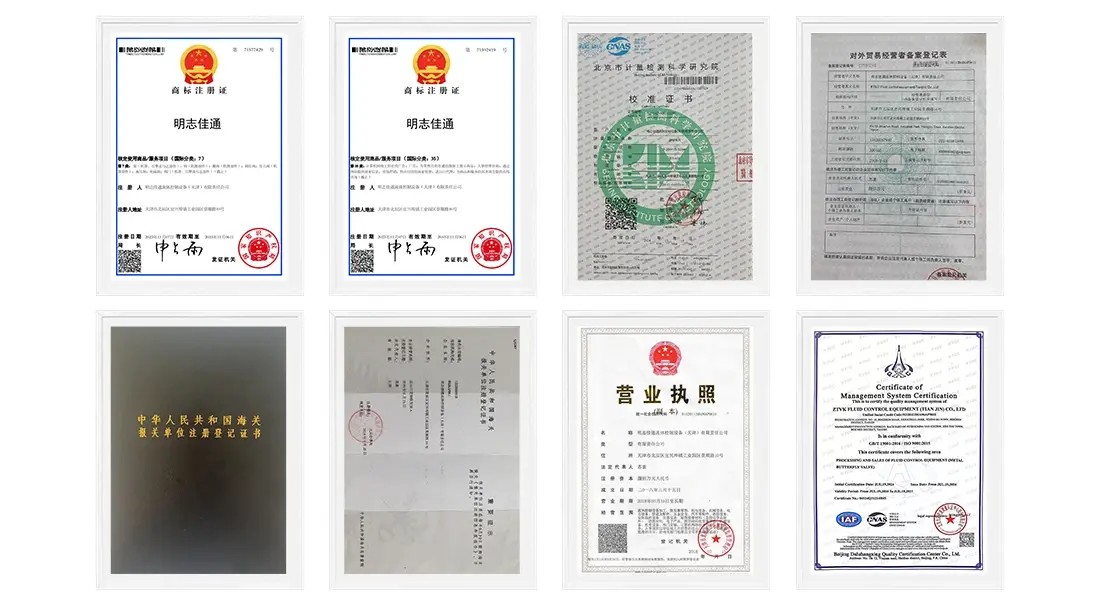
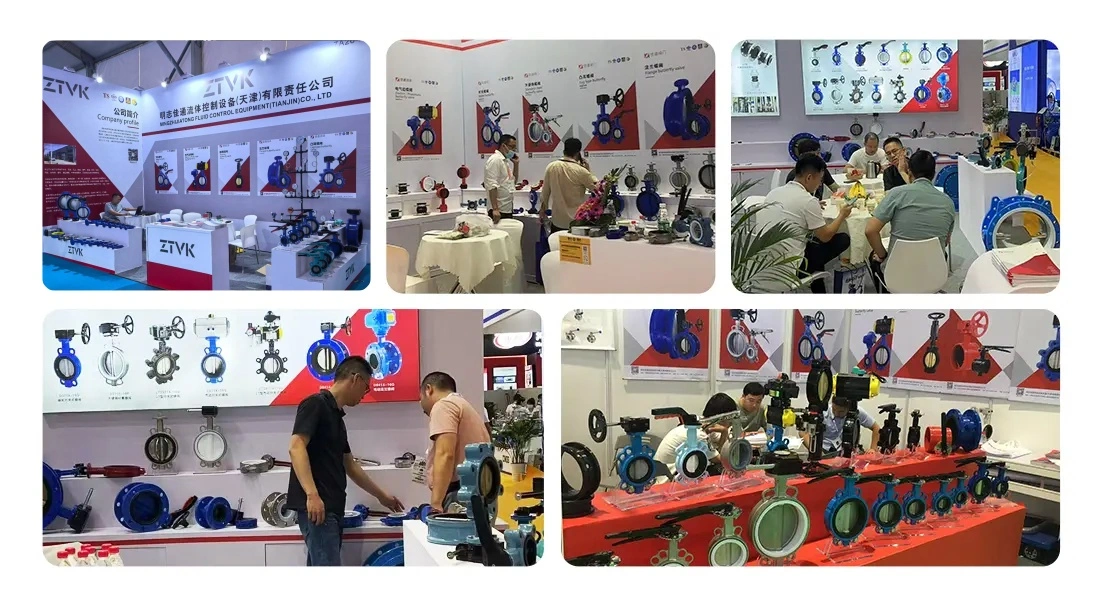
ZTVK holds ISO 9001, ISO 14001, and OHSAS 18001 certifications. Products are manufactured to API, ANSI, DIN, JIS, BS, and ISO standards depending on customer requirements.
Packaging and Delivery
You can get standard DN80 valves right away. Standard goods usually have a wait time of 3–7 days from the time the order is confirmed.
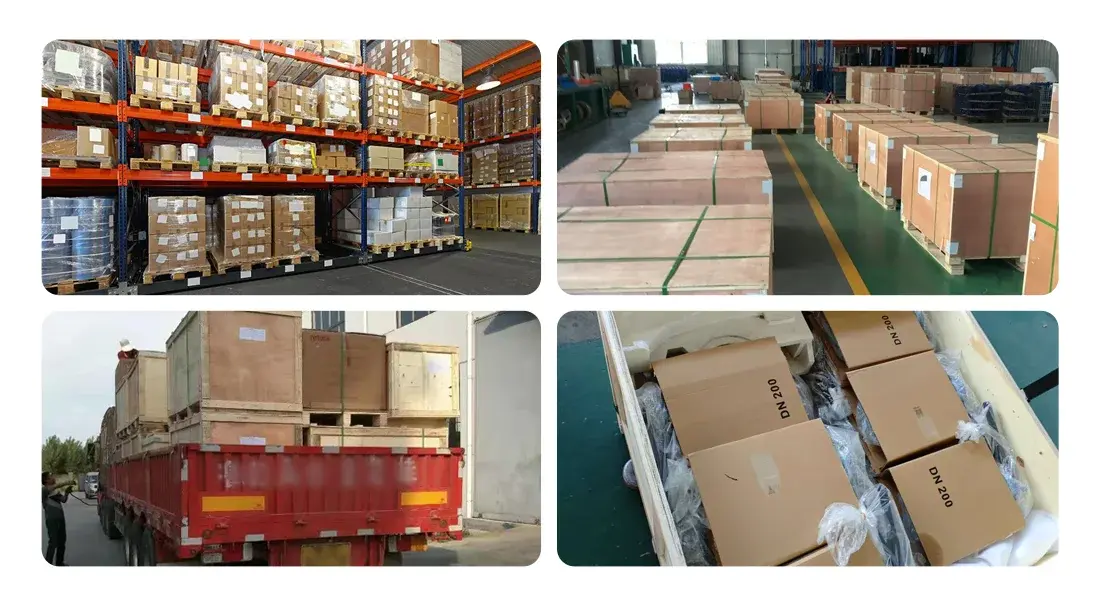
Wooden crates, moisture-proof film, and mounting brackets are used for export packaging. For foreign shipping, all of the packing meets ISPM 15 phytosanitary standards.
ZTVK's factory is about 50 km from Tianjin Port, so it can support both FOB Tianjin Xingang and CIF destination-port quotes.
The normal time it takes to make customized valve configurations is 15–25 days, but depending on the needs, it can be done faster in 7–10 days.
FAQ
Q1: What's the difference between API 600 and API 6D when it comes to valves?
A: In API 600, wedge gate valves are talked about as a way to keep refineries separate. Stronger walls and rising stems make these valves different. You can find ball, gate, and plug valves that meet API 6D standards for pipeline valves. It has certain needs for transmission pipes, like being able to pig and do Double Block and Bleed (DBB). The type of service you need, like pipeline operation vs. refinery isolation, will tell you which standard to use.
Q2: How do I decide between a shut off valve made of cast steel or formed steel?
A: In high-pressure situations where accuracy is important, forged steel (like F316 or A105) is better for valves smaller than 2 inches or used in situations where there is a lot of pressure. For valves DN50 and up, cast steel like WCB is often used because it saves money when making difficult forms. This DN80 valve's body is made of WCB cast iron, which means it can handle PN16 service.
Q3: Can this valve be used to control the flow of fluid?
A: No, using this valve for throttling (partially opening) leads to wire drawing. This happens because the high-speed fluid wears away the seat at the small gap, making a permanent leak path. This valve is only meant to be used when it is fully open or closed.
Q4: What does NACE compliance mean for a shut off valve?
A: According to NACE MR0175/ISO 15156, valve materials are heated to specific levels of hardness to prevent Sulfide Stress Cracking (SSC) in places where hydrogen sulfide (H₂S) is present. If your application involves servicing sour gas, find out if NACE compliance is needed and make that clear when you ask about it.
Q5: There is a leak in my valve through the stem packing (Q5). Can I make changes while the line is being pressed?
A: There is a side mechanism on most industrial globe valves that could possibly separate the packing area. But adjusting the packing while the line is under full pressure is dangerous and shouldn't be done unless the valve is designed and approved for live-loading maintenance. Always follow the safety rules for your building before you do anything.
Q6: What kinds of customization options are there?
A: ZTVK works with both OEM and ODM setups. You can choose from different body materials (duplex steel, stainless steel 304/316), different types of connections (flanged to other pressure classes), pneumatic or electric actuator interfaces, custom nameplates, and branded packaging. Send us your specs and we'll give you an idea of the lead time and price.
Contact Us
For specifications or a steel shut off valve quotation, contact us at ktec86961886@163.com. We welcome inquiries for standard and custom valve configurations.
Send us your valve requirements and our team will provide professional solutions and fast quotations.