- English
- French
- German
- Portuguese
- Spanish
- Russian
- Japanese
- Korean
- Arabic
- Greek
- German
- Turkish
- Italian
- Danish
- Romanian
- Indonesian
- Czech
- Afrikaans
- Swedish
- Polish
- Basque
- Catalan
- Esperanto
- Hindi
- Lao
- Albanian
- Amharic
- Armenian
- Azerbaijani
- Belarusian
- Bengali
- Bosnian
- Bulgarian
- Cebuano
- Chichewa
- Corsican
- Croatian
- Dutch
- Estonian
- Filipino
- Finnish
- Frisian
- Galician
- Georgian
- Gujarati
- Haitian
- Hausa
- Hawaiian
- Hebrew
- Hmong
- Hungarian
- Icelandic
- Igbo
- Javanese
- Kannada
- Kazakh
- Khmer
- Kurdish
- Kyrgyz
- Latin
- Latvian
- Lithuanian
- Luxembou..
- Macedonian
- Malagasy
- Malay
- Malayalam
- Maltese
- Maori
- Marathi
- Mongolian
- Burmese
- Nepali
- Norwegian
- Pashto
- Persian
- Punjabi
- Serbian
- Sesotho
- Sinhala
- Slovak
- Slovenian
- Somali
- Samoan
- Scots Gaelic
- Shona
- Sindhi
- Sundanese
- Swahili
- Tajik
- Tamil
- Telugu
- Thai
- Ukrainian
- Urdu
- Uzbek
- Vietnamese
- Welsh
- Xhosa
- Yiddish
- Yoruba
- Zulu
Backflow Protection Made Simple: Understanding 3 inch wafer check valve
For DN80 pipe functions, the 3 inch wafer check valve is a compact choice for backflow protection in industrial pipe systems. It fits directly between pipe flanges and doesn't need installation tools, saving space. Backflow is stopped instantaneously by its spring-loaded disk technology. It meets API 594 requirements and offers reliable one-way flow control in a small space, which is useful in locations where every inch matters.
What is a 3 Inch Wafer Check Valve and How Does It Work?
Understanding the Basic Design
Wafer-style check valves defend against backflow more simply. Traditional flanged valves lengthen pipes. However, this design employs lengthy bolts to fit between two conventional ANSI flanges. Two to three inches is a minor body thickness compared to swing-type choices that may reach six inches or more over the pipe's diameter.
Some applications employ single-disc variants of the dual-plate disc architecture. Because of their central pin hinge, these plates move immediately when the flow direction changes. When fluid flows in the appropriate direction, the plates open, reducing resistance. When forward pressure declines or flow reverses, torque springs close the plates, sealing the valve seat.
Operational Mechanics Explained
These valves function using differential pressure and mechanical assistance. In normal usage, system pressure presses on the upstream disc plates. Compressing the springs allows flow. For regular water consumption, the spring tension is adjusted to 0.5–1.0 PSI. This allows easy valve opening without reducing pressure.
This gadget is important because of its fast reaction time. Traditional swing check valves shut purely by gravity and backflow, allowing dangerous backflow spikes. The hydraulic shock known as 'water hammer' is avoided by spring-assisted 3-inch wafer check valves closing at zero flow rate. This proactive sealing protects pumps, compressors, and other critical industrial equipment against 500% or greater pressure surges.
Material Considerations for Different Applications
For rust resistance, ZTVK makes our D77X type 3-inch wafer check valves from grades 304 and 316 stainless steel. The 304 variant handles regular water service and somewhat corrosive media effectively. The 316 variant has molybdenum, making it chloride- and acid-resistant. Both materials are durable in municipal water systems, HVAC systems, and light chemical processing lines at normal temperatures.
Valve seats below 250°F contain rubber seals for bubble-tight cutoff, whereas those beyond that temperature are metal-seated. EPDM seals function well with mildly acidic and alkaline fluids in our basic arrangement. This balances sealing and chemical compatibility for many industrial fluids.
Benefits of Using 3 Inch Wafer Check Valves in Industrial Backflow Protection
Space and Weight Advantages
In retrofit work and tiny mechanical rooms, installation space determines many purchases. A 3-inch wafer check valve saves 80% of the axial length of ordinary flanged check valves. This reduced size saves money immediately since it requires fewer pipe replacements, valve boxes, and structural supports. Local water projects have lowered installation footprints by 40% by using wafer designs.
Weight loss matters too. A 3" cast iron swing check weighs 35 pounds, although a 12–15-pound stainless steel wafer check is similar. It simplifies installation and reduces stress on building structures and pipe supports. Seismic regions employ every pound of equipment to calculate horizontal load, making this crucial.
Hydraulic Performance Benefits
A valve pressure decrease affects system pumping costs over time. Dual-plate 3 inch wafer check valves minimize the flow route, increasing flow coefficient (Cv) by 15–20% over swing checks. This efficiency reduces pump motor energy usage and keeps fluid streams cooler.
Additional benefits include the anti-slam mechanism. Spring-loaded plates close before reverse flow starts up to prevent forceful disc-to-seat collisions that generate noise, vibration, and early wear. Facilities near neighborhoods or with noise limitations prefer this silent operation, and maintenance teams like how long the parts last—often 50,000 rounds or more under ideal circumstances.
Maintenance and Operational Simplicity
Fewer moving parts make repairs simpler. Only the disc assembly, hinge pin, springs, and seals are within the 3-inch wafer check valve. These sections are simple to reach using flange bolts. Regular checks take minutes, not hours, and replacement parts cost 30–40% less than swing check internals. Workers often have additional disc assemblies on hand to repair them quickly in the field. This reduces unforeseen maintenance downtime.
Placement possibilities are also available with the two-way body. No mounting angle is best as long as the compact body has a flow arrow. Technicians may place the valve horizontally, vertically upward, or vertically downward based on system demands. This flexibility is helpful when space or pipe geometry prevents valve placement.
Comparing 3 Inch Wafer Check Valves with Other Valve Types for Informed Procurement
Wafer vs. Swing Check Valves
Swing check valves have long been the most common backflow stopper because to its simplicity and effectiveness. When the flow changes direction, a flexible disc may readily swing from totally open to seal against a seat. Even though they perform effectively in certain instances, they are inferior to chip designs. Full-bore discs need two to three times more face-to-face length than 3-inch wafer check valves to swing through their arc.
Since swing checks are near gravity, their installation is delicate. Vertical attachment requires careful size selection to ensure the disc weight and flow speed form a secure seat. Horizontal mounting works nicely. Swing valves' slam-closing characteristic increases wear and noise, whereas chip designs' controlled spring closure prevents it.
Material Selection Impact
Purchasing teams compare stainless steel to cast iron and WCB carbon steel. Cast iron is the cheapest, but it can only be used in a restricted temperature range and lacks rust resistance outside of clean water. Carbon steel can withstand high temperatures and pressures, but it requires coatings to be safe. Stainless steel 304/316 costs more upfront, but it lasts longer, resists rust better, and performs in a broader temperature range, so it pays for itself by being replaced less frequently.
We supply 3-inch wafer check valves to builders in North America, Europe, and the Middle East, and stainless steel requests are expanding every year. Facility managers are increasingly adopting corrosion-resistant materials to save on labor, system downtime, and waste costs of replacing carbon steel parts.
Pressure Rating and Size Range Considerations
The D77X 3-inch wafer check valve set from ZTVK covers 1.5 to 40 inches, or DN40 to DN1000. Branch pipes, pump discharge lines, and secondary distribution systems employ 3-inch DN80. Most pressure ratings are based on ANSI Class 150, which allows 285 PSI cold working pressure. This covers most municipal, HVAC, and small commercial needs.
When system pressures or temperatures exceed Class 150 limitations, we recommend Class 300 or other valve bodies. The 3-inch wafer check valve can't take as much pressure as hefty flanged bodies because of its narrow profile. Proper specification is crucial for safe, dependable operation.
Installation and Maintenance Guide for 3 Inch Wafer Check Valves
Pre-Installation Preparation Steps
The fitting process starts before the 3 inch wafer check valve even gets to the job site. Check that the flange sides are flat according to ASME B16.5 standards. Surface irregularities bigger than 1/32 inch can stop the gasket from closing properly and cause leaks. Check the holes in the flange for alignment issues and thread damage that could make it harder to tighten the bolts during assembly.
To get rid of rust, scale, mill coating, and other debris, clean all closing surfaces well with wire brushes or gritty pads. Clear the pipeline of any building waste, welding slag, or sediment that could get stuck in the valve disc mechanism or hurt the closing surfaces during the first operation. We've looked into a lot of early valve failures that were directly linked to pipeline cleaning that wasn't done properly before commissioning. This is a simple step that saves a lot of money on expensive returns.
Assembly and Torque Specifications
Place the 3-inch wafer check valve body between the lips so that the flow arrow points in the right direction. Because it is so small, there is no preferred vertical position. However, installing it horizontally makes it easier to do upkeep. Put the right seal material on both sides. PTFE or flexible graphite is better than normal rubber gaskets for chemical resistance and temperature stability.
Thread flange bolts through both the flanges and the valve body. Tighten the nuts by hand until they are evenly tight before adding the final pressure. To make sure the seal is compressed evenly, use a star-shaped torque sequence that starts at 30% of the final standard and goes up to 60%, then 100%. For 3-inch Class 150 flanges with 5/8-inch bolts, the final torque runs from 90 to 120 foot-pounds, based on the material of the gasket. For exact numbers that fit your installation, look at the ASME B16.5 tables.
Routine Maintenance Protocols
Set up review times based on how bad the service is. Clean water systems in city distribution don't need to be inspected for five years, but slurry services or media with suspended solids do need to be inspected every year. Depressurise and drain the line section during repair times, then unbolt one flange to get to the disc assembly.
Check the discs' sides and seats for wear, corrosion, or buildup of debris that could mean problems with the filter upstream. To check the spring tension, move the disc by hand; the resistance should feel the same all the way through the range of motion. In water service, rubber seals that are hardening, breaking, or having a tension set should be replaced every three to five years. Clean all the parts with the right cleaners, put them back together with new gaskets, and test the pressure before putting them back into service.
Troubleshooting Common Issues
Leaking past the seat is generally a sign of dirt blocking the seal, damaged seals, or discs that aren't lined up right. Take the unit apart and clean it well. Replace any old seals and make sure the hinge pin can move easily without getting stuck. If the 3-inch wafer check valve chatters or vibrates while it's working, it means that the flow rate is close to its minimum safe range. You might want to consider putting a smaller valve or one of a different style that works better in low-flow situations.
Water hammer events that happen even though the check valve is working normally are usually caused by problems with the way the system is designed, not by the valve failing. The steps used to turn off pumps might be too sudden, or surge tanks and accumulators might need more space to handle sudden pressure changes. We work closely with system builders to find the root causes of problems and suggest solutions that protect tools while also being cost-effective.
Procurement Insights: How to Source the Right 3 Inch Wafer Check Valve
Evaluating Supplier Capabilities
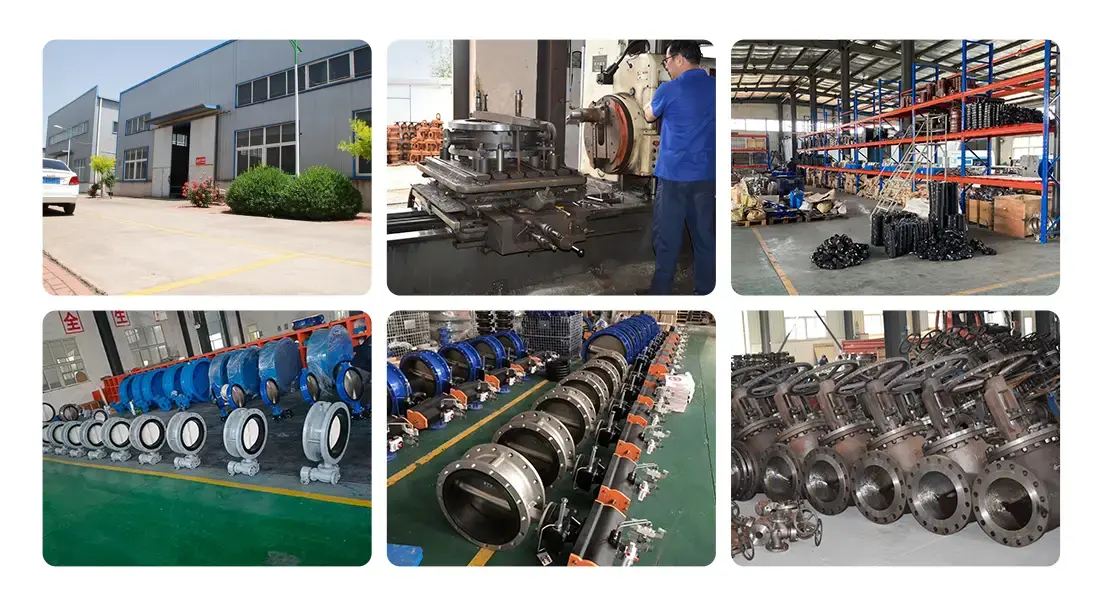
There's more to choosing a 3-inch wafer check valve provider than just looking at price sheets. Check out the company's manufacturing skills, such as its quality certifications, testing centers, and production ability. Our ISO9001, ISO14001, and OHSAS18001 certifications show that ZTVK manages quality in a planned way during the planning, production, and testing phases. Modern CNC machining centers and valve testing equipment are kept up to date at our Tianjin plant to make sure that every unit meets published specs before it is shipped.

Production capacity has a direct effect on how reliably deliveries happen. Over 2,000 units of standard DN50–DN600 configurations are kept in our building next to the production lines. This means that normal orders can be delivered in 3–7 days. Non-standard specs that need different materials or changes to the dimensions usually ship within 15 to 25 days, depending on how complicated they are. This is a lot faster than rivals who use third-party foundries or have limited machining capacity.
Understanding Certifications and Standards Compliance
More and more, buying industrial valves requires proof that they meet foreign standards. API 594 sets the size and performance standards for 3 inch wafer check valves, and API 598 sets the procedures for checking the seat's stability and the body's strength under pressure. Both standards are met by our D77X model. Each package comes with a test certificate that can be linked to approvals of raw materials and inspection records.
Material approvals are especially important for projects that need to follow the rules or have third-party approval. We offer certified mill test results that list the chemical make-up and mechanical qualities of bodies and internal parts made of stainless steel. When put together with dimensional inspection records and hydrostatic test results, these papers meet the strictest standards for buying and make project documentation easier.
Pricing Dynamics and Total Cost Analysis
Prices for 3-inch wafer check valves vary a lot depending on their size, material, pressure grade, and the number of valves that are ordered. Standard 3-inch models made of stainless steel 304 cost between $85 and $140 each, depending on the number. 316 stainless steel models cost 15 to 25 percent more because they are more resistant to corrosion. Cast iron options might look good because they are 40% less expensive, but they don't last as long and need more upkeep, so the savings are usually lost in three to five years.
Larger promises are rewarded with volume savings. Distributors who buy at least 50 pieces can get prices that are 20–30% lower than small-number rates. For container-load amounts (200–300 units, based on the mix of sizes), the biggest discounts are available. We set our prices in a way that rewards loyal customers with volume discounts that increase over time and multi-year supply deals that keep budgets stable in volatile commodity markets.
Our position in Tianjin, only 50 kilometres from Tianjin Port, makes it easier to move goods and lowers the cost of doing so. We have agreements with big shipping companies like COSCO and Maersk, so we can offer FOB Tianjin Xingang or CIF terms for target ports. Professional export packaging meets ISPM 15 standards, which keeps non-compliant wood materials from causing customs delays. This is a common problem that leads to costly port detention and demurrage charges.
Conclusion
3-inch wafer check valves effectively stop backflow in a small, light package that is ideal for setups with limited room in municipal, HVAC, and light industrial settings. The 3-inch size fits most branch pipes and pump output needs, and the stainless steel design means it will last for a long time in corrosive work. Knowing about design features, installation needs, and buying factors helps engineers and purchasing managers come up with the best solutions that balance performance, dependability, and cost-effectiveness. The service life of a system is extended by proper installation and regular maintenance, which protects valuable system parts and keeps operations running smoothly.
Frequently Asked Questions
1. What temperature range can 3-inch wafer check valves handle?
Standard 3-inch wafer check valves with elastomer seals work consistently from 0°F to 180°F, which is hot enough for most chemical, HVAC, and water uses. High-temperature versions with metal seats can handle temperatures of 400°F or more for systems that use steam or thermal fluids, but they need special materials that aren't included in our standard D77X model. Before specifying valves for extreme conditions, you should always check with the manufacturer to make sure they are temperature compatible.
2. Can wafer check valves be installed in vertical pipe orientations?
Of course. The spring-loaded closing system works even when there is no gravity, so vertical installations are fully supported whether the flow is going up or down. Because of this, 3-inch wafer check valve designs are different from gravity-dependent swing checks, which need careful direction analysis. We suggest horizontal placement mostly for the ease of maintenance access and not because it is necessary for operation.
3. How do I determine the correct pressure rating for my application?
Match the 3-inch wafer check valve pressure class to the highest working pressure in your system, plus a safety cushion that is good. At room temperature, ANSI Class 150 valves can handle 285 PSI, which is enough for most building systems and city distribution systems that work below 150 PSI. For higher-pressure uses, you need rates of at least Class 300 (740 PSI), which you can get by special order for sizes that are within our manufacturing range.
Partner with ZTVK for Reliable 3 Inch Wafer Check Valve Supply
ZTVK has been making valves for more than 15 years and can help distributors and builders who need reliable 3 inch wafer check valves. With ISO approvals and thorough testing procedures, our D77X 3-inch wafer check valve line gives your projects the quality and performance they need. Our engineering team is here to help you with any questions you have during the whole buying process, whether you need regular DN80 stainless steel units from our ready-to-ship inventory or units that are made to order for specific uses.
We know how hard it is for industrial 3-inch wafer check valve sellers to keep prices low while still making sure quality is high. Our Tianjin factory is fully integrated, which means it makes cost-effective solutions without sacrificing reliability. Its closeness to Tianjin Port makes global shipping operations easy. Your market placement is helped by OEM branding and custom package choices. Our flexible order numbers allow for both project-specific purchases and inventory stocking programs.
Ready to discuss your 3-inch wafer check valve needs with a 3-inch wafer check valve maker with a lot of experience? You can reach our technical sales team at ktec86961886@163.com. We're dedicated to providing high-quality parts and a partnership-based method that helps businesses last.
References
1. American Petroleum Institute. (2017). API Standard 594: Check Valves—Flanged, Lug, Wafer, and Butt-welding. Washington, DC: API Publishing Services.
2. Krutzsch, W.C. (2019). Industrial Valve Selection: Specifying the Right Valve for Every Service. New York: McGraw-Hill Professional.
3. Skousen, Philip L. (2018). Valve Handbook, Third Edition. New York: McGraw-Hill Education.
4. Nesbitt, Brian. (2016). Handbook of Valves and Actuators: Valves Manual International. Oxford: Elsevier Science.
5. Smith, Peter R. and Zappe, R.W. (2020). Valve Selection Handbook: Engineering Fundamentals for Selecting the Right Valve Design for Every Industrial Flow Application. Houston: Gulf Professional Publishing.
6. ASME International. (2020). ASME B16.5: Pipe Flanges and Flanged Fittings NPS 1/2 Through NPS 24 Metric/Inch Standard. New York: American Society of Mechanical Engineers.
Send us your valve requirements and our team will provide professional solutions and fast quotations.
RELATED INDUSTRY KNOWLEDGE