- English
- French
- German
- Portuguese
- Spanish
- Russian
- Japanese
- Korean
- Arabic
- Greek
- German
- Turkish
- Italian
- Danish
- Romanian
- Indonesian
- Czech
- Afrikaans
- Swedish
- Polish
- Basque
- Catalan
- Esperanto
- Hindi
- Lao
- Albanian
- Amharic
- Armenian
- Azerbaijani
- Belarusian
- Bengali
- Bosnian
- Bulgarian
- Cebuano
- Chichewa
- Corsican
- Croatian
- Dutch
- Estonian
- Filipino
- Finnish
- Frisian
- Galician
- Georgian
- Gujarati
- Haitian
- Hausa
- Hawaiian
- Hebrew
- Hmong
- Hungarian
- Icelandic
- Igbo
- Javanese
- Kannada
- Kazakh
- Khmer
- Kurdish
- Kyrgyz
- Latin
- Latvian
- Lithuanian
- Luxembou..
- Macedonian
- Malagasy
- Malay
- Malayalam
- Maltese
- Maori
- Marathi
- Mongolian
- Burmese
- Nepali
- Norwegian
- Pashto
- Persian
- Punjabi
- Serbian
- Sesotho
- Sinhala
- Slovak
- Slovenian
- Somali
- Samoan
- Scots Gaelic
- Shona
- Sindhi
- Sundanese
- Swahili
- Tajik
- Tamil
- Telugu
- Thai
- Ukrainian
- Urdu
- Uzbek
- Vietnamese
- Welsh
- Xhosa
- Yiddish
- Yoruba
- Zulu
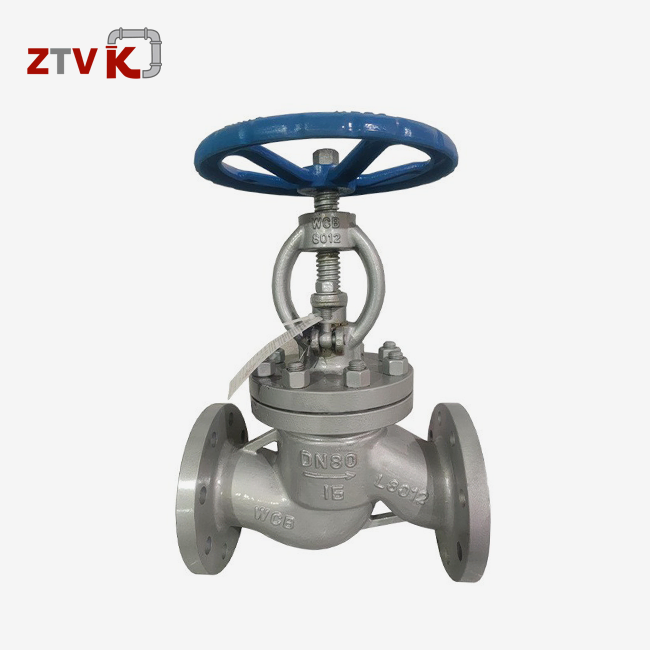
Cast steel stop valve
Nominal pressure: PN16
Nominal diameter: DN15 - DN600
body material: WCB
Operating medium: Water, steam, oil products
Application fields: Sewage, petroleum, chemical industry, environmental protection
Cast Steel Stop Valve J41W-16C | WCB Body | DN15–DN600 Industrial Flow Control
The cast steel stop valve J41W-16C is a flanged globe valve built from WCB carbon steel (ASTM A216), rated at PN16 and available in sizes from DN15 to DN600. Water, steam, and oil products can be sent through it in pipelines for power, petrochemicals, and other industries. This valve is made by ZTVK in Tianjin, which follows the ISO9001, ISO14001, and OHSAS18001 quality methods. The company has been making valves for more than 15 years.
What Is a Cast Steel Stop Valve?
A cast steel stop valve is a linear-motion globe valve designed to start, stop, and regulate fluid flow. The valve disc moves perpendicular to the seat, which enables reliable throttling — a function gate valves are not designed for.
Inside the body, the passageway makes an S-shaped flow path that changes direction. This lets go of kinetic energy during slowing and stops the sitting areas from wearing away, which in valve engineering is called "wire drawing."
The axis of the valve stem is straight across from the closing surface on the seat. The stroke is shorter than a gate valve's, which lets it work faster and shut off more consistently.
Technical Specifications
|
Parameter |
Details |
|
Model |
J41W-16C |
|
Nominal Pressure |
PN16 |
|
Nominal Diameter |
DN15 – DN600 |
|
Body Material |
WCB (Carbon Steel, ASTM A216) |
|
Operating Medium |
Water, Steam, Oil Products |
|
Applicable Standards |
API 623, ASME B16.34, API 598, DIN, JIS, BS, ANSI |
|
Pressure Class Range |
150 LB – 2500 LB |
|
Actuation Options |
Manual, Electric, Pneumatic, Hydraulic |
|
Connection Type |
Flanged |
|
Application Fields |
Sewage, Petroleum, Chemical, Environmental Protection |
Key Design Features
The J41W-16C has a round base with a divider inside that guides flow through a limited path. During normal operation, this keeps the valve disk from being hit directly by fast-moving media.
There is no sliding between the valve disk and the body sealing surface when the valve is open or closed. This cuts down on wear, increases service life, and keeps the sealing strong even after many cycles.
This valve can be used for both on/off and slowing service because the short stem stroke gives you exact control over flow management and reliable cutoff.
In terms of placement direction, media moves up from below the valve disk when PN is less than 16 MPa. This is called forward flow. When PN is less than or equal to 20 MPa, backward flow is used to make the seals work better. In both situations, the installation route must be checked before the system is turned on.
Materials and Trim Options
The standard body material is WCB carbon steel that meets ASTM A216 standards and can be used in a wide range of industrial settings.
For use at higher temperatures, alloy steels WC6 and WC9 are available. Grades 304 and 316 of stainless steel can be chosen for corrosive media.
Stellite hardfacing, a cobalt-chrome metal, can be put on the seat and disk surfaces. This material is resistant to galling, corrosion, and cavitation damage. This is especially important when the valve is partially open for a long time, which is called throttling.
Standard WCB material is not good for use at temperatures below -29°C because it becomes weak at low temps. LCB, LCC, or CF8M stainless steel must be chosen for those uses.
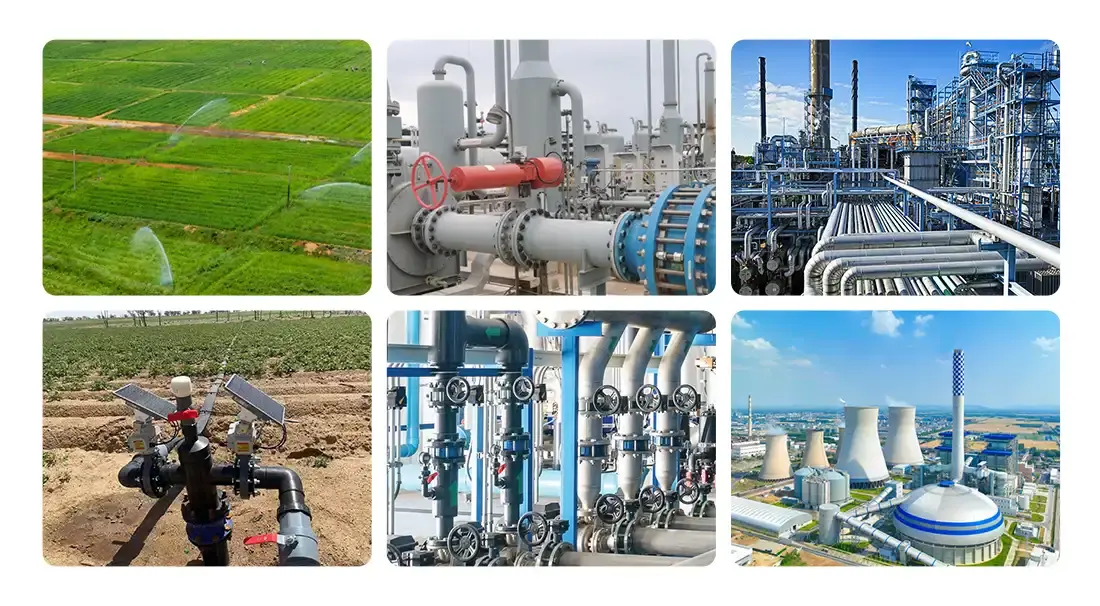
Application Fields
Controls the flow of feedwater into boilers that are working at temperatures and pressures of up to 2500 PSI. The shape of the valve lets fast changes in pressure happen without locking.
In petrochemical production, it is used in escape and control lines for units that handle crude oil. In high-temperature loops, WC6 metal body choices protect against hydrogen embrittlement and sulfidation rusting.
Marine steam systems are used in auxiliary steam lines on ships that need to be cycled often. Leaks can't get to turbines and heat exchangers further downstream when the shutoff is tight.
In general, this valve is used in sewage treatment plants, environmental protection systems, chemical pipes, and oil product transfer lines to reliably control flow and stop it.
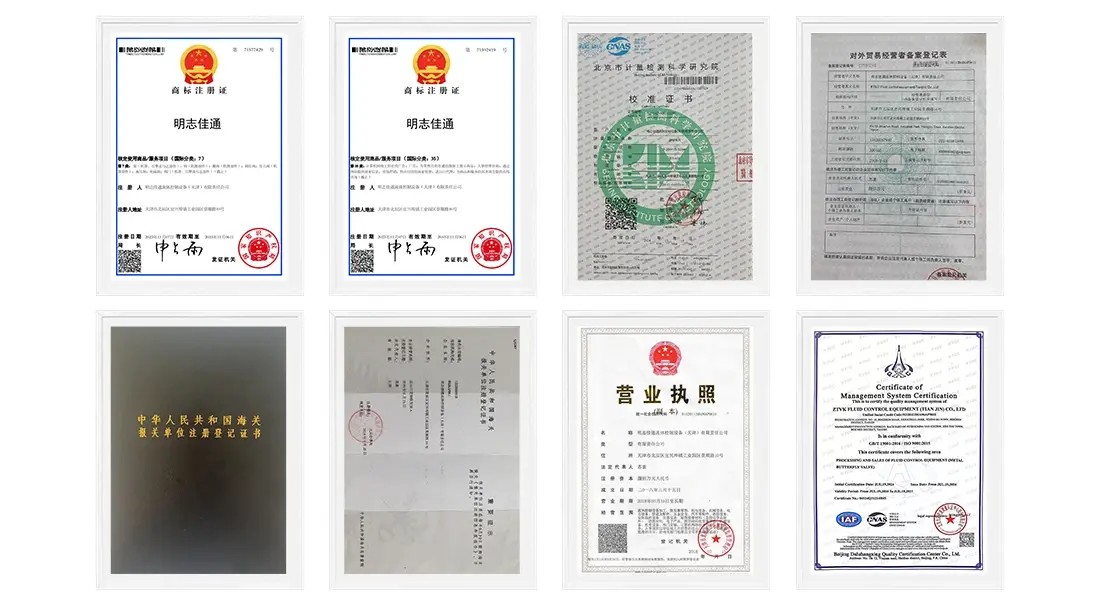
Quality Control Process
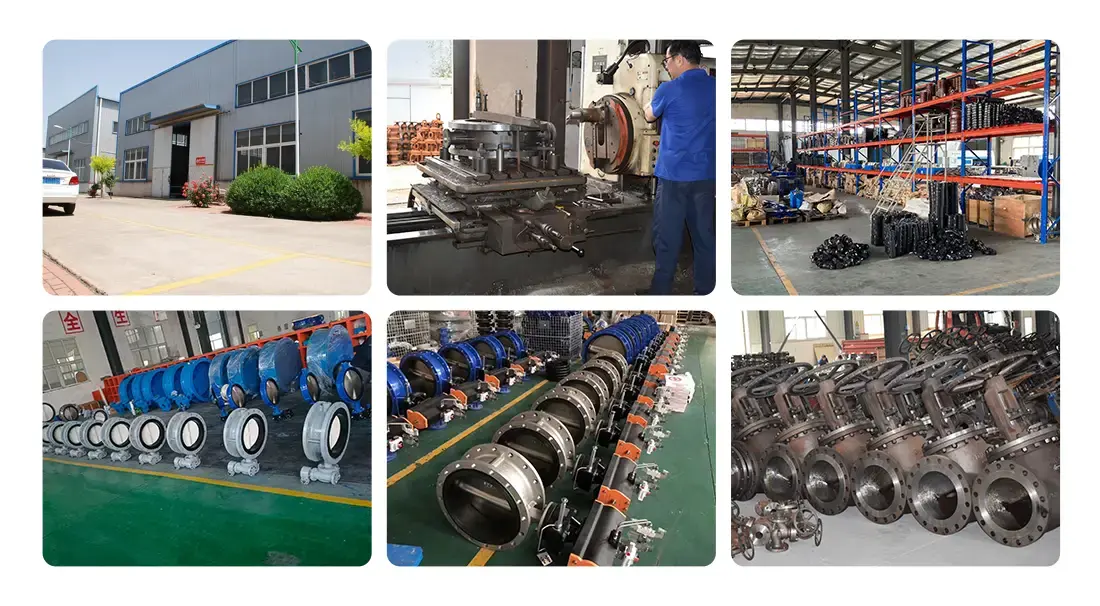
Before being sent out, every unit made at ZTVK goes through an organized check process.
Material confirmation: spectrometric research shows that the WCB body meets the standards for carbon equivalent. Before machining starts, ASTM A370 tensile testing is done to check the yield strength.
Radiographic Testing (RT) according to ASME B16.34 Annex B is a non-destructive test that finds flaws inside the casting, like shrinkage or porosity. Magnetic Particle Inspection (MPI) and Dye Penetrant Testing (PT) are used to find cracks in the body and bonnet's surface.
Pressure tests: According to API 598, every valve is put through hydrostatic shell tests at 1.5× rated pressure and closure tests at 1.1× rated pressure. Low-pressure air tests show that the rate of seat leaks is higher than what is allowed.
Customers can read the QR code on a product to get inspection reports, records about the product, and upkeep paperwork.
Customization and OEM/ODM Options
ZTVK supports OEM and ODM services for industrial buyers with specific Cast steel stop valve requirements.
OEM services include customer branding, custom nameplates, logos, and packaging configuration. ODM services cover valve body structure modifications, sealing material selection, connection configuration changes, and adaptation to specific pressure, temperature, or media conditions.
Custom orders are typically completed in 15–25 days, with expedited production available in 7–10 days for urgent requirements.
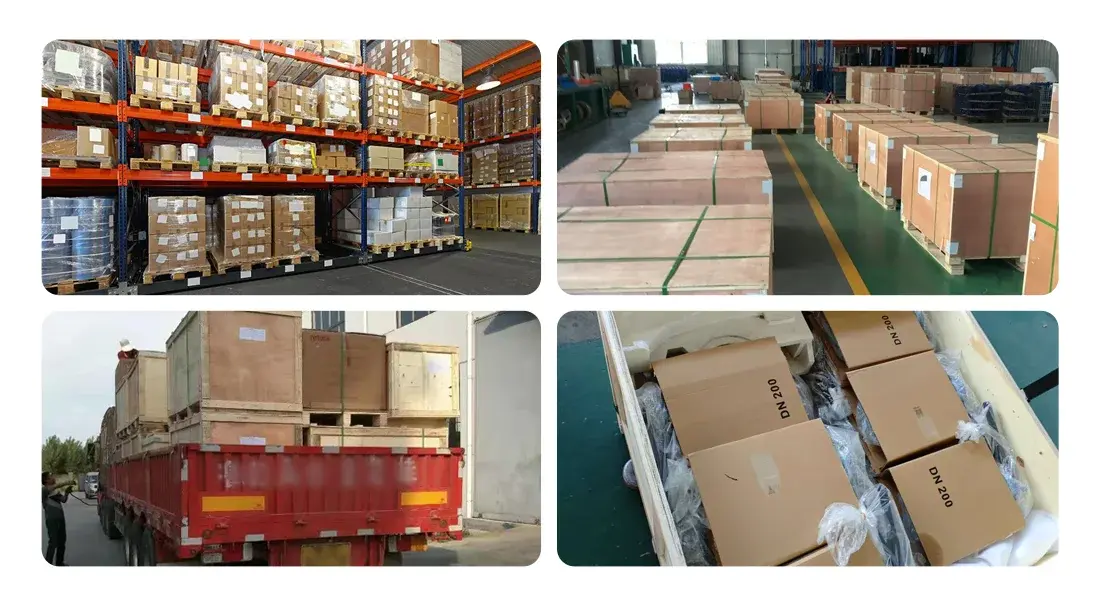
Packaging and Logistics
ZTVK's factory is approximately 50 km from Tianjin Port, roughly one hour by road. This supports coordination with major carriers for FOB Tianjin Xingang and CIF destination-port shipments.
Export packaging uses wooden crates, moisture-proof film, and fixing brackets, compliant with ISPM 15 phytosanitary requirements for international shipments.
For DN50–DN600 standard sizes, 2,000+ units are held in inventory, with typical shipping time of 3–7 days after order confirmation. If your project has a tight schedule, stock availability is worth confirming early in the sourcing process.
After-Sales Support
ZTVK provides an 18-month warranty on all products. Failures not caused by human error or improper installation are covered by free replacement.
Pre-sales support includes valve selection guidance, CAD drawings, and 3D models. After delivery, installation guidance videos, troubleshooting manuals, and access to local technical service partners are available. On-site support is available for larger projects.
FAQ
Q1: How does the direction of flow affect how the valve is installed?
A: Stop valves only work in one direction. When the pressure is 16 MPa, the flow goes under the seat and up from below the disk. Over-the-seat flow makes seals better for high-pressure steam service at PN ≥ 20 MPa. Directions must be checked before they are installed.
Q2: What's the difference between a gate valve and a stop valve?
A: Stop valves have a shorter stem stroke and an internal S-shaped passage that makes flow resistance higher but allows for precise regulation. They are made for throttling and frequent use. It is not recommended to use gate valves for slowing because they are only meant to be used for on/off service.
Q3: Why should Stellite hardfacing be used for the trim?
A: When Stellite is put on the seat and disk, it stops galling, erosion, and cavitation. This is especially important for throttling, where the disk of the valve may stay partly open for long periods of time while fluid flows through it.
Q4: Can this valve handle temperatures that are very cold?
A: Standard WCB material breaks easily below -29°C, so it can't be used in cold situations. For low-temperature use, LCB, LCC, or CF8M stainless steel must be chosen.
Q5: What should be done if the stem packing starts to leak?
A: First, make sure that all of the gland bolts are tight. If the leak keeps happening and the valve has a rear feature, fully opening the valve separates the stuffing box so that graphite (Graphoil) rings can be put back in it. Before doing any packing repair, it is best to depressurize the line.
Q6: What approvals and rules does this valve follow?
A: Our factory uses ISO9001, ISO14001, and OHSAS18001 to make the J41W-16C. It also meets the requirements of API 623, API 598, ASME B16.34, and MSS SP-117. Documents certifying compliance are ready for review by a third party if asked.
Contact Us
For quotes or technical inquiries about our cast steel stop valve range, contact us at ktec86961886@163.com. We respond to all product and specification questions promptly.
Send us your valve requirements and our team will provide professional solutions and fast quotations.