- English
- French
- German
- Portuguese
- Spanish
- Russian
- Japanese
- Korean
- Arabic
- Greek
- German
- Turkish
- Italian
- Danish
- Romanian
- Indonesian
- Czech
- Afrikaans
- Swedish
- Polish
- Basque
- Catalan
- Esperanto
- Hindi
- Lao
- Albanian
- Amharic
- Armenian
- Azerbaijani
- Belarusian
- Bengali
- Bosnian
- Bulgarian
- Cebuano
- Chichewa
- Corsican
- Croatian
- Dutch
- Estonian
- Filipino
- Finnish
- Frisian
- Galician
- Georgian
- Gujarati
- Haitian
- Hausa
- Hawaiian
- Hebrew
- Hmong
- Hungarian
- Icelandic
- Igbo
- Javanese
- Kannada
- Kazakh
- Khmer
- Kurdish
- Kyrgyz
- Latin
- Latvian
- Lithuanian
- Luxembou..
- Macedonian
- Malagasy
- Malay
- Malayalam
- Maltese
- Maori
- Marathi
- Mongolian
- Burmese
- Nepali
- Norwegian
- Pashto
- Persian
- Punjabi
- Serbian
- Sesotho
- Sinhala
- Slovak
- Slovenian
- Somali
- Samoan
- Scots Gaelic
- Shona
- Sindhi
- Sundanese
- Swahili
- Tajik
- Tamil
- Telugu
- Thai
- Ukrainian
- Urdu
- Uzbek
- Vietnamese
- Welsh
- Xhosa
- Yiddish
- Yoruba
- Zulu
What are the principles for selecting a butterfly valve for water line supply pipelines?
Selecting the right butterfly valve for water line applications demands careful consideration of system pressures, material compatibility, and operational requirements. The primary principles include matching pressure ratings (typically PN10 or PN16 for municipal water systems), choosing corrosion-resistant materials like ductile iron bodies with stainless steel or aluminum bronze discs, selecting appropriate seat materials (EPDM for potable water, NBR for industrial applications), and ensuring compliance with ISO, AWWA, or NSF standards. Proper sizing based on flow velocity calculations prevents erosion and water hammer, while actuator selection—manual hand levers for small diameters, worm gears for medium sizes, or pneumatic/electric actuators for automated systems—ensures reliable operation. Understanding these fundamentals helps procurement managers and engineers invest in valves that deliver long-term performance and minimal lifecycle costs in critical water infrastructure.
Understanding Butterfly Valves and Their Role in Water Line Supply
Systems that provide water depend on flow control devices that find a good mix between dependability and efficiency. This is done by a butterfly valve for water lines using a simple but effective quarter-turn mechanism. This mechanism controls flow by rotating a round disc around a center shaft.
Basic Operating Mechanism
The valve works with the help of a disc that is attached to a stem that rotates inside the pipeline. When the disc is lined up perpendicular to the flow, water flows through with little trouble. When you turn the stem 90 degrees, the disc is placed so that it is perpendicular to the flow. It then presses against a flexible seat to make a seal. When compared to rising stem valves, this design needs a lot less actuation force. In double-eccentric configurations, it needs up to 30% less torque. The small face-to-face size, which meets ISO 5752 short series standards, saves installation space, which is very helpful in busy pump stations or underground valve chambers.
Key Components and Construction
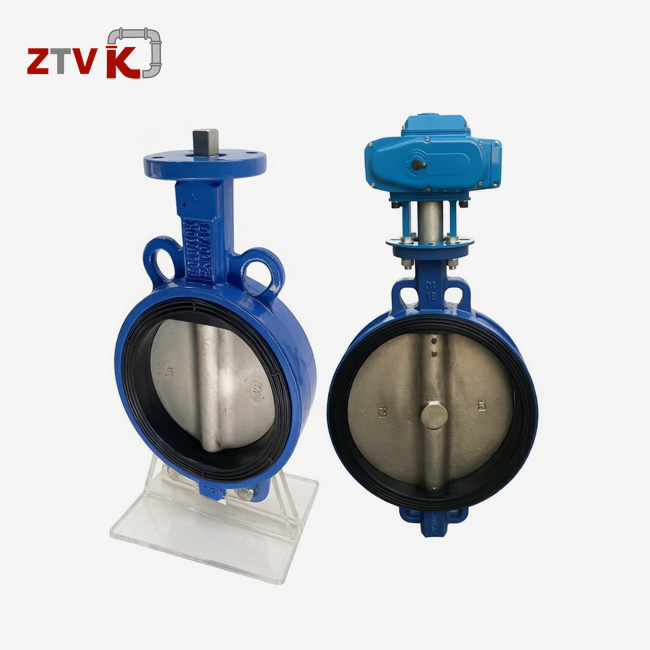
The body of the valve is usually made of ductile iron (DI/QT450), which gives it strength while keeping its slim profile compared to regular gate valves. The disc material changes depending on the use: cast iron is cheap and good for general service, CF8 (304 stainless steel) doesn't rust, CF8M (316 stainless steel) can handle polluted water, and aluminum bronze can handle harsh conditions in desalination plants. The closing ability depends on the material of the seat. EPDM rubber can handle temperatures from -20°C to +120°C and doesn't react with chloramines in treated water, while PTFE is chemically neutral and is used in industrial settings. Through-bolts are used to clamp wafer-type connection methods between flanges, which lowers the weight and cost of installation.
Actuation Options
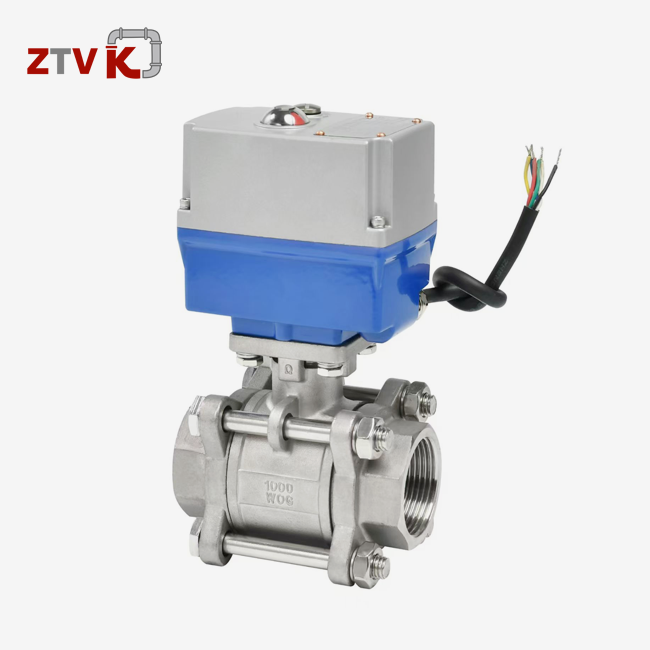
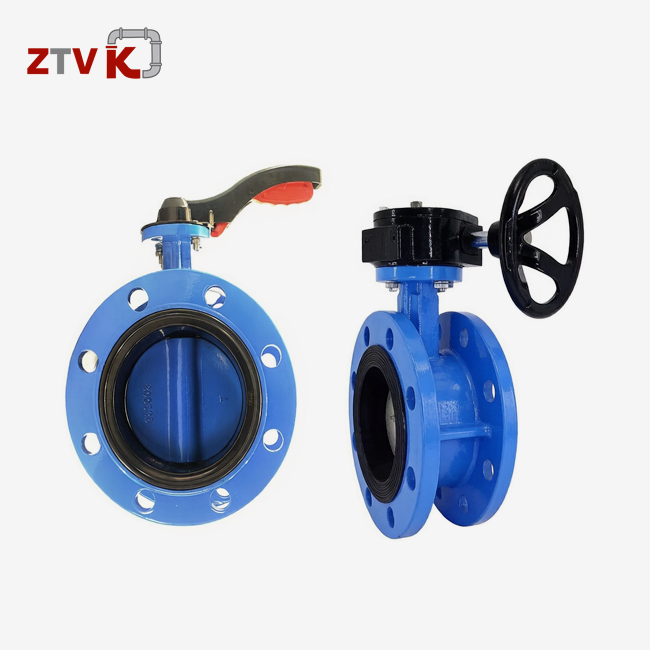
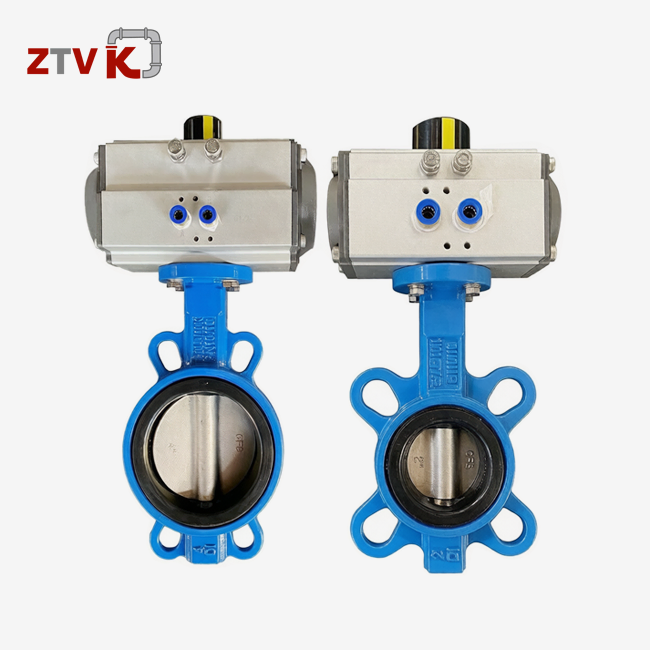
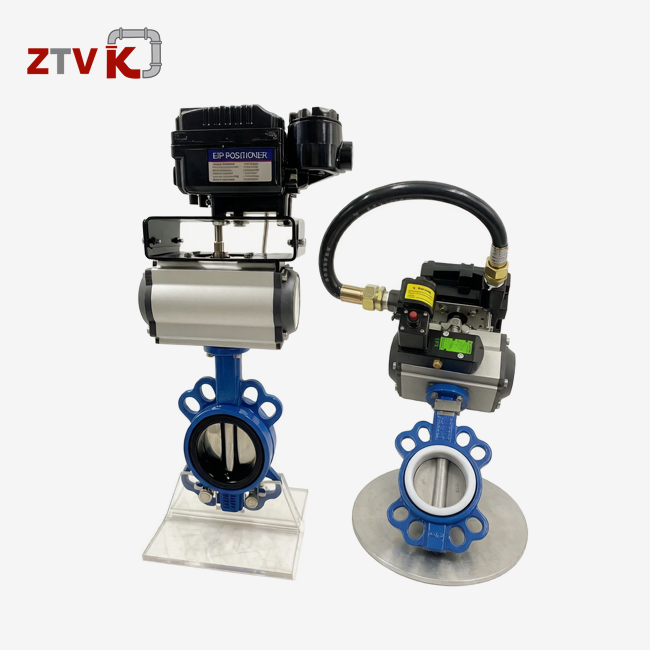
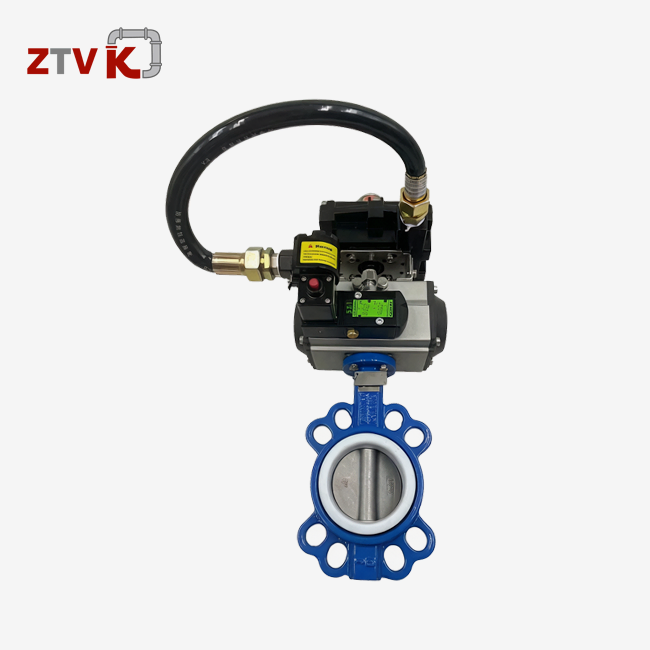
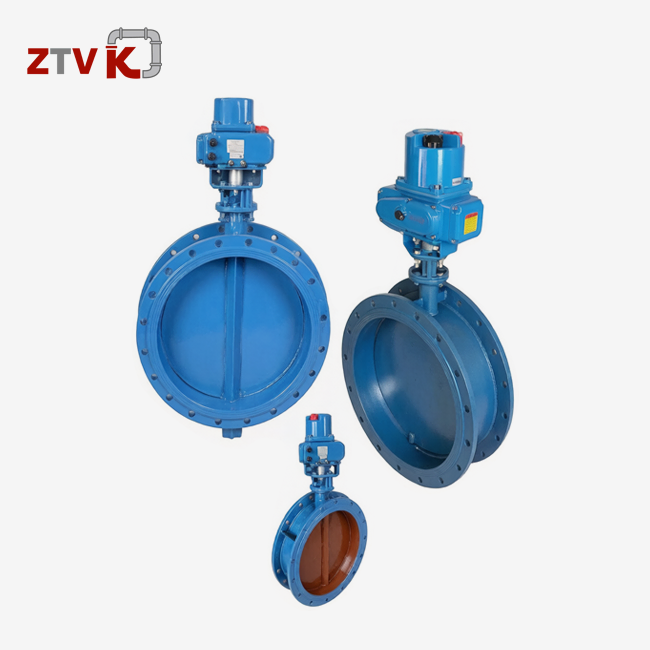
System size and automated needs can change how valves work. Hand levers let you operate sizes up to DN200 by hand and give you direct physical input. Worm gears make it easier to operate larger valves (DN250–DN600) by hand by giving the operator a mechanical advantage and making the job easier. Pneumatic actuators respond quickly to automated systems that need to be controlled from a distance, while electric actuators provide accurate modulating control for regulating flow in HVAC systems. The ISO 5211 mounting interface makes sure that all actuators from all manufacturers can work together.
These design advantages lead to measured benefits: installation time is 40% shorter than with flanged gate valves, repair intervals are longer than five years if the water quality is good, and the valves don't use much energy when they're in use.
Core Principles for Selecting Butterfly Valves for Water Line Supply Pipelines
By matching valve specs to system needs, you can avoid costly breakdowns and get the best performance. When choosing which water infrastructure projects to fund, a number of important factors are taken into account.
Pressure and Temperature Parameters
PN10 (145 psi) or PN16 (232 psi) standard pressures are usually used for butterfly valves for water line applications in municipal water distribution. If you choose a valve that is rated for the system pressure plus a safety cushion, you can account for water hammer bursts, which can temporarily double the static pressure. Temperature ratings need to take seasonal changes into account. For example, standard EPDM seats can handle normal water temperatures, but systems that circulate hot water need VITON seats for temperatures close to 150°C. If you know the difference between shell test pressure (1.5x rated) and seat test pressure (1.1x rated), you can check if a supplier is telling the truth about the quality of their products.
Material Selection for Water Quality
Water chemistry has a direct effect on how long something lasts. Materials must be NSF/ANSI 61 certified so that contaminants don't leach into potable water systems. When buried, ductile iron bodies with a fusion-bonded epoxy (FBE) coating that is more than 250 microns thick don't rust from the outside. The choice of disc material strikes a balance between cost and longevity. For clean water, ductile iron discs with nylon coatings are sufficient, but in coastal areas where saltwater intrusion happens, stainless steel CF8M discs are necessary. Aluminum bronze discs work great in desalination plants where the chloride level is higher than 1000 parts per million. Choosing the right seat material affects how well it seals over time. EPDM is better at resisting ozone and weathering, NBR works well in situations where oil is present, and PTFE seats offer bubble-tight shutoff at key separation points.
Connection Types and Installation Considerations
Wafer-type valves are the most common choice for water lines because they save money and space. Long through-bolts hold these valves in place between standard flanges that meet PN10/PN16, 125LB/150LB ANSI, or JIS 5K/10K/16K standards. When the right pressure values are given, the design can be used for dead-end work. The way the installation is done is important. Mounting the stem horizontally stops sediment from building up in the bottom bearings, which can cause seizure. When the flanges are lined up correctly, and the bolts are tightened in the right order (star pattern, three steps), the liner doesn't bend.
Standards Compliance and Certification
Compliance verification keeps you safe from products that don't meet standards. Face-to-face dimensions are set by ISO 5752, which makes sure that drop-in replacements work. ISO 5211 sets standards for the mounting connections of actuators. Testing for pressure according to API 598 or EN 12266 confirms both the integrity of the body (shell test) and the performance of the seals (seat test at Class A zero-leakage criteria). For drinking water, NSF/ANSI 61 certification makes sure that materials don't add any harmful chemicals. Regional agreement is shown by WRAS approval in the UK and ACS recognition in France. Getting test reports and factory audit certifications from a third party helps procurement teams check what suppliers say.
By following these rules, you can be sure that the valve you choose will meet both technical needs and your budget.
Comparing Butterfly Valve Options: Making an Informed Decision
Knowing how butterfly valves stack up against other options and how to read technical specs will help you make the best buying decisions.
Butterfly Valves vs. Other Types of Valves
Gate valves allow full-bore flow, but they need to be installed at a very high level so that the stem can move freely. This makes the structure more expensive for large sizes. When the size is above DN150, ball valves cost two to three times more than butterfly valves, but they can shut off bubble-tight and with low power. Globe valves are great at limiting flow, but they cause big drops in pressure that make them unsuitable for major distribution lines. Butterfly valves are a good compromise because they offer 90% of the full-bore flow capacity, a small fitting area, and low costs in sizes DN100 to DN1200. The modest pressure drop (CV coefficient of about 200 for DN200) works well for most delivery tasks without lowering the pump's efficiency.
Specifications for Size and Performance
Having the right valve size stops problems with operation. When valves are too small, they let too much flow through (above 3–4 m/s), which wears down the seat and shortens the valve's useful life. Large valves cost more at first and might not close properly when differential pressures are low. Using the continuity equation (Q = A × V) to figure out the flow speed helps choose the right DN. When matching actuators, torque specs are important. For example, breakaway torque after long closed periods can be 2-3 times higher than running torque, which is why safety factors are needed for actuators. The formula ΔP = (Q/Cv)² can be used to figure out the pressure drop, but makers may use different units (Kv metric vs. Cv imperial), so the numbers need to be converted.
Looking at Manufacturers and Brands
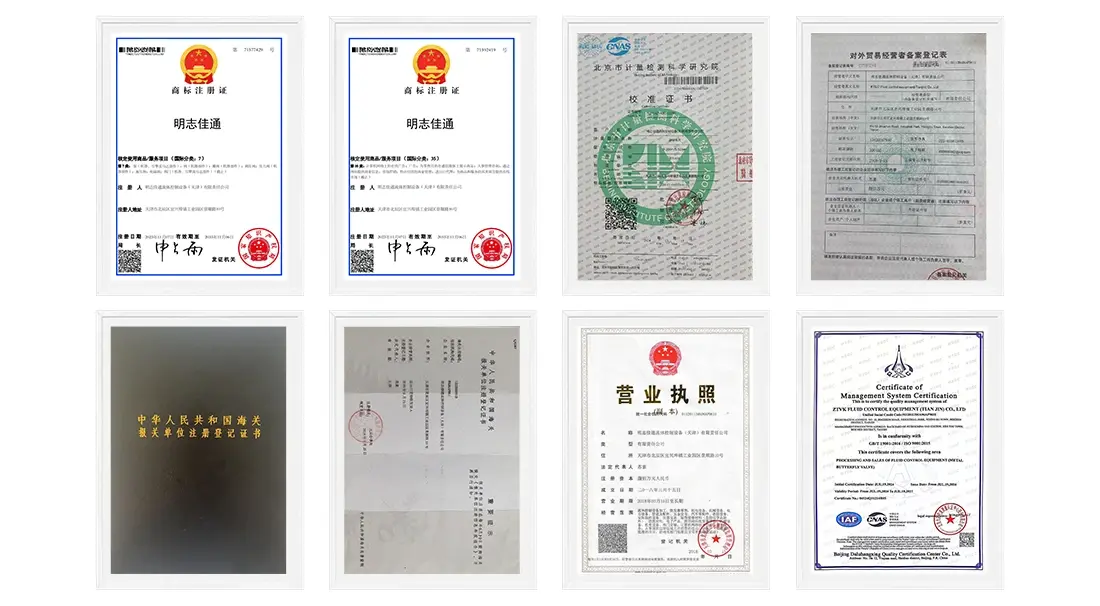
The choice of butterfly valve for water line supplier affects support and reliability in the long term. Well-known brands cost more, but they have a lot of documentation and service networks. For non-critical applications, regional manufacturers may offer competitive prices and good quality. Some ways to check are to look at ISO 9001 quality management certifications, ask for material certificates (with positive material identification test results), look at coating thickness test records, and confirm pressure test paperwork. Factory visits, which require a lot of time and effort, show how things are made and how quality is checked. Warranty terms show how confident the manufacturer is in the product. For example, 18 months of coverage with clear exclusions for misuse shows commitment.
By understanding these comparisons and specifications, you can make decisions that balance performance needs with budget realities.
Practical Aspects of Butterfly Valve Selection, Installation, and Maintenance
A successful valve application includes more than just choosing the right valve. It also includes the right way to place it and keep it in good shape.
Best Practices for Installation
Professional construction keeps things from breaking down too soon. Before installation, make sure the flanges are lined up within the tolerance (concentricity within 0.5 mm), that the pipeline is clean to get rid of welding debris, and that the length of the bolts fits the thickness of the valve. To keep the liner from deforming, the bolts that hold the wafer valve in place must be tightened evenly in a star pattern over three steps (30%, 60%, and 100% torque). The stem should be laid flat to keep it from getting contaminated by dirt. Once everything is set up, check visually with the disc open to make sure it can move freely without any problems. After installation, pressure testing the line part makes sure the system is working properly before it is turned on.
Dealing with Common Operational Problems
Leakage past the seat usually means that there is something stuck on the seat surface or that the liner is wearing down from being exposed to too much speed or heat. Particle interference is often fixed by flushing the line and cycling the valve several times. If the leak keeps happening, the seat needs to be replaced. If the disc gets stuck or the working force goes up, it means that the bearings are dirty or the stem packing is compressed. Small problems can be fixed by lubricating the stem bearings (if they can be reached) and adjusting the packing. External corrosion means that the paint is damaged and needs to be fixed right away to stop the damage from getting worse. Knowing about these types of failure makes it possible to quickly find the problem and fix it at a low cost.
How to Do Maintenance to Make Things Last Longer?
Regular maintenance makes butterfly valves for water line valves last a lot longer. Visual checks are done every three months to look for corrosion on the outside, the condition of the actuators, and the oil level in the gearbox (for worm gear operators). Bearing and packing seizure can be avoided by operating the machine yearly in full open-close sequences. Every three years, internal tests check the state of the seat, the disc coating, and the stem bearing for wear. Different manufacturers have different lubrication plans, but stem bearing grease usually needs to be replaced once a year. For actuated valves, the filter-regulator-lubricator (FRL) needs to be serviced every six months, the limit switch on the electric actuator needs to be checked once a year, and the control signal calibration needs to be checked every two years. Writing down maintenance tasks creates reliable data that helps with planning replacements.
Conclusion
When choosing a butterfly valve for water line supply pipelines, you have to think about the technical specs, the compatibility of the materials, the operational needs, and the cost. To properly specify a valve, you need to know about its pressure values, the different disc options and ductile iron bodies that can be used, the seat material that works best with the water, and how it is activated. When you look at butterfly valves next to other options, you can see that they are cheaper, easier to install, and require less maintenance for water distribution. Installation instructions and upkeep schedules that are easy to follow make the service last longer and be more reliable. Strategic procurement methods, such as evaluating suppliers, buying in bulk, offering customization options, and providing support after the sale, lower both the initial investment and the total cost of ownership. By following these tips, procurement managers, city engineers, and water infrastructure contractors can safely choose valves that will work well for decades in important water supply systems while staying within budget and on time for the project.
FAQ
1. How do I figure out what size valve I need for my water line?
First, figure out the flow rate you need (Q in m³/h). Then, use the continuity equation and speed limits (2–4 m/s for water distribution) to find the smallest pipe area that will work. Choose the valve DN that fits the pipe diameter. Going too big will cost more than it needs to, and going too small will cause erosion and too much pressure drop. Use the manufacturer's performance curves to make sure that the size you chose has the right Cv coefficient for your flow rate and the amount of pressure drop that is allowed.
2. What kind of seat material works best for devices that use drinkable water?
EPDM rubber is the standard for public drinkable water because it is NSF/ANSI 61 certified, doesn't react with chloramines used to treat water, and can handle temperatures from -20°C to +120°C. EPDM also holds up better against ozone and weathering than NBR alternatives. Choose EPDM materials that are safe for food and check the approval paperwork to make sure you're following the rules for drinking water safety.
3. What is the best way to schedule maintenance for water line butterfly valves?
Visually check the outside of the machine every three months for rust and the state of the actuator. Run the machine once a year to keep it from seizing up, and check the inside every three years to see how the seat and disc are wearing. Change how often you check on systems based on the quality of the water. Systems with a lot of sediment or water that is acidic need more frequent checks. Keep track of all the repair tasks you do so you can find trends that can help you figure out when to replace things.
Partner with ZTVK: Your Trusted Butterfly Valve Manufacturer for Water Line Projects
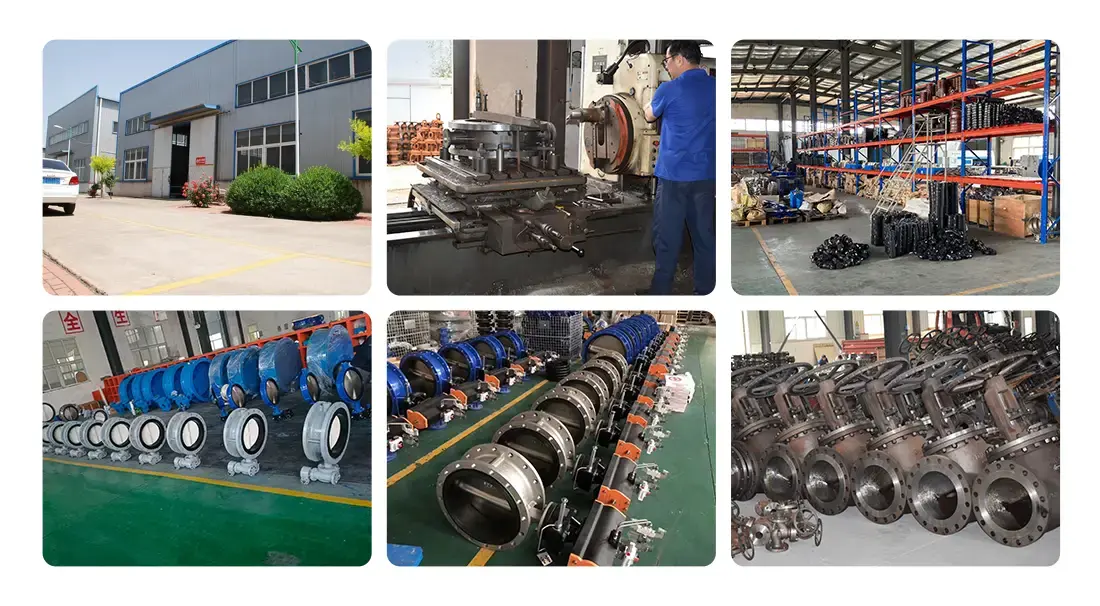
Engineering contractors and procurement managers looking for a reliable butterfly valve for water line source will find that ZTVK offers great value through its proven production skills and customer-focused service. We are a butterfly valve specialist based in Tianjin's Beichen District with over 15 years of experience. We keep over 2,000 standard units (DN50–DN600) in stock for shipping in 3–7 days, and our flexible production lines can handle custom orders in 15–25 days. Our double eccentric design cuts down on working torque by 30% and makes the service life last longer than 50,000 rounds. Customers can be sure of the quality because they are certified to ISO 9001/14001 and OHSAS 18001, and they follow ISO, API, ANSI, JIS, and DIN standards. From material choices (carbon steel, stainless steel 304/316, duplex steel) to connection standards (PN10/PN16, 125LB/150LB, JIS 5K/10K/16K) and operation types (hand lever, worm gear, pneumatic, electric), we can make any OEM or ODM order. Our plant is only 50 km from Tianjin Port, and we have ties with both COSCO and Maersk. We offer efficient FOB or CIF terms, and our packaging meets ISPM 15 standards. You can rest easy knowing that our 18-month warranty, installation instructions, and technical support are here for you. Get in touch with our team at ktec86961886@163.com to talk about your water line valve needs and get unique solutions backed by the speed and dependability of Chinese production.
References
1. American Water Works Association. (2017). AWWA Manual M49: Butterfly Valves: Torque, Head Loss, and Cavitation Analysis. Denver: AWWA.
2. Skousen, P. L. (2011). Valve Handbook (3rd ed.). New York: McGraw-Hill Professional.
3. International Organization for Standardization. (2016). ISO 5752: Metal valves for use in flanged pipe systems — Face-to-face and centre-to-face dimensions. Geneva: ISO.
4. Nesbitt, B. (2007). Handbook of Valves and Actuators: Valves Manual International. Oxford: Elsevier Science.
5. Singh, R. & Kumar, A. (2019). "Material Selection for Butterfly Valves in Water Distribution Systems: A Comparative Study." Journal of Pipeline Systems Engineering and Practice, 10(2), 04019008.
6. Tullis, J. P. (1989). Hydraulics of Pipelines: Pumps, Valves, Cavitation, Transients. New York: John Wiley & Sons.
Send us your valve requirements and our team will provide professional solutions and fast quotations.
RELATED INDUSTRY KNOWLEDGE