- English
- French
- German
- Portuguese
- Spanish
- Russian
- Japanese
- Korean
- Arabic
- Greek
- German
- Turkish
- Italian
- Danish
- Romanian
- Indonesian
- Czech
- Afrikaans
- Swedish
- Polish
- Basque
- Catalan
- Esperanto
- Hindi
- Lao
- Albanian
- Amharic
- Armenian
- Azerbaijani
- Belarusian
- Bengali
- Bosnian
- Bulgarian
- Cebuano
- Chichewa
- Corsican
- Croatian
- Dutch
- Estonian
- Filipino
- Finnish
- Frisian
- Galician
- Georgian
- Gujarati
- Haitian
- Hausa
- Hawaiian
- Hebrew
- Hmong
- Hungarian
- Icelandic
- Igbo
- Javanese
- Kannada
- Kazakh
- Khmer
- Kurdish
- Kyrgyz
- Latin
- Latvian
- Lithuanian
- Luxembou..
- Macedonian
- Malagasy
- Malay
- Malayalam
- Maltese
- Maori
- Marathi
- Mongolian
- Burmese
- Nepali
- Norwegian
- Pashto
- Persian
- Punjabi
- Serbian
- Sesotho
- Sinhala
- Slovak
- Slovenian
- Somali
- Samoan
- Scots Gaelic
- Shona
- Sindhi
- Sundanese
- Swahili
- Tajik
- Tamil
- Telugu
- Thai
- Ukrainian
- Urdu
- Uzbek
- Vietnamese
- Welsh
- Xhosa
- Yiddish
- Yoruba
- Zulu
How to choose the right stainless steel stop valve
To pick the correct stainless shut off valve, you need to look at things like the material grade (CF8 or CF8M), the pressure number (PN1.6 to 6.4MPa), the temperature range (-60°C to +450°C), and the connection type (flanged or threaded). When you choose the right supplier, you can balance operational needs like exposure to corrosive media, thermal cycling, and leak-tight shut-off with factors like supplier reliability, certification compliance, and lifecycle cost. This way, you can be sure that your purchase will work well right away and last for a long time in industrial settings.
Introduction
Industrial fluid control systems are separated using stainless steel shut-off valves. In pipelines, water, steam, chemicals, and petroleum compounds consistently switch on and off. The valves you pick influence your facility's efficiency, worker safety, and maintenance expenses. Early failures, unexpected downtime, and expensive emergency repairs affect production plans and budgets due to poor judgment.
ISO9001, API, and ASME B16.34-compliant providers make valves with trackable materials, extensive testing, and a written quality guarantee. To guarantee bubble-tight seals and durability, reliable manufacturers engage in sophisticated metalworking and precise machining. Technical standards, material considerations, supplier evaluation criteria, and maintenance best practices are included in this paper for procurement experts. This helps you find valves that fulfill industrial and operational requirements.
Understanding Stainless Steel Stop Valves: Types, Functions, and Key Features
A simple idea behind stainless shut-off valves: when the valve is closed, a moving disc or plug meets a fixed seat to stop all flow. When the valve is opened, the disc or plug retracts all the way to keep the pressure as low as possible. In contrast to throttling devices, these valves work best in full shut-off situations where accurate flow modulation is not needed, but there must be no leakage.
Common Valve Configurations
A disc inside a globe valve moves perpendicular to the flow direction, making an S-shaped opening inside the valve. This design has a great shut-off feature and lets you control the flow to some extent, but the winding path makes the pressure drop more. Needle valves have a tip that looks like a tapered needle and are used for fine control in small-bore situations, like monitoring lines. Angle valves change the direction of flow by 90 degrees and also shut off the flow. They are useful in tight areas or when the layout of the pipes requires changes in direction. Using a flexible membrane, diaphragm valves separate the device that opens and closes them from the process media. They are perfect for use in the pharmaceutical and electronics industries, where the media needs to be very pure or corrosive.
Material Advantages
Stainless steel metals create an inactive chromium oxide layer that keeps growing back. This makes them more resistant to corrosion than options like carbon steel or brass. CF8 (which is the same as cast 304 stainless steel) is a good choice for general-purpose water, steam, and light chemical service. CF8M (cast 316 stainless steel) has an extra 2% to 3% molybdenum added to it to make it more resistant to cracking from chlorides. This makes it necessary for use in marine settings, desalination plants, and chemical processing that uses acidic media. With the right seat materials, these materials keep their mechanical strength from very cold temperatures (-196°C) to very hot temperatures (over 450°C).
Industrial Applications
In places like wellhead assemblies, refinery process units, and pipeline stations where hydrogen sulphide, saltwater, and fuels can damage less durable materials, oil and gas companies use stainless steel shut-off valves. Pharmaceutical companies need sanitary valves that have been electropolished and have tri-clamp connections so that they can support Clean-in-Place processes without harboring germs. For filtered water service, reverse osmosis systems, and chemical dosing lines, water treatment plants use these valves because brass would lose its zinc, and carbon steel would rust quickly.
Key Criteria to Consider When Choosing a Stainless Steel Stop Valve
Stainless shut off valve design starts with choosing the right material grade. CF8 works well in non-corrosive environments like rainwater, air, and oils that aren't acidic, where saving money is important. CF8M is needed when chloride levels are higher than 200 ppm, temperatures change a lot, or the media contains acidic substances like sulphuric acid dilutions. WCB carbon steel with stainless trim is a cheap mix that can be used for steam work where rust from the outside isn't a problem. CF3 and CF3M have less carbon in them, which makes them better for systems that need to be welded a lot and have low intergranular corrosion and sensitisation risks.
Pressure and Temperature Ratings
Valve bodies made to ANSI Class 150LB can handle pressures of up to 285 psi at room temperature, making them good for low-pressure steam and city water systems. Class 300LB increases the pressure range to 740 psi, which is enough for most industrial process uses. Class 600LB can handle up to 1480 psi for high-pressure work in chemical plants and refineries. PN-rated European versions work the same way: PN16 for 232 psi, PN40 for 580 psi, and PN64 for 928 psi. Temperature limits depend on the type of seat material. Soft PTFE or RPTFE seats can work from -20°C to +250°C and have an ANSI Class VI leak-tight shut-off. The temperature range for metal-seated versions goes from -60°C to +450°C, and they can handle ANSI Class IV leaks, which means that a small bubble-through is okay for non-critical services.
Size and Connection Types
Different sizes, from DN15 (½ inch) to DN400 (16 inches), are used for different types of connections, from instrument sense lines to main process heads. Smaller valves usually have threaded NPT or BSP connections that make them easier to put in pipe racks that are already full. Flanged connections are needed for bigger sizes. For general service, a raised face RF is used; for high-pressure chemical uses, a ring joint RJ is used; and for brittle-lined or glass-lined pipe systems, a flat face FF is used. For projects in North America, the flange drilling designs must match ASME B16.5, and for projects in Europe, they must match PN16 or PN40 EN 1092-1.
Certification Requirements
Having ISO 9001 approval shows that a company has written quality management systems that are regularly checked by a third party. Before it is shipped, API 598 testing shows that each valve goes through hydraulic shell testing at 1.5 times its rated pressure and seat testing at 1.1 times its rated pressure. A CE mark means that the product meets the requirements of the European Pressure Equipment Directive. Material test reports that use X-ray fluorescence to positively identify materials confirm that the real alloy makeup fits the specs. This stops the 304-substituted-for-316 fraud that is common with dishonest suppliers.
Procurement Insights: How to Source and Purchase Stainless Steel Stop Valves Efficiently
To find suitable suppliers, you have to look at more than just marketing claims about their production skills. Check the websites of factories to see if they have CNC machining centers, investment casting foundries, or testing facilities that are inside the factories. Suppliers following ASME B16.34 design standards know the measurements needed for face-to-face lengths and flange cutting, which makes sure that drop-in replacements can be used with current infrastructure.
Bulk Purchasing Considerations
Shorter lead times are usual for standard valve sizes in the DN50 to DN200 range because makers keep popular configurations in stock. Different companies have different minimum order numbers. For example, big sellers might need full pallet quantities (50 to 100 pieces), but direct makers can usually handle smaller initial orders to get to know you. Production processes go from two weeks to six weeks when customers ask for custom features like unique trim materials, rare alloys, or pressure levels that aren't standard. When there aren't many days left on a job, find out if expedited production is possible and how much it costs, which is usually 15–25% more than normal pricing.
Evaluating Price vs. Quality
When prices are very low, it's generally because the quality has been lowered through bad castings, poor testing, or the use of low-quality materials. Figure out the total cost of ownership, which should include the expected service life, the cost of upkeep, and the effects of a failure. It's not worth saving money on a valve that costs 30% less but breaks after three years when a good one lasts fifteen years with little upkeep. Make sure you get what the standards say you will get by asking for mill test results, dimensional inspection certificates, and picture testing documents.
Logistics and Support
Being close to major shipping ports lowers the cost of sending goods within a country and makes export paperwork easier. Freight rates are low, and ships leave often, which is good for manufacturers near Tianjin, Shanghai, or Busan. Review the rules for packaging—making sure that wooden crates are built correctly and meet the ISPM 15 heat treatment requirements keeps customs delays to a minimum. Support after the sale is just as important. Having access to expert advice, help with troubleshooting, and warranty coverage (18–24 months normal) saves your investment when problems happen in the field.
Maintenance Tips and Troubleshooting Common Problems
Regular upkeep on valves makes them last longer and keeps them from breaking down during important activities. External inspections should be done every three months to look for packing leaks, stem rust, and flange bolt tightness. Seat state, stem straightness, and body cavity cleanliness are all checked during yearly internal checks. Write down what you find in repair logs so you can keep track of trends of wear and tear and figure out when to replace something before it breaks completely.
Common Issues and Solutions
Most stem packing leaks are caused by PTFE packing ring stress. Use incremental steps to tighten the packing gland nuts across the stem to prevent over-compression that stops movement. Leaking seats, shown by increased pressure downstream when closed, may indicate wear and tear or debris impeding complete closure. Look at the valve seats under a microscope for scoring, then lap the surfaces smooth if the damage is minor. Seats should be replaced if cracking or weathering exceeds 0.005 inches. Solid deposits from process fluids or galvanic corrosion between incompatible metals generally interrupt the operation and prevent the handwheels from turning. Use penetrating oils, strap wrenches for regulated power, and actuator-assisted operation for seldom-used valves.
Installation Best Practices
Before welding or putting the valve into place, make sure that the flow direction matches the arrow that is cast into the body of the stainless shut off valve. Support big valves on their own instead of relying on pipes to hold their weight, which causes stress to build up at the ends. To make sure the gasket is compressed evenly and without warping, torque the flange bolts according to the manufacturer's instructions using a measured wrench in a star pattern. Do a few full strokes of the valve before applying pressure to the system to make sure it works smoothly and that the packing change is correct.
Making the Final Choice: Decision Support Framework for B2B Buyers
Based on their business needs, different buyer groups put different value traits at the top of their lists. OEM equipment makers who put valves into packed systems, such as small sizes, standard connections, and want to know how much something will cost ahead of time, so they can plan their budgets. When EPC companies are in charge of big projects, they stress the importance of on-time deliveries, bulk availability, and detailed paperwork for handing over the keys for commissioning. Diverse end users require distributors to have a wide range of sizes and rates in stock, and they need to be able to change the order amounts as needed.
Application-Specific Selection
For petrochemical uses that deal with sour gas or hydrogen sulphide, the minimum requirement is CF8M that meets NACE MR0175 for sulphide stress cracking protection. Fire safety systems need to be approved by UL or FM, and metal chairs must be able to keep their shape after a fire, unlike soft seats, which burn out. Installations for food and drinks must meet 3-A Sanitary Standards and have electropolished wet surfaces and FDA-approved elastomers. The municipal water service gives materials that don't leach contaminants into potable water sources NSF/ANSI 61 approval as a high priority.
Lifecycle Cost Analysis
The purchase price is only 20–30% of the total cost of ownership. Over many years of use, energy losses from pressure drops across partly closed valves add up. Maintenance work like replacing packing, fixing up seats, and servicing actuators adds to ongoing costs. Unplanned downtime during emergency fixes costs a lot more in lost opportunities than the cost of replacing the valve. When considering choices, all of these should be taken into account. A premium valve with less pressure drop, longer maintenance intervals, and a history of reliability often gives you a better return on your investment, even if it costs more at first.
Checklist Summary
Make sure the quality of the material fits the corrosive media exposure. Check to see if the pressure class is higher than the maximum working pressure by a sufficient amount. Make sure that the temperature number takes into account both process and external extremes. For existing pipes, make sure that the flange hole and face-to-face measurements fit. Make sure that the certifications meet the needs of the job and the laws in the area. Check the supplier's ability to produce and make sure the shipping schedules are in sync. Check the warranty terms and see if there is expert help available. Figure out the costs over the whole life of the product, including energy use, repairs, and downtime.
Conclusion
When choosing the right stainless shut off valve, you have to weigh the technical specs against the budget and working needs. Grades of material from CF8 to CF8M deal with rust problems in a wide range of media. From ANSI 150LB to 600LB, the pressure levels can handle a wide range of streams, from city water to petrochemical process streams. When the right seat materials are used, the temperature range goes from cold to high heat. Partnering with qualified makers who can show quality control, rigorous testing, and a reliable supply chain is key to successful procurement. Long-term worth is higher when you look at total lifecycle costs instead of just the buying price. By using this organised method, you can be sure that the valves you choose will shut off without any leaks, require little upkeep, and keep working normally for as long as they are supposed to.
Frequently Asked Questions
1. What differentiates CF8 from CF8M stainless steel in valve bodies?
Cast 304 stainless steel (CF8) is good for general water, steam, and light chemical service as long as chloride contact is low. CF8M refers to cast 316 stainless steel that has molybdenum added to it to make it much more resistant to pitting corrosion in coastal settings, chlorinated water systems, and acidic chemical processes. If the chloride level is higher than 200 ppm or the media contains sulphuric, phosphoric, or other natural acids, you must specify CF8M.
2. Can stainless shut off valves regulate flow or only provide isolation?
Because the discs in globe-style stop valves move perpendicularly, they allow some throttling. However, constant throttling speeds up seat wear and finally compromises the shut-off integrity. Ball and gate structures should only work when they are fully open or fully closed. When they are only partially open, high-velocity erosion damages the closing surfaces. For tasks that need to change the flow rate often, use control valves that are made just for that purpose.
3. How do soft seats compare with metal seats for shut-off performance?
ANSI Class VI bubble-tight shut-off is achieved by soft seats made of PTFE or reinforced PTFE. This means that there is no measured leaking, and the fluids can be dangerous or expensive. Metal chairs can handle higher temperatures (-60°C to +450°C) and are better at protecting against damage from sharp particles. They also meet ANSI Class IV leakage standards, which means that small amounts of seepage don't affect operation. Pick based on whether temperature resistance or leak-tightness is more important to you.
4. What installation precautions prevent galling in stainless threaded connections?
Stainless steel threads have a lot of friction and tend to gall, which means they will cold-weld under pressure. Before putting the parts together, use PTFE tape or a nickel-based anti-seize solution on the male threads. Using measured torque tools, turn slowly and stop right away if the resistance goes up in a strange way. If you need to disassemble something often or need a lot of power, flanged connections might be better than threaded engagement for DN50 and bigger sizes. To find the best stainless shut-off valve bodies, examine factory quality controls.
Partner with ZTVK for Reliable Stainless Shut Off Valve Solutions
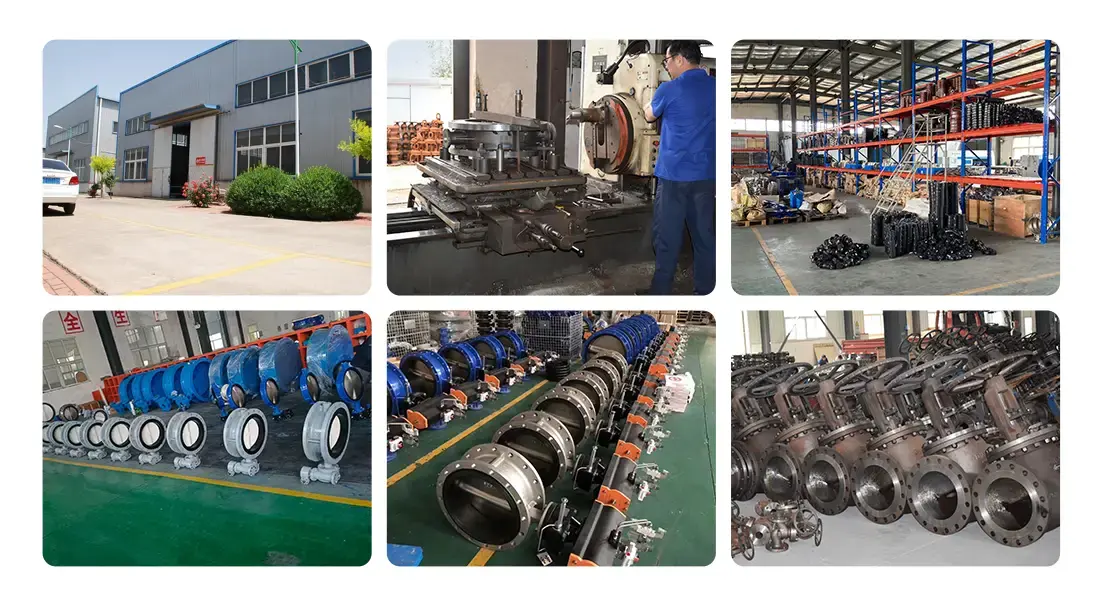
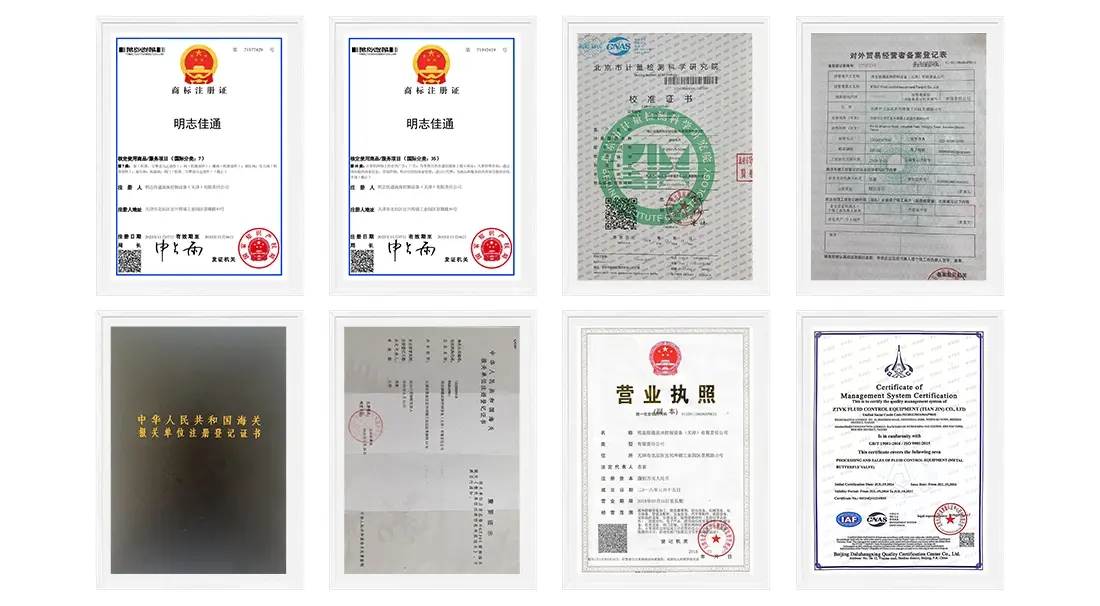
ZTVK has more than 15 years of knowledge in a specific type of manufacturing that helps wholesalers, contractors, and industry end-users find valves. Our factory in Tianjin is certified for ISO9001, ISO14001, and OHSAS18001, and it uses cutting-edge CNC machine centers and valve-specific processing tools to make sure that the dimensions are correct and the material is intact. We keep more than 2,000 standard valves in stock in sizes DN50 to DN600, so we can send them in 3 to 7 days for important projects. Custom setups can work with unique materials like CF8M, duplex metals, and exotic trims, and production processes last between 15 and 25 days.
We are a reliable provider of stainless shut off valves, and we can help you with OEM branding, custom nameplates, and packing that fits your market position. We are only 50 kilometres from Tianjin Port and can help you load your containers quickly. We can also give you FOB or CIF quotes because we work with major shipping lines. Our 18-month warranty covers flaws that were not caused by humans. It comes with expert help like startup movies, troubleshooting guides, and engineering advice. Get in touch with our team at ktec86961886@163.com to talk about how ZTVK's skills can help you meet your procurement goals and delivery deadlines, whether you need large amounts for your distribution inventory or project-specific specs for municipal water systems.
References
1. American Society of Mechanical Engineers, "ASME B16.34: Valves - Flanged, Threaded, and Welding End," ASME International, New York, 2020.
2. American Petroleum Institute, "API Standard 598: Valve Inspection and Testing," Tenth Edition, API Publishing Services, Washington, D.C., 2019.
3. Zappe, R.W., "Valve Selection Handbook: Engineering Fundamentals for Selecting the Right Valve Design for Every Industrial Flow Application," Fifth Edition, Gulf Professional Publishing, Houston, 2018.
4. Sotoodeh, K., "Industrial Valves: Calculations for Design, Manufacturing, Operation, and Safety Compliance," Springer International Publishing, Switzerland, 2021.
5. International Organization for Standardization, "ISO 5208: Industrial Valves - Pressure Testing of Metallic Valves," ISO Central Secretariat, Geneva, 2015.
6. Smith, P. and Zappe, R.W., "Valve Selection and Specification Guide for the Process Industries," Van Nostrand Reinhold, New York, 2017.
Send us your valve requirements and our team will provide professional solutions and fast quotations.
RELATED INDUSTRY KNOWLEDGE