- English
- French
- German
- Portuguese
- Spanish
- Russian
- Japanese
- Korean
- Arabic
- Greek
- German
- Turkish
- Italian
- Danish
- Romanian
- Indonesian
- Czech
- Afrikaans
- Swedish
- Polish
- Basque
- Catalan
- Esperanto
- Hindi
- Lao
- Albanian
- Amharic
- Armenian
- Azerbaijani
- Belarusian
- Bengali
- Bosnian
- Bulgarian
- Cebuano
- Chichewa
- Corsican
- Croatian
- Dutch
- Estonian
- Filipino
- Finnish
- Frisian
- Galician
- Georgian
- Gujarati
- Haitian
- Hausa
- Hawaiian
- Hebrew
- Hmong
- Hungarian
- Icelandic
- Igbo
- Javanese
- Kannada
- Kazakh
- Khmer
- Kurdish
- Kyrgyz
- Latin
- Latvian
- Lithuanian
- Luxembou..
- Macedonian
- Malagasy
- Malay
- Malayalam
- Maltese
- Maori
- Marathi
- Mongolian
- Burmese
- Nepali
- Norwegian
- Pashto
- Persian
- Punjabi
- Serbian
- Sesotho
- Sinhala
- Slovak
- Slovenian
- Somali
- Samoan
- Scots Gaelic
- Shona
- Sindhi
- Sundanese
- Swahili
- Tajik
- Tamil
- Telugu
- Thai
- Ukrainian
- Urdu
- Uzbek
- Vietnamese
- Welsh
- Xhosa
- Yiddish
- Yoruba
- Zulu
Motorized Valve Applications for Industrial Flow Control
Industrial flow control demands precision, reliability, and automation—challenges that motorized valves address effectively. A motorized valve integrates an electric actuator with traditional valve bodies, enabling automated fluid pathway regulation without manual intervention. This technology has transformed how industries manage liquids and gases, from municipal water systems to petrochemical refineries. By eliminating the physical strain and inconsistency of manual operation, these valves provide repeatable accuracy, remote control capability, and seamless integration with modern automation systems. Understanding their applications helps procurement professionals make informed decisions that enhance operational efficiency and reduce long-term costs.
Understanding Motorized Valves and Their Operating Principles
Core Mechanics of Electric Actuation
An electric actuator turns electrical energy into mechanical force, which turns the valve stem to open or stop it or change the flow. Motorized configurations work on their own with only a few simple electrical connections, unlike manual valves that need to be operated by hand or pneumatic systems that need a system for compressed air. The actuator gets control signals, which are usually 24V AC/DC, 110V, or 220V, and uses them to power an internal motor that is linked to it by precise gears. This setup produces a lot of torque, which makes it good for large-diameter pipelines where operating by hand would be difficult.
Modulating vs. On/Off Control
There are two main control modes that determine how a motorized valve works. On/off actuators move valves to either fully open or fully closed states. Limit switches stop movement at each end of the range. These work well for isolation tasks like shutting down in an emergency or ordering a batch of processes. Control systems send analog signals (4-20mA or 0-10V) to modulating actuators, which move the valve to a middle angle for precise flow throttling. In situations like temperature control, chemical doses, and pressure balance, where small changes are needed to avoid system shocks, this feature comes in very handy.
Butterfly, Ball, and Globe Configurations
Different valve types can be used with motorized technology. Butterfly valves, which have a disk inside the pipe that spins, are great for big water distribution networks because they have low pressure drop and are easy to install. Ball valves can close tightly with little friction, making them good for services that involve thick fluids or slurry. Even though they lose more pressure, globe valves are great for slow-use applications that need to make small changes to the flow. Which one to use depends on the type of flow, the amount of space available, and whether the main purpose is isolation or regulation.
Key Industrial Applications of Motorized Valves
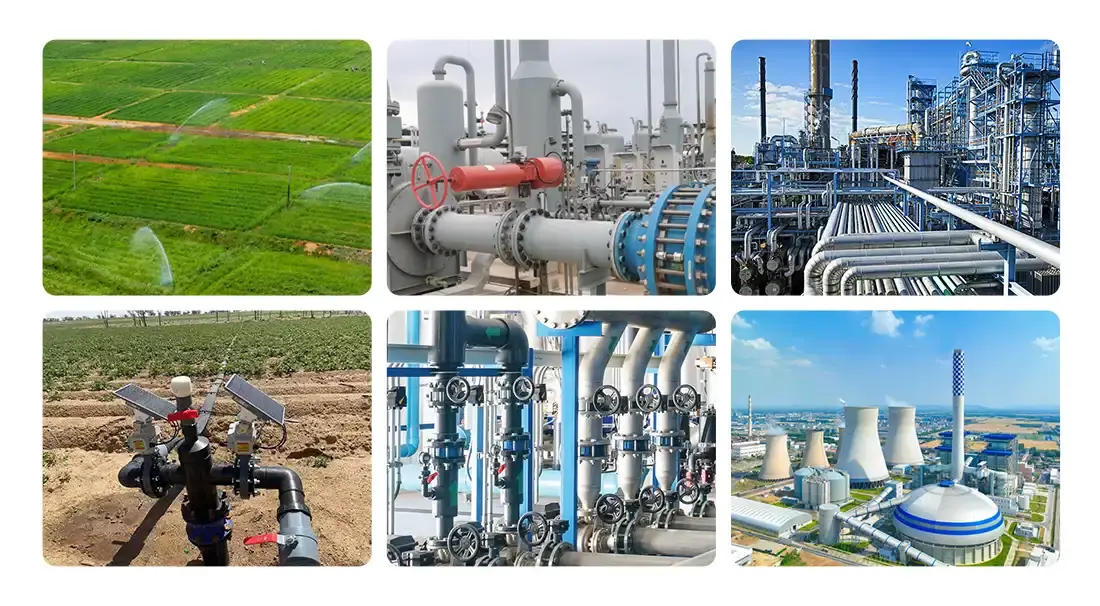
Using electric actuators for automation can help with practical problems in many fields. The examples below show measurable benefits for both distributors and end users that make the investment worth it.
Water Treatment and Municipal Infrastructure
Automated butterfly valves, like the motorized valve, are used for backwash cycles and controlling distribution lines in water treatment plants that are managed by the city. A standard automatic 800mm butterfly valve can handle 2,000 cubic meters per hour and can be placed accurately within ±2 degrees. This accuracy makes sure that the filter recycling time is perfect, which cuts chemical waste by up to 15% compared to operating by hand. Following the NSF/ANSI 61 standards ensures that the materials are safe for contact with potable water. This meets the regulatory needs that contractors face during the project approval stages.
HVAC and District Cooling Systems
When it comes to HVAC engineering, choices are based on how to save energy. In chiller loops, regulating valves keep precise temperature differences. The American Society of Heating, Refrigerating, and Air-Conditioning Engineers did a study that showed automatic control valves cut energy use by 18–25% by getting rid of the need for human valve drift and reaction lag. Contractors who put in district cooling systems in business buildings save money on returns and maintenance because motorized units get rid of the mistakes that happen when people change them by hand, which leads to comfort complaints.
Petrochemical and Refinery Operations
In refineries, valves need to be able to withstand harsh conditions and still work reliably. Motorized ball valves with PTFE seats can handle fuels that are harmful at up to 200°C and PN16 pressure. When working with volatile substances, the ability to monitor and shut down in an emergency in real time is made possible by the integration with Distributed Control Systems (DCS). When the power goes out, battery backup motors shut down automatically. This meets the API 607 fire-safe testing standards that insurance companies are requiring more and more.
Food Processing and Pharmaceutical Manufacturing
For sanitary uses, the insides must be smooth, and the parts must be easy to take apart for cleaning. 3-A sanitary standards are met by motorized valves made of stainless steel with electropolished finishes. This keeps bacteria from growing in dairy processing lines. Because of automation, people don't have to touch the process fluids, so conditions stay clean between batches. Pharmaceutical companies like the digital logging feature a lot because it lets the actuators keep track of every time the position of a valve changes. This is necessary for FDA 21 CFR Part 11 compliance during checks.
Comparing Motorized Valves with Other Valve Types: Making Informed Procurement Decisions
Choosing actuation technology affects not only the initial cost of capital but also the total cost of ownership over the life of the machine, which is usually 10 to 15 years. When procurement managers know the trade-offs, they can make choices that are in line with operational goals and spending limits.
Manual valves have the lowest initial cost, but they add up in hidden costs because they need a lot of work, especially in remote areas where technicians have to travel to make adjustments. A factory with 50 hand valves spread out over several floors might spend $30,000 a year just on adjusting the valves. By switching to motorized control, this ongoing cost is eliminated, and response times are cut from hours to seconds.
Solenoid valves are cheap and can switch quickly for small-bore uses, but they have trouble with torque limits above 2 inches. Their direct-acting system works well for clean gases and liquids with low viscosity, but it doesn't work at all for slurries or high differential pressures. Electric actuators provide consistent torque no matter what the media is made of, so they can be used in a wide range of process conditions.
In areas that aren't supposed to explode and where electrical sparks could start a fire, pneumatic control is still widely used. But infrastructure for compressed air makes things more complicated and costs more energy. Studies show that pneumatic systems use 7–8 times more energy than similar electric actuators when compressor flaws are taken into account. Motorized solutions are more cost-effective for buildings that don't already have air distribution networks. This is especially true when they are combined with modern PLC control architectures that can talk to electric actuators directly using Modbus or Profibus protocols.
Hydraulic actuators can apply a lot of force to large gate valves in dam situations, but they need fluid reservoirs, pumps, and ways to stop leaks, which makes them unsuitable for most industrial flow control situations. Servo valve systems can respond in less than a millisecond, but they are very expensive and should only be used in research or aerospace applications. For most industrial applications, the motorized valve is the best combination of efficiency, cost, and ease of upkeep.
Best Practices for Motorized Valve Use and Maintenance in Industrial Settings
Installation Considerations
Binding and premature wear can be avoided by making sure the fitting is properly aligned. To make sure the actuator fits tightly to the valve stem, the connection joints must be checked for runout tolerances of less than 0.1 mm. The environmental protection ratings—IP67 for wet areas and IP68 for underwater installations—must match the conditions of use. Electronics are especially vulnerable to condensation. Putting space heaters inside actuator enclosures keeps the temperatures inside above the dew point, which stops failures caused by moisture in humid places.
Routine Maintenance Protocols
Setting up a schedule for inspections every three months greatly increases the service life. Maintenance teams should make sure that the electrical connections are still tight, listen for strange actuator noise that could mean the gears are wearing out, and make sure that the position feedback matches the setpoints that were given. Stainless steel parts don't get galling if the stem threads are oiled every six months. Smart actuators have cycle counting features that can tell when internal parts are getting close to the end of their useful life. This lets them replace them before they break down unexpectedly and stop production.
Troubleshooting Common Issues
Most of the time, actuators that don't work are caused by temperature overloads that trip instead of the motor burning. Letting the system cool down for 30 minutes fixes 60% of these problems without having to call a technician. Position drift during modulating control is usually caused by worn potentiometers or loose feedback links, which can be fixed by following the steps outlined in the manufacturer's instructions for recalibration. Leakage past valve seats means that media contamination is hurting the seal materials. Changing from EPDM seats to VITON seats fixes problems with chemical compatibility in tough service.
Sourcing Reliable Motorized Valve Solutions: What Procurement Professionals Need
When choosing a distributor, factors other than unit price are taken into account, such as the stability of the supply chain and the level of professional help. Leading valve suppliers keep extra parts in stock to avoid project delays, offer customization services to meet the needs of each application, and offer support after delivery, both during and after the warranty period.
In foreign trade, quality guarantees are very important. ISO 9001 approval shows that quality management is done in a planned way, and ISO 5211 mounting standards make sure that actuators from different brands can be used together, which is important for future updates. Valve bodies that meet the pressure requirements of ANSI/ASME B16.34 and seat materials that have been tested according to ASTM standards protect buyers from cheap products that are flooding the global market.
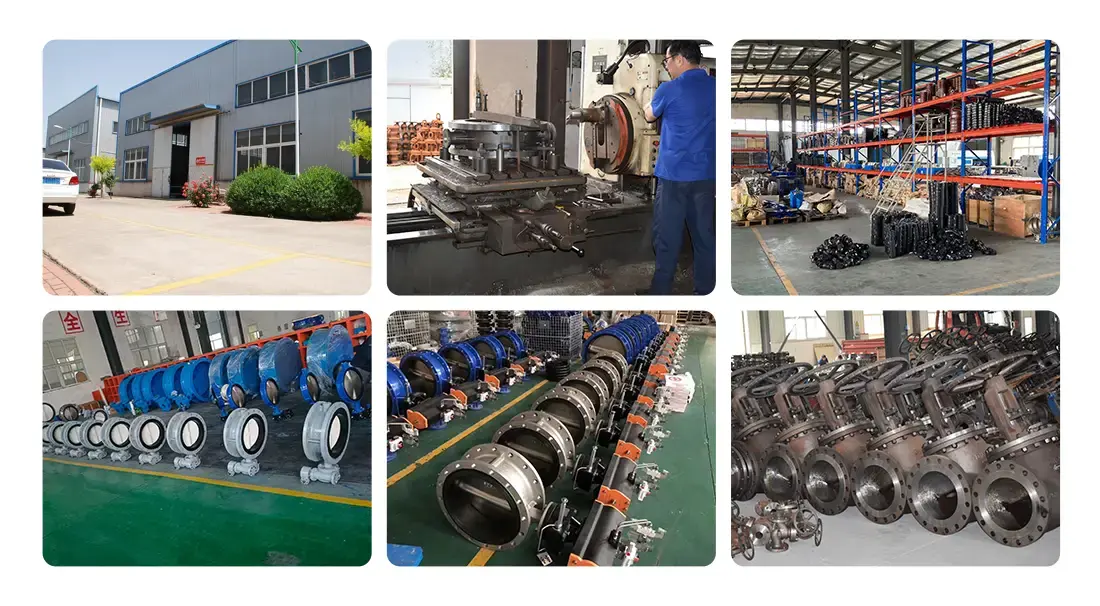
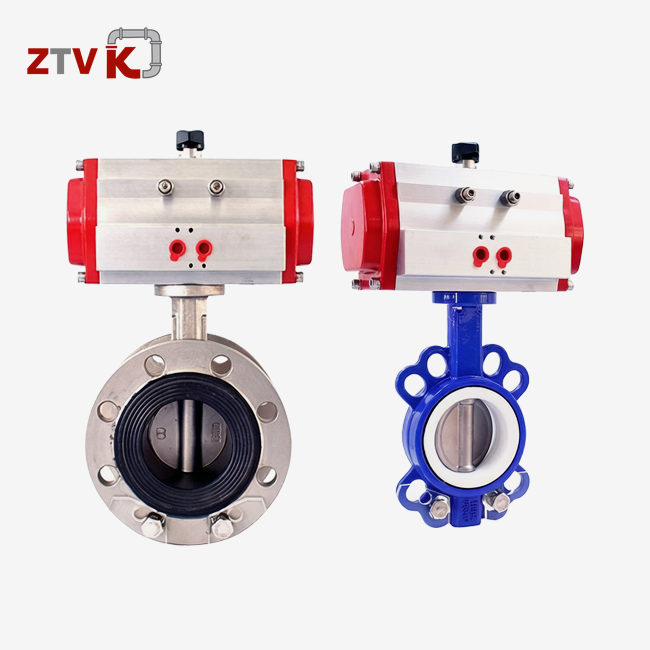
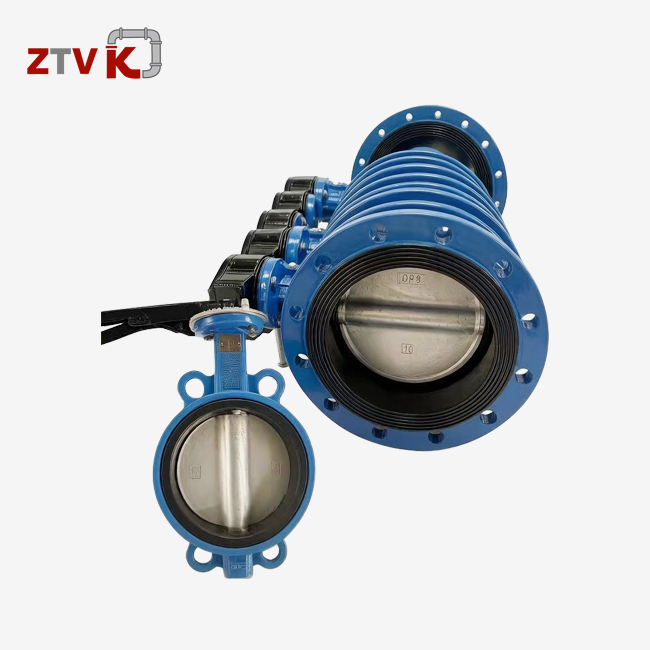
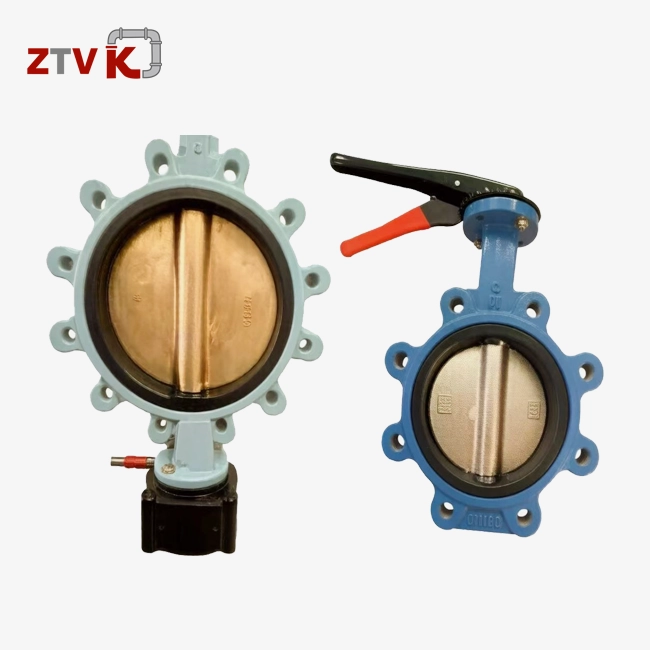
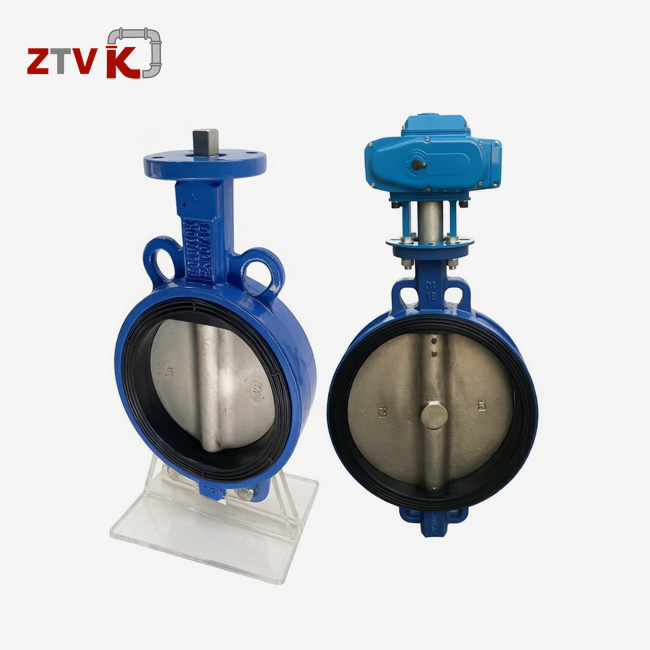
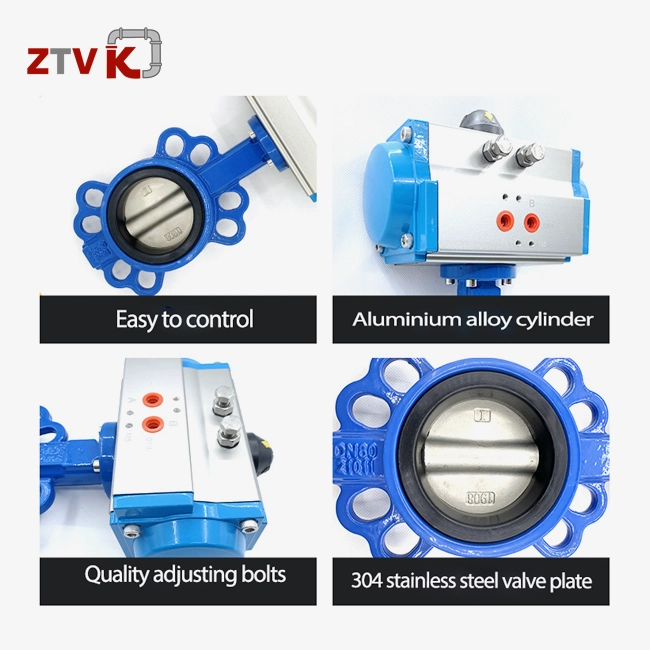
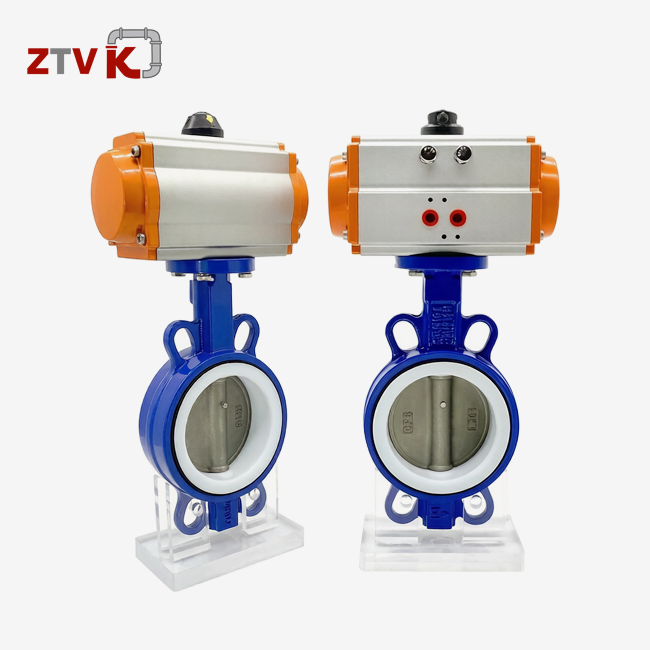
At ZTVK, we've designed motorized butterfly valves that solve the problems that industrial distributors have. Our wafer-type designs, which range from DN40 to DN1200 (1.5" to 48"), can fit a wide range of pipe systems. The ductile iron bodies (DI/QT450) paired with stainless steel or aluminum bronze disks provide better rust protection than cast iron options. The double-eccentric design lowers the running force by 30% and increases the lifetime of the actuator beyond 50,000 cycles. This is very important for high-frequency systems like automated backwash systems.
Because we are close to Tianjin Port, we can send standard sizes in 3–7 days from our collection of over 2,000 units, which helps contractors meet the tight deadlines they face while completing projects. Non-standard configurations, like custom seat materials (EPDM, NBR, PTFE, or VITON), special coatings for marine environments, or changed connection standards, can be shipped within 15 to 25 days through production lines set up just for overseas clients. This gives OEM partners who need branded packages and ODM clients who need to change the design to work in different situations the freedom they need.
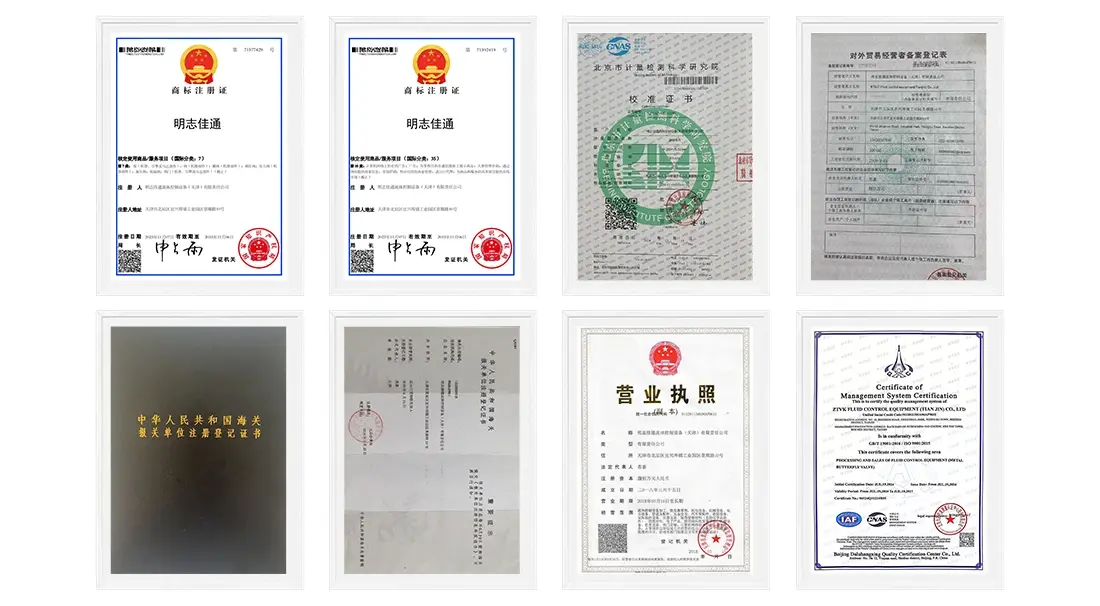
Technical help goes beyond just delivering the goods. During the quotation stage, we offer CAD drawings and 3D models. After the shipment, we provide installation guidance videos, and during our 18-month warranty period, we offer troubleshooting help. All of our goods have valid ISO9001, ISO14001, and OHSAS18001 certifications, and they can all withstand the third-party factory audits that many distributors need before they can work with a source. Our open approach to documentation, which includes material certifications and pressure test results that can be accessed through QR codes, helps build the trust that is needed for long-term relationships.
The way prices are set takes into account the economic reality of buying in bulk. When you buy 50, 100, or 500 units, you can get a discount. The FOB Tianjin Xingang and CIF destination port terms make the costs clear for buyers who are in charge of figuring out the landing cost. In emergency substitute situations where downtime costs are higher than expedite fees, rush order accommodation (7–10 days at +20% extra) can be used.
Conclusion
Motorized valves are a smart investment for improving operational safety, efficiency, and the ability to grow in many different industries. They are necessary for modern facilities because they can work reliably in harsh conditions, connect to automation systems, and provide accurate control. When buying something, people should think about not only the initial cost but also the total cost of ownership, how reliable the seller is, and how well they can help with technical issues. Distributors and contractors can get a competitive edge in project completion and customer happiness by working with makers that offer a wide range of options, from standard products that can be shipped right away to custom designs that are made to fit specific needs.
Frequently Asked Questions
1. How do I determine the correct actuator torque for my application?
Find the valve's breaking force at the highest differential pressure and then add 1.3 times the safety factor. This makes sure that the valve works reliably for as long as it's supposed to without the motor stopping. When you ask for quotes, be sure to include all of the process factors because media viscosity and temperature can change the power needs. Undersizing actuators causes them to break down early, while oversizing them wastes money on capacity that isn't needed.
2. What distinguishes modulating from on/off motorized valves?
Simple open/close directions let on/off motors move valves to fully open or closed positions, making them good for isolation tasks. Modulating actuators can stop at different angles by accepting analog position signals (4-20mA). This lets the flow be slowed down. For the second one, your automation system needs proportional-integral-derivative (PID) control methods to keep setpoints correct. Pick based on whether your application just needs to be isolated or needs to control the flow of data all the time.
3. Can motorized valves function during power outages?
When the power goes out, most standard electric motors stay in the last position. This is called fail-freeze mode. When the power goes out, fail-safe actuators with battery backups or spring-return mechanisms must be used to drive valves to safe positions (open or closed) that have already been set. Make sure you specify fail-safe requirements when you're buying so that you can choose the right actuators for your risk management needs.
Partner with a Trusted Motorized Valve Manufacturer
ZTVK makes industrial flow control products that are built to last and work well. We are a well-known seller of motorized valve controlled valves with more than 15 years of experience making them in Tianjin Beichen District. Our quality systems are ISO-certified, and we can make things in a variety of ways. Our electric-actuated butterfly valves are used by petrochemical plants, water treatment companies, and HVAC installers all over the world. Our engineering team is happy to help you with technical issues for free, whether you need stock units that can be shipped within days or special configurations that meet your exact needs.
Send emails to ktec86961886@163.com for specialized help choosing valves, getting big discounts, or talking about OEM partnerships. Together, we can make your fluid control systems work better by using tried-and-true valve technology and providing full support.
References
1. American Society of Heating, Refrigerating and Air-Conditioning Engineers. "Energy Efficiency in HVAC Systems Through Automated Control Valves." ASHRAE Technical Paper Series, 2021.
2. Johnson, M. and Peterson, R. "Comparative Analysis of Valve Actuation Technologies in Industrial Applications." Journal of Process Control Engineering, Vol. 45, 2022, pp. 178-195.
3. International Organization for Standardization. "Industrial Valves—Multi-turn Valve Actuator Attachments." ISO 5211:2020 Standard, Geneva, Switzerland.
4. National Sanitation Foundation International. "Drinking Water System Components—Health Effects." NSF/ANSI Standard 61, Ann Arbor, Michigan, 2019.
5. Smith, L., Chen, W., and Kumar, P. "Lifecycle Cost Analysis of Pneumatic vs. Electric Valve Actuators in Chemical Processing." Chemical Engineering Research Journal, Vol. 38, No. 4, 2023, pp. 412-429.
6. U.S. Food and Drug Administration. "Electronic Records; Electronic Signatures—Scope and Application." FDA Guidance for Industry, 21 CFR Part 11, Rockville, Maryland, 2020.
Send us your valve requirements and our team will provide professional solutions and fast quotations.
RELATED INDUSTRY KNOWLEDGE