- English
- French
- German
- Portuguese
- Spanish
- Russian
- Japanese
- Korean
- Arabic
- Greek
- German
- Turkish
- Italian
- Danish
- Romanian
- Indonesian
- Czech
- Afrikaans
- Swedish
- Polish
- Basque
- Catalan
- Esperanto
- Hindi
- Lao
- Albanian
- Amharic
- Armenian
- Azerbaijani
- Belarusian
- Bengali
- Bosnian
- Bulgarian
- Cebuano
- Chichewa
- Corsican
- Croatian
- Dutch
- Estonian
- Filipino
- Finnish
- Frisian
- Galician
- Georgian
- Gujarati
- Haitian
- Hausa
- Hawaiian
- Hebrew
- Hmong
- Hungarian
- Icelandic
- Igbo
- Javanese
- Kannada
- Kazakh
- Khmer
- Kurdish
- Kyrgyz
- Latin
- Latvian
- Lithuanian
- Luxembou..
- Macedonian
- Malagasy
- Malay
- Malayalam
- Maltese
- Maori
- Marathi
- Mongolian
- Burmese
- Nepali
- Norwegian
- Pashto
- Persian
- Punjabi
- Serbian
- Sesotho
- Sinhala
- Slovak
- Slovenian
- Somali
- Samoan
- Scots Gaelic
- Shona
- Sindhi
- Sundanese
- Swahili
- Tajik
- Tamil
- Telugu
- Thai
- Ukrainian
- Urdu
- Uzbek
- Vietnamese
- Welsh
- Xhosa
- Yiddish
- Yoruba
- Zulu
4 butterfly valves with actuators for Industrial Flow Control
When engineers and procurement managers search for reliable automated isolation solutions, the conversation almost always comes back to the 4 butterfly valve with actuator configurations that dominate modern pipelines. These assemblies combine a quarter-turn disc valve with a dedicated drive mechanism—electric, pneumatic, hydraulic, or smart—to regulate fluid flow with speed and precision. Choosing the right pairing directly affects uptime, maintenance costs, and compliance with standards such as ISO, ANSI, and API across water treatment, petrochemical, HVAC, and municipal infrastructure projects.


Understanding Butterfly Valves with Actuators: Basics and Working Principles
A butterfly valve turns a disk inside the pipe bore 90° to control the flow. Using an actuator instead of a handwheel makes the movement repeatable, remote, and quantifiable. The actuator takes energy from a source like compressed air, electricity, or hydraulic pressure and turns it into spinning force that is sent through a stem. ISO 5211 standardizes the mounting interface so that valve bodies and actuators from different makers can connect without having to make their own adapters. This makes installation much faster.
Key Actuator Energy Sources
Automated 4-way butterfly valves with actuators used in industry today get their power from three well-known sources. Electric actuators need power from the grid or 24 VDC, while pneumatic actuators use 4–8 bar of compressed air. For high force at low speed, hydraulic actuators need pressurized fluid. Each source affects how fast the actuator responds, how it handles failure, and whether it can be used in a dangerous area.
Torque Generation and Control
When choosing an actuator, torque is the most important factor. The Valve Manufacturers Association of America (VMA) says that about 35% of early valve breakdowns in industrial pipes are caused by actuators that are too small. Most companies in the industry use a safety factor that is 25–30% higher than the estimated break-away force. This is to account for seat swelling, media buildup, and pressure differences across the disk.
Top 4 Butterfly Valve Actuators for Industrial Flow Control
The first thing you should do before making a purchase choice is to figure out which type of valve fits your process. Each of the four types below has a different operational profile. Picking one without making sure it fits your system requirements is a costly mistake.
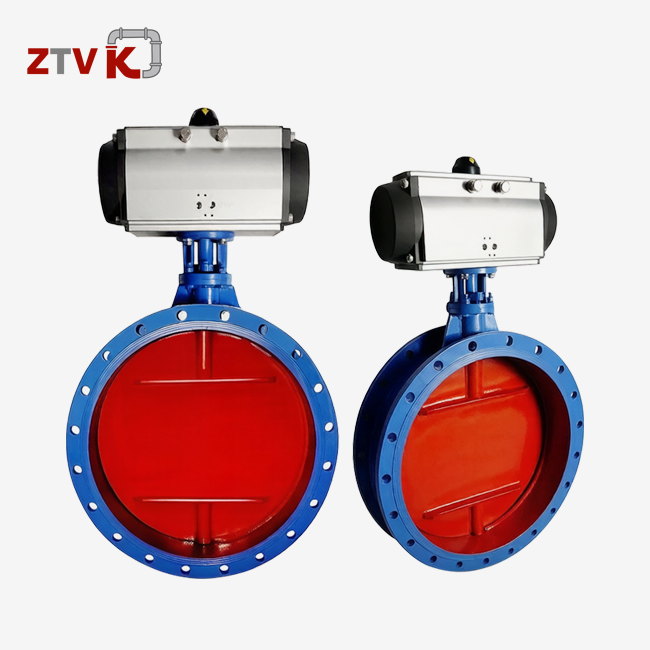
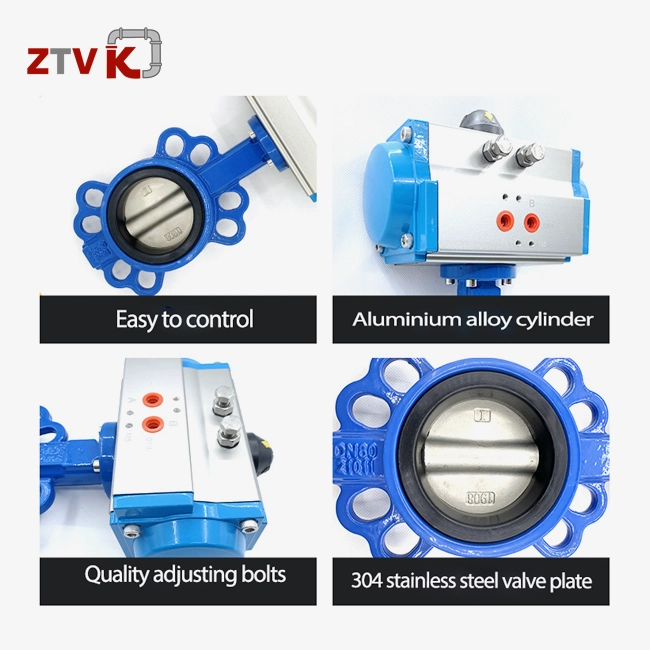
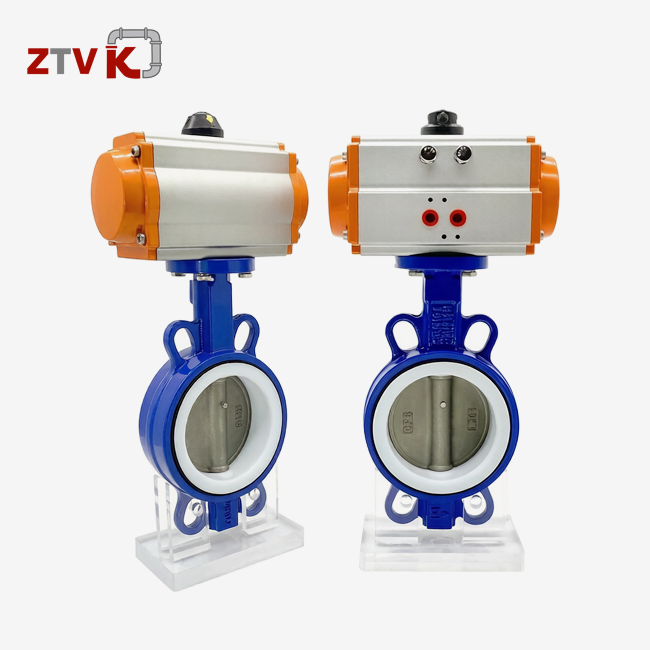
- Pneumatic Rack-and-Pinion Actuator (Single Acting / Double Acting): The pneumatic rack-and-pinion actuator, which can be either single-acting or double-acting, is the most common type of actuator used in chemical dosing and water treatment systems. For double-acting to work, it needs air to open and close. For single-acting (spring return), it needs compressed air to work in one direction and mechanical springs to return to a fail-safe position when the air supply drops. The hard-anodized extruded aluminum body doesn't rust, and the pressure die-cast aluminum caps and rack system keep the weight down without lowering the stiffness of the structure. There are often response times of less than two seconds at 6 bar, which makes this set-up perfect for emergency shut-down (ESD) lines.
- Electric Quarter-Turn Actuator (On/Off and Modulating): Electric actuators work great in places where compressed air infrastructure isn't available or isn't practical. A modulating unit with a smart positioner can take a 4–20 mA signal and hold the disk at 45°, 60°, or any other goal position. This allows for precise throttling instead of just on/off separation. More advanced models can talk to SCADA systems directly through Modbus RTU or Profibus DP, sending torque curves and cycle counts. For straight bolt-on compatibility with standard butterfly valve bodies, the ISO 5211 fixing flange is used.
- Hydraulic Actuator: The hydraulic actuator has the highest torque density of any quarter-turn device. It is essential for large-diameter pipes (DN400 and above) that work at high differential pressures in oil facilities and offshore platforms. Their slower stroke speed is meant to help systems that are sensitive to water hammer. The cost is a more complicated hydraulic power unit and stricter upkeep rules for the seals.
- Smart IIoT-Enabled Actuator: These are new devices that are being used in both new construction projects and digital retrofit programs. They have sensors built in that give feedback on position, track vibrations, and send maintenance warnings before they happen. Integration with Industrial Internet of Things (IIoT) platforms lets operations teams find signs of seal degradation before leaks happen, which cuts down on unplanned downtime. A 2023 McKinsey study on industrial automation said that predictive maintenance programs can cut down on machine breakdowns by as much as 40%.
These four types of actuators are used for almost all industry 4 butterfly valve with actuators. Which option is best for you relies on the pressure class, automation design, and fail-safe needs of your pipeline.

Selecting the Right Butterfly Valve Actuator: Criteria and Best Practices
Finding the right actuator for a valve starts with figuring out the force, not just the valve size. The power demand changes a lot depending on the line pressure, seat material, media viscosity, and actuator frequency.
Torque Sizing and Safety Margins
Find the minimum output torque of the actuator at the lowest supply pressure by multiplying the break-away torque by 1.3. This will give you the maximum differential pressure. For hydraulic units, check the force at the lowest air pressure, not the normal air pressure, so the unit doesn't stop working when the air pressure drops.
Material and Pressure Class Matching
You can get a ZTVK 4 butterfly valve with actuators with bodies made of ductile iron (DI), CF8, CF8M, or WCB cast steel, and disks made of DI, CF8, CF8M, or aluminum bronze. The shafts are made of SS410/416, SS304, and SS316. When used at working temperatures between -20°C and +200°C, seat elastomers like EPDM, Nitrile, White EPDM, PTFE, and VITON can handle it. The ends can be flanged or wafer-type and must meet the requirements of ASME B16.5 (150#/300#) and have pressure ratings of PN10/PN16. This is the same as most North American and European municipal and industrial pipeline standards.
Supplier Reliability and Lead Time
When bulk purchasing managers look at a seller over a long period of time, they always put shipping reliability above unit price. ZTVK keeps more than 2,000 basic units (DN50–DN600) in stock and can ship them within 3–7 days. Non-standard configurations take 15–25 days to make, but there is a faster option that gets them to you in 7–10 days. The factory is 50 km from Tianjin Port and has partnerships with both COSCO Shipping and Maersk that make FOB and CIF shipments quick and easy.

Maintenance, Troubleshooting, and Reliability Optimization
Actuated 4 butterfly valve with actuators need regular maintenance to keep working as long as they're supposed to. The easiest way to cause an unplanned shutdown is to forget to do routine checks.
Routine Maintenance Practices
Stem bearings and rack-and-pinion parts should be oiled as often as the product manual says, which is usually every 500 cycles or six months, whichever comes first. Check the setting of the limit switch every three months to make sure that the open and closed state signals are correct. For pneumatic units, the quality of the supply air must meet ISO 8573-1 Class 4. Moisture and particulate contamination damage cylinder walls and O-ring seals, which means that most maker guarantees are no longer valid.
Common Failure Modes and Fixes
A common problem in water distribution systems is valves that slam shut when they are closed. Putting speed adjusters (exhaust flow control mufflers) on actuator ports slows down the flow of exhaust air, which gets rid of water hammer. Actuator stalling is usually caused by undersizing or seat swelling from thermal cycling. This can be avoided by adding a 25–30% torque margin during the procurement stage. Seal bleed-through in pneumatic cylinders means the O-rings are worn out and need to be replaced with a standard seal kit. With the right tools, this can be done in less than an hour.
Comparing Manual vs. Actuated Butterfly Valves and Electric vs. Pneumatic Actuators
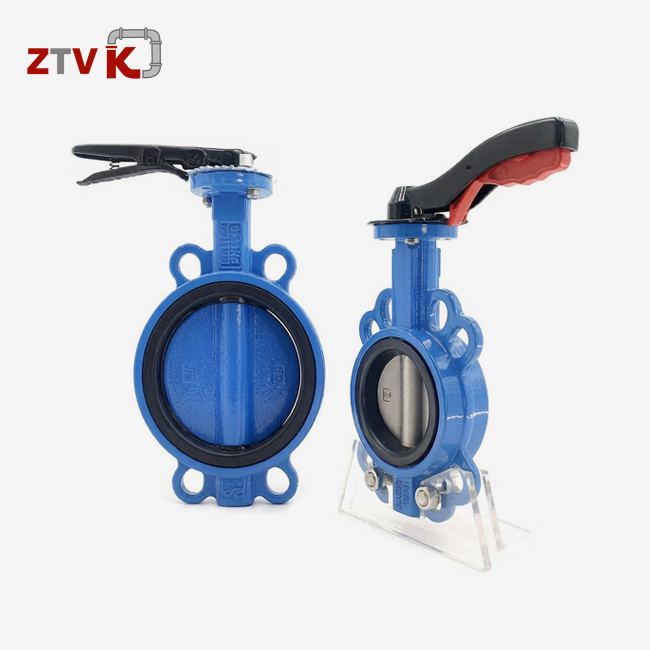
Manual butterfly valves are still a cheap way to isolate places that aren't used very often and are easy to get to. When a valve needs to work faster than a person can turn a handwheel, more than twice a day, in a dangerous or remote area, or when it needs to respond more than twice a day, an actuated version gives a measurable return on investment. Most U.S. factories can afford to put automatic devices on high-cycle lines within 18 to 24 months just because of the cost of labor.
Because they are easier to build and cost less, pneumatic actuators are clearly better for high-cycle, fast-response applications. When the infrastructure for compressed air is expensive, energy metering is important, or modulating control is needed, electric actuators work better than pneumatically driven units. The total cost of ownership over ten years often favors electric units in places that don't already have air supply networks. On the other hand, pneumatic units are still the most cost-effective choice in places where instrument air is already spread.
Conclusion
Using the right actuated 4 butterfly valve with actuator assembly can lower your operating costs, increase the life of your pipeline, and make sure that your process meets international standards. Matching the type of actuator to the process conditions is what matters, whether your application needs the quick reaction of a pneumatic rack-and-pinion unit, the accuracy of an oscillating electric actuator, or the durability of a hydraulic drive. ZTVK's product line includes ductile iron to CF8M bodies, EPDM to VITON seats, and wafer to flanged ASME B16.5 connections. These are the shapes that purchasing managers in the energy, water, and industry sectors use every day.
FAQ
1. What is the difference between single-acting and double-acting pneumatic actuators?
Compressed air moves in one way, and mechanical springs return in a single-acting (spring return) system. This creates a clear fail-safe position—either normally open or normally closed—if air pressure drops. When something is double-acting, air flows in both directions. This gives it more torque, but it doesn't have a built-in failsafe without extra parts.
2. How do I calculate the correct actuator torque to prevent stalling?
Find the maximum break-away torque of the valve at your highest differential pressure. Then, use a 25–30% safety margin that you calculated based on your lowest air supply pressure. A common mistake in procurement is to size based only on nominal pressure.
3. Can a pneumatic butterfly valve actuator handle modulating (throttling) service?
Yes. Adding an electro-pneumatic positioner that works with a 4–20 mA signal lets the actuator hold the disk at exact middle angles to control flow in ways other than just turning it on and off.
4. Can I retrofit an existing manual butterfly valve with a pneumatic actuator?
Most of the time, yes. Valves made to ISO 5211 top-works measurements can have actuators mounted directly on them without any cutting. Check the size of the stem drive and the power that is needed before placing your order.
Partner with ZTVK for Reliable Butterfly Valve with Actuator Solutions
With ISO 9001 approval, in-house torque testing, and a specialized OEM service, ZTVK sells a full range of 4 butterfly valve with actuator products, ranging from DN50 wafer-type pneumatic assemblies to DN600 flanged electric-actuated units in CF8M. ZTVK is designed for wholesalers, EPC contractors, and OEM buyers who can't afford supply delays. With more than 2,000 units in stock and close to Tianjin Port, it can quickly ship products all over the world. To get a quote right away, email us at ktec86961886@163.com.
References
1. Valve Manufacturers Association of America (VMA). Industrial Valve Market Report. 2022.
2. McKinsey & Company. The Next-Generation Operating Model for the Digital World. 2023.
3. International Organization for Standardization. ISO 5211: Industrial Valves — Part-Turn Actuator Attachments. 2017.
4. American Society of Mechanical Engineers. ASME B16.5: Pipe Flanges and Flanged Fittings. 2017.
5. American Petroleum Institute. API 598: Valve Inspection and Testing. 2016.
6. International Organization for Standardization. ISO 8573-1: Compressed Air — Contaminants and Purity Classes. 2010.
Send us your valve requirements and our team will provide professional solutions and fast quotations.
RELATED INDUSTRY KNOWLEDGE