- English
- French
- German
- Portuguese
- Spanish
- Russian
- Japanese
- Korean
- Arabic
- Greek
- German
- Turkish
- Italian
- Danish
- Romanian
- Indonesian
- Czech
- Afrikaans
- Swedish
- Polish
- Basque
- Catalan
- Esperanto
- Hindi
- Lao
- Albanian
- Amharic
- Armenian
- Azerbaijani
- Belarusian
- Bengali
- Bosnian
- Bulgarian
- Cebuano
- Chichewa
- Corsican
- Croatian
- Dutch
- Estonian
- Filipino
- Finnish
- Frisian
- Galician
- Georgian
- Gujarati
- Haitian
- Hausa
- Hawaiian
- Hebrew
- Hmong
- Hungarian
- Icelandic
- Igbo
- Javanese
- Kannada
- Kazakh
- Khmer
- Kurdish
- Kyrgyz
- Latin
- Latvian
- Lithuanian
- Luxembou..
- Macedonian
- Malagasy
- Malay
- Malayalam
- Maltese
- Maori
- Marathi
- Mongolian
- Burmese
- Nepali
- Norwegian
- Pashto
- Persian
- Punjabi
- Serbian
- Sesotho
- Sinhala
- Slovak
- Slovenian
- Somali
- Samoan
- Scots Gaelic
- Shona
- Sindhi
- Sundanese
- Swahili
- Tajik
- Tamil
- Telugu
- Thai
- Ukrainian
- Urdu
- Uzbek
- Vietnamese
- Welsh
- Xhosa
- Yiddish
- Yoruba
- Zulu
Double Offset vs Triple Offset Metal-Seated Butterfly Valve: Which to Choose?
When selecting between double offset and triple offset metal-seated butterfly valves, the choice hinges on your application's severity. The triple offset metal seated butterfly valve stands out for extreme-service applications demanding zero-leakage sealing at high pressures and temperatures, while double offset designs offer reliable, cost-effective solutions for moderate industrial conditions. Understanding the distinct engineering geometries and operational profiles of each design enables procurement managers to match valve specifications precisely to pipeline demands, avoiding costly over-specification or dangerous under-performance.

Understanding Double Offset and Triple Offset Metal-Seated Butterfly Valves
The technical differences between these two valve designs have a direct effect on how well they seal and how long they last. Both designs changed over time to deal with important issues in the business that circular butterfly valves couldn't.
Double Offset Design Fundamentals
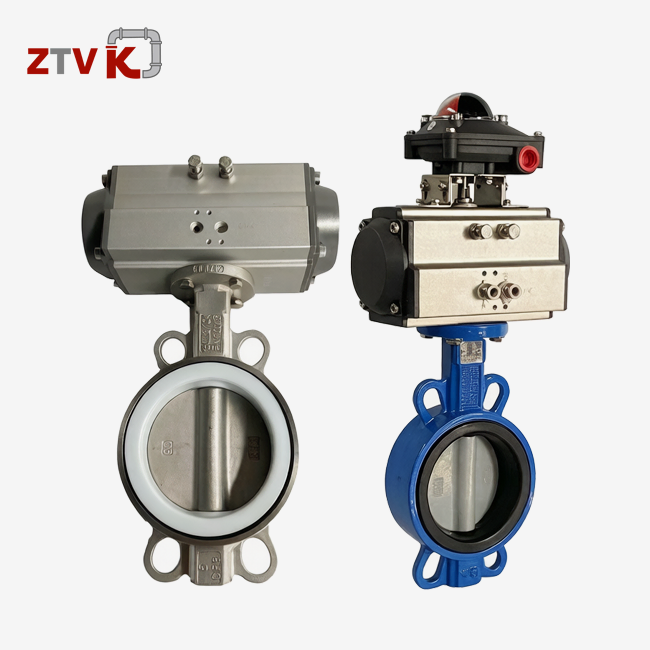
Double offset butterfly valves are made with two important eccentricities in mind. Both the disc centerline and the seating surface plane are not in the same plane as the centerline of the shaft. This two-way shift lets the disc move away from the seat as soon as the lid opens, which lowers friction during use. The disc makes a mechanical interference fit with the seat when the valve closes. This creates a tight seal by compressing the two. When compared to concentric valves, this design greatly reduces wear, which increases the service life to about 20,000 to 30,000 cycles in common water and HVAC applications. Manufacturers like ZTVK offer ductile iron (GGG40/50), carbon steel (WCB A216), and stainless steel types (SS304/316) as body materials. These can handle pressure levels from PN6 to PN16.
Triple Offset Engineering Advantage
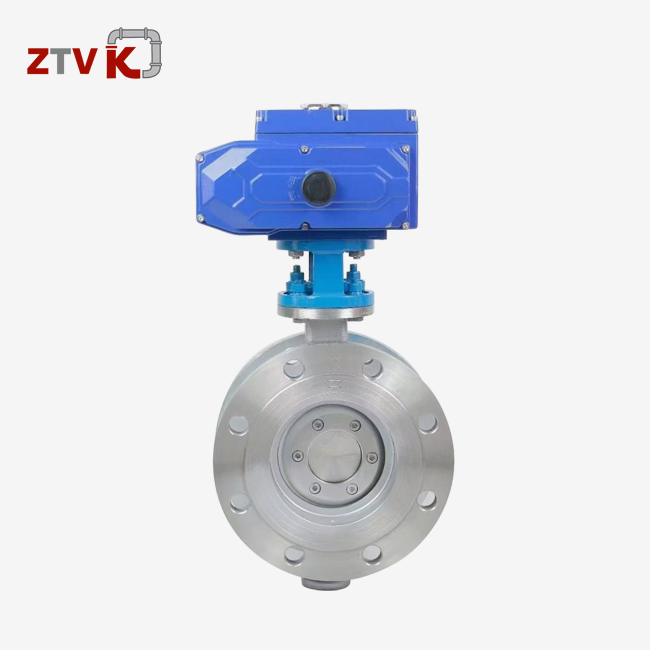
The triple offset configuration adds a third geometrical oddity: the axis of the seating cone is tilted relative to the centerline of the pipe, making a conical sealing shape. This new discovery means that the disc and seat don't have to rub against each other during the whole 90-degree rotation. Metal-to-metal contact only happens at the very end of closure, creating what engineers call "torque seating" instead of "position seating." This cam-action sealing mechanism greatly reduces wear, allowing more than 50,000 cycles of use without major degradation. The metal seat structure, which is usually made up of flexible graphite layers and hardened metal surfaces, can handle temperatures ranging from very cold (-196°C) to very hot (+815°C). These valves are made by ZTVK and come in sizes from DN50 to DN3000. The discs are made of nickel-lined ductile iron, WCB, and duplex stainless steel types (2205/2507) that are resistant to acidic media.
Material Composition and Sealing Mechanism
The main difference between these kinds of valves is the closing technology. Most double offset valves have seats made of rubber or PTFE, which means they can only handle temperatures up to about 200°C and can be damaged by chemicals in harsh media. The triple offset metal-seated butterfly valve has fused metal-graphite seal rings that fit against Stellite 21 hard-faced body seats. This makes the valve bubble-tight according to API 598 norms and fire-safe according to API 607. This design makes sure that the sealing is strong in both directions, no matter which way the flow is going. This is very important in petrochemical and power-producing plants where backflow can be dangerous.
Performance and Application Comparison
Which valve design gives the best performance and lifecycle value depends on how harsh the operational climate is. Industry data shows that each design has its own "sweet spot" for use.
High-Severity Service Environments
Triple offset metal seated butterfly valves are the most common type used in harsh industrial settings where process integrity must be maintained at all costs. In ports for compressed natural gas, these valves keep a tight seal at cryogenic temperatures, where normal seats would leak because of thermal shrinkage. In sour service uses with hydrogen sulphide, petrochemical plants use them because the metal seating doesn't break down quickly as soft seats do. In power plants, triple offset designs are used in superheated steam lines that work at 538°C and 160 bar. The metal-to-metal sealing can handle thermal cycling without the galling issues that happen with gate valves. When compared to gate valves of the same size, the non-rubbing operation cuts the actuator force needed by up to 40%. This lets smaller, more cost-effective actuators be used. Hardened metal seats last ten times longer than elastomer alternatives and are better for process industries that deal with abrasive slurries or catalyst fines because they don't wear down as easily.
Moderate Condition Applications
When the temperature stays below 200°C, and the pressure stays within PN16 limits, double offset butterfly valves work great in city water systems, HVAC installations, and general industry use. Their lower starting cost—usually 30% to 50% less than triple offset equivalents—makes them a good choice for projects that want to stay within their budget. Water treatment plants like how easy it is to maintain and how easy it is to get new seats without having to use special tools. When the temperature is normal and the extra cost of metal-seated construction is not worth it, fire protection systems use double offset valves to reliably isolate the system. These valves work well with clean water, glycol solutions, and non-aggressive gases. Under normal working conditions, the seats should be replaced every five to seven years.
Comparative Performance Metrics
When looking at different valves for your project or sales catalogue, keep these performance standards in mind. With triple offset valves, leakage rates are less than 5 x 10⁻⁸ standard cubic centimetres per second of helium per inch of port diameter (API 598 Rate A), which means that there is almost no leakage. Most double offset designs meet API 598 Rate C or D standards, which means they can be used in most industrial settings but aren't ideal as cutoff valves in critical isolation situations. Because there is no friction in the rotation of a triple offset valve, the operating torque stays pretty constant over the life of the valve. On the other hand, as seats wear on a double offset valve, the operating torque goes up, which means that the actuator needs to be upgraded. In continuous-duty applications, the lifecycle cost analysis usually favours triple offset construction, even though it costs more to buy. On the other hand, double offset valves are more cost-effective in installations that only use them sometimes.
Technical and Procurement Considerations
To buy valves successfully, you need to find a balance between scientific requirements and the facts of the supply chain. Global distributors and trade businesses have to look at more than just the catalogue specs.
Material Selection and Standards Compliance
The materials for the valve body and disc must match how acidic the process media is. Carbon steel (WCB A216) is good for work that doesn't involve corrosion, while types of stainless steel (SS304, 316, and 316L) can handle fluids that are slightly acidic or contain chloride. Duplex stainless steel (2205/2507) is better at resisting stress corrosion cracking in oil and gas applications that are used offshore. This makes the higher cost of the material worth it because it lasts longer. Manufacturers who follow international standards, such as ISO 5752 for face-to-face measurements, API 609 for butterfly valve design, and ASME B16.34 for pressure-temperature ratings, make sure that their products can be used with existing pipelines. ZTVK keeps its ISO9001, ISO14001, and OHSAS18001 standards up to date. This gives project approvals and insurance companies the quality guarantee paperwork they need.

Procurement Efficiency and Customization
Lead times have a big effect on project plans, especially for EPC workers who have to meet tight building targets. Stocks of standard valve sizes (DN50 to DN600) in amounts greater than 2,000 pieces allow delivery within three to seven days of order confirmation, meeting immediate replacement needs. Non-standard configurations that need custom materials or connection types (wafer, lug, flanged) usually take 15 to 25 days to make. For an extra fee, expedited options can cut this time down to seven to ten days. Minimum order numbers as low as one set can be met for pilot projects and prototypes without having to buy in bulk. With OEM and ODM possibilities, wholesalers can brand valves with their own names and packaging, which helps them set themselves apart in the market. Engineering help, like CAD drawings and 3D models, makes it easier to integrate into client systems without having to go through long specification cycles.
Total Cost of Ownership Analysis
Lifecycle economics is something that smart buying managers look at in addition to the purchase price. Triple offset metal seated butterfly valves cost 60% to 100% more than double offset valves at first, but over 15 to 20 years of use, their longer service life and low maintenance needs often result in lower total costs. Not having to change seats on a regular basis saves money on both parts and system downtime. When the actuator force is lowered, pneumatic or electric actuators can be made smaller, which lowers the cost of both capital and running energy. Trading companies that work with price-conscious markets may focus on double offset valves to stay within their customers' budgets. On the other hand, trading companies that work with industrial end-users can offer triple offset technology as a value-engineering upgrade that lowers their clients' long-term costs.
Maintenance and Longevity Insights
Proactive repair plans improve the performance of valves and stop them from breaking down without warning, which can stop industrial activities. Maintenance needs are very different for these two types of valve designs.
Triple Offset Maintenance Best Practices
The triple offset metal-seated butterfly valves' friction-free operation keeps wear to a minimum, but they still need to be inspected on a regular basis to make sure they're working at their best. Visual checks should be done once a year to make sure the shaft seal is still in good shape and to look for external leaks at the packing glands. Technicians should check the metal seat areas for erosion or corrosion damage every three to five years, based on how often the media is used and how it behaves. Quality valves have a modular seat ring design that lets the ring be replaced without taking the valve out of the pipeline. This cuts down on maintenance downtime from days to hours. Properly lubricating the actuator according to the manufacturer's instructions keeps it running smoothly and stops galling at the stem interfaces. When used in harsh conditions with temperature changes or sudden increases in pressure, keeping an eye on the trends in actuator torque can help find problems early on, before they become too big to handle. In properly defined uses, the strong construction usually lasts 25 to 30 years.
Double Offset Operational Challenges
During operation, rubbing contact causes the seats of double offset valves to slowly squeeze and wear out. When there is a lot of differential pressure, elastomer seats may push outward, creating leakage paths that weaken the isolation. Temperature changes that are too big for the seat material to handle cause permanent deformation, which means the seat has to be replaced too soon. Seats should be replaced every two to seven years, based on how often they are used, how rough the media is, and how harsh the temperature changes are. For the repair process to work, the pipeline has to be depressurised, and valves have to be taken out, which can delay production plans. Keeping track of past maintenance helps figure out when to replace parts and when to do repairs, so they don't have to be done when there are emergency leaks.
Making the Right Choice: Double Offset or Triple Offset?
Strategic valve selection matches the product's abilities with the needs of the application and the goals of the company. This method for making decisions helps procurement managers with the review process.
Selection Criteria Matrix
The main selection factor is the severity of the application. If the working temperature is higher than 200°C, the pressure is higher than PN16, zero-leakage performance is required by law or safety analysis, or the process media contain rough or strong chemicals, choose triple offset metal seated butterfly valves. Choose double offset designs when working in moderate temperature and pressure ranges, when saving money is important at first, or when regular seat replacement is part of established maintenance programs. Cycle frequency is important. Installations that see more than 5,000 operations a year benefit from metal-seated construction's longer lifecycle, while isolation valves that are only used occasionally may not be worth the extra money.

Future-Proofing Industrial Assets
Industry trends favor triple offset adoption as sites try to improve their operations and become more environmentally friendly. More and more, rules about fugitive emissions say that valves that don't leak hydrocarbons must be used, which is pushing standard changes toward metal-seated designs that are approved to ISO 15848. The lower actuator force makes it possible to improve process control and safety through automation updates that are in line with the digital transformation efforts of Industry 4.0. Distributors who see themselves as technical advisors instead of just selling goods set themselves apart by being experts at matching advanced valve technology to customers' needs. This helps them build long-term relationships that go beyond price competition.
Conclusion
Choosing between double offset and triple offset metal-seated butterfly valves comes down to how well the engineering skills match the needs of the application. Triple offset valves are more expensive, but they are worth it because they work better in high-temperature, high-pressure, and zero-leakage situations. They also have a longer service life and require less maintenance over time. It is still cheaper to use double offset designs for moderate-service uses where their skills meet operational needs. When building product ranges or choosing project parts, procurement managers who work with global markets have to find a balance between technical requirements, budget limits, and the stability of the supply chain. By knowing these differences, you can make smart choices that will improve both the short-term success of a project and the long-term performance of an asset.
Frequently Asked Questions
1. Can triple offset metal-seated butterfly valves handle highly corrosive fluids?
Of course. Acids, caustics, and sour gas with hydrogen sulphide can't damage the triple offset metal-seated butterfly valve because it is made of stainless steel (SS316L) or duplex grades (2507) and Stellite hard-facing. The choice of material should be based on the acidic media. ZTVK offers a range of body and disc materials, from common carbon steel to rare duplex stainless steel (1.4529) for harsh chemical environments.
2. What are typical lead times for custom valve orders?
Standard sizes (DN50–DN600) ship in three to seven days from ZTVK's collection of more than 2,000 units. It takes 15 to 25 days to make custom configurations that need non-standard materials or link types. With a priority schedule and expedited manufacturing, this time is cut down to seven to ten days. Being close to Tianjin Port makes it easy to load containers quickly and offers cheap FOB/CIF prices.
3. Do bulk purchases include warranty coverage?
ZTVK offers an 18-month warranty on all orders, even large sales, that covers problems with the way the product was made or the materials that were used. Damage caused by improper installation or usage outside of certain limits is not covered by the guarantee. When used correctly, technical documentation like installation videos and troubleshooting guides helps with successful commissioning and lowers the number of warranty claims.
Partner with ZTVK for Reliable Metal-Seated Butterfly Valve Solutions
ZTVK's Tianjin factory makes industrial-grade triple offset metal seated butterfly valves. These valves combine technical know-how with efficient supply chain management. With 15 years of experience in valve engineering, we can guarantee that our products will work well in petrochemical, power generation, and water infrastructure. We keep a large inventory (over 2,000 standard units), which lets us deliver quickly. Our flexible production can also meet the needs of OEMs with 15–25-day turnarounds. As a qualified producer of triple offset metal seated butterfly valves, we help global distributors by offering low bulk prices, full certifications (ISO9001, API, and CE), and detailed documentation in many languages. Our research team helps you choose the right valves for your clients' needs, matching valve sizes and grades from DN50 to DN3000 and PN6 to PN16. You can email our technical sales team at ktec86961886@163.com to talk about the needs of your project, ask for CAD drawings, or set up factory audits to check our quality control and manufacturing skills.
References
1. American Petroleum Institute (2017). API Standard 609: Butterfly Valves—Double-Flanged, Lug- and Wafer-Type, 8th Edition. Washington, D.C.: API Publishing Services.
2. Smith, P. & Zappe, R.W. (2019). Valve Selection Handbook: Engineering Fundamentals for Selecting the Right Valve Design for Every Industrial Flow Application, 6th Edition. Burlington, MA: Gulf Professional Publishing.
3. ASME International (2020). ASME B16.34: Valves—Flanged, Threaded, and Welding End. New York: American Society of Mechanical Engineers.
4. Skousen, Philip L. (2018). Valve Handbook, 4th Edition. New York: McGraw-Hill Education.
5. International Organization for Standardization (2019). ISO 5752: Metal Valves for Use in Flanged Pipe Systems—Face-to-Face and Centre-to-Face Dimensions. Geneva: ISO Central Secretariat.
6. Lyons, Jerry L. & Askland, C. (2015). Valve Design and Selection for the Process Industries. Houston: Jacobs Engineering Technical Publications.
Send us your valve requirements and our team will provide professional solutions and fast quotations.
RELATED INDUSTRY KNOWLEDGE