- English
- French
- German
- Portuguese
- Spanish
- Russian
- Japanese
- Korean
- Arabic
- Greek
- German
- Turkish
- Italian
- Danish
- Romanian
- Indonesian
- Czech
- Afrikaans
- Swedish
- Polish
- Basque
- Catalan
- Esperanto
- Hindi
- Lao
- Albanian
- Amharic
- Armenian
- Azerbaijani
- Belarusian
- Bengali
- Bosnian
- Bulgarian
- Cebuano
- Chichewa
- Corsican
- Croatian
- Dutch
- Estonian
- Filipino
- Finnish
- Frisian
- Galician
- Georgian
- Gujarati
- Haitian
- Hausa
- Hawaiian
- Hebrew
- Hmong
- Hungarian
- Icelandic
- Igbo
- Javanese
- Kannada
- Kazakh
- Khmer
- Kurdish
- Kyrgyz
- Latin
- Latvian
- Lithuanian
- Luxembou..
- Macedonian
- Malagasy
- Malay
- Malayalam
- Maltese
- Maori
- Marathi
- Mongolian
- Burmese
- Nepali
- Norwegian
- Pashto
- Persian
- Punjabi
- Serbian
- Sesotho
- Sinhala
- Slovak
- Slovenian
- Somali
- Samoan
- Scots Gaelic
- Shona
- Sindhi
- Sundanese
- Swahili
- Tajik
- Tamil
- Telugu
- Thai
- Ukrainian
- Urdu
- Uzbek
- Vietnamese
- Welsh
- Xhosa
- Yiddish
- Yoruba
- Zulu
Cast Iron vs Ductile Iron vs Stainless Steel Butterfly Valves
The right butterfly valve material affects system dependability, maintenance costs, and long-term efficiency. Understanding material characteristics is crucial when comparing cast iron, ductile iron, and stainless steel. In moderate-pressure applications that require cost-effectiveness and reliability, the cast iron wafer butterfly valve excels. Ductile iron is ideal for water hammer-prone systems due to its high tensile strength and impact resistance. It excels in corrosive situations and severe temperatures when material degradation causes operational hazards. Procurement experts can compare technical requirements to make project-specific and budget-friendly selections.
Understanding Butterfly Valve Materials: Cast Iron, Ductile Iron, and Stainless Steel
Valve performance in various industrial applications depends on material selection. The three main alternatives offer distinct operating benefits.
Cast Iron: Cost-Effective Reliability
Traditional grey cast iron valves are reliable in low-to-moderate-pressure systems. Excellent castability allows complicated shapes at low manufacturing costs. Grey cast iron handles non-corrosive fluids well up to 120°C, but its brittleness limits its use in high-impact or dynamic systems. Grey iron's graphite flake structure naturally lubricates disc rotation.
Ductile Iron: Enhanced Mechanical Performance
Spheroidal graphite microstructure makes ductile iron, or GGG40 in international standards, less brittle than cast iron. This metallurgical innovation outperforms gray cast iron with tensile strengths of 400 MPa. The material resists thermal shock and municipal water pounding. Ductile iron valves cover most industrial fluid control applications with pressure ratings from PN6 to PN16. Infrastructure safety depends on the material's ductility, which avoids catastrophic fracture.
Stainless Steel: Corrosion Resistance and Durability
Unlike stainless steel valves, a cast iron wafer butterfly valve is more suited for general industrial applications where corrosion resistance requirements are not as stringent. Stainless steel grades SS304 and SS316 dominate chemical, saltwater, and high-temperature applications. Chromium creates a passive oxide coating that self-heals when scratched, keeping the valve corrosion-resistant. Desalination plants, pharmaceutical factories, and food processors use stainless steel butterfly valves to reduce contamination. After considering lifecycle costs like replacement frequency and system downtime, the material's greater cost makes sense.
Cast Iron Wafer Butterfly Valves: Specifications, Benefits, and Performance
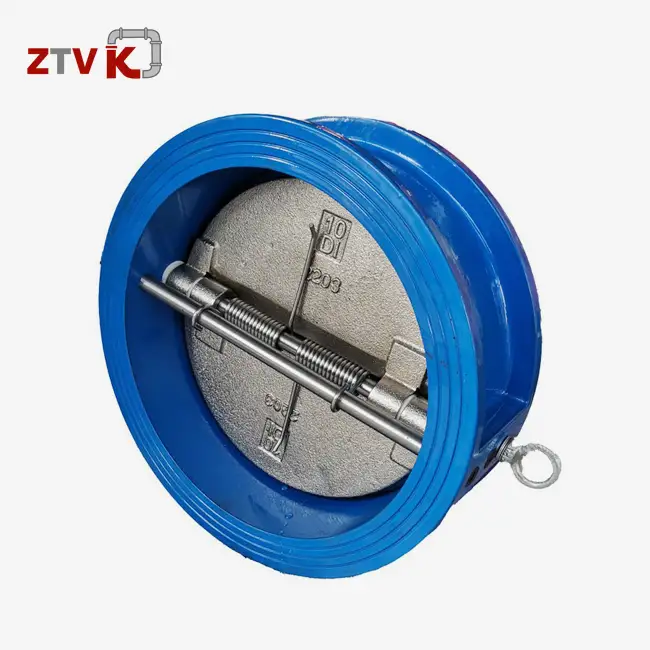
Engineers optimized the wafer design to reduce weight, installation time, and material costs while retaining functionality. We make valves for DN50 to DN2400 pipe diameters, from HVAC systems to municipal water mains.
Technical Specifications
Our ductile iron body uses the international casting standard GGG40 material. PN6, PN10, and PN16 (Class 150) pressure ratings fit most water distribution and HVAC applications. Elastomer seat selection, not body material constraints, determines the upper temperature tolerance limit of -29°C to +120°C.
NBR is good for water service, EPDM for chemical resistance and temperature tolerance, Viton for harsh chemicals, and silicone rubber for food-grade applications. Epoxy coats the disc for potable water systems, whereas SS304, SS316, and duplex steel handle corrosive media. SS316, SS304, SS420, and SS416 stem materials are used for corrosion and torque.
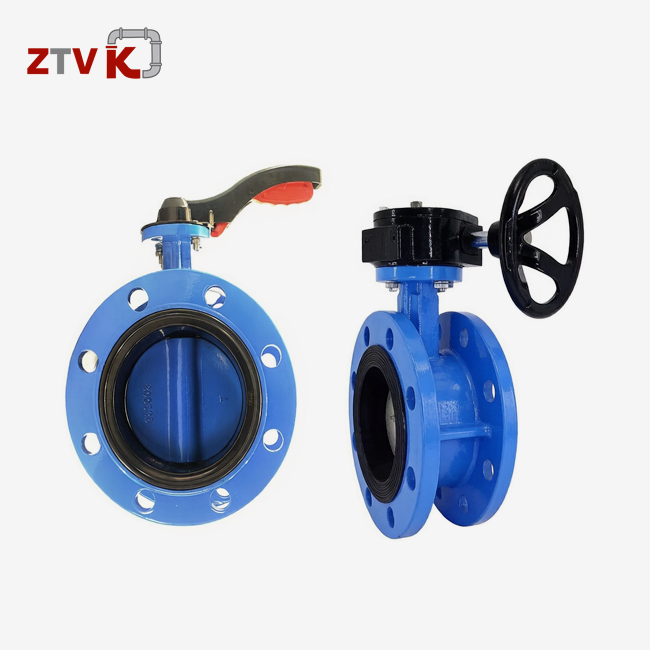
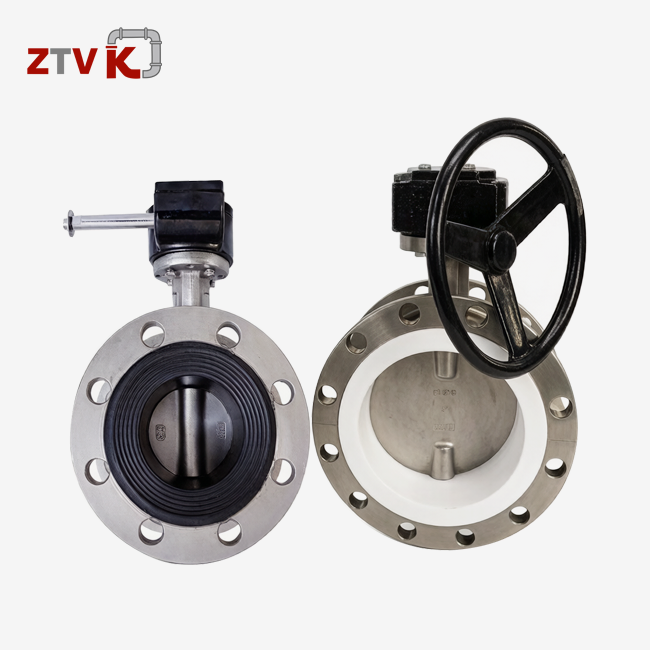
Wafer, lug, and flanged connections exist. Wafers with through-bolts fit between pipe flanges, decreasing face-to-face dimensions. Threaded inserts in lug-style bodies allow single-flange line terminations. Flanged connections provide the strongest mechanical attachment for high-vibration settings.
Benefits of Driving Procurement Decisions
Wafer butterfly valves require 40% less installation than flanged gate valves. Retrofits and urban infrastructure projects struggle with crowded mechanical rooms, but the compact envelope saves space. Reduced metal volume lowers material prices accordingly, saving project budgets without affecting functionality.
Easy maintenance is improved by quarter-turn operation and disc-seat geometry. Technicians may inspect seats without removing valves, reducing normal maintenance downtime. As operational needs change, actuator retrofits allow manual valves to become automated.
Performance in Real-World Applications
Wafer butterfly valves control municipal water flow at pump discharge sites and zoning boundaries. Low head loss maintains system pressure, saving pumping energy. HVAC contractors specify these valves for throttling-prone chilled and condenser water loops. In poor water quality, the durable seat may withstand tiny debris without damage, unlike metal-seated competitors.
Comparative Analysis: Cast Iron vs Ductile Iron vs Stainless Steel Butterfly Valves
Procurement decisions must be evaluated across several performance criteria. The following comparative framework explains material selection.
Mechanical Strength and Pressure Limits
Ductile iron bodies are cheaper than stainless steel and can tolerate higher pressures than grey cast iron. Our GGG40 ductile iron valves reliably serve PN16 (230 psi, ambient temperature) systems. Conservative designs limit grey cast iron to PN10. Despite exceeding most water and HVAC regulations, stainless steel can manage Class 300 and higher pressure levels.
Ductile iron resists impact, unlike cast materials. The spheroidal graphite structure absorbs pressure spikes without fracturing, unlike grey iron installations. Stainless steel has equivalent impact tolerance and corrosion resistance.
Corrosion Resistance Across Fluid Types
Potable water systems benefit from epoxy-coated ductile iron bodies and EPDM seats. This combination reduces iron leaching and meets FDA drinking water contact requirements. Stainless steel is needed when chloride concentrations surpass thresholds or biological growth issues require improved cleanability.
Chemical processing requires material compatibility analysis. Coated ductile iron can withstand weak acids and alkalis intermittently, while stainless steel is needed for constant exposure. Spending on SS316 material extends service life and reduces contamination.
Temperature Performance and Seat Material Selection
Elastomer seat temperature tolerance is usually lower than that of the body material. EPDM chairs withstand 120°C hot water and low-pressure steam condensate. Suitable for ambient and chilled water service, NBR chairs limit application temperatures below 80°C. Viton can reach 200°C, but metal-seated designs become competitive.
Thermal cycling ages elastomers faster. Silicone rubber seats provide flexibility in systems with frequent temperature fluctuations. To maintain cutoff integrity, tougher compounds must be replaced more often.
Installation Flexibility: Wafer, Lug, and Flanged Configurations
In a bidirectional service where line removal for valve maintenance is allowed, the wafer arrangement maximizes cost efficiency. Through-bolts compress the valve body between pipe flanges, making it leak-tight without flanges. This design cuts installed weight by 30% over flanged options.
Lug-style bodies have tapped holes for flange bolts on each side. This feature permits downstream piping removal without disrupting the upstream connection, which is useful during system upgrades or expansions. The cast iron wafer butterfly valve is a typical representative of wafer designs that use downstream flange compression for seat retention; therefore, dead-end service applications require lug construction.
Instead of squeezing a tiny body part, flanged butterfly valves distribute bolt loads through integrated flanges for the strongest mechanical connection. This structural rigidity helps pump discharge areas with high vibration. When service reliability trumps initial investment, weight and cost premiums are justifiable.
Case Study: Municipal Water Distribution System
Old gate valves in a 30-year-old water distribution network were replaced in the Southeast. The engineering team considered stainless steel, ductile iron, and coated cast iron 48-inch main line isolation valves. The best solution is balanced pressure ratings (PN10), corrosion resistance through epoxy coating, and budget restraints with ductile iron wafer butterfly valves with EPDM seats. Installation lowered valve weight per unit by 65%, saving crane rental expenses and speeding replacement. Three years of operational data demonstrate zero leakage and negligible actuation torque deterioration, verifying material selection.
Procurement Insights for Cast Iron Wafer Butterfly Valves
Successful sourcing goes beyond unit pricing. TCO depends on supply chain reliability, certification compliance, and post-sale support.
Evaluating Manufacturers and Suppliers
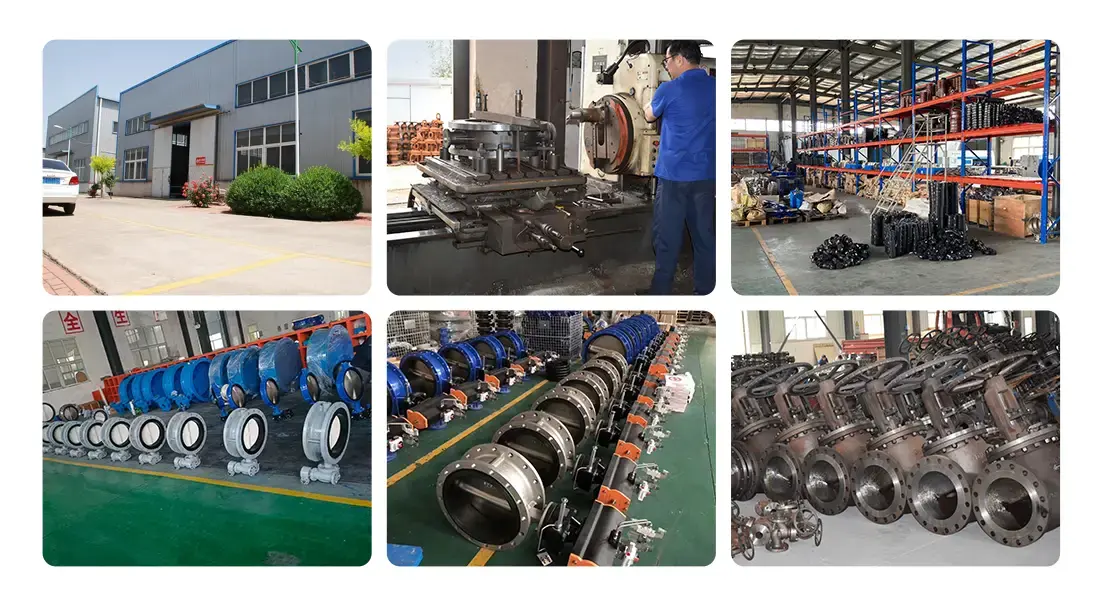
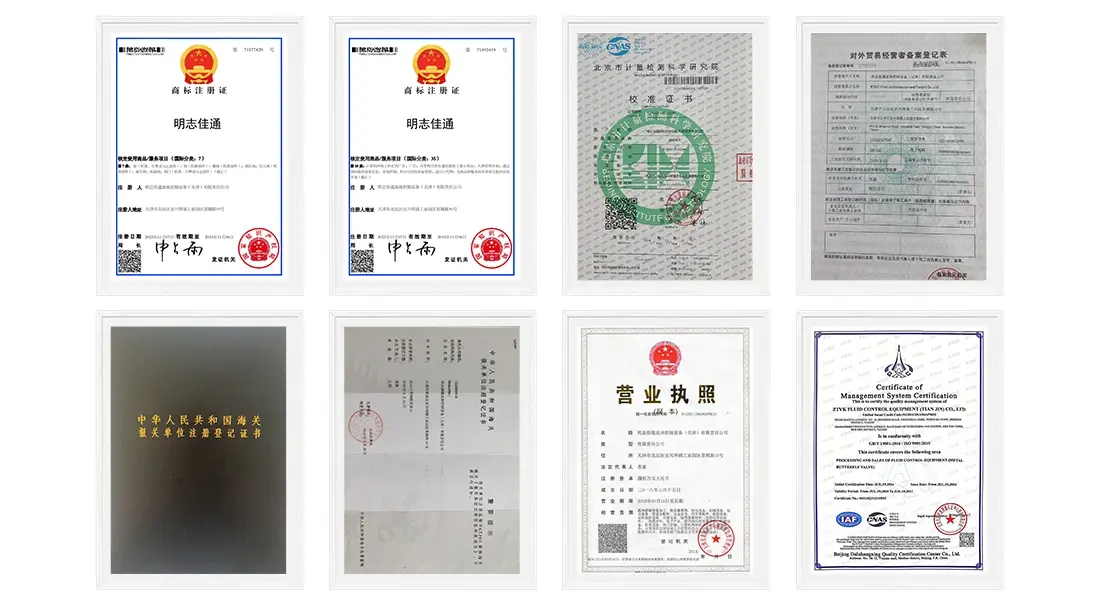
Production capacity, quality management, and technical support should be considered while evaluating manufacturers. ISO9001, ISO14001, and OHSAS18001 certifications show ZTVK's systematic quality management across manufacturing processes. Our CNC machining centers and pressure testing equipment provide in-house dimensional tolerance and performance verification.
Production lead times affect project timelines. Standard configurations (DN50-DN600) are available for 3-7 days delivery. Special sizes and specifications take 15-25 days, with expedited options at a charge. Our 50-kilometer straight expressway to Tianjin Port allows container loading within an hour of production, reducing international shipping times.
Certification and Compliance Standards
Butterfly valves must meet regional material composition, pressure testing, and dimensional interchangeability norms. To meet varied piping system specifications, we manufacture to API 609, DIN, ASME, ISO, ANSI, GB/T, BS EN, and AWWA standards. Our shipments include certified material test reports from third-party labs that verify performance promises.
Export crating follows ISPM 15 wooden packing guidelines. Packaging violations delay customs and incur quarantine costs. Our timber crates are heat-treated and certified to avoid port issues.
Pricing Strategies and Volume Discounts
Unit pricing drops significantly with order volume. Distributors buying 500+ valves per year receive tiered discounts to boost regional competitiveness. We offer FOB Tianjin Xingang and CIF destination port arrangements for freight cost transparency.
OEM branding initiatives differentiate distributor products at low cost. Brand identification is reinforced without tooling using custom nameplates, logo stamps, and packaging. OEM program minimum order quantities are flexible for developing distributors building market presence.
Logistics and Delivery Optimization
Advantageous container booking and freight costs are available through our COSCO Shipping and Maersk relationships. Smaller buyers can share container space and get ocean freight costs previously reserved for bulk buyers using consolidation services. As necessary by destination nations, we arrange customs documents and offer commercial invoices, packing lists, and certificates of origin.
Fixed mounts and moisture-proof film protect valve coatings during shipping. Epoxy surfaces are subject to impact damage until installation, and our packing minimizes shipping-related warranty claims. Buyers are protected from premature failures by the 18-month guarantee from installation or 24 months from manufacture.
Maintenance Tips and Common Issues with Cast Iron Wafer Butterfly Valves
Proactive valve maintenance reduces unplanned shutdowns that disrupt operations and increase lifecycle costs.
Routine Inspection Protocols
Early corrosion, coating degradation, and exterior leaking are detected quarterly by visual inspection. At flange interfaces where installation torque focuses stress, epoxy coatings may chip. Quick touch-up paint minimizes oxidation beneath undamaged coatings. Check stem packing glands for weepage and tighten gland nuts slowly to minimize over-compression and actuation torque.
Annual operational testing ensures torque requirements are met. Increased breakaway torque indicates seat wear or disc corrosion. Check disc position versus actual flow conditions because linkage loosening can cause incorrect position indications during automated operation.
Seal Material Longevity and Replacement
Chemical, heat, and mechanical abrasion destroy elastomer seats. EPDM lasts 8-10 years in potable water at moderate temperatures. Every 10°C above nominal operating temperature reduces elastomer lifespan. NBR has less chemical resistance than EPDM, rendering it susceptible to chlorine and ozone in treated water systems.
Seat replacement in wafer arrangements requires valve removal from the line. Remove downstream pipes and the disc-stem assembly to change seats upstream with lug-style valves. The original manufacturer should supply replacement seats for dimensions and material uniformity.
Corrosion Prevention Strategies
External corrosion begins at coating flaws and undercuts unbroken surfaces. Cathodic protection for subterranean pipeline valve bodies should be expanded. Periodic coating inspection detects holidays before metal loss.
For cast iron wafer butterfly valves, fluid chemistry and velocity affect internal corrosion. Localized corrosion cells and sediment accumulate in low-flow circumstances. Flushing measures during commissioning eliminate building debris that could damage seats or discs. Water chemistry monitoring detects corrosion-promoting conditions—low pH, high chloride, dissolved oxygen—allowing valve damage prevention.
Troubleshooting Common Operational Problems
Flange interface leakage is usually caused by insufficient bolt torque or defective seating. Use a calibrated torque wrench and star pattern sequence to torque flange bolts to manufacturer specifications. Valve removal and seat inspection are needed if leakage persists.
Disc binding during operation shows debris between the disc edge and seat, piping strain misalignment, or stem bearing corrosion. Never force actuators against abnormal resistance; damage increases repair costs. Before continuing, isolate the valve, depressurize the line, and find the cause.
Pressure rating exceedances occur when system modifications raise operating pressures over design. Valves can survive temporary overpressure, but seats extrude with differential pressure, leaking permanently. Transient spikes during pump starts or quick valve shuts elsewhere in the system are prevented by pressure monitoring and relief devices.
Conclusion
Operational pressures, fluid properties, and budget determine cast iron, ductile iron, or stainless steel butterfly valves. The best strength, affordability, and corrosion resistance for water, HVAC, and general industrial applications is ductile iron. Contractors with tight project timeframes favor wafer layouts for installation efficiency and space savings. While proper maintenance enhances service life, material selection for the application eliminates premature failures that no maintenance program can overcome. When selecting suppliers, procurement professionals should prioritize certifications, production capacity, and technical support. Initial pricing is only one part of the lifecycle cost.
FAQ
Q1: What pressure and temperature limits apply to wafer butterfly valves?
Ductile iron wafer butterfly valves typically handle PN6 through PN16 pressure ratings, equivalent to approximately 85-230 psi at ambient temperature. Temperature capabilities depend primarily on seat material rather than body construction. EPDM seats accommodate temperatures to 120°C, while NBR limits application to 80°C. The ductile iron body itself tolerates significantly higher temperatures, but elastomer degradation governs practical operating limits in most installations.
Q2: How do I select between ductile iron and stainless steel for my application?
Ductile iron with epoxy coating suits potable water, HVAC, and fire protection systems where corrosion remains moderate, and budgets constrain material costs. Stainless steel becomes necessary in seawater, aggressive chemicals, or food-grade applications where contamination risks and corrosion rates exceed coated iron capabilities. Evaluate fluid chemistry, temperature extremes, and lifecycle cost projections to determine which material delivers optimal value for your specific operating conditions.
Q3: Can EPDM and NBR seats be interchanged during maintenance?
Yes, seat materials can be changed during maintenance to better match operating conditions. EPDM provides superior temperature and chemical resistance compared to NBR, making it the preferred upgrade for valves experiencing premature seat degradation. Confirm dimensional compatibility with the valve manufacturer, as seat groove profiles may vary between product generations. Installing the correct seat material extends maintenance intervals and improves shutoff reliability across the valve's remaining service life.
Partner with ZTVK for Your Butterfly Valve Procurement
ZTVK delivers comprehensive butterfly valve solutions designed specifically for industrial valve distributors, contractors, and equipment manufacturers seeking reliable cast iron wafer butterfly valve suppliers. Our ductile iron GGG40 bodies with epoxy coating meet international standards, including API, DIN, ASME, and AWWA, ensuring seamless integration into diverse piping systems. We maintain 2,000+ units of standard configurations (DN50-DN600) in ready stock, enabling 3-7 day delivery that keeps your projects on schedule.
Our Tianjin manufacturing facility—ISO9001, ISO14001, and OHSAS18001 certified—produces valves spanning DN50 to DN2400 with pressure ratings to PN16. Custom OEM programs provide branded packaging, modified specifications, and tailored seat materials without extended lead times. Located 50 kilometers from Tianjin Port, we offer FOB and CIF terms with competitive freight rates through established carrier partnerships. Contact our technical team at ktec86961886@163.com for application-specific valve selection guidance, bulk pricing for distributors, and custom engineering support for your next project.
References
1. American Water Works Association. AWWA Manual M49: Butterfly Valves: Torque, Head Loss, and Cavitation Analysis. Denver: American Water Works Association, 2012.
2. Skousen, Philip L. Valve Handbook, 3rd Edition. New York: McGraw-Hill Professional, 2011.
3. Smith, Peter R. and Zappe, R.W. Valve Selection Handbook: Engineering Fundamentals for Selecting the Right Valve Design for Every Industrial Flow Application, 5th Edition. Oxford: Gulf Professional Publishing, 2004.
4. Parisher, Roy A. and Rhea, Robert A. Pipe Drafting and Design, 3rd Edition. Waltham: Gulf Professional Publishing, 2012.
5. Lyons, Jerry L. The Valve Designer's Handbook. New York: Van Nostrand Reinhold, 1982.
6. Nesbitt, Brian. Handbook of Valves and Actuators: Valves Manual International. Oxford: Elsevier Science, 2007.
Send us your valve requirements and our team will provide professional solutions and fast quotations.
RELATED INDUSTRY KNOWLEDGE