- English
- French
- German
- Portuguese
- Spanish
- Russian
- Japanese
- Korean
- Arabic
- Greek
- German
- Turkish
- Italian
- Danish
- Romanian
- Indonesian
- Czech
- Afrikaans
- Swedish
- Polish
- Basque
- Catalan
- Esperanto
- Hindi
- Lao
- Albanian
- Amharic
- Armenian
- Azerbaijani
- Belarusian
- Bengali
- Bosnian
- Bulgarian
- Cebuano
- Chichewa
- Corsican
- Croatian
- Dutch
- Estonian
- Filipino
- Finnish
- Frisian
- Galician
- Georgian
- Gujarati
- Haitian
- Hausa
- Hawaiian
- Hebrew
- Hmong
- Hungarian
- Icelandic
- Igbo
- Javanese
- Kannada
- Kazakh
- Khmer
- Kurdish
- Kyrgyz
- Latin
- Latvian
- Lithuanian
- Luxembou..
- Macedonian
- Malagasy
- Malay
- Malayalam
- Maltese
- Maori
- Marathi
- Mongolian
- Burmese
- Nepali
- Norwegian
- Pashto
- Persian
- Punjabi
- Serbian
- Sesotho
- Sinhala
- Slovak
- Slovenian
- Somali
- Samoan
- Scots Gaelic
- Shona
- Sindhi
- Sundanese
- Swahili
- Tajik
- Tamil
- Telugu
- Thai
- Ukrainian
- Urdu
- Uzbek
- Vietnamese
- Welsh
- Xhosa
- Yiddish
- Yoruba
- Zulu
How to install a valve positioner on a butterfly valve?
Installing a butterfly valve with positioner correctly is the foundation for achieving precise flow control in automated industrial systems. The positioner acts as the communication bridge between control signals and valve actuators, translating electrical or pneumatic commands into accurate valve disc positioning. Proper installation ensures your automated process maintains the accuracy needed for operations ranging from water treatment plants to petrochemical facilities. Throughout this guide, we walk you through the complete installation process, from preparation through calibration, specifically designed for procurement managers, engineering contractors, and valve distributors who need reliable, repeatable results. We also address maintenance protocols and procurement considerations that help you select the right equipment and maintain long-term operational integrity.
Understanding Butterfly Valves with Positioners
Core Components and Their Functions
A butterfly valve with a positioner controls flow mechanically and gives smart input to automation. The body of the valve, which comes in sizes from 2" to 24" (DN50 to DN600), has a disc that rotates and controls the flow. The positioner attaches directly to the actuator, which can be pneumatic (DA/SR type) or electric. It then constantly checks the position of the disc and changes the actuator output to match the control signal from your DCS or PLC system.
The positioner gets a 4-20mA signal or a digital protocol order (HART, Fieldbus) and checks it against the real position of the valve stem, which is found by Hall-effect sensors or mechanical links. When there is a shift, the positioner changes the motor speed or the air pressure on the actuator diaphragm to fix the disc angle in milliseconds. This closed-loop feedback gets rid of problems like hysteresis and dead band that happen with simple on-off functions.
Benefits Driving Industrial Adoption
Positioners make control much more accurate, and they can usually keep uniformity within ±1% across the whole stroke range. This accuracy has real-world benefits for operations, such as lower energy use in HVAC systems due to exact control of chilled water, less chemical waste in dosing applications, and better process stability in continuous manufacturing. Smart positioners can diagnose problems and let maintenance teams know when friction levels rise or supply pressure drops before they cause failures. According to field studies, this can cut unplanned downtime by up to 40%.
Material and Design Considerations
Valve bodies made of WCB carbon steel can handle water and air service in general, while stainless steel 316 can handle corrosive media in chemical processing. The type of connection—wafer type for light installations, lug type for easy repair without having to separate downstream, and double flange type for high-pressure applications—affects how the connection is made and how long it lasts. Working pressure ratings of CLASS 150 or PN 10/PN 16 must match the design pressure of your system, leaving enough room for error.
Preparing for Valve Positioner Installation
Compatibility Verification Steps
Before installing, verify that your positioner model matches the actuator and valve size. Clean, dry instrument air is needed for pneumatic positioners. However, electro-pneumatic systems need air and energy (24VDC or 120VAC). Most butterfly valves with positioners can turn 90 degrees, so be sure the actuator can handle this range. Mounting clips vary by manufacturer, so make sure they suit your actuator body.
Check the valve and positioner technical datasheets for ambient temperature, ingress protection (IP65 or IP66 for outdoor installations), and explosion-proof certificates. Field failures from mismatches hinder project start-up and increase expenses.
Essential Tools and Safety Measures
Before you begin, make sure you have an accurate torque wrench for the bracket screws, pipe thread sealant rated for the pressure, a voltmeter to verify the signal and a pressure gauge to test the air supply. PTFE tape works on pneumatic couplings but not electrical tube fittings. When working with pressured systems, safety glasses and gloves are essential.
Lower source and downstream line pressure and separate the valve from process medium. Disconnect all electricity and label the circuit switch. Systems that are "de-energised" may have actuator pressure or air in supply lines, which may be harmful.
Choosing the Right Positioner Type
Using only compressed air, pneumatic positioners (P/P configuration) are easy to use and naturally safe in dangerous areas. Electro-pneumatic positioners (E/P) can work with current DCS systems because they can accept electronic control signals. Smart digital positioners have advanced features like auto-calibration routines that finish in less than five minutes, partial stroke testing to make sure the safety valve is working properly, and detailed diagnostics sent over the 4-20mA signal using the HART protocol.
Analogue electro-pneumatic positioners are a good mix between price and performance for HVAC and water treatment uses. Explosion-proof digital models with SIL-rated safety features should be a top priority for petrochemical plants that work with volatile materials. Large-diameter valves (DN400–DN600) paired with high-torque pneumatic motors and strong positioners that can handle changes in outdoor temperature are helpful for municipal workers working on district cooling projects.
Step-by-Step Installation Procedure of a Valve Positioner on a Butterfly Valve
Mechanical Mounting and Alignment
First, check the actuator yoke or mounting surface for dirt or rust that might be blocking the contact between the flush bracket and the actuator. Line up the guide pins or pilot holes on the positioner mounting bracket and the actuator housing. First, hand-tighten the threaded fasteners. Then, use a cross-pattern procedure to torque them to the manufacturer's specs, which for steel brackets is usually 15 to 25 ft-lbs.
Attach the butterfly valve with positioner feedback cable to the stem of the actuator or the spinning indicator. This mechanical link turns the position of the valve disc into data for the positioner cam or sensor. Change the length of the linkage so that when the control signal is 0%, the valve is fully closed and when it is 100%, the disc turns 90 degrees to the open position. Hysteresis happens when the connections are too loose, and too much wear and binding happen when the connections are too tight.
Pneumatic and Electrical Connections
Connect the air supply line to the positioner's input port and put an air filter/regulator upstream to keep the pressure fixed while removing moisture and particles. Connect the supply tubing to the actuator through the positioner's output ports, making sure to use the correct polarity. The "A" port usually controls the opening action, and the "B" port controls the closing action. Use nylon or stainless steel tubing with a 1/4" or 3/8" OD and a minimum 150 psi rating. Secure links with compression fittings that are 1.25 turns tighter than finger-tight.
Follow the diagram for wiring the positioner to connect the control signal terminals. A normal 4-20mA loop links the positive (+) terminal to terminal 1 and the negative (-) terminal to terminal 2. It is very important to follow the polarity rules to keep electronics from breaking. Separate data lines from power cables by at least 12 inches to avoid electromagnetic interference. Use 14-AWG wire to connect the positioner housing to the system ground.
Calibration and Testing Protocol
Turn on the control system and set the output to 4mA (0% signal). Make sure the valve closes all the way and the positioner shows 0% feedback. Gradually raise the signal to 20mA (100%), keeping an eye on smooth, proportional valve travel. The disc should reach 90 degrees open without stopping or overshooting. Write down the actual valve position at 25%, 50%, and 75% signal levels, making sure the deviation stays below 2%.
Do a stroke time test to see how long it takes for the valve to fully open from closed to open. Depending on the size of the actuator, a typical 6-inch butterfly valve can do this in 10 to 30 seconds. Too fast of strokes can cause water hammer, while slow response could mean that the actuators are too small or there isn't enough supply pressure. Change the positioner's gain settings (which are usually accessible through configuration buttons or software interface) to get the best response without oscillation.
Compliance Checks and Documentation
Check all the pneumatic connections for leaks by using soap solution and looking for bubbles at the fittings and tubing junctions. Tighten any connections that are weeping, but be careful not to over-torque compression fittings. Make sure the electrical terminations are secure, and the conduit seals are still in place. Test the positioner's fail-safe behavior by cutting the air supply. The valve should move to the safe position (usually closed for fail-safe closed and open for fail-safe open).
Write down the initial calibration data, such as the zero and span settings, stroke time, and any gain adjustments that were made. Take a picture of the installation to keep a record of the orientation of the brackets, the routing of the wiring, and the layout of the tubes for future maintenance. These records are very helpful when troubleshooting and meet the requirements for an ISO 9001 or API 609 audit.
Maintenance and Troubleshooting for Butterfly Valve Positioners
Routine Maintenance Protocols
Schedule inspections every three months to replace the air filter, drain any moisture, and look at the wear on the linkages. Clean the outside of the positioner housing with a mild detergent; do not use solvents that break down polycarbonate covers. Check the pneumatic tubing for cracks, especially where it bends, and replace any sections that look like they might be broken before they do. Lubricate the actuator bearings as recommended by the manufacturer, usually once a year for continuous-duty.
Recalibrate butterfly valve with positioners every 18 to 24 months or after any process changes that may have put stress on parts. Smart positioners often store operational data—cycle counts, travel limits, and temperature extremes—that helps determine when to do maintenance. For example, a unit that has 45,000 cycles and is getting close to its 50,000-cycle design life should be looked at more closely, even if it is currently working within specs.
Common Issues and Diagnostic Approaches
Check the integrity of the control signal with a multimeter if a valve doesn't respond proportionally. 4-20mA loops should show stable current that matches the output of the control system; fluctuating readings mean there are wiring problems, ground loops, or failing power supplies. Check the supply air pressure at the positioner inlet—drops below 40 psi starve actuators of motive force. Check the air filter element for clogging that stops flow.
Usually, oscillation or "hunting" is caused by too much positioner gain or mechanical friction in the valve packing. Lower the gain gradually while testing the valve response. If the hunting continues even when the gain is lowered, it means that the actuator seals are worn and leaking air or that the valve stem is binding due to corrosion or misalignment. In this case, the whole system needs to be taken apart and the parts replaced.
When to Engage Professional Support
Factory-trained technicians are needed to fix complex problems like digital communication errors, firmware corruption, or explosion-proof enclosure breaches. Trying to fix certified explosion-proof equipment without the right permissions puts people's safety at risk; you should only work with OEM-authorized service providers. This way, you can get calibrated test equipment, genuine spare parts, and warranty protection. Also, get in touch with regional technical support before an emergency happens to cut response times from days to hours.
Comparison and Procurement Considerations for Butterfly Valve Positioners
Positioners Versus Actuators: Complementary Roles
Positioners and actuators play roles that complement each other. Actuators, which are powered by pneumatic or electric motors and rotate the valve disc, add precision control by constantly adjusting actuator input to achieve exact positioning based on control signals. An on-off actuator is enough for isolation service, but butterfly valves with positioners are needed to close the control loop for modulating applications, which slow flow in response to temperature, pressure, or level setpoints. Buyers may be tempted to skip positioners because they are expensive, but poor control wastes energy and product, quickly wiping out any initial savings.
Pneumatic Versus Electro-Pneumatic Performance
Pneumatic positioners are easy to use and intrinsically safe; they can work without electricity in dangerous areas. They cost 30–40% less than electro-pneumatic equivalents and can handle harsh environments with fewer failure modes. However, they need to be calibrated by hand and can't be diagnosed remotely. Electro-pneumatic and smart positioners, on the other hand, can be easily integrated into distributed control systems, allowing for centralized monitoring and configuration changes without field visits.
Evaluating Suppliers and Quality Assurance
Check potential suppliers' certifications, such as ISO 9001 quality management, API 609 butterfly valve structural standards, and CE marking for European markets. Ask for test reports that show seat leakage according to ISO 5208, pressure testing according to API 598, and positioner linearity verification. Suppliers that keep a large inventory, like 2,000+ units for standard DN50–DN600 sizes, show that they can produce large quantities and have a mature supply chain, which cuts lead times.
Carefully read the warranty terms. The standard 18-month coverage protects against manufacturing defects, but make sure you understand what isn't covered for improper installation or misuse. After-sales support, such as installation tutorial videos, multilingual troubleshooting manuals, and easy-to-reach technical contacts, sets trustworthy partners apart from transactional vendors. Companies that offer OEM branding and ODM customization give distributors building a regional market presence more flexibility.
Total Cost of Ownership Analysis
When comparing the price of an acquisition to its lifecycle costs, such as energy use, maintenance labor, spare parts inventory, and downtime, it's important to look at the bigger picture. For example, a premium smart positioner that costs 50% more than a basic analogue unit may save $15,000 over the course of its five-year service life by cutting annual maintenance by 200 hours at $75/hour labor rates. Another thing to think about is process efficiency gains. In large installations, a 2% increase in flow control precision can cut energy costs by thousands of dollars every year.
When you buy something from another country, where the supplier is located is important. Suppliers near major ports like Tianjin can offer FOB or CIF terms with faster shipping and lower freight costs than manufacturers in the interior. Make sure the packaging meets ISPM 15 standards to avoid customs delays, and make sure the supplier has good relationships with reputable freight lines to guarantee reliable transit times.
Conclusion
Installing a butterfly valve with positioner requires careful attention to mechanical accuracy, electrical integrity, and pneumatic system cleanliness. The steps outlined here provide a roadmap for achieving reliable, accurate flow control in industrial automation. Routine maintenance and proactive troubleshooting extend service life while minimizing costly unplanned outages. When procuring equipment, balance initial cost against total ownership expenses, prioritizing suppliers demonstrating quality certifications, responsive support, and manufacturing capabilities aligned with your project scale. Properly installed and maintained positioner-equipped valves deliver measurable improvements in energy efficiency, process stability, and operational safety.
FAQ
1. How Often Should We Calibrate Butterfly Valve Positioners?
The frequency of calibration depends on the severity of the application and any regulatory requirements that apply. For general industrial use, calibration should be done every 18 to 24 months. In petrochemical facilities or pharmaceutical manufacturing, safety-critical applications may require quarterly verification. Smart butterfly valve positioners with auto-calibration features reduce the need for manual intervention, but it is still a good idea to do annual baseline checks to find sensor drift or mechanical wear before performance starts to decline.
2. Can We Retrofit Positioners Without Replacing Existing Actuators?
It is possible to retrofit an actuator as long as it has enough torque and stroke compatibility. Make sure that the existing actuator's rotation matches the positioner's input range (usually 90 degrees for butterfly valves) and that the mounting brackets fit the actuator housing. Adding a positioner to an actuator that is too small improves control accuracy but can't get around basic torque limits. Before moving forward, compare the actuator's torque curves to the valve's breakaway and running torque needs.
3. What Symptoms Indicate Positioner Malfunction?
Symptoms of a problem include valves not staying in the right place, not responding to control signals, continuously hunting or oscillating, and using too much air. A closer look could reveal corroded linkages, cracked pneumatic tubing, or moisture building up in the instrument air supply. Smart positioners send out diagnostic alerts when conditions like friction rise or supply voltage drops, which allows for planned maintenance before the whole thing breaks down.
Partner With ZTVK for Reliable Butterfly Valve With Positioner Solutions
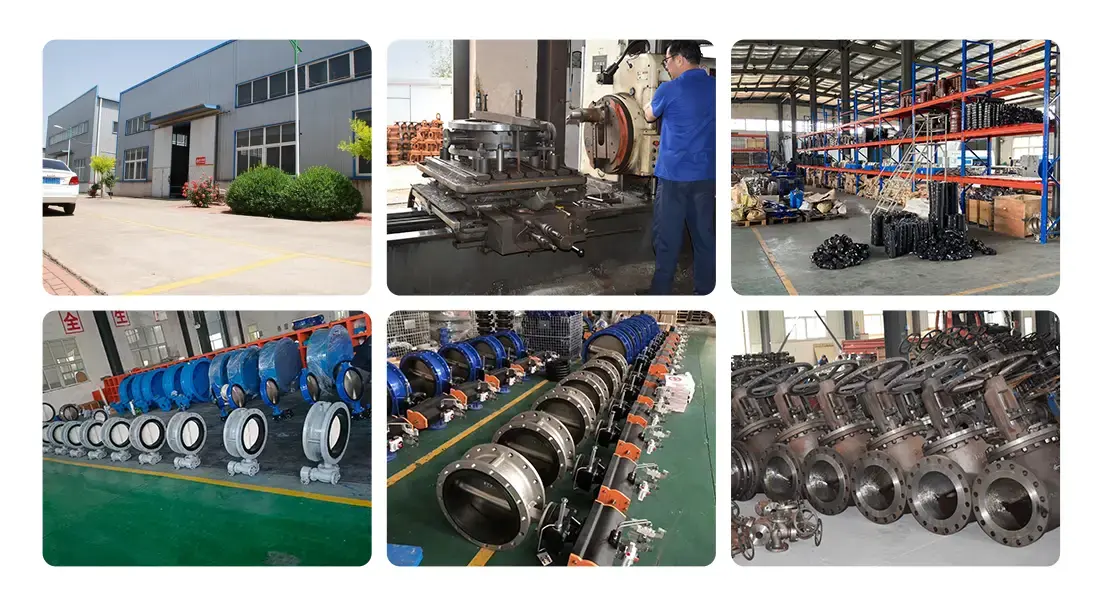
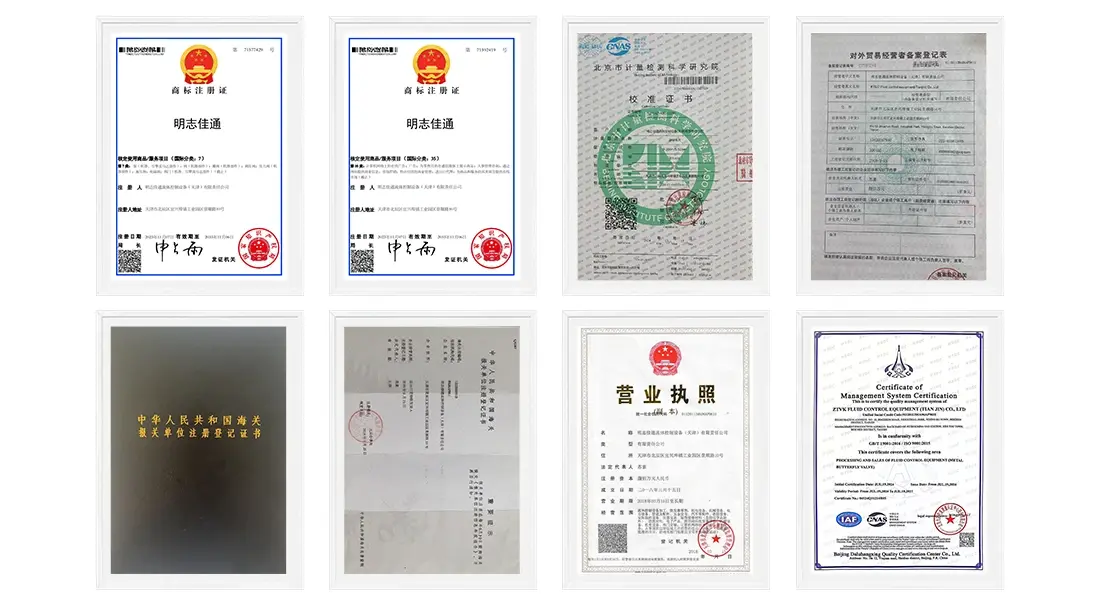
Selecting the right butterfly valve with positioner supplier impacts project success from delivery timelines through decades of operational service. ZTVK, based in Tianjin Beichen District, combines over 15 years of valve manufacturing expertise with ISO9001/ISO4001/OHSAS18001 certifications, ensuring consistent quality from our modern CNC machining centers. We stock 2000+ standard units (DN50-DN600) for 3-7 day delivery and support non-standard customization within 15-25 days, accommodating urgent project schedules with dedicated production lines. Our double eccentric oblique seal design reduces operating torque by 30% while extending service life beyond 50,000 cycles, backed by comprehensive accessories including pneumatic actuators, solenoid valves, limit switches, positioners, air filter/regulators, and gear boxes. Located just 50 km from Tianjin Port, we offer efficient FOB Xingang or CIF destination port shipping through partnerships with COSCO and Maersk, using ISPM 15-compliant wooden crate packaging to prevent customs delays. Whether you need OEM branding for regional distribution or ODM engineering for specialized process conditions, our technical team provides CAD drawings, installation videos, and 18-month warranty coverage. Contact ktec86961886@163.com today for customized butterfly valve with positioner solutions that meet your flow control requirements and budget parameters.
References
1. Fisher Controls International LLC. (2019). Control Valve Handbook: Valve Positioners and Controllers, Fifth Edition. Emerson Automation Solutions.
2. American Petroleum Institute. (2017). API Standard 609: Butterfly Valves: Double-Flanged, Lug- and Wafer-Type, Ninth Edition. API Publishing Services.
3. International Society of Automation. (2018). ISA-75.25.01: Test Procedure for Control Valve Response Measurement from Step Inputs. ISA Standards and Practices Department.
4. Monsen, John P. (2013). Industrial Valve Selection: A Practitioner's Guide to Specifying and Testing Control Valves. ISA Press.
5. Baumann, Hans D. (2020). Control Valve Application Technology: Techniques and Considerations for Properly Selecting the Right Control Valve, Second Edition. ISA Publications.
6. Valve Manufacturers Association of America. (2021). VMA Guide to Actuator and Positioner Selection for Quarter-Turn Valves. VMAA Technical Standards Committee.
Send us your valve requirements and our team will provide professional solutions and fast quotations.
RELATED INDUSTRY KNOWLEDGE