- English
- French
- German
- Portuguese
- Spanish
- Russian
- Japanese
- Korean
- Arabic
- Greek
- German
- Turkish
- Italian
- Danish
- Romanian
- Indonesian
- Czech
- Afrikaans
- Swedish
- Polish
- Basque
- Catalan
- Esperanto
- Hindi
- Lao
- Albanian
- Amharic
- Armenian
- Azerbaijani
- Belarusian
- Bengali
- Bosnian
- Bulgarian
- Cebuano
- Chichewa
- Corsican
- Croatian
- Dutch
- Estonian
- Filipino
- Finnish
- Frisian
- Galician
- Georgian
- Gujarati
- Haitian
- Hausa
- Hawaiian
- Hebrew
- Hmong
- Hungarian
- Icelandic
- Igbo
- Javanese
- Kannada
- Kazakh
- Khmer
- Kurdish
- Kyrgyz
- Latin
- Latvian
- Lithuanian
- Luxembou..
- Macedonian
- Malagasy
- Malay
- Malayalam
- Maltese
- Maori
- Marathi
- Mongolian
- Burmese
- Nepali
- Norwegian
- Pashto
- Persian
- Punjabi
- Serbian
- Sesotho
- Sinhala
- Slovak
- Slovenian
- Somali
- Samoan
- Scots Gaelic
- Shona
- Sindhi
- Sundanese
- Swahili
- Tajik
- Tamil
- Telugu
- Thai
- Ukrainian
- Urdu
- Uzbek
- Vietnamese
- Welsh
- Xhosa
- Yiddish
- Yoruba
- Zulu
What is the flow characteristic of a water main butterfly valve?
When specifying valves for municipal water distribution or industrial fluid systems, understanding flow behavior isn't just a technical detail—it's the difference between efficient operation and costly downtime. The flow characteristic of a water main butterfly valve defines how the valve regulates flow rate in relation to its disc position during rotation from fully closed to fully open. This characteristic is typically represented by a flow coefficient curve showing the relationship between valve opening percentage and flow capacity. In practical applications, most butterfly valves exhibit a modified parabolic or near-linear flow pattern, meaning flow increases progressively as the disc rotates from 0° to 90°, with the steepest flow gain occurring between 60° and 90° opening. This behavior directly impacts system pressure stability, pump coordination, and energy consumption across water transmission networks. Over my years working with water infrastructure contractors and valve distributors, I've noticed that flow characteristics often get overlooked during procurement—until a project experiences unexpected pressure fluctuations or throttling inefficiency. Let me walk you through what really matters when evaluating these valves for your next municipal or industrial water project.
Understanding the Flow Characteristics of Water Main Butterfly Valves
The Disc Position and Flow Control Mechanism
An important part of any butterfly valve's flow control is its rotating disc. When you fully open a gate valve, the wedge is lifted out of the flow path. But when you fully open a butterfly valve, the disc stays in the flow path, making a smooth barrier. The flow area changes dynamically as the disc moves from being perpendicular to the flow direction (closed position) to being parallel to it (open position). This quarter-turn operation (just 90 degrees) lets you turn off the water quickly, which is especially helpful when water main butterfly valves need to be isolated in an emergency.
A lot of procurement teams don't realize that the disc doesn't just "get out of the way." The disc profile and shaft assembly still create turbulent flow even when the disc is fully open. This is a big reason why valve body shape is important. Modern designs from makers that use double-eccentric offset setups lessen this interference, allowing flow coefficients (Cv values) that are close to 85–92% of the pipe bore's potential capacity.
Flow Coefficient and Pressure Drop Fundamentals
The flow rate, or Cv number, tells you how much fluid a valve can let through at a certain pressure. When Cv is high, resistance is low, and flow is better. When choosing valves for a 24-inch water main that moves 3,000 gallons per minute, even a 5% change in Cv can add up to real money in energy costs over time.
The disc angle is directly related to the pressure drop across the valve. When the opening is between 10° and 30°, there will be big pressure drops because the flow has to go around an almost straight-on obstruction. As the flow path gets wider between the 50° and 70° openings, the pressure drop goes down by a lot. Once you go past 70°, the curve flattens out, meaning that more opening doesn't lower the pressure any more. Engineers can predict how systems will behave during slow operations by understanding this non-linear relationship. This is important for keeping water hammer from happening in large-diameter mains.
Linear vs. Equal Percentage Flow Patterns
We call the flow pattern that standard butterfly valves usually show a "modified parabolic" one—somewhere between purely linear and equal-percentage curves. A linear characteristic means that the flow increases proportionally as the disc rotates: when the disc is half open, it lets about half of its maximum flow through. At low flows, equal percentage characteristics give you more precise control, as each increase in opening causes a change in flow that is proportional to the flow that is already going through.
In water main applications, this difference is very important when the valve has two jobs: to isolate and change the flow. You want the water main butterfly valve to respond in a way that is reliable and close to linear if you're using it to control the pump output or the pressure zone. If you need to do exact low-flow dosing, like in chemical feed systems, an equal amount is better. Most wafer-type butterfly valves with ductile iron bodies and EPDM seats behave in a straight line, which means they can be used in most water distribution situations.
Types of Butterfly Valves and Their Flow Performance in Water Mains
Wafer vs. Lug Design and Flow Implications
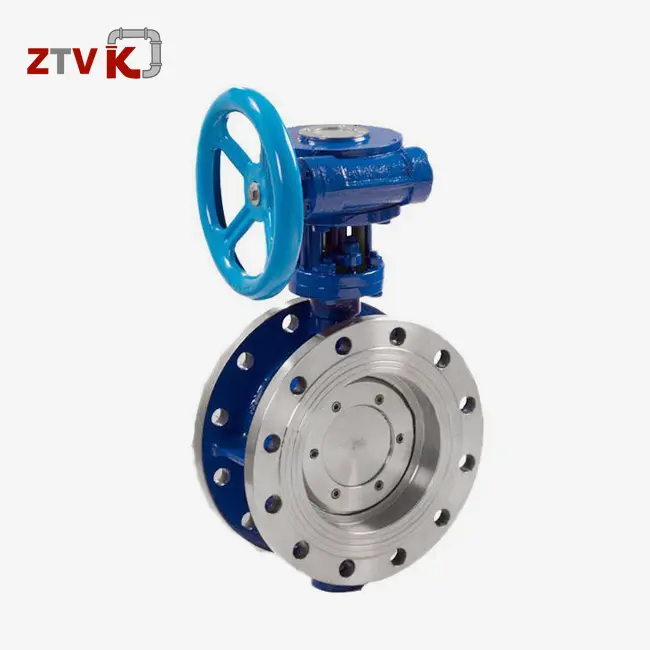
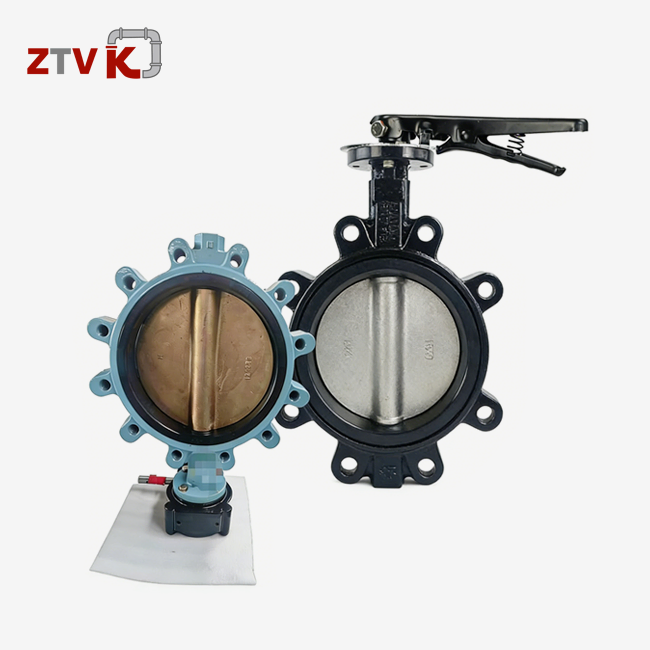
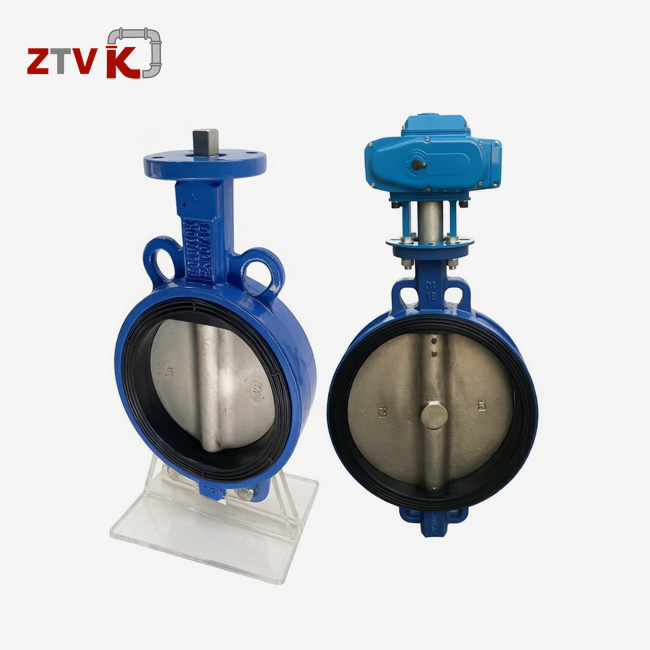
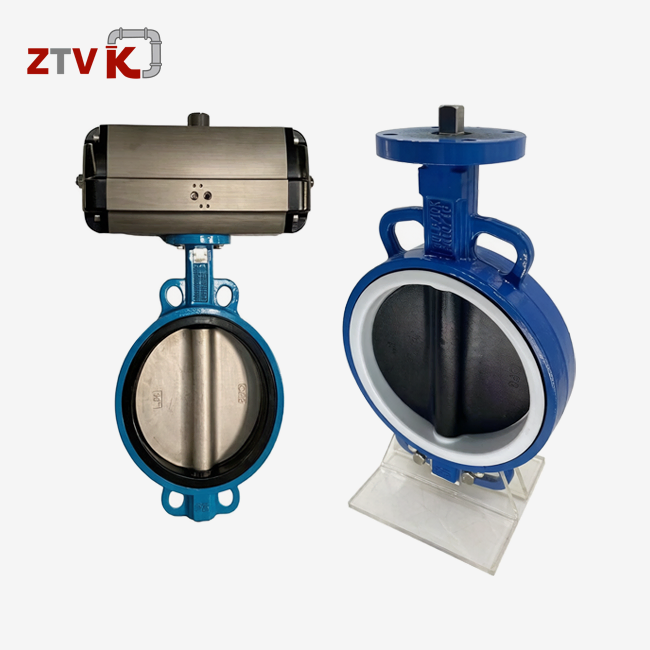
Wafer-type water main butterfly valves use through-bolts to squeeze the valve body directly between two pipeline openings. This small installation takes up less room and weight, which is a big plus in underground vaults that are already full or when upgrading old infrastructure. However, the chip design doesn't let the valves be removed separately without first releasing pressure in both the upstream and downstream parts. When it comes to flow, wafer valves have the same internal shape, which keeps their Cv values the same for pressure classes PN10 and PN16.
Actuation Methods: Manual, Pneumatic, and Electric
Lug-style valves have threaded inserts in the body that let the flange connect separately. This makes installation more flexible for easy maintenance access, but the slightly thicker body can slightly lower the effective flow area in smaller sizes (DN40–DN100). This difference doesn't matter much in water mains with a width of DN600 to DN1200. Choosing between wafer and lug is usually based on practical access needs rather than pure flow performance. However, when both are made to ISO5211 connection standards, they have similar flow properties.
The operating processes have a direct effect on the accuracy and speed of flow control. Hand lever actuators work well for separation duty where the valve only runs a few times a year, like every three months for maintenance sectioning. What is the limit? Between 30° and 70° opening, where flow control sensitivity is highest, operators can't get the disc to stay in the same place over and over again. Worm gear operators are great for slowing where the valve needs to stay in a certain position against line pressure because they have a mechanical edge and lock themselves.
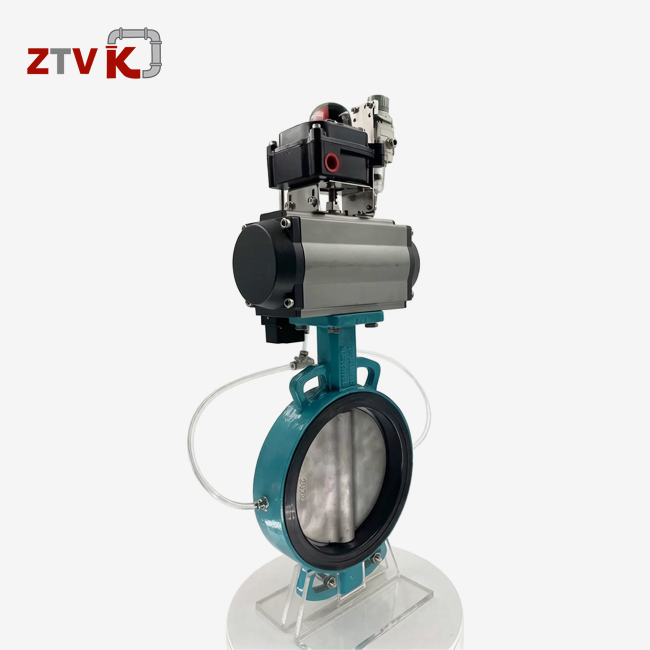
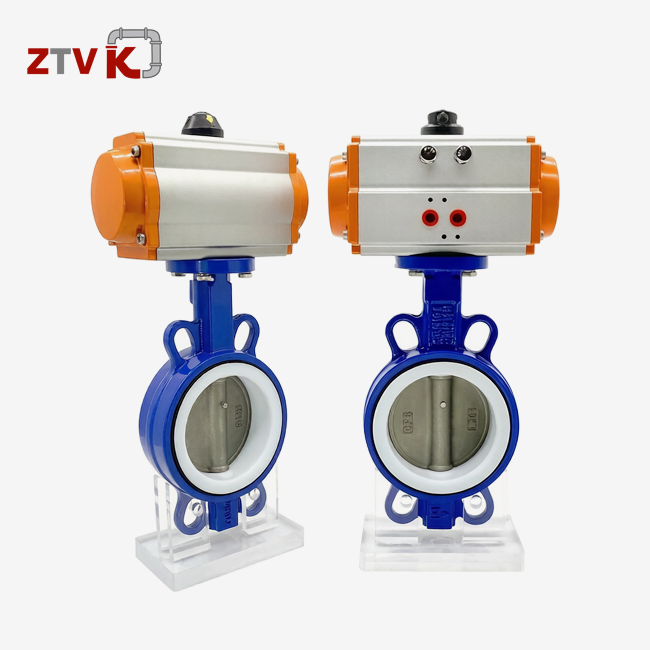
Pneumatic actuators work great in automated systems that need to respond quickly—they close in less than five seconds to stop backflow when the pump trips. When hydraulic systems are used with positioners, the disc angle can be repeated within ±2%, which means that the flow can be predicted. Electric motors provide even finer resolution, with positioning accuracy of up to 0.5°, and work smoothly with SCADA systems to allow tracking from afar. Electric control is the standard in local water treatment plants that change the flow based on changes in demand.
What does this mean for procurement in real life? You should plan for actuated valves from the beginning of your project if it needs automatic flow balancing or emergency stop routines. When adding actuators to manual valves after the fact, it's important to make sure that the torques of the two are compatible, and there are often long production lead times that make commissioning take longer.
Material Selection for Durability and Corrosion Resistance
The body material has a direct effect on how long something will last in settings with harsh water chemistry. When covered by fusion-bonded epoxy coats, ductile iron (DI/QT450) bodies have great strength-to-weight ratios and don't rust in chlorinated water. Carbon steel (WCB) can handle more pressure, but it needs more complex treatment systems to keep it from rusting when it comes to drinkable water service. 304 or 316 stainless steel bodies don't rust at all, but they are expensive, so they can only be used in certain situations, like for seawater intake or highly acidic industrial fluids.
Choose disc materials that are strong, won't rust, and don't cost too much for a water main butterfly valve. When the water temperature is below 80°C, ductile iron discs work well in regular city water. When working with chlorine water above 60°C or in salty water mains, you need CF8 or CF8M discs made of stainless steel. In flows with slurry or particles, aluminum bronze plates are better at resisting erosion, but these conditions don't happen very often in clean water distribution. The fluid chemistry and temperature ranges must match the seat material, which can be EPDM, NBR, PTFE, or Viton. EPDM seats are most common in drinking water uses because they meet NSF 61 standards. Viton seats, on the other hand, can handle higher temperatures in industrial cooling systems.
Comparison: Butterfly Valve Flow Characteristics vs. Other Valve Types
Flow Control Mechanisms: Butterfly vs. Ball and Gate Valves
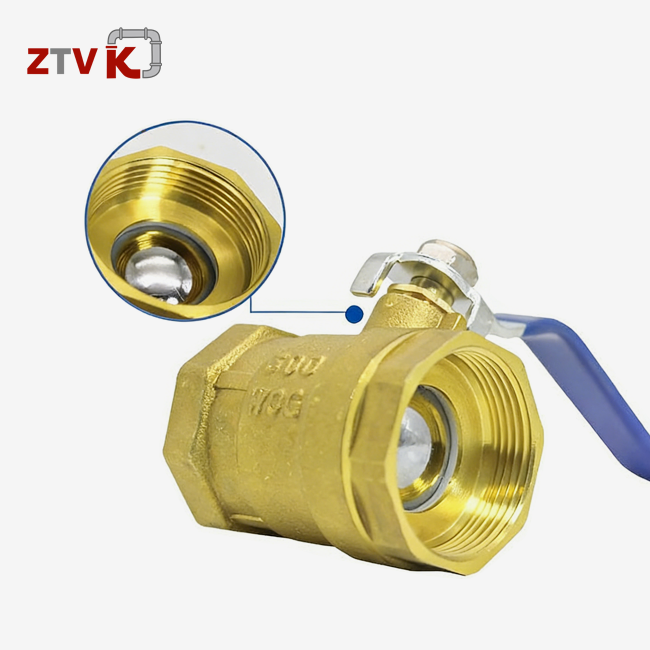
When ball valves are fully open, the flow path becomes an unobstructed bore that matches the diameter of the pipe. This makes the pressure drop almost zero. Their flow is not at all linear; they stay almost closed until the rotation reaches 60 to 70°, then suddenly open up to full flow over the last 20°. Because of this, ball valves are great for isolating on/off signals but not so good for regulating. Gate valves open and close in a more straight way, but they need to be turned more than once (often 15 to 25 full spins for large sizes), which makes them slow to use and complicated to build.
Watermain butterfly valves are a good compromise. Their quarter-turn operation lets them shut off faster than gate valves and slow down flow better than ball valves between 40° and 80° of opening. The disc-in-stream design does lower the pressure more than a fully open ball valve—usually between 0.3 and 0.7 bar at normal flow rates. But this trade-off saves a lot of money, especially when the width is big, since a 24-inch butterfly valve costs 40–60% less than a ball valve of the same size.
Maintenance Complexity and Long-Term Reliability
There are fewer places where a butterfly valve could fail than a multi-turn gate valve because it has fewer working parts. The main parts that wear out are the shaft, joints, and seat. Resilient seats, like EPDM, can keep sealing well for thousands of cycles as long as they are properly oiled and kept clear of debris. In clean water service, maintenance intervals are extended beyond ten years with bearing designs that use bronze or PTFE bushings that lubricate themselves.
Gate valves need to have their stem packing adjusted on a regular basis, and grit particles can score the seat. Even though ball valves are strong, the seats wear out in slow service because fast flow across partially open seats wears them down. The butterfly valve's perpendicular seating layout spreads the closing force more widely, which lowers wear in specific areas. When a seat needs to be replaced, the wafer body design makes it possible to do maintenance on many models without taking the valves out completely. This is very helpful in active pipeline networks.
Pressure Ratings and Temperature Limitations
Choosing the right pressure class has a big impact on the size of the valve and how well it flows. PN10 butterfly valves work with low-pressure networks (up to 10 bar), while PN16 grades work with gearbox mains and pumping station discharge lines that handle higher pressures. When you go from PN10 to PN16 construction, the disc shapes tend to get wider, and the body walls get stronger. This means that the effective flow area and Cv rating go down by a small amount, usually by 3 to 5 percent for sizes DN300 and up.
Temperature limits are mostly caused by the qualities of the seat material. EPDM seats securely seal from -10°C to +80°C, which means they can be used for almost all municipal water uses with a water main butterfly valve. The highest temperature that Viton can handle is 150°C, which is good for hot process water in industry. NBR chairs are very resistant to wear, but they can only handle temperatures between +5°C and +70°C. When these parameters are matched to the actual operating conditions, the seal doesn't fail too soon, and the flow characteristics stay the same throughout the valve's service life.
Conclusion
Flow factors determine how water main butterfly valves work in real water systems, and they affect everything from how well they direct flow to how much energy they use. Procurement pros can make smart choices when they understand the modified parabolic flow patterns these valves show, how disc position and design changes affect performance, and how their behavior compares to other valve types. When you plan upgrades and do regular maintenance, you can extend the life of your service while keeping the flow going smoothly. When choosing valves, making sure that the size and features match the needs of the system, using OEM customization options, and carefully checking sources against approval and support standards are all things that will help the project succeed and last a long time.
FAQ
1. What causes inconsistent flow control in butterfly valves?
Inconsistent flow control typically stems from worn seats allowing internal leakage, damaged disc coatings creating uneven surface roughness, or bearing friction preventing smooth disc rotation. Mineral buildup on disc surfaces in hard water systems can also alter flow patterns. Regular exercising and timely seal replacement maintain predictable flow characteristics throughout the valve's operational life.
2. Can butterfly valves handle bidirectional flow in water mains?
Most resilient-seated butterfly valves seal effectively in both flow directions, though manufacturer specifications should confirm bidirectional capability. The symmetrical disc design handles reverse flow without mechanical issues, though pressure drop characteristics may vary slightly depending on whether flow approaches the disc's convex or concave face during the opening sequence.
3. How does valve size affect flow characteristic curves?
Larger valves (DN600+) exhibit slightly flatter flow characteristic curves than smaller sizes because the disc's relative thickness compared to flow area decreases. This means a DN1200 valve provides more linear flow response across its opening range than a DN100 valve, where disc thickness represents a larger proportion of the available flow area at partial openings.
Partner with a Reliable Butterfly Valve Manufacturer for Your Infrastructure Projects
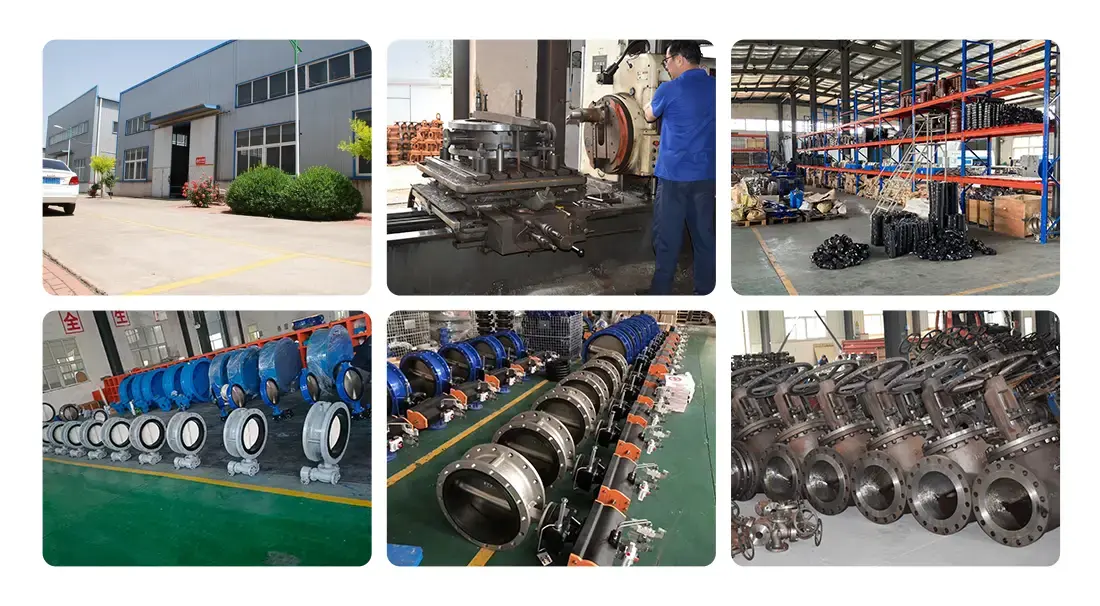
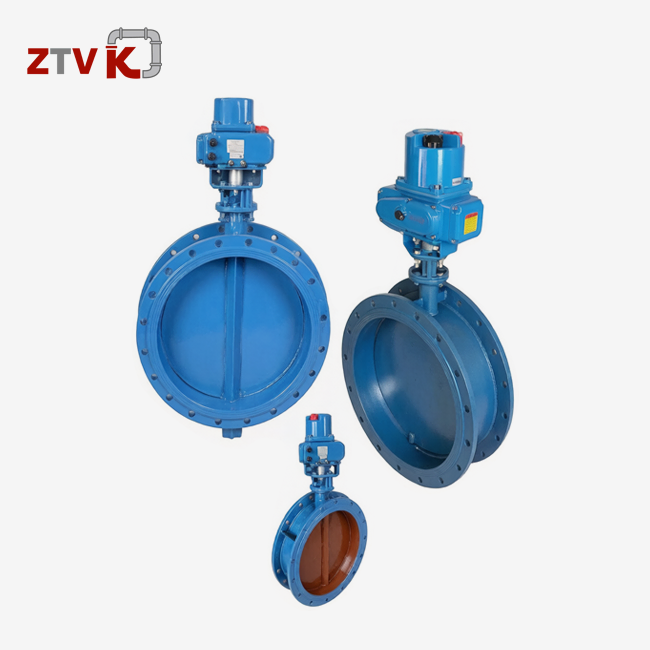
ZTVK has been making high-quality water main butterfly valves in Tianjin's Beichen District for more than 15 years. They can give your projects the technical performance and supply chain reliability they need. Our double-eccentric design cuts down on operating torque by 30% and increases service life to over 50,000 cycles, which is a lot more than what other concentric designs can do. We keep more than 2,000 standard valves in stock, ranging from DN50 to DN600, and can deliver them within one week. For non-standard configurations, our flexible production lines can handle special specs in 15 to 25 days.
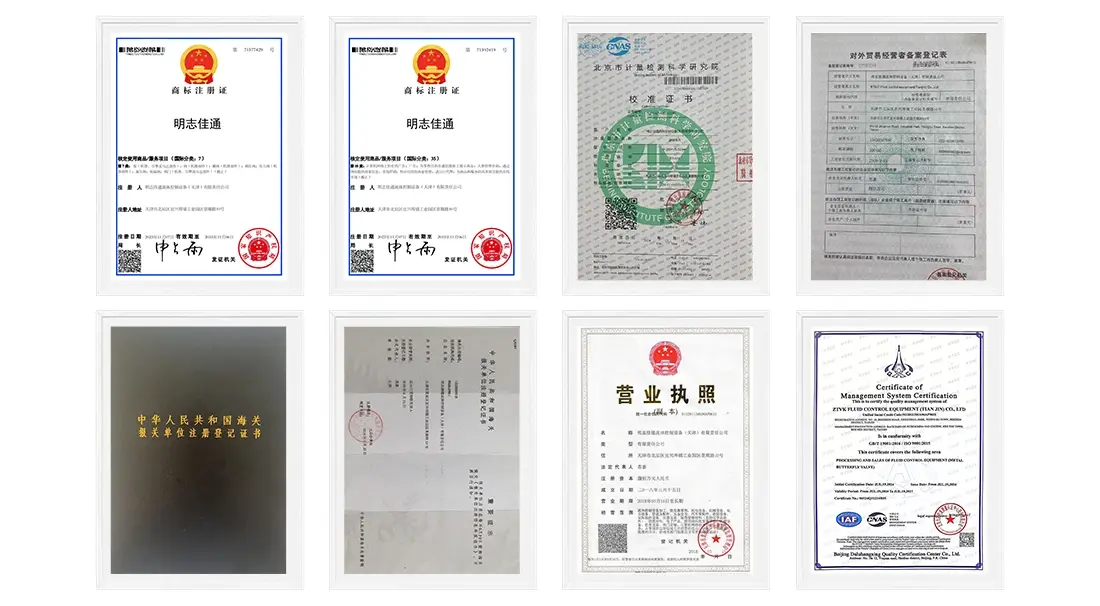
ISO9001, ISO14001, and OHSAS18001 certifications underpin our quality management systems, and all products meet international standards, including API, ANSI, JIS, DIN, and CE requirements. Our wafer-type construction conforms to ISO5211 mounting standards across pressure classes PN10/PN16 and connection standards, including 125 lb, 150 lb, and JIS ratings. Material options span ductile iron bodies (DI/QT450), stainless steel discs (CF8/CF8M), and resilient seats (EPDM/NBR/PTFE/Viton) to match your specific application conditions.
Located just 50 kilometers from Tianjin Port with established partnerships with major shipping lines, we provide efficient FOB Tianjin Xingang and CIF destination port quotations with ISPM 15-compliant packaging. Whether you need OEM branding, custom disc materials, or electric actuator integration, our engineering team provides detailed technical support from specification review through commissioning. Contact ZTVK today at ktec86961886@163.com to discuss how our valve solutions can enhance your water infrastructure reliability and operational efficiency.
References
1. American Water Works Association (2015). AWWA Manual M49: Quarter-Turn Valves: Head Loss, Torque, and Cavitation Analysis. Denver: AWWA Publications.
2. Baumann, H.D. (2009). Control Valve Primer: A User's Guide (4th ed.). Research Triangle Park: ISA-The Instrumentation, Systems, and Automation Society.
3. Miller, D.S. (1990). Internal Flow Systems (2nd ed.). Cranfield: BHRA Information Services.
4. Skousen, P.L. (2011). Valve Handbook (3rd ed.). New York: McGraw-Hill Professional.
5. Tullis, J.P. (1989). Hydraulics of Pipelines: Pumps, Valves, Cavitation, and Transients. New York: John Wiley & Sons.
6. Zappe, R.W. (2004). Valve Selection Handbook: Engineering Fundamentals for Selecting the Right Valve Design for Every Industrial Flow Application (5th ed.). Houston: Gulf Professional Publishing.
Send us your valve requirements and our team will provide professional solutions and fast quotations.
RELATED INDUSTRY KNOWLEDGE