- English
- French
- German
- Portuguese
- Spanish
- Russian
- Japanese
- Korean
- Arabic
- Greek
- German
- Turkish
- Italian
- Danish
- Romanian
- Indonesian
- Czech
- Afrikaans
- Swedish
- Polish
- Basque
- Catalan
- Esperanto
- Hindi
- Lao
- Albanian
- Amharic
- Armenian
- Azerbaijani
- Belarusian
- Bengali
- Bosnian
- Bulgarian
- Cebuano
- Chichewa
- Corsican
- Croatian
- Dutch
- Estonian
- Filipino
- Finnish
- Frisian
- Galician
- Georgian
- Gujarati
- Haitian
- Hausa
- Hawaiian
- Hebrew
- Hmong
- Hungarian
- Icelandic
- Igbo
- Javanese
- Kannada
- Kazakh
- Khmer
- Kurdish
- Kyrgyz
- Latin
- Latvian
- Lithuanian
- Luxembou..
- Macedonian
- Malagasy
- Malay
- Malayalam
- Maltese
- Maori
- Marathi
- Mongolian
- Burmese
- Nepali
- Norwegian
- Pashto
- Persian
- Punjabi
- Serbian
- Sesotho
- Sinhala
- Slovak
- Slovenian
- Somali
- Samoan
- Scots Gaelic
- Shona
- Sindhi
- Sundanese
- Swahili
- Tajik
- Tamil
- Telugu
- Thai
- Ukrainian
- Urdu
- Uzbek
- Vietnamese
- Welsh
- Xhosa
- Yiddish
- Yoruba
- Zulu
What does a double-acting pneumatic actuator butterfly valve do?
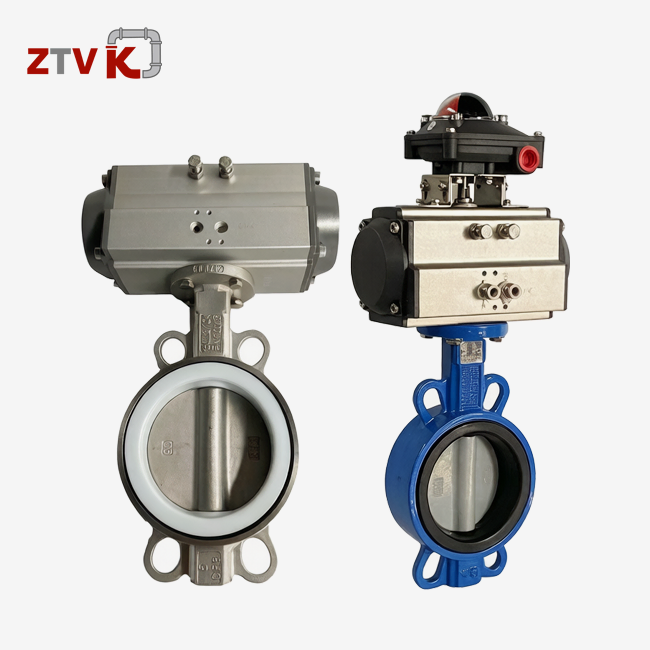
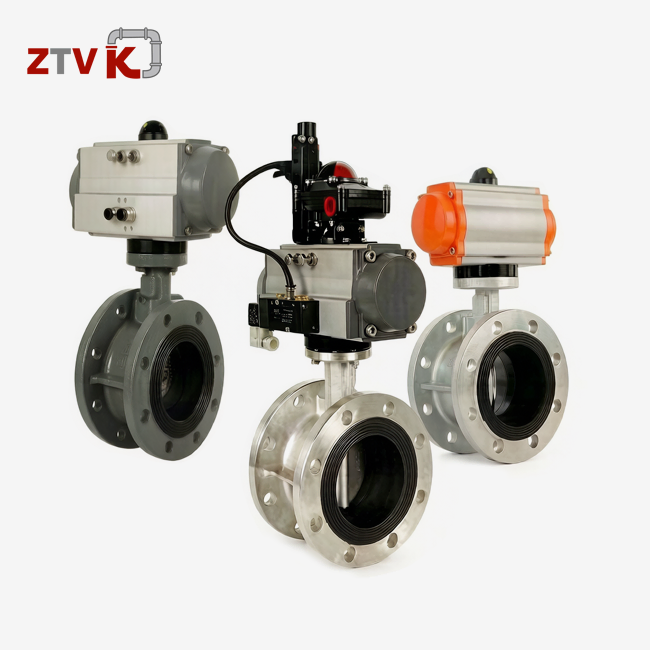
A double-acting pneumatic actuator butterfly valve is an automated flow control device combining a quarter-turn butterfly valve with a pneumatic actuator that uses compressed air for both opening and closing operations. Unlike spring-return models, this design delivers air pressure to internal pistons in both rotational directions, providing consistent torque throughout the entire 90-degree stroke. When you need rapid, reliable on-off control in demanding pipelines—whether managing chemical flows, water distribution networks, or HVAC systems—this valve configuration offers the precision and durability that keeps industrial operations running smoothly without unexpected shutdowns.
Understanding the Double-Acting Pneumatic Actuator Butterfly Valve
Core Components and Operating Principles
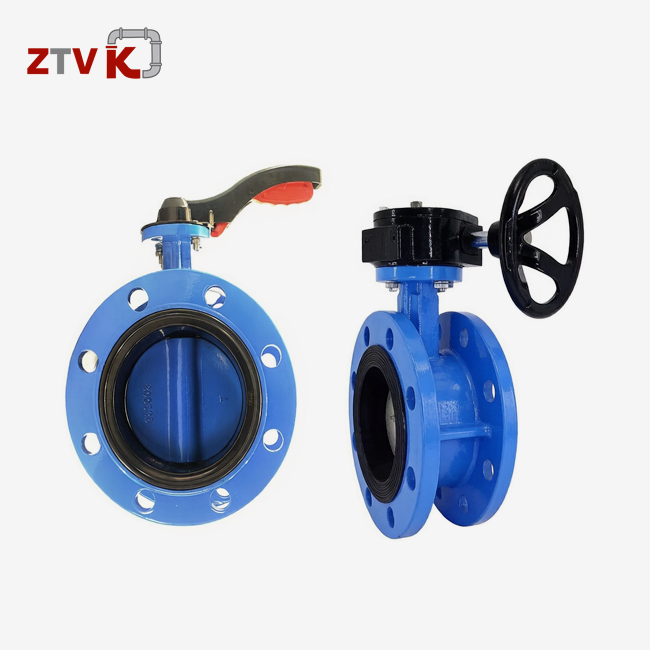
Basically, this assembly is made up of two main parts that work together perfectly. The butterfly valve is made up of a body made of stainless steel, a disc made of SS304, SS316, or SS316L that rotates, and a PTFE seat that makes sure the valve shuts off completely without any bubbles. The disc moves halfway between fully open and fully closed positions on a stem made of stainless steel 410 or 416. It moves a quarter turn. These valves come in sizes from 2 inches to 60 inches (50 mm to 1500 mm), so they can fit everything from small lab pipes to big water mains in cities.
With ISO 5211 standard connections, the pneumatic actuator part can be attached straight to the valve stem. The actuator housing is usually made of hard-anodized aluminum alloy (ASTM 6063) because it is very resistant to corrosion. Inside it are pistons or a rack-and-pinion system that turns linear air pressure into rotary motion. When control air comes in through one port, it moves the mechanism in one way. To turn the valve backwards, reverse the air flow to the other port. Double-acting designs are different from single-acting designs because they can move air in both directions.
How Does It Differ from Other Actuator Types?
Single-acting pneumatic actuators use compressed air to move in one way and mechanical springs to move backwards. This setup makes positioning fail-safe when air is lost, but as the stroke goes on, the force decreases because the spring is compressed. Because air pressure, not spring tension, causes both moves, double-acting models keep the torque output constant across the whole working range. Engineers can choose smaller, more compact actuators for the same valve size because of this stability. This saves installation room and cuts down on the cost of buying them.
Electric motors can precisely modulate, but they pose an ignition risk in explosive environments and need more complicated wire infrastructure. Because they don't create electrical sparks, pneumatic systems are the best choice for ATEX Zone 1 and ATEX Zone 2 settings that are common in petroleum plants. Because compressed air is so simple, it can move things faster—often in less than three seconds for smaller sizes—than motorized options, which can take up to thirty seconds to move everything.
Key Benefits and Advantages for Industrial Applications
Operational Strengths in Demanding Environments
These valve systems work great in situations where other tools wouldn't work as well. They work with air pressures between 3 and 8 bar and have low-friction honing on the cylinder surfaces that makes them stable over millions of rounds. Leading manufacturers use a double eccentric and oblique seal design that lowers the opening and closing torque by about 30 percent and increases the service life to over 50,000 cycles. The maintenance problems that come up with high-frequency operations are directly fixed by this structural optimization.
When working with acidic substances like acids, alkalis, or chlorinated water, the material suitability choices become very important. When compared to regular cast iron, valve bodies made of carbon steel (WCB), stainless steel grades, or duplex steel are more resistant. Chemical compatibility charts can be used to choose seat materials like EPDM, PTFE, or NBR that will keep their seals intact for a long time. Since there are no springs, there is one less place where corrosion could happen, which makes the whole system more reliable.
Comparing Efficiency and Safety Features
When it comes to energy use, pneumatic actuation only uses air when the valve moves. When the valve is in place, it stays there without using power all the time. This is different from some electric motors that need holding current to stay in place. This pattern of intermittent use lowers overall operating costs in places where compressed air infrastructure is already in place. When working with batches, the fail-safe behavior that comes with double-acting pneumatic actuator butterfly valve double-acting patterns is very helpful. If the air pressure in the plant drops suddenly, the valve doesn't snap shut, which could ruin a whole batch of products. Instead, it stays where it was.
Safety concerns go beyond logic in the fail-position. Electrical dangers are taken care of by pneumatic systems, which lowers the risk for repair workers who have to work in wet or dangerous places. Because air-operated tools are so simple, there are also fewer ways for them to fail. There are no circuit boards that can break, motor windings that can burn out, or limit switches that can become out of whack. Checking the quality of the air supply, looking at the seals, and making sure the torque output are all simple jobs that front-line techs can do without any special training.
Real-World Application Performance
In wastewater treatment plants for factories, these valves control sludge filtration lines and aeration systems that deal with rough particles and fast flow rates every day. The valve can cut through thick slurries and keep a tight seal when needed thanks to its strong construction and high torque output. Chemical batch processing plants depend on them for accurate isolation in harsh environments. Whether it's controlling concentrated sulphuric acid or caustic soda, the fail-safe feature keeps important process states when airflow is temporarily interrupted. The intrinsically safe pneumatic design meets strict safety codes.
These valves are used in big industrial buildings and cooling towers to quickly turn chilled water loops on and off. The fast movement speed lets the system react right away to changes in temperature, which saves energy compared to motorized valves that move more slowly. When paired with solenoid valves and spring-return override modules, they work as emergency shutdown (ESD) valves in oil and gas pipeline networks. This shows how flexible the platform is.
How to Choose the Right Double-Acting Pneumatic Actuator Butterfly Valve?
Critical Selection Parameters
Before you can choose the right valve system, you need to know what your process needs. The most important thing is the pressure rating. Making sure that the valve end connections (PN10, PN16, 5K, 10K, 16K, or 150 lb) are matched to the design pressure of your pipeline stops catastrophic breakdowns. Next is to figure out the torque. You need to figure out how much torque is needed to break the valve free from a seated position, taking into account the difference in media pressure, seat friction, and a safety margin. Check the actuator's torque table and pick a model that can give the needed torque at the lowest air pressure in your building, not just the nominal supply pressure.
Matching pipe widths isn't the only thing that makes sizes compatible. Think about how the valve's flow coefficient (Cv) fits in with the flow rate needs of your system. A double-acting pneumatic actuator butterfly valve that is too small causes too much pressure drop and noise, while an oversized valve works close to its closed position, which makes it hard to control and wears out the seat too quickly. The temperature, humidity, and corrosive atmospheres in the environment determine the materials and sealants used in the actuator housing. Facilities that are near the coast or in the desert need better-protected coverings and seals that are made for those circumstances.
Evaluating Manufacturers and Quality Standards
Manufacturers with a good reputation follow international standards like ISO 9001 for quality management, API 609 for butterfly valve design, and ISO 5211 for actuator mounting interfaces. If the valve is certified to EN 12266 or API 598, it means it passed strict tests for hydraulic shell and seat leaks. When buying from valve makers, make sure they can test their products. Do they have tools to test the pressure inside the company? Are they able to give you mill test certificates for body materials? Third-party workplace checks by reputable groups add another level of security.
Distributors and equipment integrators need to be able to do OEM and ODM work. When you work with suppliers that offer custom branding, private labeling, and packing, you can give your customers a line of products that all go together, including a double-acting pneumatic actuator butterfly valve. Good providers are different from great ones in how quickly they respond to technical help requests. Can the manufacturer's tech team look at your application and tell you what options would work best? Will they give you CAD drawings and 3D models to help you plan the integration? These services make it easier to buy things and lower the risk of the project.
Understanding Pricing and Lead Times
Prices change based on the number of orders, the amount of customization, and how quickly they need to be delivered. Most catalogue items in common sizes (DN50 to DN600) can be shipped within three to seven days if they are in stock. It usually takes 15 to 25 days to make non-standard setups that need specific disc materials, seat compounds, or custom actuator sizes. Orders that need to be delivered quickly may be accepted for an extra fee, usually around 20 percent, which cuts the delivery time to 7 to 10 days.
Logistics of transportation have a big effect on the total landing cost. Suppliers who are close to big shipping ports can offer better freight rates and faster delivery. Facilities that are less than an hour from Tianjin Port, Shanghai, or other foreign ports can easily set up FOB or CIF terms. Customs delays at target ports can be avoided by using wooden crates that meet ISPM 15 standards for packing. Your business will be safe from supply chain disruptions if you build relationships with suppliers who keep strategic stock and flexible production schedules.
Maintenance, Troubleshooting, and Optimization Tips
Routine Inspection and Lubrication
Preventive maintenance is the first step in making valves last longer. Check the torque specs on the actuator mounting bolts every three months to make sure they haven't become loose from vibration. Check the outside seals and O-rings for cracks or thickening and replace them before leaks happen. The quality of the air supply has a direct effect on efficiency. To get rid of wetness and particles that speed up internal wear, install filters. Once a month, check the filter elements and quickly replace any cartridges that are wet to keep the air pressure at the actuator at the right level.
The type of actuator determines how much lubrication is needed. Rack-and-pinion types work better when the gear surfaces are oiled once a year with grease that the maker recommends. Scotch yoke designs usually don't need to be serviced as often. Don't use too much oil because it attracts dust and other dirt. Some new motors have bearings that lubricate themselves and don't need to be oiled for years. Check the technical manuals to make sure you're following the right plan for your tools.
Common Issues and Corrective Actions
Air leaks are one of the most common issues. External leaks are often caused by shaft seals that are worn out or port fittings that are loose. Tighten the links as needed and repair any seals that are worn out. Leaks inside the actuator chambers make it work slowly or not be able to hold its position. Usually, this means that the piston seals are broken or the cylinder walls are cut. Most of the time, rebuilding the actuator with new seal kits gets it working again for a lot less money than buying a new one.
A valve may not respond quickly if there is not enough air pressure, the supply lines are not the right size, or there is too much friction in the valve itself. Check the air pressure at both the compressor and the actuator while the machine is running. If the pressure goes below the minimum needed for the right torque output, you should either make the line bigger or add a separate source. Too much friction could mean that the actuator and valve stem are not lined up correctly or that debris has built up in the valve body. Take apart, clean, and reassemble the parts, making sure the stem is straight and the bearings are in good shape.
Performance Monitoring and Diagnostic Tools
Condition tracking devices are used in more advanced buildings to keep track of actuation time, air consumption, and cycle counts. By looking at trends in this data, we can see that performance is slowly getting worse before it fails. If a valve always takes longer to spin, it could be because of friction problems or bad air quality. Pneumatic positioners with built-in diagnostics let you know right away how accurate the valve position is and how healthy the actuator is. When the process needs to change from a simple on-off to a slower service, these devices can also allow adjusting control via 4-20 mA signals.
Performance measures for the double-acting pneumatic actuator butterfly valve are checked regularly under controlled settings. Every year, test the actuator's torque to make sure it's still delivering the expected output. To find the release torque, use a measured torque wrench on the manual override and compare the results to the starting values. Increases that are very big mean that the seat is wearing out or getting dirty. Using these optimization techniques cuts down on unplanned downtime and increases the life of equipment, giving you a clear return on your investment.
Conclusion
The double-acting pneumatic actuator butterfly valve is a reliable choice for controlling flow in industrial settings that need steady torque, quick action, and fail-safe placement. Its design benefits—uniform power output, long cycle life, and built-in safety in dangerous environments—make it essential in the energy, chemical processing, water treatment, and HVAC industries. Knowing how things work, how to choose them, and how to keep them in good shape helps procurement workers and engineers choose equipment that improves working efficiency while keeping prices low. When you work with manufacturers that offer full technical support, flexible customization, and reliable supply chains, your projects will go smoothly from the first specification to decades of reliable service.
FAQ
1. What distinguishes double-acting gas valves from single-acting ones?
Compressed air is used by double-acting actuators to open and close. They provide steady force throughout the stroke and keep their position even when the air supply is lost. Single-acting models use air for one direction and springs for the other. This makes positioning fail-safe, but the torque at the stroke end is lower because the springs are compressed.
2. Are these valves safe to use with chemicals that eat away at metal?
Chemical compatibility is based on the choice of material. PTFE chairs on bodies made of stainless steel (SS304, SS316, or SS316L) make them resistant to most acids and bases. If you choose the right disc and seal materials for your media, they will work well for a long time without breaking down or leaking.
3. How does energy efficiency compare to electric actuators?
Electric actuators may draw holding current all the time, but pneumatic systems only use air when the valves move. When a building already has equipment for compressed air, pneumatic function is often cheaper. Electric actuation works well in situations that need precise modulation or don't have access to compressed air.
4. What tools make things work better?
Electrical control can be done from a distance with solenoid valves; position feedback is provided by limit switch boxes, air quality is maintained by filters, and modulating control is possible with 4-20 m. A signal from E/P positioners and human override is possible with hand wheels during repair or power outages. By adding these extras, the valve system can be changed to fit different work needs.
Partner with ZTVK for Your Pneumatic Valve Solutions
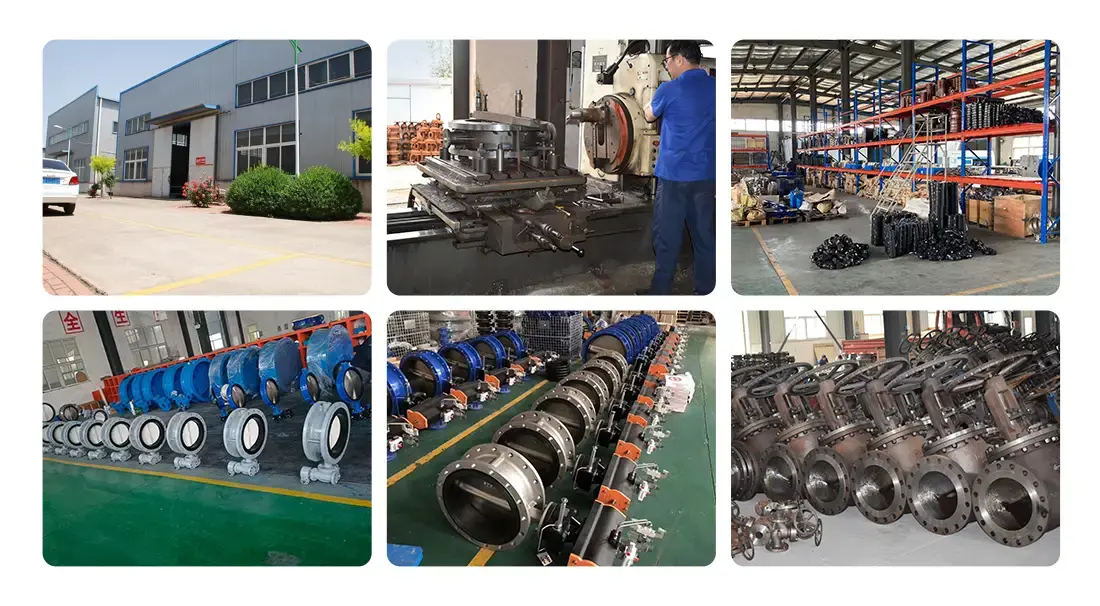
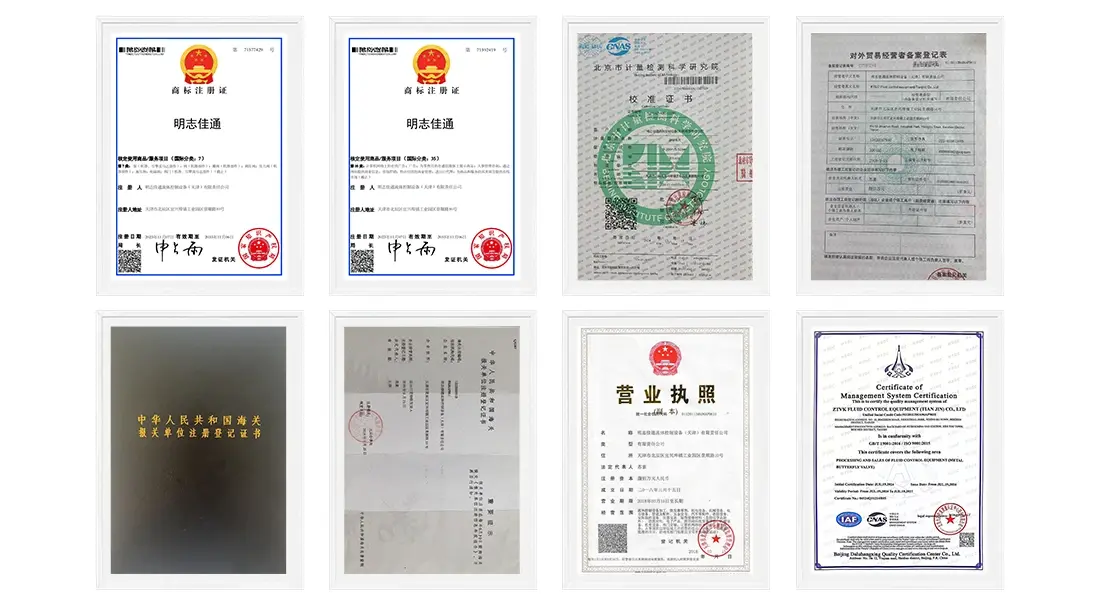
With double-acting pneumatic actuator butterfly valve products that meet strict international standards, industrial businesses all over the world rely on ZTVK as their provider. Our factory is in the Beichen District of Tianjin, which is only 50 kilometers from Tianjin Port. It has personalized machining machines and full testing equipment, as well as ISO 9001, ISO 14001, and OHSAS 18001 standards. We keep more than 2,000 standard valves (DN50-DN600) in stock and can deliver them within three to seven days. Our flexible production lines can also handle OEM and ODM projects with wait times of fifteen to twenty-five days. Our double eccentric design cuts down on operating torque by 30 percent, which means it will last longer than 50,000 cycles. Our technical team gives you free CAD drawings, 3D models, and advice on how to use our products, whether you need bulk orders with private labeling or engineered solutions for tough problems. Get in touch with us at ktec86961886@163.com to get personalized product suggestions and quotes that fit your project's budget and timeline.
References
1. American Petroleum Institute (2018). API 609: Butterfly Valves – Double Flanged, Lug- and Wafer-Type. API Publishing Services, Washington, DC.
2. International Organization for Standardization (2020). ISO 5211: Industrial Valves – Part-Turn Actuator Attachments. ISO Central Secretariat, Geneva, Switzerland.
3. Chen, L., & Wang, H. (2019). Pneumatic Actuator Performance in Automated Process Control Systems. Journal of Industrial Engineering, 45(3), 217-234.
4. European Committee for Standardization (2017). EN 12266: Industrial Valves – Testing of Metallic Valves – Part 1: Pressure Tests, Test Procedures, and Acceptance Criteria. CEN Management Centre, Brussels, Belgium.
5. Martinez, R., & Kowalski, J. (2021). Comparative Analysis of Valve Actuation Technologies in Chemical Processing. Process Safety Progress, 40(2), 89-103.
6. ASTM International (2019). ASTM A351/A351M: Standard Specification for Castings, Austenitic, for Pressure-Containing Parts. ASTM International, West Conshohocken, Pennsylvania.
Send us your valve requirements and our team will provide professional solutions and fast quotations.
RELATED INDUSTRY KNOWLEDGE