- English
- French
- German
- Portuguese
- Spanish
- Russian
- Japanese
- Korean
- Arabic
- Greek
- German
- Turkish
- Italian
- Danish
- Romanian
- Indonesian
- Czech
- Afrikaans
- Swedish
- Polish
- Basque
- Catalan
- Esperanto
- Hindi
- Lao
- Albanian
- Amharic
- Armenian
- Azerbaijani
- Belarusian
- Bengali
- Bosnian
- Bulgarian
- Cebuano
- Chichewa
- Corsican
- Croatian
- Dutch
- Estonian
- Filipino
- Finnish
- Frisian
- Galician
- Georgian
- Gujarati
- Haitian
- Hausa
- Hawaiian
- Hebrew
- Hmong
- Hungarian
- Icelandic
- Igbo
- Javanese
- Kannada
- Kazakh
- Khmer
- Kurdish
- Kyrgyz
- Latin
- Latvian
- Lithuanian
- Luxembou..
- Macedonian
- Malagasy
- Malay
- Malayalam
- Maltese
- Maori
- Marathi
- Mongolian
- Burmese
- Nepali
- Norwegian
- Pashto
- Persian
- Punjabi
- Serbian
- Sesotho
- Sinhala
- Slovak
- Slovenian
- Somali
- Samoan
- Scots Gaelic
- Shona
- Sindhi
- Sundanese
- Swahili
- Tajik
- Tamil
- Telugu
- Thai
- Ukrainian
- Urdu
- Uzbek
- Vietnamese
- Welsh
- Xhosa
- Yiddish
- Yoruba
- Zulu
Technical Requirements for Electric Butterfly Valve Actuators
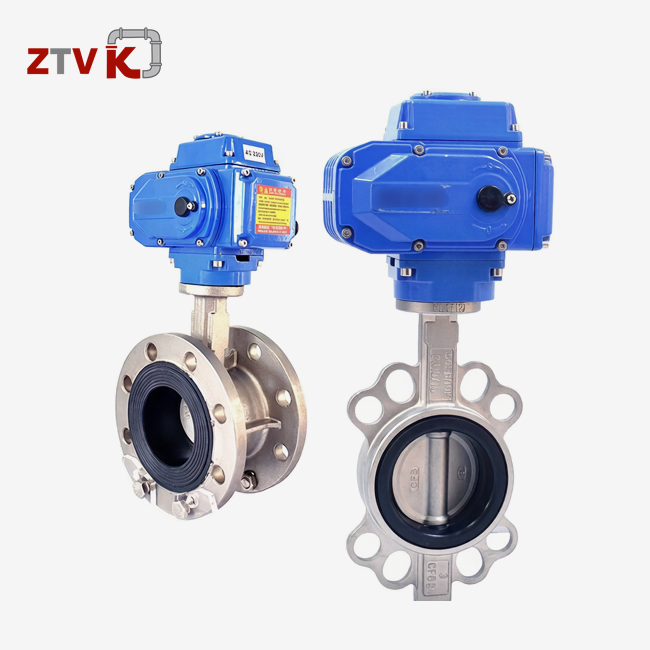
When sourcing automated flow control solutions for industrial systems, understanding the technical requirements for electric butterfly valve actuators becomes paramount. A butterfly valve motorized actuator is an electromechanical device that transforms electrical energy into precise rotational motion, enabling quarter-turn butterfly valves to open, close, or modulate flow automatically. Unlike pneumatic or manual counterparts, electric actuators eliminate the need for compressed air infrastructure and reduce operator fatigue, particularly on large-diameter pipelines where manual operation demands excessive torque. These devices incorporate electric motors, precision gearboxes, and intelligent control electronics to deliver consistent performance across water treatment facilities, HVAC systems, and petrochemical plants. The integration of position feedback mechanisms and communication protocols allows seamless connectivity with modern automation architectures, making electric actuators indispensable for achieving operational efficiency and safety compliance in demanding industrial environments.


Understanding Electric Butterfly Valve Actuators
The basic idea behind how electric motors for butterfly valves work is simple but strong. For on/off uses, the electric motor gets power signals like AC 220V or AC 380V. For variable control, it gets 4-20 mA and 0-10 V analog signals. This electricity powers a worm-and-wheel or planetary gearbox, which takes the high-speed rotation of the motor and turns it into a high-torque, low-speed output that can turn the valve stem from 0 degrees to 90 degrees. The valve disc goes from fully closed to fully open positions as it turns, controlling the flow of fluid.
Working Principles and Torque Management
The reliability of an actuator depends on how well it manages torque. When there is a lot of differential pressure, the unseating torque (needed to break the first seal) is often 30 to 50 percent higher than the running torque. Good electric actuators have excess safety circuits and torque monitors built in to keep the mechanical parts from getting damaged. Output power is based on the gearbox reduction ratio. A 50:1 ratio and a 60-watt motor can make enough force to turn on DN200 valves with mild pressure.
Feedback methods make control more accurate. To show when the unit is fully open or closed, basic units use mechanical limit switches. Modern modulation actuators have potentiometers or absolute encoders built in that send real-time position information to distributed control systems. This lets proportional flow be changed with an accuracy of ±2 degrees. This level of accuracy is very important in situations where temperature or pressure needs to be tightly controlled, like in district cooling networks, where keeping Delta T stable has a direct effect on energy use.
Compatibility Across Valve Types
Electric actuators are incredibly flexible when it comes to butterfly valve designs. The ISO 5211 flanged connections let them join straight to valve stems, and they can fit sizes from DN50 to DN2000. Wafer-type, lug-type, and flanged butterfly valves can all work with actuators of the right size without any problems. The housing of the actuator usually has two shafts that can connect to both square and circular stem shapes after the right adaptors are installed.

Extreme working conditions are not an issue for materials that are compatible. Electric actuators can work in harsh chemical processing environments when paired with valve bodies made of stainless steel 316 and seats made of PTFE. The ratings for the actuator enclosures, which range from IP65 for dust and water resistance to IP68 for submersion applications, keep the electronics inside safe from the outside world. Versions that are explosion-proof and approved to ATEX or IECEx standards can be used safely in dangerous areas with burning gases or vapors.
Variants for Specific Applications
The most common type is an on/off actuator, which moves valves to their final places without stopping in between. These units work well for isolation tasks where binary control is enough, like emergency shutdown valves in petrochemical plants. When constant analog signals are sent to modulating motors, they move the valve to any angle within a 90-degree range. This feature lets you precisely slow down the flow in processes that need to change the flow rate.
Different styles of butterfly valve motorized actuator are needed to deal with different natural problems. In desalination plants, salt spray corrosion can't happen because the actuators are waterproof and have marine-grade coatings. High-temperature versions can handle temperatures up to 70°C, which makes them good for boiler feedwater systems. When the power goes out, the battery backup modules make sure that the system can still work by automatically moving the valves to safe positions that have already been set. This is a very important feature for isolating the gas pipeline.
Core Technical Requirements When Selecting Electric Butterfly Valve Actuators
When purchasing, teams look at electric motors, they need to pay close attention to a few key factors to make sure they work well and last a long time. When specs don't match, things break down early, there are warranty disagreements, and there is expensive downtime.
Torque and Power Specifications
To figure out how much torque is needed, start with the valve manufacturer's data sheets, which list the highest working torque at the rated pressure. A cautious method uses a safety factor of 1.3 to take into account changes in media viscosity and seal aging. It's possible that a DN300 butterfly valve working at PN16 needs 200 Nm of running torque and 300 Nm of breakaway torque. The chosen actuator should be able to make at least 390 Nm so that it works reliably for its whole life.
Power ratings and duty cycle expectations are linked for the butterfly valve motorized actuator. Continuous-duty actuators can handle a lot of modulation without getting too hot, while intermittent-duty actuators are better for operations that only happen once in a while. Thermal durability is based on the motor insulation class, which is usually Class F (155°C) or Class H (180°C). Motors that are too small wear out their windings and last less long, especially in high-cycle situations like automatic batch processing.
Mounting Standards and Communication Protocols
ISO 5211 sets standards for mounting connections that make it possible for different kinds of actuators and valve bodies to be used together. This standard tells you the sizes of the flanges, the bolt patterns, and the profiles of the drive couplings for sizes from F03 to F30. Similar matching guarantees are provided by NAMUR mounting standards that are common in European markets. Checking for compliance stops expensive changes in the field and delays during installation.
How easy integration is depends on how well people can communicate. Basic units have volt-free contact outputs that show where the valve is. Industry-standard protocols, such as Modbus RTU for serial communication, Profibus DP for factory automation, and Foundation Fieldbus for process control, can be used with intelligent actuators. These digital interfaces send diagnostic data, like motor temperature, cycle counts, and torque profiles. This lets maintenance plans plan ahead and avoid unplanned breakdowns.
Environmental Resilience and Protection Ratings
The operating environment determines the level of protection that is needed. Enclosures with an IP65 rating can handle dust and low-pressure water jets, so they can be used indoors. For valve holes and places that are likely to flood, IP67 protection lets water in up to one meter for a short time. IP68 approval lets things work continuously underwater, which is important for wastewater treatment plant submerged release valves.
Extreme temperatures call for special materials and lubricants. Normal motors work in temperatures ranging from -10°C to 50°C. Extended-range types work from -30°C to 70°C with synthetic greases that keep their stickiness even when heated and cooled many times. Explosion-proof housings approved for Zone 1 and Zone 2 dangerous areas have flame paths and higher safety features that keep the atmosphere around them from catching fire.
In places with a lot of humidity, internally heated parts keep condensation from forming. When the motor is not running, these resistance heaters turn on. They keep the inside temperature above the dew point and keep circuit boards from getting damaged by water. This function is very useful in warm areas and along the coast, where the relative humidity is higher than 90%.
Control Accuracy and Feedback Devices
The level of process control depends on how accurate the positioning is. Basic motors can repeat within ±5 degrees, which is good enough for separation service. Modulating tasks need accuracy of ±1 degree, which can be achieved with closed-loop control systems that use absolute encoders. These sensors give each shaft angle its own unique position code, so there's no need for homing sequences after power cycles.
Mechanical contacts in the limit switches of the butterfly valve motorized actuator make sure that the endpoint is correct. Field adjustment to butterfly valve motorized actuator valve-specific angles is possible with adjustable cam systems. Electronic limit sensing with Hall effect sensors allows for contactless operation and long-lasting butterfly valve motorized actuator parts that can be used over ten million times. Dual-redundant feedback systems improve safety-critical butterfly valve motorized actuator applications by checking the outputs of two or more separate sensors and sounding alarms when there are differences.
Comparing Electric Actuators with Alternative Actuator Types
To choose between electric, pneumatic, and manual actuation, you need to look at the total cost of ownership, the needs of the operation, and the infrastructure of the site.
Electric Versus Pneumatic Actuation
Electric actuators don't need compressed air, so they don't have to pay for things like air dryer repair, compressor upkeep, and pneumatic distribution pipes. A medium-sized building with 100 pneumatic actuators uses a lot of electricity to keep the air pressure steady, but electric actuators only use electricity when the valves move. This means that in normal HVAC systems with mild cycling frequencies, this saves more than 40% of energy each year.
Electric versions are better for maintenance times. Air filters, regulators, and solenoid valves in pneumatic devices need to be checked every three months. Technicians don't have to work as hard on electric units because they only need to have their gearboxes oiled and inspected visually once a year. About 20% of the air in pneumatic systems is lost through leaks, which means that the compressor's capacity is spent. Electric actuators have almost no standby losses, which helps make sustainability metrics better.
Response time and control accuracy are very different. For quick shutoff situations, pneumatic actuators can reach stroking speeds of less than one second. Electric lifters take a few seconds to turn 90 degrees, but they can hold their place better without steady air pressure. It is easier to modulate control with electric actuators because they don't need a constant pneumatic source to stay in the middle places.
Manual Operation Versus Motorized Automation
Manual motors put physical strain on the people who use them and pose safety risks. For valves bigger than DN400, you need gear workers or long lever arms that still take a lot of work. Automated solutions get rid of injuries caused by repetitive motion and make it safe to use valves in dangerous places like high-heat steam systems, toxic gas lines, and raised platforms without touching them directly.
When figuring out the return on investment, it's usually better to automate valves that are used more than five times a day. When you add up the savings in labor, fewer accident claims, and better process consistency, the difference in starting costs goes down very quickly. Automated systems can be controlled from afar, which is especially helpful in emergencies where many valves need to be shut off quickly at the same time.
Lifecycle benefits of butterfly valve motorized actuators go beyond cost savings in operations. Motorized actuators use steady torque levels that keep valve seats from being damaged by overtightening, which makes service times longer. Programmable soft-start and soft-stop ramps protect equipment further downstream by lowering the effects of water hammer in long pipes. Diagnostic tools let maintenance teams know about problems that are starting to happen before they become major problems. This changes maintenance from being reactive to being proactive.
Conclusion
When choosing electric butterfly valve actuators, you need to carefully look at their technical specs, how they work, and what the provider can do. By including safety margins in torque estimates, undersizing is avoided, which stops breakdowns from happening too soon. Verifying compatibility across mounting interfaces and communication protocols makes sure that new systems can be added without any problems. Electronics are protected from moisture, extreme temperatures, and corrosive atmospheres by environmental protection ratings that are matched to the installation conditions. When you compare electric actuation to pneumatic and manual options, you can see that electric actuation is better in terms of saving energy, being easy to maintain, and keeping operations safe. Installing things correctly by following the manufacturer's instructions and keeping up with repair plans will extend their useful life and cut down on unplanned downtime. Long-term value is delivered by procurement strategies that balance quality and cost, use existing source relationships, and set up long-term support systems. When wholesalers, contractors, and end users know these technical requirements, they can choose actuator solutions that improve safety, make processes more controlled, and lower the total cost of ownership across a wide range of industrial uses.
FAQ
1. How do I determine the correct torque rating for my butterfly valve?
The valve manufacturer's technical documentation will tell you the maximum operating torque values. This documentation also lists the torque requirements at the rated differential pressure. You need to multiply this number by 1.3 to account for the effects of seal stress, media viscosity, and getting older. Think about both the running torque and the breaking torque that are needed to release the valve from rest. The rated output torque of the actuator must be greater than these calculated values to make sure that the valve works reliably throughout its service life. This will keep the motor from stopping and prevent mechanical damage.
2. What distinguishes on/off actuators from modulating types?
On/off actuators only move valves to fully open or fully closed states. At the ends of the valves, limit switches stop the motor from turning. They work well for isolation tasks that need binary control. Modulating actuators can use constant analog signals, like 4-20 mA or 0-10 V, to place valves at exact middle angles. This lets proportional flow control happen. These units have feedback devices, such as potentiometers or encoders, that tell control systems where something is actually located. This creates closed-loop circuits that allow for accurate flow regulation in processes that need to handle a range of throughputs.
3. How often should electric actuators undergo maintenance?
How often maintenance is done relies on the working environment and the number of cycles. Standard suggestions include eye inspections every three months to check for damage to the housing and the integrity of the cables, lubricating the gearbox once a year with greases recommended by the maker, and electrical tests every six months to check the insulation resistance. Applications that do more than 5,000 tasks a year should have reviews more often. Harsh places with corrosive air, extreme temperatures, or high humidity need maintenance every three months. Monitoring cycle counters in intelligent actuators lets condition-based maintenance happen based on how they are being used instead of at set times.
Partner with ZTVK for Reliable Butterfly Valve Motorized Actuator Solutions.
ZTVK has been making things in Tianjin's Beichen Industrial Zone for more than 15 years, so they can give you complete electric actuator solutions that are made to fit your needs. Our ISO 9001-certified factory keeps more than 2,000 units in stock for DN50 to DN600 sizes. This means that basic setups can be delivered in three to seven days, and custom engineering can be done for specific uses. We offer OEM branding and ODM customization that are both flexible. You can choose from ductile iron, WCB, and stainless steel 304/316 bodies paired with EPDM, NBR, PTFE, or Viton seats to fit your specific operating conditions. Being only 50 kilometers from Tianjin Xingang Port, it offers transportation benefits with FOB and CIF terms and partnerships with major carriers that ensure reasonable freight rates and packaging that meets ISPM 15 standards, which avoids customs delays. Our global service network, 18-month guarantee, and expert help in multiple languages show that we are committed to long-term relationships. Get in touch with our team at ktec86961886@163.com to talk about your needs for a butterfly valve motorized actuator, get more information, or get bulk prices for dealer partnerships.
References
1. American Water Works Association. (2020). Manual of Water Supply Practices M49: Quarter-Turn Valves: Head Loss, Torque, and Cavitation Analysis. Denver: AWWA Publications.
2. British Standards Institution. (2018). BS EN 15714-2:2009+A1:2018 Industrial Valves – Quarter-turn Actuators – Part 2: Electric Actuators. London: BSI Standards Limited.
3. International Society of Automation. (2019). ISA-75.25.01-2000 (R2019) – Test Procedure for Control Valve Actuators. Research Triangle Park: ISA Publications.
4. Lyons, Jerry L. (2017). Practical Guide to Industrial Flow Control Valves: Applications, Specifications, and Sizing. Houston: Gulf Professional Publishing.
5. Nesbitt, Brian. (2021). Handbook of Valves and Actuators: Valves Manual International. Oxford: Butterworth-Heinemann Technical Books.
6. Skousen, Philip L. (2018). Valve Handbook: Third Edition. New York: McGraw-Hill Education Professional.
Send us your valve requirements and our team will provide professional solutions and fast quotations.
RELATED INDUSTRY KNOWLEDGE